Starbucks Japan unveils epic Frappuccino hunt with five to find in new Star birthday campaign

There is a way to try them all.

On 2 August, 1996, Starbucks opened its first-ever Japanese branch in Tokyo’s Ginza district, making 2026 its 30th birthday year. To celebrate, the chain has a huge three-part anniversary project in the works, scheduled to be released in three stages across April, mid-June and August, and today they pulled the curtain back on its first big surprise: The Star Frappuccino.

Starbucks says it’s served over 2 billion Frappuccinos in Japan over the past 30 years – a whopping figure that works out to roughly 67 million Frappuccinos a year – and this first celebratory release honours that history with the theme of “Returning to our roots, and surpassing our roots“. In keeping with this theme, the new release sees five classic Frappuccinos returning from the past with modern updates to the ingredients, texture and aroma to achieve what the chain describes as their “evolved and perfected” form.

They won’t be that easy to find, though, as Starbucks is turning the release into something of a gift hunt, with every branch selling only one of the five Frappuccinos. According to the chain, this is so customers can “search, discover, and enjoy all five classic Frappuccinos” in the Star Frappuccino range.

The flavours selected for this release were based on popularity, so let’s take a look at which ones were chosen, and what makes each one so special.

▼ Melon (736 yen [US$4.62] takeout; 750 yen dine-in)

Said to be “the most anticipated Frappuccino, which generated the most excitement before its release”, this beverage originally contained the fragrant pulp of domestically grown red-fleshed muskmelon, with a melon base and melon-flavored whipped cream to make you feel like you’re savouring only the best parts of a perfectly ripe melon.

For this 30th anniversary version, the amount of pulp has been increased, to such an extent it’s being described as “the largest amount of melon pulp in any product ever released by Starbucks Japan”. Different melon flavours intermingle in each layer, delivering a “melon experience that goes beyond melon”.

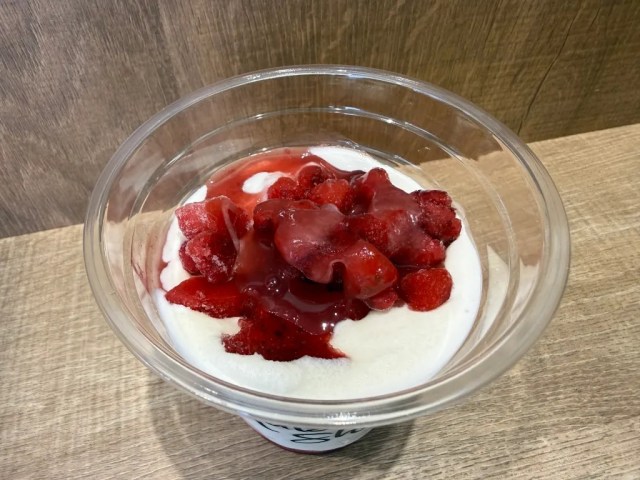
Fruit Yogurt (717 yen takeout; 730 yen dine-in)

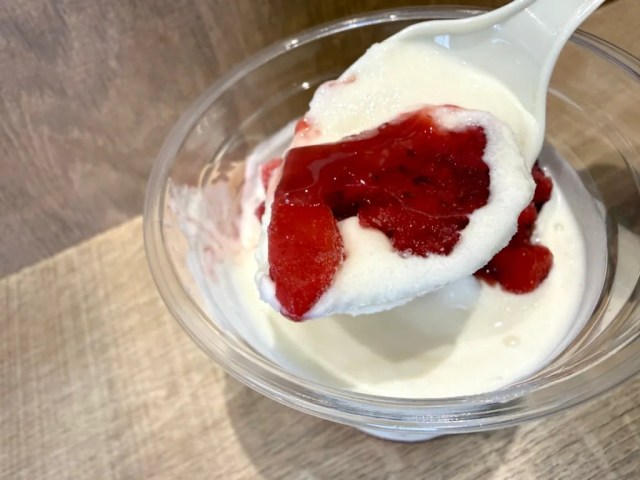
Described as “the number-one Frappuccino that people want to drink right now, especially in this era”, this drink contains a blend of yoghurt, milk, and fruit syrup to create a smooth and pleasant “yoghurt sensation“. That sensation has been dialled up to 11 for this release, with a yoghurt layer that now extends all the way to the bottom of the cup. The top layer of mixed fruit jelly now contains four types of fruit – strawberry, yellow peach, orange, and white peach – adding more tartness and sweetness for enhanced refreshment, while crushed almonds, deep-roasted specifically for this Frappuccino, provide a fragrant texture and nutty richness.

▼ Next, up we have Coffee Jelly (687 yen takeout; 700 yen dine-in).

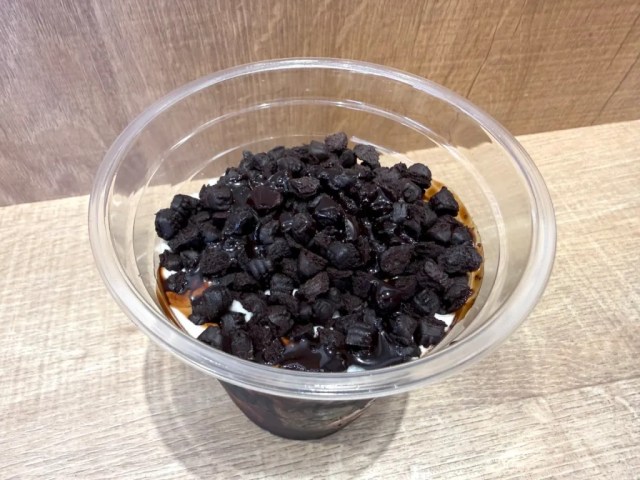
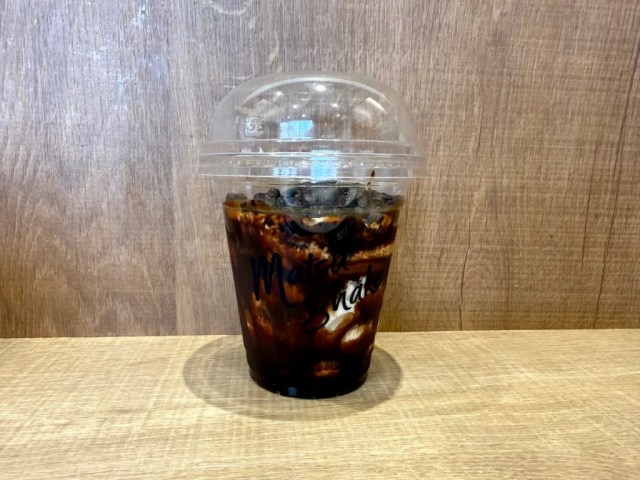
Starbucks says this is the Frappuccino that best captures its signature coffee taste, offering “the ultimate coffee experience” through its coffee-blended base, bittersweet coffee jelly layer and whipped cream topping. The coffee jelly, made from Starbucks’ original espresso roast, has a smooth, jiggly texture and slightly bitter taste that perfectly complements the sweetness of the Frappuccino, allowing the coffee flavour to unfold as you drink it. This updated version upgrades the whipped cream to coffee whipped cream, resulting in an even richer flavour and a luxurious, all-enveloping coffee experience.

Kaga Bo Hojicha (717 yen takeout; 730 yen dine-in)

A Frappuccino that “truly embodies the spirit of Japan, in true Starbucks style“, this cult classic showcases a special stem-only roasted green tea that originated in the Kaga Domain (modern-day Ishikawa and Toyama Prefectures). By lightly roasting the tea stems, a tea with a beautiful golden colour and toasty aroma is produced, making it a hit with tea lovers.

For this new version, the original jelly pieces have been replaced with hojicha-flavoured warabi mochi (a jelly-like traditional bracken starch confection) and a new white mocha-flavoured whipped cream has been added for a mellow sweetness. Up top is a sprinkling of “Kaga Bo Hojicha Powder”, which utilizes first-flush tea leaves for added fragrance and texture.

▼ Finally, we have Chunky Cookie (687 yen takeout; 700 yen dine-in).

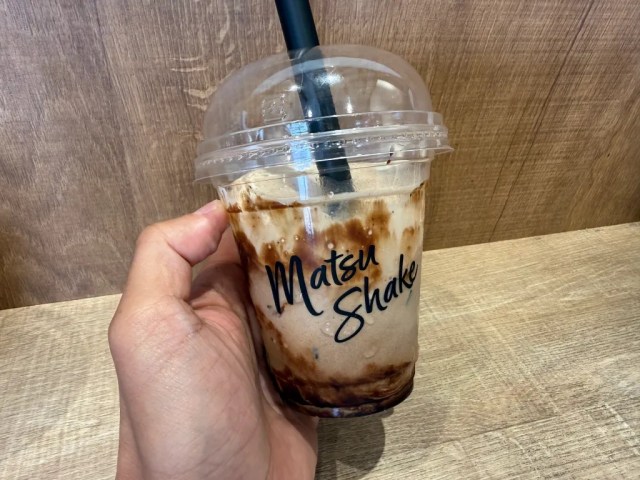
This Frappuccino, said to be the number one choice amongst teenage customers, offers a “real cookie experience” with its crunchy texture and rich milky flavour. A whole chocolate chunk cookie is blended into the vanilla-flavored base, releasing the cookie’s texture and fragrant chocolate flavour with every sip. Now, the drink is even more exciting, with the development of an all-new cookie that complements the Frappuccino more perfectly, and a topping of baked chocolate and cookie pieces for extra crunch and flavour.

As an added anniversary special, the chain will be running a special “Star Frappuccino Quest” campaign, where 100 lucky customers who purchase three of the new drinks will win a year’s supply of Frappuccinos. Winners will be awarded the title of “Frappuccino Master” and receive an Original Digital Starbucks Card, topped up with four 700-yen e-tickets each month for 12 months.

Those who purchase all five drinks will be entered into a draw to win a special “Golden Frappuccino Statue”, a commemorative piece made for the 30th anniversary.

▼ This statue has been meticulously handcrafted by skilled artisans at a renowned Arita ware kiln.

The chance to win prizes adds even more fun to the hunt for these new Frappuccinos, and to help you find them all, the chain has set up a special site where you can easily search for the drink of your choice and locate it on a map. As for the Frappuccinos, they’ll only be available for a limited time from 8 April, so you’ll want to act fast to find them before they disappear again into the annals of Starbucks history.

Related: Star Frappuccino Store Finder
Source, images: Press release

● Want to hear about SoraNews24’s latest articles as soon as they’re published? Follow us on Facebook and Twitter!


Credit:
0 comments:

Post a Comment

Chrono Trigger comes to Japan’s capsule toy gacha machines

Keychains feature beautiful pixel art from an all-time classic.

For as critically acclaimed as Chrono Trigger is, publisher Square Enix doesn’t produce a whole lot of merchandise for it. But the 1995 RPG came about as a rare one-time collaboration between Hironobu Sakaguchi, Yuji Horii, and Akira Toriyama, the creators of Final Fantasy, Dragon Quest, and Dragon Ball, respectively, so maybe a reluctance to tamper with the legacy of those luminaries is why Chrono Trigger never got a direct sequel, and odds are there’s not much space in the promotional schedule to revisit a single game from 30-plus years ago if it’s not part of an active franchise.

However, every now and again the spotlight does shined again on what’s widely considered one of the true classics of the 16-bit video game era, and right now in Japan fans can get their hands on Chrono Trigger pixel art keychains.

The 500-yen (US$3.25) pins are being offered as gacha capsule toys, and with 15 different versions, that might seem like a merciless degree of randomization. However, 14 of the designs are actually spread among seven characters, with stand-by and action poses for Crono, Marle, Lucca, Frog, Robo, Ayla, and Magus (or Chorno, Marl, Lucca, Kaeru, Eira, and Maoh, if you’re using their Japanese names/renderings). That still leaves one mysterious secret design, but that still means the keychain you get will randomly be one of eight, or possibly even only seven, possible characters, raising the chances of getting one of your favorites of the bunch.

And while scouring the realm for coveted treasures is fun within an RPG setting, Square Enix acknowledges that in this case, fans would appreciate a less arduously puzzling journey. To that end, they’ve posted the locations of roughly 200 shops where the Chrono Trigger pins have been stocked here.

Source: Square Enix via Otakomu
Images: Square Enix
● Want to hear about SoraNews24’s latest articles as soon as they’re published? Follow us on Facebook and Twitter!


Credit:
0 comments:

Post a Comment

Tokyo teahouse serves up a sakura matcha dessert you won’t find anywhere else

Unique cherry blossom dessert conceals a surprising filling of traditional flavours.

If you’re looking to explore an area of Tokyo that retains an air of traditional Japanese charm, then Kagurazaka in Shinjuku needs to be on your itinerary. As one of Tokyo’s few remaining geisha districts, this quiet corner of the city is dotted with cobblestone-style backstreets, longstanding stores, and numerous ryotei (traditional Japanese restaurants) where geisha still perform to this day.

On one of the narrow side streets you’ll find a beautiful teahouse cafe called Kagurazaka Saryo, and at this time of year it serves up one of the best sakura sweets in Tokyo.

▼ Plus, some delicious extras.

All these items look gorgeous, but there’s a lot more to them than meets the eye, as they contain extremely high-quality ingredients that make them taste sublime.

▼ The star dessert is Haruka, which means “Spring Breeze“.

This poetically named dessert is a seasonal, limited-edition cherry blossom Mont Blanc, with strands of thin “sakura an” (cherry blossom bean paste) making it feel as delicate as a spring breeze.

Scattered around the dessert is a sprinkling of sakura-flavoured chocolate shavings, mixed with matcha-flavoured feuilletine (crispy, crumbled crepe pieces).

The feuilletine and chocolate shavings add a delicate sweetness and crunchy texture to the dessert, while also resembling fallen sakura petals on green grass.

On top is a rare, luxury Japanese strawberry variety known as Awayuki, which has very low acidity and a sakura pink hue.

At first glance, you might think this is a one-note dessert that consists only of sakura paste, but slice into it and you’ll find it has delicious complexity.

Beneath the strands of sakura is a layer of handmade ice cream containing sencha (steamed green tea) sourced from Shizuoka Prefecture, an area famous for green tea.

Beneath that is a crunchy meringue, followed by Crème Épaisse (a popular French cream made by fermenting fresh cream with lactic acid bacteria), a tart griotte (sour cherry) jam, and a thin layer of sponge to finish.

Scooping a serving of everything onto a plate adds even more flavour to the this six-layered dessert, with another strawberry to be found in the mix as well.

Each mouthful delivers perfect measures of flavour to the taste buds for an absolutely sublime eating experience. Unlike a lot of other sakura treats, this one doesn’t punch you in the mouth with sweetness or intense floral aromas, which is a testament to the high quality ingredients and the level of care in its creation.

▼ The sweet and tart taste of sour cherry adds a nice accent to the mellow cherry blossom flavours.

The heavy outer layer of sakura might look like a lot, but its airy smoothness melts on the tongue, imparting just the right amount of blossom flavour to enhance the other ingredients.

Hidden within it all are pieces of sakura-flavoured warabi mochi (a traditional jelly-like bracken starch confection), which provides a nice surprise with its smooth mouthfeel.

Looking closely at the warabi mochi reveals it has a gorgeous light pink colour, and a speckling of ground sakura leaves, the hallmark of a good cherry blossom dessert.

We’ve tried a lot of sakura treats in our time, and this freshly made Mont Blanc was one of the best we’ve ever tasted. The interplay between sakura, matcha, meringue, cherry, cream and sponge created subtle nuances of flavour you’d normally find at a high-class restaurant, making this dessert a memorable one.

▼ Plus, it comes with a choice of tea, and we recommend ordering the matcha, which is deliciously deep green and incredibly flavourful.

Kagurazaka Saryo has two other locations in Tokyo, at Ikebukuro Sunshine City and Shibuya Scramble Square, as well as one branch each in Italy, Canada and Thailand. As the place where the teahouse started, though, Kagurazaka is home to the main branch, and this is the only location where you’ll be able to order the special Haruka Mont Blanc.

▼ At the two other Tokyo locations, as well as the head branch, you can enjoy another cherry blossom special: the Sakura Warabi Mochi Matcha Latte.

This original drink uses Kyoto matcha as the star ingredient, and tops it all off with a mound of sakura cream and a pickled cherry blossom.

The gorgeous combination of pink and green makes this a total showstopper, and it impresses the palate too.

▼ How green is this matcha?

The body of the drink contains a layer of cream to mellow out the intensity of the matcha, and at the bottom is a mound of sakura warabi mochi. The thick pieces of warabi mochi travel up the straw to wow your taste buds with a hit of jelly-like smoothness, delivering subtle spurts of sakura to complement the green tea.

These limited-edition treats are levels above regular cafe offerings, and the high quality is reflected in the price. The Haruka Mont Blanc retails for 2,860 yen (US$18.03) for a set with Japanese tea, or 2,970 yen for a set with matcha or gyokuro, while the Sakura Warabi Mochi Matcha Latte is on the menu at 990 yen.

The high price is worth it for a sakura experience to remember, though, and they’re only on the menu for a limited time until early-to-mid April, so now’s the time to explore Kagurazaka, and all its hidden charms.

Cafe information
Kagurazaka Saryo Main Store /神楽坂 茶寮 本店
Address: Tokyo-to, Shinjuku-ku, Kagurazaka 3-1
東京都新宿区神楽坂3-1
Open 11:30 a.m.-10:00 p.m.
Website

Photos ©SoraNews24
● Want to hear about SoraNews24’s latest articles as soon as they’re published? Follow us on Facebook and Twitter!


Credit:
0 comments:

Post a Comment

Pokémon and Ikea Japan cross over into each other’s worlds with collaboration events

Ikea is all about creating cozy living spaces, and ditto for Pokémon Pokopia.

In Pokémon Pokopia, the goal shifts from capturing Pocket Monsters to creating a home. Taking on the role of a determined Ditto, the player builds a town and fills its structures with creature comforts through various crafting and construction mechanics.

But while Ditto might be new to this whole interior design thing, Ikea has been at it for a while now, and so as a joint celebration of the release of Pokémon Pokopia and the 20th anniversary of Ikea’s first store opening in Japan, they’re teaming up for a collaboration that’s bringing some Ikea fun to the game world, and also some of the game’s style to the real world.

Within Pokémon Pokopia, Ikea has created an Ikea Island that players can visit. While there, you can check out homes created by Ikea’s designers that boast interiors inspired by Pikachu and Snorlax. Pikachu’s is focused on playful socializing, while Snorlax’s, naturally, is more about cozy, slumber-inviting relaxation.

These rooms have also been recreated at Ikea Japan stores using the chain’s furnishings, so that you can get the feel of really visiting the game’s world. The in-store rooms also have posted codes that grant access to the in-game Ikea Island

Visitors to Ikea stores can also take part in a Pokémon stamp rally activity, collecting stamps to put on an adorably illustrated paper at seven stamp stations hidden within each store (with the exception of the Okayama branch, which isn’t part of the collaboration).

Puzzlingly, Ikea hasn’t mentioned anything about a prize for those who collect all seven stamps, but members of the Ikea Family reward program who make a purchase of 5,000 yen (US$32) or more on their visit will get an Ikea Pokémon sticker sheet.

▼ There are a total of six sheets, with two given out randomly during any single week.

Part of what’s made Ikea a success in Japan is how popular it is as a place to spend the better part of a day, with fans sometimes as excited about eating in the store’s attached cafe as they are shopping for home furnishings. For such-motivated visitors, the collaboration also includes Pokémon-themed decorations for desserts (though in addition to Okayama, Ikea’s Kyoto, Hiroshima, and Yokohama Bay Quarter cafes are sitting this out).

The in-store Pokémon/Ikea collaboration is currently underway, and will be going on until May 10, while Pokémon Pokopia’s Ikea Island will be visitable through June 30.

Source, images: PR Times
● Want to hear about SoraNews24’s latest articles as soon as they’re published? Follow us on Facebook and Twitter!


Credit:
0 comments:

Post a Comment

Japan’s prime minister exchanges Dragon Ball kamehamehas with president of France[Video]

Leaders of world powers strike energy blast pose.

There’s an interesting cultural question that pops up during international meetings in Japan: Should the participants shake hands at the end of their conversation? Japan isn’t ordinarily a hand-shaking society, with bowing instead being the gesture by which respect, gratitude, and similar earnest sentiments are conveyed. However, most Japanese people know that handshaking is common in much of the rest of the world, especially western countries…but then again, so too are many people from other nations aware that bowing is the norm in Japan.

There’s not a clear consensus, and it’s a question that only gets more complicated when both parties are prominent figures who frequently interact with each other’s culture, such as, say, Japanese prime minister Sanae Takaichi and French president Emmanuel Macron. As the pair wrapped up a joint press conference in Tokyo on Wednesday, it appeared that they’d subconsciously settled on a handshake…until Takaichi followed it with a third option.

Yes, that’s Dragon Ball’s kamehameha pose that the two world leaders exchanged. The gesture itself is more or less the same as Street Fighter’s hadouken, but it’s clearly Dragon Ball’s energy blast that Takaichi and Macron are emulating, as Takaichi can be faintly heard saying “kamehameha” through the audience’s applause. Macron himself, as a professed anime/manga fan, is also likely more familiar with the kamehameha than the hadouken.

▼ A clip of Macron at France’s Japan Expo event in 2025, where he met with Kazuhiko Torishima, Dragon Ball’s initial editor

Following the press conference, Macron posted the kamehameha video to his Twitter account along with “Fusion” written in Japanese.

Of course, the French president didn’t come all the way to Japan for anime fandom, and the main purpose of his visit is to discuss cooperation between the French and Japanese governments regarding rare earth and energy procurement. Still, the sudden kamehameha shows that their worldwide recognition and popularity grow, anime and manga continue to be prominent goodwill cultural ambassadors for Japan.

Source: Yomiuri Shimbun
Top image: Pakutaso
● Want to hear about SoraNews24’s latest articles as soon as they’re published? Follow us on Facebook and Twitter!


Credit:
0 comments:

Post a Comment

Fading Tokyo – Searching for signs of the Showa era as local neighborhoods evolve[Photos]

Mr. Sato starts his urban exploration of Tokyo to catch a glimpse of local neighborhoods’ pasts before they’re changed forever.

There’s never a time when Tokyo isn’t changing. The city is so big and has so many people that there’s always some part of it that’s being renovated, redeveloped, or otherwise reimagined. Oftentimes those changes bring greater convenience and interesting new experiences, but at the same time, there’s also the sadness that comes with losing elements that were part of the cityscape for decades up until then.

That’s something that our ace reporter Mr. Sato has been thinking about a lot recently. A resident of western Tokyo, he lives not far from the Seibu Shinjuku Line, which is going thought some extensive renovation work, with stretches of track and stations being converted from above-ground to underground facilities. Having been part of a construction crew that did similar work in his hometown of Izumo, Mr. Sato knows how much the atmosphere of a neighborhood can change after such conversions, and it’s inspired him to search Tokyo for fading vestiges of the Showa era (1926-1989) in order to document and appreciate them while they still exist.

For today’s urban exploration expedition, Mr. Sato started at Baishoin Temple, also called Araiyakushi Baishoin Temple, in the vicinity of the Seibu Shinjuku Line’s Araiyakushi-mae Station. “Yakushi” means “healer,” and this temple, which was founded 440 years ago, is said to bestow blessings upon those suffering from eye ailments, and also to help ensure the health of growing children. In a more secular sense, it’s also a spot of beautiful traditional architecture, and if you time your visit for when the cherry blossoms are blooming in spring, the approach to the main gate is quite picturesque.

Baishoin isn’t the only local place for purported divine assistance either. There’s also a Shinto shrine, Arai Tenjin Kitano Shrine, right across the street, which is dedicated to Sugawara no Michizane, a ninth century scholar and poet who became deified as a god of learning and education.

The shrine’s grounds have lovely sakura trees of their own too, but not of the Somei Yoshino variety that makes up the majority of Japan’s cherry blossoms. Instead, these cherry blossoms are a kind called “Princess Miyabi” that blooms earlier and has a more pronounced pink color.

From the shrine, Mr. Sato made his way to Araiyakushi-mae Station, a walk that takes about eight minutes.

▼ Walking route from Baishoin Temple to Araiyakushi-mae Station via Arai Tenjin Kitano Shrine

Araiyakushi-mae is one of the stops on the Seibu Shinjuku Line that’s being converted to an underground station, and while it’s still operating above-ground for now, the prevalent partitions are a reminder that changes are coming.

As part of the switch to underground tracks along this part of the line, a multiple railroad crossings are going to be eliminated. This will no doubt help ease congestion, but it also means those moments of neighbors waiting side by side at the crossing gate, taking in the same scenery at the same time, will also come to an end.

The entire track between Araiyakushi-mae and Nuamabukuro, the next stop on the line, will be underground once the renovations are finished, so Mr. Sato hopped on the train and rode over to Numabukuro to get a look at the neighborhood.

This crossing will be gone too, which will also likely mean the removal of the charmingly retro maps posted on its fence.

This public bath, called Ichinoyu and located a block away from Numabukuro Station, is also a remnant of an a more old-fashioned way of life. While it’s not directly in the path of the renovation work, one can’t help wondering if it’ll eventually get swept away as part of a local redevelopment project, but for now it’s hanging on, as are the small, independent izakaya pubs on the nearby streets.

As he strolled about, Mr. Sato suddenly spotted a large torii gate marking the approach to Ooka Inari Daimoyijin.

Ironically, after he passed through the gate and followed the path, he found that this shrine, dedicated to Ukanomitama, a god of harvests and agriculture, is actually pretty small, but Mr. Sato sill stopped to say a prayer of silent thanks.

▼ Route from Numabukuro Station to Ichinoyu and Ooka Inari Daimoyijin

Now with food on his mind, Mr. Sato realized that he’d gotten really hungry, so it was time to look for lunch.

The good honest grub of Manpuku Kitchen and halal offerings of Rejaul, the establishments shown in the photo above, were both tempting, but unfortunately both of the places were closed at this late-afternoon hour, so Mr. Sato’s search continued, with more visual reminders of just how close the future was pushing its way into the past’s territory.

In time, he came across a Chinese restaurant called Tairiku, with its banner hanging across the doorway and signaling that they were still serving.

Stepping inside, Mr. Sato saw that the only people in the restaurant were the owner/chef and one elderly customer who appeared to be a regular. The two of them were entranced by a high school baseball game they were watching on the restaurant’s TV set, with the contest having just gone into extra innings. Mr. Sato put in his order for a bowl of tanmen ramen and a plate of gyoza (700 yen [US$4.50] and 400 yen, respectively), and as he ate, he found himself getting emotionally invested in the game too.

Both starting pitchers were still in the game, which was tied at 0-0. With every pitch, the other customer would let out an admiring “Oohh!”, and Mr. Sato unconsciously began to do the same, periodically looking down at his food to take a bite but then moving his eyes back up to the game.

The ramen and gyoza were delicious and filling, but just as enjoyable was this unexpected sense of unspoken comradery with the other people in the restaurant, and when the game ended with a 2-1 victory for the winning team, Mr. Sato felt like he’d had not just a great meal, but a uniquely comforting experience…which he then followed with another at a cafe called Nekomaru.

Neko is the Japanese word for “cat,” so you can probably spot the cafe even if you don’t read Japanese.

▼ Route from Ooka Inari Daimoyijin Shrine to Tairiku to Nekomaru

This is a retro kissaten, a Japanese cafe in the style that was ubiquitous in the ‘60s and ‘70s, but which became less common as the Bubble Economy years went on. That means fewer flashy Instagram-baiting drinks and desserts, and a stronger focus on fundamentals, such as a really good cup of coffee for 480 yen.

After taking a few satisfying sips, Mr. Sato realized that this stylishly old-school atmosphere was having an influence on his mental state. Ordinarily, in idle moments like this he’d be quick to pull out his smartphone and start scrolling through social media. But with the sounds of the staff’s jazz selection flowing from the cafe’s speakers and a cup of high-quality coffee in his hand, Mr. Sato felt he had all the stimulation he needed, and without an excess of it either. It was tranquil but not tranquilizing, and the 15 minutes or so he spent in this throwback state of mind turned out to be far more satisfying than doomscrolling, and he’s going to keep Nekomaru in mind for the next time he finds himself in need of a mental detox of this sort.

After leaving the cafe, Mr. Sato started walking south, in the direction of Nakano Station, the closest train stop to his apartment. This brought him to the Myoshoji River, where a plaque posted on the bridge he crossed said that back in the Edo period, frogs caught along the river, which were caught to be used as food, were collected as tax payments by the Shogunate government.

On the south side of the river is Heiwa no Mori Park, a relaxing green space for locals on ground that used to be part of a prison.

And eventually, Nakano Station came into view.

▼ Route from Nekomaru to Heiwa no Mori Park to Nakano

Nakano Station has been going through some massive renovations of its own recently. The new building is much larger and more modern than its previous form was, and, to Mr. Sato’s eyes, looks like something that would blend right in with the more heavily urbanized environments of the Tokyo city center, with the redesign making it more convenient and commerce-friendly.

Similarly, Nakano Sun Plaza, a B-tier concert hall near Nakano Station that’s been the venue for performances by many beloved niche artists over the years, is in a state of limbo as it’s technically closed down, but demolition has been indefinitely delayed.

Mr. Sato isn’t completely opposed to the march of progress in Tokyo’s neighborhoods. However, understanding that such changes are inevitable, and in some cases even necessary, has hardened his resolve not to overlook those special places that are going to be fading away as newer, shinier stuff comes in, and he’s planning to expand his explorations to other parts of the city too, while there’s still time.

Photos ©SoraNews24
● Want to hear about SoraNews24’s latest articles as soon as they’re published? Follow us on Facebook and Twitter!


Credit:
0 comments:
Post a Comment