Police to ticket cyclists riding on sidewalks, which amounts to almost all cyclists in Japan
22:13 cherishe 0 Comments

I hope they have a lot of paper.

As reported earlier, Japan’s Road Traffic Act has undergone some revisions that are set to take place in April of next year. Most notable among them is the addition of a “blue ticket” (aokippu) which is a fine for reckless cycling behaviors, such as 12,000 yen (US$83) for using a smartphone while riding, 6,000 yen for running red lights, and 111 other types of traffic violations.

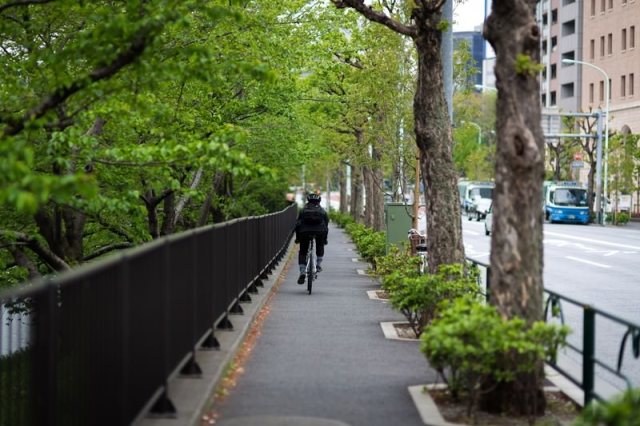
Many of them are clearly dangerous and hard to argue with, but one that has been turning heads is a 6,000 yen fine for riding on the sidewalk. This one is especially surprising since most cyclists in Japan always use the sidewalk. After the fine was announced, the National Police Agency was flooded with nearly 6,000 complaints that it was an unreasonable law.

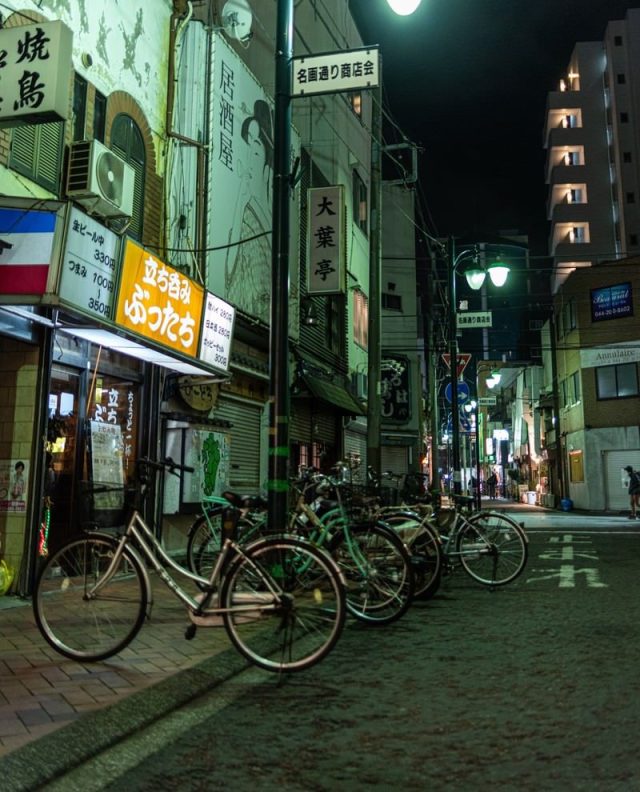
Japanese streets tend to come in all shapes and sizes with some dating back centuries and lacking the size or shape to accommodate things like bike lanes. And even when they do, many motorists seem to interpret them as a convenient place to park their cars on the side of the road. This can make riding on the road daunting for many people who fear getting into a much more serious accident than they might on a sidewalk.

▼ People just tend to make do with the space available.
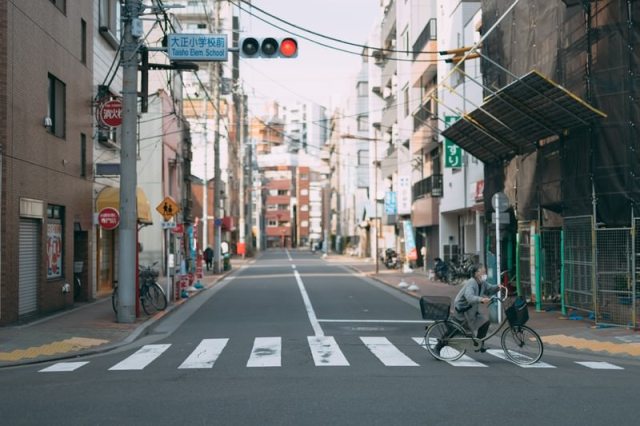
In response to the blowback, the police issued a statement saying that they wouldn’t hand out tickets for the mere act of riding on the sidewalk. Instead, they said tickets will only be issued in cases where someone is exhibiting aggressive and dangerous behavior while on a sidewalk. However, a writer for President Online pointed out that their criteria is a very subjective thing, and riding even at average speed would be considered dangerous.

▼ The National Police Agency suggests 7.5 kilometers per hour (4.7 miles per hour) as a safe speed for sidewalks, but that’s about half the speed of even a casual cyclist.
Comments online largely agree that the National Police Agency is putting the cart before the horse by punishing cyclists for using sidewalks without giving them a reasonable alternative.

“Riding a bike on the road is too scary, so I usually use my car.”
“Reserve the left lanes for cyclists and elderly motorists.”
“If cyclists go slowly on the sidewalk, it’s no problem. But they don’t understand that and go too fast, so it’s their own fault.”
“Taking a bike on the road along Shinome-kaido in Tokyo would be suicide.”
“They should let us ride on the sidewalk and use umbrellas as long as we go slowly.”
“Riding with headphones isn’t dangerous.”
“This country is stupid to just throw rules at us without fixing the infrastructure first.”
“I’d rather stop using a bike completely than take it out onto the road.”
“It’s idiotic to force us into the streets if the streets aren’t equipped to handle us.”
“Get rid of those roadside trees and put in bike lanes that are separated from both the sidewalk and the road by curbs.”

Getting rid of the few trees that exist in Japan’s urban areas probably isn’t the best solution, but I’d have to agree that a separate conduit for bicycles would be ideal if possible. It’s a colossal logistical challenge though, as the streets in many cities are so chaotic they can barely accommodate pedestrians and cars properly, let alone bicycles.

It certainly doesn’t look like that’ll be happening soon, so just be sure to be on your best behavior when riding bikes in Japan, especially after the new laws go into effect next year.

Source: President Online, My Game News Flash
Featured image: Pakutaso
Insert images: Pakutaso 1, 2
● Want to hear about SoraNews24’s latest articles as soon as they’re published? Follow us on Facebook and Twitter!


Credit:
0 comments:

Sanrio Character Ranking results: Cinnamaroll’s five-year streak broken, poll still goes to dogs

20:13 cherishe 0 Comments

Surprise comeback also puts one retro star back into the top 10 for the first time since the ‘90s.

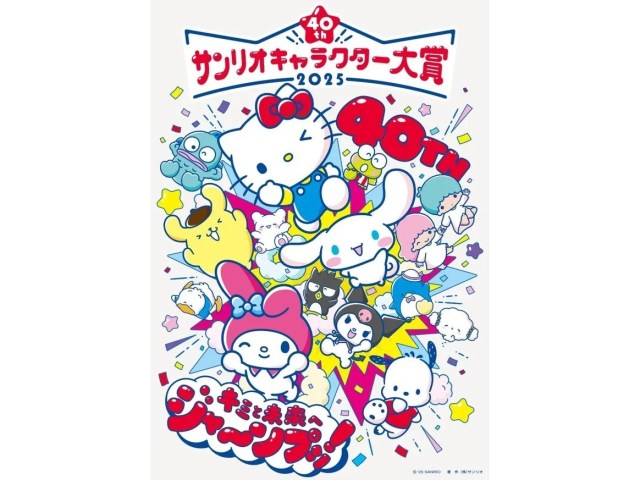
World politics are at a particularly divisive stage right now, but there’s one annual election in which you can always count on all of the candidates to not only be civil and cordial, but also adorable. We speak, of course, of the Sanrio Character Ranking, in which fans of the pantheon of cute characters from the creators of Hello Kitty cast their votes to choose the absolute cutest of them all.

To give you an idea of what a big deal the Sanrio Character Ranking is, this year over 63 million votes were cast — 63,160,696 to be precise. Sanrio has now tallied them all up and announced the results, so let’s take a look at the top 10.

Coming in at 10th place is Ahirunopeckle, who’s both a character we haven’t seen much of recently and also a walking Japanese vocabulary lesson (ahiru means “duck”). This is Peckle’s first time to finish in the top 10 since the 1994 Sanrio Character Ranking, so it’s safe to say he’s in the middle of a comeback. In 9th place is penguin Tuxedo Sam (who wears two articles of clothing, but neither one is a tuxedo jacket or pants), and in 8th place is another character who’s been having a revival in popularity following an extended time out of the spotlight, fish-man Hangyodon, who debuted in 1985.

In both the 7 and 6 spots are characters currently celebrating their 50th anniversaries, the Little Twin Stars Kiki and Lala and My Melody. In 5th place is the one and only Hello Kitty, who despite remaining the most famous of all Sanrio’s characters, hasn’t won the Sanrio Character Ranking poll since 2019, though she also had back-to-back victories in 2012 and 2013 and a dominant streak of first-place finishes that stretched from 1998 to 2009. Edging ahead of Kitty-chan, in 4th place is Kuromi, My Melody’s self-appointed rival (since My Melody is too sweet to think of anyone as an adversary).

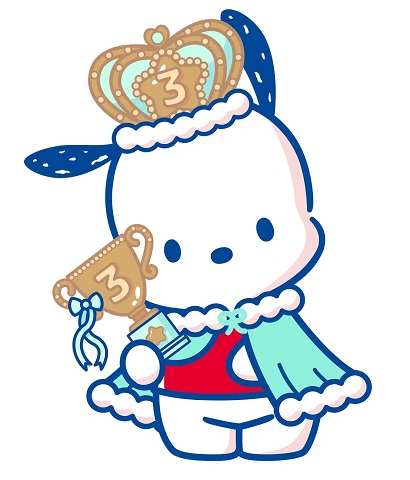
And now we reach the characters who reached the podium, beginning with, in third place, Pochacco.

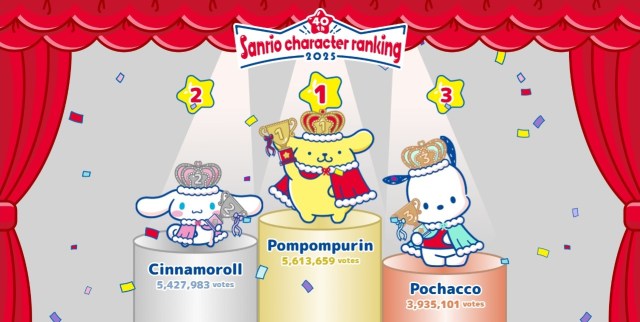
Voting was pretty tight between 3rd, 4th, and 5th place, as Pochacco’s 3,935,101 votes are only around 10 percent more than Kuromi’s or Hello Kitty’s. There’s a huge gap between Pochacco and the 2nd place finisher, though, as Cinnamaroll finished with 5,427,983 votes.

A strong showing by Cinnamaroll was to be expected, as the cinnamon roll-esque pooch was coming off five consecutive first-place finishes between 2020 and 2024. But in the end, with 5,613,659 votes, 2025’s top dog, literally, is Pompompurin.

This marks Pompompurin’s fourth time to top the rankings, and his first since 2016. It also means that canine characters swept the top three spots in this year’s rankings.

▼ You go, dogs!

Collectively, Pompompurin, Cinnamaroll, and Hello Kitty have accounted for all but three of the first-place finishes since 1998, with My Melody taking the crown in 2010, 2011, and 2014. If you throw Pochacco and his streak of wins from 1991 to 1995 into the mix, that power quintet has won 34 of the last 35 Sanrio Character Rankings, with the only outlier being the 1996 win by Bad Badtz-Maru (who finished 11th in the 2025 poll).

▼ 2025 Sanrio Character Ranking results

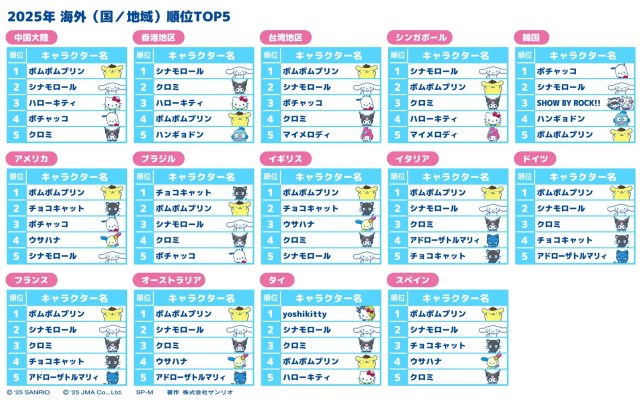
Voting for the Sanrio Character Ranking is conducted worldwide, and Pompompurin had strong support around the globe, finishing in first place in all 14 countries outside of Japan, with a first-place finish in nine of them: the U.S., the U.K., Australia, China, Taiwan, Italy, Germany, France, and Spain.

Though Sanrio hasn’t released individual vote counts by country, it would appear that the majority of the votes were gathered from Japan and elsewhere in Asia, as despite Chococat finishing second in the U.S. and U.K., second in Spain, fourth in Germany and France, and first in Brazil, the character finished out of the top five in China, Hong Kong, Taiwan, Singapore, Korea, and Thailand, and finished 24th overall. Similarly, Usahana was the third-favorite character in the U.K., and fourth in the U.S., Australia, and Spain, but out of the top five among all other countries and finished 17th overall, behind 16th-place Gudetama (who wasn’t in any country’s top five). Sifting through the by-country results, we can also see that Thailand’s infatuation with Yoshikitty, the combined persona of Hello Kitty and Japanese rock star Yoshiki, continues, as Yoshikitty was Thai voters’ number-one pick.

▼ Top five rankings by country (from left to right)
Top row: China, Hong Kong, Taiwan, Singapore, Korea
Middle row: U.S., Brazil, U.K., Italy, Germany
Bottom row: France, Australia, Thailand, Spain

Following the announcement of this year’s results, Sanrio also released statements from the top three finishers.

Pompompurin: “Yippee! Thanks so much for all your support! I’m gonna celebrate with a giant pudding!”

Cinnamaroll: “I’m super grateful for all your support. I’ll continue to be right by your side from now on!”

Pochacco: “Hey, everyone! I got third place! Thanks for everything. Let’s continue to get along forever!”

Congratulations, Pompompurin, and enjoy your victory dessert.

Source: PR Times, Sanrio
Top image: PR Times
Insert images: Sanrio, PR Times
● Want to hear about SoraNews24’s latest articles as soon as they’re published? Follow us on Facebook and Twitter!


Credit:

0 comments:

The Great Parm Exhibition coming to Harajuku, Tokyo for frozen treat’s 20th anniversary

19:13 cherishe 0 Comments

What’s the Parm in a little celebration?

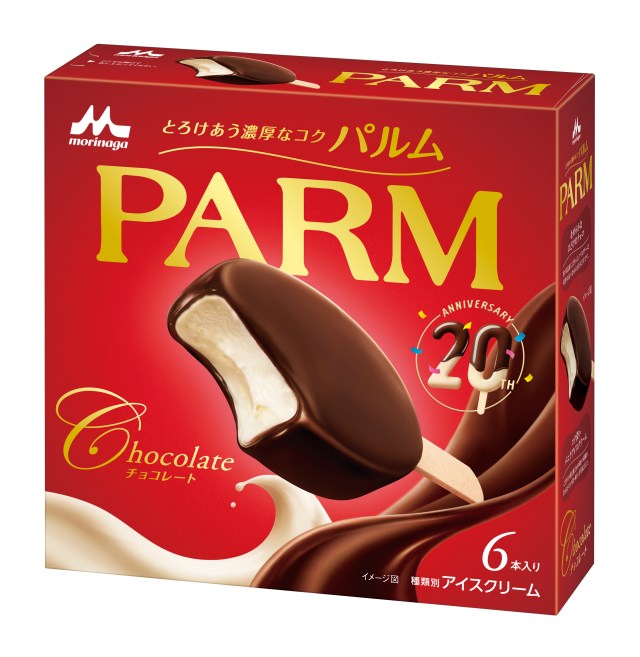
Parm, chocolate-covered ice cream bars on sticks, are often overlooked in the vast ecosystem of Japan’s frozen treats. But their simplicity has served as a reliable ever-popular treat in an industry that sometimes gets unhinged with spaghetti ice pops or crab ice cream. It’s just nice to know the sober deliciousness of Parm has always been around for the past 20 years.

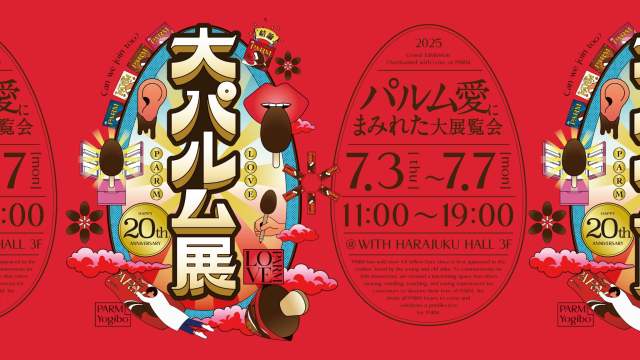
However, after 20 years of being the dignified ice cream in Japan, it’s time for Parm to let its hair down and get a little funky. So, to celebrate this milestone The Great Parm Exhibition will be held from 3 to 7 July in the trendy Harajuku district of Tokyo.

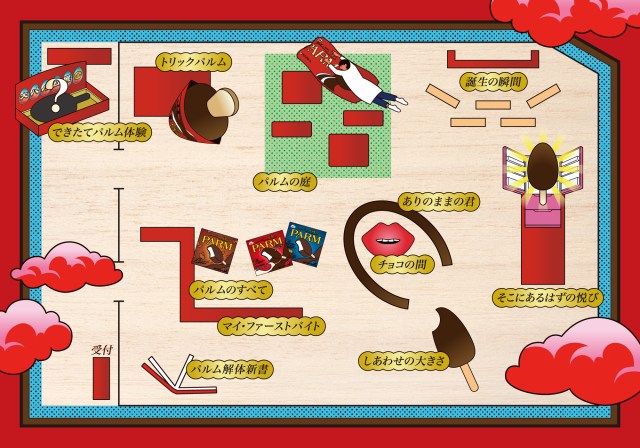
▼ A map of the exhibition space

Upon entering this exhibition, guests are first greeted with an introduction narrated by movie star Yutaka Takenouchi, probably best known outside of Japan for his role as the Prime Minister’s aide in Shin Godzilla. He also appears in commercials for Parm.

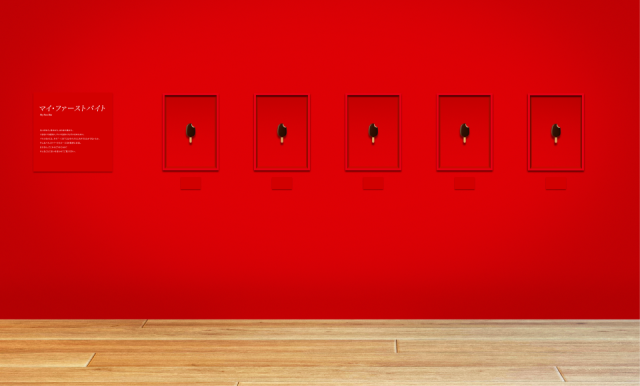
From here you can view the Parm Dissection Book, a tome that outlines the creation of Parm and gives never-before-seen insights about its design and production. After this, there is the My First Bite display where notable fans of Parm, such as Takenouchi and the head of product development for Morinaga Milk Industry shared their first times sinking their teeth into its silky smooth chocolate and ice cream.

▼ My First Bite

Next up is the All of Parm section which will showcase the over 100 varieties of Parm that have been released over their 20-year history. Then it’s on to the Grandeur of Happiness, where a giant monument, the size of 10,000 Parm bars, will be erected. This scale was chosen because an estimated 10,000 Parm bars are eaten every 15 minutes in Japan based on last year’s sales data.

From here you can enter the Chocolate Room which is designed to make it feel like you’re inside a Parm bar and surrounded by smooth chocolate walls. Various displays highlight the unique qualities of this chocolate, like the Velvet Curtain that represents the coating which Morinaga refers to as Velvet Chocolate, and a giant pair of human lips that causes the chocolate to melt deliciously on contact.

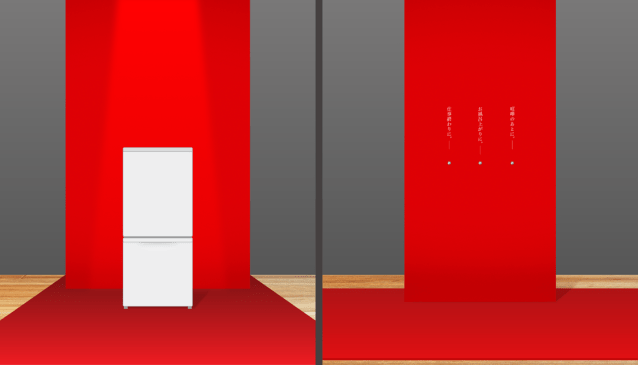
In the Just the Way You Are section, photos taken by fans of Parm are on display, giving a unique look at the bar seldom seen in slick advertising campaigns. Nearby is the Joy That’s Supposed to Be There exhibit which simulates the happiness of finding a Parm in the freezer in three different ways.

▼ Much of the exhibition has a minimalist theme that exemplifies the simple charm of Parm.

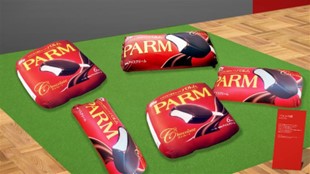
The Moment of Birth gives visitors a rare glimpse of Parm bars entering existence from the factory, just before packaging and shipping to spread joy around the country. Next to that is the Parm Garden, which is an area with Yogibo bean bag chairs that resemble Parm bars both in appearance and smooth texture. And next to that is the Trick Parm trick art area where you can take a photo as if pulling out a giant Parm from its wrapper.

▼ Parm Garden

And last but certainly not least, there is a My Parm Bar experience where you can create your very own ice cream snack by dipping your frozen bar into melted chocolate and then adding up to two toppings of your choice. This can be done at no extra charge, but visitors must first take the Parm Love Test that gauges their love of Parm.

And speaking of charges, admission is only 700 yen (US$5), but parts of this event will only be held as long as supplies last so you may not want to wait until the last minute of this five-day celebration of all things Parm. Take the time now to get yourself Parmed and ready.

Event information
The Great Parm Exhibition / 大パルム展
With Harajuku Hall
Tokyo-to, Shibuya-ku, Jingumae 1-14-30, 3F
東京都渋谷区神宮前1丁目14-30 3F
Event runs 3 July-7 July
Hours: 11 a.m. – 7 p.m.
Admission: 700 yen

Source, images: PR Times
● Want to hear about SoraNews24’s latest articles as soon as they’re published? Follow us on Facebook and Twitter!


Credit:

0 comments:

Nagoshi no Harae: the summer Shinto ritual that most Japanese people don’t even know about

11:13 cherishe 0 Comments

Have you finished all your Nagoshi no Harae shopping yet?

With 30 June approaching, we are now at the halfway point of 2025, and it certainly has been… a year. But did you know that on this day there’s a special Shinto ritual that lets you purify all of the bad energy you’ve accumulated in the first half of the year?

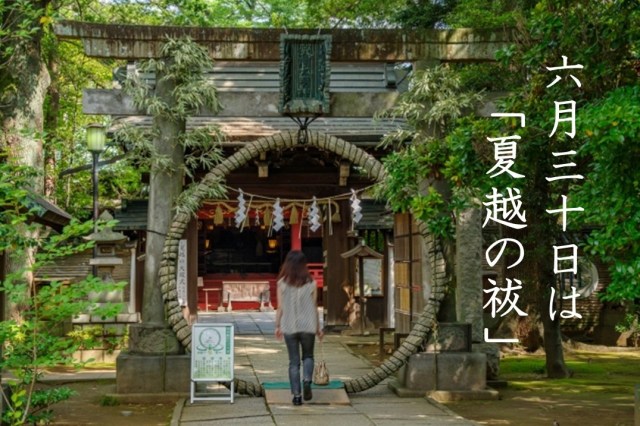
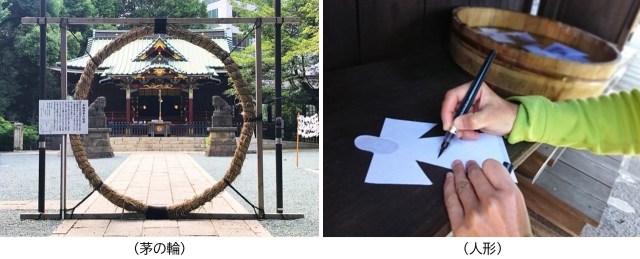
Chances are you haven’t because according to a survey, about 80 percent of Japanese people have never even heard of it and an additional 14 percent only have a vague notion of it. It’s called Nagoshi no Harae and on this day some Shinto shrines set up a large ring made of straw called a chinowa near the entrance of the shrine. Walking through it is said to have a purifying effect.

Another custom is the hitogata. This is a paper doll meant to give a human form to the divine. By writing your name and age on the doll and then wiping it on yourself and/or blowing on it, it picks up the negative spirits from you. You then leave it with the shrine, which will dispose of both the doll and the bad energy it received.

▼ A chinowa (left) and hitogata (right)

This all works on the Shinto concept of kegare which is a kind of negative energy or spiritual impurity that people can acquire not only through doing bad deeds but through things beyond their control, like going to a funeral. It’s pretty hard to go through life without picking up a little kegare here and there, and if enough of it builds up inside you, it can manifest as bad luck.

So, it’s considered good practice to regularly clear out your kegare and thus ward off the bad luck that comes with it. One such way is the Nagoshi no Harae ritual but that’s only one day a year, and since it’s on a Monday this year, it can be hard for a lot of people to fit it into their schedules.

As luck would have it, this information comes to us from Takami Kato, a fortune teller and author of Money Luck Yearbook: 365 Days of Money Attracting Behavior Manga Manual. I know what you’re thinking and that title doesn’t fill me with confidence either, but he’s basically just applying harmless Shinto philosophies as a purported way to improve your luck.

Kato himself was once a very successful businessman but as a result of his own hubris he began to alienate others which led to a spiral into depression and massive debt. After hitting rock bottom, he changed his outlook on life to helping others by sharing his experiences and suddenly found that his luck in both personal happiness and finances also improved.

So, even if you can’t make it to a shrine in time for Nagoshi no Harae, Kato suggests lots of other ways to purify yourself of kegare. The first and easiest way is plain old salt. It’s not just for sumo wrestlers anymore, and you can pretty much use it any way you want whether it’s kept in a neat little pile, added to your bath, kept in your pocket, or even just eaten, so go ahead and have those pretzels because the coarser the salt the better.

Another way is simply by saying “I’m sorry” for any transgressions you might have had. It doesn’t necessarily have to be to anyone directly, but you at least get some of it off your chest because harbored guilt is a breeding ground for kegare. In a similar vein, you can also say “thank you,” but say it to yourself for making it through the past six months and just surviving, which is good enough.

That’s the gist of it really, it’s mostly the idea of positive thinking and generally good advice whether you believe in kegare or not. Just be careful about your salt intake because all the Shinto purification rituals in the world won’t wash away high blood pressure or kidney stones.

Source, images: PR Times
● Want to hear about SoraNews24’s latest articles as soon as they’re published? Follow us on Facebook and Twitter!


Credit:
0 comments:

App that lets you hunt down discounted food about to expire available at the Expo too

23:13 cherishe 0 Comments

Good way to get the best deals in town, just not the freshest deals.

Japanese supermarkets usually have a section filled with bentos and other freshly cooked foods like pizzas, croquettes, and spring rolls. But foods like these are only sellable for a limited time and when that clock starts to run down, the supermarkets often start slashing prices to cut their losses. Some regular shoppers get wise to this schedule and deliberately hang around until the stickers come out before buying something.

But in our increasingly online society, there really ought to be a better way to handle this situation and a service called Tabesuke might just be it. This app lists shops in your area where certain items might be nearing the time they become unsellable but still edible. You can find stuff either by searching or just perusing a map of your surrounding area.

The pins are color-coded and red pins mean those stores have something to unload cheaply before it’s too late.

▼ 80 yen for some anpan? Hell yeah!

You can then click on whatever item you want to put a hold on and set a time when you’ll come to buy it. It’s a win-win for both parties as the customer gets some great deals and shops can reduce wasted inventory. It’s also a great way for small businesses to promote themselves and the whole world benefits too with an overall reduction in food waste.

However, Tabesuke is managed by local governments and only a handful across Japan have signed up for it to date, so it’ll require a little luck for your area to have Tabesuke coverage.

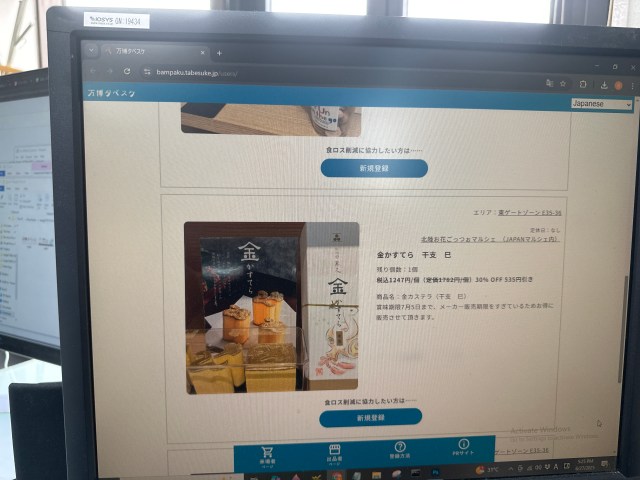
For example, in Osaka where I am, there’s unfortunately no data at all, but one big exception for the time being is the 2025 Osaka-Kansai World Expo. A separate program called Banpaku Tabesuke is being held exclusively in the venue of the Expo where guests can get some really sweet deals on the perishable food merch there.

▼ 30 percent off snake-shaped cakes at the time of this writing

It’s been very successful too, with over 11,000 registered users in the first month and a half, and over 80 percent of the 875 listed products finding homes without having to be discarded. Banpaku Tabesuke will be available for the entire run of the Expo.

Although recent efforts have been effective at reducing food waste in Japan, current estimates are still well over four million tons per year. If Tabesuke could bring that 80-percent magic to the rest of the country, it could lead to a remarkable improvement in Japan’s food self-sufficiency.

By the way, the makers of Tabesuke, G-Place, came up with some other handy apps for daily life in Japan. Gomisuke is a neat browser-based app where you can learn all about your area’s garbage collection rules. It’s supported by 150 local governments and also multilingual. They even designed an evacuation system that lets governments give real-time disaster shelter information such as location and occupancy so people know the best place to go.

It’s some of the best stuff to hit the Internet since that map that shows you where all the Dr. Pepper in Japan is sold.

Source: Tabesuke, Banpaku Tabesuke, Gomisuke, PR Times
Featured image: PR Times
Insert images: ©SoraNews24
● Want to hear about SoraNews24’s latest articles as soon as they’re published? Follow us on Facebook and Twitter!


Credit:

0 comments:

It’s officially Ponyo time as Ghibli character appears as new anime accessory line and clock【Pics】

20:13 cherishe 0 Comments

Whether you’re heading out to brave the summer heat or staying cool at home, Ponyo is ready to hang out.

With summer here, it’s the perfect time to head to the beach. Or, alternatively, it’s the perfect time to say “Yeah, it’s way too hot to be outside” and enjoy some marine-themed anime in your air-conditioned home.

But while only you can decide which of those times it is, Ponyo can tell you what time it is on the clock.

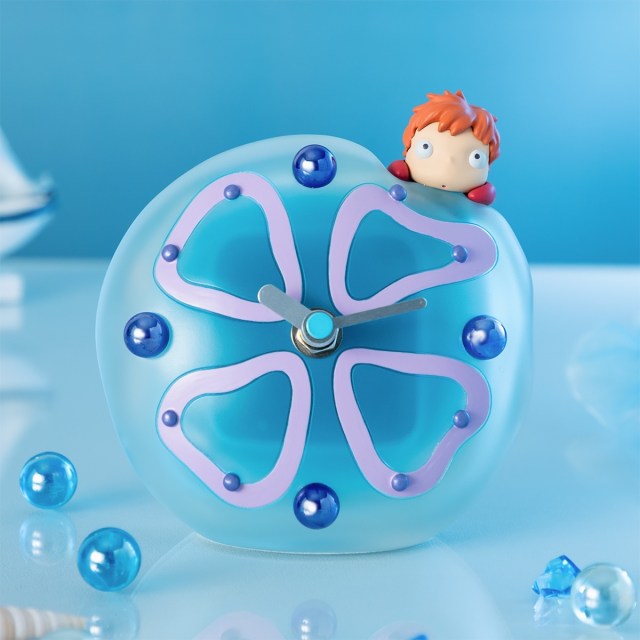
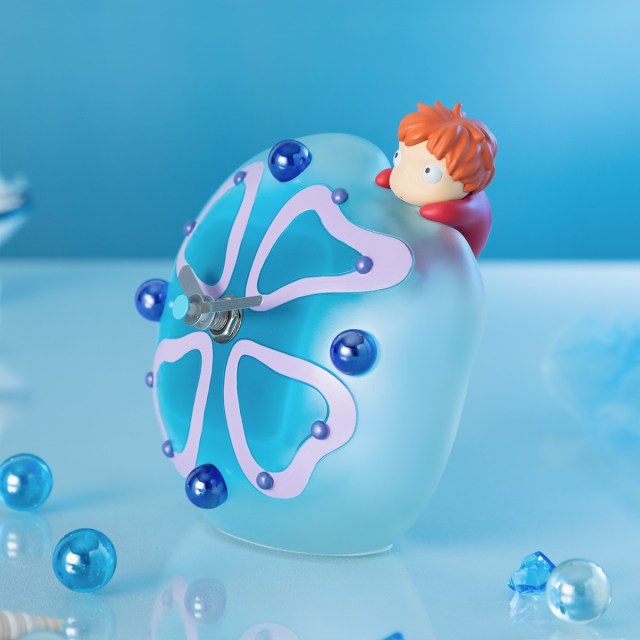
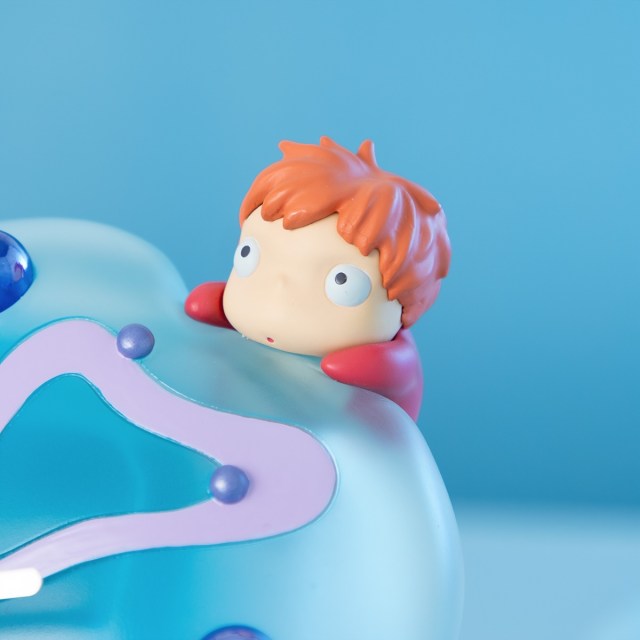
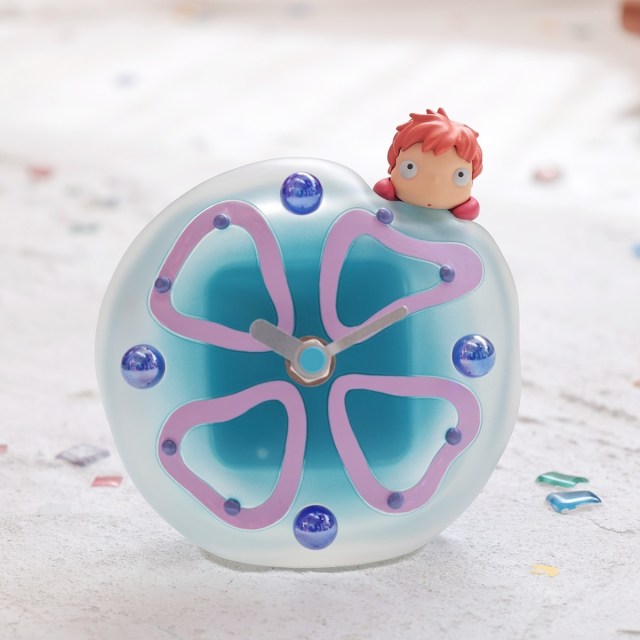
Studio Ghibli’s spunky fish girl, star of the anime movie of the same name, is swimming into specialty shop Donguri Kyowakoku with a new lineup of summery merch, including a Ponyo Jellyfish Clock, with elegant glass beads instead of numbers serving as markers on the clockface.

Donguri Kyowakoku is known for their attention to detail, and whereas some designers might have been tempted to only model the part of Ponyo that sticks up over the top of the jellyfish, the character is represented in full.

The material for the jellyfish itself even has a translucent effect to it, making it seem even more realistic.

Arriving at the same time as the clock is a selection of Ponyo accessories. The ring once again features Ponyo and a jellyfish, but this time she’s crawled inside for a nap.

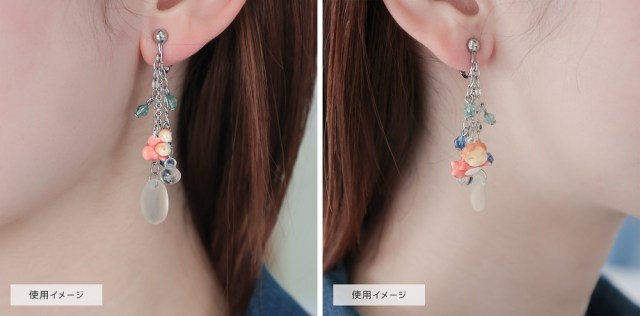
With pierced ears not being quite as prevalent among Japanese women as they are in some other countries, and especially less so among teens and kids, Donguri Kyowakoku often releases its earrings in two styles, one for pierced ears and the other as clips, and that’s the case for the Ponyo earrings.

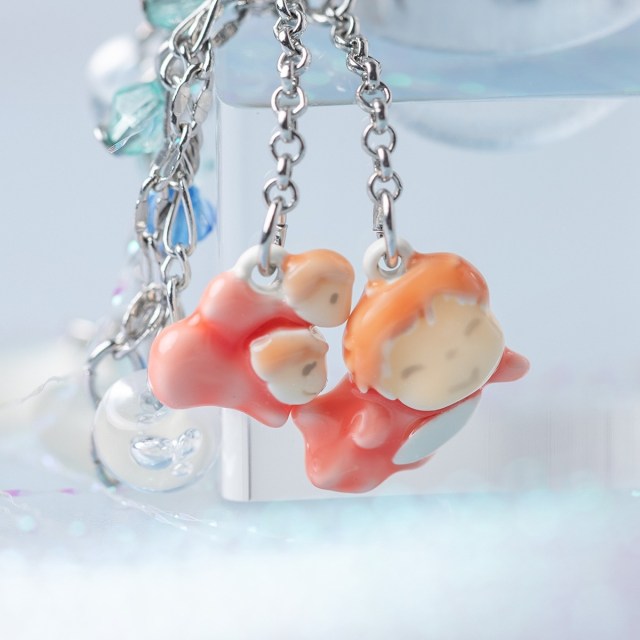
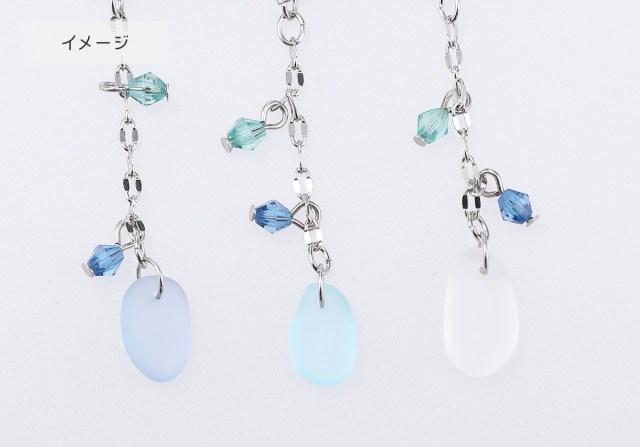
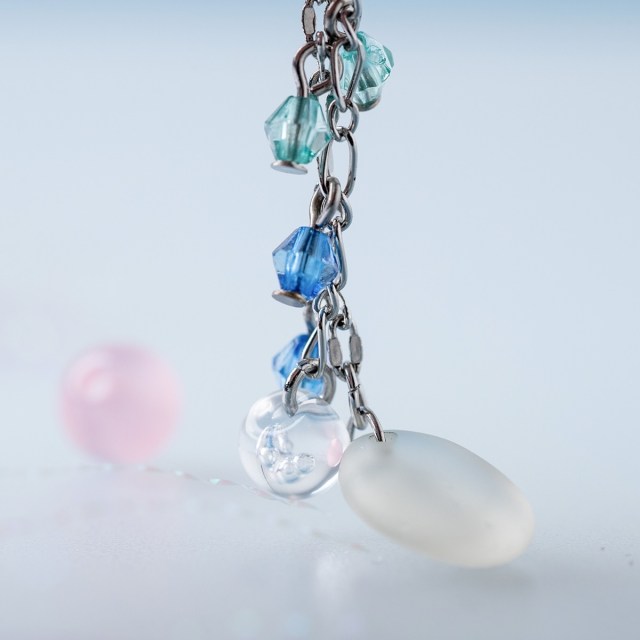
No jellyfish here, but Ponyo won’t be lonely, because she’s got some of her sisters with her!

Something to bear in mind here is that the sea glass-style accents at the end of the strands vary from piece to piece.

So if you’re ordering the earrings online, you won’t be able to choose the exact color you’re getting, but you will still have something that’s beautiful and somewhat unique.

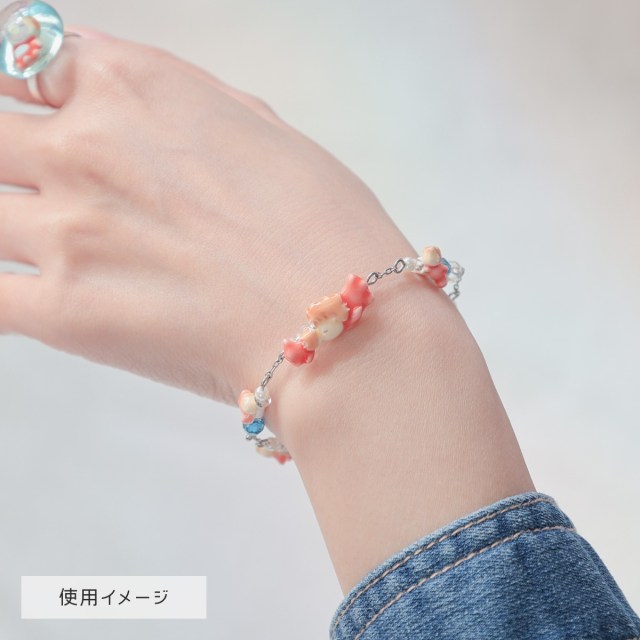
And finally, even more of Ponyo’s siblings show up to help form this bracelet.

Prices range from 2,420 yen (US$17) for the ring, 2,970 yen for the bracelet, 3,630 yen for the earrings of either type, and 8,580 yen for the clock. The whole lineup goes on sale July 5 and can be ordered through the Donguri Kyowakoku online store (clock here, accessories here), meaning they’ll be available in time to wear for a summer trip to the real-life town that inspired the Ponyo anime.

Source: Donguri Kyowakoku
Top image: Donguri Kyowakoku
Insert images: Donguri Kyowakoku (1, 2, 3, 4, 5)
● Want to hear about SoraNews24’s latest articles as soon as they’re published? Follow us on Facebook and Twitter!


Credit:

0 comments:

See 400 years of Osaka’s history in 10 minutes at housing museum’s new VR exhibit

19:13 cherishe 0 Comments

You can’t keep a good city down.

This year Osaka was once again ranked among the top 10 most livable cities in the world, but it’s not something that just happened overnight. This city became what it is today through the hard work of generations of people overcoming adversity time and time again. Soon, an exhibit will come to the Osaka Museum of Housing and Living that can let you experience just what a rocky road it’s been.

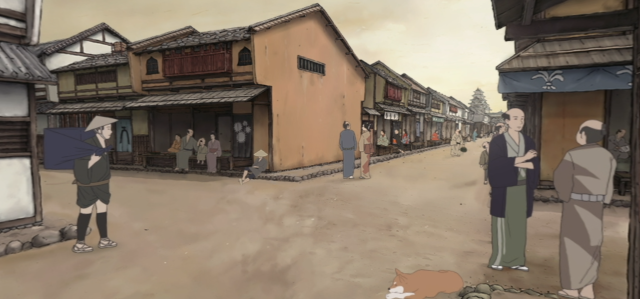
The name of the exhibit is called Osaka Momoyo and it aims to put you right in the middle of history through a VR animation by award-winning director Jonathan Hagard. After donning the goggles, you’ll be virtually transported to the intersection of Sakai-suji and Hirano-dori and watch as 400 years of history unfolds around you in that one spot.

▼ Sakai-suji and Hirano-dori

The 10-minute experience starts in 1615, when the Summer Siege of Osaka took place. This was a series of skirmishes that took place all around Osaka, when Tokugawa Ieyasu launched an assault on Osaka Castle, after learning that its lord Toyotomi Hideyori was preparing a rebellion. Tokugawa was successful and his shogunate would remain in power for the next two and a half centuries.

▼ Osaka in 1615

You’ll then move forward 50 years to 1665, after Osaka was rebuilt from the battles and began to prosper again under the rule of the Tokugawa shogunate. Since the buildings were all low at the time, you can even see the “newly” rebuilt Osaka castle in the distance.

▼ Osaka in 1665

Another 59 years later, you’ll be in the middle of The Great Fire of Myochi in 1724. Citizens run for their lives as firefighters struggle to contain the flames all around you that end up devastating two-thirds of the city. After that, you’ll be whisked to 1832, to see that Osaka has recovered once again and has grown increasingly modern in its architecture.

Next is a short jump to 1837, when philosopher Oshio Heihachiro led an ill-fated rebellion against the Tokugawa shogunate. He and his followers attempted to raise government offices after rising food prices and high taxes made it hard for people to eat — if that doesn’t sound familiar. The rebellion was largely a failure but did help push forward the idea that Japan should open itself to the rest of the world.

That ended up happening a few decades later as the Meiji Restoration closed the curtain on samurai rule and ushered in Western influences that can be seen in the fashions of 1882 and infrastructure set up by 1913.

▼ Osaka in 1913

This growth continued unabated and by 1932, Osaka was the most populous city in Japan. You can see how the streets have widened and buildings have grown taller to accommodate a booming Osaka.

However, this all came crashing down in 1945, when American forces leveled most of the city in air raids. Here you can once again see Osaka Castle in the distance, only because the buildings between it and you have been reduced to rubble. But, by this time, Osaka had become rather adept at rebuilding and by 1969 was once again a bustling center of commerce.

▼ Osaka in 1969

The VR experience then carries you along through the modernization that went on until 2018 and finally 2024. As you can see, it’s been a steady series of highs and lows for Osaka, which kind of makes me nervous because it looks like we’re due for another catastrophe. Then again, that low could have just been the general economic malaise of the past 30 years, in which case we might be due for some good times.

If you’re interested in this kind of history, the Osaka Museum of Housing and Living has lots of other exhibits showing how lifestyles have changed over the years and lets you dress up in traditional Japanese clothing during your visit.

The Osaka Momoyo VR exhibit will be added to its many attractions starting 14 July and will cost 1,500 yen (US$10) for adults and 600 yen for children, but Osaka residents can get in for two-thirds of the price. Check it out and become one with the past.

Exhibit information
Osaka Momoyo / 大阪百世
Osaka Museum of Housing and Living
大阪くらしの今昔館
Osaka Municipal Housing Information Center Building 8F
大阪市立住まい情報センター 8階
Osaka-fu, Osaka-shi, Kita-ku, Tenjinbashi 6-4-20
大阪府大阪市北区天神橋 6丁目 4-20
Open: From 14 July, 2025
Hours: 10 a.m. – 5 p.m.
Exhibit Admission: General – Adults 1,500 yen, Children 600 yen / Osaka Residents – Adults 1,000 yen, Children 400 yen
Museum Admission: Adults 600 yen, Children 300 yen
Website

Source, images: PR Times
● Want to hear about SoraNews24’s latest articles as soon as they’re published? Follow us on Facebook and Twitter!


Credit:
0 comments: