International fugitive Carlos Ghosn says he’d be best person to head Nissan now

I think I have a better chance of becoming CEO of Nissan at this point.

In the evening of 30 December, 2019, when much of Japan was gearing down for the New Year’s holidays, a small team led by a former US Special Forces soldier were quietly breaking former Nissan CEO Carlos Ghosn out of house arrest and helping him flee the country back to his home in Lebanon.

Prior to that, Ghosn had been under arrest for over a year, both in jail and then under house arrest, while he faced mounting charges, including under reporting his compensation and misuse of corporate funds for personal gain. He now still lives in Lebanon, where he cannot be extradited to Japan, maintaining that the indictment was a plot by other Nissan executives and his imprisonment was unjust.

Meanwhile, at Nissan, the removal of Ghosn led to several major restructuring plans facing a different direction from his aggressive form of high-volume sales. However, the plans have not been going well, and shareholders have been getting increasingly dissatisfied with the direction Nissan has been taking. This sentiment boiled over at a shareholder meeting on 23 June 2026, where outside director Motoo Nagai, a key person involved in the ousting of Ghosn in 2018, was denied reappointment in a vote. Some shareholders were reportedly also floating the idea of reinstalling Ghosn as CEO, though that was likely out of frustration rather than a feasible suggestion.

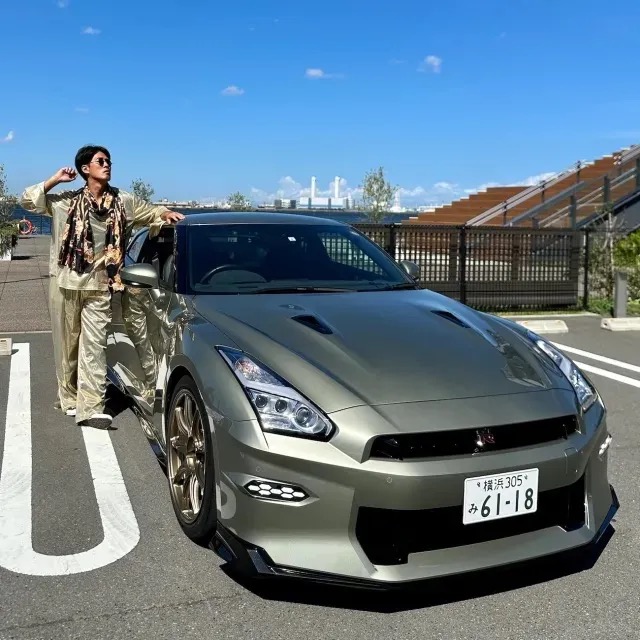
▼ One point of contention with Ghosn’s strategy was that Nissan should focus more on prestige signature models, like the GT-R.
News of this reached Ghosn, and in an interview with Reuters the following day, he said Nissan was in an emergency situation and that “tough decisions have to be made.” When asked if he would be willing to advise Nissan, he said that it would require a CEO position to fix things and: “If there is one person or one profile today who can make it happen, it’s mine. I’m not saying it because I’m arrogant. I’m saying it because of the facts. I’ve done it already once.”

He’s not wrong in saying the facts back him up. It was in 1999 that Ghosn arrived on the scene and brought Nissan back from the brink of bankruptcy, and as a result, he became a superstar in the Japanese business scene. He earned multiple accolades for his work, even snagging a Father of the Year award from a community group in 2001, a rare distinction allowing him to legally open carry a “#1 Dad” coffee mug.

But even with some shareholders calling for it, and Ghosn himself saying he’d be the man for the job, is there any possible way that he could go from being an exiled fugitive to Nissan CEO?

Readers of the news said in online comments that they doubt it, but would love to see him try.

“You’re eagerly awaited… by the police.”
“Oh yeah, hurry up and get over here.”
“Isn’t he the guy who turned Nissan into a company with nothing worth selling?”
“Ghosn gutted the company to make a quick buck. The management that came after him didn’t help either, though.”
“So, he wants to escape Lebanon now?”
“Will he come back in a musical instrument case?”
“Nissan probably would have been better off if they just kept letting him do whatever he was doing.”
“Nissan should just move their headquarters to Lebanon.”

Let’s assume Nissan did relocate to Lebanon, which would be rather ironic since the name literally means “Japan Industries.” Or, even more realistically, let’s say Ghosn somehow manages to whittle all the charges against him in Japan down to a suspended sentence. Stranger things have happened when mega-wealthy captains of industry are in legal trouble. 

Let’s even say he also manages to slip out of getting extradited from Japan and put on trial in France, where he is wanted for a different matter of financial misconduct. Even after somehow evading all that, in 2019, Ghosn reached a settlement with the SEC in the USA, part of which prohibited him from acting in any capacity as a CEO for 10 years. While that wouldn’t technically prevent him from becoming one in Japan or Lebanon, it still would be an additional nightmare to toss on the current pile of nightmares for Nissan if they hoped to do any business in the USA prior to 2029.

So, it’s clear to see the deck is heavily stacked against any chance of Carlos Ghosn’s return. But he does seem to have a knack for doing the impossible, so you never know. He is 2001’s Father of the Year after all.

Source: Jiji.com, Reuters 1, 2, Japan Times, CNN, Itai News
Top image: Wikipedia/Thesupermat
Insert image: ©SoraNews24
● Want to hear about SoraNews24’s latest articles as soon as they’re published? Follow us on Facebook and Twitter!


Credit:
Japan’s Mos Burger goes super-premium for summer with eel burgers that require pre-orders

Summer is the season for unagi, and Mos Burger has some very special, and very expensive, sandwiches on the way to celebrate Doyo no Ushi no Hi.

Despite having a name that sounds intimidatingly identical to “moss burger,” Japan’s Mos Burger fast food chain has a broadly accessible menu. “Mos” is actually meant to represent “mountain,” “ocean,” and “sea,” symbolizing the chain’s championing of fresh, naturally delicious ingredients.

That accessibility usually extends to Mos’ pricing too, since while it’s a little more expensive than some other chains, it’s still within the budget-friendly range expected of a casual burger joint. However, later this summer Mos is going to be serving up some very premium sandwiches of a sort you won’t see on the menu at McDonald’s or Burger King, and which require a pre-order to get your hands on: an unagi, or freshwater eel, burger.

Traditional Japanese culture holds that the midsummer day called Doyo no Ushi no Hi is when the weather is supposed to be at or near its hottest. Doyo no Ushi no Hi’s exact date fluctuates under the contemporary calendar, but this year falls on July 26. For hundreds of years, folk wisdom in Japan has also said that eating unagi is supposed to help the human body better cope with heat. Some historians say that this idea was first floated by crafty unagi merchants, and modern medical science doesn’t necessarily back up the claim. Nevertheless, the custom of eating unagi on Doyo no Ushi no Hi gained traction, and between unagi already being a luxury food and people now having an excuse to splurge on it for summertime health seasons, demand for fancy unagi foodstuffs spikes annually at this time.

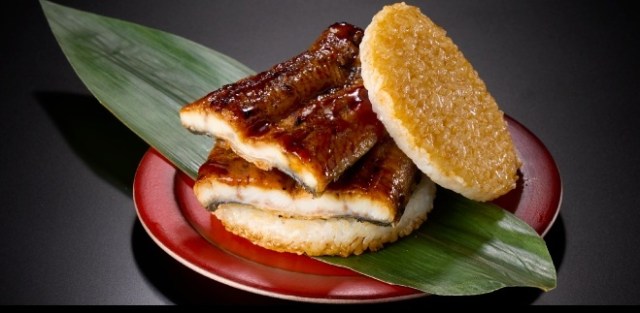
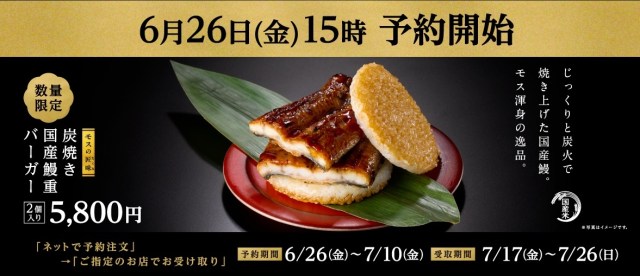
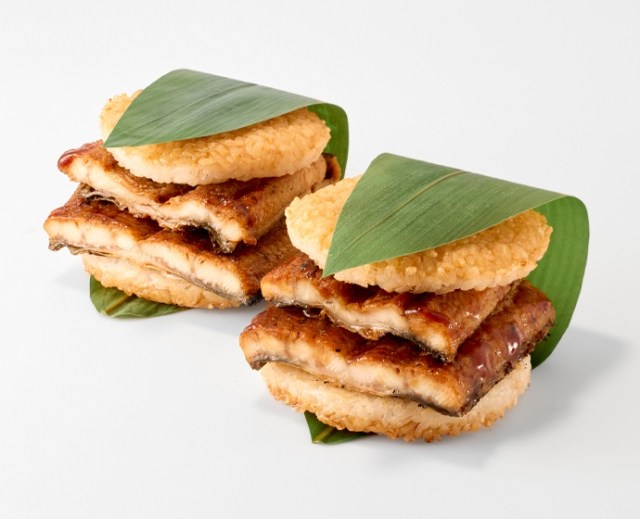
This is where Mos Burger comes in with its Charcoal Grilled Unaju Burger, and if you want to eat it, you’re going to have to shell out 5,800 yen (US$36).

Granted, that price actually gets you two unagi burgers, but since they’re not sold individually, you’re still going to need to cover a bill of 5,800 yen if you want one, and even if you’re splitting the cost with a dining companion, your individual outlay will be 2,900 yen. For comparison, a standard Mos Burger costs 470 yen, so the Unaju Burger is more than six times as much.

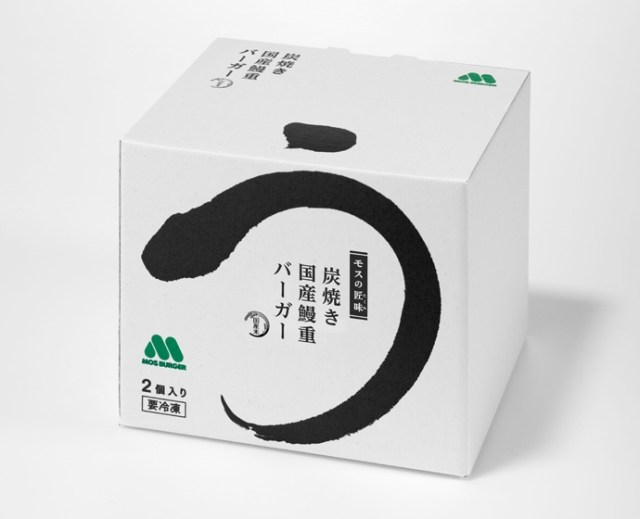
That lofty price does get you an elevated eating experience, though, with each freshwater eel fillet individually sliced, skewered, and grilled by an expert chef. The Unaju Burger is also part of Mos Burger’s rice burger family, swapping out bread buns in favor of a pair of lightly toasted disc-shaped rice balls (this is also why the sandwich is called the Unaji Burger, as unaju is a dish of unagi and rice). And since these offerings are too exquisite for an ordinary paper wrapper, they instead come embraced by fragrant bamboo leaves.

The Unaju Burger even comes in a fancy box with an illustrated eel that doubles as the hiragana character for the “u” in “unagi.”

▼ う = u

An arguably counterintuitive part of the deal, though, is that because the preparation of the Unaju Burger is done by experts, they’re not cooked at individual Mos Burger branches. Instead they’re shipped cooked but frozen, and available only through prior reservation. While supplies last, pre-orders can be placed through the Mos Burger website here between June 26 and July 10, with in-store pickup or home delivery schedulable between July 17 and 26.

Source, images: Mos Burger
● Want to hear about SoraNews24’s latest articles as soon as they’re published? Follow us on Facebook and Twitter!


Credit:
Taco Spaghetti appears in Japan, and our taco fan rushes to try it[Taste test]

Tacos and spaghetti have earned love around the world, but will their meeting in Japan be a tragedy?

Japan loves spaghetti, but doesn’t necessarily feel bound to tradition when it comes to the dish, So while you can find authentic Italian-style pasta in Japan, so too can you find things like Napolitan (spaghetti with ketchup sauce, bacon, bell peppers, onion, and mushrooms) and spaghetti with tarako (cod roe) sauce.

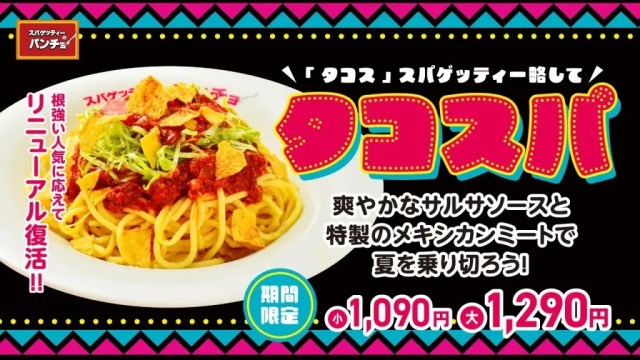
And now restaurant chain Spaghetti no Pancho is expanding the concept of spaghetti even further in Japan with its new Tacospa, or Taco Spaghetti.

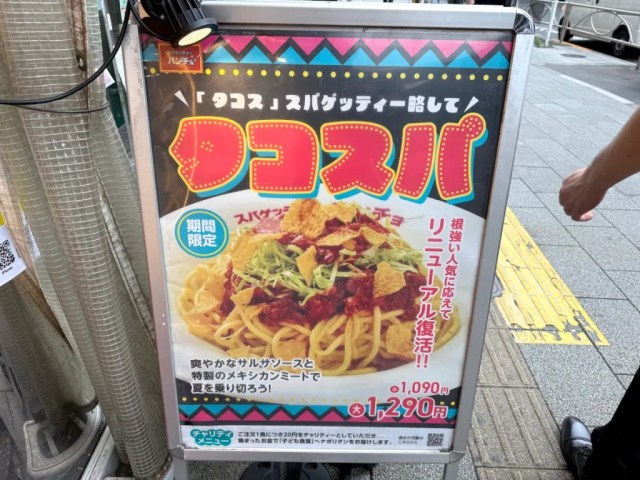
▼ タコスパ = Tacospa

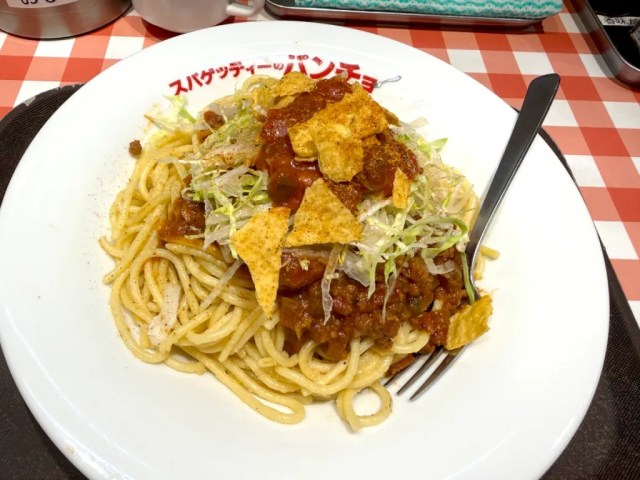
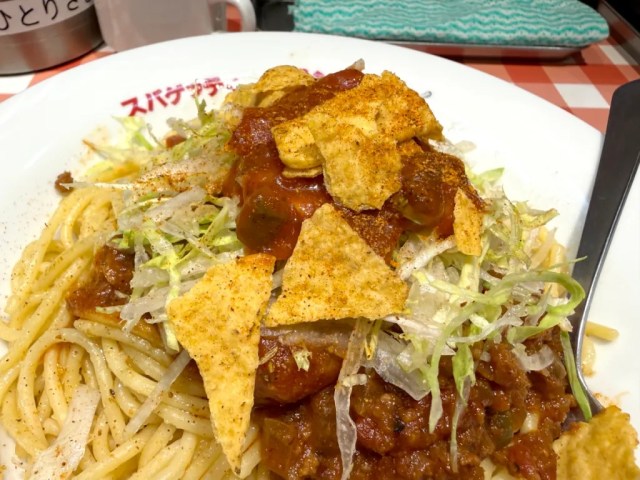
To be clear, this isn’t a spaghetti taco (that’d be a taco filled with spaghetti). Spaghetti no Pancho’s Tacospa is an attempt to combine the flavors and ingredients of a taco with those of a bowl of spaghetti. For this fusion dish, Spaghetti no Pancho forgoes its flagship Napolitan sauce and instead starts from a ragu-style meat sauce, but adds cumin and “Cajun spices” for a taste inspired by the seasoned ground meat you’d find in a taco. Salsa is then mixed in with the sauce, and shredded lettuce and cracked tortilla chips are sprinkled on.

Placed in front of us, the Tacospa had immediately impactful visual vibes. It reminded us a little of the Okinawan fusion dish taco rice, which is essentially the fillings of a taco on top of white rice. Unlike taco rice, though, Spaghetti no Pancho’s Tacospa has those tortilla chips, and the contrasting colors of the lettuce and vivid sauce help the ingredients really stand out from one another and make you doubly aware of just how unique this dish is.

Taste-testing duties fell to our Japanese-language reporter P.K. Sanjun, one of the more passionate taco enthusiasts in the SoraNews24 office. As captivated as he was by the Tacospa concept, though, his initial impression after taking his first bite was that it tasted like pretty ordinary meat sauce spaghetti, but with a little extra spiciness. That’s not a complaint, as Spaghetti no Pancho’s basic meat sauce is really tasty, but still, if he’d been doing this taste test blindfolded, aside from the texture there wasn’t anything that screamed “Tacos!” to him right away, and instead the Tacospa seemed to be only faintly whispering “…tacos…” to him.

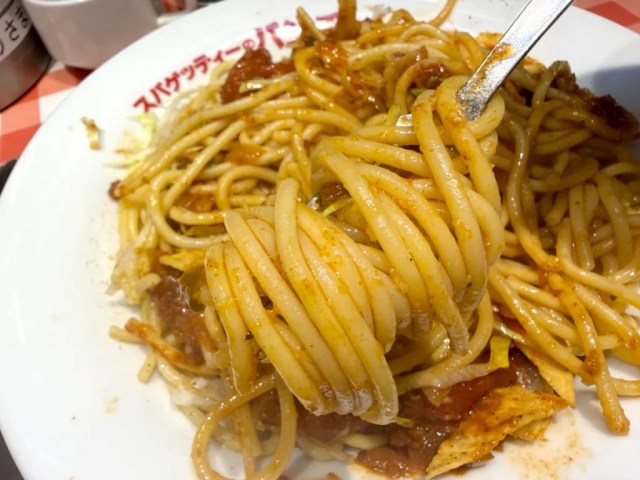
But something unexpected happened as P.K. continued eating. Maybe because of its thinner consistency compared to the meat sauce, it takes a while for the salsa to really start to cling to the noodles. With every twist of his fork and mixing of the pasta, though, the salsa sensation got stronger and stronger. The result is a very enjoyable, momentum-building eating experience that gets increasingly rewarding the more you eat, with your taste buds spurring you on once they realize that each mouthful is going to taste even better than the last.

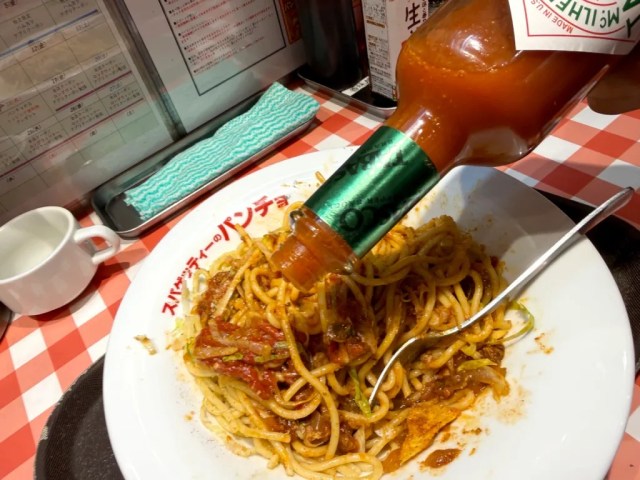
Spaghetti no Pancho, it just so happens, always has bottles of Tabasco sauce on its tables, since it’s a popular condiment for Napolitan spaghetti. To P.K.’s great joy, Tabasco is also an outstanding accompaniment to the Taco Spaghetti, and pouring some on took it to an even higher level of stimulating spicy deliciousness.

The Tacospa is priced at 1,090 yen (US$6.80) for a small-size order or 1,290 for a large, and is scheduled to be available until the end of July.

Related: Spaghetti no Pancho location list
Top image: PR Times
Insert images ©SoraNews24
● Want to hear about SoraNews24’s latest articles as soon as they’re published? Follow us on Facebook and Twitter!


Credit:
Blind Tokyo commuter explains the easiest place for him to stand while riding the train

While waiting for the train, there’s always one spot he hopes will be empty when it comes.

Today, we’re featuring the writing of a special guest columnist, Ryoku. Ryoku works as a producer in the TV industry, and his hobbies include singing karaoke and traveling the country in a search for Japan’s tastiest gyoza.

Ryoku also happens to have glaucoma, and has been almost completely blind since about four years ago. In this article, he’d like to talk about his experiences riding the train as someone with impaired vision.

“You can’t see, but you still work in the television industry?”

Sometimes even I ask myself that, but it’s thanks to the support of people around me that I’m able to continue in this line of work. On the other hand, even though I receive help from so many people, I’d like to talk about some of the things I can do on my own and what I’ve noticed while doing them. One of those things, which I want to talk about today, is the best spot for me to be at inside a train.

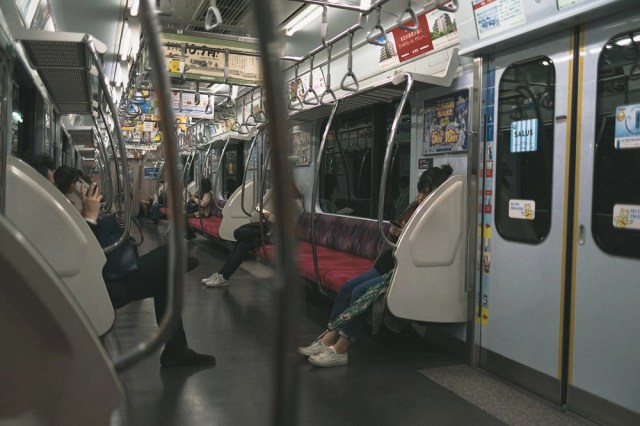
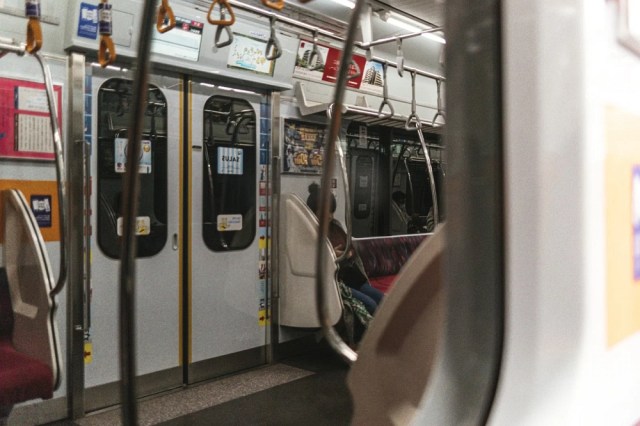
I use a white cane when taking the train, and each time I do I end up thinking the same thing: It’s a huge help for me if there are empty spaces inside the train right next to the door. Those are the best places for me to ride in. You could even say that after I became unable to see, standing next to the door was one of the first places I found where I could feel secure.

I usually get on the train a little past 9 a.m. Even if there are some days when it’s still crowded, at that time usually it’s not all that packed. I’d say there’s about a 50-percent chance of having an empty spot next to the door where I can stand, so when I’m waiting on the platform for the train to arrive, I’m usually thinking about whether I’m going to be lucky that day.

When the train stops and the doors open, I don’t get on right away. First, I focus all my attention on what I’m hearing. Can I hear footsteps of people getting off? Can I hear voices of people talking inside the train? Can I hear air currents rustling? Usually, though, everyone is pretty quiet.

In movies and manga, there are a lot of stories where someone loses their eyesight and then their other senses become sharpened. Unfortunately, in real life it’s not that simple. I didn’t realize this until after developing vision problems, but you always have to be paying attention. Is my footing safe? Am I going to bump into someone? What was that sound I just heard? And, of course, where exactly am I right now? There’s hardly ever a moment when I can relax and stop asking myself these kinds of questions.

This is all before even getting on the train, At this point, I’m already using about 60 percent of my mental capacity. Once the train does come and it’s time to get onboard, that gets kicked up to 100 percent. When the doors open, I gather my resolve and stretch out my left hand…and if I feel someone else’s hand inside the train, I think “Ah, no luck again today.” If someone is standing inside the train to the left of the door, it’s a pretty sure bet that someone will be standing on the right side too. As everyone knows, the spots right next to the door are popular spaces for commuters. So I end up standing right in front of the door, and that means that at every stop along the way to where I’m going, I have to get off the train, then get on again, so that other people can get on and off too.

I could solve this by going further into the train, but honestly that’s really frightening for me. The more I move, the more chance there is that I’ll bump into someone, but what I’m even more worried about is making other people do more to accommodate me. There have been many times when someone has helped me find a hand strap or given up their seat so that I can sit in it. I really appreciate their kindness, but having to be in a state of continual reliance on them is tiring. If I move farther into the train’s interior, I have to start saying “Excuse me” and “Thank you.” I bump into people. I apologize. I bump into someone else. Then this terrifying game repeats when the train gets to my destination and I have to get off. To other people, it probably looks like a peaceful scene, but actually, I’m moving around the train constantly appreciating, apologizing, and feeling frightened. I’m in a state of serious panic.

On occasion, a thoughtful person standing by the door will say “You can stand here” and give me the spot. At those times I tell them “Thank you” from the bottom of my heart, and accept their offer. Standing next to the door makes it easier to understand where I’m at inside the train, and I can feel my mental HP quickly refilling. When other people need to get on or off the train, I can just stand up straight so I won’t block their way. I don’t have to concentrate on anything else until I need to get off. It’s one of the few places where I can feel relaxed and secure.

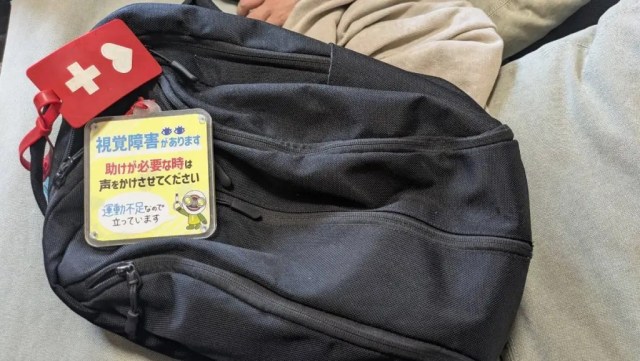
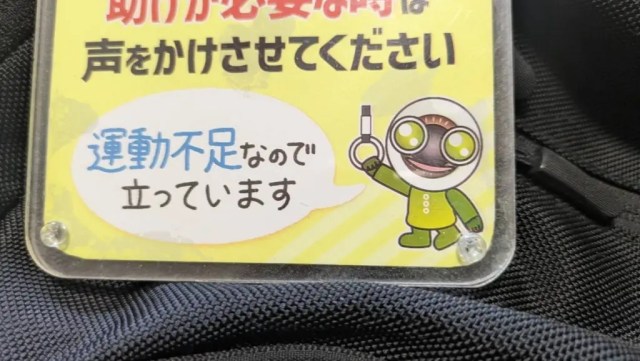
Recently, I’ve also started putting this card on my bag.

▼ 運動不足なので立っています = “I am standing because I don’t get enough exercise,” and the red tag is Japan’s Help Mark badge, indicating that the bearer may be in need of assistance.

This is my personal reason for standing. The card has turned out to be more effective than I’d expected, though. Seeing the card, people seem to think “Oh, this person doesn’t want to sit,” and that’s made standing by the door even more comfortable for me.

There’s a downside too, though. A few times a month, I go back to visit my parents’ house, and the train ride to get there takes about an hour and a half. Obviously, somewhere in the middle of the ride I start wanting to sit down, but no matter how many empty seats there are on the train, none of the other passengers tell me that there are places to sit. Well, that’s to be expected though, isn’t it? After all, I’m the one who, all on his own, let them know that “I am standing because I don’t get enough exercise.” Plus, having put the card on my bag, it somehow becomes a point of pride, so I can’t say “You know what, I actually do want to sit down.” Sometimes, people end up struggling in the situations they set up for themselves…

In talking about all this, I’m not asking for anyone to change the rules about riding trains. It’s just that, if the space next to the door is empty and I can stand there, it makes it a little easier to get around that day, so the next time I’m waiting on the platform and the train comes, I’ll be listening as the doors open, and stretching out my hand to see if that space is available.

Top image: Pakutaso
Insert images: Pakutaso (1, 2), SoraNews24
● Want to hear about SoraNews24’s latest articles as soon as they’re published? Follow us on Facebook and Twitter!


Credit:
Beautiful new dangling Totoro socks let the Ghibli mascot sway with every step[Photos]

Lacework designers turn their talent to Totoro for adorably fashionable socks and clutch bag.

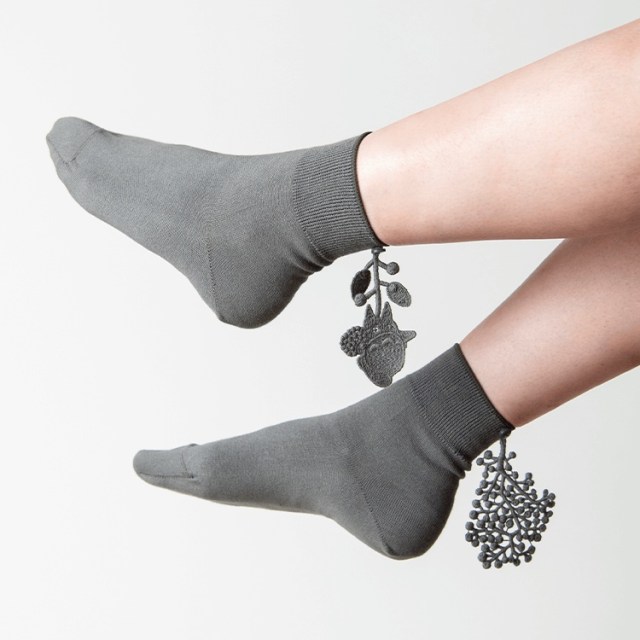
As any Studio Ghibli fan can tell you, Totoro’s natural habitat is a lush forest. That doesn’t mean he’s confined to the woodlands, though. Between his flying top and apparent free pass to ride the Catbus, he’s actually a pretty mobile guy, and now he’s got a new way of getting around with these adorable Totoro socks.

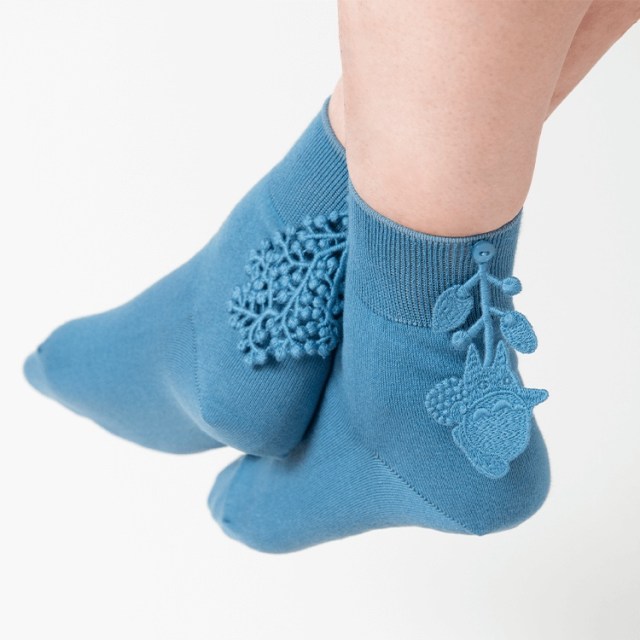
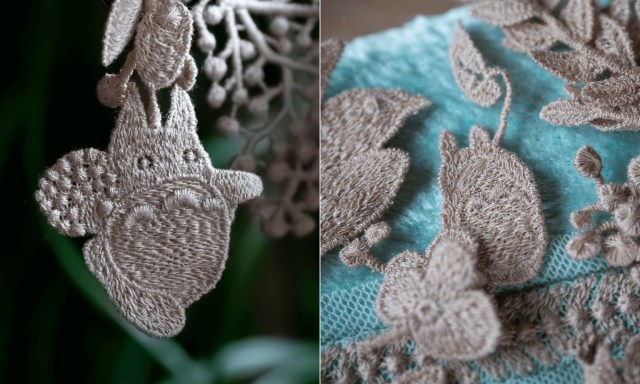
Newly added to the lineup at the Ghibli Museum store, these stylish socks are a collaboration with Mina Perhonen, a Japanese fashion brand from Kanagawa Prefecture with a love for lace. For this project, Mina Perhonen created a new pattern for its Forest Parade line, called Totoro Forest Parade, that combines the brand’s customary nature and wildlife motifs with appearances by Totoro.

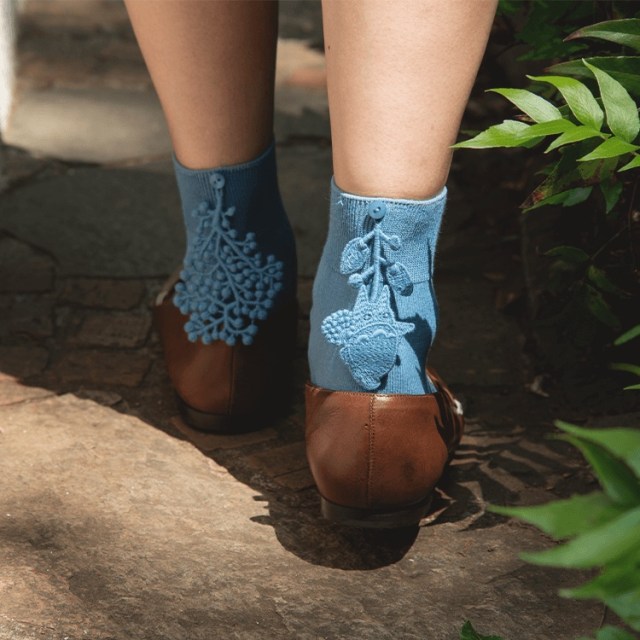
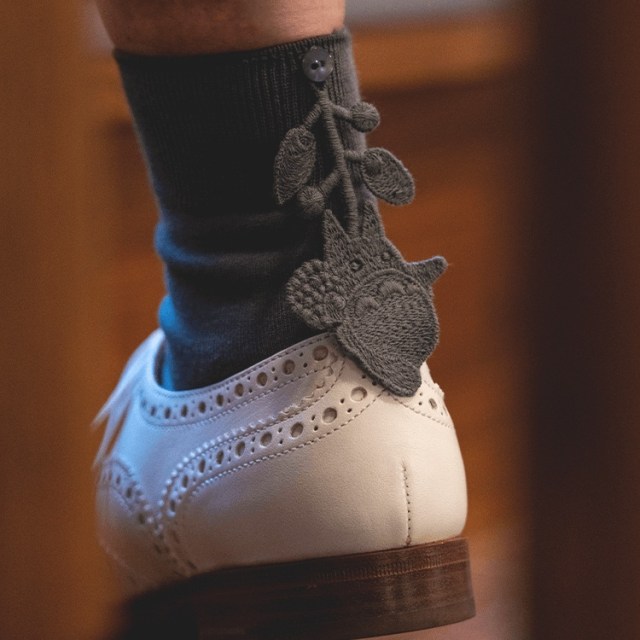
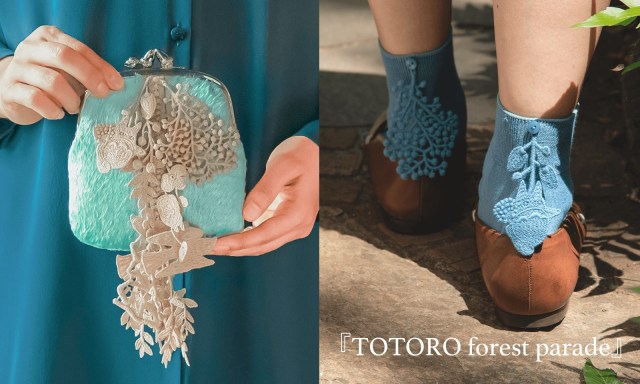
An especially clever point is that the lacework isn’t fixed in place. Instead, it attaches to the sock near the hem, but with enough slack that Totoro will playfully dance with every step or dangle as you stretch out your legs.

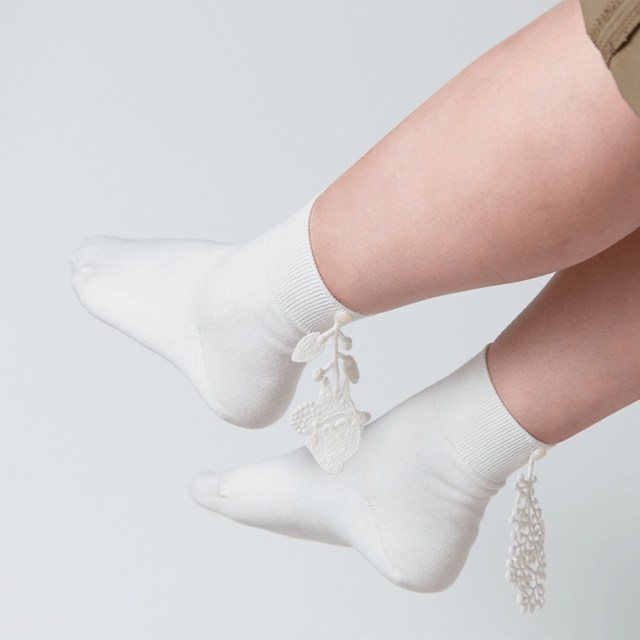
The lace straps can also be removed, in case you want to sport the accouterment on just one foot for a more asymmetrical look. You could even mix and match colors if you pick up more than one pair.

▼ The socks come in gray, blue, and white, a nod to the colors of the big, medium, and small Totoros.

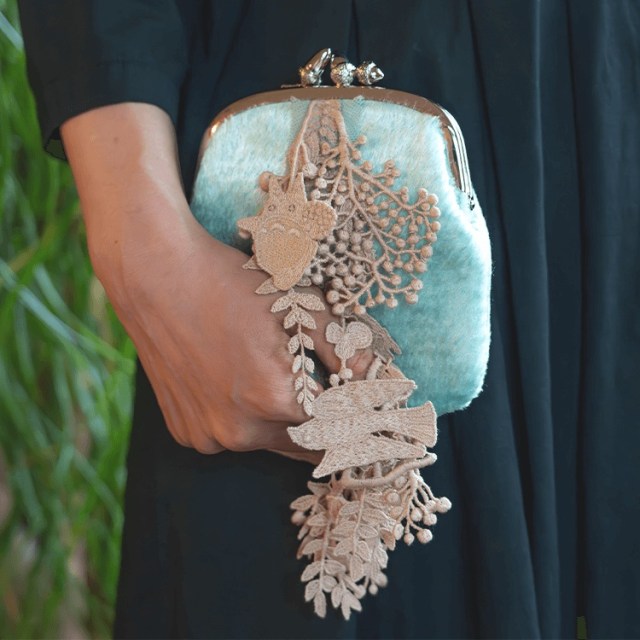
Mina Perhonen’s Ghibli-inspired lacework is also part of the Totoro Forest Parade Cuddle Purse.

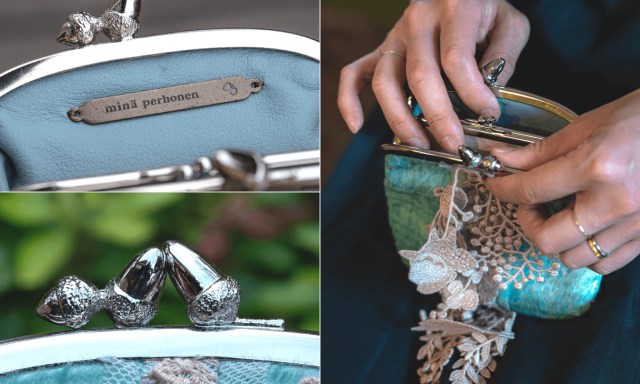
This blue velvet clutch bag features a lace bird for Totoro to make friends with, and acorn-shaped tabs to close or open the main clasp.

The lacework here even features a second subtle Totoro, holding a lotus leaf

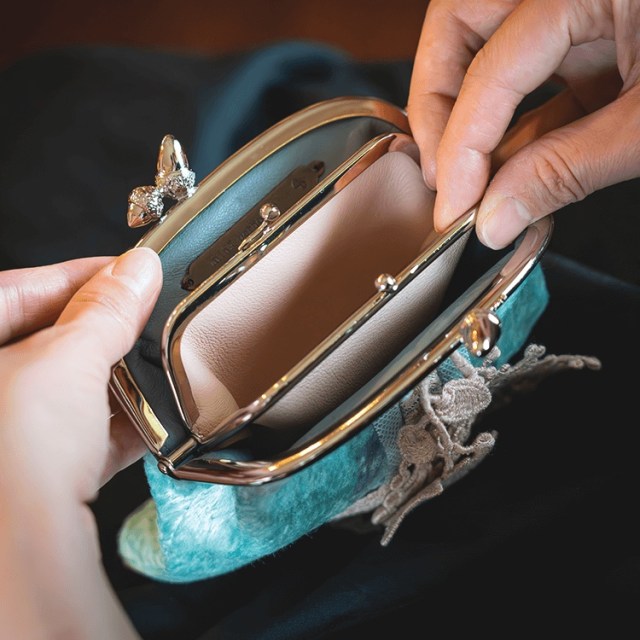
…and the interior has multiple compartments to help keep everything neatly organized.

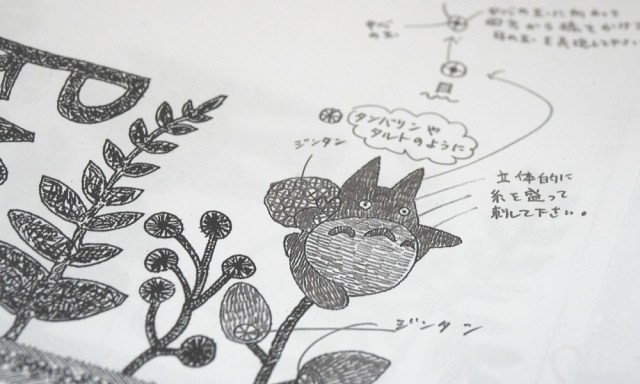
▼ Design sketches from the lacework’s planning stages

The Totoro Forest Parade Socks are priced at 4,400 yen (US$27.50) per pair, while the bag is 48,400 yen. You don’t necessarily have to go all the way to the Ghibli Museum in Tokyo’s Mitaka district to get your hands on them, as they’re also being offered through the Ghibli Museum Online Shop here and here.

Source: Ghibli Museum
Top image: Ghibli Museum
Insert images: Ghibli Museum (1, 2, 3, 4)
● Want to hear about SoraNews24’s latest articles as soon as they’re published? Follow us on Facebook and Twitter!


Credit:
Krispy Kreme Japan releases new fruit doughnuts…that taste better cold

We find out if these limited-edition treats really taste like the fruits that inspired them.


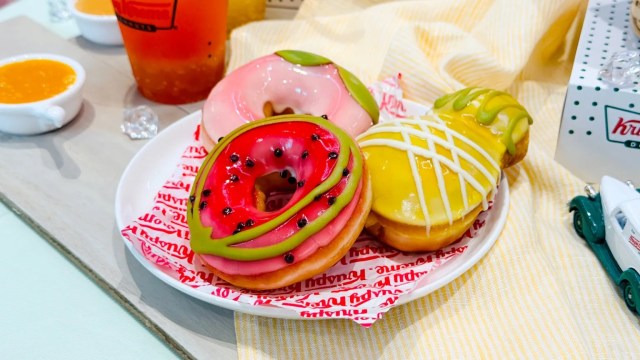
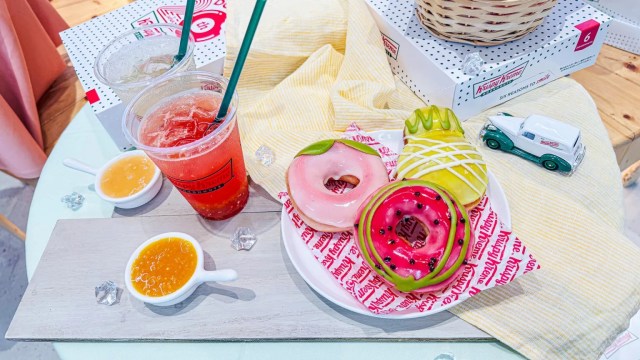
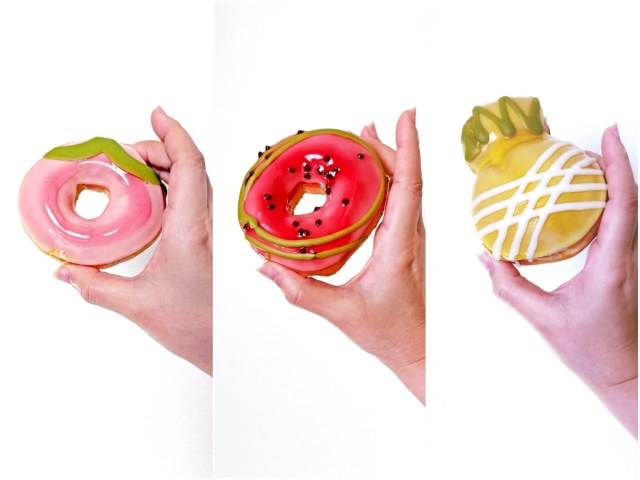
Krispy Kreme Japan is going fruity this summer, with not one, not two but three delicious creations designed to satisfy our sweet cravings. On the menu from 24 June, we were able to pop by for a taste of all three, to find out if they really taste as good as they look.

▼ The three new doughnuts take their inspiration from watermelon, peach and pineapple.

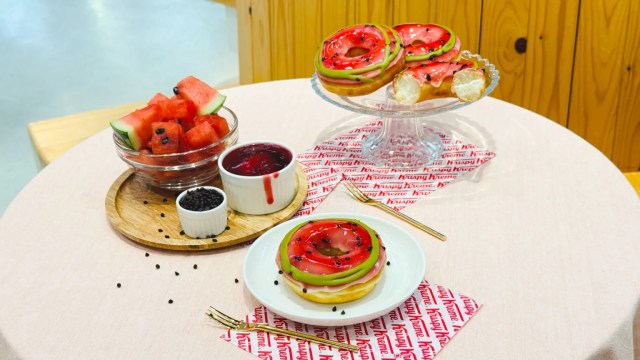
Each doughnut has a brilliant, glossy fruit glaze that makes them look so fresh and juicy you’ll want to bite right into them. The one that looks most similar to a fresh fruit is the Juicy Watermelon, which is priced at 356 yen (US$2.45) for takeout and 363 yen for eat-in.

The glossy red finish is made with a fruit glaze containing watermelon juice, raising our expectations for the flavour to be as good its looks. The playful touches are especially cute, with chocolate chips used for the “seeds” and a green coating recreating the rind.

When we took a bite, we were immediately surprised by the aroma, which was just like a real watermelon. The authenticity transferred to the taste buds in flavour soon afterwards, and it was so spot-on that every bite could’ve fooled us into thinking we were biting into a slice of the fruit. The delicious dough provided depth to the watermelon, allowing the flavour to linger longer before leaving with a clean finish.

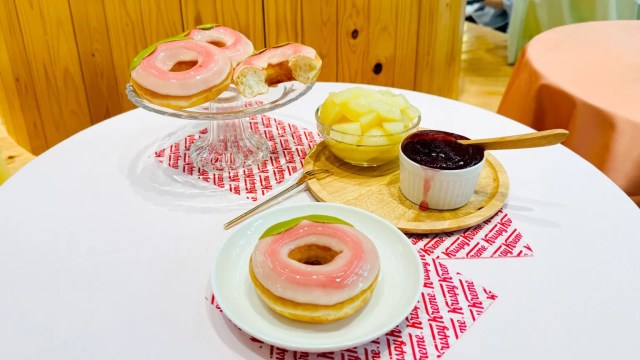
▼ Next up, the Juicy Peach (356 yen takeout; 363 yen eat-in).

Like the watermelon, this too is finished with a fruit glaze containing peach juice. The decorative green leaf helps to enhance the peach-inspired look, and biting into it revealed a sweet-and-tangy flavour reminiscent of a fruity sweet.

▼ Finally, we have the Pineapple Cream (378 yen for takeout; 385 yen for eat-in)

This playful-looking doughnut looks like a pineapple emoji that’s leapt straight off the screen and into real life. As the name suggests, this one is filled with plenty of cream, and the flavour is undeniably tropical, so for us, it was the most summery of the three. It’s also the one with a significantly shorter sales period, as it’ll only be on the menu until 14 July, while the watermelon and peach will be available until 20 August.

Whichever one you try, Krispy Kreme recommends chilling them in the fridge before eating. We actually did that with another batch when we got home, and we were surprised to find that they did seem even more deliciously fruit-like, as the fruit glaze firms up slightly, intensifying the flavours. It’s a very sweet way to enjoy the refreshing taste of fruit this summer, and next time we pop by to try them, we might not be able to resist picking up a peach drink from Starbucks to amp up the fruity refreshment.

Images©SoraNews24
● Want to hear about SoraNews24’s latest articles as soon as they’re published? Follow us on Facebook and Twitter!


Credit:
Japanese man’s gross conveyor belt sushi social media prank video gets him a 500,000-yen fine

Cost of sushi? 132 yen. Cost of being a moron? 500,000.

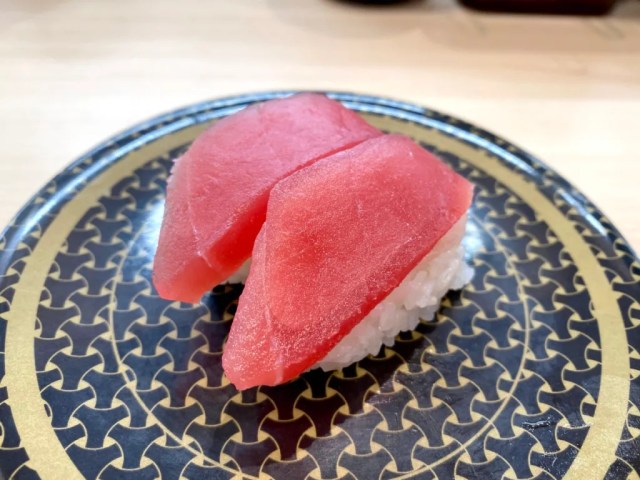
In addition to being tasty, casual, and convenient, low prices are a big part of the appeal of Japan’s conveyor belt sushi restaurants. At the most popular major chains, for example, you can usually get a two-piece plate of mainstays like tuna or salmon for 200 yen (US$1.25) or less.

A 43-year-old man’s meal at a branch of conveyor belt sushi chain Hama Sushi in Saitama Prefecture, though, is going to end up costing him a lot more than that, but he really has no one to blame but himself.

As we discussed earlier this month, the man went into a Hama Sushi branch in the town of Tsurugashima on May 27, then filmed himself taking a plate of tuna sushi from the conveyor belt, pulling a dish soap container out of his bag, and squirting liquid from the bottle onto the fish. He then posted the video online, later telling investigators that he did it because he wanted “to get a lot of views on social media.”

Unfortunately for him, after seeing the video neither Hama Sushi nor the police smashed that like button, and he was arrested on charges of forced obstruction of business, and Saitama’s Kawagoe Summary Court has now handed down its verdict, ordering the man to pay a fine of 500,000 yen (US$3,125).

Though equivalent to the cost of 3,788.88 plates of Hama Sushi’s tuna sushi, 500,000 yen isn’t exactly a your-life-is-ruined sum, and many online commenters have expressed anger that the penalty wasn’t more severe. One factor in the decision may have been that the man squirted the liquid (which he later claimed was water that he’d put inside a dish soap bottle) onto a plate of sushi that he seemed to have ordered for himself, since it automatically came to a stop on the conveyor next to his table and he took the plate off the belt before applying the liquid. Though the video cut off before showing what happened to the sushi, it’s unlikely that any other customer would have consumed the foreign substance, which may have gotten him some clemency. Nevertheless, after becoming aware of the video Hama Sushi, as a precaution, had to disinfect the possibly affected area within the restaurant, and employees also had to spend extra time responding to customer complaints and inquiries about the incident, leading to the ruling that the man was guilty of the forced obstruction of business charge.

Even within a culture that’s passionate about food, Japan is particularly fond of conveyor belt sushi restaurants, with a wide swath of the population regularly eating at them. At the same time, both restaurant customers and operators know that the system is highly dependent on trust and considerate, hygienic conduct, and so while the fine could have been bigger, hopefully the swiftness with which the punishment was handed out will discourage others from similar disgusting acts.

Source: Yomiuri Shimbun, Jin, Saitama Shimbun
Top image ©SoraNews24
● Want to hear about SoraNews24’s latest articles as soon as they’re published? Follow us on Facebook and Twitter!


Credit: