Starbucks Japan invites us to par-tea with its new Earl Gray Frappuccino [Taste test]

Three new drinks, featuring seven kinds of tea, join the Starbucks Japan menu.

This year’s Halloween parties are over and done with, but that doesn’t mean the fun is over for sweets fans. On November 2, Starbucks Japan rolled out no fewer than three new sweetly soothing beverages, and we rushed out to try them all.

“Let’s par-tea” is the theme of this new lineup which aims to please lovers of puns and black tea, and while all three of them looked very tempting, we felt the strongest allure from Starbucks Japan’s newest Frappuccino, the Earl Grey Chocolate Frappuccino.

By pouring a bunch of chocolate chips into an Earl Grey tea base, Starbucks has created something that appeals to a sophisticated sweet tooth, especially with the partnering presences of chocolate sauce and a swirl of whipped cream on top. And since Japan starts getting into the Christmas mood right after Halloween, you can dress up your 690-yen (US$4.30) Earl Grey Chocolate Frappuccino with a Christmas cookie for an additional 70 yen.

The bright-colored Christmas present-shaped confectionary made for a cheery visual accent against the dark color of the Frappuccino itself, and while the combination looked so pretty we almost felt bad about drinking it, that hesitation only lasted until the moment it fired up our taste receptors. Our resident Frappuccino expert K. Masami handled taste-testing duties, and says that the elegantly aromatic sensation of Earl Grey tea arrives first, creating a serenely relaxing mood. The sweetness of the chocolate chips come next, but it blends smoothly with the tea notes while adding in some crunchy texture. As you continue to sip, or swirl your straw around, more of the chocolate sauce gets drawn into the mix, upping the sweetness but without becoming unpleasantly cloying, especially with the whipped cream helping to smooth together the various component flavors.

Up next: the Joyful Medley Strawberry Creamy Tea Latte.

This 650-yen latte features Starbucks Joyful Medley holiday tea mixture of black tea, oolong tea, and jasmine tea, plus a touch of apricot flavor. Beloved by fans for its complex taste that nonetheless comes to a clean finish, the Joyful Medley is joined for this drink by fresh cream, strawberry mouse, and a sprinkling of freeze-dried strawberry bits across the top.

Our Joyful Medley Strawberry Creamy Tea Latte was also joined by the optional cookie topping, and this time we got a Christmas tree (there’s also a possible Santa hat cookie, adding a bit of a gacha element).

Once again, this is a beautiful drink to look at, but tastes too good to spend very much time only visually admiring. The comforting blend of teas, rich creaminess, and sweetly tart strawberry flavors were so good together that Masami almost stopped sipping to give the drink a round of gleeful applause, and she especially recommends it to Starbucks fans who look forward to the Joyful Medley blend every year as a fresh new way to enjoy the blend.

And finally, Masami checked out Starbucks Japan’s new Royal Milk Tea (620 yen). An original blend of Darjeeling, Assam and Ceylon tea, this one might not be as inventive as the other drinks we taste-tested here, but it’s still very satisfying, especially in your order your hot on a chilly autumn evening.

All three drinks are listed as limited-time items, and since Starbucks Japan tends to get very busy with rapidly releasing new items as we get closer to the end of the year, it’s probably best to have your tea par-tea as soon as you can.

Photos ©SoraNews24
● Want to hear about SoraNews24’s latest articles as soon as they’re published? Follow us on Facebook and Twitter!


Credit:

Tokyo Skytree set to offer breathtaking Diamond Fuji natural phenomenon view this month

The Tokyo landmark is a perfect spot on an ancient ley line of spiritual power to view the sight of Mt. Fuji with a diamond of light on its summit.

Twice per year around February and November, anyone close enough to see Mt. Fuji can witness Diamond Fuji, a natural phenomenon when the rising or setting sun aligns perfectly with the mountain’s peak. When the conditions are just right, the sun’s rays then pan outward, giving the appearance of a shining diamond ring nestled on top of Japan’s highest mountain. This stunning phenomenon is next predicted to happen on November 8 around 4:30 p.m.

▼ The view of Diamond Fuji in November 2025

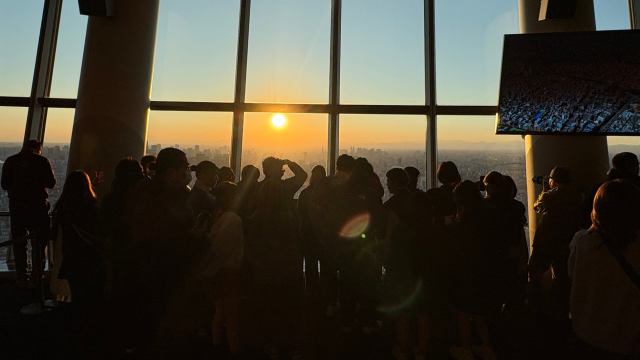
While any relatively tall spot in the Greater Tokyo Area is prime viewing to catch a glimpse of Diamond Fuji, the Tokyo Skytree‘s two main viewing platforms–the Observation Deck at 350 meters (1,1448 feet) high and the Observation Galleria at 450 meters high–have a special claim to fame as to why Diamond Fuji is best viewed from one of them.

▼ Crowds gathered at the Tokyo Skytree Observation Deck at the Diamond Fuji phenomenon in February 2026

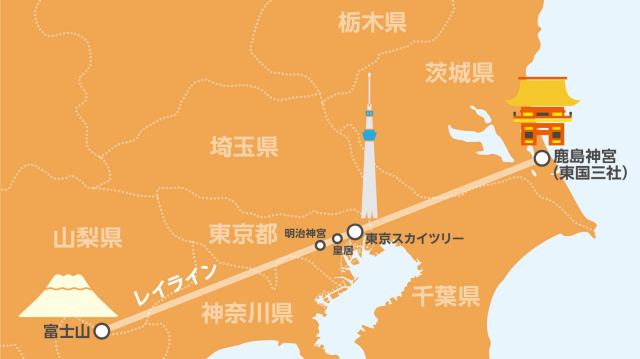
As described on the Tokyo Skytree’s website, the landmark was actually constructed on a kind of spiritual pathway that links several significant sites in the Kanto region:

“Tokyo Skytree is built on a ‘ley line,’ a straight line connecting ancient ruins and sacred sites such as Mt. Fuji, Meiji Jingu Shrine, the Imperial Palace (formerly Edo Castle), and Kashima Jingu Shrine (Kashima City, Ibaraki Prefecture), and is said to be a place where positive energy gathers.”

Therefore, by viewing Diamond Fuji from a location on this line, tradition says that you can essentially charge yourself with plenty of positive energy for the months to come–similar to visiting one of Japan’s various “power spots.”

▼ Highlighted locations from left to right: Mt. Fuji, Meiji Shrine, Imperial Palace, Tokyo Skytree, and Kashima Shrine

Regular Tokyo Skytree entrance fees apply for viewing the Diamond Fuji phenomenon on November 8. Viewing conditions are also unpredictable depending on the weather conditions, so please be prepared in advance. In the case of stormy weather, you may want to check out these picks for the top ten indoors attractions in Japan and Tokyo specifically instead.

Source, images: PR Times
Reference: Tokyo Skytree
● Want to hear about SoraNews24’s latest articles as soon as they’re published? Follow us on Facebook and Twitter!


Credit:
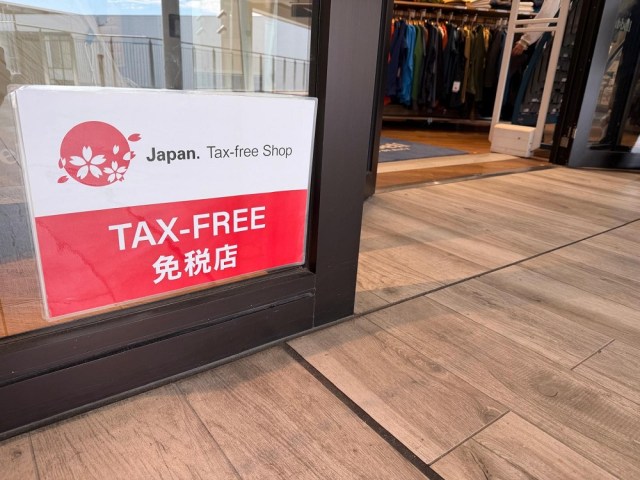
Japan ends tax-free shopping system for foreign tourists, new refund request system now in effect

What to be aware of as Japan tightens the rules for tourists saving 10 percent on their purchases.

As of November 1, Japan has ended its tax-free shopping system for foreign tourists. Up until now, non-residents making purchases in Japan could avoid paying sales tax when shopping at participating stores by showing their passport as long as their total purchase price came to 5,000 yen (US$31.50) or more. As sales tax in Japan is generally 10 percent, and most major retailers, as well as a great many smaller ones, offered this service, overseas visitors to Japan were able to save a considerable amount of money, especially with shopping having become an especially popular activity for foreign tourists benefiting from the weak yen.

The tax-free arrangement has now been replaced by a tax-refund system. Foreign tourists will now be required to pay sales tax in full at the time of purchase, and then apply for the amount to be refunded prior to their departure flight from Japan.

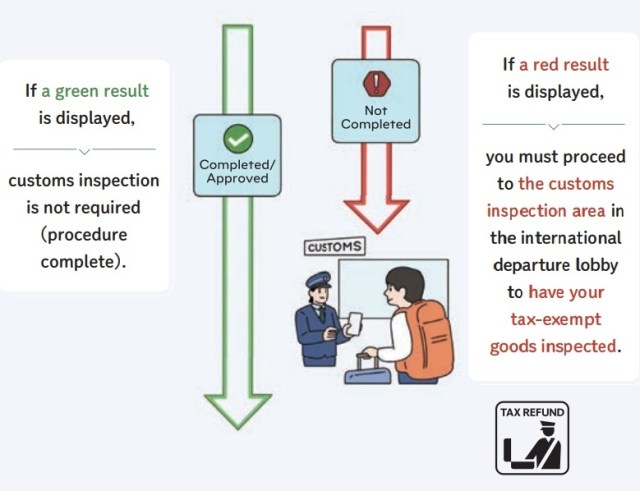
Under the new system, travelers will still need to show their passport when purchasing items at retailers. Then, at the airport or seaport that you’re leaving Japan from, you’ll need to complete a tax refund application process at a kiosk or electronic self-service terminal. After showing your passport, the customs agent or terminal screen will inform you whether or not your application requires an additional inspection, and if it does, you’ll need to show all of the items that you’re seeking a tax refund for. In other words, you’ll need to complete the application process, and the inspection too, if required, before checking in your luggage.

▼ Self-service terminals will display either a green or red notice after you present your passport.

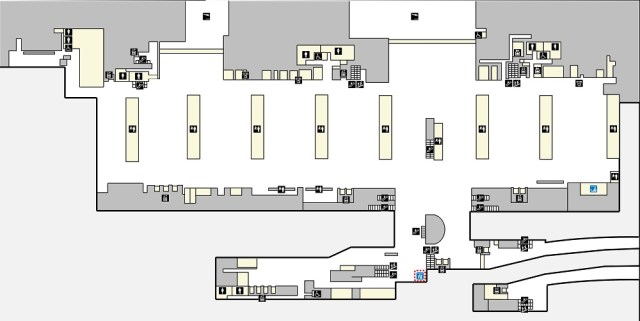
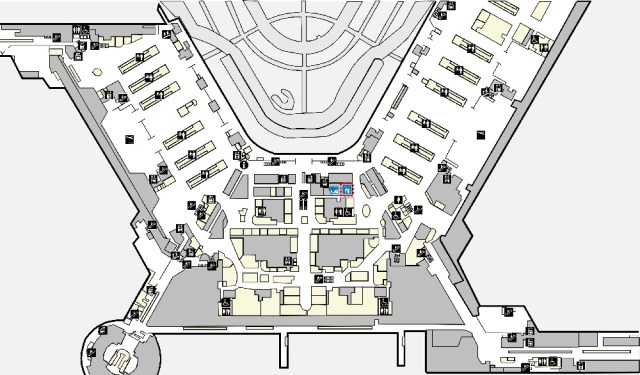
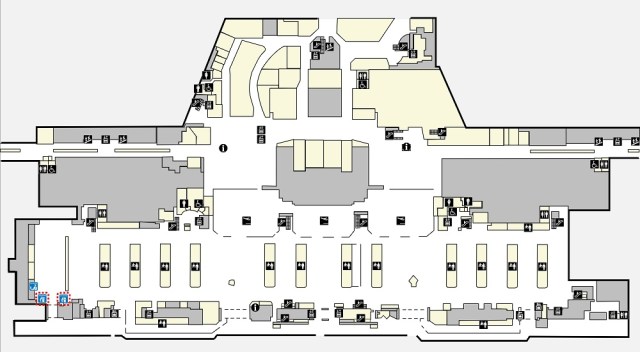
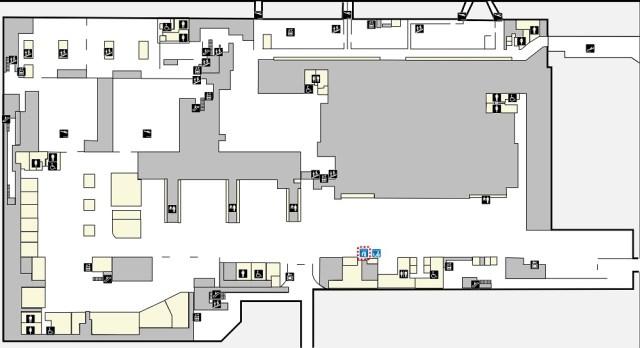
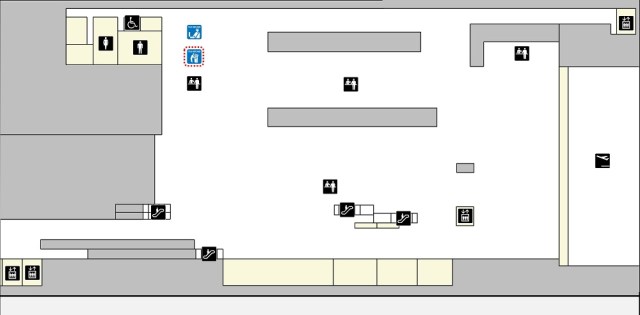
Maps showing the locations of the terminals and inspection areas inside Japan’s major airports can be found online here.

▼ Terminal and inspection areas (marked in blue) inside Haneda Airport’s Terminal 2, International Flights Area (3rd floor)

▼ Haneda Airport Terminal 3 (3rd floor)

In addition, travelers departing from Narita, Haneda, Kansai, Chubu Centrair International Airport, Fukuoka, New Chitose, and Naha airports can perform the application online through the Visit Japan Web website. However, doing so requires being connecting to a dedicated Wi‑Fi network for the procedure within the international departure lobby, so you’ll need to be at the airport either way.

Once the procedure is complete, you can designate whether you wish to receive your refund via your credit card company or a bank transfer. The Japan Customs website does not mention a timeframe for refund processing, but a few weeks is likely, so you’ll want to make sure you’re not counting on that money for anything critical like rent or groceries.

▼ Narita International Airport Terminal 1 (4th floor)

▼ Narita International Airport Terminal 2 (3rd floor)

So what prompted this change? Well, Japan’s sales tax is technically a “consumption tax,” and proponents of waiving it for foreign tourists figure that if the items aren’t going to be used/consumed in Japan, there’s no need to levy a tax on those purchases, which makes prices lower for tourists and helps boost sales for retailers. Japan’s tax-exemption system was basically operating on the honor system in that regard, though, which left the door open for dishonorable types to pass off or resell the tax-free items within the country. Changing to a tax refund system gives customs officials a way to confirm that the items really are going to be taken out of Japan before the purchasing tourist benefits from the untaxed price, and while not all travelers requesting a refund will be subject to inspection, it’s probavbly something you should be prepared for if you’ve done a lot of shopping during your trip.

Something to be careful about regarding the tax refund system is that all items purchased at the same time (i.e. on the same receipt) are counted as a single, unbreakable unit. So, for example, if you purchase five items at the same time, and you get flagged for an inspection, you have to be able to present all five of those items to qualify for the tax refund for that purchase. If you’re missing even one, you won’t be eligible for a refund for the other four item, either. Likewise, if you purchase, say, multiple bottles of skincare lotion and opened one of them to use during your time in Japan, you won’t be able to claim a refund for the others unless they were purchased as a separate transaction/on a separate receipt. In addition, tax refund requests must be made within 90 days of an item’s purchase, though since 90 days is the standard tourist visa length for international visitors to Japan, this won’t be an issue for most shoppers.

▼ Narita International Airport Terminal 3 (2nd floor)

Finally, under the new regulations it is the traveler’s responsibility to complete the procedure within time to check in for their flight. If you don’t, there’s no framework for requesting refunds at a later date, so if you stand to get a lot back, you’ll want to make sure to get to the airport early, though with the system being brand-new, there are not yet any official guidelines as to how long the procedure will take.

Source: Japan Customs (1, 2, 3, 4)
Top image ©SoraNews24
Insert images: Japan Customs (1, 2)
● Want to hear about SoraNews24’s latest articles as soon as they’re published? Follow us on Facebook and Twitter!


Credit:
Japan’s mini Shikoku Pilgrimage walking tour left us feeling immensely satisfied

The full pilgrimage takes weeks to complete, but if you’ve got a couple hours, this Matsuyama experience will show you what makes the tradition so special.

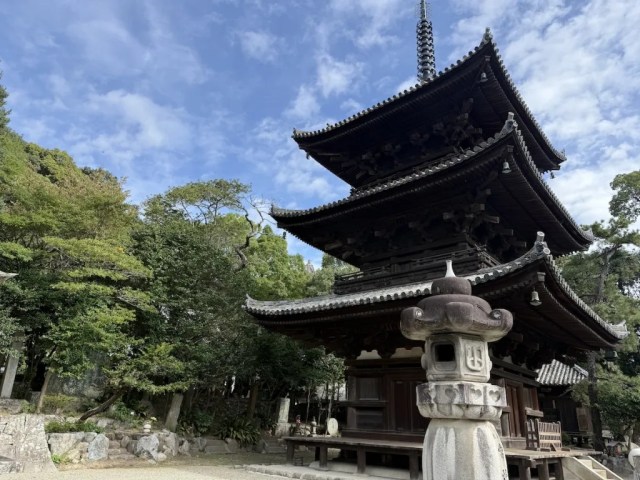
The Shikoku Pilgrimage route is, unquestionably, a great Japan travel experience. After all, people have been walking it, tracing the footsteps of famed Buddhist monk Kukai (also known as Kobo Daishi), for 1,200 years now.

However, the full route, which goes all around the island of Shikoku, is also a very time-consuming travel experience, taking roughly six weeks if you do it on foot. Odds are you don’t have that much time, and neither did we on our recent visit to the Shikoku city of Matsuyama in Ehime Prefecture. What we could fit into our itinerary, though, was a 90-minute Pilgrimage Experience Guided Walk which takes you to one of the 88 temples along the route, with guidance in traditional pilgrimage customs along the way.

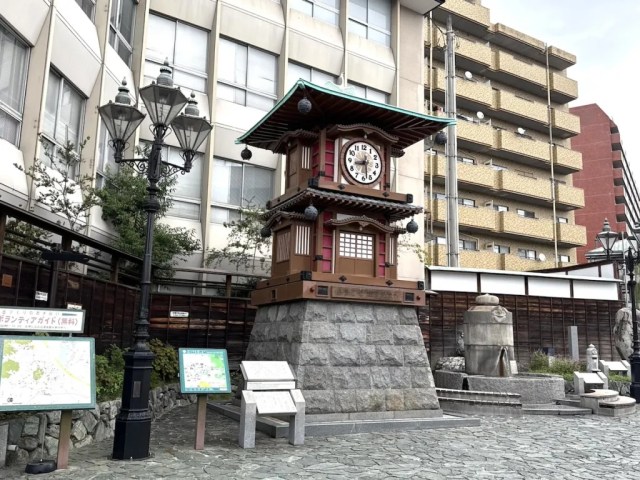
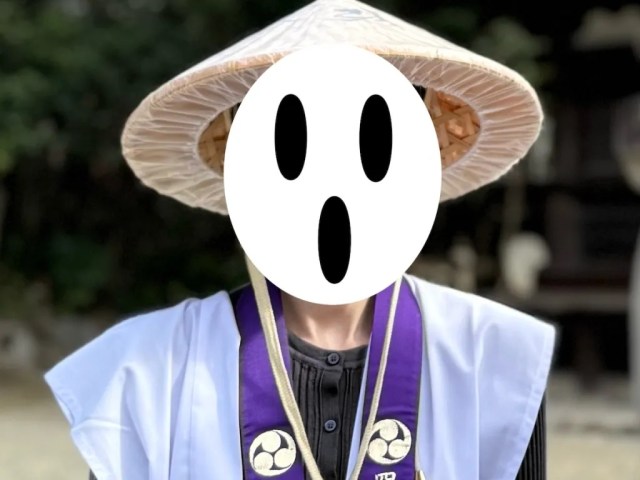
We and the other participants gathered at the pre-arranged meeting point on Matsuyama’s Dogo Shopping Street, not far from the city’s famous Dogo Onsen hot spring bathhouse. There we met our guide, who provided each of us with a sleeveless hakue, the white cloth tunic worn by Shikoku pilgrims, a sugegasa (conical straw hat), and kongozue (walking stick).

▼ There’s no mask that’s part of the outfit, that’s just a little privacy mark.

As you might remember from the glowing review from our ace reporter Mr. Sato, Japanese straw hats are surprisingly comfortable, since not only do they keep the sun off of you, their construction means they don’t sit directly on top of your head like a baseball cap or other Western-style hats, providing better air circulation and to help keep you cool, all good things when you’re walking to and from temples.

There’s a more morbid reason for the white tunics, though. The Shikoku Pilgrimage doesn’t present any grave dangers in the modern era, but centuries ago, when you couldn’t just whip out your phone and call for help if you became sick, injured, or lost, embarking on the route carried the risk that you might not make it back home. In Buddhist funeral rites, the body of the deceased is wrapped in a white garment prior to cremation, and the Shikoku pilgrimage tunic is white so that if someone were to meet with an untimely death along the way, they would already by properly dressed for cremation.

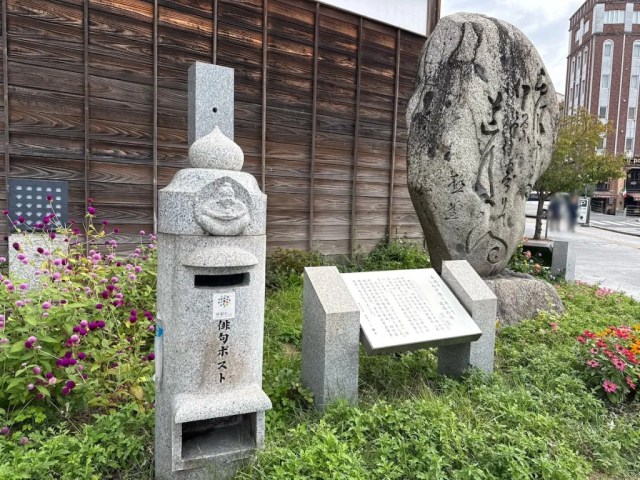
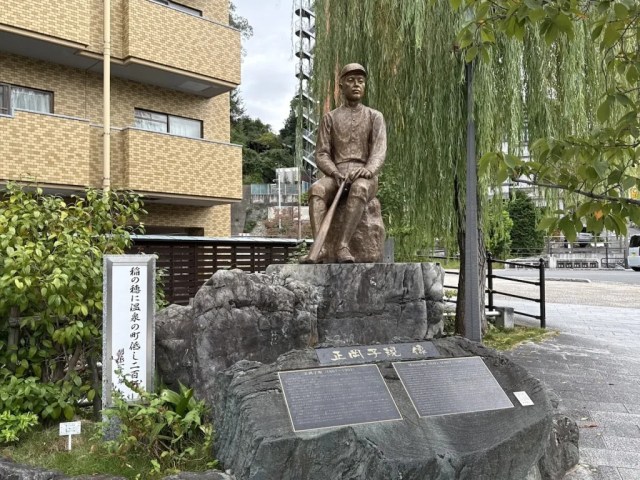
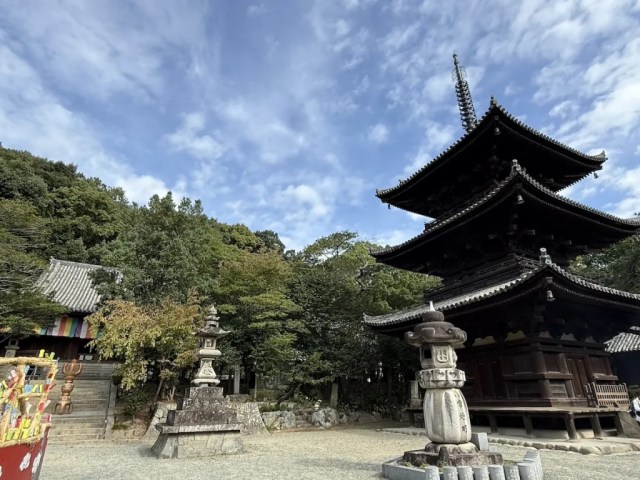
But, to be clear, you won’t be on any mortal danger as part of this guided mini-pilgrimage, in which you walk from Dogo Onsen to Ishiteji Temple, the 51st of the 88 temples on the pilgrimage route. It takes about 20 minutes to reach the temple, and along the way we spotted such quant aspects of the neighborhood as haiku mailboxes in which anyone can submit a haiku poem they’ve written, from which a committee selects the best works every three months for awards. We also saw numerous ashiyu open-air foot baths filled with hot spring water, as well as a statue of Matsuyama-born master haiku poet Masaoka Shiki reflecting his other great passion, baseball.

▼ The guy was also pretty fond of sweet bean bread.

As our group progressed further away from the bustling Dogo Shopping Street, we noticed local residents politely greeting us. “Good morning,” one would say, followed by another encouraging us with “Hang in there.” We asked our guide is these were friends or acquaintances acknowledging us by extension of their relationship with him, but he told us no, he’d never met these specific residents. With the pilgrimage route being such an important part of Shikoku culture, residents have made a custom of showing warmhearted respect to those walking the route, either in whole or part.

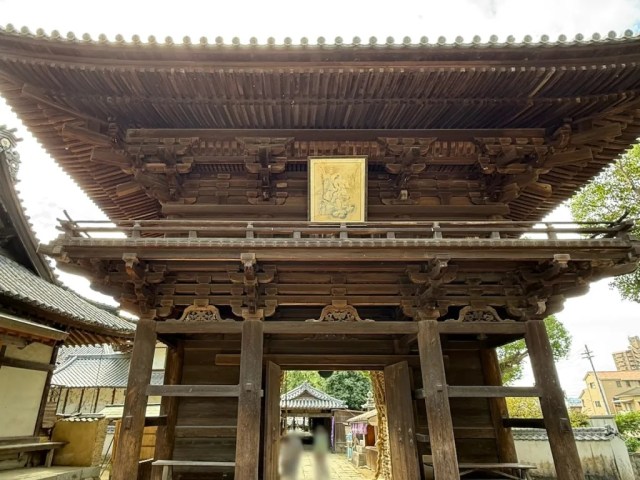
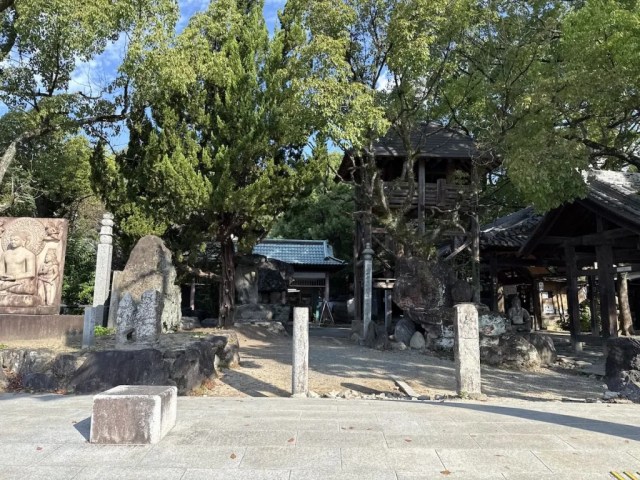
We then reached Ishiteji Temple, where we learned another unique part of Shikoku culture.

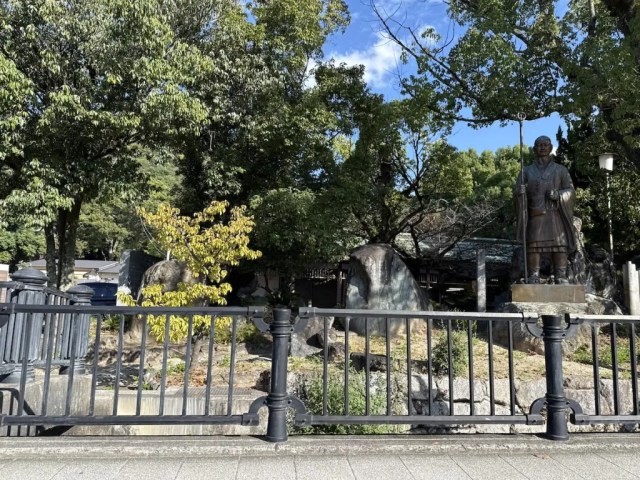
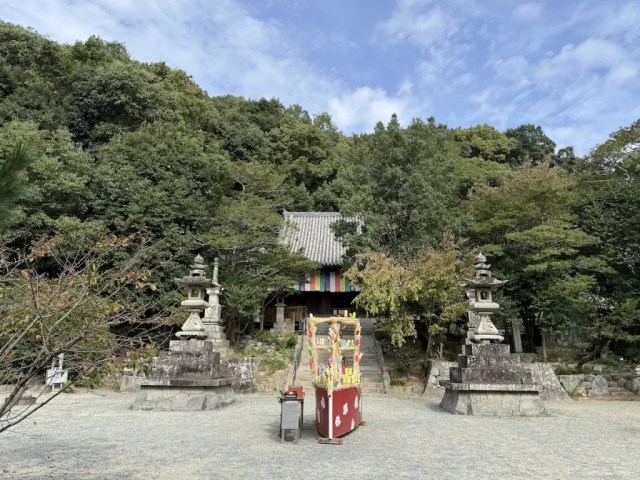
Soon after entering the temple grounds, we came to a stone bridge, and our guide instructed us to be careful not to tap our walking sticks on it as we crossed. This sort of specific prohibition isn’t the norm at temples in Japan, but as the guide explained, it’s connected to Kukai. When he was doing the very first Shikoku Pilgrimage back in the ninth century, Japan didn’t exactly have a robust leisure hotel industry. Sure, there were scattered inns here and there, but a lot of times Kukai didn’t have a roof over his head when he had to make camp for the night, and so he’d often sleep underneath bridges. Because of that, pilgrims should avoid hitting the upper surface of bridges with their walking sticks, as a metaphorical show of respect and consideration to the monk who might have been sleeping below.

Ishiteji has two halls, where we lit candles and incense. Again, our guide gentle reminded us of the importance of consideration for others on the pilgrimage route, recommending that we place our lit offerings at the highest, farthest back, and most laterally centralized positions, so that those who came after us could place there’s without having to pass their hands over our flames.

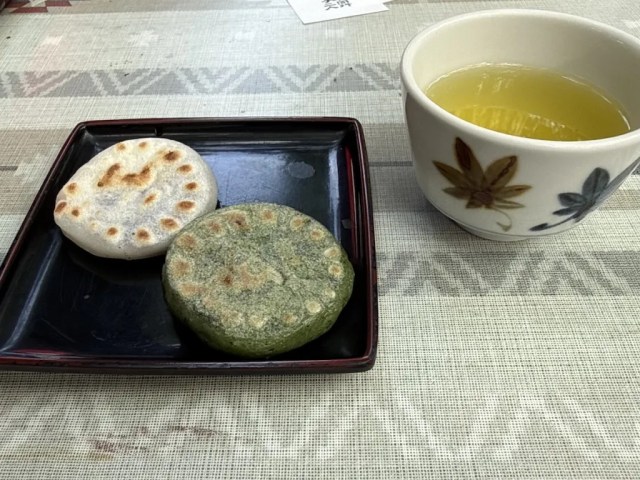
After that, we took a short rest and munched on some roasted mochi, a specialty of the temple that pilgrims have been enjoying for generations, and sipped a cup of green tea, which are offered as a set for 600 yen (US$3.80).

As with a lot of temple visits and activities in Japan, the Pilgrimage Experience Guided Walk isn’t presented with an atmosphere of severe solemnity, nor as something only for individuals of markedly devout Buddhist faith, and can be participated in and enjoyed as a cultural experience rather than a strictly religious one. That said, there’s something special about knowing you’re helping keep a tradition alive more than a millennium after it started, and the kind greetings we received from townspeople along the way put us in a contemplative but happy mood that stayed with us long after we were back where we’d started in Dogo. We may have only completed one eighty-eighth of the Shikoku Pilgrimage, but we still felt completely satisfied with the part of it we’d seen this day, and if you’d like to try it for yourself, reservations can be made through the website of tour provider Matsuyama Haiku here.

Photos ©SoraNews24
● Want to hear about SoraNews24’s latest articles as soon as they’re published? Follow us on Facebook and Twitter!


Credit:
Beautiful Ghibli diorama kits lets you build anime characters’ homes inside yours [Photos]

Papercraft models are small in size, but colossally cool for fans of Studio Ghibli.

Earlier in the year Ghibli Park added a new exhibit consisting of over 30 large dioramas made by famed anime director Hayao Miyazaki. Odds are, though, that you don’t have that much space to devote to your love of Ghibli’s art and environments, but Japanese papercraft company Sankei does have a way to let you bring a little piece of the Ghibli world into your home.

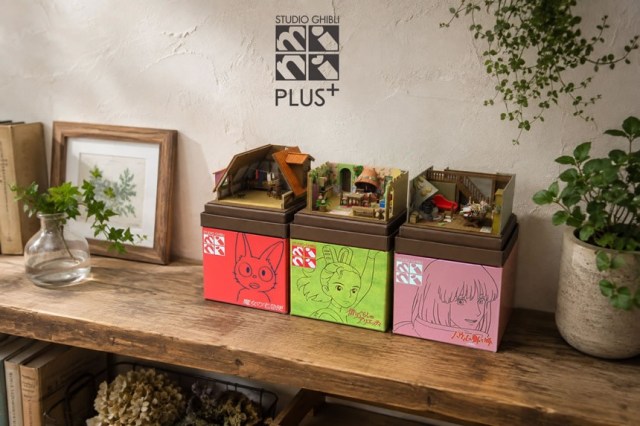
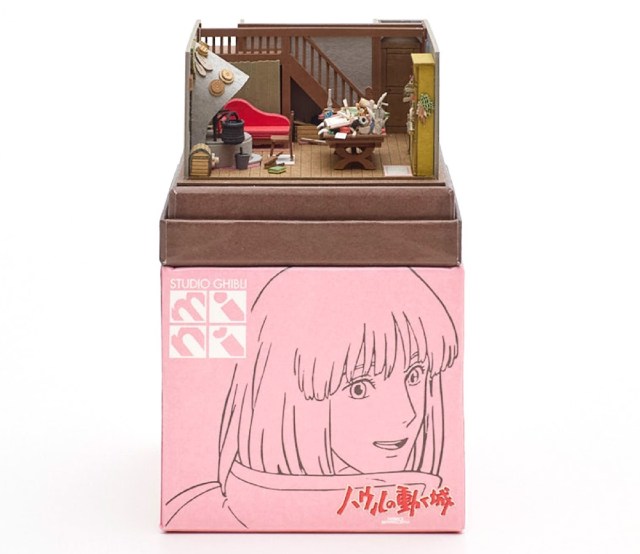
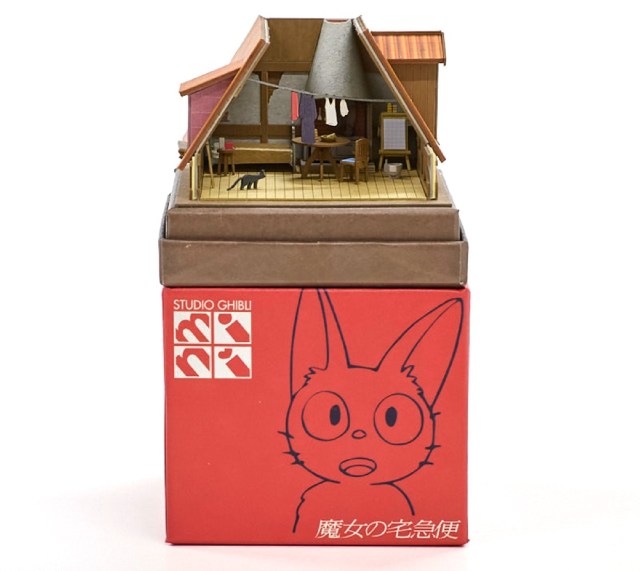
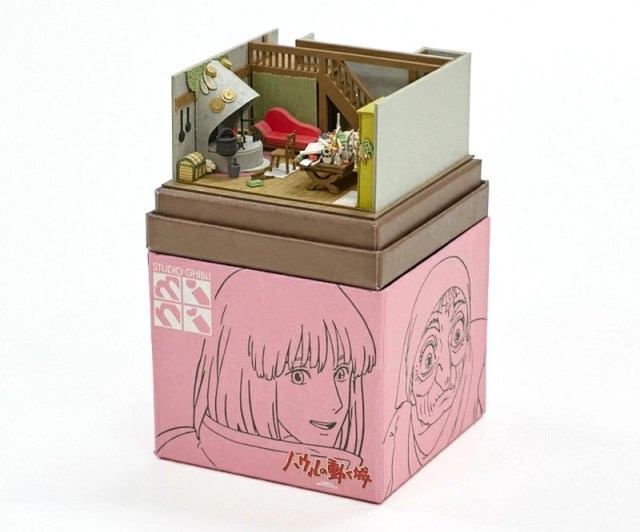
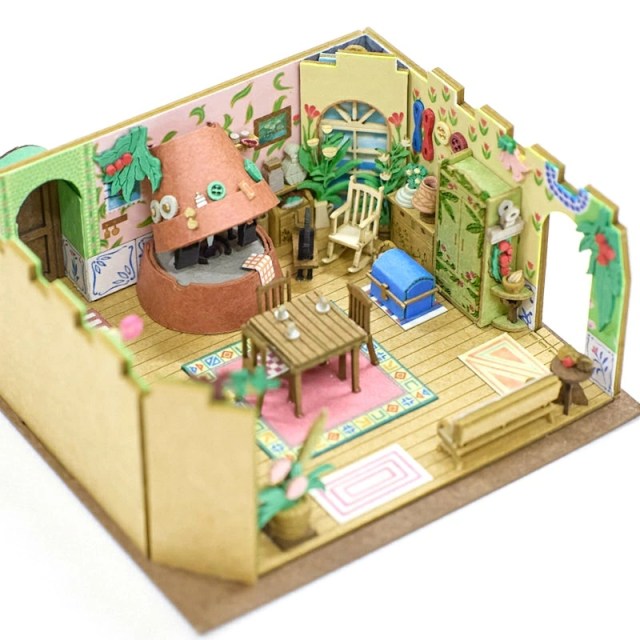
Going on sale November 3 are three new entries in Sankei’s Miniatuart Mini Plus line, recreating locations from Howl’s Moving Castle, Kiki’s Delivery Service, and Arrietty.

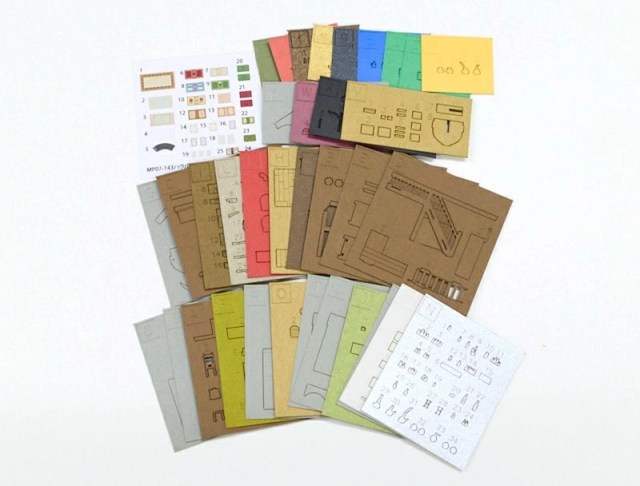
Each of them starts as a box filled with sheets of paper from which to build the walls and interior, and after you assemble everything the box then becomes a stand for the completed diorama.

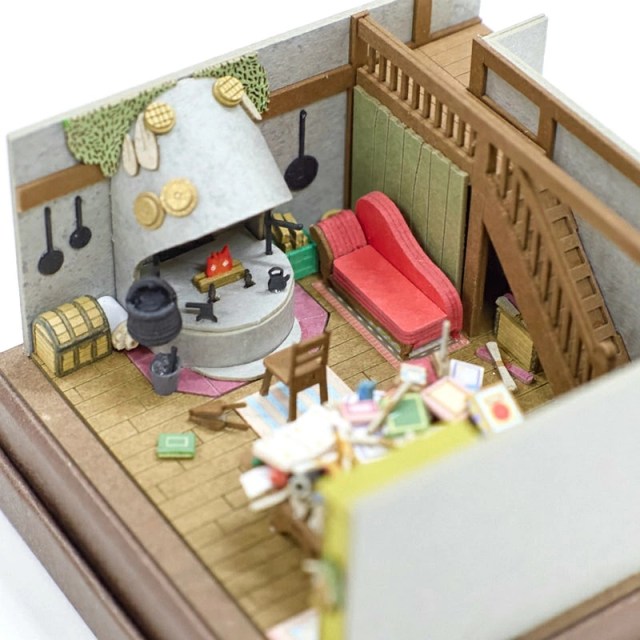
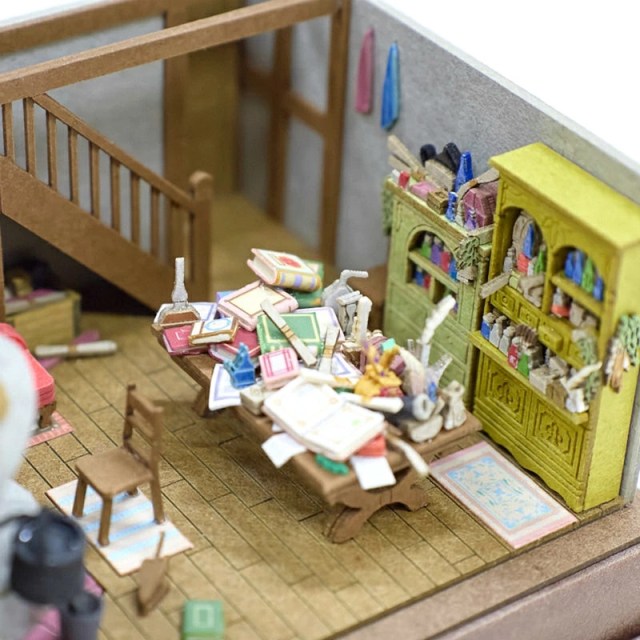
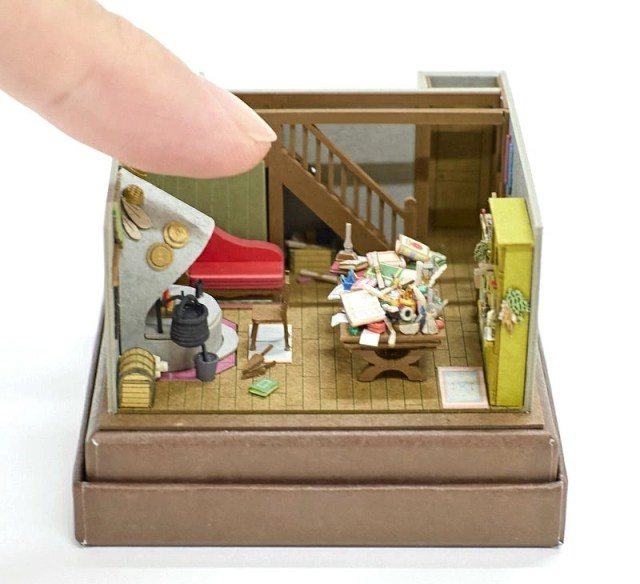
Though the scale is compact and the building materials simple, the kits contain an incredible level of charming detail. Howl’s hearth, for example, is cluttered with all sorts of magical baubles and reference materials, just as you’d expect the eccentric wizard’s living quarters to be, and even fire spirit Calcifer makes an appearance.

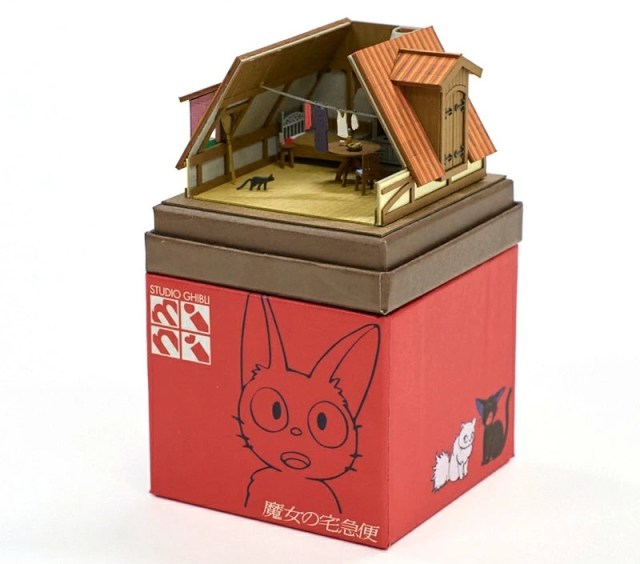
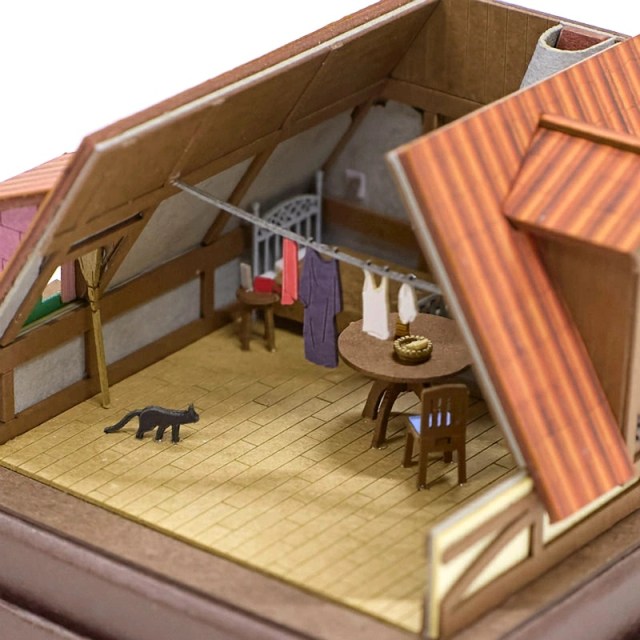
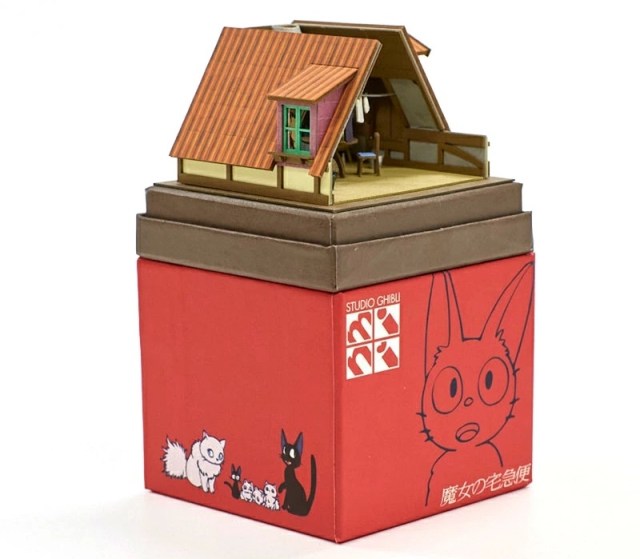
The room that Kiki and Jiji rent from bakery owner Osono is decidedly less chaotic, but still has a lived-in feel with the witch’s laundry hanging up to dry, her broom leaning against the windowsill, and Jiji making sure not to leave any dirty pawprints on the nice clean floor.

The Kiki’s kit also has the most detailed exterior, which really helps create the atmosphere of it being a miniaturized loft that scaled-down version of the characters could live inside.

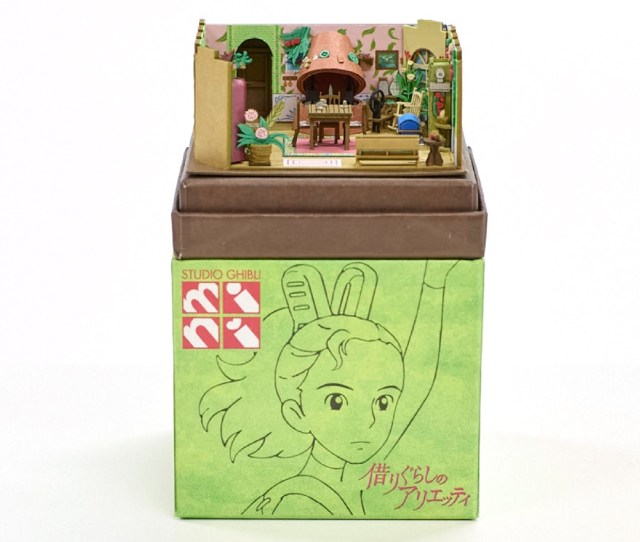
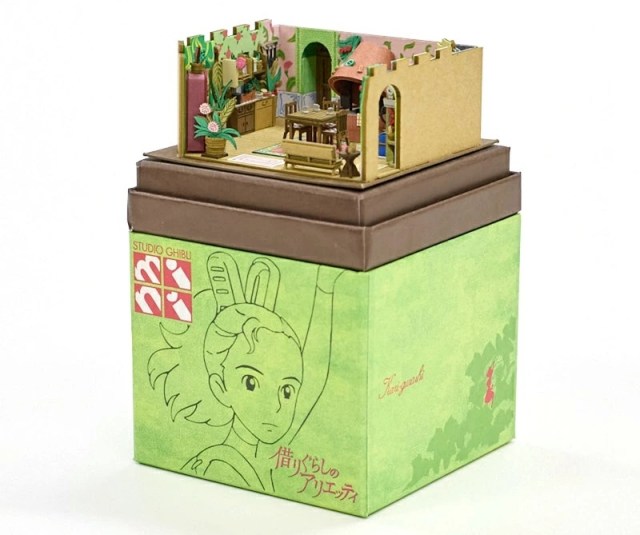
▼ The kits’ boxes/bases bear different illustrations on different sides, too, giving you one more reason to view them from different angles

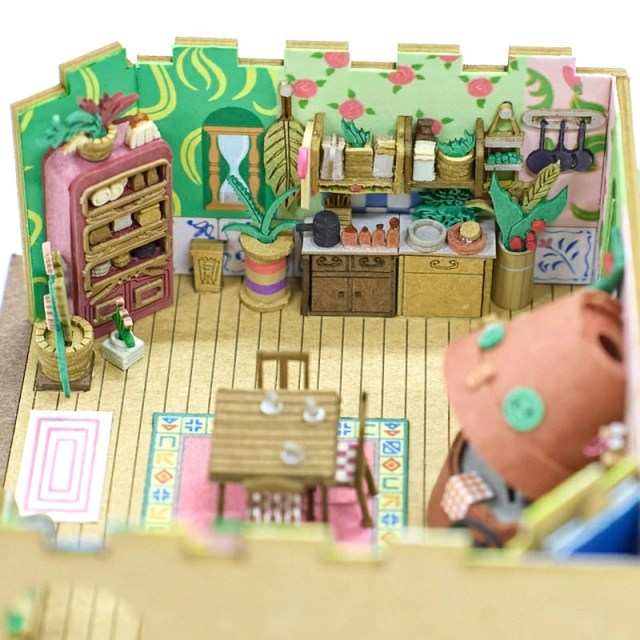
Rounding out the trio is Arietty’s family’s living room.

This one comes with an extra dash of coolness because the scale of the diorama (6 centimeters [2.4 inches] square) works as a reminder that Arietty and her kin are all so tiny that most of the humans whose house they lived inside of never noticed them.

All of the locations are filled with cozy vibes, but they are listed on Sankei’s website as being advanced-difficulty kits, with an estimated time of five hours or more to build Kiki’s room, and 10 hours or more for the others. Kiki’s kit is also the lowest-priced of the bunch at 4,290 yen (US$27), followed by Arrietty’s (6,160 yen) and Howl’s (6,600 yen). All three can be ordered starting November 3 through Sankei’s Rakuten online storefront (here, here, and here).

Source: Sankei
Top image: Sankei
Insert images: Sankei, Rakuten/Sankei (1, 2, 3)
● Want to hear about SoraNews24’s latest articles as soon as they’re published? Follow us on Facebook and Twitter!


Credit:
Shoplifting prevention guard arrested for shoplifting boot from store he was guarding

Those boots weren’t made for walking away with.

In tough economic times, where even stores are switching to automated checkouts to save money, it’s no surprise that incidents of shoplifting have been steadily rising in Japan. To combat this, some retailers have employed what are known as “manbiki G-men,” plainclothes security guards whose role is to patrol stores and prevent sticky-fingered shoppers.

Although the name is a throwback to prohibition-era FBI agents in the USA, these guards have no government authority like the police. Instead, they keep an eye on shoppers, shadow anyone suspected of shoplifting until they leave the store without paying, and then make a citizen’s arrest.

But having manbiki G-men watch shoppers begs the question of who is watching the manbiki G-men. The answer to that question has revealed itself recently at a home improvement store in Hiroshima Prefecture on 27 October. 

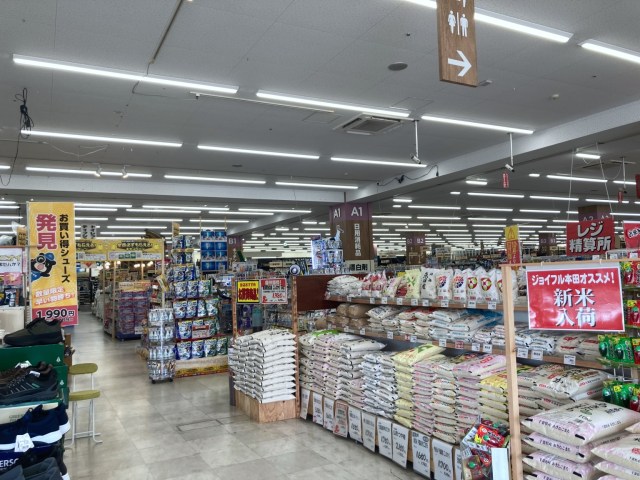
▼ The incident occurred at the Home Plaza Nafco in the picturesque town of Sera.

At about 11 a.m. on that morning, a plainclothes police officer spotted the plainclothes security guard taking a single rubber boot, concealing it in his clothing, and attempting to take it from the store without paying. It was later revealed that the man is actually employed by the same store as a manbiki G-man, but it is unclear if he was on duty at the time of the incident.

About a month prior to this, the store had contacted police about an uptick in shoplifting there, which put them on high alert. After being arrested on-site by the plainclothes police officer, the 66-year-old suspect admitted to the crime, saying he stole the single boot because he needed it.

Though with a tragically ironic twist, it was an open-and-shut case. Once again, a man’s desire for a single rubber boot corrupted him to the point of abusing the power entrusted to him by his employer.

“It’s always darkest right under the lighthouse.”
“I guess they need some manbiki G-men G-men.”
“Maybe he was just trying to get inside the head of his target.”
“Are they not even paying their G-men enough to get some rubber boots?”
“We’re not going to make it, are we? The country, I mean.”
“You either die a G-man or live long enough to become a shoplifter.”
“Fascinating! It’s like the end of a Poirot story.”
“I wonder if he just needed one boot or was planning to make two trips.”

Regardless of whether or not he really did need a second piece of footwear, we can be certain the home improvement store will be figuratively giving him the boot. Hopefully, he was just caught up in the thrill and excitement of stealing some Wellies, because that’s at least slightly less bleak than an employed person being unable to afford a pair on his own.

So, let that be a lesson to all you junior G-men out there. While bustin’ two-bit flimflammers, it can be right tempting to get yer mitts on some cabbage for yourself too, but the only easy street that lands you on leads straight to the hoosegow. 

Source: TBS News Dig, Itai News
Photo ©SoraNews24
● Want to hear about SoraNews24’s latest articles as soon as they’re published? Follow us on Facebook and Twitter!


Credit:
Pokémon guitars from Fender Japan come with 8-bit sound mode for covering retro game music [Vid]

Fender celebrates Red and Green’s 30th anniversary with guitars saluting the Pokémon world in both looks and sound.

In the English-speaking world, the start of the Pokémon video game series were the paired releases of Pokémon Red and Blue for the Game Boy in 1998. However, unbeknownst to many young fans at the time, the real origins of the franchise had come out in Japan two years prior, and were titled Pokémon Red and Green.

Here in 2026, the global Poké-fan community has a more comprehensive picture of the franchise’s history, which brings us to the appropriate color schemes for the latest collaboration celebrating Pokémon’s 30th anniversary, a pair of customized guitars created in partnership with Fender Japan.

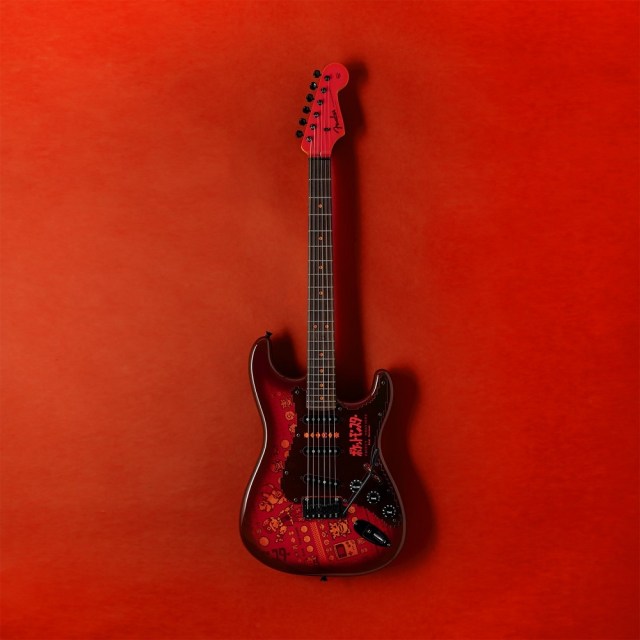
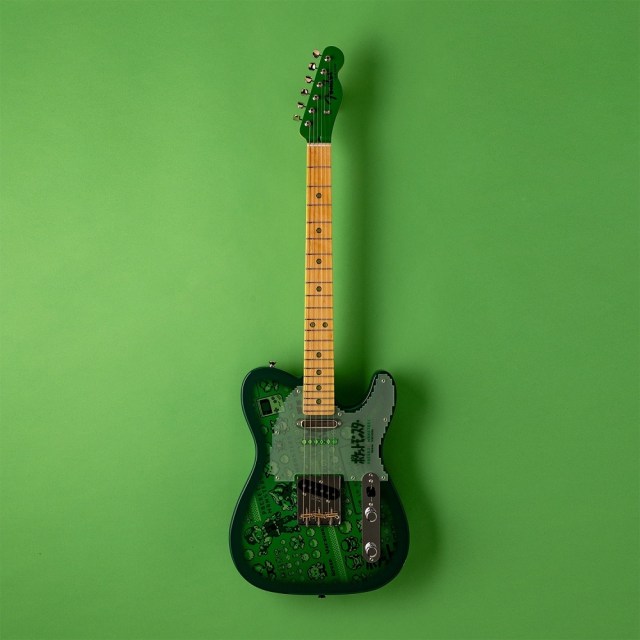
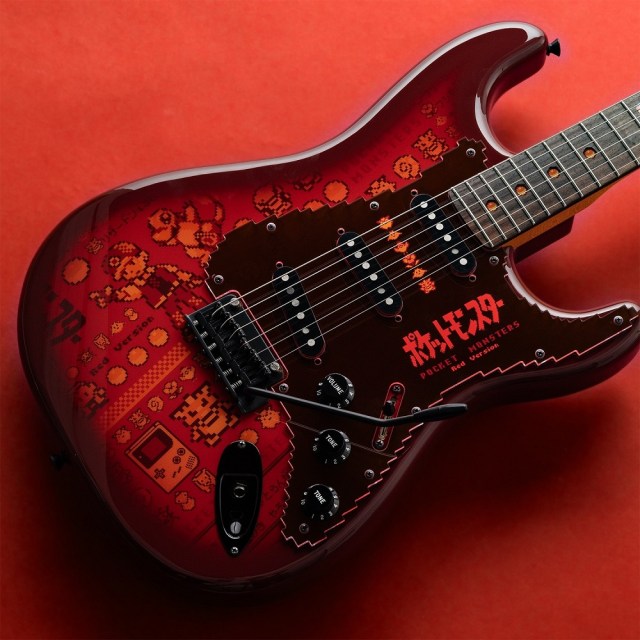
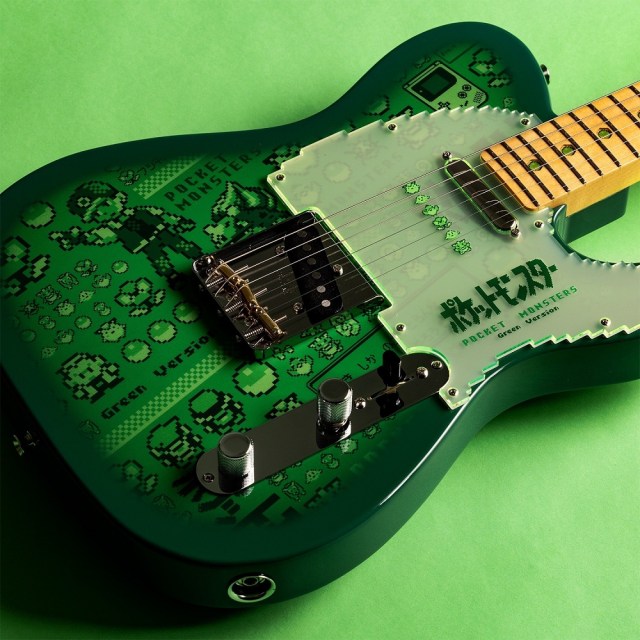
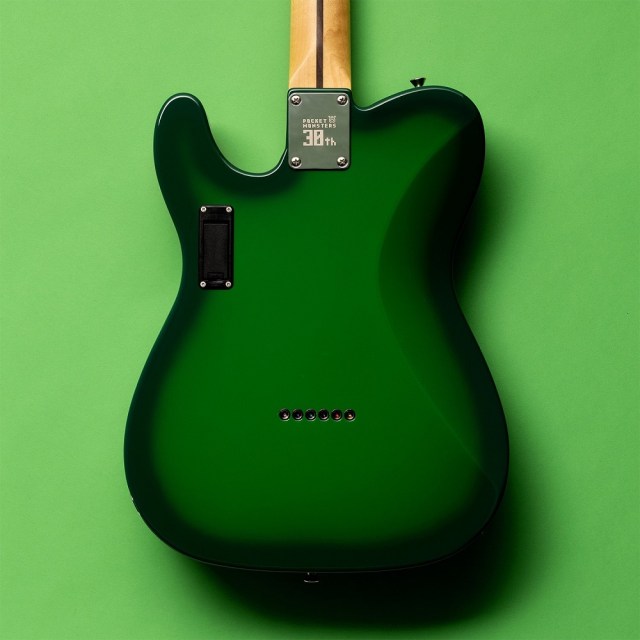
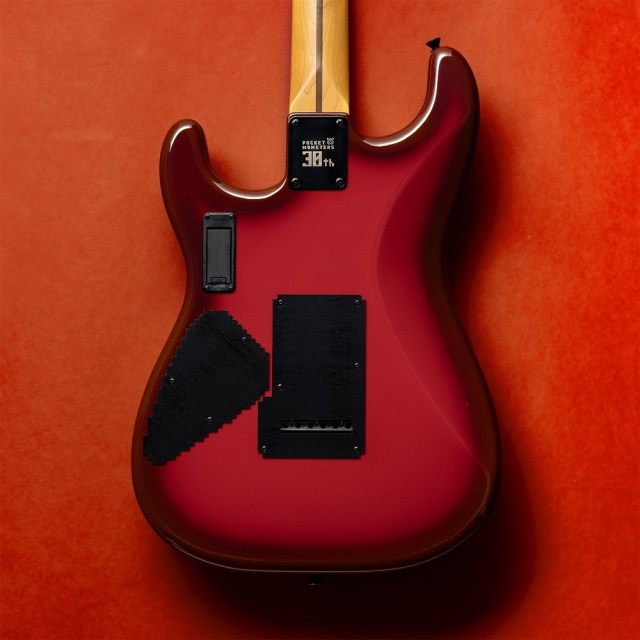
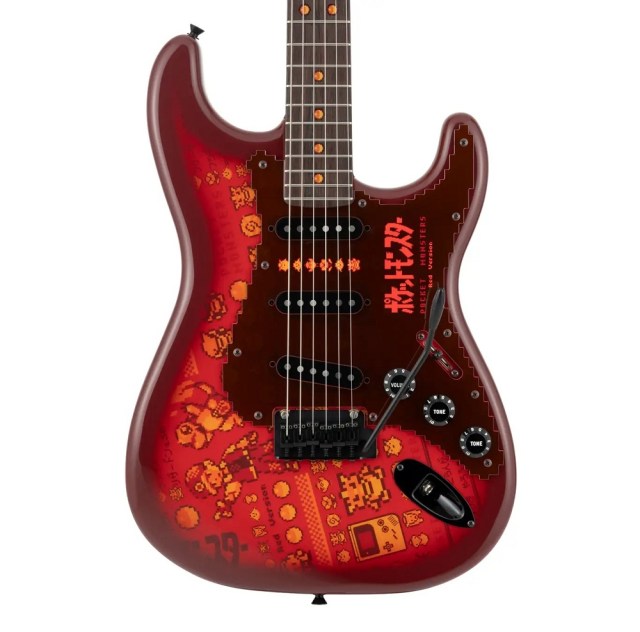
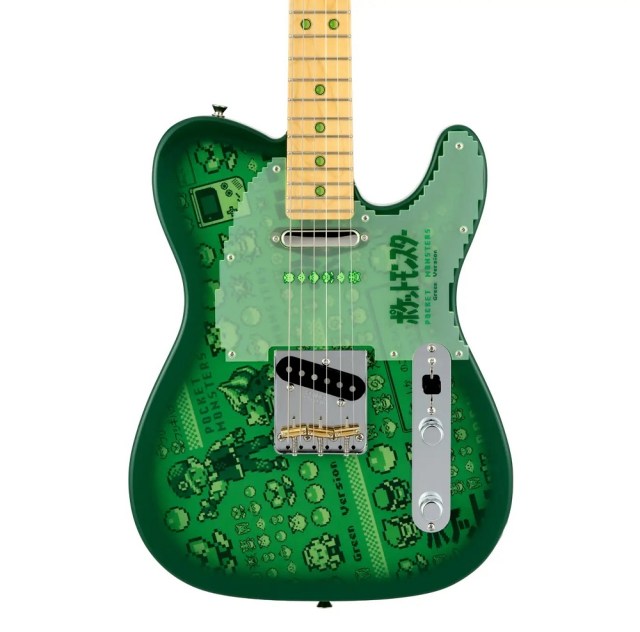
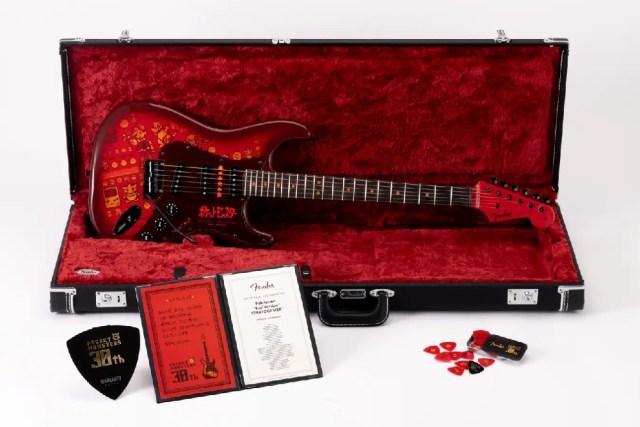
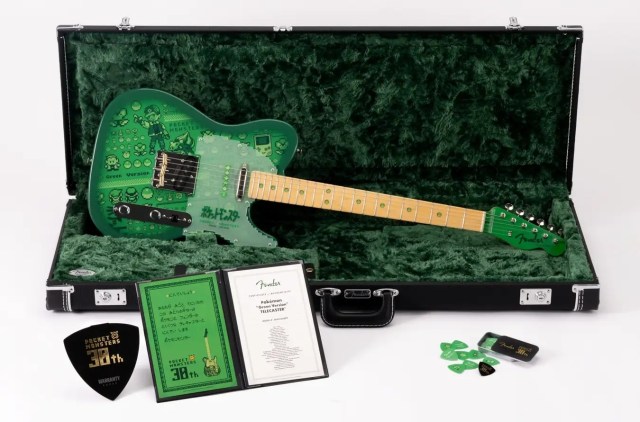
In a parallel to how mainline Pokémon games customarily have a similar but still different sibling, so too has Fender chosen two different models of guitar for this team-up, the Made in Japan Pokémon “Red Version” Stratocaster and Made in Japan Pokémon “Green Version” Telecaster.

Within the series’ visual design language, the color red is often associated with Fire-type Pocket Monsters, and green with Grass-types, so the body of each guitar is covered in pixel art of species from those categories.

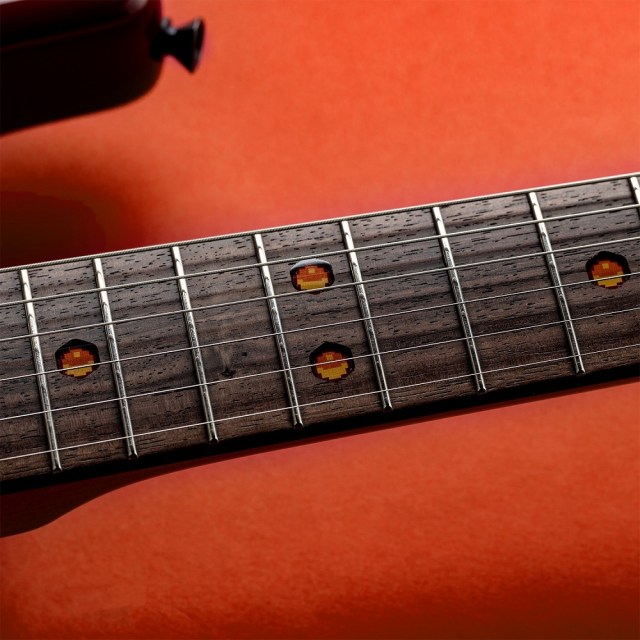
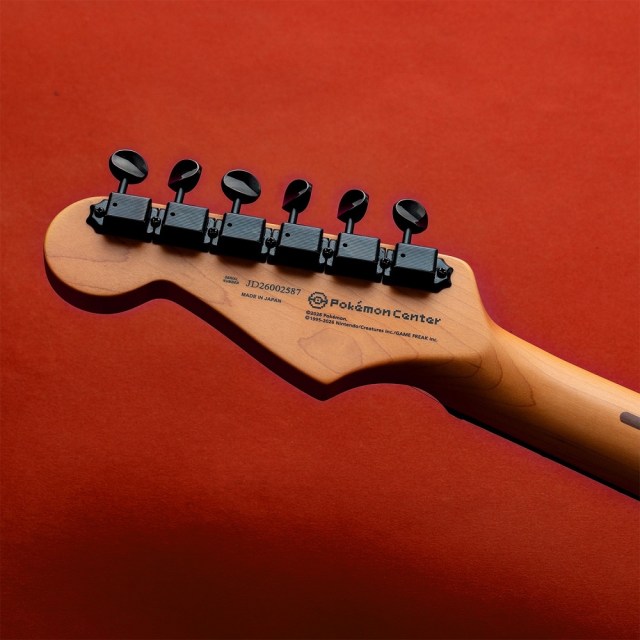
More fan-service flair can be found on the neck, where Poké Balls are subtly scattered about…

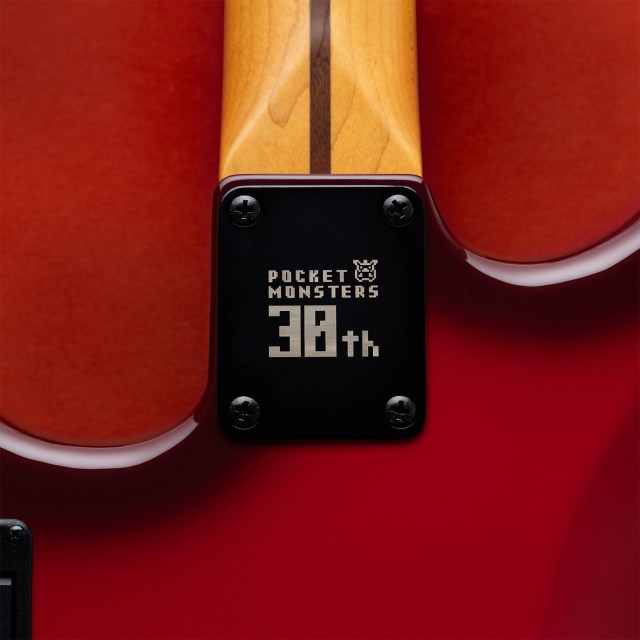
…and the backside features a Pokémon 30th anniversary plate.

In addition to their visual salutes to the Pokémon world, these made-in-Japan guitars make an audio one too.

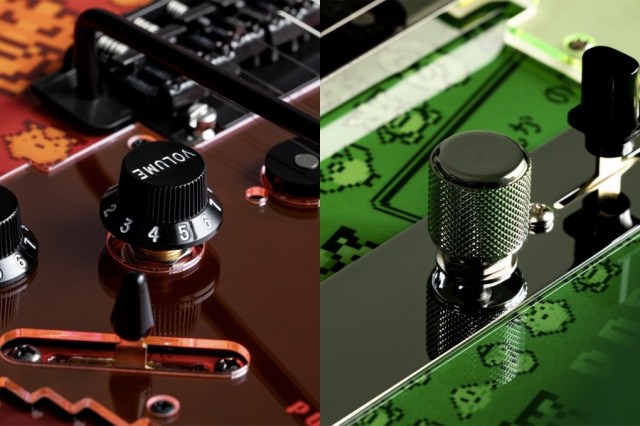
Push in the volume knob, and you can activate what Fender has dubbed the instruments’ “8-Bit Sound System Mode,” a clever audio effect that gives the guitar’s sound a quality reminiscent of nostalgic chiptunes, which should lend itself really well to playing covers of classic Pokémon games’ soundtracks.

▼ A demonstration video of the 8-Bit Sound System Mode

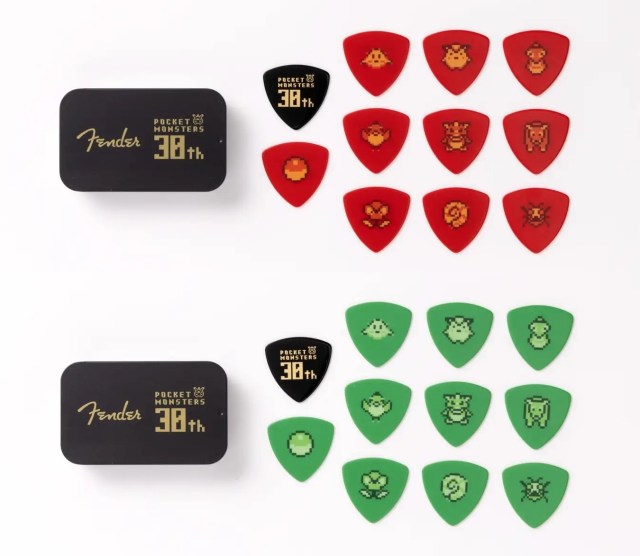
Each guitar also comes bundled with a selection of pixel art picks, plus a custom hardcase and certificate of authenticity.

Because they’ll be available in limited quantities, both guitars, priced at 396,000 yen (US$2,490) each, will be offered for sale through a lottery system from the Pokémon Center Online store, which will be accepting applications between noon on November 19 and 4:59 p.m. on November 24 (Japan time).

Related: Pokémon Center Online

Source: Pokémon official website, PR Times
Top image: Pokémon official website
Insert images: Pokémon official website, PR Times
● Want to hear about SoraNews24’s latest articles as soon as they’re published? Follow us on Facebook and Twitter!


Credit: