
Japan’s adorable pudding chick becomes a transit card mascot
One of Japan’s most popular dessert mascots is set to go with you as you tap through ticket gates.
Last year, one of Japan’s many railway companies, JR East, announced that they would be retiring their iconic mascot character featured on their rechargeable prepaid transit card, Suica, much to the dismay of many of its fans. Meanwhile, JR Central, another rail company, has decided to celebrate the 15th anniversary of Nagoya’s beloved dessert Piyorin with a special release of its Toica card.
Despite the similar sounding names, the massive JR (Japan Railways) network is split into independent regional companies that operate within their own territories. For example, JR East handles Tokyo and northern Japan, while JR Central manages the lines surrounding Nagoya and the central Tokai region. Unlike several countries where trains are state-run, Japan’s rail networks are entirely privately owned by companies such as these (though the JR network was previously the government-run Japanese National Railways from 1949 until 1987).
As a result of this regional division, each JR company issues its own transit card, commonly referred to as an IC card, for daily travel. Travelers arriving into Tokyo are usually introduced to the Suica (JR East) or Pasmo (Tokyo Metro and many other non-JR lines around Tokyo) cards that let them tap through ticket gates seamlessly. In the Central Japan region around Nagoya, the local equivalents are the Toica (JR Central) and Manaca (Nagoya Subway, Meitetsu, and other non-JR lines around Nagoya) cards.
While these cards are issued separately within their own regions and feature different mascots, which can lead some to travel around Japan collecting them, many of the cards are completely interoperable.
▼ I have a long way to go.
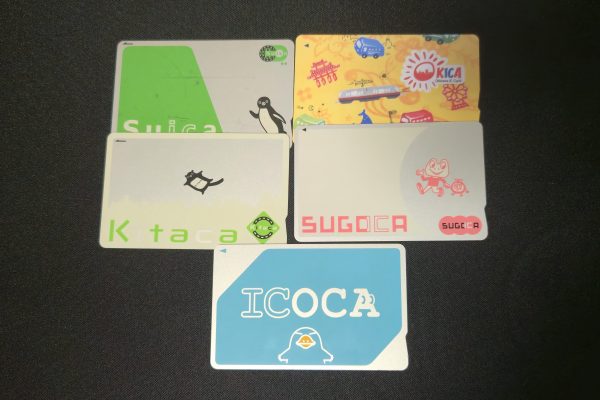
A Toica card purchased in Nagoya, for example, can be used on Tokyo subways, Kyoto buses, and at thousands of convenience stores nationwide.
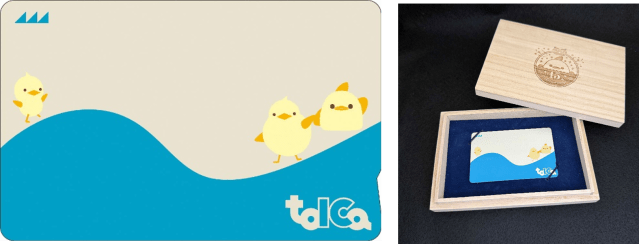
The commemorative Piyorin Toica card has the standard Toica chick mascots alongside Piyorin on the face of the card.

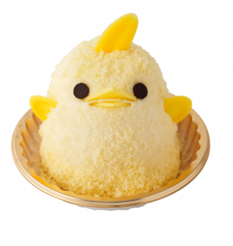
Piyorin itself is a famous Nagoya fresh dessert made from locally sourced eggs, consisting of pudding wrapped in vanilla bavarois and covered in crumbly sponge cake.
People looking to grab the new Piyorin Toica card will need to make their way to the region operated by JR Central (Nagoya and its surroundings) where it will begin being dispensed in late May 2026 from automatic ticket vending machines and customer service windows at major train stations. For those further away, sales will start at JR Tokai ticket windows at major Shinkansen stations along the Tokaido line from September 1, 2026. Smaller stations within the coverage area will also get access to the Piyorin card supply at this time. Each card will cost 2,000 yen (US$13), which includes 1,500 yen as a usable amount and a 500 yen deposit.
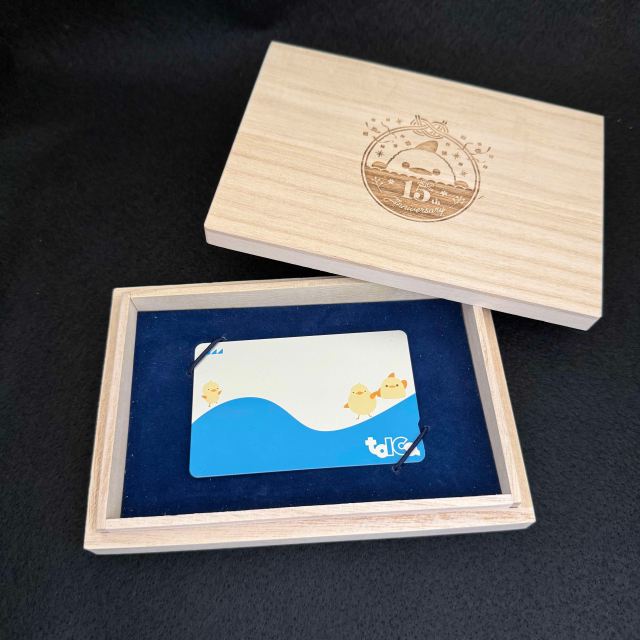
As part of the celebration JR Central released a special online-exclusive Piyorin Toica card in a paulownia wood storage box costing 4,980 yen. However, the 3,000 sets were completely sold out within a couple of days of its launch, attesting to Piyorin’s popularity.
If you’re expecting to go out tomorrow and pick up a Piyorin Toica, you might face some disappointment, as they’ll only start to be dispensed when current Toica card stocks run out, so the start date of the sales will vary depending on the station. Sales of the Piyorin cards will also end when they run out at each station, so there is definitely an element of luck to getting one, if the online sales are anything to go by. That being said, a Piyorin card is a great way to make a souvenir of your travels just a little bit sweeter.
Related: Online-Exclusive Piyorin Toica Card, JR Tokai Ticket Window Locations, Toica Usage Information
Source: PR Times
Top and insert images: PR Times
Insert IC card collection photo ©SoraNews24
● Want to hear about SoraNews24’s latest articles as soon as they’re published? Follow us on Facebook and Twitter!
Credit:


0 comments: