
Japan has been tossing message-bearing coconuts into the ocean since the 1980s
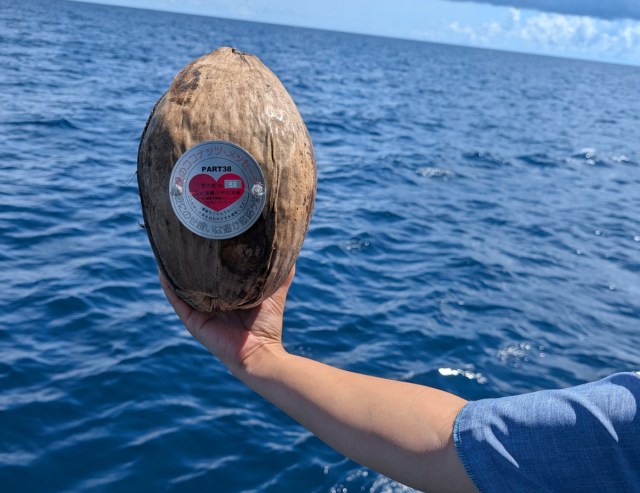
Only a tiny fraction of them ever get found, but that’s just part of the charm.
The southernmost islands of Japan and its mainland are separated by vast stretches of ocean, powerful currents, and clear cultural differences. However for nearly four decades, both Ishigaki in Okinawa and the Atsumi Peninsula in Aichi, two very distant places, have shared an unusual connection: a coconut.
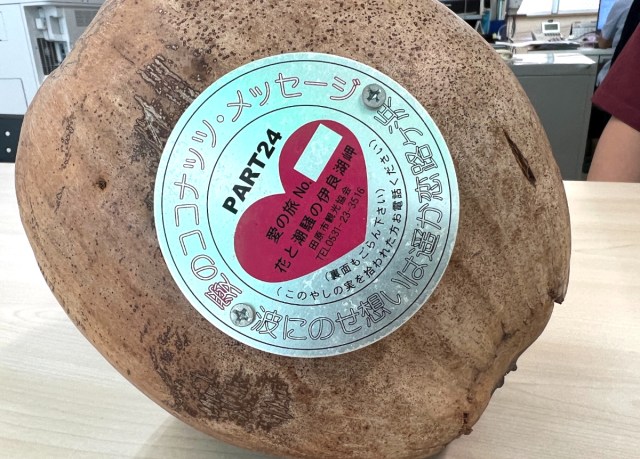
The Love Coconut Message project is an unusual tradition, where each year coconuts are lobbed into the ocean off the coast of Ishigaki and left to drift northward on the Kuroshio Current, a warm ocean current that flows from the tropics along Japan’s Pacific coast. The destination people hope the coconuts reach lies roughly 1,600 kilometers (1,000 miles) away.
The inspiration for the project came from a Japanese song released in 1936 called Yashi no Mi (“Fruit of the Palm Tree”).
▼ The coconut (“kokonattsu” in Japanese) is a type of palm fruit (“yashi no mi”), one of many, but for simplicity’s sake we’ll just use the term “coconut”.
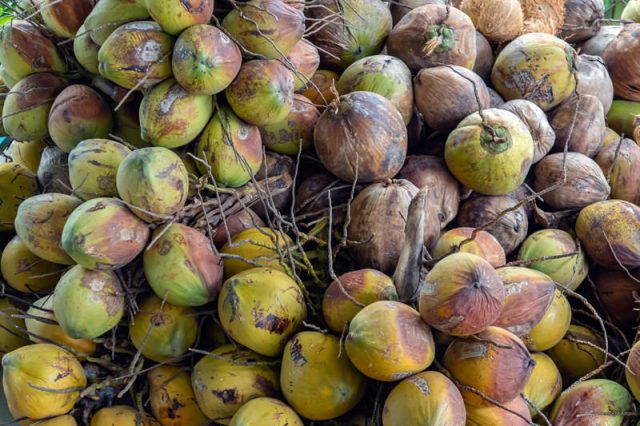
It’s a widely known song in Japan, commonly sung in elementary schools, with lyrics describing a lone coconut drifting ashore from a faraway, unnamed island.
The song itself was inspired by a real event: folklorist Kunio Yanagita found a coconut washed up at Cape Irago, on the western edge of the Atsumi Peninsula, back in 1898.
At that time, coconuts did not grow in mainland Japan, leading Yanagita to speculate that it had traveled north on the Kuroshio Current from the southern seas. He later shared this experience with his friend, a poet named Toson Shimazaki, who later transformed the story into verse, which then became the lyrics for the song.
In 1988, the Atsumi Peninsula Tourism Bureau set out to recreate this poetic journey. Every year, coconuts fitted with small metal plates engraved with a short message are released offshore from Ishigaki. Participants, who are known as “coconut members”, purchase a coconut and imbue it with their thoughts of love, remembrance, hope, or curiosity.
Last May, back when we were visiting the Okinawa Fes Milafete in Tokyo, one of the largest Okinawa festivals in Eastern Japan, we stumbled across Ishigaki City Hall’s booth, which had one of these coconuts on display.

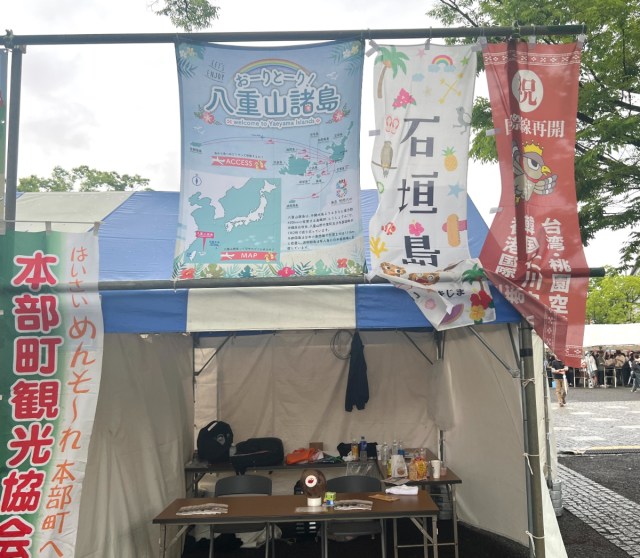
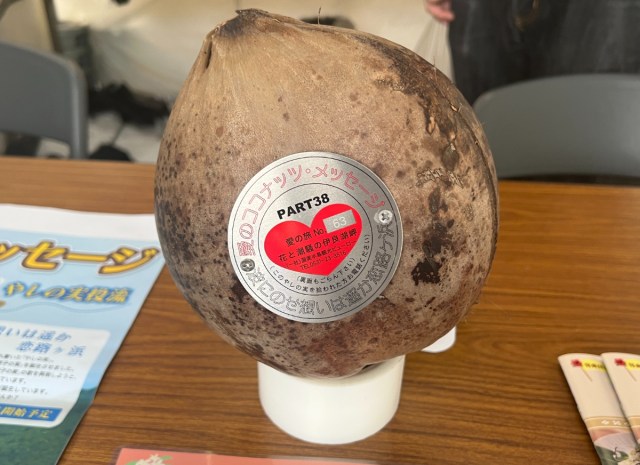
It was there we learned about this intriguing project, as well as the next release being planned for June 19, 2025.
While we were not able to attend in person, the event staff sent us some photos that captured the moment of sending 100 coconuts on their own lengthy, Finding Nemo-esque journey.
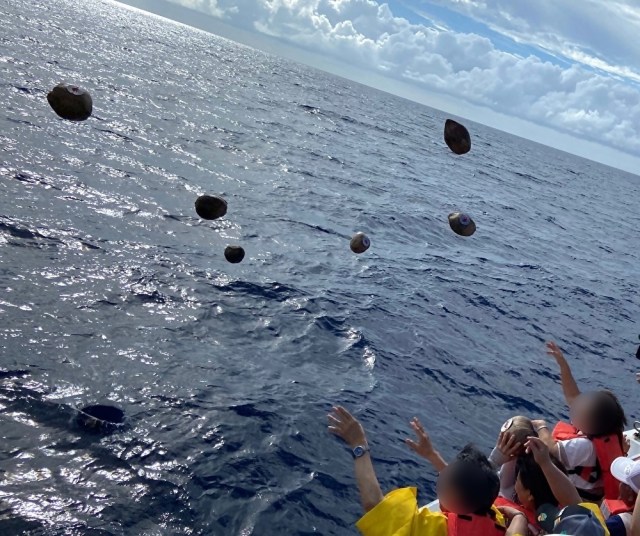
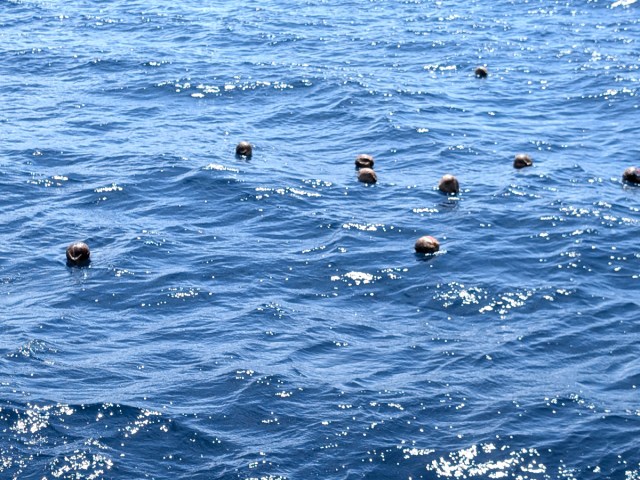
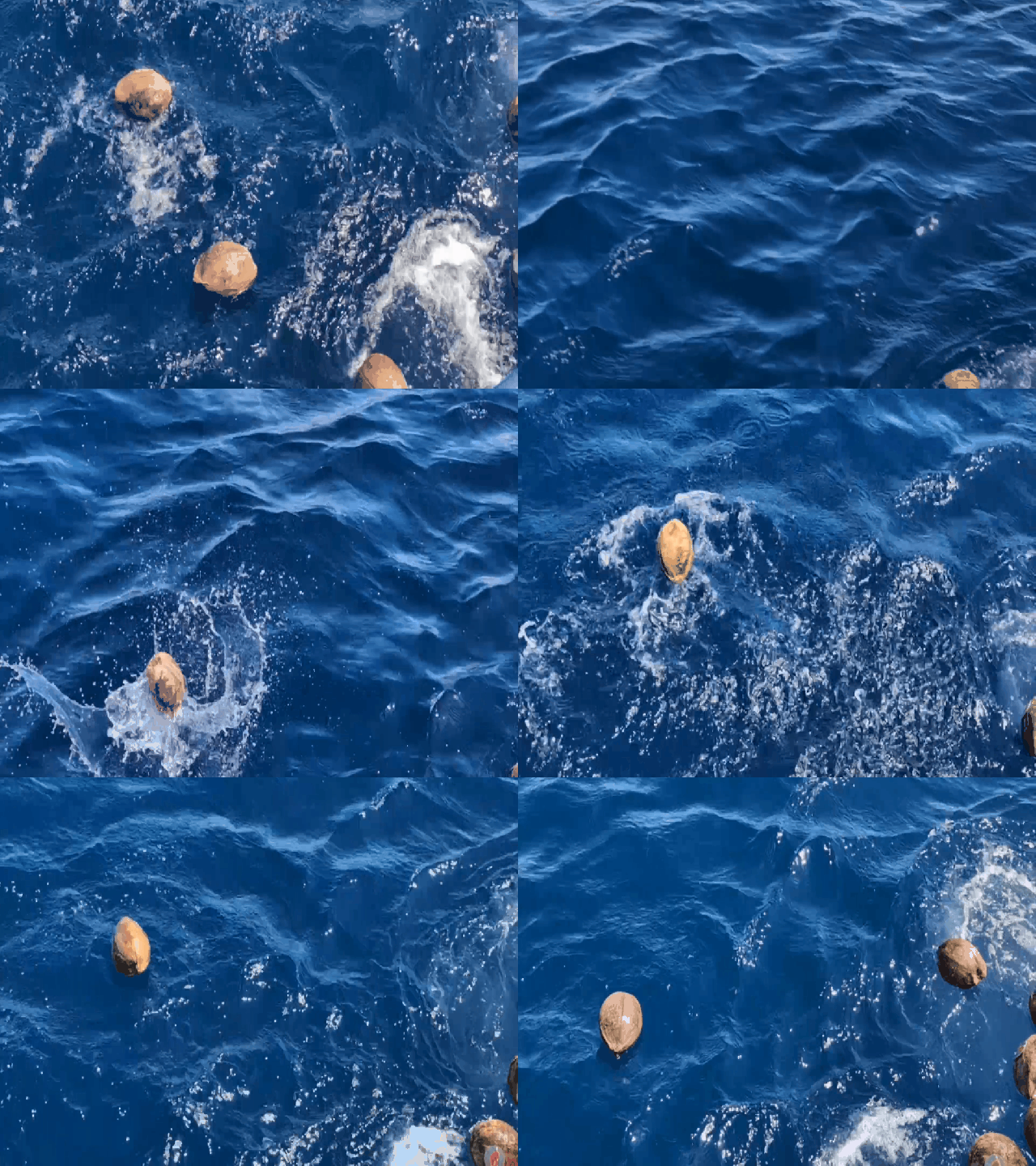
▼ Could these little coconuts really make it to their hoped-for destination?
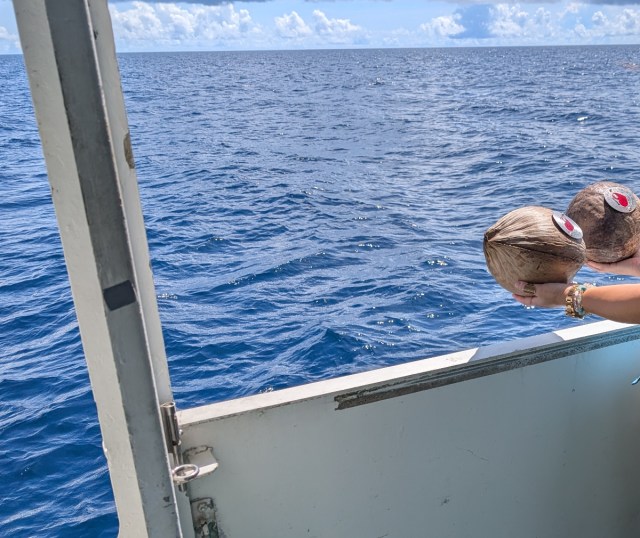
Over the previous 37 years of the event, more than 3,800 coconuts have been released, yet only 156 have ever been found and reported, and just a handful have reached the Atsumi Peninsula itself.
When a coconut is discovered, the finder contacts the tourism bureau, and in rare cases, both the finder and the coconut member that sent it on its journey are invited to meet at Cape Irago, near Koijigahama, the beach associated with the song.
In October 2025, we had a chance to visit Ishigaki and checked in with the person we talked to at the festival to find out the results.
By the end of October, a total of six coconuts had been confirmed as having washed ashore.
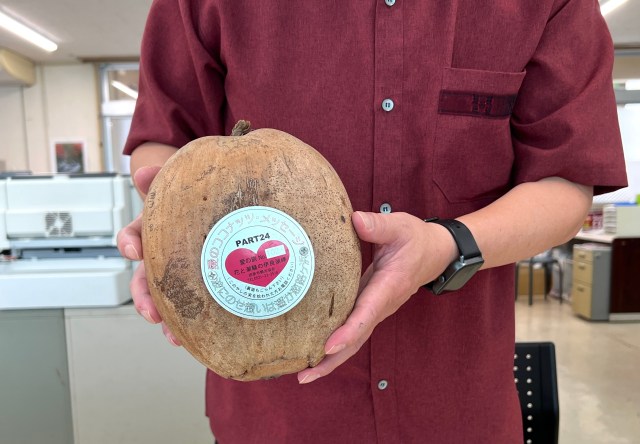
According to a report from the Atsumi Peninsula Tourism Bureau, the locations and dates of discovery were:
No. 45: July 28, Futami Fishing Port, Shimanto, Kochi
No. 38: August 1, Hayami Coast, Hiji, Hayami, Oita
No. 18: August 4, Uchinoura Fishing Port, Kimotsuki, Kagoshima
No. 24: August 5, Odotsu Coast, Nichinan, Miyazaki
No. 21: August 12, Okura Coast, Akashi, Hyogo
No. 20: August 16, Shinjo, Tarumizu, Kagoshima
While it’s a little disappointing that none of them reached the Atsumi Peninsula this time, six out of a hundred is actually quite a miraculous feat given how wide Japan’s Pacific coastline is, and factoring in the odds of someone actually discovering one and reporting the find. Now, the recovered coconuts are on display at the Atsumi Peninsula Tourism Bureau in Tahara, Aichi.
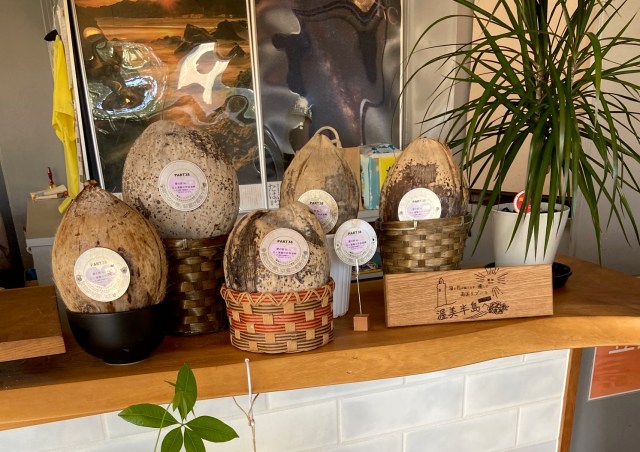
To some, the idea of sending a coconut out to sea might seem absurd, but many of the participants are repeaters who look forward to the day every year. For these people, it’s a romantic project that uses the power of nature to connect distant lands. If it sounds like something you’d want to take part in, you’ll need to contact the Atsumi Peninsula Tourism Bureau when applications open later this year, although the date is yet to be announced. Using last year’s information as a reference, you will need to send an email to them by the deadline and it will cost 3,000 yen (US$19.56) for a coconut. If the coconut is found by the end of October, you will be invited to go to Cape Irago to meet your fated coconut finder.
Even if you don’t want to join in the fun this year by throwing in a coconut of your very own, keep your eyes peeled whenever you walk along the coast, because you just might spot a little love coconut riding the waves.
Related: Ishigaki City Tourism Association, Atsumi Peninsula Tourism Bureau, Okinawa Fes Milafete
Top image: ©SoraNews24
Insert images: Pakutaso
Insert photos: ©SoraNews24
● Want to hear about SoraNews24’s latest articles as soon as they’re published? Follow us on Facebook and Twitter!
Credit:

0 comments: