
As rumors swirl of 7-Eleven shorting customers on rice ball fillings, we check on their sujiko

Viral tweet claims have shoppers wondering if they’re paying premium-filling prices for almost-plain onigiri.
Consumers in Japan have gotten a lot more cautious with their convenience store rice ball purchases these days. Once a go-to impulse buy for when you’re feeling too hungry to wait for your next full meal but not ready to have that meal just yet, convenience store rice balls, or onigiri, as they’re called in Japanese, have rapidly risen in price, now costing double, and sometimes triple, what they did just a few years ago.
So in this climate, where it’s no longer a given that convenience store rice balls will be a good value for money, the Japanese Internet sighed in disappointment when it saw the tweet from Twitter user Shingeki no Gourmet below showing 7-Eleven Japan’s onigiri filled with sujiko (salted salmon roe). Well, it was supposed to be filled with sujiko, but the photos showed hardly any filling at all.
「手巻おにぎり 熟成すじこ醤油漬け(246円)」
— 進撃のグルメ@コンビニ新商品とチェーン店の新メニュー@SHINGEKI (@rekishichosadan) March 5, 2026
セブンイレブンの定番商品。
出汁醤油に漬け込んで熟成させた、旨味とコクのあるすじこを中具にした、パリッとした海苔を巻いて食べるコンビニおにぎりです。
残念ながら、具材のすじこがほとんど入っていませんでした。 pic.twitter.com/QstIPhWKdv
Making the situation more suspicious is that this wouldn’t be the first time for 7-Eleven to be selling something that’s not as generous a portion as it seems. There was the whole “paper tiger sandwich” thing from a few years back, plus the deceptive coloring on the cups of its banana and strawberry milk beverages.
At 246 yen (US$1.60) each, 7-Eleven’s sujiko onigiri aren’t exactly cheap to begin with, and that price would become really egregious for an almost entirely plain onigiri. So to get a better handle on what’s going on, we decided to conduct our own investigation, and purchased 10 sujiko onigiri to see if 7-Eleven really is skimping on their fillings so badly.

To get a broader sample size, we didn’t source them all from the same store, either. Instead, we hit up four different 7-Eleven branches in our vicinity, getting two or three at each of them. Once we had them assembled at SoraNews24 HQ, instead of popping them into our mouths like we usually would, we opened each rice ball up to take a look inside and see if it contained what we felt was a reasonable amount of salmon roe.

Here’s what we found:
● Rice ball #1: a reasonable amount of salmon roe

● Rice ball #2: a reasonable amount of salmon roe

● Rice ball #3: a reasonable amount of salmon roe
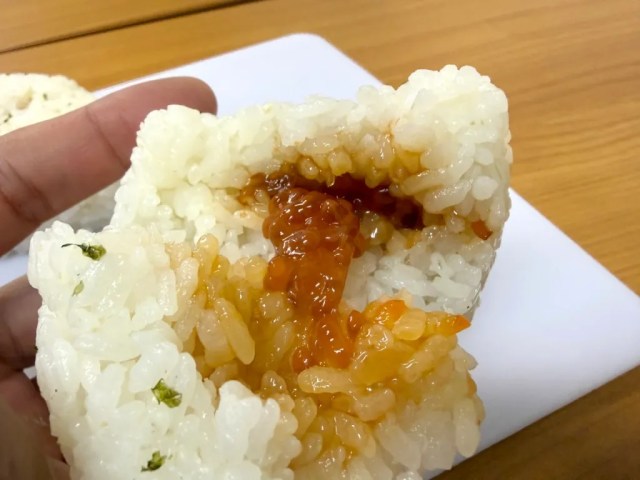
● Rice ball #4: a smaller amount of salmon roe

● Rice ball #5: an extra-large amount of salmon roe
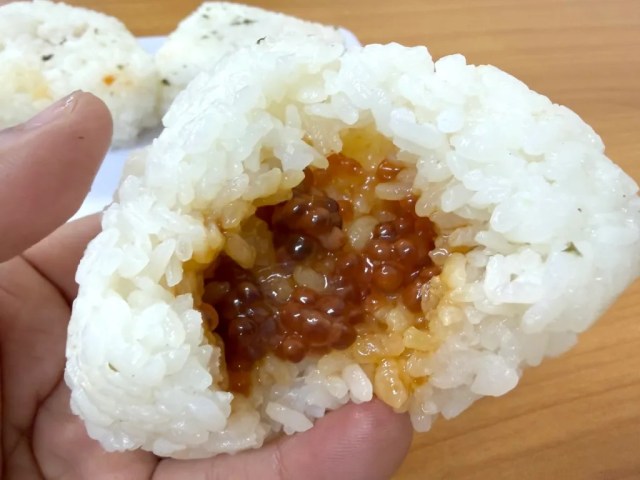
● Rice ball #6: a reasonable amount of salmon roe
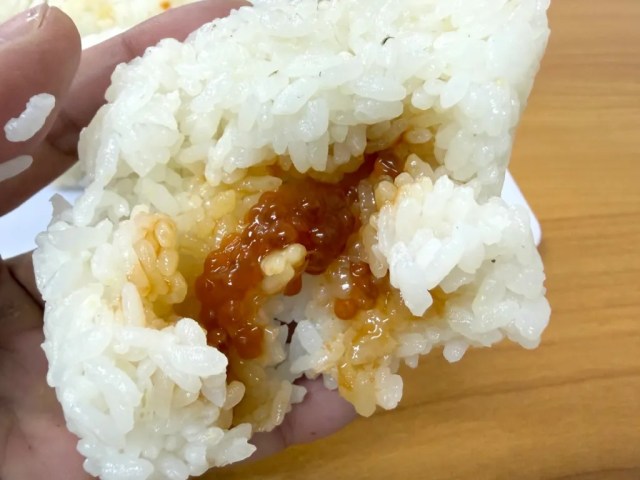
● Rice ball #7: a reasonable amount of salmon roe

● Rice ball #8: a reasonable amount of salmon roe
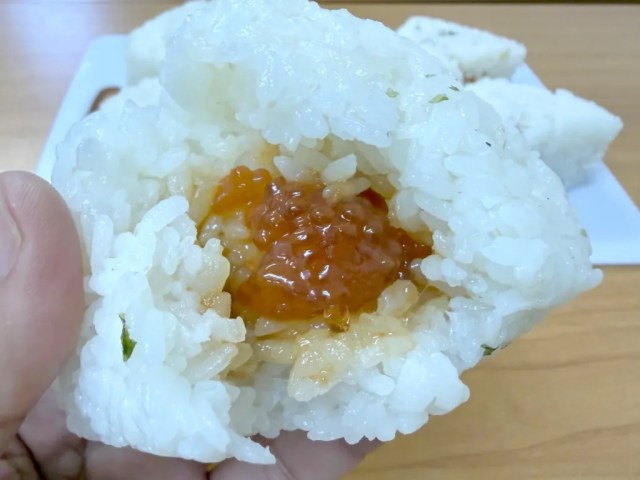
● Rice ball #9: an extra-large amount of salmon roe
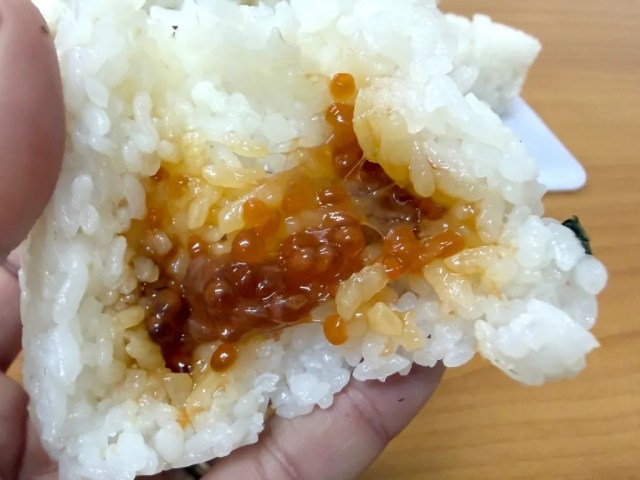
● Rice ball #10: a smaller amount of salmon roe

So out of 10 onigiri, the majority of them, six, contained what we feel is an acceptably large amount of salmon roe, and certainly more than Shingeki no Gourmet got in the rice ball shown in the tweet. And with an even split among our remaining four rice balls of two with a smaller-than-expected amount of sujiko and two with extra-large portions, things balanced out for us overall.

That said, it is unusual for there to be this much variance with a store-brand offering from one of Japan’s major convenience store chains, given their reputation for excellent and consistent quality control. Maybe the sticky texture of the salted salmon roe makes it difficult to dole out in exactly even portions while the rice balls are being made, but regardless of the reason, it looks like there’s a bit of luck involved in just how much filling you’ll get with 7-Eleven’s sujiko onigiri.
Photos ©SoraNews24
● Want to hear about SoraNews24’s latest articles as soon as they’re published? Follow us on Facebook and Twitter!
Credit:

0 comments: