We take a trip to Tokyo’s Islam Alley and find a world of sweets we never knew existed
Mr. Sato broadens his palate and his perspective at the same time.

With coronavirus vaccination numbers up and infection numbers down, life is slowly returning to its pre-pandemic way in Tokyo. And while our reporter Mr. Sato may not be ready to hop on a plane and travel overseas just yet, his taste buds have been crying out for something from beyond the borders of Japanese cuisine.

To satisfy those cravings, he took a stroll over to Tokyo’s Shin Okubo neighborhood. While it’s most famous as Japan’s liveliest center for Korean food and pop culture, there’s also a side street in Shin Okubo that locals have dubbed “Islam Alley” for its collection of Indian, Pakistani, and Middle Eastern specialty shops.

Mr. Sato’s destination on this snack run was the Siddique National Mart Shin Okubo branch, which opened in August as an offshoot of the Siddique Indian/Pakistani restaurant chain.

▼ The store on opening day

In addition to various imported ingredients, the market also has a food court with adjacent outdoor terrace seating.

▼ The menu has plenty of pictures, for the benefit of customers who are newcomers to things like dal chawal and falooda.

But Mr. Sato skipped those offerings and headed to the dessert counter, where he was greeted with an array of sweets in all manner of colors and shapes, as tempting to him as they were unfamiliar.
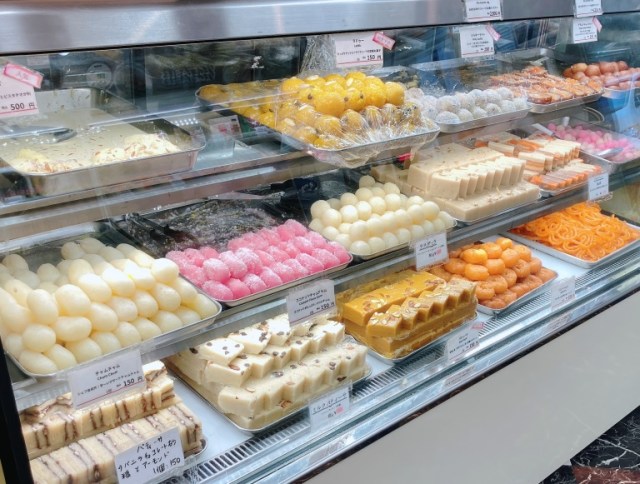
They were all neatly arranged in their own trays, with a thoughtful written description of their ingredients. After looking over his options, Mr. Sato picked out three to bring back to SoraNews24 headquarters and try.

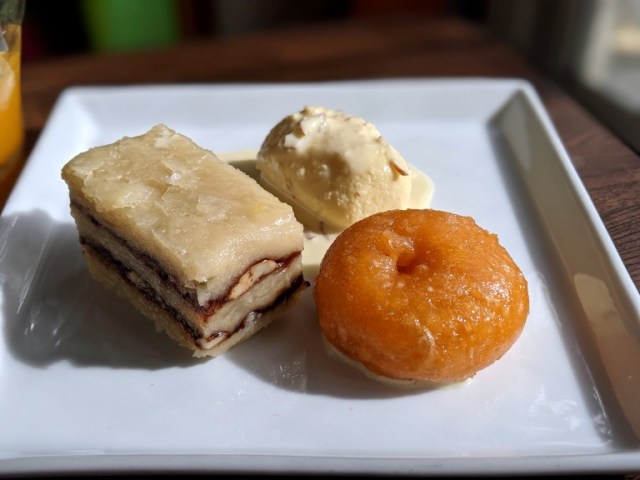
He started with the balushahi (150 yen, US$1.30). Though its bright color might have you thinking it’s a candied apricot, it’s actually a donut-like fried bread.
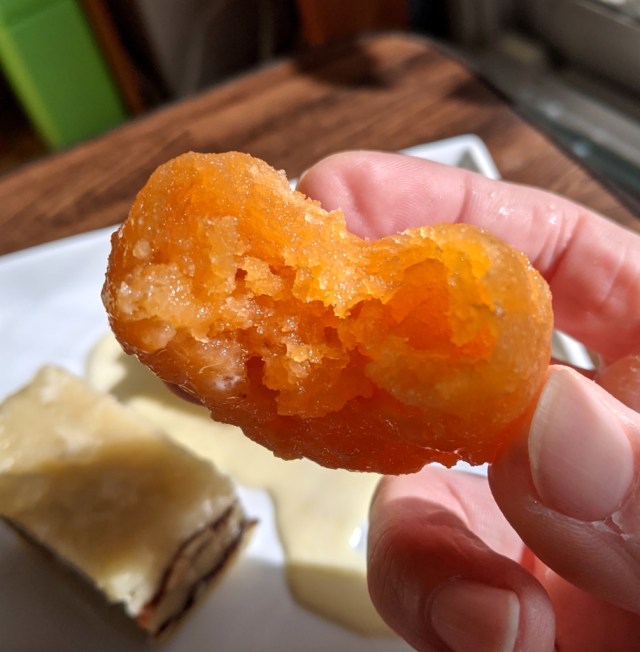
Because of its vibrant hue, Mr. Sato had braced himself for something simplistically saccharine, but it turned out to have an intriguingly refreshing and complex flavor profile with both sweet and tangy notes, reminding him of tamarind, a sour-sweet tropical fruit, plus a pleasing crispness to the dough’s outer layer.

Also priced at 150 yen was the patisa.
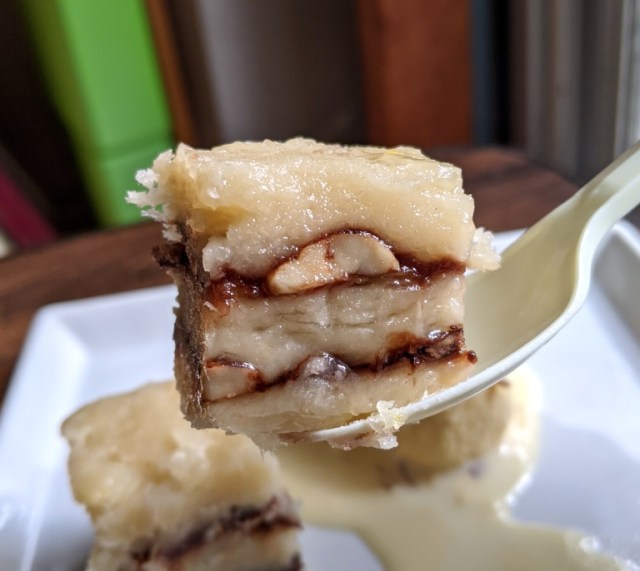
This flaky dessert was especially crispy, making Mr. Sato think of traditional Japanese amezaiku hard candy. The ingredients were listed as “vanilla, chocolate, sugar, and almonds,” but the flavor was actually quite balanced and sophisticated, especially with the nice-sized almond chunks on the inside.

And finally there was the ras malai.
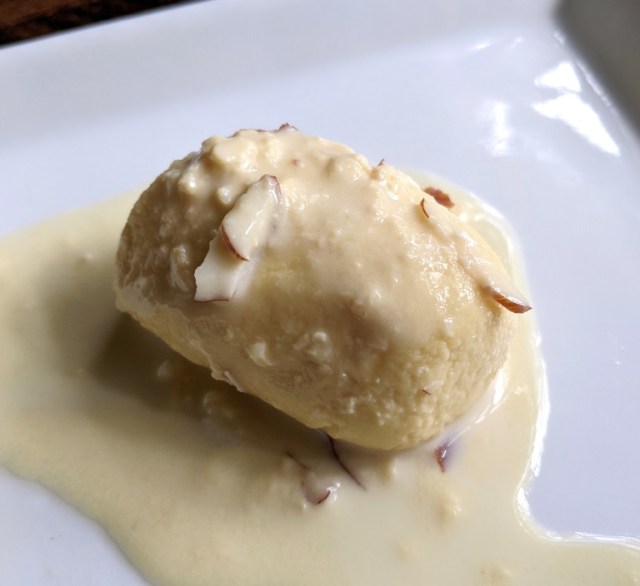
Priced at two for 500 yen, this is the top seller at the market’s dessert counter, and also the biggest cultural adventure for Mr. Sato’s palate on this day. In contrast to the hard textures of the balushahi and patisa, the ras malai was remarkably soft, similar in consistency to Japanese tofu.

That’s because ras malai is made by soaking bite-sized balls of chhena, a type of non-aged cheese curd, in cream and boiling them. Siddique also adds almond milk and pistachio flavors. The result is a flavor that almost reminded Mr. Sato of some sort of Japanese or European-style dessert he may have eaten, but after several minutes of trying to figure out exactly what, he came to understand that he’d never before had anything quite like ras malai.

Thinking back to how many other desserts Siddique had on display, Mr. Sato reflected on how much more there still is for him to learn about this sector of sweets culture. Thankfully, Shin Okubo isn’t far at all from our office, and even if you’re not in the neighborhood, Siddique has an online store too.

Shop information
Siddique National Mart (Shin Okubo branch) / シディークナショナルマート(新大久保店)
Address: Tokyo-to, Shinjuku-ku, Hyakunin-cho 2-9-15
東京都新宿区百人町2丁目9-15
Online store

Photos: ©SoraNews24
● Want to hear about SoraNews24’s latest articles as soon as they’re published? Follow us on Facebook and Twitter!


Credit:

Japan’s most mysterious vending machine sells fukubako, boxes filled with…something【Photos】

We try our luck at the lucky box vending machine in Tokyo’s Nakano.

As you might have noticed, we’ve got a soft spot for Japan’s quirky vending machines. Oh, there’s one that sells sea urchin? Awesome! We still have coins left over from our coriander vending machine run.

So today we’re hitting up a vending machine that sells…well, we’re not actually sure what it sells.

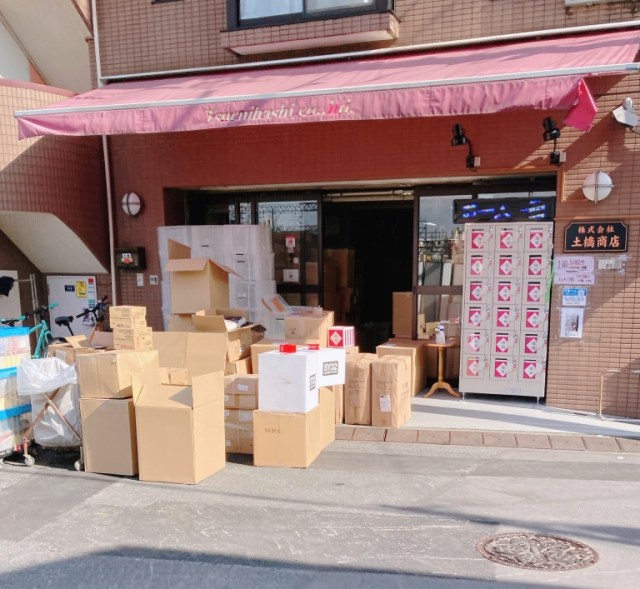
The machine is located outside the entrance to Dobashi Shoten, a wholesaler in Tokyo’s Nakano Ward. Dobashi, though, sells a little bit of everything. They buy up overstocks of imported goods, factory seconds, leftover inventory from stores going out of business, and all other sorts of random collections of goods, and so their vending machine, likewise, sells random collections of goods.

Lucky bags are most common around New Year’s in Japan, where shops will offer blind grab bags of their wares, usually with the promise of deep discounts for what’s inside. For its machine, Dobashi is selling what it calls fukubako, or “lucky boxes,” basically lucky bags with the bag replaced by a sturdy cardboard box filled with…something.

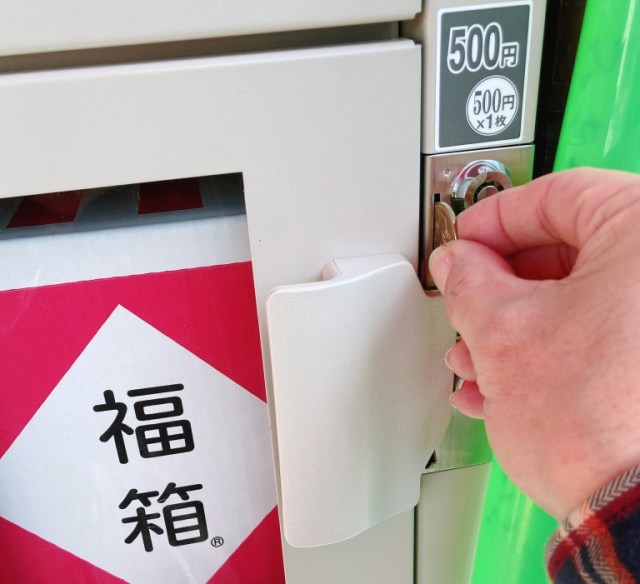
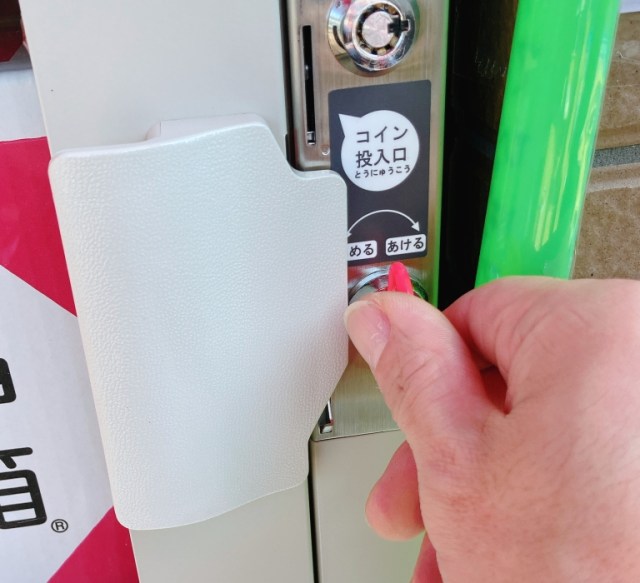
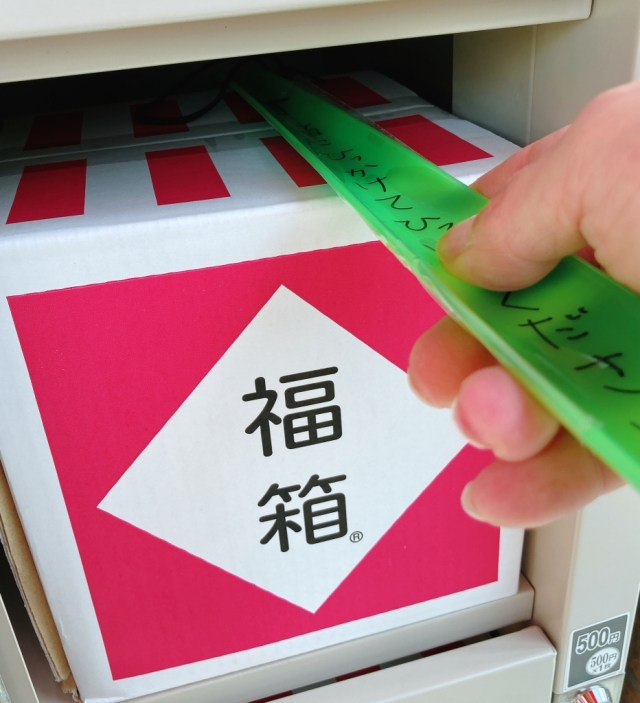
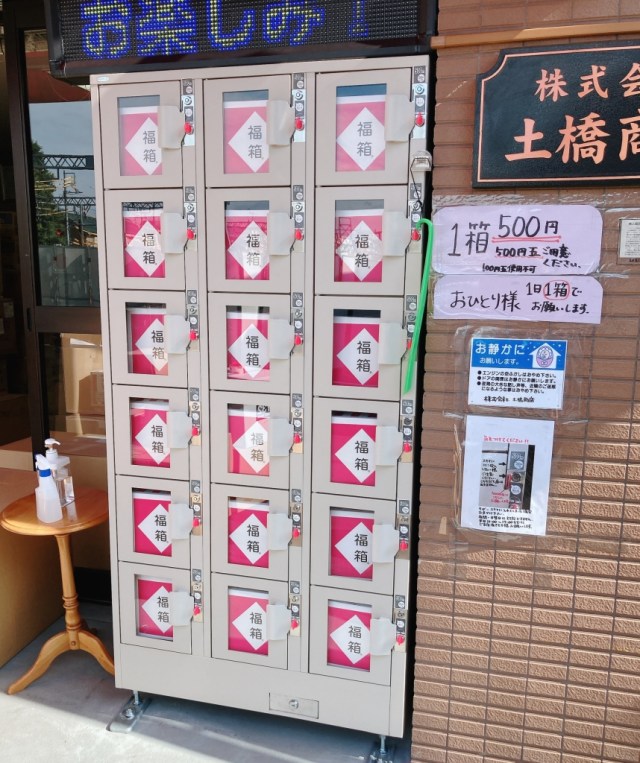
The machine itself actually looks more like a bank of coin-operated lockers, a setup you’ll sometimes see in Japan at unmanned produce stalls. Each lucky box costs 500 yen (US$4.40), so we tossed our 500-yen coin into a slot in the right column, turned the key, and opened up the door.

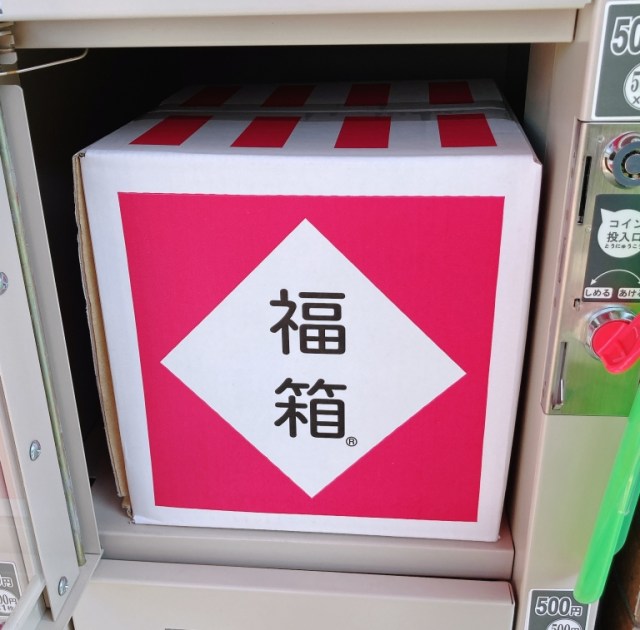
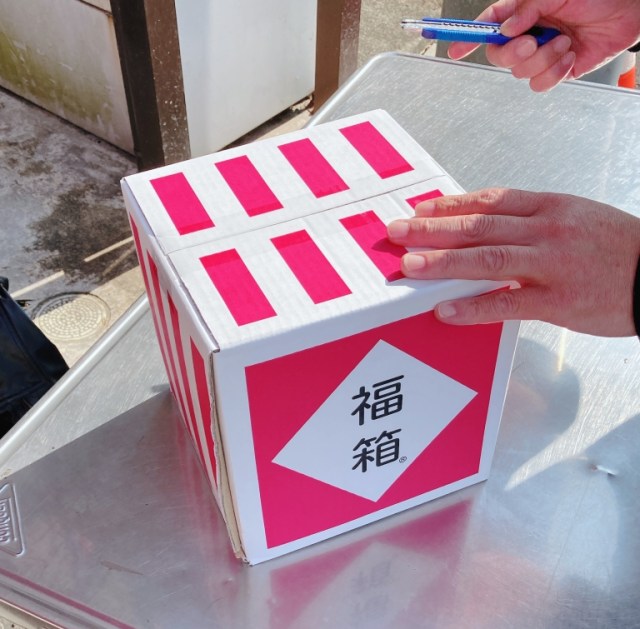
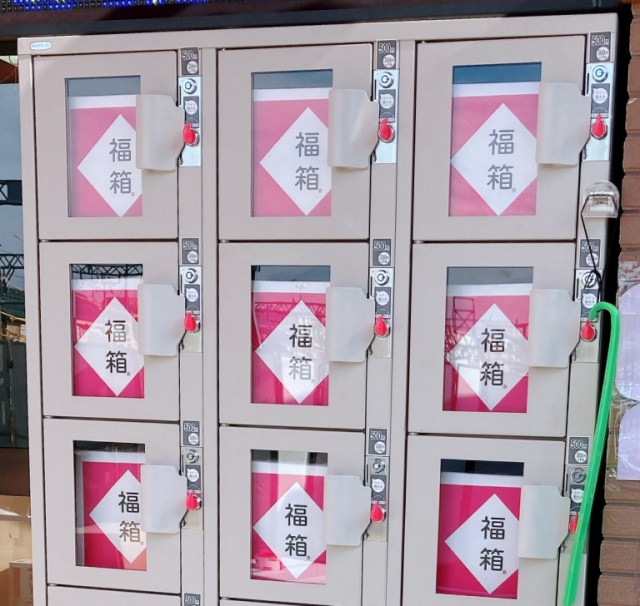
▼ All of the lucky boxes look identical from the outside, making this the blindest of blind buys.

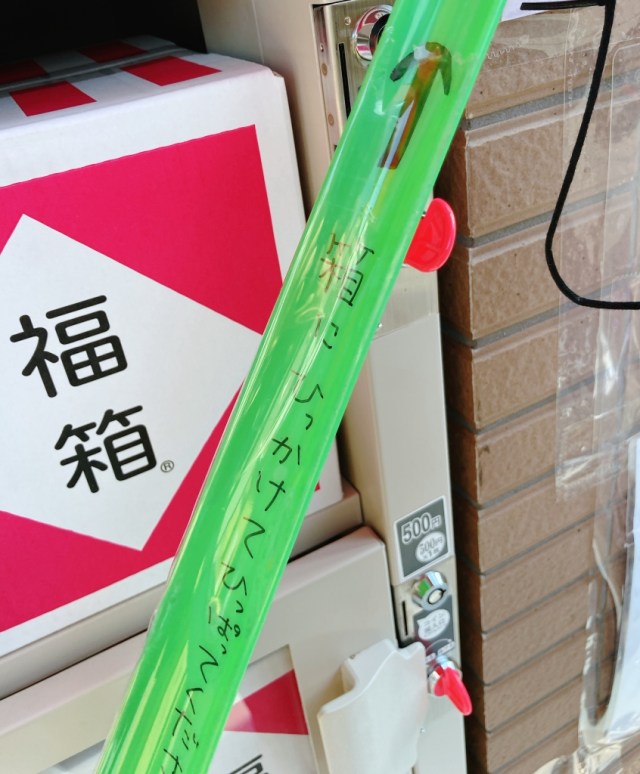
The box was surprisingly heavy, so much so that we couldn’t pull it out with our fingertips. Dobashi offers a solution, though, with a shoehorn strapped to the vending machine that you can use to pry the box out towards yourself.

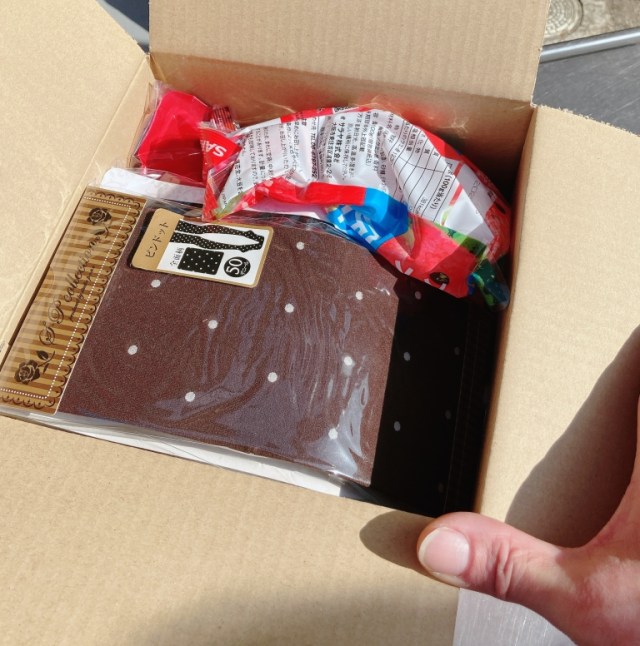
OK, time to open this up and see what treasures we’ve obtained!

Oh!

Ummm…

…huh…

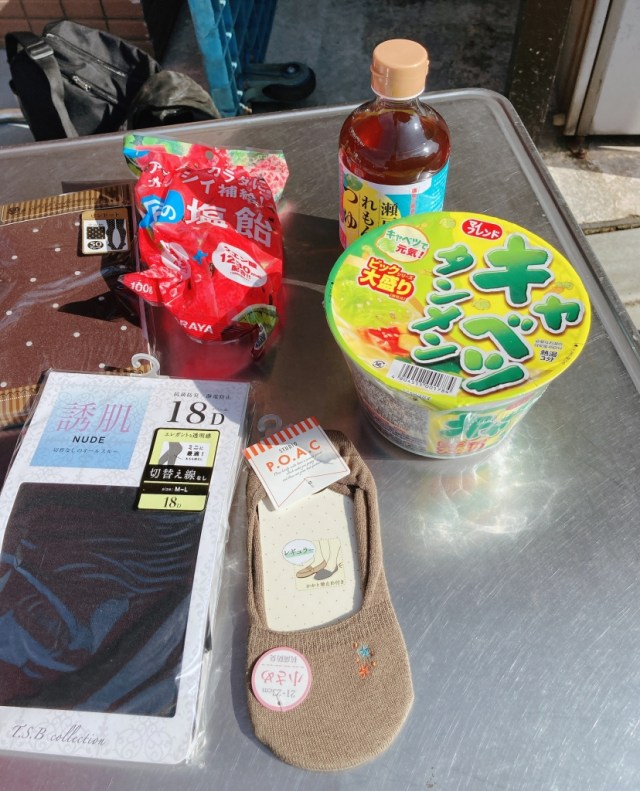
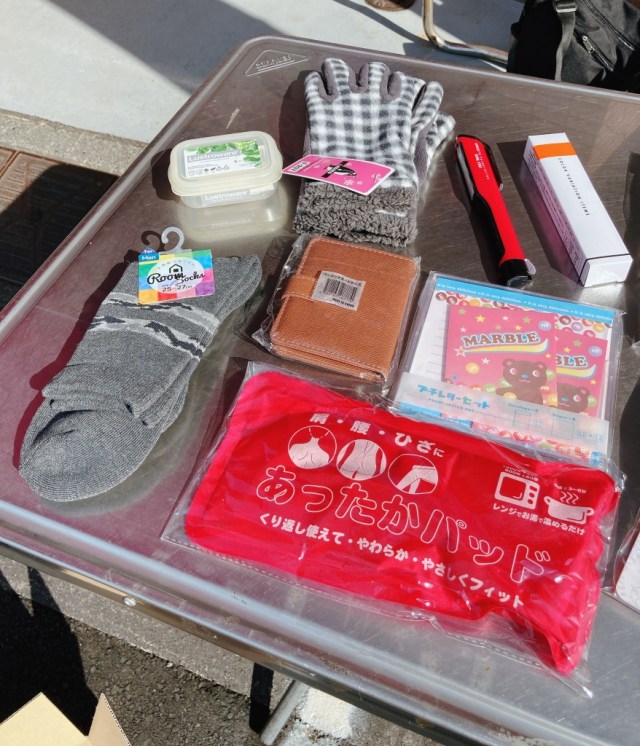
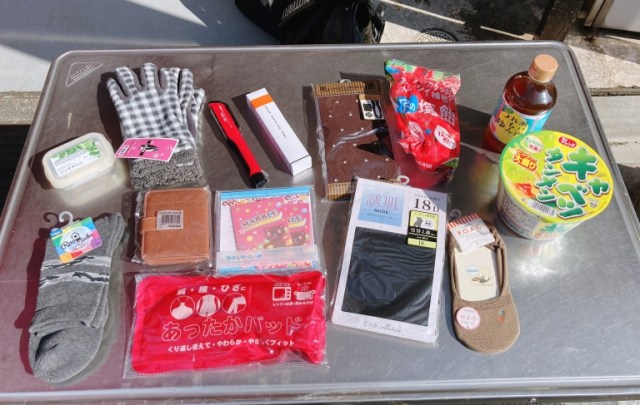
After spreading out our lucky box’s content for maximum photogenicity, we took the tally of our haul, which was:
● A cup of instant ramen
● A bottle of mentsuyu (bonito-stock noodle broth)
● A bag of salty hard candy
● A pair of mittens
● 2 pairs of socks
● 2 pairs of women’s stockings
● A set of plastic chopsticks and case
● A flashlight
● A stationery set
● A reusable heating pad
● A business card holder
● A small rectangular Tupperware container

That’s a total of 14 items, and while most of them look like the sort of thing you could buy at Daiso or some other 100 yen shop, with our lucky box having cost 500 yen, that works out to less than 36 yen each! Honestly, that’s a pretty impressive bargain, provided you just so happened to be in the market for this extremely eclectic set of products.

Even more optimistically, you could say that if there are even five things in your lucky box that you like, you’re essentially getting the rest of the contents for free. In our case, we really can’t complain. Who doesn’t like having some cozy new socks and mittens as winter is coming, and who can’t find a place in their stomach for ramen and candy, right?

We’ll let you know if/when we find a use for the rest of the stuff.

Vending machine information
Located at Dobashi Shoten / 土橋商店
Address: Tokyo-to, Nakano-ku, Namabukuro 1-13-6
東京都中野区沼袋1-13-6

Photos ©SoraNews24
● Want to hear about SoraNews24’s latest articles as soon as they’re published? Follow us on Facebook and Twitter!


Credit:
Pokémon doughnuts appear in Japan, with Eevee joining the new Mister Donut range!

Christmas collection also includes Piplup, Pachirisu and Glaceon butts!

As the year winds down and begins to draw to a close, Pokémon fans have been keeping their ears perked for news from Mister Donut regarding their annual Christmas collection.

In past years, the Japanese doughnut chain has teamed up with Pokémon for some exclusive sweets and merch to mark the festive season, and today they revealed the popular collaboration will continue this year as well, with some bright new additions to spark up some extra excitement.

While Pikachu has been the star of recent Mister Donut collaborations — in both scary and tasty versions — this year, the electric Pokémon will be joined by another beloved character from the franchise.

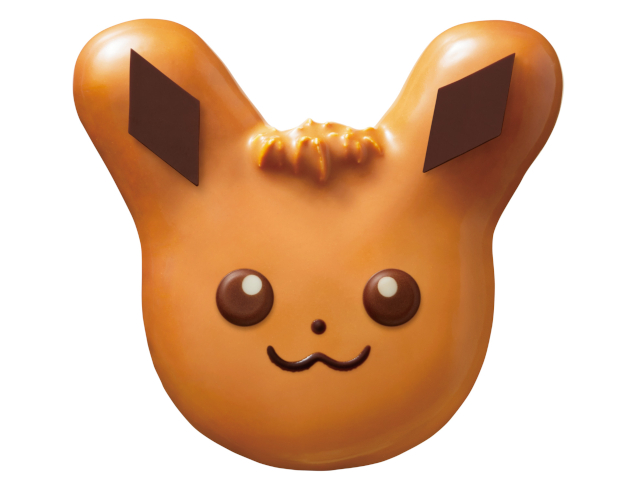
▼ Eevee!

The new Eevee doughnut contains whipped cream within the soft, chewy dough, and the Pokémon’s entire face is coated in caramel-flavoured chocolate. Eevee’s fringe tuft contains whipped cream while the ears are crunchy chocolate pieces.

While this is Eevee’s first appearance as a doughnut, crowd-favourite Pikachu will be returning for its third time, due to popular demand. Both doughnuts retail for 270 yen (US$3.17) for takeout and 275 yen for eat-in customers (tax differs for takeout and eat-in in Japan).

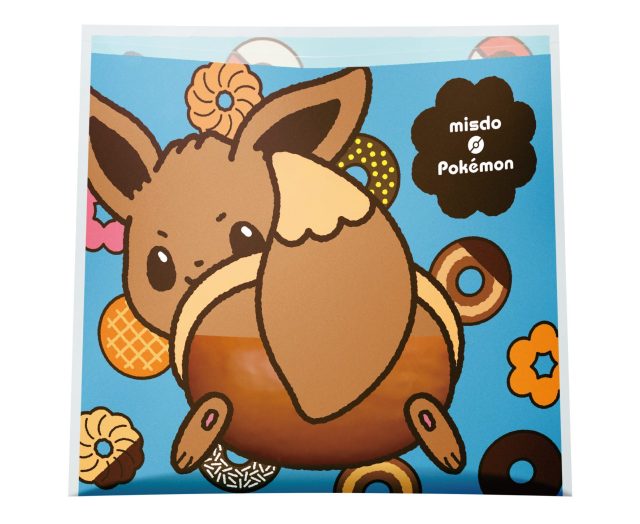
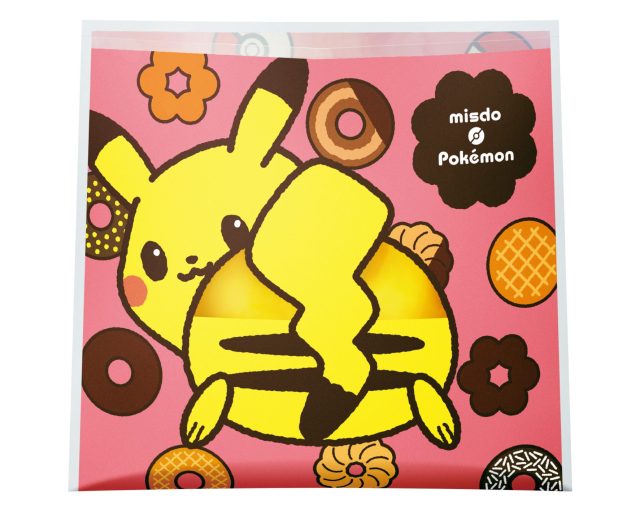
Fans are in for an extra-special treat this year, with a new range dubbed “Furumuki Doughnuts” (“Looking Back Doughnuts“), which are priced at 194 yen for takeout and 198 yen for eat-in customers. While these are regular-looking doughnuts that aren’t shaped like Pokémon, each one comes in special packaging with a Pokémon butt square and centre, showing the character looking back over its shoulder at you.

The Eevee Furumuki Doughnut has whipped cream and chocolate cream sandwiched inside it, and is finished with coconut and caramel-flavoured chocolate.

The Pikachu Furumuki Doughnut has whipped cream and custard cream sandwiched inside it, and is finished with purin-flavoured chocolate.

The Pokémons Furumuki Doughnut has whipped cream sandwiched inside it, and is finished with a white chocolate and cider-flavoured sugar (cider in Japan is non-alcoholic and tastes like lemonade).

▼ This variety allows you to imagine you’re biting into the butt of either Piplup, Pachirisu or Glaceon.

Like previous years, the chain’s signature Pon de Ring doughnuts are re-named “Pon de Wreath” for the holidays, and this year they’ll be available in the following three flavours, priced at 162 yen each for takeout and 165 yen for eat-in.

▼ Chocolate

▼ Purin (custard pudding)

▼ White Chocolate

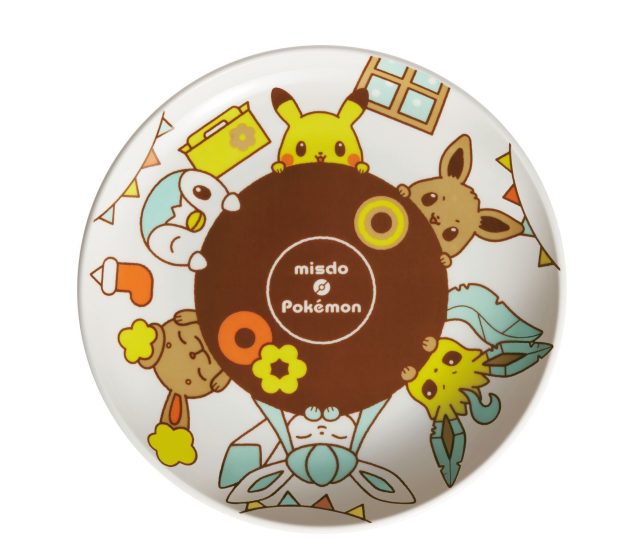
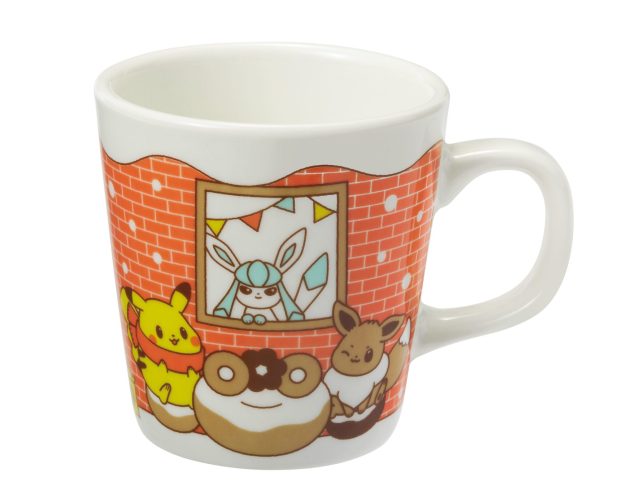
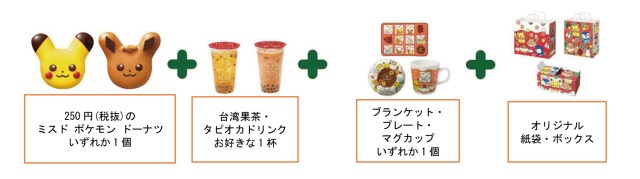
Once you’ve had your fill of Pokémon doughnuts, you’ll be able to continue the party all winter long with a limited-edition blanket, plate and mug.

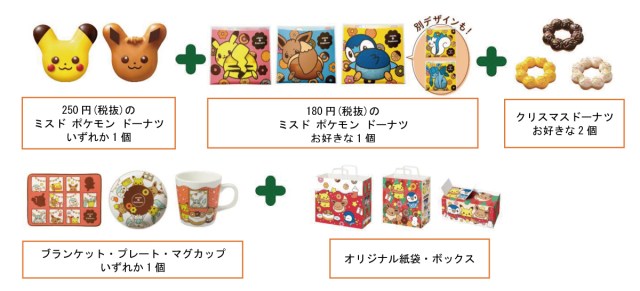
The merchandise can only be obtained by purchasing one of the following sets:

The Doughnut Set (1,350 yen for takeout or 1,365 yen for eat-in) contains one pocket monster doughnut, a Furumuki Doughnut, and two of the Pon de Wreaths, as well as one of the merch items, packed in an original bag or box.

The Drink Set (1,450 yen for takeout or 1,465 yen for eat-in) contains one pocket monster doughnut, plus one tapioca drink and one of the Pokémon merch items, packed in an original bag or box.

All the goods and doughnuts in this year’s Christmas collection will be available at Mister Donut stores around Japan from 12 November until the end of December. After that, it’ll be time to catch all their fukubukuro lucky bags which, if last year’s release is anything to go by, will also contain some neat Pokémon goodies!

Source, images: PR Times
● Want to hear about SoraNews24’s latest articles as soon as they’re published? Follow us on Facebook and Twitter!


Credit:
Convenience store Family Mart employs its first robot stocker

This is not the cat-monster robot future I was promised.

It’s a problem that has been plaguing the industry for years now. The lucrative convenience store business has expanded to such a degree that the growth of stores is outpacing the available labor. Add in ongoing issues with wages and late hours, and you have all the ingredients for a full-blown labor crisis.

▼ When 7-Eleven builds a 7-Eleven in the parking lot of another 7-Eleven and post guards at the doors, you know something’s not quite right

So, as we’ve seen, the major chains have been flirting with technology to handle the duties once held by people. Cashier-free stores have been slowly emerging to iron out any kinks that may appear before mass adoption, and robots have been called in to do the stocking duty.

Last year we saw tests held by convenience chain Family Mart and robotics firm Telexistence in which a robot avatar called the Model-T was remotely piloted via VR to stock drinks. Perhaps most impressive part was that the robot looked pretty cool – like something from a Tim Burton movie.

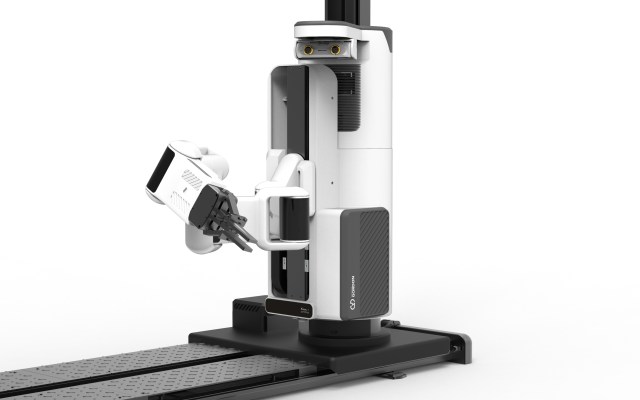
Now, Family Mart and Telexistence have announced that the first such robot has been installed at a Family Mart on the premises of the Ministry of Economy, Trade and Industry in Tokyo. It was put into active duty on 2 November in an unveiling attended by the press.

▼ News report on the new robot worker

Oh… I guess they decided against the cat-monster in the end. Instead, it appears Family Mart chose Telexistence’s very plain looking TXScara robot arm to do the stocking. As we can see in the video above, the arm automatically refills the display case by grabbing items from the stock shelves directly behind it and sliding them into the correct section.

The previous cool robot had a human to control it and monitor which drink went where through a VR interface. However, the TXScara can monitor and identify stock by itself with the aid of an AI named…sigh, Gordon.

▼ I guess “Gordon” sounds more exotic to Japanese ears.

Reaction online has also been lukewarm, with many pointing out what they see as flaws in the system.

“But you still need a person to stock the shelf that the robot is [taking the items from in order to stock the cooler].”
“It’s pretty slow. Seems like a person could do it way faster.”
“It’s actually amazing, but kind of slow too.”
“Are they going to make another robot to open the cardboard boxes and refill the back shelf?”
“I used to work at a convenience store and do this. It was actually a nice break to cool down in the summer.”
“In the end, it still takes a person to stock the back shelf.”

Ultimately many of those complaints seem superficial. Stocking the back shelf would only need to be done as a single job when deliveries arrive rather than constantly keeping up with sold inventory throughout the day. Also, there’s no need for the robot to move fast unless people were buying up drinks at an amazing speed, and it would take some kind of BTS canned coffee for that to happen.

Still, it can’t be denied that they completely sucked all the fun out of this endeavor by replacing the proposed nightmare-catbot with an AI named Gordon. Nevertheless, Family Mart reports that the move will be beneficial to the labor shortage as stocking takes up about 20 to 30 percent of a human employee’s workload.

Honestly though, that’s probably the kind of work I’d want to do at a Family Mart. The other day I saw a maniac arguing with the poor clerk there for at least five minutes about the price of a single 27 yen (US$0.24) Black Thunder. When they can make a robot that can handle that kind of crap then we’ll have true progress.

Source: NHK News Web, Family Mart, Hachima Kiko
Top image ©SoraNews24
Insert image: Family Mart
● Want to hear about SoraNews24’s latest articles as soon as they’re published? Follow us on Facebook and Twitter!


Credit:
Japan’s new sukiyaki burger tops your burger with more beef all winter long

Mos Burger combines traditional Japanese hotpot with a hamburger for an irresistible crossover.

As Japan’s most popular domestic hamburger chain, Mos Burger is always ready to give its menu an extra dose of Japanese-ness. Last year, for example, they created the amazingly delicious sake milkshake, and now they’re bringing out another mouthwatering fusion with a brand-new sukiyaki burger.

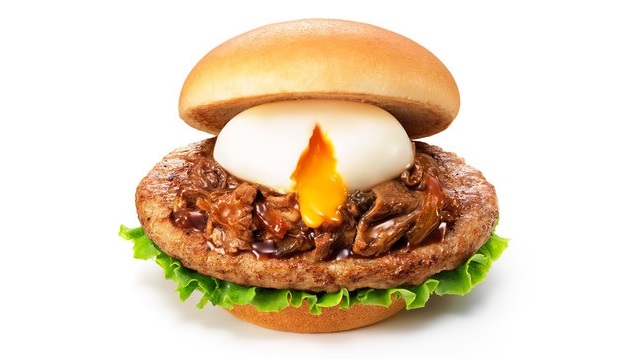
The Tobikiri Torottama Sukiyaki burger, part of Mos’ premium Tobikiri or “Jumping Out” series (so called because the extra-large patties stick out beyond the buns), is a burger with toppings inspired by sukiyaki. Of course, sukiyaki is a stewed beef hotpot, so yes, this means that the Tobikiri Torottama Sukiyaki is a burger where the patty is topped with even more beef!

Resting atop the mixed beef/pork patty are slices of stewed beef, both shoulder and flank cuts to provide a mix of morsels both lean and succulent. There’s also green onion, a must-have ingredient in sukiyaki, and they’re all drizzled with a sauce modeled after warishita, the sweet and succulent soup stock used for sukiyaki hotpot. And since sukiyaki connoisseurs recommend dipping the beef in a dish of egg before popping it into your mouth, the Tobikiri Torottama Sukiyaki also features a soft-boiled egg (or “torottama”) to unite everything for a decadent, gooey eating experience.

The Tobikiri Torottama Sukiyaki burger is priced at 590 yen (US$5.20), or 820 yen if you’re hungry enough for a double-patty version. It officially goes on sale November 11, and unlike the cruelly short lifespans of many seasonal Japanese menu items, it’ll be sticking around until late January, so we plan on eating several as we alternate between Mos sukiyaki burgers and Yoshinoya sukiyaki hotpot.

Source, images: PR Times
● Want to hear about SoraNews24’s latest articles as soon as they’re published? Follow us on Facebook and Twitter!


Credit: