Otaku gather in the Akihabara night as Toranoana dojinshi shop permanently closes【Photos】
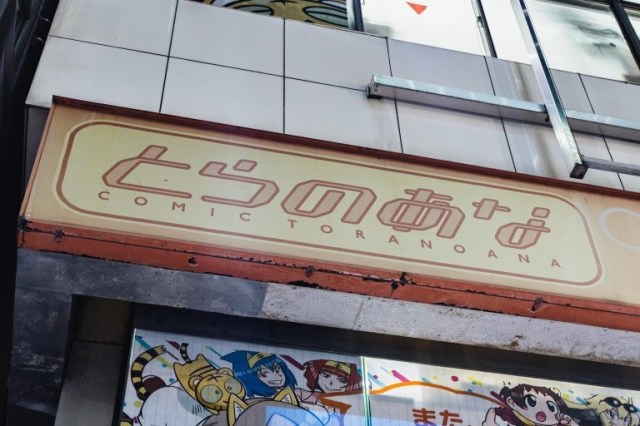
Goodbyes both heartfelt and snarky mark the end of an era in Tokyo’s otaku district.

It’s not unusual to feel a little wistful at the end of August, as summer starts to fade and shorter days and colder nights loom. This year, August 31 was especially bittersweet for otaku, though, because it marked the final day of the last remaining Akihabara branch of Toranoana, which was once one of Japan’s premier dojinshi (self-published manga) stores.

Actually, no fewer than five Toranoana branches were permanently closing on this day, with the others being locations in Tokyo’s Shinjuku, Osaka’s Namba and Umeda, and Chiba City. The Akihabara closure was the most significant, though, since not only is the neighborhood the worldwide mecca for otaku culture, Toranoana’s Akihabara A branch had been a neighborhood fixture for the last 28 years.
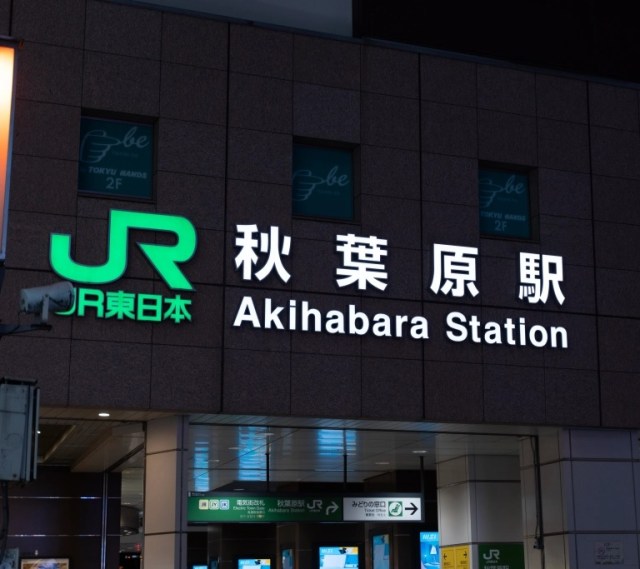
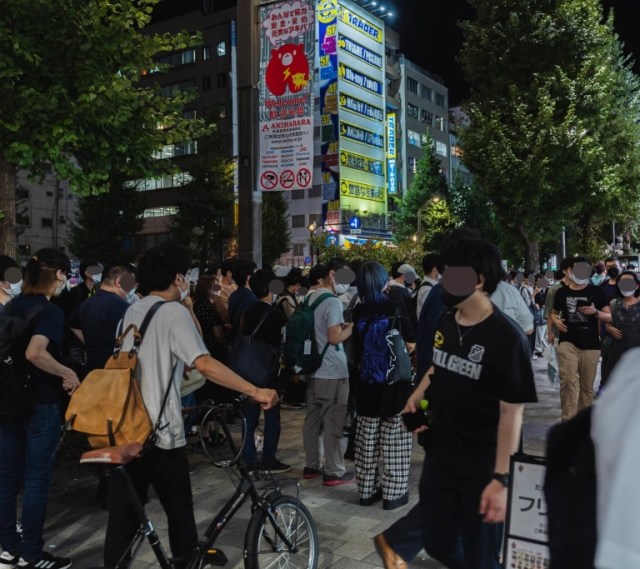
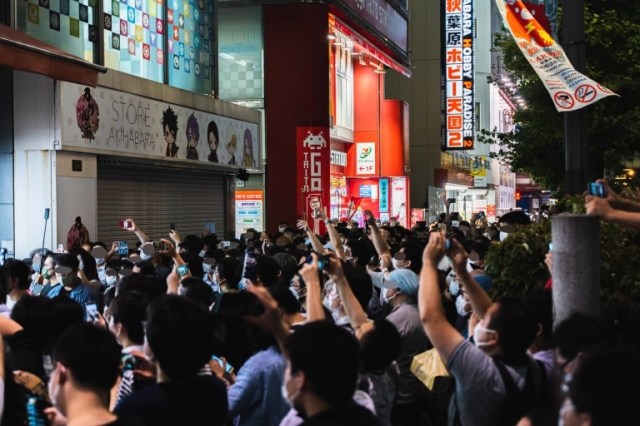
But that was all ending on Wednesday night, so we made our way out to Akihabara. It’s becoming customary for the clientele of fan-oriented shops and entertainment centers to come pay their respects on the final day, and for the staff to make a speech marking the occasion, and when we arrived a little before Toranoana was scheduled to close at 8 p.m., a crowd of otaku had already gathered.
▼ A sign in the window informing passersby of the closing of the five branches on August 31
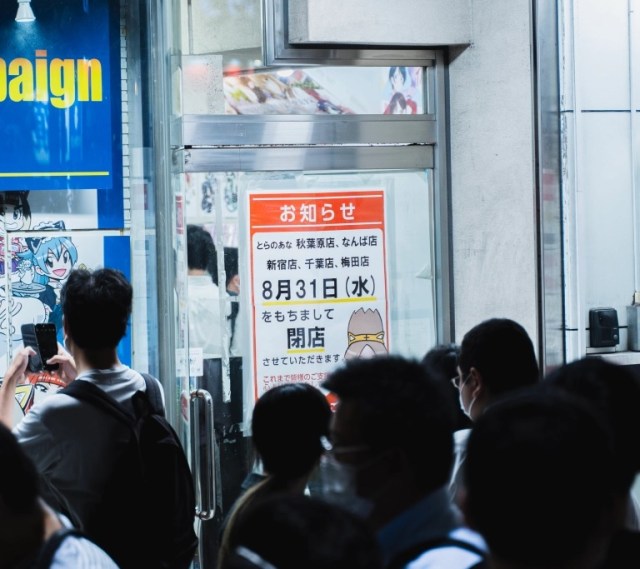
Customers inside were looking through the selection and making one last purchase, while others snapped commemorative photos of the storefront. Serving as a metaphorical time capsule, the final series being promoted outside the shop were Jewelry Hearts Academia and Rent-A-Girlfriend, with posters right above the door…
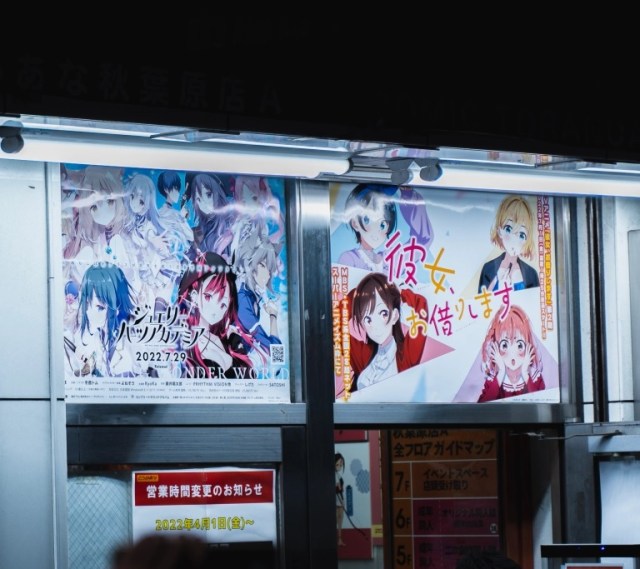
…and Sakura no Toki, with its artwork displayed just to the left of the entrance.
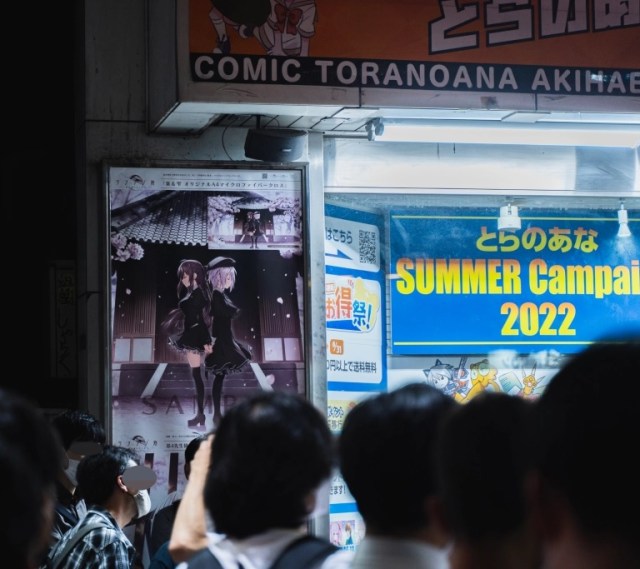
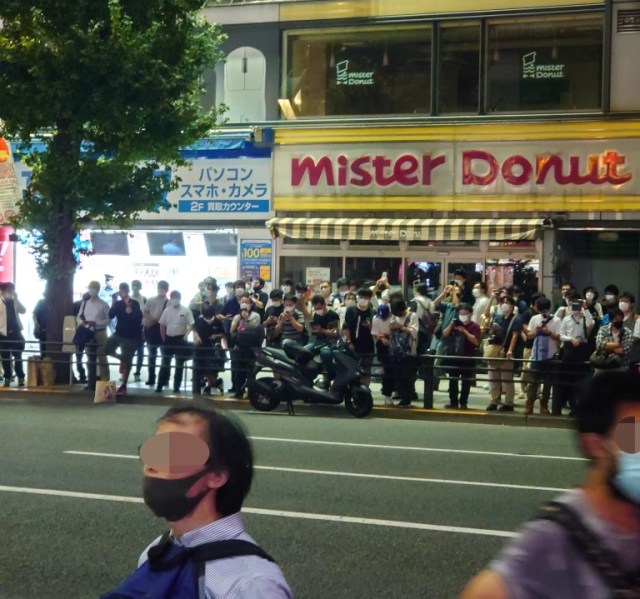
As the time got closer to 8, the crowd continued to grow. Eventually, there wasn’t space on the sidewalk in front of Toranoana, so people started amassing across the street, in front of the Mister Donut and Sofmap stores.
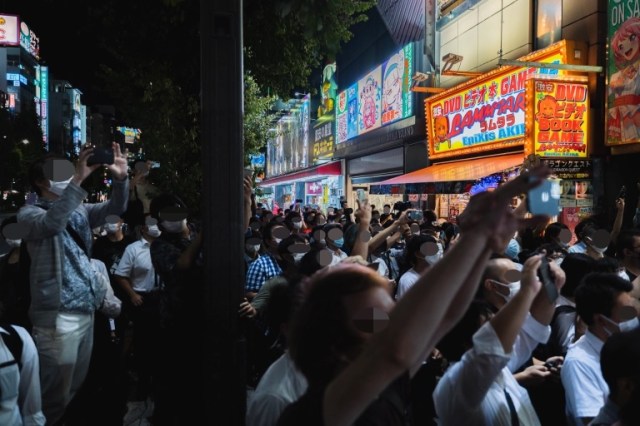
Speaking of other nearby businesses, Melon Books, another dojinshi specialty store, has a branch just two blocks away from Toranoana’s Akihabara shop.

▼ Melon Books
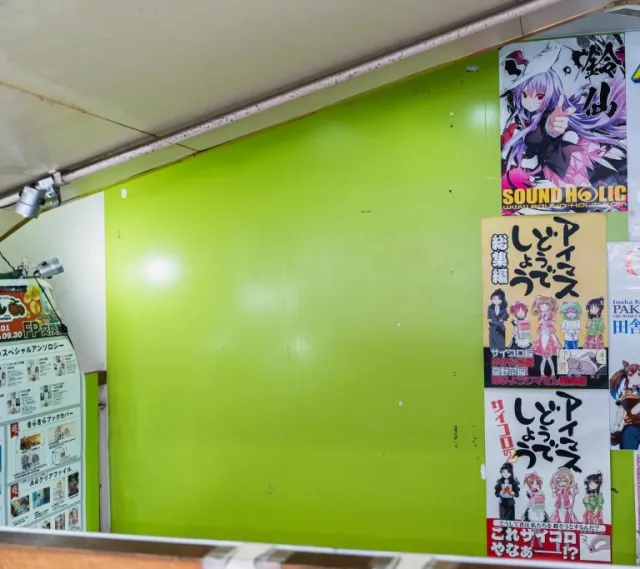
Melon Books was already closed for the night, but earlier in the day they’d put up a sign with the following message:

Thank you for 28 happy years

“Our neighbor two blocks over, Toranoana, will be closing today.
Esteemed rival, and fellow friend who loved Akihabara,
because you were close by, we also could do our best.
Without you here, Toranoana, thinking of the future fills us with sadness.
Selfish though it is for us to say this, everyone, please go to Toranoana today.
Challenging ourselves to be as good as Toranoana has been our goal, so with a smile, we say thank you.”

If that phrasing sounds familiar, it’s the same message that the Akihabara Burger King branch posted when the Akihabara McDonald’s closed down two years ago, with the same layout, which means that if you read the first character in each of the lines of text vertically, they spell out Watashi tachi no kachi,” or “Victory is ours.”

▼ The Melon Books sign, with 私たちの勝チ (“Victory is ours”) hidden in the far left column of text.

We then headed back over to Toranoana, but even though 8 o’clock came and went, the staff was still working hard, ringing up its last-ever shoppers’ purchases. At about 8:25, all the customers had been taken care of, and Toranoana’s staff came out to greet the assembled crowd, and the branch manager said a few words.

Even with a megaphone, it wasn’t easy to hear him over some of the surrounding noise of the city, but Toranoana’s appreciation for its fans was clear as he said:

“Thank you all for coming out, even in this hot weather on a weeknight.

As you are all already aware, today, August 31, is the last day for the Toranoana Akihabara A store to be in operation. We didn’t imagine that so many people would gather, and we are very happy to see that we are so loved. It’s very sad for our store’s time to be ending, but as we close, we hope that we’ll be able to see you all again, somewhere, in a new capacity.

Also, Toranoana itself remains in business, and we’ll continue to do our best through our online sales service, so we hope you’ll make use of it and show it the same love you have shown us here in Akihabara.

Thank you again for coming out tonight. Toranoana Akihabara A branch is now closed. Thank you for shopping with us for so many years.”
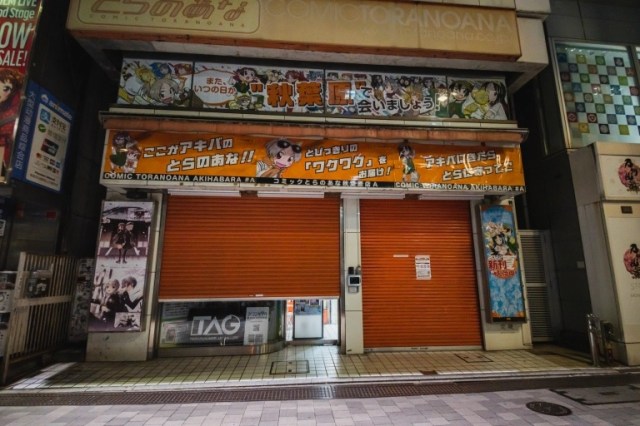
As mentioned in the manager’s speech, Toranoana will continue to sell doujinshi online, and it also has a number of regional satellite shops within other stores (essentially Toranoana-branded dojinshi corners inside of bookstores). There’s also one remaining full-fledged Toranona physical branch, the fujoshi-oriented store in Tokyo’s Ikebukuro neighborhood.

Still, as the crowd burst into emotional applause, the staff bowed deeply, and when the shutter on the store came down one last time, the curtain was also coming down on a period of Akihabara history.

Photos ©SoraNews24
● Want to hear about SoraNews24’s latest articles as soon as they’re published? Follow us on Facebook and Twitter!


Credit:
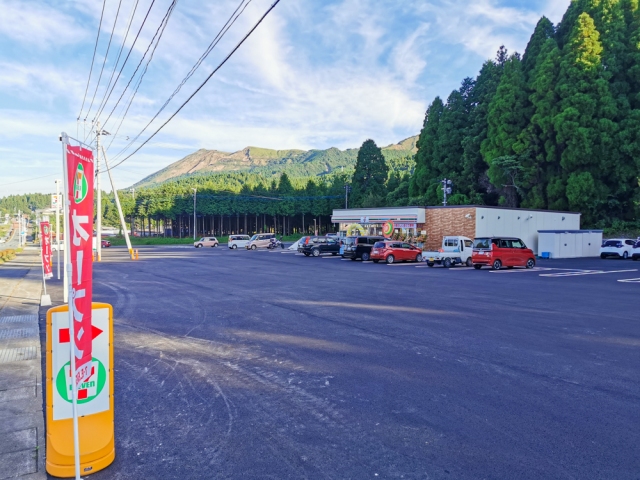
When a Japanese convenience store opens in the countryside…

7-Eleven comes to a rural town, and we’re one of the first to walk through its doors.

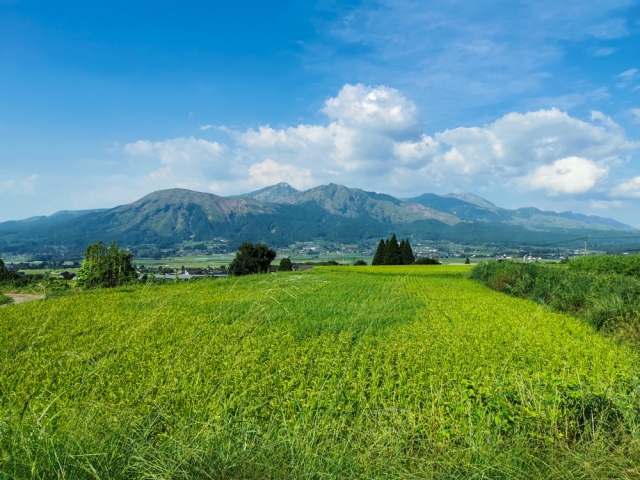
Our Japanese-language reporter Daiichiro Tashiro recently moved from the big smoke of Tokyo to the small smoke of Minamiaso in Kumamoto Prefecture, which lies at the foot of Mount Aso, an active volcano that last erupted in 2021.

▼ It’s been a big change of pace for him, but now that he’s surrounded by nature as majestic as this, he’s never been happier.

As Daiichiro eases himself into the slow life of the Japanese countryside, he’s been noticing a few things he’s never stopped to notice before. One of those things is the convenience of a Japanese convenience store.

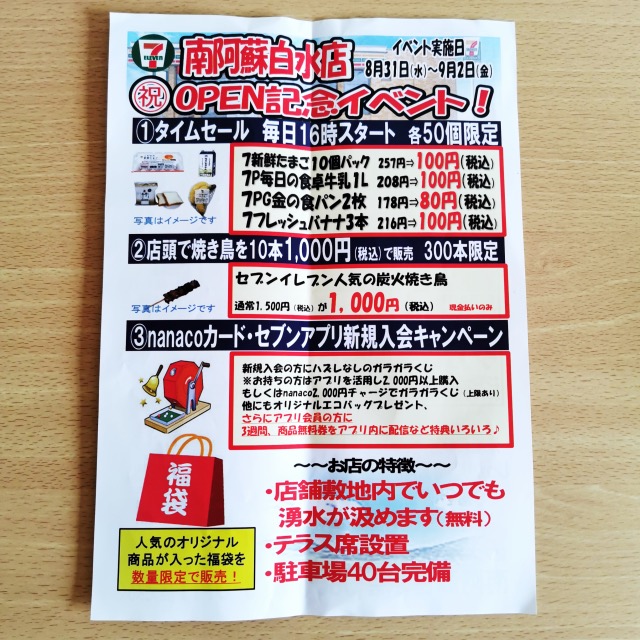
Previously, in the city, Daiichiro had been surrounded by convenience stores, never even bothering to glance up at them as he walked past. However, here in the countryside, they’re much more spread apart, and not always within walking distance so he’s come to appreciate them in a whole new light. In fact, when a new convenience store opens, it comes with a lot of fanfare that Daiichiro hadn’t known about…until he received this flyer in the mail.

▼ Minamiaso Hakusui Branch Commemorative Open Event!

Daiichiro felt a sense of excitement upon hearing the news of a new 7-Eleven opening in the neighbourhood, and reading through the commemorative events planned for the opening got him even more excited.

First, there would be a “time sale”, when select products would be sold at a discount from 4:00 p.m. on each day of the event, held from 31 August to 2 September. The new store would also be selling the chain’s popular yakitori chicken skewers at a 500-yen (US$3.59) discount for a pack of ten, and offering a lucky draw for new nanaco card members or users of the Seven app, where everybody would win a prize. What really caught Daiichiro’s eye on the flyer, though, was the chance to purchase a lucky bag, which would only be available in limited numbers.

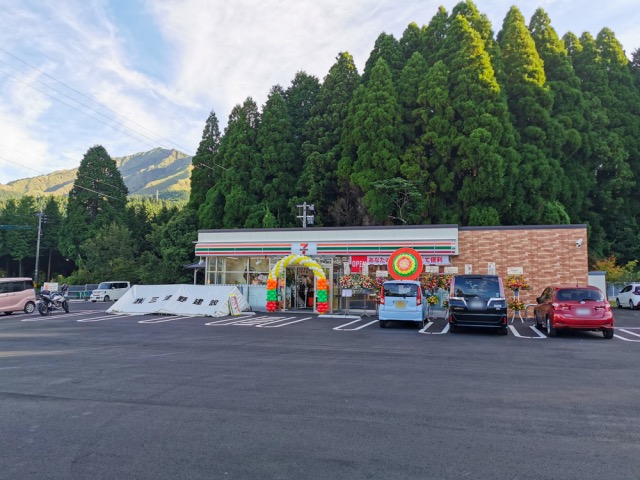
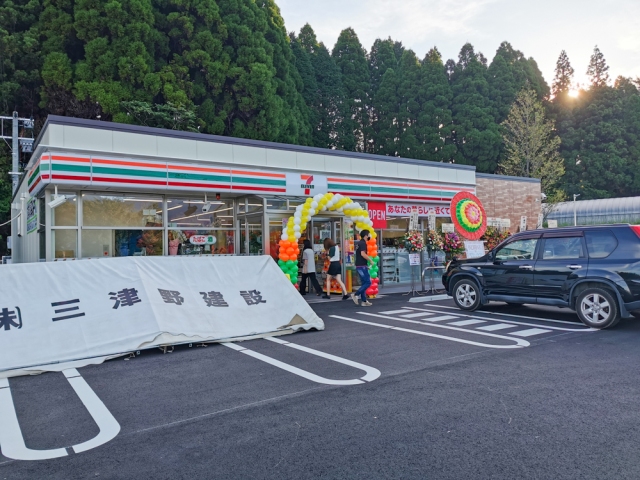
The flyer really worked to drum up a lot of local interest, because when Daiichiro arrived at the store bright and early on 31 August, when the doors opened at 7:00 a.m., there was a line of people outside waiting to get in.

▼ In the countryside, the opening of a new convenience store is an event.

As far as Daiichiro is aware, Minamiaso already has a Family Mart and Lawson convenience store, but this would be the very first 7-Eleven in the area, so it’s no wonder everyone was so excited for the opening.

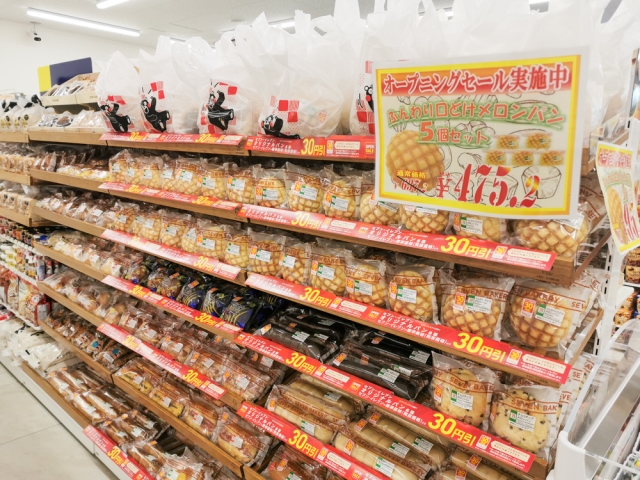
Daiichiro was also excited, especially after stepping inside the store and feeling the festival-like atmosphere. Everything was pristine — the shelves were perfectly stacked and the products were yet to be sullied into disarray by customers, and Daichiro couldn’t help but snap some photos to capture the pure joy of it all.

Opening sale Melon Bread — Five for 475.2 yen!

Yakitori 10 Pack — 1,000 yen!

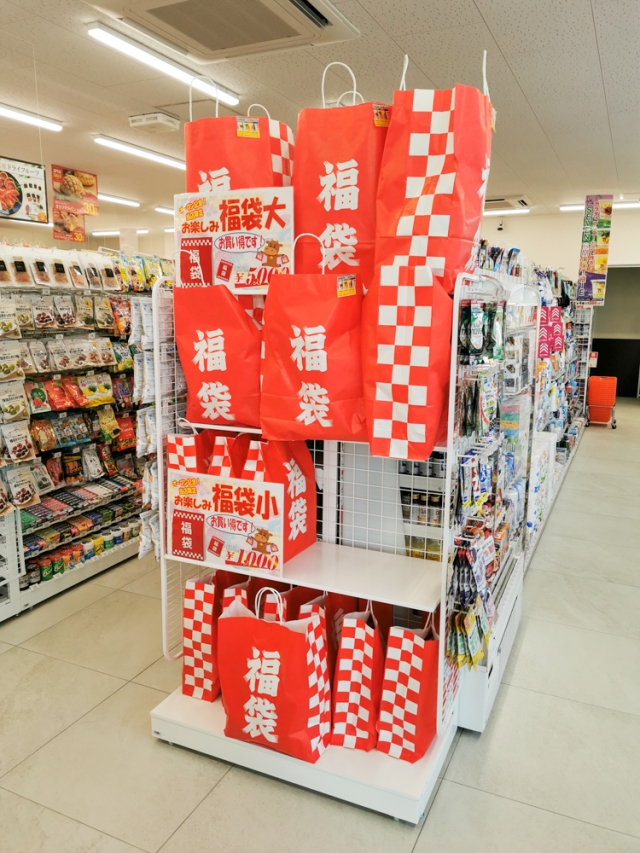
After checking out the food, Daichiro laid eyes on the product he’d come here for — the lucky bags.

These bags would only be sold at the opening, so Daiichiro picked up one small and one large, which set him back 6,000 yen (US$43.07). Lucky bags like these contain mystery items worth more than what you pay for them, so Daiichiro was looking forward to finding out what was inside them.

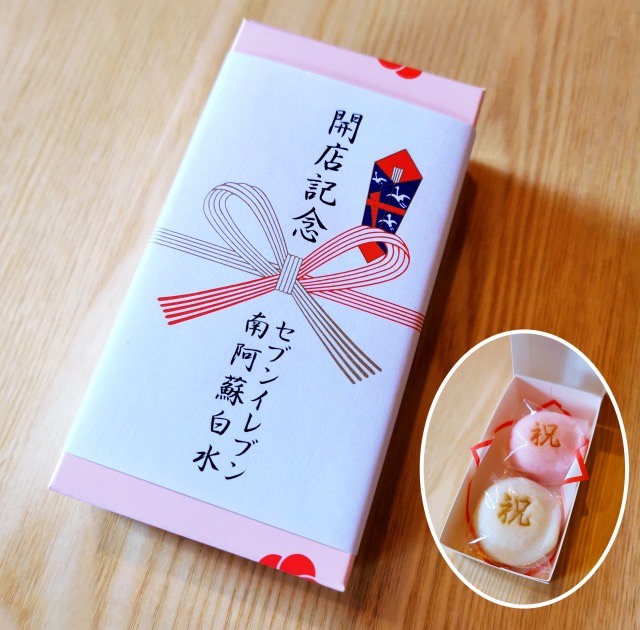
After paying for his purchases, Daiichiro’s heart melted when the staff handed him this free gift as part of the opening celebrations. It was a box wrapped in noshi paper, as is the custom when handing out gifts at formal occasions, and inside was one red and one white steamed manju bun with the character for “celebration” branded on them. Red-and-white is an auspicious colour combination in Japan, reflected in the customary bow on the noshi as well, which is another symbol to express good wishes.

▼ “Store Opening Commemoration” was written above the bow, and below, the name of the gift-giver — 7-Eleven Minamiaso Hakusui.

This was a beautiful, totally unexpected gesture, and when he left the store Daiichiro found another nice surprise waiting for him.

▼ The store had terrace seating unique to this branch, and beside the seating area, there was…

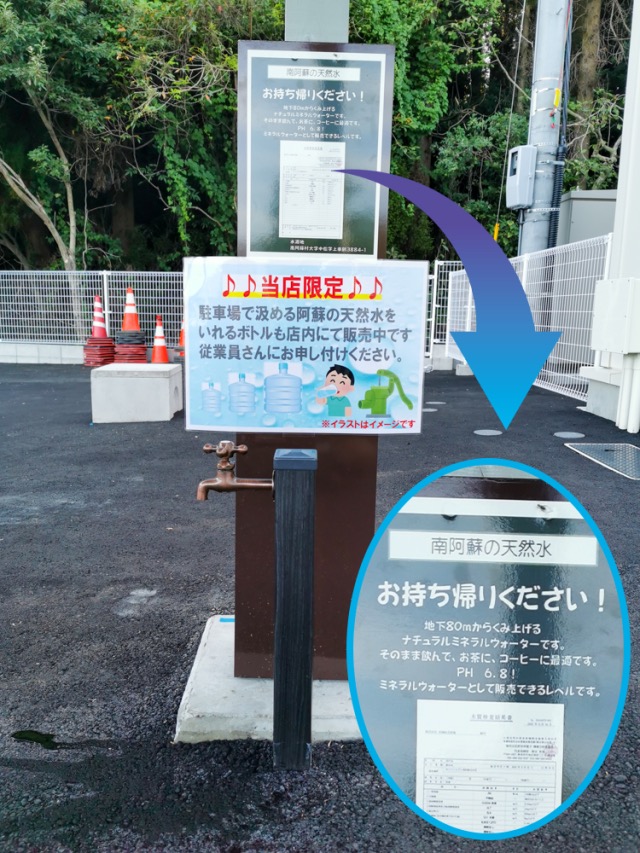
▼…a tap that dispenses natural mineral water from 80 metres (262 feet) below the earth!

Being in the vicinity of a volcano, this area is famous for delicious spring water, and here at this 7-Eleven they were giving it away free to customers. What’s more, there are special bottles designed to store water available, so if customers want one of these, they simply have to go in to the 7-Eleven and ask staff for them.

Daiichiro was so happy he was tempted to pinch himself, as he could hardly believe this was his life now. Convenience stores in the city are great and all, but out here in the countryside, they’re so much more.

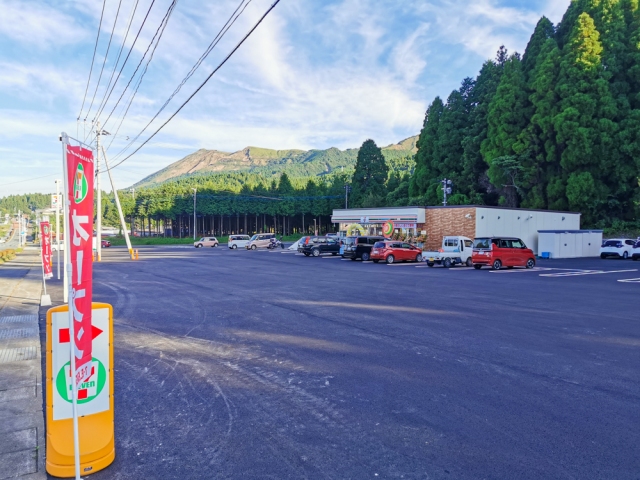
▼ And he’s not just talking about the massive 40-vehicle parking lot.

Rather than just being a place to buy things, convenience stores like these are a way to connect with people and enjoy a sense of community. Unlike a city store, where customers are taken for granted, Daiichiro felt valued here, as if his patronage was wanted and appreciated. It reminded him of being a child and shopping at a local family-run store — when he was younger, every time a new shop opened in his neighbourhood he’d feel a sense of excitement, and it’d been a long time since he felt that same sense of joy.

It was a reminder of how living in the countryside brings you back to appreciating the small things in life, where even the opening of a convenience store is a cause for celebration. Daiichiro never expected the opening of a 7-Eleven to have such a profound effect on him, but, like a lot of things he’s now experiencing in the countryside, it left a mark on him that he’ll never forget.

As for what’s inside those lucky bags — Daiichiro will be revealing all in a future article. Because these days, his life is running at a much slower pace than usual!

Photos ©SoraNews24
● Want to hear about SoraNews24’s latest articles as soon as they’re published? Follow us on Facebook and Twitter!


Credit:
Arcade game coin slot capsule toys bring coin-op style to your home or office【Photos】

A clever way to preserve a fading part of video game design.

Japan’s gacha capsule toy vending machines are a lot of fun, but they’re not the only way to transform your loose change into instant-gratification enjoyment. As gamers know, arcade game machines are another worthy candidate for dropping a few coins into.

So now there’s a way to combine the two with the Arcade Machine Coin Slot series.

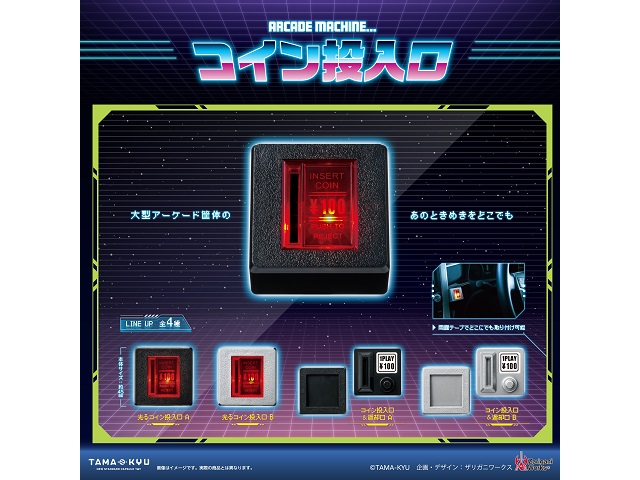
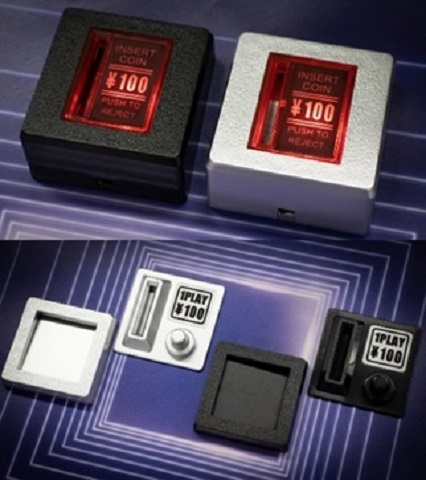
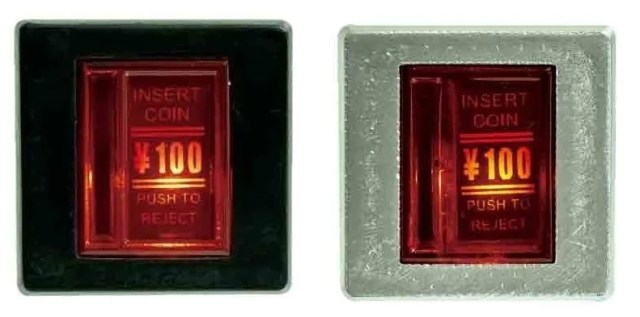
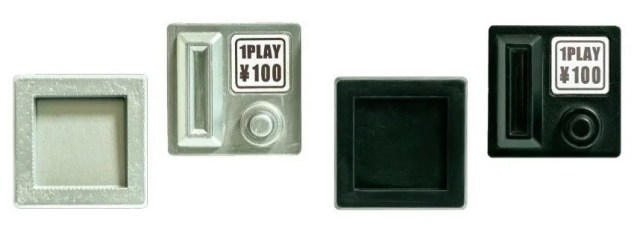
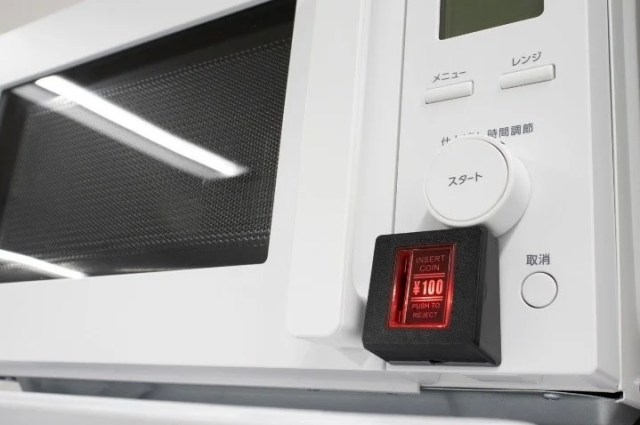
The latest creation from capsule toy maker Tama-Kyu, the Arcade Machine Coin Slot lineup consists of four different designs. Two of them are “light-up style,” with coloring that gives the illusion of the rear-illuminated plastic cover for a powered-on coin-op game’s coil slot cover.

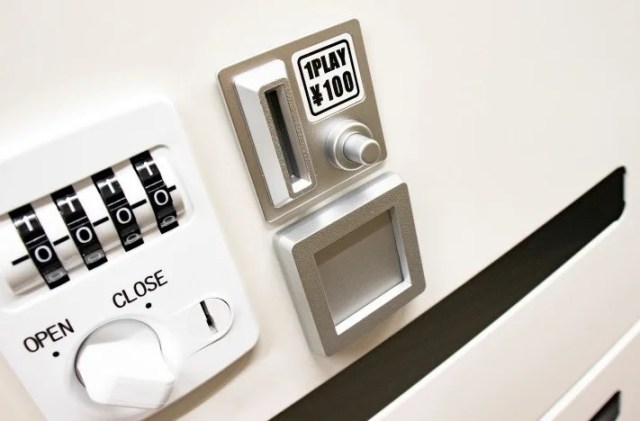
While not unseen in Japan, the above style tends to be more common in overseas arcade games. Within Japan, most of the semi-standardized arcade cabinets have a slot that’s comparatively flush to the machine, with an accompanying plunger-action refund rod.

▼ These versions of the toys come with a separate faux refund tray.

The Arcade Machine Coin Slot capsule toys have self-adhesive backings and are meant for decorative use, and can’t actually accept coins (there’d be nowhere for the coins to go). They do look convincingly realistic, though, especially when stuck on something that theoretically could be coin-operated.

The series is available in capsule toy machines now, priced at 300 yen (US$2.20) each. Granted, you could also use those three hundred yen coins to play three arcade games, but with arcades starting to become rarer in Japan, the Arcade Machine Coin Slot might be the sort of preservation of gamer culture you’ll want to have for your home.

Source: PR Times via IT Media
Images: PR Times
● Want to hear about SoraNews24’s latest articles as soon as they’re published? Follow us on Facebook and Twitter!


Credit:
Japanese hot sandwich maker dessert heaven: Making a jumbo obanyaki the easy way【Recipe】

Who’s got time for sandwiches when there are delicious Japanese sweets to be made?

You could make an argument either way about whether the hot sandwich maker is the most accurately named kitchen appliance or the least. On the one hand, yes, it’ll definitely make sandwiches, but it’ll make a whole lot of other delicious things too.

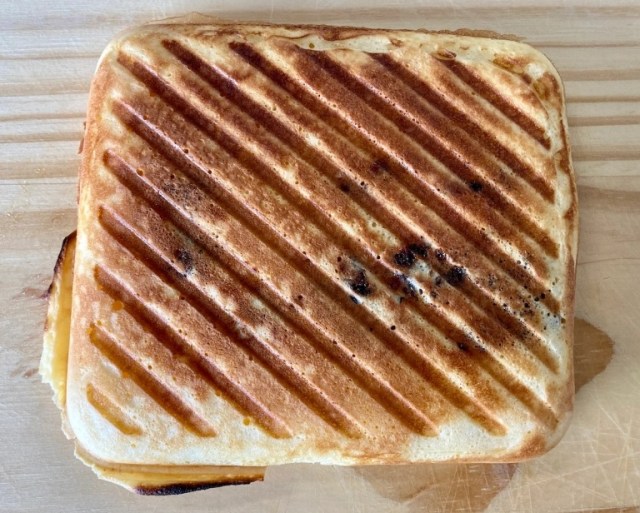
Case in point: today we’re going to use our hot sandwich maker to make an obanyaki, one of Japan’s favorite desserts.

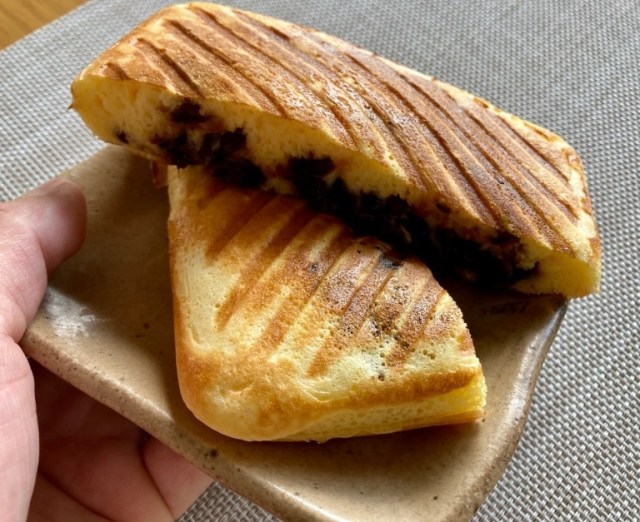
Usually obanyaki are made with a specialized piece of cooking equipment and come out shaped like hockey pucks. With our sandwich press, though, we’re going to make a jumbo obanyaki, but even with its extra-large size, it’s still super simple, thanks to the recipe we’re following from our friend at YouTube channel Ken Outdoor Cooking.

Ingredients

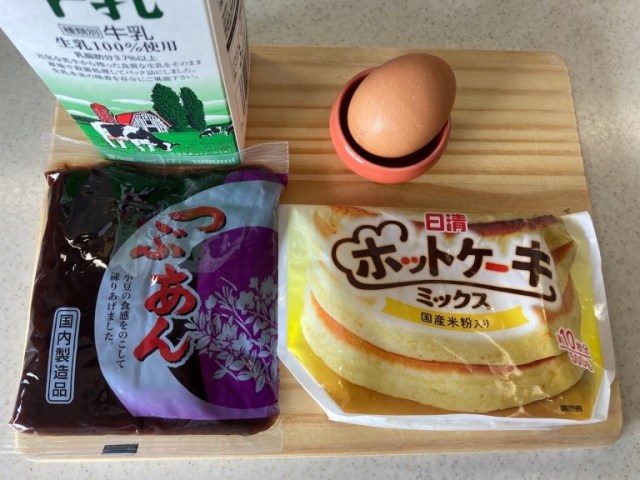
● Egg (1)
● Milk (50 milliliters [1.7 ounces])
● Pancake mix (80 grams [2.8 ounces])
● Vegetable oil
● Anko (sweet red bean paste)

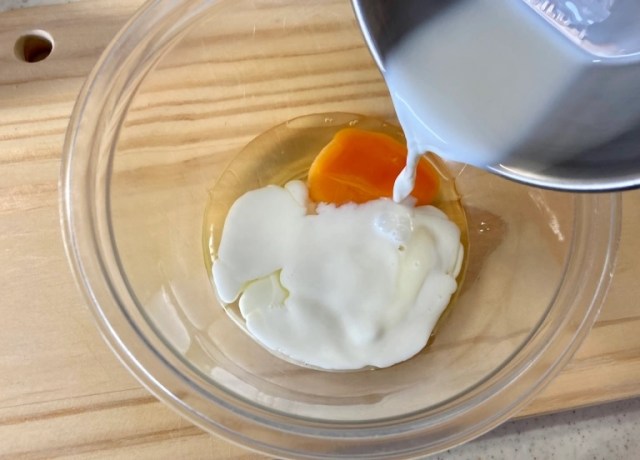
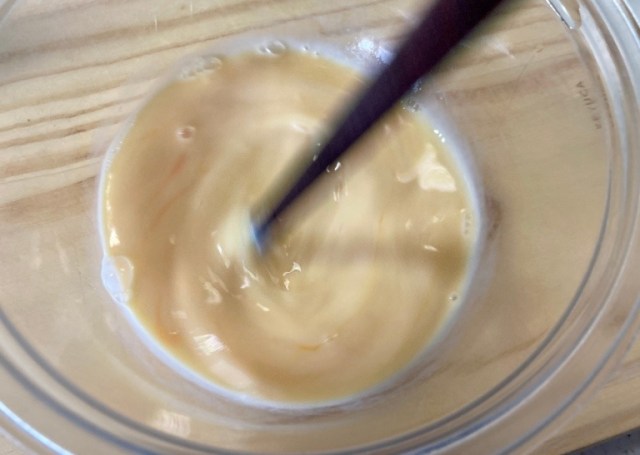
Step 1: Place the egg and milk into a bowl and mix well.

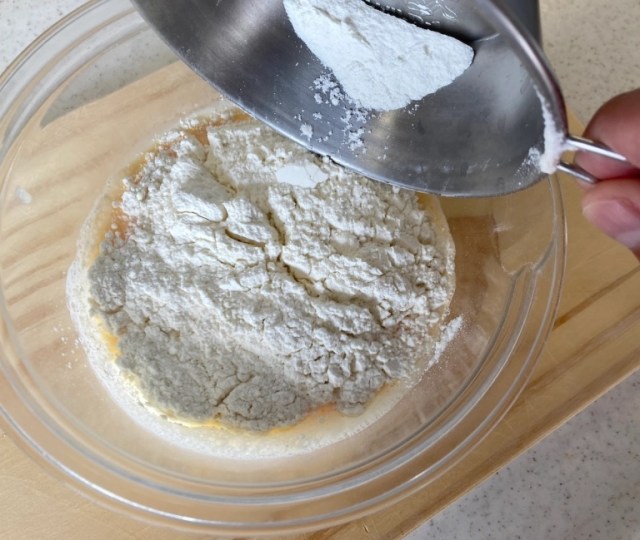
Step 2: Add the pancake mix and mix until there are no lumps. As a side note, the amount of pancake mix and and milk we used (80 grams and 50 milliliters) were per what was listed on the package for our pancake mix, so you’ll want to double check the brand you’re using and adjust the ratio as necessary.

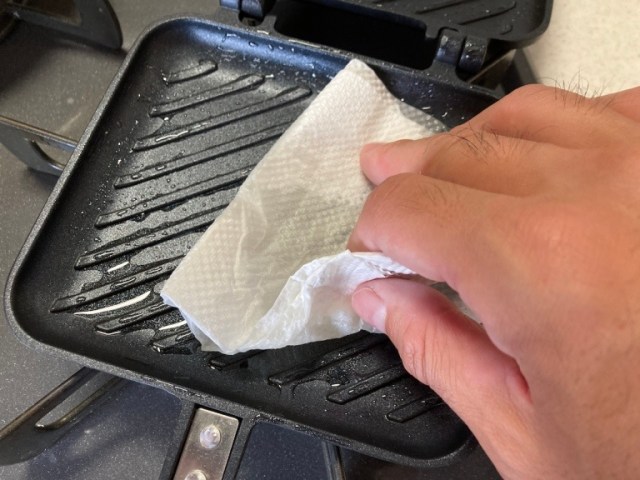
Step 3: Lightly apply vegetable oil to both sides of the inside of the sandwich maker. Use a paper towel to make sure the oil gets in between any grooves.

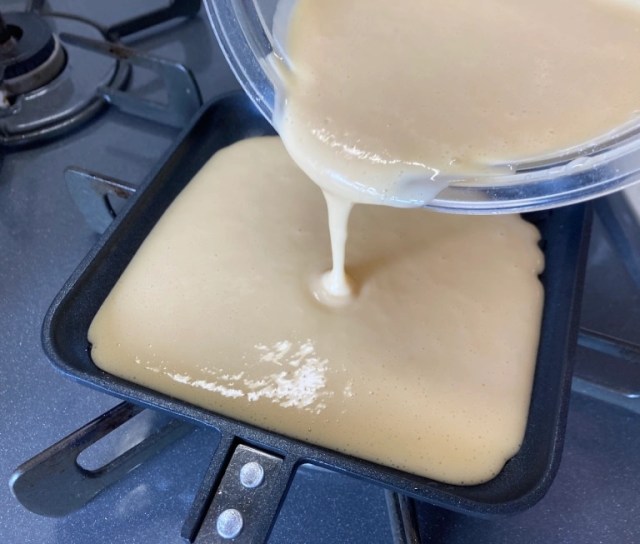
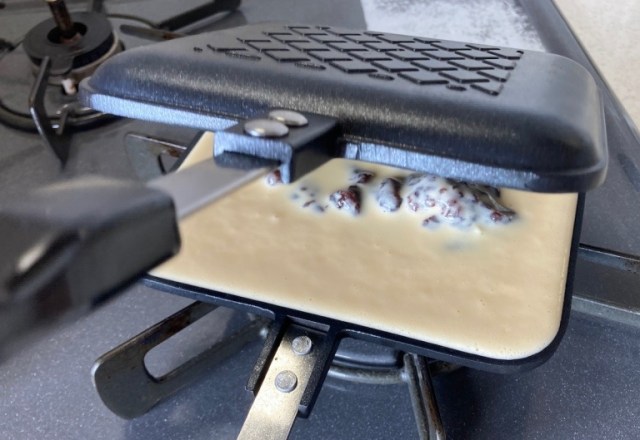
Step 4: Pour in the batter your prepared in Step 2. You’ll want to fill the sandwich maker up about 2/3 of the way.

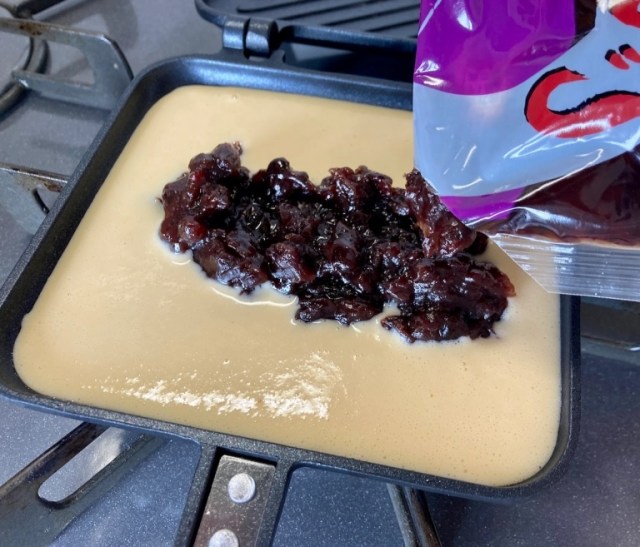
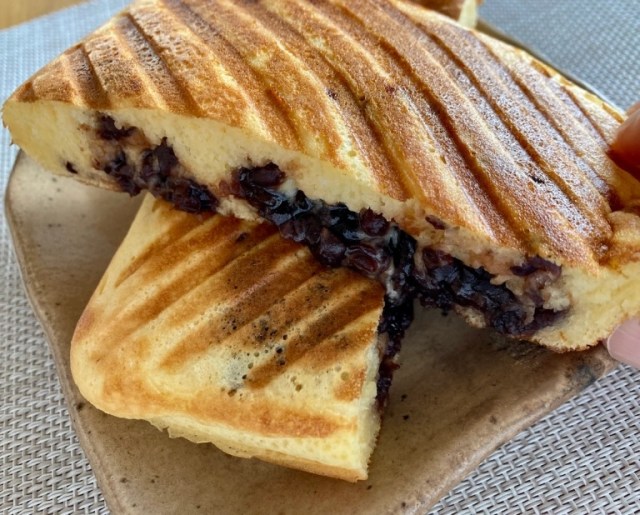
Step 5: Add in the anko. How much to use is up to you and your preference, but remember to leave some room to add in more batter after this.

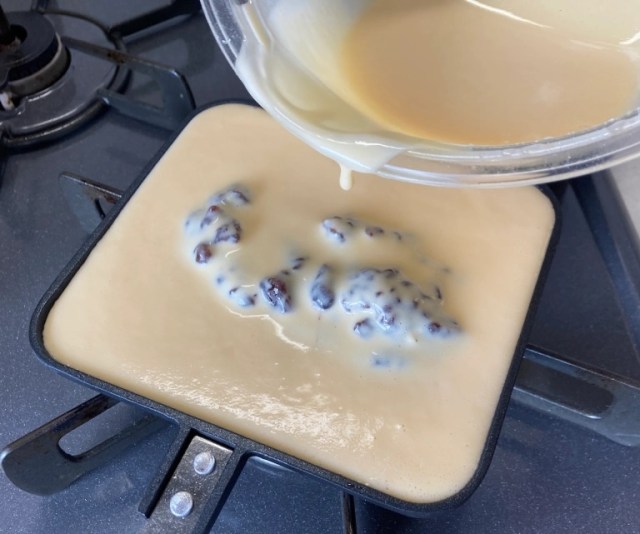
Step 6: Pour in as much of your remaining batter as you can while still leaving a little leeway underneath the top of the rim. The batter will plump as it cooks, so if you go all the way to the top of the rim you’ll get some spillage.

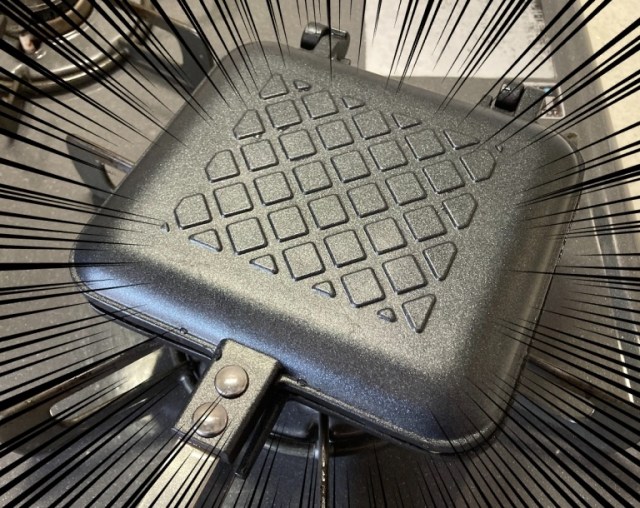
Step 7: Close up the sandwich press and cook on low heat for three minutes.

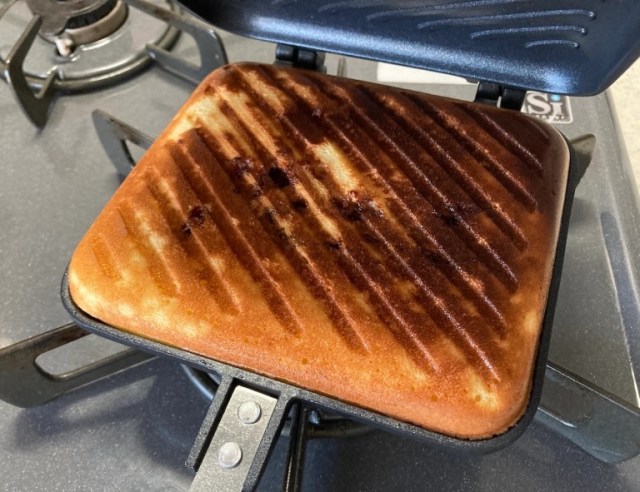
Flip the sandwich maker over and check to make sure the outer layer has browned nicely. If it has, cook the other side for three minutes as well.

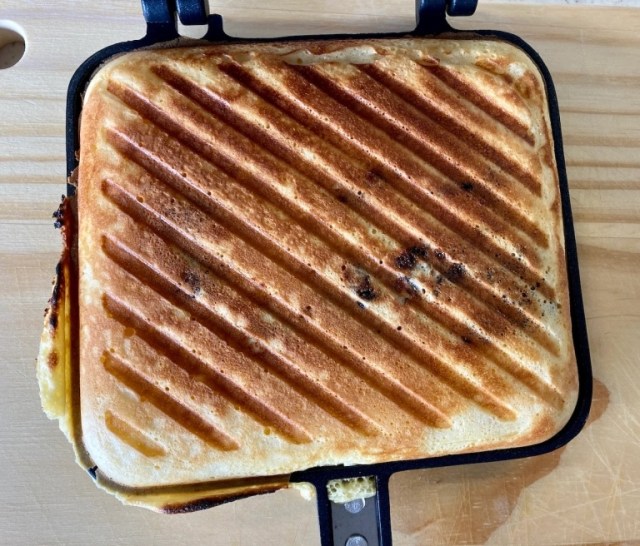
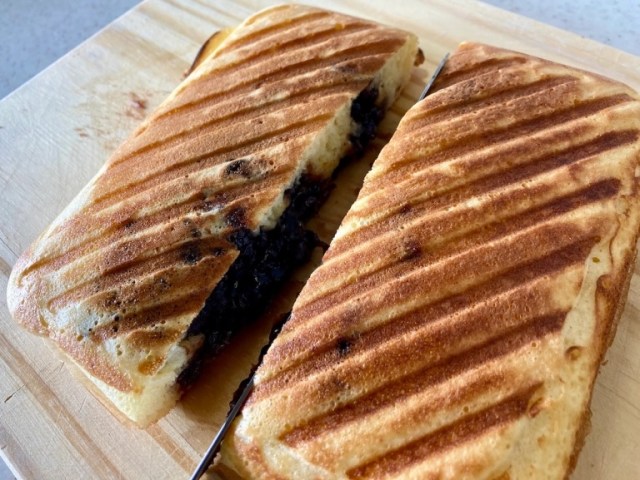
Once both sides have cooked you’re done!

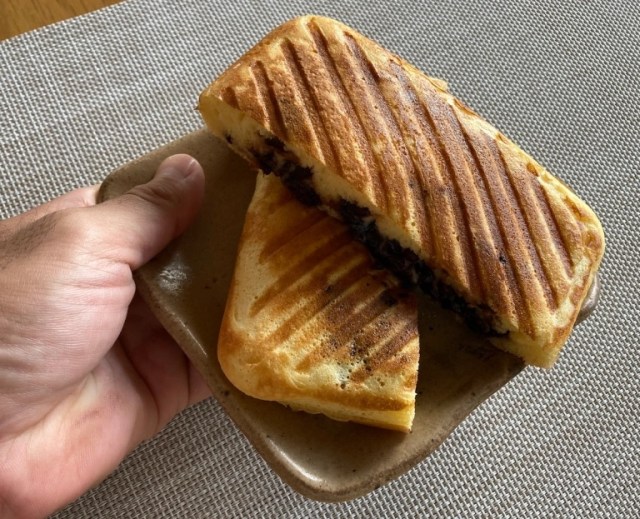
OK, technically you might have one more step to do. While you could just grab hold of the jumbo obanyaki with both hands and start eating, you might feel more dignified if you slice it in half first. This will also help the inside cool down to an edible temperature, and may also be something you’ll be forced to do if the tantalizing scent of fresh-baked Japanese sweets has attracted any nearby friends or family members who are now begging you for a piece.

▼ Ken Outdoor Cooking’s video demonstration

Depending on where you grew up, obanyaki may be a reassuring comfort food that brings back memories of festival snacks you enjoyed as a child, or it could be a brand-new experience, especially if you’re a newcomer to sweet bean desserts in general.

Either way, though, it’s delicious, and it’s going straight into our hot sandwich maker dessert schedule rotation, right next to this sandwich press choco banana pie.

Related: Ken Outdoor Cooking YouTube channel
Photos ©SoraNews24
● Want to hear about SoraNews24’s latest articles as soon as they’re published? Follow us on Facebook and Twitter!


Credit:
New trailer for Fist of the North Star musical released ahead of Tokyo and Fukuoka performances

You’re already fabulous.

There have been a lot of ambitious musical theater performances over the years, but I’m hard-pressed to think of one quite as ambitious as the live musical adaptation of the classic ultra-violent manga and anime Fist of the North Star. Granted it’s been a while since I watched it, but my memories tend to be more of people’s heads exploding in fountains of blood than musical numbers.

Nevertheless, someone decided to take up the ultimate challenge of making this gritty post-apocalyptic martial arts series into an emotionally charged tapestry of music, dance, and acting.

The play, which in Japan goes by the approximate English title of Fist of North Star rather than the manga’s original Japanese title of Hokuto No Ken, actually premiered last December. Due to the lingering effects of the pandemic, it wasn’t very easy to get out to the theater back then, but that luckily gave the actors and producers time to work out the kinks and create an even stronger performance.

To show it off, they’ve released a new long-version trailer for the musical. Let’s take a look:

This video was released as a lead-up to Fist of North Star‘s return engagement at Tokyo’s Bunkamura Orchard Hall from 25 to 30 September as well as a string of shows at Fukuoka’s Canal City Theater from 7 to 10 October. Also, on 27 September there’ll be a special talk with five of the stars, Yusuke Onuki (Kenshiro), Kanata Irei (Juza), Takuya Uehara (Shin), Yohei Isshiki (young Raoh), and Hiroki Hyakuna (young Toki).

The talk can be viewed both in person at the eplus Living Room Cafe & Dining in Shibuya, Tokyo, or streamed on the Internet, and will feature the cast members sharing behind-the-scenes stories about putting together Fist of North Star. Normally, I’m not that interested in hearing about how actors prepare for roles, with the one exception of preparing for roles in a musical version of First of the North Star. In that case, you have my undivided attention, because how the hell do you prepare for something like that?

Fist of North Star is directed by Sachiko Ishimaru, who wrote the live stage musical for Galaxy Express 999, and was written by Ako Takahashi, who worked on localized versions of theater classics How to Succeed in Business Without Really Trying and Hairspray. The music was written by Frank Wildhorn who, among several Broadway credits, also penned the Whitney Houston hit “Where Do Broken Hearts Go.”

So, it could be good? It’s just too hard to imagine though, so let’s see another montage of moments from the stage show:

I will give Yusuke Onuki credit. It’s got to be hard singing like that while jump-kicking hordes of road warriors, but I still just don’t know… I think the biggest problem is that I’ve yet to see anyone’s head explode. They don’t have to spray the stage down with fake blood or anything. If the character just falls off stage and a red light signifies the head explosion, I could buy into that at least.

Still, I just hope this does work out because it’s such a far-out idea, and I like the fact that they attempted it. The only way to know for sure is to check it out when Fist of North Star – or as I will call it from here on out: “Fist!” – rolls into a theater near you.

Show information
Fist of North Star / フィスト・オブ・ノーススター~北斗の拳~
25 – 30 September
Bankamura Orchard Hall
Bunkamuraオーチャードホール
Tokyo-to, Shibuya-ku, Dogenzaka 2-24-1
東京都渋谷区道玄坂2-24-1
Website

7 – 10 October
Canal City Theater
キャナルシティ劇場
Fukuoka-shi, Hakata-ku, Sumiyoshi 1-2-1, Canal City Hakata North Bldg. 4F
福岡県福岡市博多区住吉1丁目2−1 キャナルシティ博多ノースビル4F
Website

Fist of North Star More After Talk / フィスト・オブ・ノーススター~北斗の拳~Mottoアフタートーク
eplus Living Room Cafe & Dining
Tokyo-to, Shibuya-ku, Dogenza 2-29-5, Shibuya Prime 5F
東京都渋谷区道玄坂2丁目29-5 渋谷プライム 5F
5:45 p.m. – 6:30 p.m., 27 September
Admission: 2,000 yen live, 1,500 yen online (online show will be archived until 30 September)
Website

Source: PR Times
Top image: YouTube/ホリプロステージ Horipro Stage
Insert images: PR Times
● Want to hear about SoraNews24’s latest articles as soon as they’re published? Follow us on Facebook and Twitter!


Credit:
Tasting Starbucks Japan’s new autumn Frappuccino, created around the theme of “Our Harvest Table”

The taste of Japanese autumn in a cup! 

With September now here, it’s time to breathe a sigh of relief at making it through another punishingly hot summer, and ease ourselves into autumn with a new seasonal beverage from Starbucks.

This year, as part of the chain’s annual Artful Autumn @ Starbucks campaign, Starbucks has enlisted a number of its employees to act as “coffee ambassadors“, and they’ve been hard at work using their sales experience to create a range of seasonal products around the theme of “Our Harvest Table”.

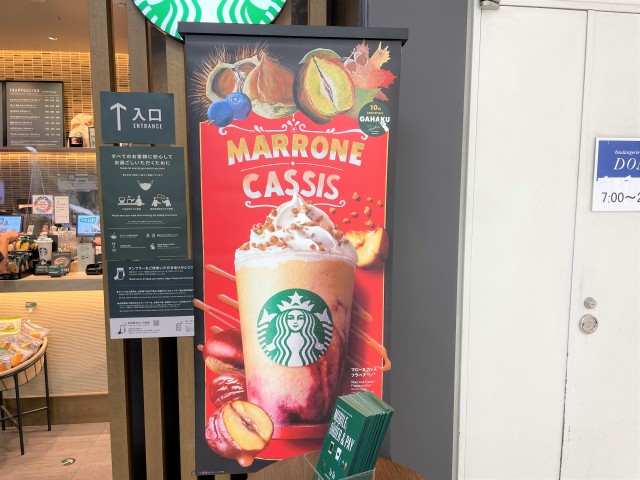
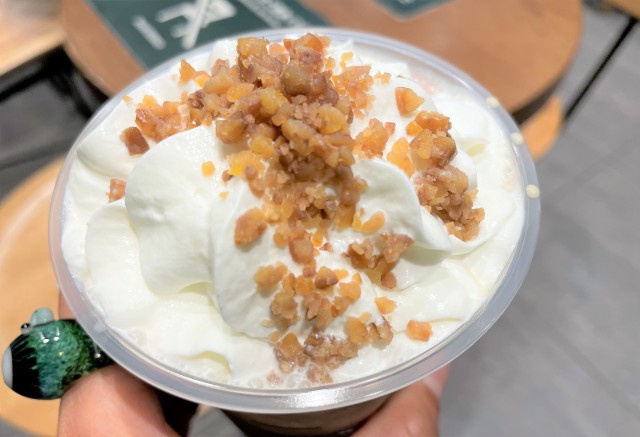
▼ At the centre of the collection is the Marrone Cassis Frappuccino, which combines chestnut with blackcurrants as the taste of an autumn harvest.

Our resident Starbucks expert, K. Masami, was in line to try the new beverage as soon as it was released on 1 September, and while she was there, she was seduced by another item on the menu, the Roasted Chestnut Latte.

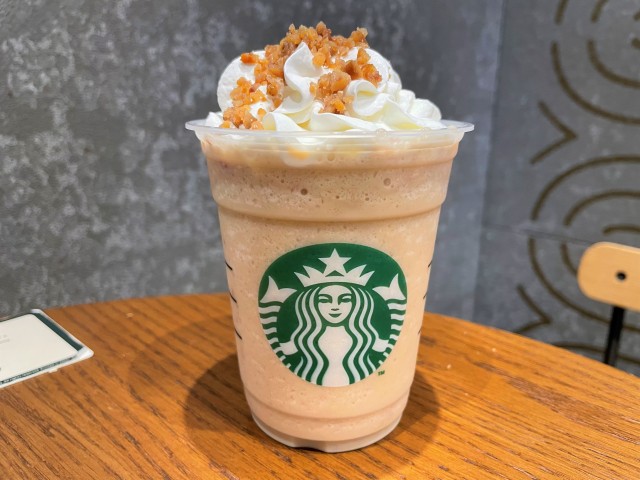
She decided to order the Frappuccino first, pulling up a chair and admiring its brown autumnal hues.

▼ The Marrone Cassis Frappuccino costs 648 yen (US$4.75) for takeout and 660 yen to drink in-store.

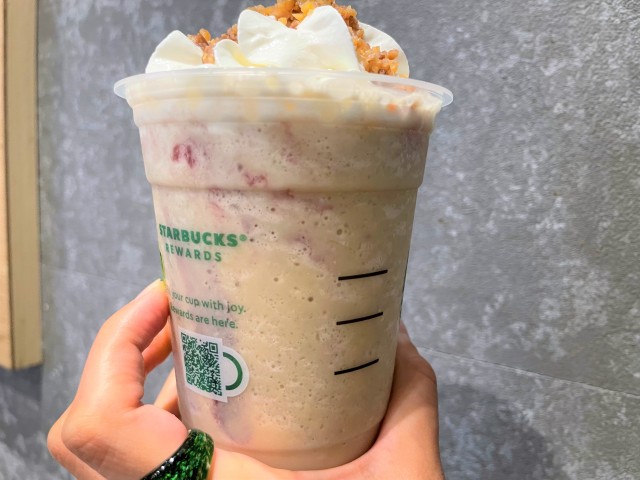
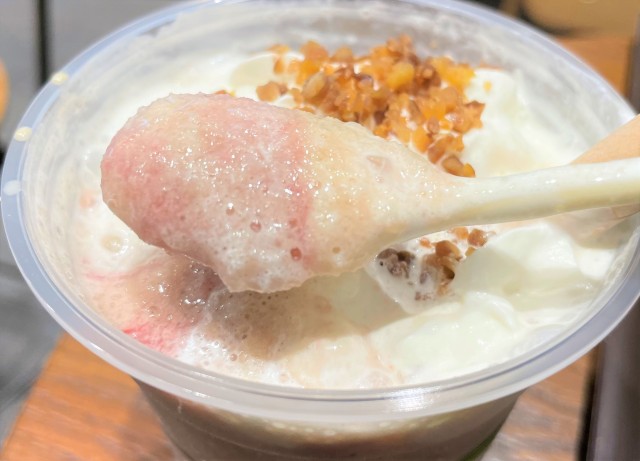
While the colour appeared to be uniform at first glance, upon closer inspection Masami was able to see ripples of blackcurrant coursing its way through the milky base.

Up top, there was a scattering of crushed chestnuts sitting upon a mound of whipped cream, reminding her of fallen leaves…and fallen chestnuts.

Just looking at the drink made Masami feel as if autumn had finally arrived, and upon first sip, that sense intensified.

Chestnuts are synonymous with autumn in Japan, and their flavour shone perfectly here. The smooth, nutty taste was sweet and comforting, caressing the taste buds before the fruity, slightly tart note of the blackcurrants lifted the palate with a refreshing note. Then, the taste of coffee — yes, this Frappuccino contains a small amount of coffee — stepped in to meld the chestnut and blackcurrant together, creating a harmonious blend of flavours.

▼ It was Masami’s first time trying coffee, blackcurrant and chestnut together, and it turned out to be a fantastic combination.

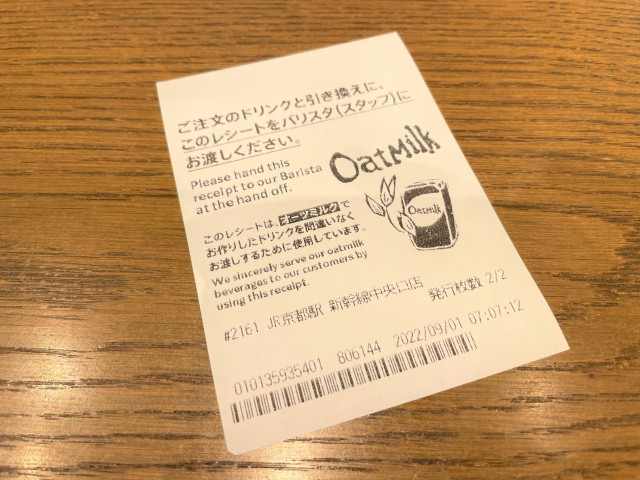
Once she’d slurped up the last of her Frappuccino, it was time to head to the counter again and order the hot latte that had previously caught her eye. One of the perks of this drink is the fact that you can order it with oat milk instead of regular milk, which is what Masami did.

▼ “We sincerely serve our oat milk beverages to our customers by using this receipt.”

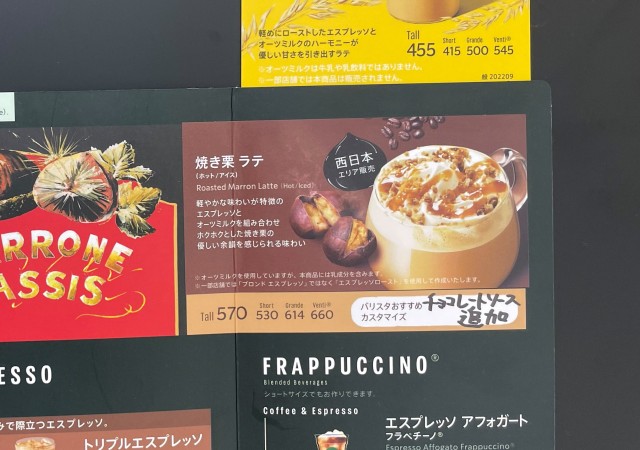
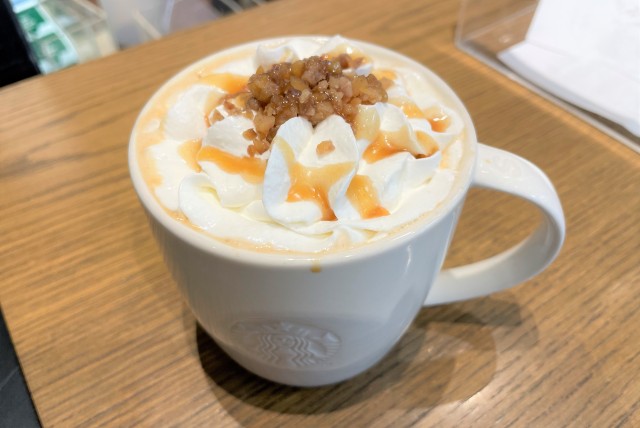
Recently, Masami has fallen in love with the combination of oat milk and espresso, which she says pair very well together, so she always jumps at the chance to order it when she can. As she waited for her drink to be made, she did some research online and discovered that the latte she’d ordered was not the only new seasonal latte being added to the menu this year. Apparently, there are different lattes being served in different regions, with the Mont Blanc Latte available in eastern Japan, the Honey Marrone Latte available in central Japan, and the Roasted Chestnut Latte in western Japan.

▼ Masami lives in western Japan, so she was able to buy the Roasted Chestnut Latte, priced at 530 yen for a Short size.

Oat milk was the perfect partner for the light blonde roasted espresso used in the latte, and it complemented the roasted chestnut sauce beautifully. The whipped cream was moreish, the sweet chestnut topping added a fun textural contrast, and with every sip, Masami felt the cosiness of autumn wrapping its arms around her.

Both chestnut drinks were absolutely delicious, and Masami would like to raise a glass to the staff members behind their creation. They certainly know what their customers like, and though the addition of blackcurrant may have seemed like a risky partnership, its strong flavour was expertly controlled, working to enhance the taste of chestnut rather than overpower it.

Masami will be back to taste these drinks again before sales end on 20 September, but they’ll only be on the menu while stocks last so get in quick if you’d like to try them. And if you’re looking for another taste of autumn in Japan, don’t forget to pop by KFC and McDonald’s to try their moon-viewing burgers, which are only available for a limited time!

Images © SoraNews24
● Want to hear about SoraNews24’s latest articles as soon as they’re published? Follow us on Facebook and Twitter!


Credit: