What happens when you combine fries from 8 different fast food chains in Japan?【Taste test】
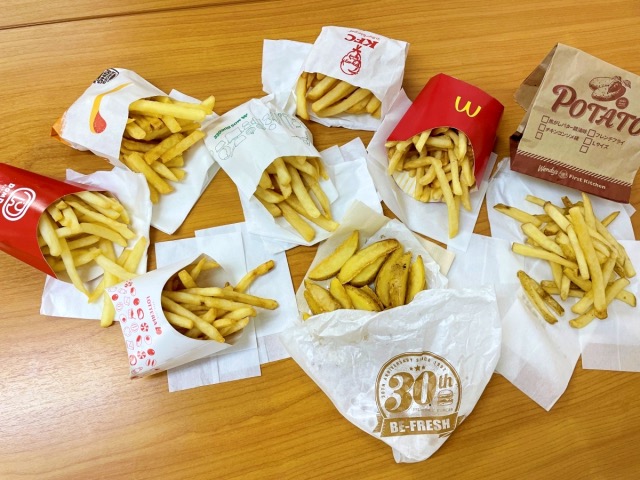
Playing God with French fries can have some unexpected consequences.

It was a relatively quiet afternoon in the office the other day when SoraNews24’s boss and founder Yoshio stretched back in his chair, clasped his hands behind his head, and said: “I want to mix all the French fries from fast food restaurants and make the strongest fries.”

It wasn’t the oddest idea we’d ever heard in the office, but it still came as a surprise to everyone — mostly because, after all our culinary adventures, we couldn’t believe we’d never thought to try this before.

Bowing down to our leader for his innovative idea, we all raised our hands at the same time to offer our services for the task of taste-testing. However, this was a job for Yoshio, who selected reporter Ahiruneko as his partner in crime, and after they visited the top fast food chains in the city…

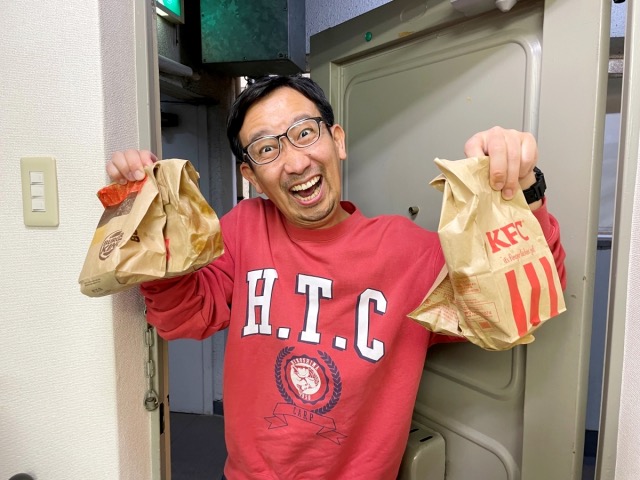
▼ …they returned with their bounty!
Before we get down to the actual tasting, let’s first introduce the big names that will be combining forces for this epic French fry creation.

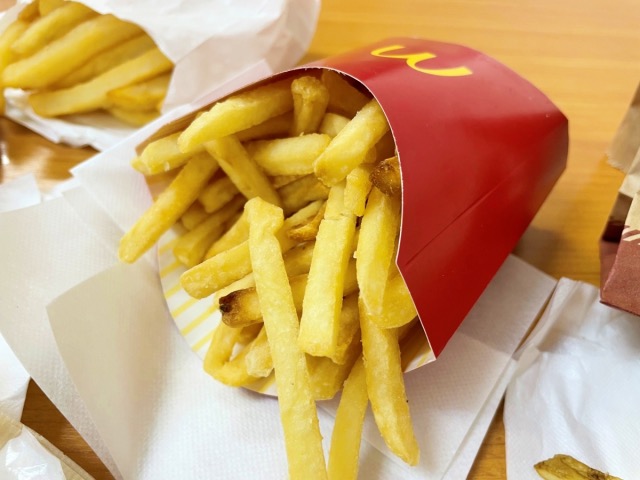
McDonald’s (330 yen [US$2.49])

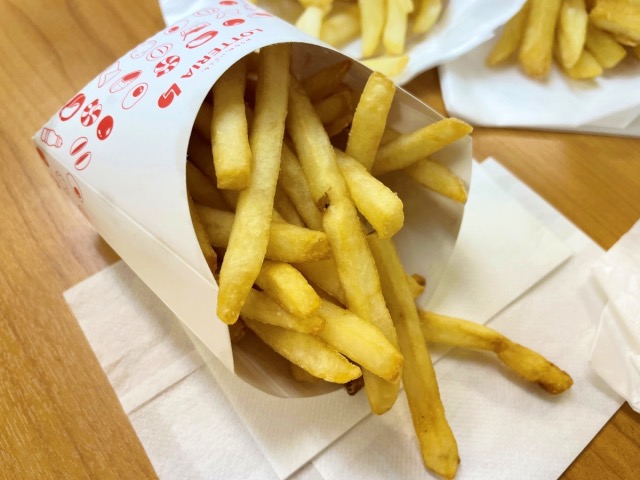
Lotteria (285 yen)

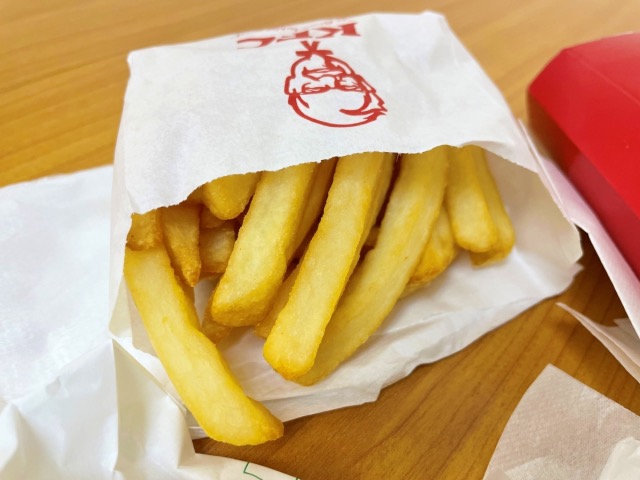
KFC (400 yen)

▼ Burger King (300 yen)
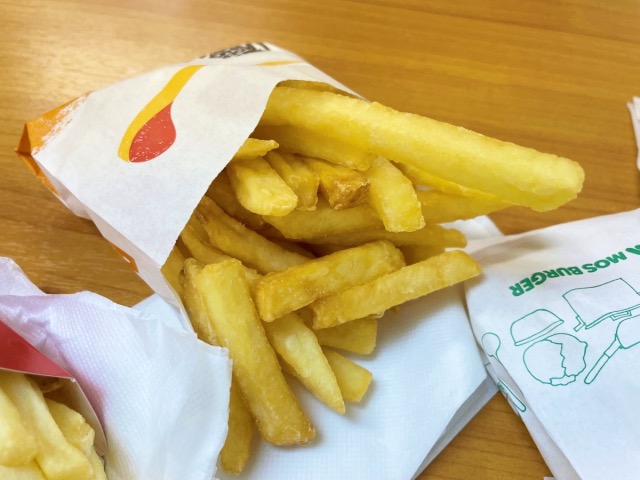
▼ Mos Burger (330 yen)
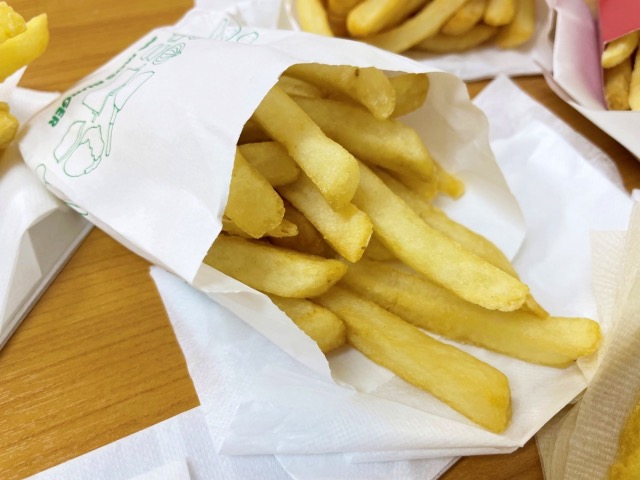
▼ First Kitchen (304 yen)
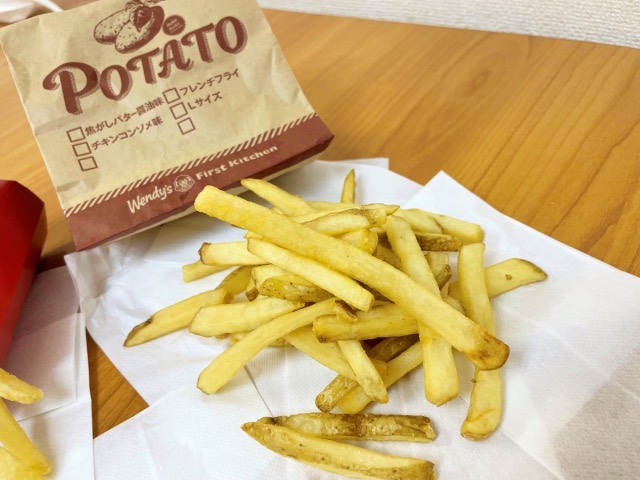
▼ Freshness Burger (340 yen)
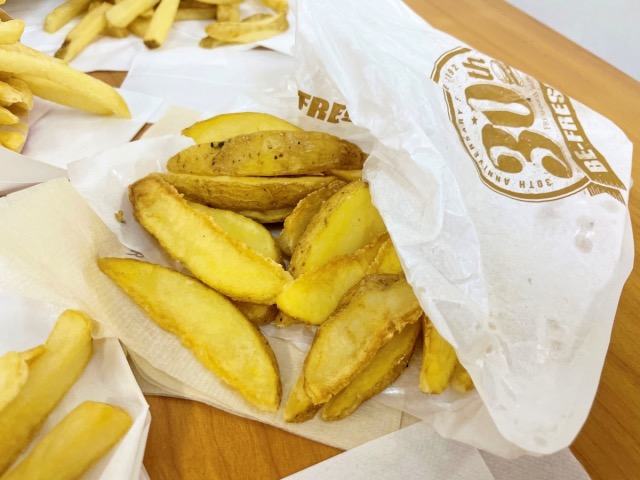
▼ Dom Dom Hamburger (320 yen)

All the fries above are the “medium” size option at their respective chains, except for KFC and Mos Burger, who only sell small and large sizes, so the ones they picked up there were large sizes.

This would add even more girth to the meal, and when they put all eight varieties together in a ziplock bag, Yoshio and Ahiruneko’s smiles widened and their eyes popped out of their heads, like two naughty boys in a cartoon caper.
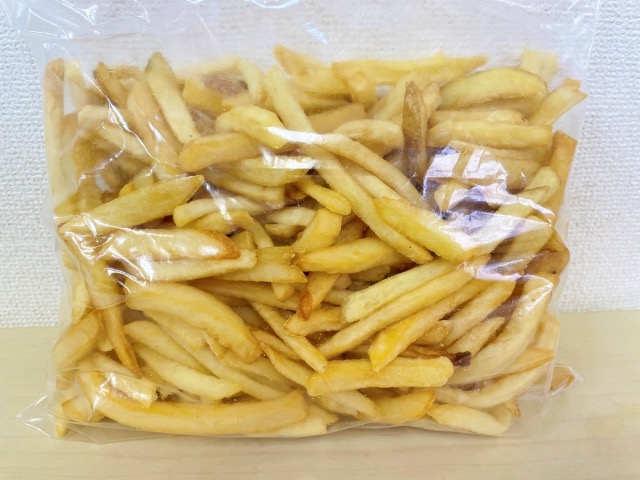
There was only one thing left to do… 

▼…shake!
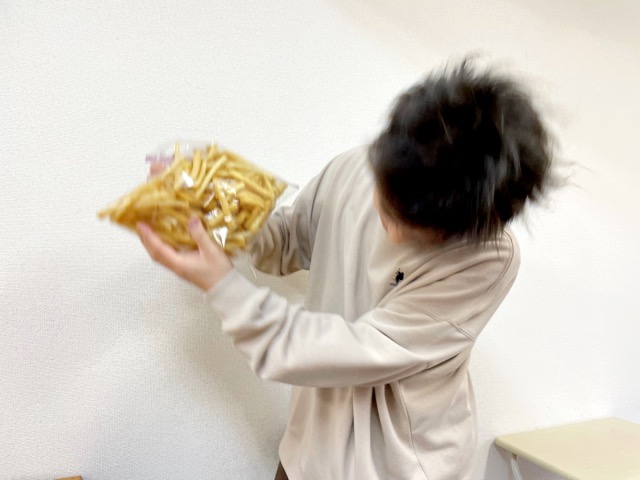
Showing his dedication to the project, Ahiruneko shook the bag until he could shake no more, ensuring all the different seasonings were well mixed together.  

Ahiruneko then dutifully poured the fries out into a tray before handing the feast to his boss.
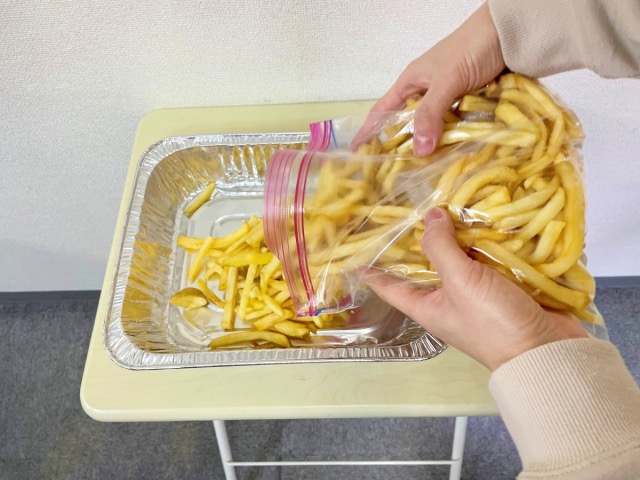
▼ “It’s the strongest potato!!!!
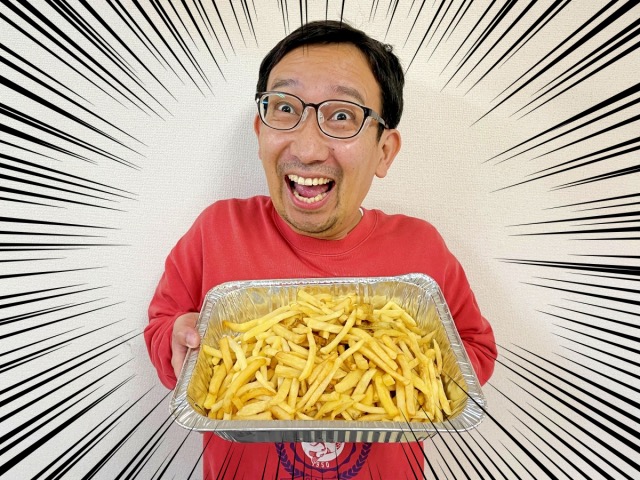
Holding back the urge to yell “Fries, assemble!” like some sort of potato avenger, Yoshio stared lovingly at the fries, with all the affection of a father cradling his newborn baby.
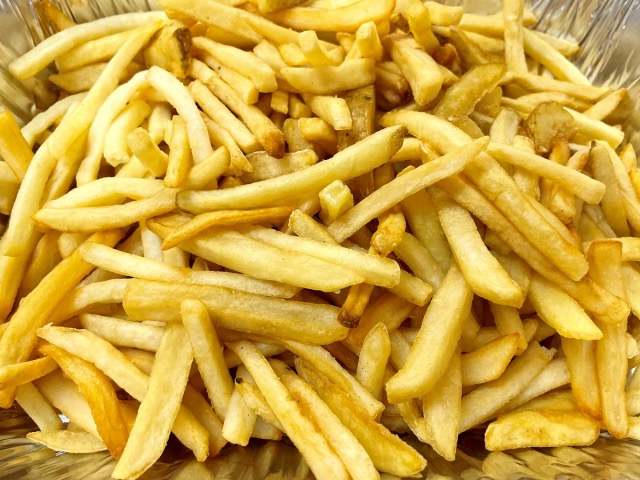
So how do they taste? Yoshio put one into his mouth, let out a little cry of delight, and then shoved more fries into his gob, one after the other, with increasing speed.
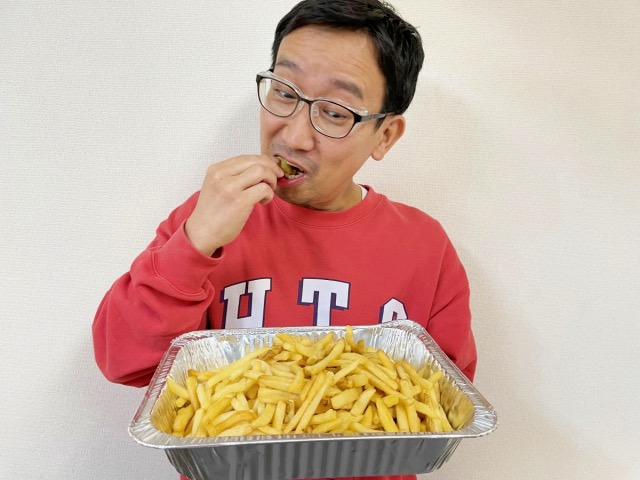
▼ One at a time just wasn’t enough, so he grabbed a fork…
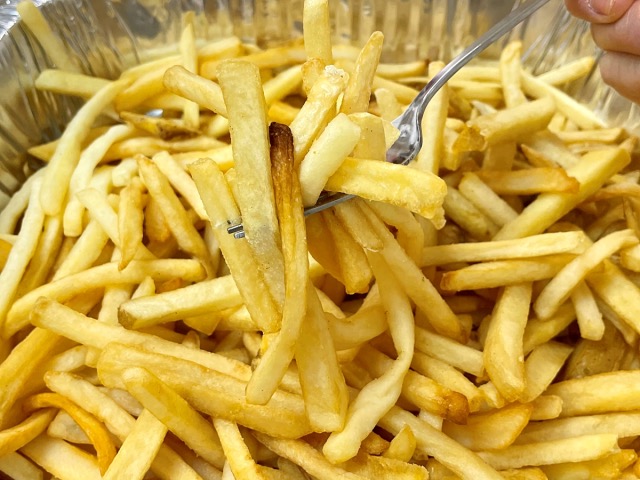
…and shovelled them into his mouth, living out his dreams of drowning in fries, where every gulp for air was rewarded with flavour.
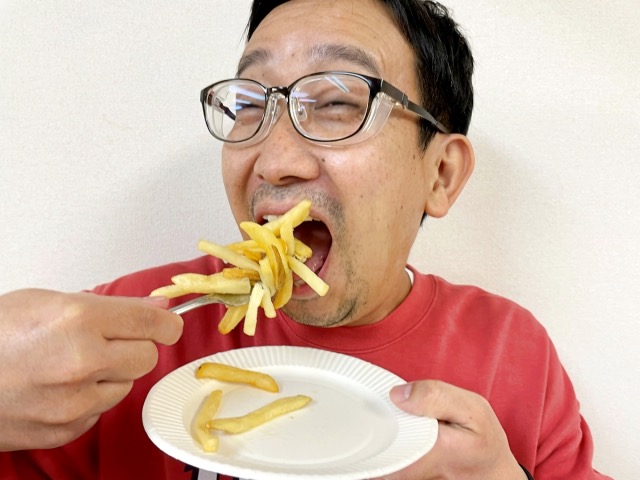
The shovelling-lots-in-at-a-time method actually made the fries taste even better, especially as they were all different shapes and sizes, with wedges. shoestring and thick-cut varieties in the mix.
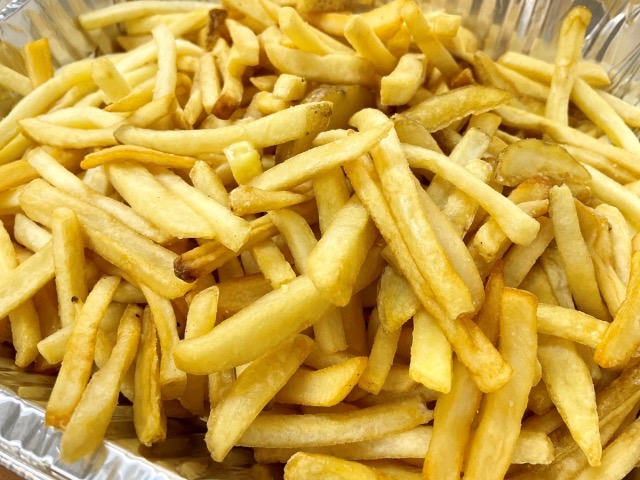
Strangely, though, Yoshio was able to pinpoint each fry in his mouth — the KFC and Burger King varieties were about the same thickness, but he could intuitively tell them apart. It was the same with the McDonald’s fries, which, despite their comparatively small size, stood out with their distinctive taste.
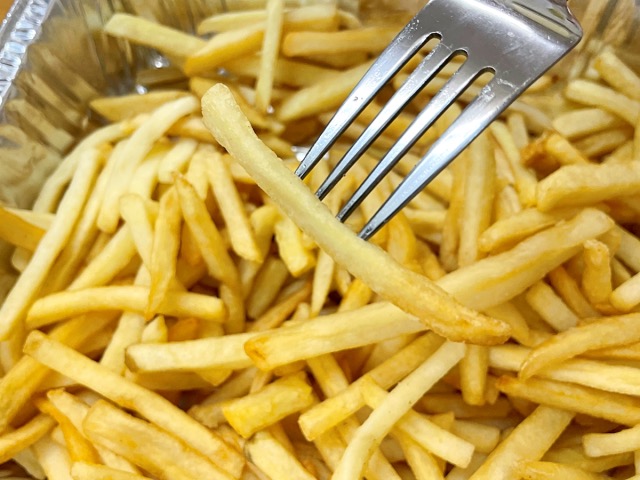
In fact, it was the McDonald’s chip that was the most prominent of all, with its defiant flavour rising above all the others for attention. Who knew this feast would actually make each individual fry stand out rather than blend in? It was a result neither Yoshio nor Ahiruneko had expected, but it still made for a suitably satisfying meal, and they recommend you give it a try if you ever have the chance — and the stomach — for it!

Photos ©SoraNews24
● Want to hear about SoraNews24’s latest articles as soon as they’re published? Follow us on Facebook and Twitter!


Credit:
The surprising semi-secret ingredient in many Japanese convenience store rice balls: oil

A lot of the rice balls on convenience store shelves include oil, but it’s not to make them taste better.

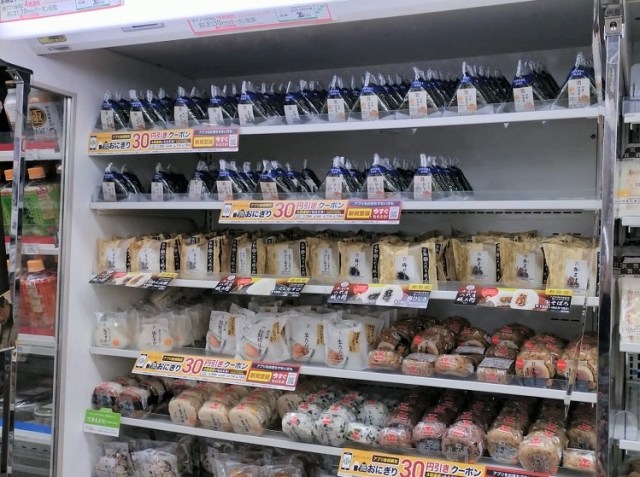
Among the many wonderful things at Japanese convenience stores, perhaps the most wonderful of all are the rice balls, or onigiri, as they’re called in Japanese. Tasty, reasonably priced, and relatively healthy, you’ll find convenience store onigiri with all sort of fillings, such as salmon, chicken, and plum.

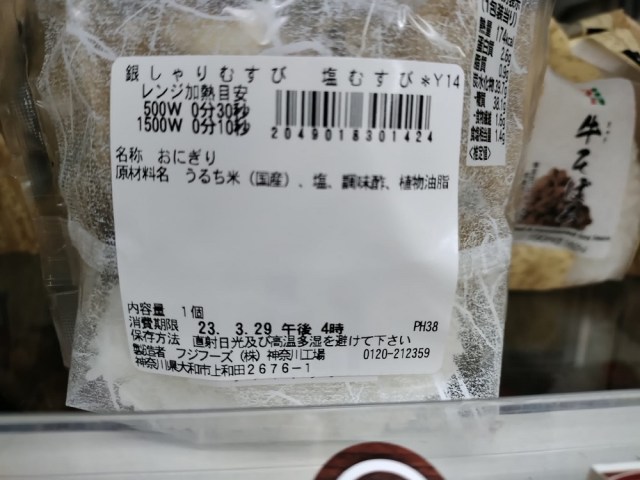
But there’s one ingredient present in a lot of convenience store onigiri that even most Japanese shoppers aren’t especially conscious of: oil.

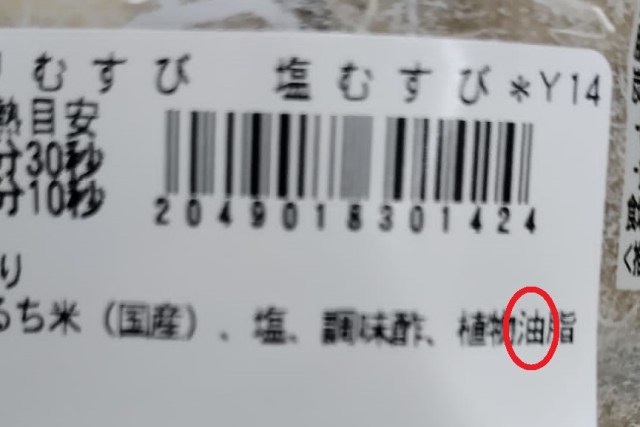
▼ 油 = oil

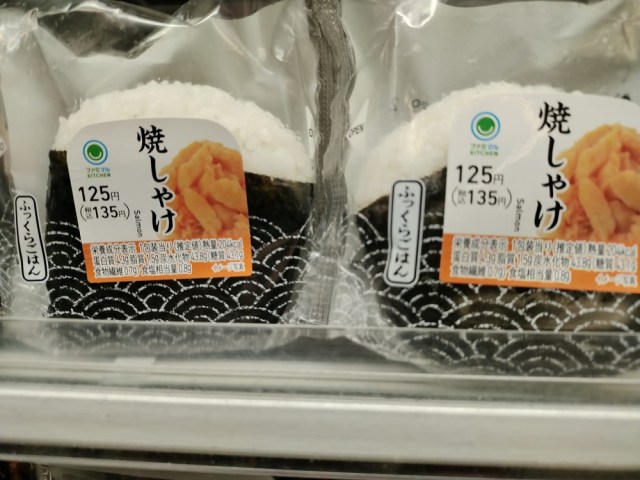
Specifically, it’s vegetable oil that many convenience store onigiri have. This isn’t a new development, but since it’s something a lot of people aren’t aware of, every couple of years it gets some people in a stir when someone notices/points out “oil” on a convenience store ingredient list, like in this tweet posted this week with a photo of a plain slated rice onigiri from convenience store chain Family Mart.

“Make it with just rice and salt,” the poster pleads.

You might assume that the oil is added as a cheap but unhealthy way to make convenience store onigiri taste better, but the truth is actually more complicated, with no fewer than three reasons for the oil. The first is texture. Adding oil to the rice before it’s cooked creates a coating for the individual grains, so that even though they’re pressed together and retain their rice ball form, there’s enough space between them for a light, fluffy consistency.

“But wait, what about homemade onigiri? Those don’t have oil in them,” you might be asking. That’s true, but unlike onigiri made at home and then eaten soon after, convenience store onigiri are made at a factory, then shipped to the chain’s branches and stocked on refrigerated shelves until they’re purchased. Without oil, the passage of time and low temperature would make the rice clumpy and hard.

The second reason has to do with how convenience store onigiri are made. Rather than being pressed by hand, they’re made with a mechanical press. The oil helps prevent rice from sticking to the machinery, which keeps the shape of the onigiri nice and consistent.

And finally, the oil in convenience store onigiri is there because of how the rice balls are packaged. They have to be wrapped in something, usually plastic, and just like how the oil keeps the grains from sticking too closely to each other, it also keeps the onigiri from sticking to the inside of its packaging, so it can be removed without inadvertently tearing off a piece of the rice ball.

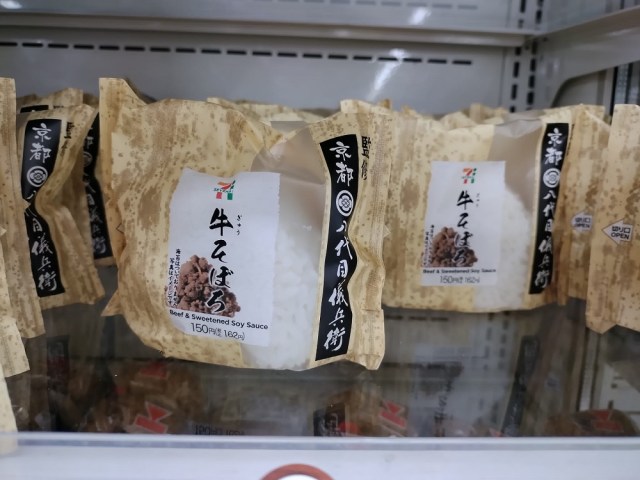
▼ If this onigiri was poorly formed or sticking to its package it might spill its beefy filling before you can bite into it.

All that said, not every convenience store rice ball is made with oil. It seems like the ingredient is more common with onigiri that don’t have a nori (seaweed) wrapping.

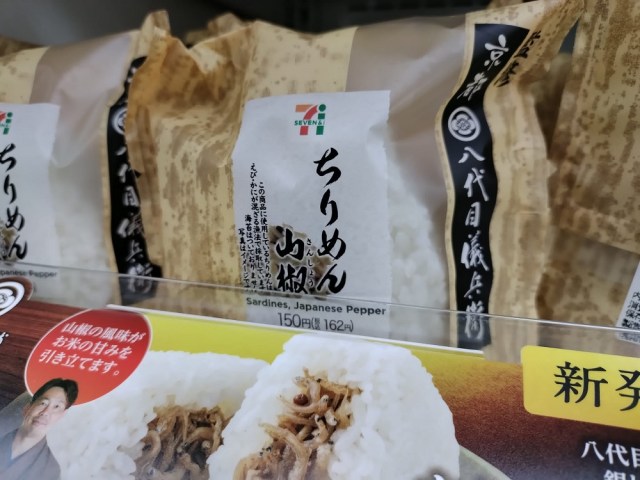
▼ This sardine and sansho spice onigiri has oil in its ingredient list…

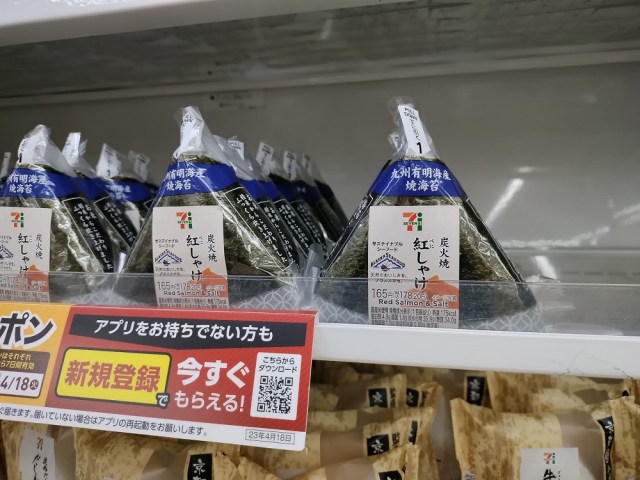
▼ …but this salmon onigiri, with a nori wrapper, doesn’t…

▼ …and neither does this seaweed-equipped salmon onigiri.

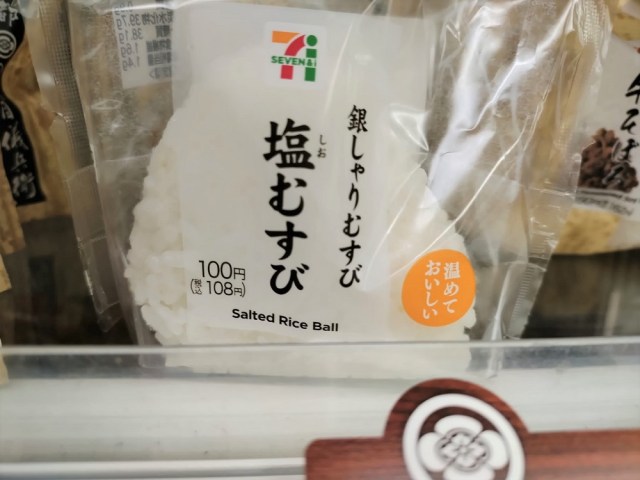
And thankfully, even when convenience store onigiri are cooked with oil, it’s not like the rice was boiled in a 100-percent pot of the stuff. The salt onigiri from 7-Eleven pictured at the start of this article has a total of 0.9 grams of fat, and the onigiri pictured in the tweet, from rival chain Family Mart, has only slightly more fat, 1.1 grams. So even if convenience store onigiri aren’t always entirely oil-free, they’re still a pretty healthy snack choice, so the main thing to worry about is whether or not you can open the wrapper the right way.

Source: Hachima Kiko, Shukan Josei Prime
Photos ©SoraNews24
● Want to hear about SoraNews24’s latest articles as soon as they’re published? Follow us on Facebook and Twitter!


Credit:
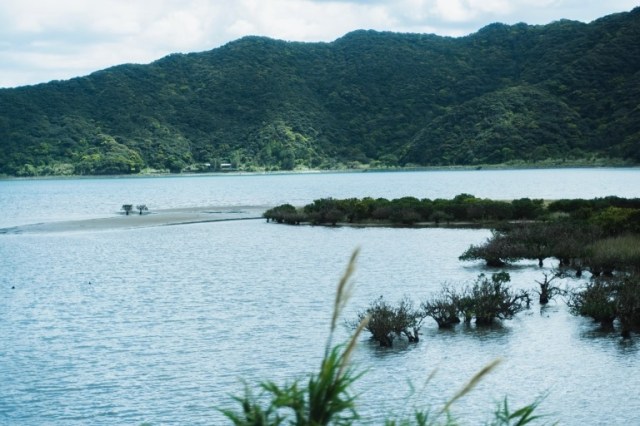
Off the beaten Japan travel path in Amami Oshima’s mangrove forests【Photos】

If you’ve been skipping Amami Oshima on your trips to Japan, you’ve been skipping a beautiful, uncrowded gem.

Kagoshima Prefecture is typically thought of as the southwestern corner of Japan’s southwestern island of Kyushu. However, Kagoshima also includes a number of islands that stretch even further away, with some being more than half-way to Okinawa.

Today, we’re headed to one of those islands: Amami Oshima.

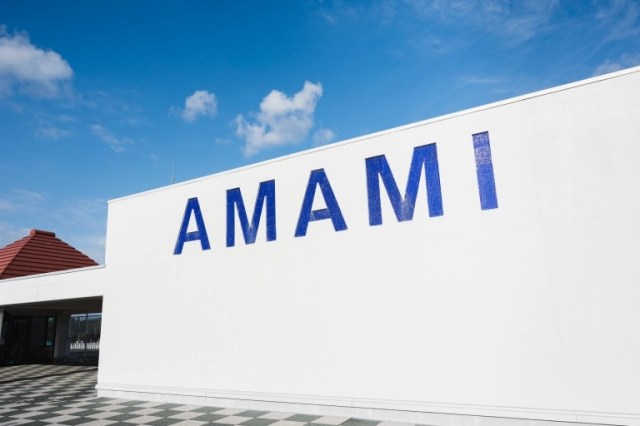
▼ Amami Oshima

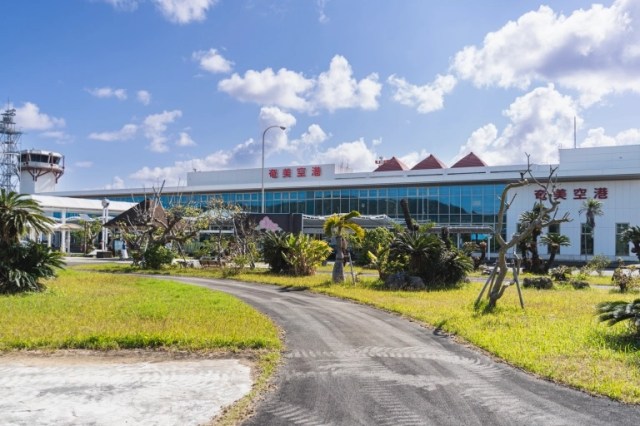
▼ Amami Oshima airport

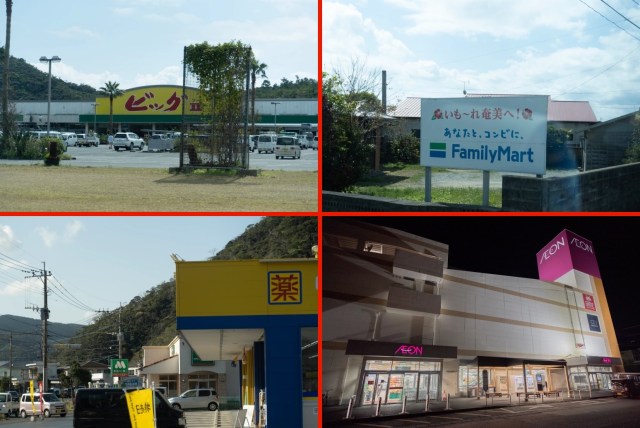
We were invited to check out the island by the “Wide Area Administration Association of Amami Islands,” the local tourism promotion department. The highlight of our trip was to be a visit to the island’s mangrove forests, which conjured up primordial jungle imagery in our head, but things were surprisingly modern when we got out of the airport, with supermarkets, drug stores, and even a Family Mart convenience store not far away.

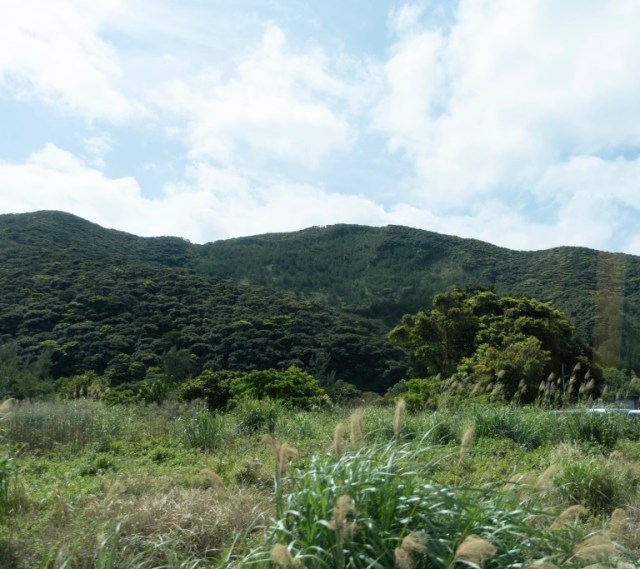
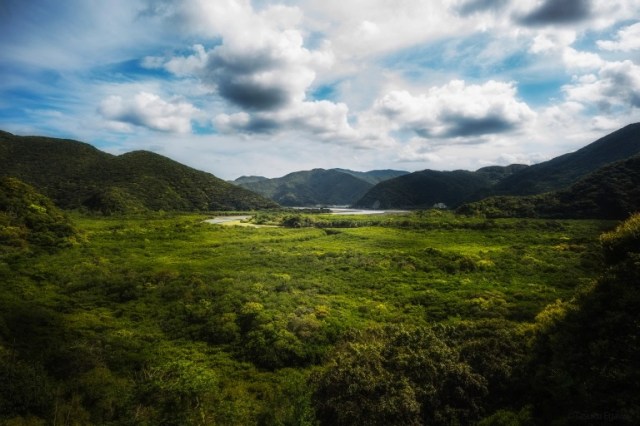
But as we hopped in our van and headed away from the airport, the scenery became increasingly lush…

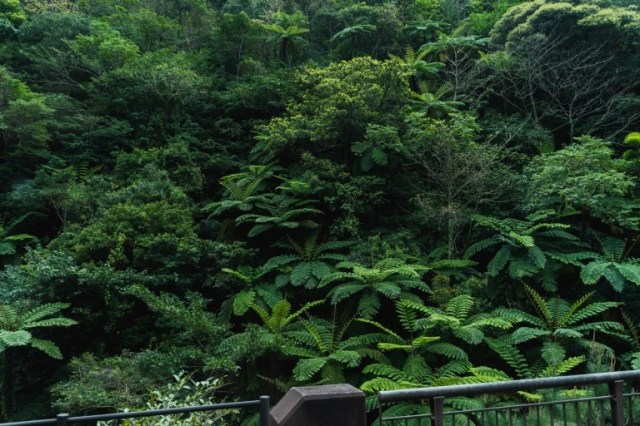
…and before long, we were in a part of the island with such dense vegetation we weren’t sure we’d ever find our way back if we randomly wandered into it…

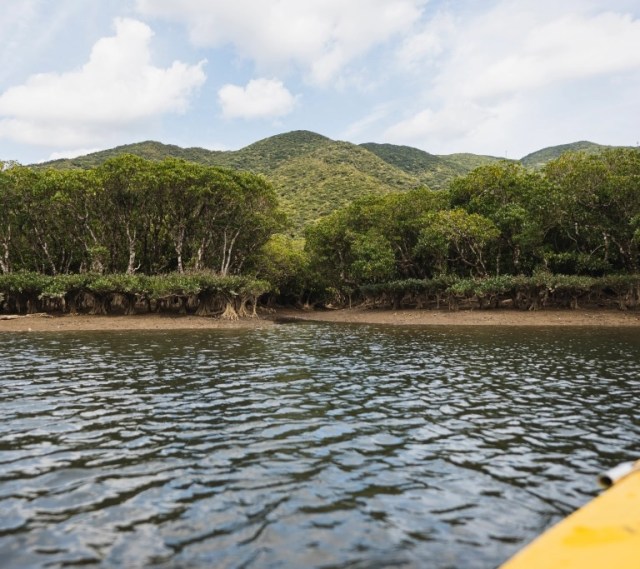
…and the view only got more beautiful once we reached the mangroves.

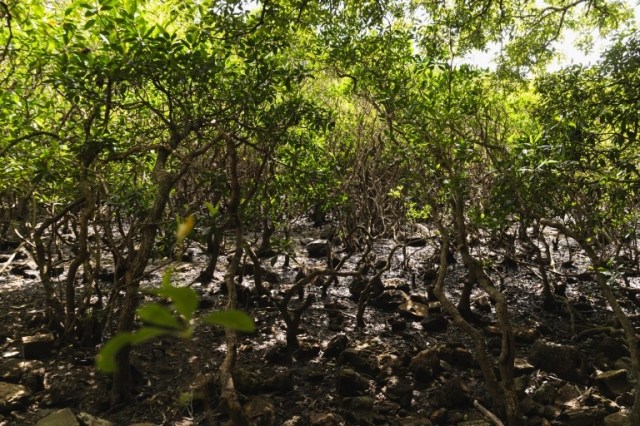
The trees grow in rivers and inlets where fresh and seawater mix, and we could see a meandering waterway in the middle of the forest we were approaching.

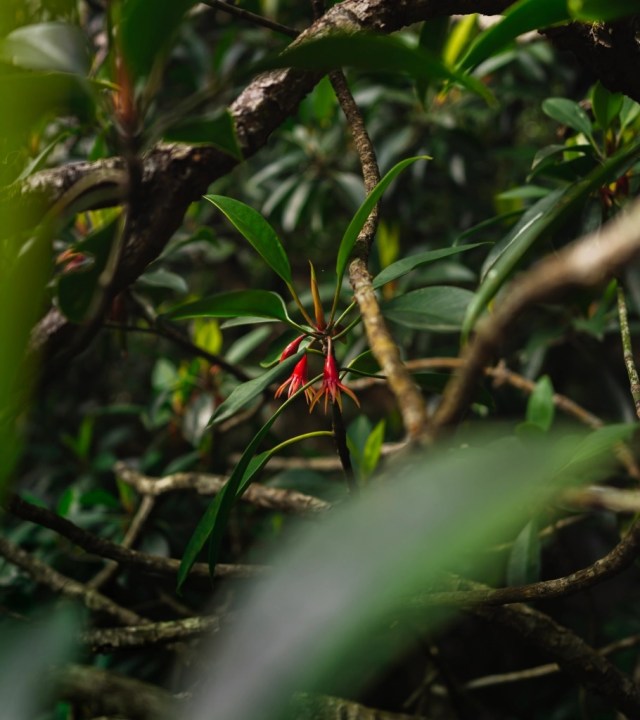
▼ The species of mangrove that grows on Amami Oshima is the bruguiera gymnorhiza, which you can tell from its flowers.

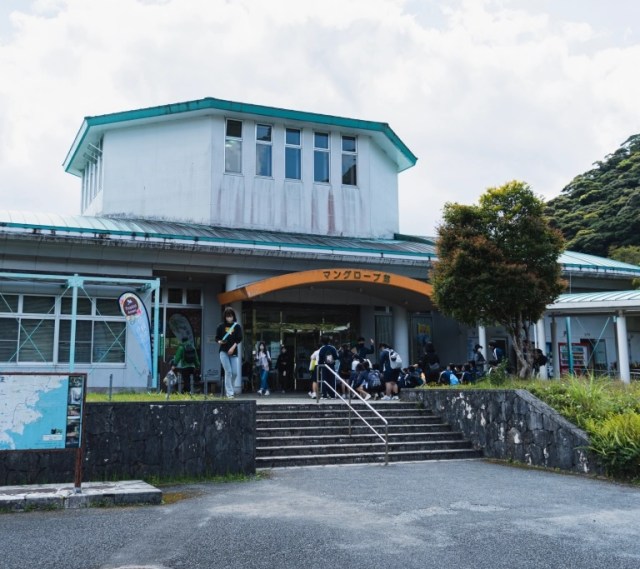
The mangroves are found in the Amami Gunto National Park Special Protection Zone, so you can’t just go traipsing off into the woods. Instead, we headed over to the Mangrove-kan (“Mangrove Building”)…

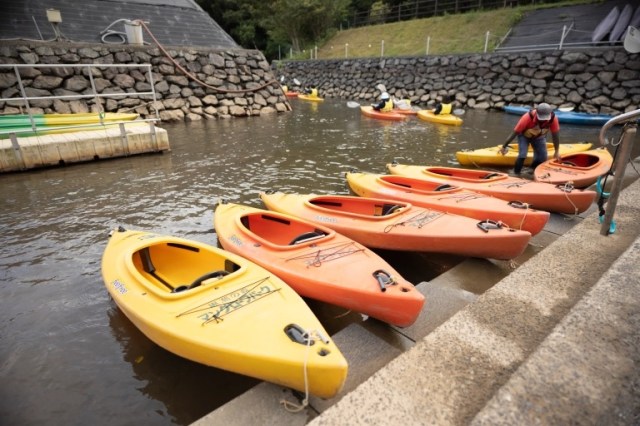
…which offers guided canoe tours.

Having zero canoe experience ourselves, we were sort of apprehensive about hopping into one. After a brief, five-minute safety and operation lecture, though, our group was on its way, and we quickly became accustomed to the rhythm of paddling our oars and gasping at the lovely landscape.

As we mentioned above, the mangroves grow in a mix of fresh and saltwater, and sometimes visitors will even encounter sea turtles while on the tour (we, unfortunately, weren’t lucky enough to, but a group that went out before us that day did). Tours are priced at 2,000 yen (US$15) and leave every 90 minutes between 10 a.m. and 4 p.m.

▼ A 360-degree view of part of the canoe route

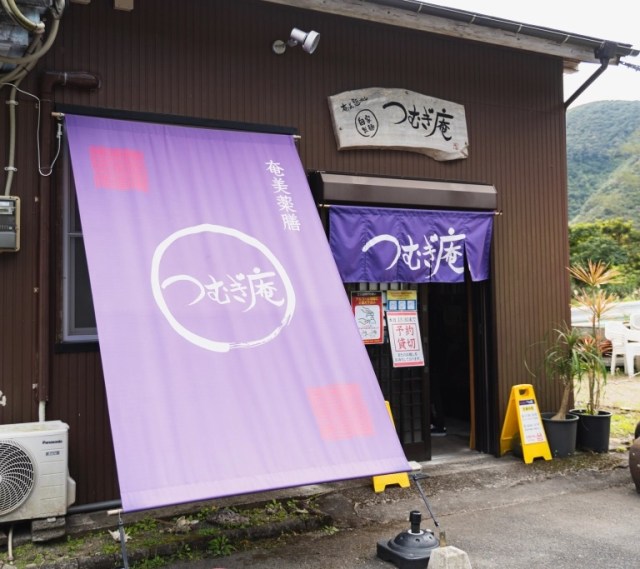
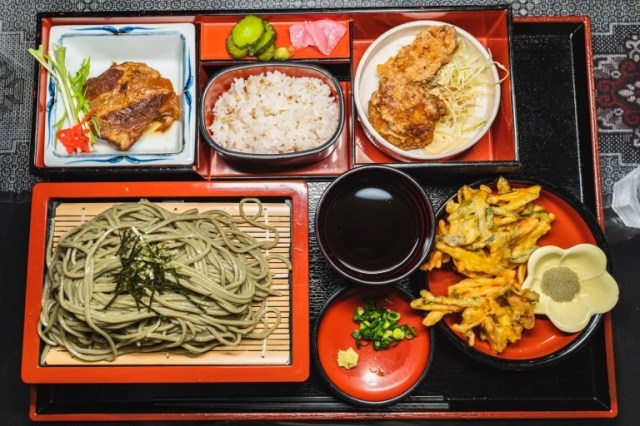
By the way, if you’re looking for lunch at someplace with plenty of local flavor, near the Mangrove-kan is the restaurant Tsumugi-an. We treated ourselves to the 1,850-yen (US$14) manpuku (“full stomach”) set and stuffed ourselves with soba noodles, stewed pork, karaage fried chicken, tempura, and rice.

When night fell, instead of turning in early, we headed out once again for a special wildlife spotting tour.

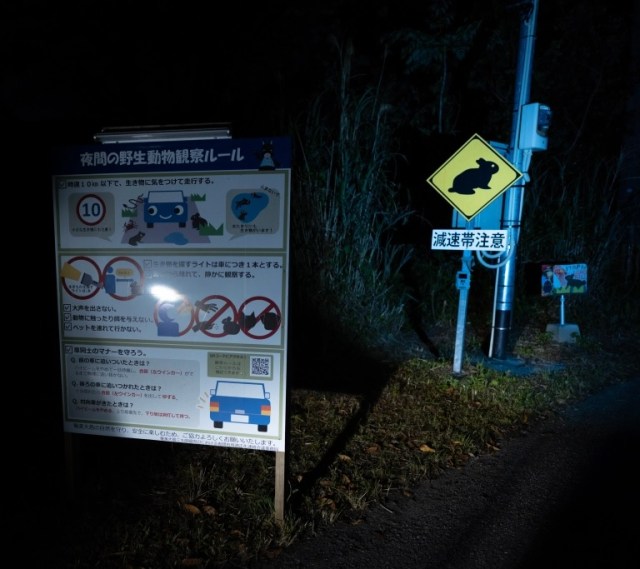
To access this section of road after dark, visitors are required to make an advance reservation (which can be done online here). You also have to stay in your car and stay under a speed of 10 kilometers (6.2 miles) per hour.

But if you do all that…

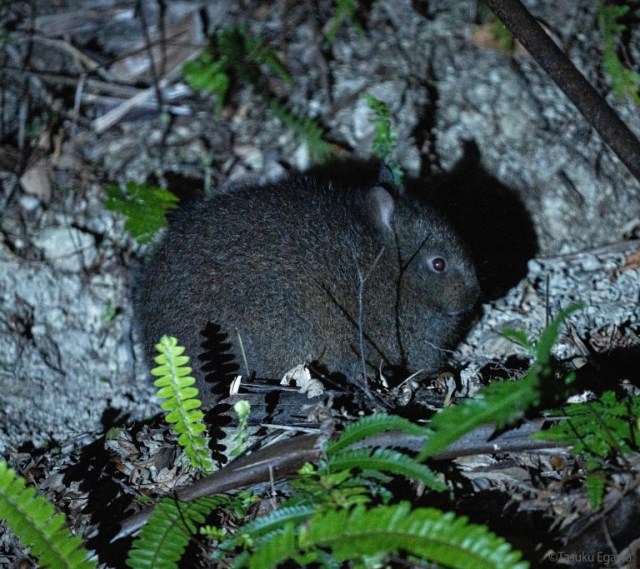
…you’ve got a good chance of seeing the Amami no Kurousagi, or Amami Black Rabbit, a protected, and adorable, species.

Because of its geographic location, Amami Oshima often gets skipped over by travelers heading from the rest of Japan to further south in Okinawa. It’s a beautiful and unique place, though, so if you’re looking for something off the beaten path, it’s worth putting on your Japan travel itinerary.

Related: Amami Oshima Mangrove Park, Tsumugi-an
Photos © SoraNews24
● Want to hear about SoraNews24’s latest articles as soon as they’re published? Follow us on Facebook and Twitter!


Credit:
My oh my! Burger King Japan’s elegantly named Kyoto tea matcha pie has returned

My Matcha Pie is what it’s called in English, but the sweet’s Japanese name gets an extra dash of class.

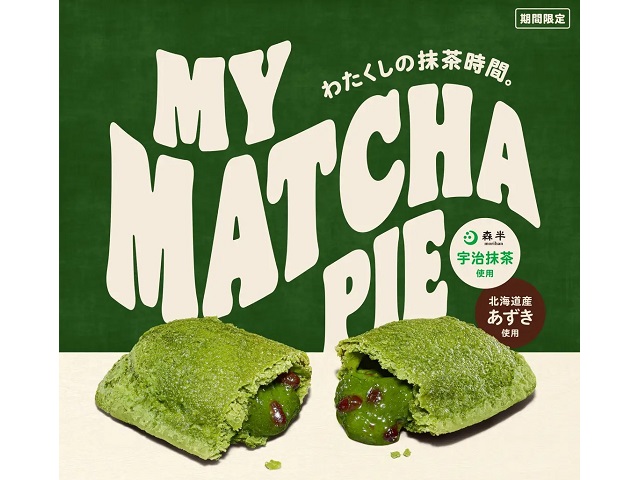
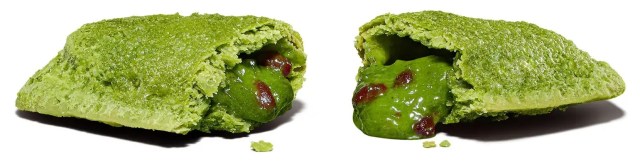
A popular dessert is returning to Burger King Japan, and its English name is pretty straightforward: My Matcha Pie. But while that gives you the basic idea, it’s the Japanese name, Watakushi no Matcha Pie, that really conveys how classy it is.

Watakushi no means “my,” and watakushi “I.” There are many ways to say “I” in Japanese, though, and watakushi carries an eminently elegant tone compared to other first-person pronouns. That might seem a little overblown for fast-food sweets, but Burger King Japan’s partner in creating the Watakushi no Matcha Pie is none other than Morihan, a highly respected Kyoto green tea company that was founded in the 7th year of Japan’s Tenpo era, or 1836 by the Western calendar reckoning.

For the Watakushi no Matcha Pie, Morihan provides prized matcha grown in Uji, Kyoto’s premier green tea-producing region. Matcha powder goes into both the crisp pie crust and the matcha cream filling for a high-class mixture of non-cloying sweetness and gentle tea bitterness. The only thing that’s not matcha in the pie are the azuki sweet beans, sourced from Hokkaido, mixed in with the cream, but their lack of matcha-ness can be forgiven, since azuki makes everything better.

The Watakushi no Matcha Pie initially appeared last fall, though like with many desserts in Japan, was only available for a limited time. As of March 31, though, it’s back, though once again no one knows how long it’ll stay. The important thing, though, is that it’s here now, and even discounted by 20 yen to 220 yen (US$1.70) until April 6.

Source: PR Times via Entabe
Images: PR Times
● Want to hear about SoraNews24’s latest articles as soon as they’re published? Follow us on Facebook and Twitter!


Credit:
Spruce up your office with Pikachu date stamps in various sizes and styles

Pikachu is ready to help you keep track of things!

Is your workplace just a boring, plain old office, without any Pokémon decorations or accessories? Are you tired of working in a Pokémon-free zone? Well, now you have at least one way to change that: by stamping your documents with a Pikachu date stamp!

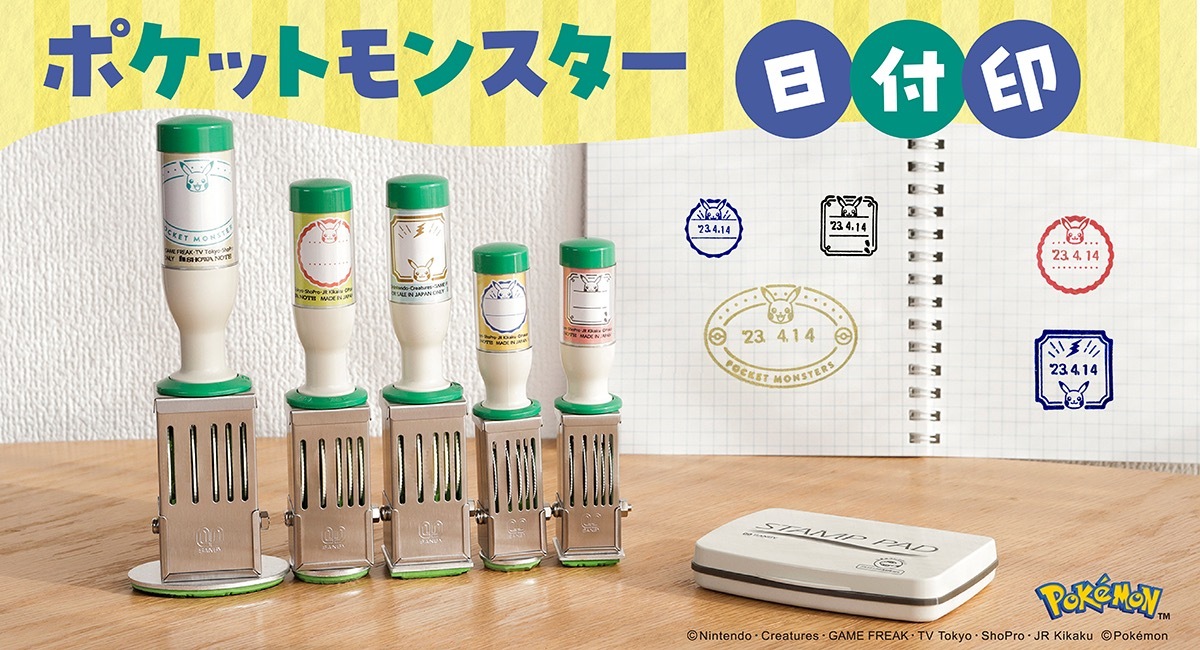
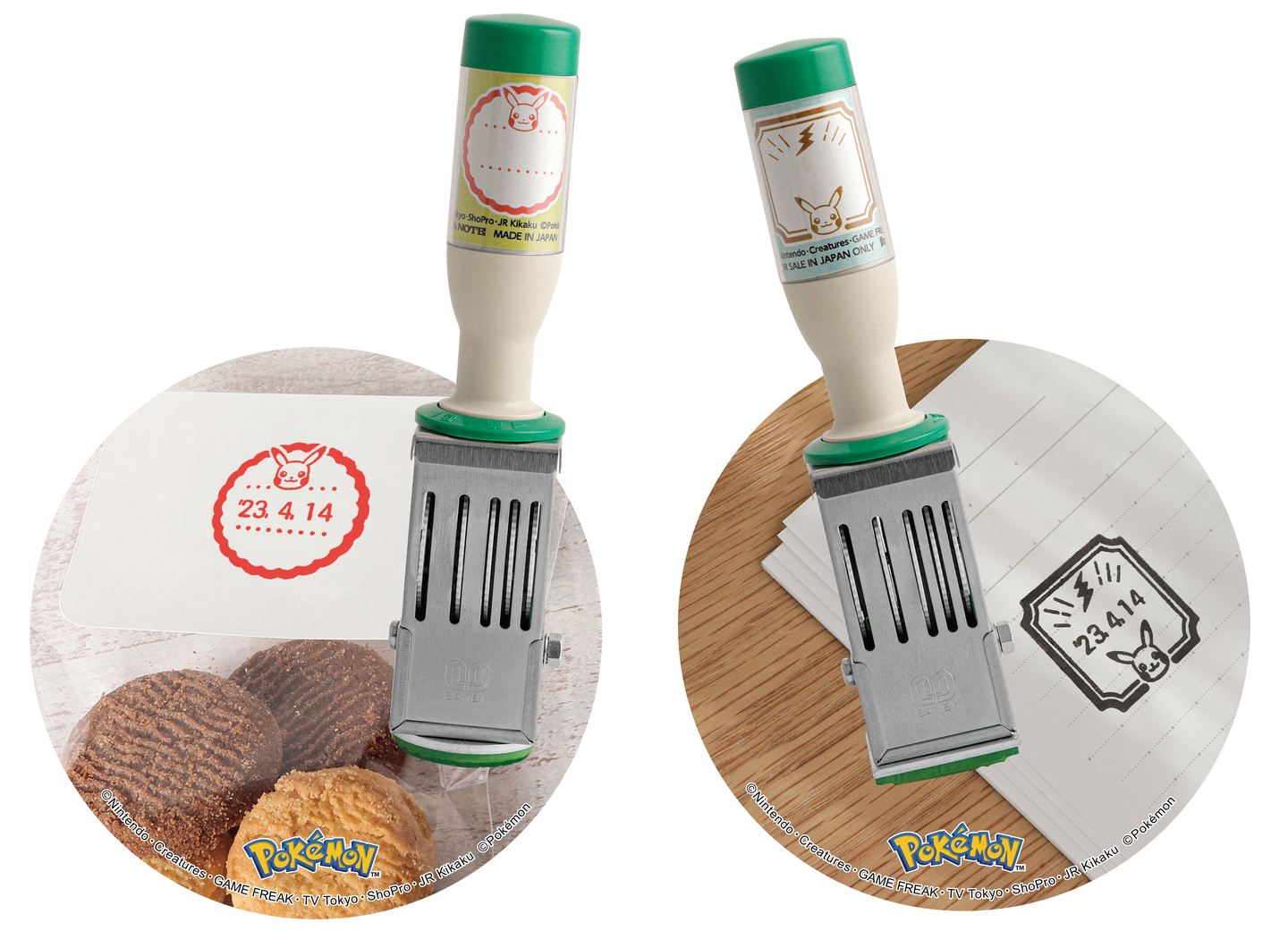
Hailing from stationery company Showa Note–previously noted for their awesome cardboard costumes–are five Pikachu stamps, each with different shapes and designs that come in either small, medium, or large.

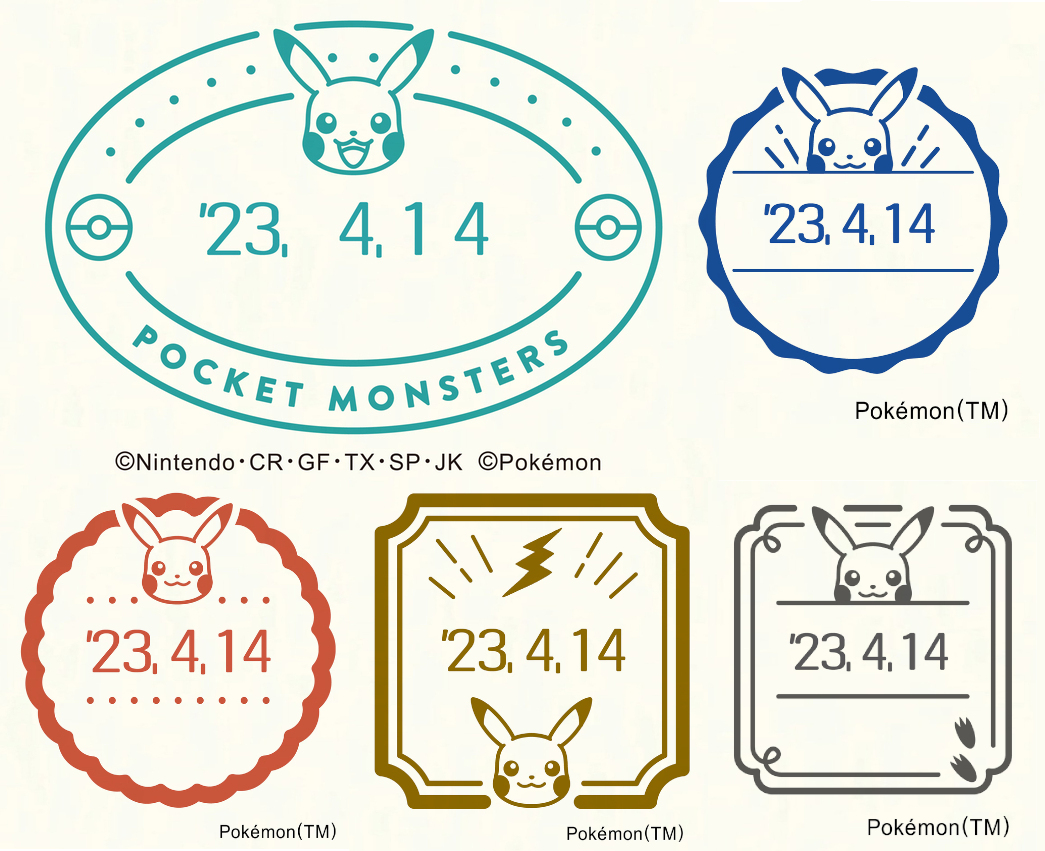
Out of the two small-sized stamps, one is round with a scalloped border design called “Face”, and the other is square with rounded edges called “Ashiato,” or “Footprints.” These have a stamp size of 18 by 18 millimeters (0.7 inches).

Both have a smiling Pikachu on the top, peeking over the date, though the square one has the added accessory of footprints in the bottom right corner. These small stamps sell for 3,690 yen (US$28.22) each.

The medium size, which produces a stamp 24 millimeters (0.9 inches) long and wide, also comes in a round style called “Retro” and a square style called “Denki” or “Electricity”, but as you might guess from the names, their designs are a little different from the small stamps. These have Pikachu’s whole head on them instead of part of it peaking over the dates.

The square stamp also has the Pikachu on the bottom and is accented with a lightning bolt on top. These retail for 4,620 yen each.

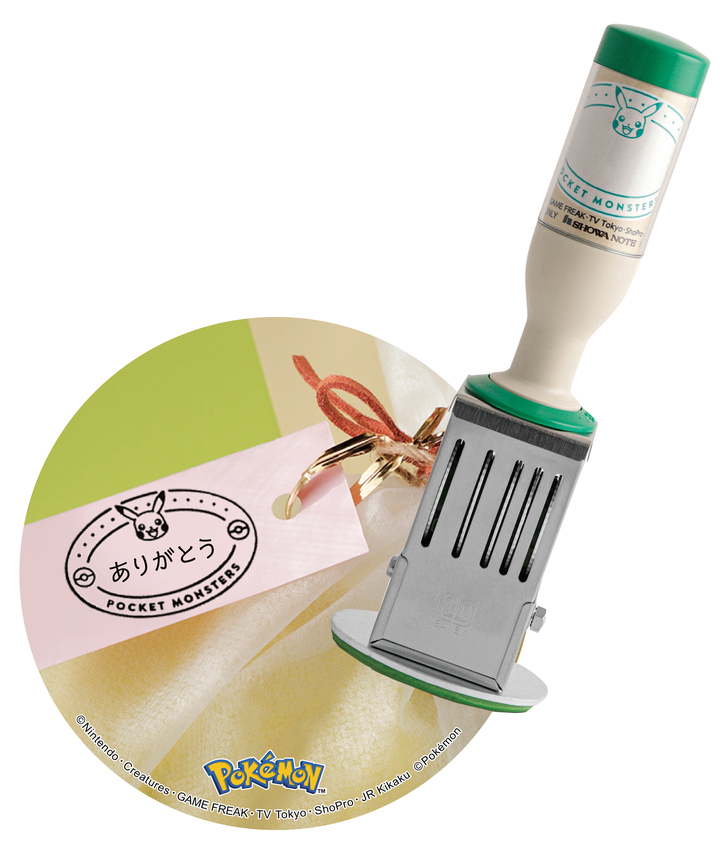
Last up is the large size, which is called the “Pokéball” design, since it’s decorated with Pokéballs. This one is oval-shaped, with measurements of 48 millimeters (1.9 inches) by 32 millimeters (1.3 inches), so it’s a decent-sized stamp. Pikachu looks extra happy in this one, and the bottom of the oval is also graced with the word “Pocket Monsters”. The price of this stamp is 6,160 yen.

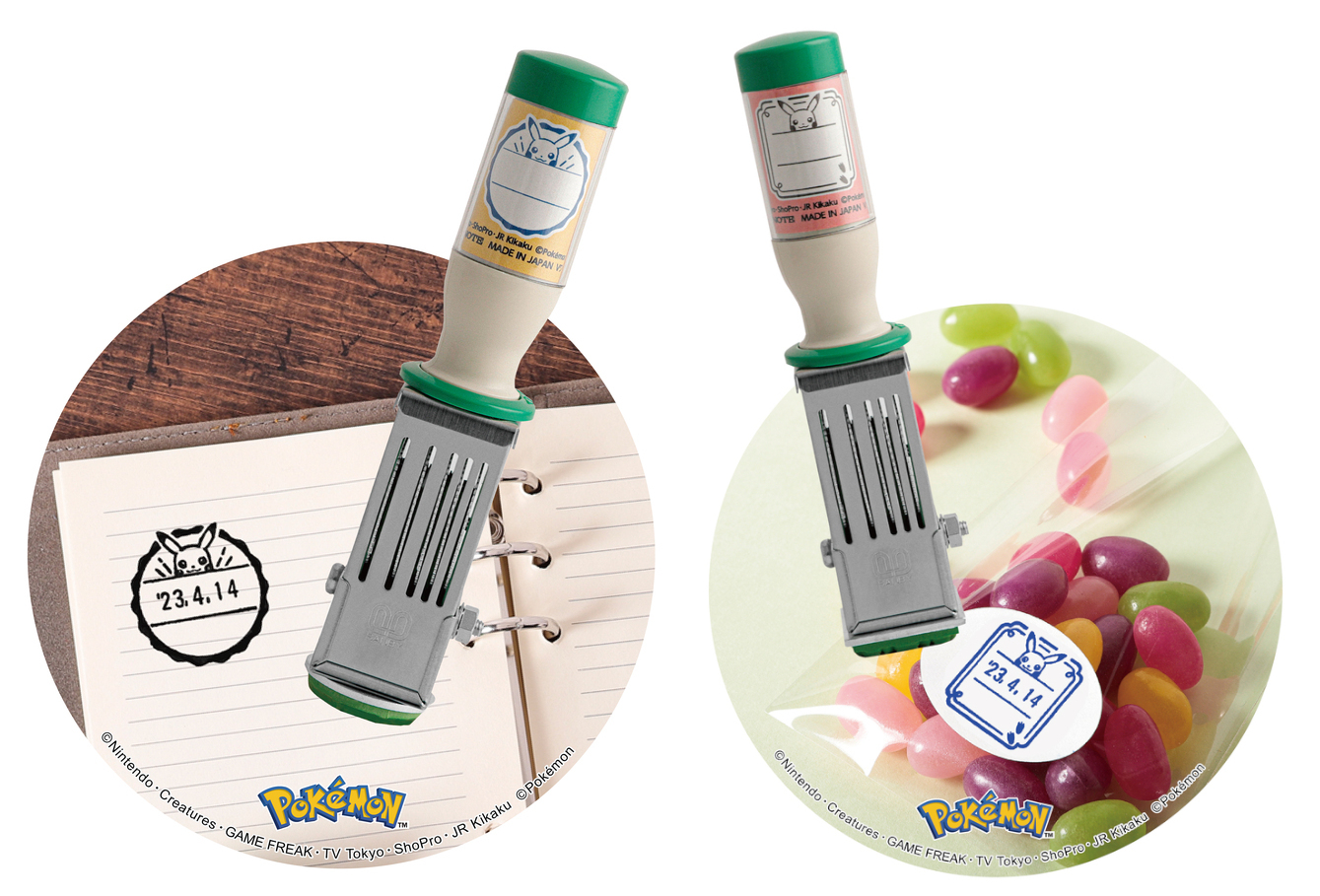
▼ Though the image shows the Japanese word for “thank you” stamped in hiragana, these stamps do not appear to be customizable with personal messages based on the order page. If you want Pokémon message stamps, check out Pokémon Pon Stamps!

These date stamps will be sold by preorder on the Yubinkyoku Net Shop and Showa Note’s Official Shop on the Rakuten Marketplace until May 21, but their shipping date will vary depending on when you order them. Orders placed by April 9 will start arriving on June 14, those placed between April 10 and April 30 are expected to be delivered on June 28, and any after May 21 are projected for a July 12 delivery. If Showa Note experiences an excess of orders, estimated delivery times may also be delayed, so that’s something to keep in mind when ordering.

These date stamps would probably go great with your Pokémon hanko, which you’re hopefully already using at the office. Don’t let the opportunity to cute-ify your workplace with Pikachu pass you by!

Source, images: Value Press
● Want to hear about SoraNews24’s latest articles as soon as they’re published? Follow us on Facebook and Twitter!


Credit: