Standing sleeping pods coming to Tokyo cafe, promise to relieve fatigue and stress【Pics】

Nescafé Harajuku is offering the opportunity to nap like a giraffe.

The whole point of stepping into a cafe for a cup of coffee is that it’s more comfortable and relaxing than just grabbing a drink from a vending machine or convenience store. A comfortable seat and laid-back ambiance go a long way towards making that coffee not just a beverage, but a reason to take a few moments and mentally decompress.

Of course, it’d be even more relaxing to just take a nap, which will be on option at the Harajuku Nescafé in downtown Tokyo later this month, which will be installing some very unusual sleep pods.

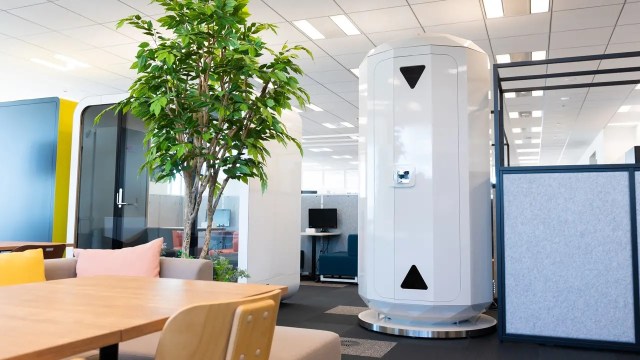
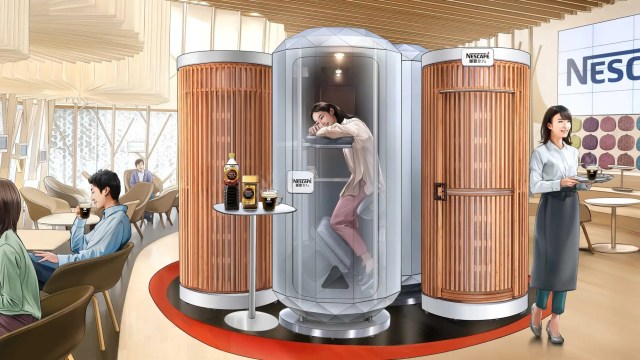
Giraffenap is a standing sleeping booth created by Hokkaido-based Koyoju Plywood Corporation. The company doesn’t say why they chose the name, but it might be because not only are giraffes capable of sleeping while standing up, but because they only sleep for a few minutes at a time, what we’d call a “nap.”

Sleeping while standing isn’t something our human bodies are designed to do, though, so the Giraffenap provides a little biomechanical assistance. Inside the booth are pads and platforms to support your head, butt, shins, and the soles of your feet. With those body parts accounted for, the designers say it’s possible to reach Stage 2 sleep, a restful pre-REM condition.

A 20-minute Giraffenap nap, the designers promise, improves mental performance by reducing fatigue and stress while boosting concentration and memory retention. As part of its “Standing Coffee Nap” promotion, Nescafé Harajuku actually recommends drinking a cup of coffee first and then taking a 20-minute nap in the pod, so that the caffeine will be kicking in right about the time you’re waking up.

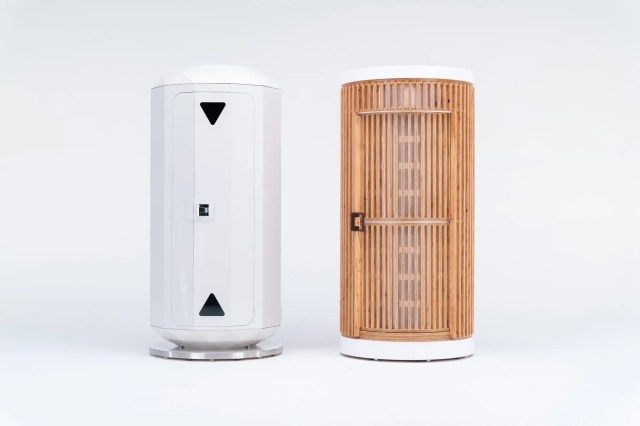
The Giraffenap comes in two designs, the futuristic Spacia and woody Forest, but the interiors seem to be identical. Koyoju Plywood is recommending them to wellness-minded workplaces that want to create a space for employees to take mid-day naps but who lack the floor space to put in a full bed for that purpose.

Giraffenap is slated to go on sale in late December or early January, but the pods will be at the Harajuku Nescafé from August 22 to September 17, with reservations available online here.

Cafe information
Nescafé Harajuku / ネスカフェ原宿
Address: Tokyo-to, Shibuya-ku, Jingumae 1-22-8
東京都渋谷区神宮前1丁目22−8
Website

Source: PR Times (1, 2)
Top image: PR Times
Insert images: PR Times (1, 2)
● Want to hear about SoraNews24’s latest articles as soon as they’re published? Follow us on Facebook and Twitter!


Credit:

Japanese convenience store fools us with its 40-percent-more sandwich, but in a good way

Family Mart is upsizing over a dozen products for a limited time, but they’re being more generous than they let on. 

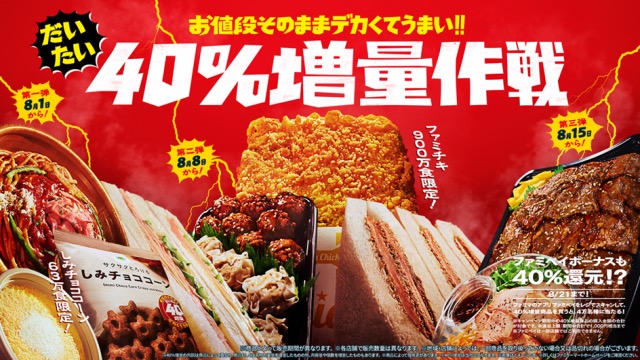
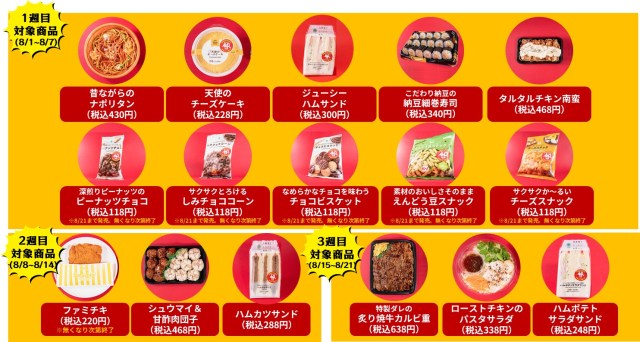
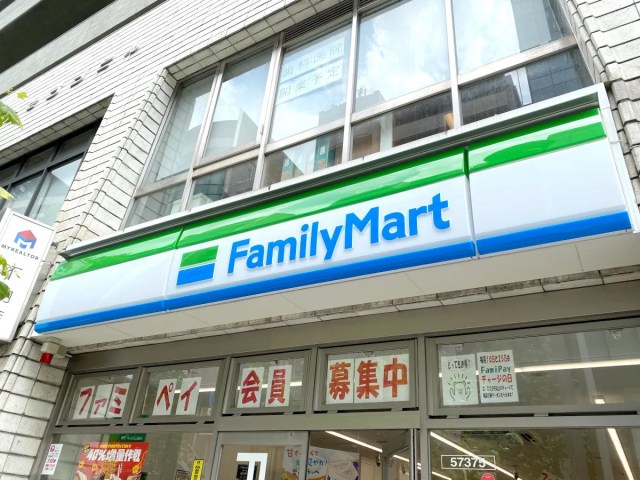
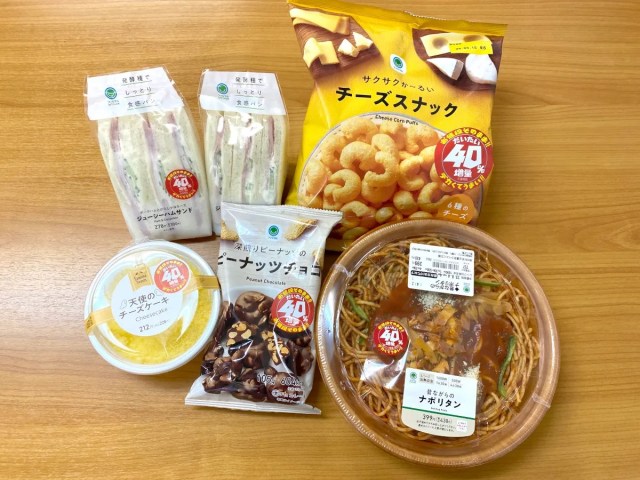
On 1 August, Japanese convenience store chain Family Mart began a new campaign called the “Roughly 40-Percent Increase Strategy”. This campaign, which gives customers roughly 40-percent more for their money, is limited to certain items and is set to be released in three instalments, with the first instalment running from 1-7 August, the second from 8-14 August and the third from 15-21 August.

Image: Press release

▼ The first instalment is the largest of the three, with a total of 10 products being upsized during the seven-day period.

Image: Press release

The product that caught our eye here was the Juicy Ham Sandwich, which sounded absolutely delicious, so we went out and purchased one, along with a regular sized one so we could compare the two sizes.

▼ Both the large and the regular Juicy Ham Sandwich (“ジューシーハムサンド”), which goes by the rather dull-sounding “Ham & Cucumber” in English, were priced at 300 yen (US$2.10).

In an era of rising prices, where companies everywhere are doing their best to cut costs, we had a sneaking concern that this “roughly” 40-percent increase campaign might land more on the sub-40-percent side of things. The only way to find out, though, would be to get out the scales and weigh the sandwich fillings, seeing as this appeared to be the only difference between the two, as the bread slices were identical in both.

So how would they weigh up? Well, let’s start with the regular fillings, which weighed in at…

▼ …57 grams (2 ounces).

Judging from this result, the fillings in the new campaign sandwich would need to weigh at least 79.8 grams to be a 40-percent increase. So…how much would the fillings weigh?

Drumroll please…….

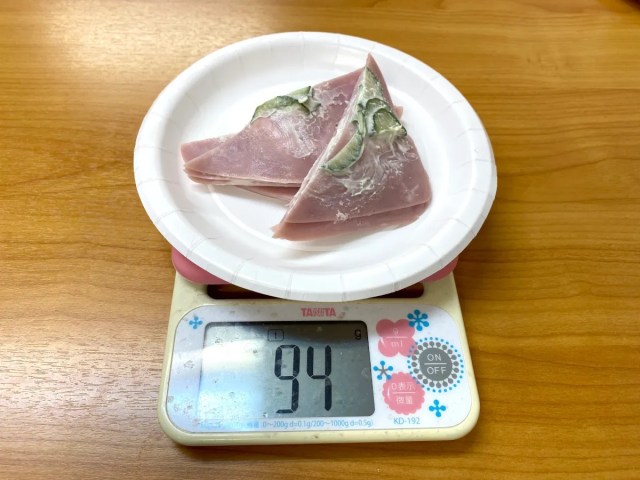
The “roughly” 40-percent more sandwich weighed in at….

▼…94 grams!!!!!

That means that instead of giving us 40-percent more fillings, Family Mart had given us…

▼…65 percent more!

▼ Family Mart! You big, lovable, god-like underseller, you!

By underselling the “roughly 40-percent increase” and giving us more than we bargained for, Family Mart just earned a forever-place in our convenience-store loving hearts.

▼ We felt so much affection for the chain and its new campaign that we immediately went out and purchased even more of the upsized products.

Having been fooled by “paper tiger” sandwiches at Japanese convenience stores before, this reverse fraud, which delivered more than advertised, was a very pleasant surprise. Now we can’t wait to see how next week’s products fare on the “roughly” side of things. With Family Mart’s iconic Famichiki fried chicken being upsized in the next instalment, we’re already loosening a notch on our belts in preparation!

Photos ©SoraNews24unless otherwise stated
● Want to hear about SoraNews24’s latest articles as soon as they’re published? Follow us on Facebook and Twitter!


Credit:

Over half of Japanese students in nationwide test score zero percent in English speaking section

But that number might not tell the whole story of why so many were at a loss for words.

In April, Japan’s Ministry of Education, Culture, Sports, Science and Technology conducted its National Academic Ability and Educational Condition Survey, a test to measure the abilities of sixth-year elementary school students and third-year middle school students (equivalent to the ninth grade in the U.S. school system) in a variety of subjects. Though the tests are conducted every year, this was the first time since 2019 that middle school students were tested on their English abilities, and the results weren’t pretty.

The English test was divided into four skill sets: listening, reading, writing, and speaking. Students faired the best in listening, with an average score of 58.9 percent for that category. That might not sound like much, but when you consider that the middle school students’ average score on the math section of the test (which is written in Japanese, of course) was just 51.4 percent, 58.9 for English listening looks pretty good.

Unfortunately, it was downhill from there. For English listening, the average score was 51.7 percent and for English writing 24.1 percent. Then, way down at the bottom of the four English language skills came speaking, for which the average score was just 12.4 percent. Even more startling: 63.1 percent of the test takers got a zero for the English speaking section, failing to satisfactorily answer any of the five questions it contained.

“The format of the questions [in the speaking section] was complicated, and it was probably difficult for the students,” said a spokesperson from the ministry regarding the results.

Numerically, the speaking scores seem dismal, but there might very well be some truth to the idea that the format didn’t do the kids any favors. One of the speaking section questions involved having students listen to a native English speaker talk about differences in disposable plastic bag usage between shoppers in New Zealand and Japan, after which they were given 60 seconds to organize their own thoughts on the topic before having 30 seconds to express them in English. Other questions were also designed with first listening to an English passage and then formulating a response.

As any parent who’s asked their teenager “How was school today?” and been met with a minute of stony silence before an eventual “…fine…I guess…you know?” 14/15-year-olds aren’t known for being particularly eloquent or loquacious when talking to someone outside their peer group. “You’ve got 60 seconds to digest what someone just told you about the environment and form a meaningful response that you can condense down into 30 seconds” is a tall order for teens even in their native language.

▼ I’d bet that under those parameters, even a few adults’ responses would end up as something like “Umm…trees good…I believe.”

By comparison, at least one of the English speaking questions in 2019 had a much simpler setup. Students were asked to imagine that they were being interviewed by a foreign news crew, and to describe a dream or goal they have for their future, and what they need to do to accomplish it. Sure, it’s a bigger topic than plastic bag usage, but it’s also something students are more likely to already have a personal answer for, and removing the necessity to come up with the answer itself on the spot arguably makes it a more accurate measure of a student’s English speaking abilities than combining that with a trial of their aptitude at quickly forming an opinion.

This year’s test was also the first time that the English speaking section of the test was conducted online, as opposed to face-to-face with testing staff. While humanity as a whole has gotten more accustomed to voice/video chat than ever before during the pandemic, for many people there’s still an added layer of awkwardness and stress compared to a face-to-face conversation, which likely had a negative impact on test takers’ scores.

The combination of a less complicated question format and face-to-face speaking in the last time the test was conducted might explain why the average score for the English speaking section was 30.8 percent in 2019, still low, but more than double the 12.4 percent for 2023.

That said, scores dropped for all four skills in the English section of the test compared to 2019, especially when students had to express themselves. The average listening and reading scores fell by 9.4 and 4.5 percent, while writing and speaking plummeted 22.3 and 18.4 percent.

It’s possible that the decreases can be partly attributed to the effects of the pandemic. Isolation at home and remote learning are, generally, not the most conducive conditions for language acquisition, particularly self-expression. Motivation also likely sagged for many students, since it’s hard to get excited about learning a foreign language when international travel is shut down. Still, it looks like educators and policy makers are going to have a lot of work to do bringing those scores up by the next time students’ English abilities get tested.

Source: Jiji via Yahoo! Japan News via Jin, The Sankei News, The Japan News
Top image: Pakutaso
Insert images: Pakutaso (edited by SoraNews24), Pakutaso
● Want to hear about SoraNews24’s latest articles as soon as they’re published? Follow us on Facebook and Twitter!


Credit:

Nine of the best spots for beating the heat with kakigori shaved ice in Japan this summer

These shops also showcase the immense variety of flavors and ingredients that go into the making of individual shaved ice recipes.

When the scorching days of summer hit Japan, there’s only one appropriate solution: go out and eat a ton of kakigori, or flavored shaved ice. Eating a heaping mound of kakigori should definitely be on any visitor’s bucket list when traveling through the country in the summertime. Shops selling the treat are easily recognizable by their classic red and blue banners with the kanji for “ice” (氷) hanging outside of the door.

▼ Keep your eyes out for a banner like this as a sign that kakigori is sold inside.
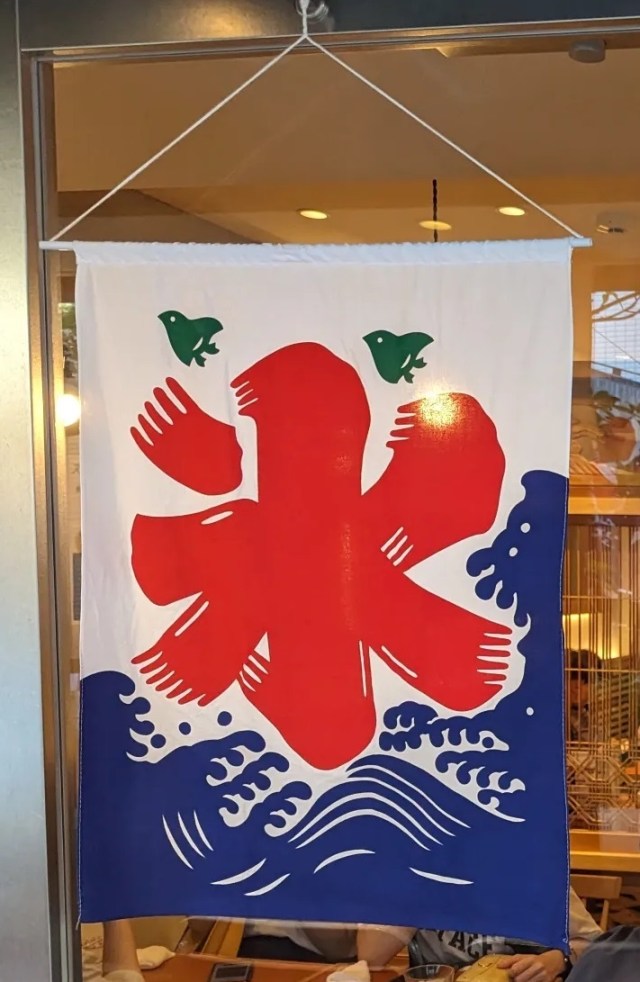
Image: ©SoraNews24

That said, there’s tons of variety in the world of kakigori when it comes to flavors, from classic fruit syrup toppings to more novel and solid toppings. Here are nine particular shops throughout Japan selling their own unique take on the dessert that you may want to check out before the summer heat causes you to melt. One thing to note is that in Japan, kakigori desserts are often limited-time summer menu items. Though some of the places listed below have announced the sales period for their kakigori, others haven’t, so it’s usually best to get in before the end of August to ensure you’ll be able to try all of the ones that you want.

1. Kyo mo Imo (きょうもいも) / Sakai City, Osaka Prefecture

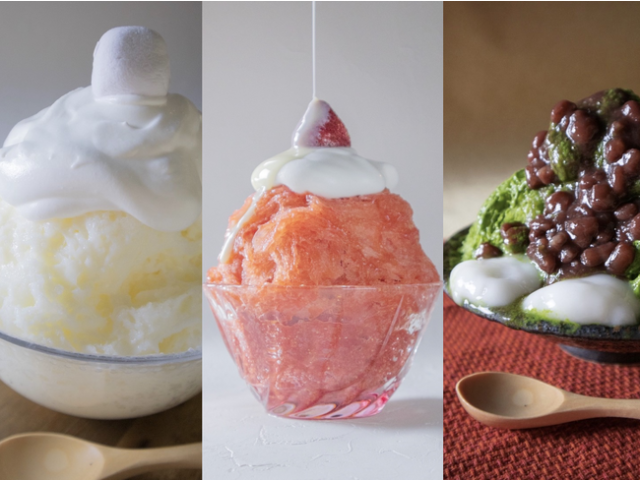
Interestingly, Kyo mo Imo is actually a store that specializes in Japanese sweet potatoes (satsumaimo). The kakigori here is as fluffy as a cloud and makes use of traditional Japanese ingredients. Popular flavors from last year have returned, including “Sweet potato, milk, and organic maple syrup” for 950 yen (US$6.73) and “Purple sweet potato, azuki, and refined Japanese sugar” (950 yen), along with new ones such as “White peach, jasmine, and mascarpone cream” (1,100 yen). Kakigori will be available at the shop until August 31.

Kyo mo Imo
Address: Osaka-fu, Sakai-shi, Kita-ku, Higashi-Asakayama-cho 4-1-12, Aeon Mall Sakai Kitahanada, 3rd floor
Website


2. Kominka Cafe Okamedo (古民家caféお亀堂) / Toyohashi City, Aichi Prefecture
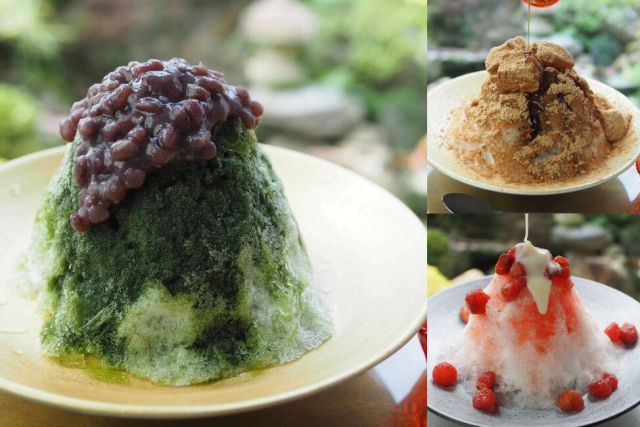
This cafe has been run by a beloved maker of traditional Japanese sweets for over 70 years. It’s especially well-known for the traditional “Uji kintoki” flavor made using matcha and azuki bean paste (1,080 yen). You may also want to try the shop’s original “Thick warabi-mochi and brown sugar syrup” flavor (1,280 yen) as well.

Kominka Cafe Okamedo
Address: Aichi-ken, Toyohashi-shi, Minami-Koike-cho 164
Website


3. Nanaka (なな菓) / Ikebukuro, Tokyo
Nanaka offers a unique take on kakigori with its self-described blended “ice cream kakigori.” The kakigori is available for a limited time until August 31 outside of the Kin no Kura Izakaya in the popular Sunshine Street area. “Condensed milk and strawberry milk,” “Rich Uji kintoki,” and “Snow white milk and yogurt” flavors are each 1,045 yen. You can also get a 100-yen discount by sharing a post about the shop on Instagram using a provided hashtag.

Nanaka
Address: Tokyo-to, Toshima-ku, Higashi-Ikebukuro 1-21-11, Oak Ikebukuro Building, B1F
Website


4. Mont St. Clair (モンサンクレール) / Jiyugaoka, Tokyo
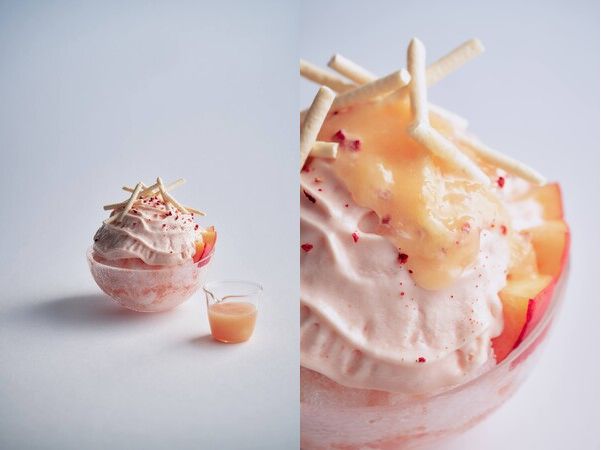
This famous patisserie combines peach and yogurt for its refreshing, almost cake-like version of kakigori called “Awa ko-ri momo” (1,400 yen). The ice is shaved extremely thinly for a luxuriously soft texture and topped with homemade yogurt sauce, meringue, and various forms of peaches, from chunks of fruit to infused sauce.

Mont St. Clair
Address: Tokyo-to, Meguro-ku, Jiyugaoka 2-22-4
Website


5. Koe Donuts (コエ ドーナツ) / Kyoto City, Kyoto Prefecture

This popular donut shop has collaborated with kakigori specialty shop Hyosha Mamatoko (氷舎 mamatoko) for a unique take on the dessert that’s said to pair perfectly with donuts. The two flavors are “Genmaicha [roasted green tea], puffed cereal, and sweet bean paste” (1,100 yen) and “Grapes and elderflower” (1,650 yen), which includes whole Kyoho purple grapes and Shine Muscat grapes on top.

Koe Donuts
Address: Kyoto-fu, Kyoto-shi, Nakagyo-ku, Shinkyogoku-tsu, Shijo-agaru, Nakano-cho 557, Kyoto Shochiku Sakaiza Building, 1st floor
Website


6. Bono Bakery (ボーノベーカリ) / Osaka City, Osaka Prefecture
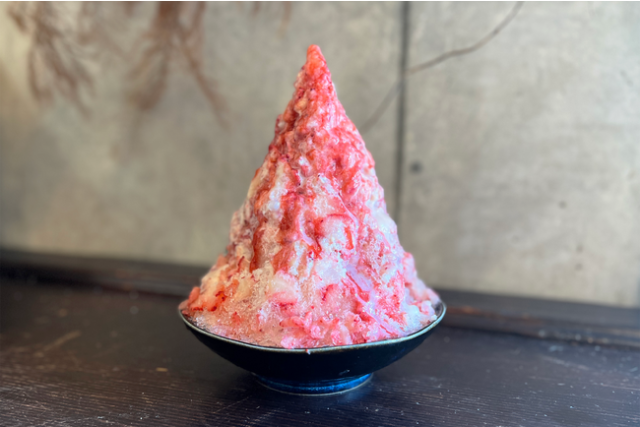
Sold at a popular bread bakery, this kakigori is only available for dining in and is limited to 10 customers per day. The “Dongari [pointed] ice strawberry” flavor (1,650 yen) is composed of perfectly ripe, frozen strawberries and fruit puree. You can also add as much condensed milk as you’d like. Of course, the really unique thing about this shaved ice is its pointed tip, which measures in at over 20 centimeters (7.9 inches).

Bono Bakery
Address: Osaka-fu, Osaka-shi, Nishi-ku, Minami-Horie 2-9-16, 1st floor
Website


7. Sushiro (スシロー) / Sushiro locations around Japan

Shaved ice isn’t something you’d normally think of getting at a conveyor belt sushi restaurant, but the chain is currently offering a “Peach kakigori parfait” and a “Soda kakigori parfait” for only 280 yen each through August 18. Both flavors come with a dollop of ice cream on top and some fruit on the side. With a price like that, we’ll make it a habit to order kakigori parfaits after every sushi meal! Note: Beef bowl chain Sukiya also currently has similar kakigori on the menu.

Sushiro
Location list


8. Vanilla Beans the Roastery (バニラビーンズ ザ ロースタリー) / Yokohama City, Kanagawa Prefecture

Chocolate specialty store Vanilla Beans has branched into shaved ice this summer with its unique “Vanilla Beans Glace Pilée [crushed ice] Mango and Orange” flavor (1,980 yen). Made using a rare variety of cacao pulp, it’s a thick but refreshing treat. While this artistic eye-and-stomach candy is available through August 31, please be aware that the number of dishes sold per day are limited–so you might want to get there early when you visit.

Vanilla Beans the Roastery
Address: Kanagawa-ken, Yokohama-shi, Naka-ku, Shinko 2-14-1, Yokohama Hammerhead, 2nd floor
Website


9. Matsuzakaya Ueno (松坂屋上野店) / Ueno, Tokyo
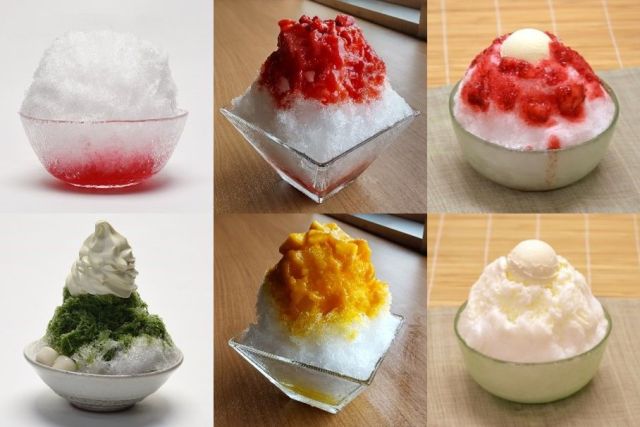
Various food shops are nestled in this department store right next to Ueno Park. Matsuzakaya has revamped its grand kakigori menu together with three of these shops for a total of 15 different varieties. Prices begin at 580 yen. This shaved ice is also available later than most other places, with the curtain closing on September 12.

Matsuzakaya Ueno
Address: Tokyo-to, Taito-ku, Ueno 3-29-5
Website

Any of the above seem like a great way to cool yourself down over the next month, but here’s a second suggestion as well if you’re looking for even more ideas.

Reference, images: PR Times (1, 2, 3, 4, 5, 6, 7, 8, 9)
● Want to hear about SoraNews24’s latest articles as soon as they’re published? Follow us on Facebook and Twitter!


Credit:

Barbenheimer posts cause backlash in Japan, prompting two-sentence apology from Warner Bros.

U.S. studio attempts to dodge backlash by keeping apology low-key, driving #NoBarbenheimer to trend in Japan.

Anyone who’s ever visited the Hiroshima Peace Memorial Museum in Japan will know that the nuclear bomb is no joke. There, at the site where one of two atomic bombs were dropped, the other being at nearby Nagasaki, museum visitors come face-to-face with human hair, fingernails, and skin that fell away from people who suffered from radiation poisoning following the blast. Other artefacts are equally chilling, including pieces of clothing that stuck to human bodies as their skin melted.

So when #Barbenheimer posts started trending overseas, with people mashing together images of smiling characters from Barbie with images of mushroom clouds from Oppenheimer, two movies that were released overseas on the same day, it made a lot of people in Japan feel uncomfortable. However, when the social media marketing team from Warner Bros. in the U.S. started replying to these tweets with playful comments through its official Barbie movie account, something had to be done.

That something was the Warner Bros. Japan branch releasing a statement on its official Barbie movie Twitter account, as seen below.

The tweet reads:

“Both the movie Barbie (distributed by Warner Bros.) and the movie Oppenheimer (distributed by Universal Pictures), were released in the United States on 21 July so there is currently a movement (#Barbenheimer) by overseas fans to watch  the movies together, but this movement and its activities are not official. We consider it extremely regrettable that the U.S. head office, through its official Barbie movie account, reacted to social media posts by fans involved in this movement, and we take this situation very seriously. We are asking the U.S. head office to take appropriate action. We apologise to those who were offended by this series of inconsiderate actions. Warner Bros. Japan G.K.”

A day later, on 1 August, the Warner Bros. head office in the U.S. distributed an apology through a number of media outlets, which read:

“Warner Brothers regrets its recent insensitive social media engagement. The studio offers a sincere apology.”  

It was a much shorter apology than the one issued in Japan, and at the time of writing, the apology had not been published on the offending account that had previously reacted to the controversial images with comments such as, “We’re always thinking PINK 💞” and “It’s going to be a summer to remember 😘💕”

At the time the first apology was issued, the #NoBarbenheimer hashtag had begun trending in Japan, but following the second apology the hashtag gathered even more momentum, with people leaving comments such as:

“This feels like they’ve just apologised for the sake of it.”
“Arrogant and impudent.”
“If 9/11 was made into a joke like this, people would be outraged.”
“It’s like they’re laughing at over 100,000 dead children.”
“They should fire the person who sent out the tweets.”

Warner Bros. is yet to make any further statement about the issue, including what actions they’re taking to ensure something like this doesn’t happen again. However, with Barbie director Greta Gerwig due to appear in Japan for the local premiere on 2 August, she may have to face some uncomfortable questions from fans.

Source: Twitter/@BarbieMovie_jp via Hachima Kikou
Top image: Pakutaso (edited by SoraNews24)
● Want to hear about SoraNews24’s latest articles as soon as they’re published? Follow us on Facebook and Twitter!


Credit:
Sales of Japan’s most convenient train ticket/shopping payment cards suspended indefinitely

Suica and Pasmo have become an ubiquitous part of life and travel in Japan, but you can’t get a new card for either.

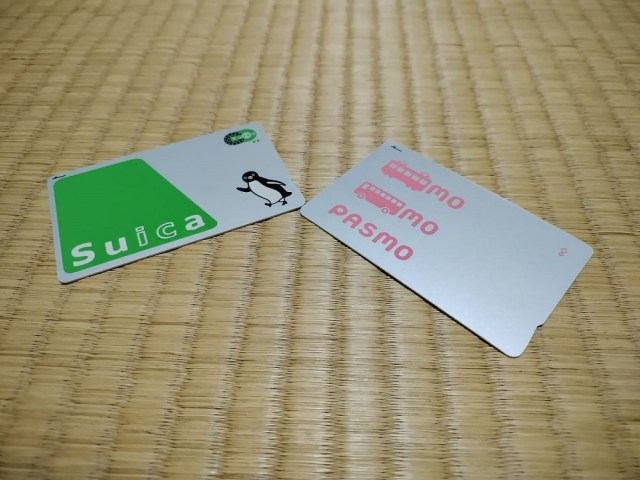
When arriving in Japan, ordinarily one of the first things you’d want to do is to get yourself a Suica card. As of today, though, that’s not an option, as sales of the rechargeable e-money card, issued by East Japan Railway (JR East), have been suspended.

Suica has become an extremely convenient and near-ubiquitous part of daily life in Japan. Originally only used for buying tickets for JR lines, Suica cards can now be used on a variety of train and subway lines operated by other companies as well, and they’re also a way to quickly and easily pay for all sorts of things, from vending machine drinks to Uniqlo T-shirts to restaurant bills. Suica, and the similar alternative card Pasmo, are especially handy if you’re new to traveling in Japan. Since all you have to do is tap the card on a pad to pay, there’s no need to hold up the line behind you at the ticket machine or cashier as you try to count out coins in a currency you might not be accustomed to using yet.

▼ “Is the gold coin with the hole in it 5 yen or 50?” is something everyone asks themselves a couple times on their first trip to Japan.

Suica/Pasmo cards are also handy because they save you the hassle of having to calculate your train fare before you get on the train. Instead of looking up at a map of Tokyo’s massive rail network and trying to find the name of the station you’re headed to (which might be written in Japanese kanji only), you just tap your card as you enter the gates, tap it again when you exit at your destination, and the fare is calculated automatically. They’re also a godsend if you’re traveling with family or friends, since it saves your group the trouble and time of everyone having to stop at the machine and buy tickets before every train/subway ride.

Unfortunately, due to the ongoing global semiconductor shortage, JR East and Pasmo Co. have simultaneously announced that they are suspending sales of Suica and Pasmo cards as of August 2. The companies had already suspended sales of “unregistered” Suica and Pasmo cards in June, but the extended suspension now includes registered cards (for which the purchaser provides their name, date of birth, and phone number).

▼ The Pasmo robot mascot bowing in apology in the suspension’s announcement tweet

Currently, the only type of physical Suica/Pasmo cards available are those purchased as part of a monthly commuter rail pass. Those cards can also be charged with e-money and used to make purchases, but the break-even point on the cost of the commuter pass is usually around 15 round-trip fares between two stations within a month, making them not a viable choice for most tourists.

Mobile versions of Suica and Pasmo remain available, but may or may not be compatible with overseas phone models and payment methods.

Neither JR East nor Pasmo Co. has made any public comments about when physical Suica/Pasmo card sales will resume.

Source: JR East, Pasmo Co. via IT Media
Photos ©SoraNews24
● Want to hear about SoraNews24’s latest articles as soon as they’re published? Follow us on Facebook and Twitter!


Credit:
Starbucks Japan releases first-ever nationwide watermelon Frappuccino, and it’s a summer stunner

In a country famous for its expensive watermelons, this is a drink we’ve long been waiting for.

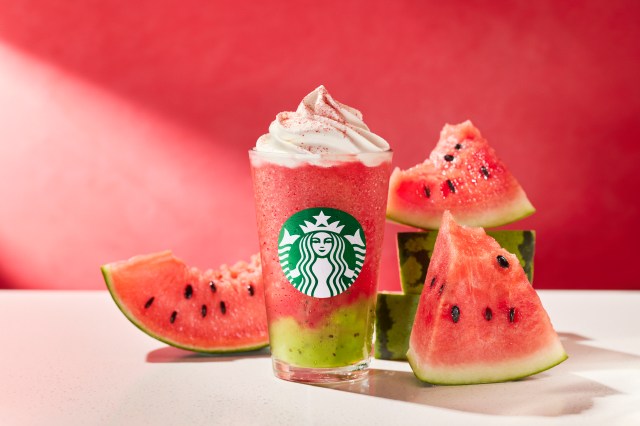
Now that we’re in the heat of summer, Starbucks is pulling out the big guns of refreshment in Japan, with the announcement of the chain’s first-ever nationwide watermelon Frappuccino.

The new beverage is called the Gaburi Suika Frappuccino, with “suika” meaning “watermelon” and “gaburi” referring to a big bite, which in this case conjures up images of biting into a succulent watermelon.

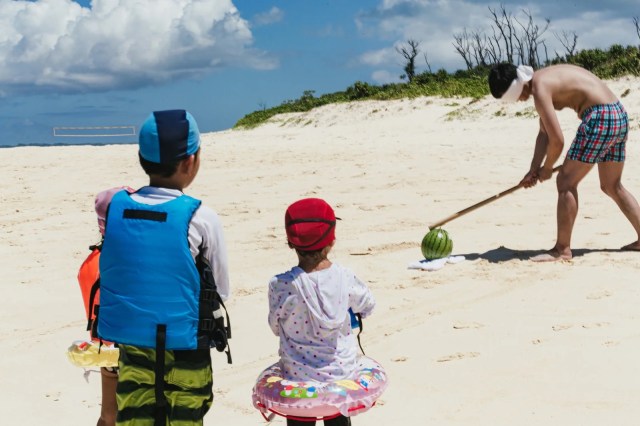
Watermelons are such a popular summer fruit in Japan that there’s even a tradition called “suikawari“, where one person attempts to smash open a watermelon with a stick while blindfolded, usually while out with friends or family at the beach.

▼ Once it’s been smashed open, everyone gets to eat it.

Image: Pakutaso

So the advent of a watermelon Frappuccino is big news in Japan, especially as it’s the first time customers around the country will be able to taste it. Previously, only one watermelon Frappuccino has graced the menu for a limited time, and only in Toyama Prefecture — where you can find the country’s largest watermelons — as part of the chain’s epic 47-Frappuccino release to mark its 25th year of business in Japan.

However, while that Frappuccino was topped with matcha powder and chocolate sauce to mimic the look of a watermelon, this new Frappuccino takes the fruit in a different direction entirely, pairing it with several other summer fruits, namely dragon fruit, passion fruit and kiwi fruit.

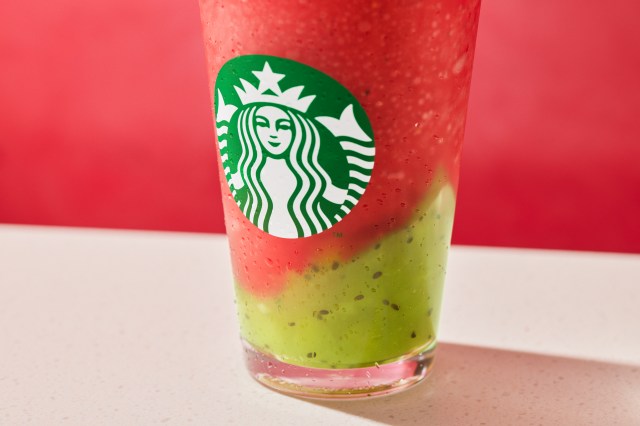
According to the chain, the bright red body of the drink has a robust flavour, created by blending watermelon juice with a sauce made with dragon fruit pulp and passion fruit juice. At the bottom of the drink is a layer of pulpy kiwi fruit to recreate the look of a watermelon peel while adding a tart sweetness for contrast.

On top, the drink is finished with a pinch of “watermelon salt”, made with salt and watermelon juice, which is a nice nod to the Japanese tradition of sprinkling salt on watermelon to enhance the sweetness.

The salty, sweet and fruity flavours look set to be an addictive combination, and we can’t wait to try it when it appears in stores for a limited time from 9 August. Available in a tall size only, priced at 678 yen (US$4.75) for takeout and 690 yen for eat-in customers, the Gaburi Suika Frappuccino will be available while stocks last until 31 August.

Source, images: Press release unless otherwise stated
● Want to hear about SoraNews24’s latest articles as soon as they’re published? Follow us on Facebook and Twitter!


Credit: