Bathe in the waters of a rare Japanese onsen temple steeped in over 1,000 years of history
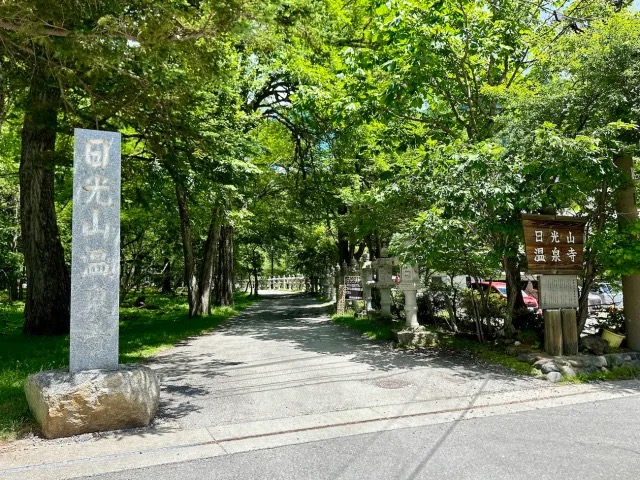
Escape the crowds of tourists at Nikko with a visit to this hidden gem.

Nikko in Tochigi Prefecture is known for its natural beauty and World Heritage-listed temples, one of which is home to the famous three wise monkeys, but it’s also home to a rare hot spring temple that often gets overlooked by tourists.

Called Nikkozan Onsenji, this is a temple where you can bathe in hot springs, and it’s an annex of Nikko’s World Heritage-listed Nikkosan Rinnoji Temple. Located in Okunikko Yumoto Onsen, this hot spring has a history that stretches back to 788, and our reporter Masanuki Sunakoma took advantage of a recent day off to head out to the onsen so he could soak in its waters.

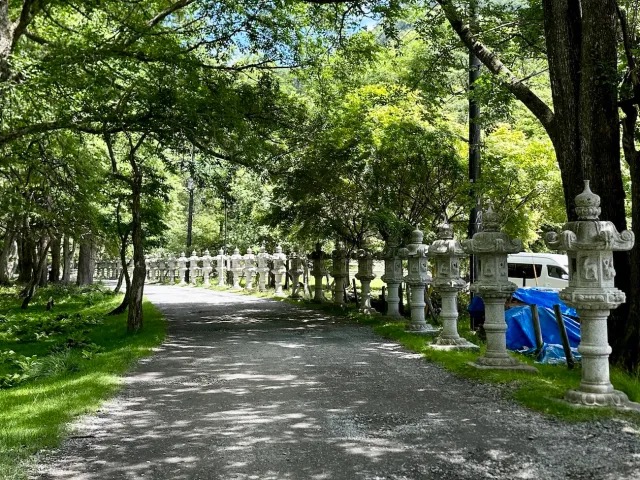
▼ First, though, he soaked in the scenery as he walked along the shaded approach to the temple, which was lined with stone lanterns.
Masanuki ended up following a group of guests to the temple building, where he discovered there was a sutra copying experience available, for 1,000 yen (US$7) per person.

Figuring this would be a great way to ease himself into the zen-like surroundings, he signed up and took a seat, emptying his mind as he used a calligraphy brush to trace over 16 characters from one section of the Yakushi Sutra.
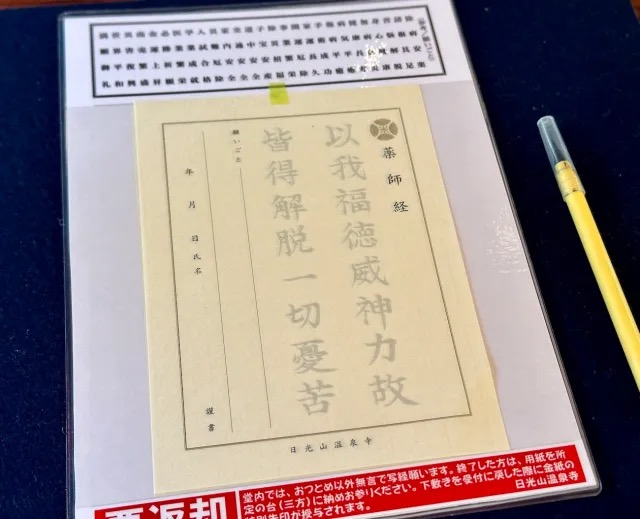
The passage translates to “You can escape from all sorrow and suffering with the great good fortune of Yakushi Nyorai.” It’s said that if you trace each letter with all your heart, your mind will naturally calm itself.

Those who leave their traced sutra in front of the altar will be given a special golden goshuin (stamped paper), marked with the date and the name of the temple.
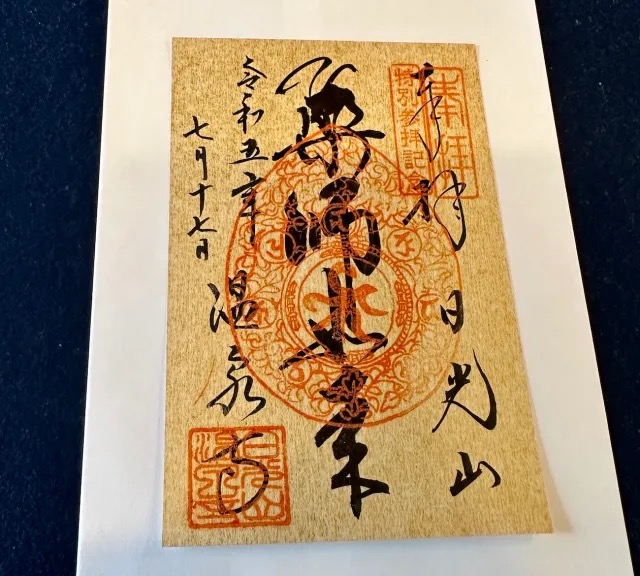
Masanuki tucked his goshuin carefully into the pocket of his bag and exited the building, proceeding to the hot springs, which goes by the name Yakushi-yu.
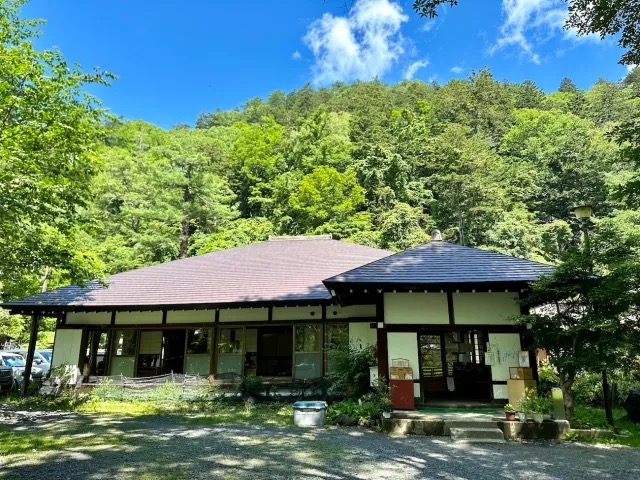
The hot springs building also serves as the temple office, and its interiors will take you several decades back in time. The gender-separated bathing facilities here are just as rustic as the building, and the hot spring itself dates back even further.

▼ The entry to the men’s bath.
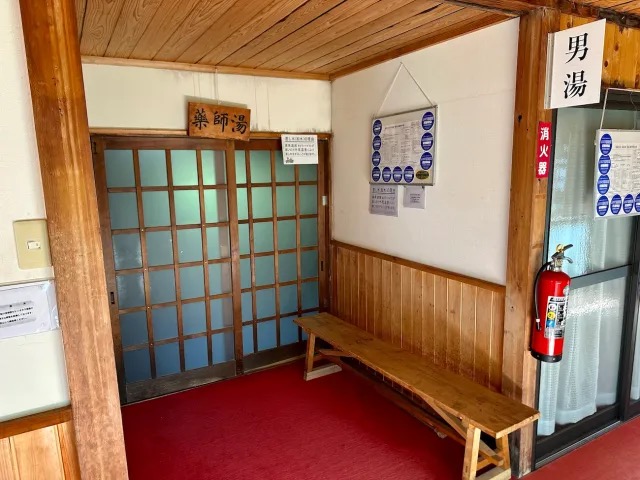
Back in the Edo period (1603-1867), these hot springs were closed to members of the general public, so Masanuki felt a rush of excitement at being able to soak in such exquisite waters. Unlike a lot of modern hot spring establishments, though, this onsen doesn’t rent out towels, so you’ll need to remember to bring one with you when you visit.
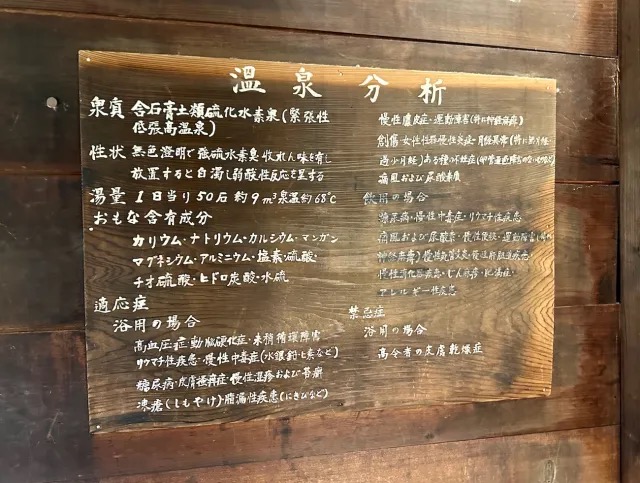
After undressing in the changing room, where Masanuki was able to learn more about the effectiveness of the hot springs by reading the wooden board above, he proceeded to the bath itself, which made him smile in delight.

Not only was the bath overflowing with rustic beauty, it was overflowing with beautiful milky green water, and to cap it all off, he had the whole place to himself. The water here is emerald green at its source, turning milky white when exposed to air, giving it an almost otherworldly feel.
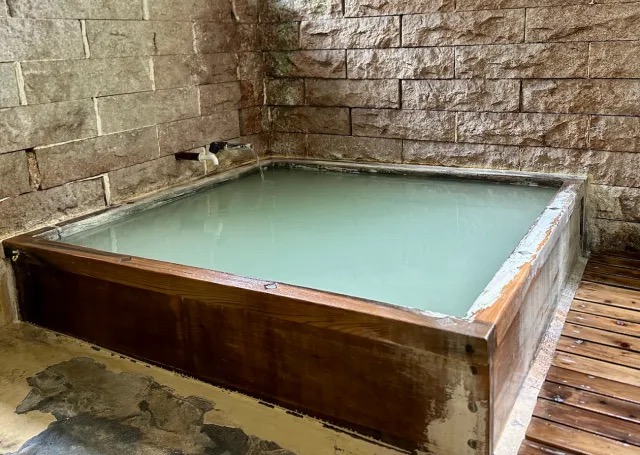
The water is hot, so you’ll want to be careful by slowly introducing your body to the extreme temperature — don’t throw a bucket of water over your shoulders first thing. The high percentage of sodium sulphate in the water is said to have skin-smoothing properties, and Masanuki could feel the effect as he slowly slid into the bath and allowed the water to work its healing powers on him.

▼ After his soak, Masanuki felt totally rejuvenated as he got dressed and headed out along the corridor to the relaxation area.
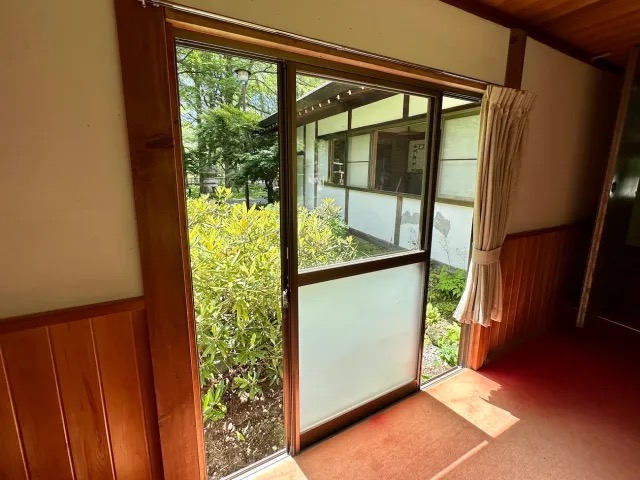
At the relaxation area, he was able to enjoy tea and Nikko Jingoro rice crackers, a local specialty of the region, while cooling off and enjoying the view. The laid-back atmosphere and retro feel of the building made him feel like he was visiting his grandma’s house in the country during summer vacation.

▼ The simple refreshments reminded him of his grandma’s house too.

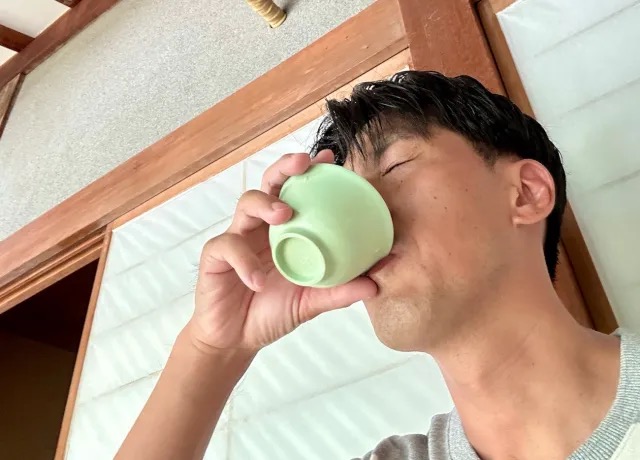
▼ Totally refreshing!
Before making his way back to the hustle and bustle of Tokyo, Masanuki had one more place to visit — Yunodaira Marsh, which is the source of Nikko Yumoto Onsen, located near Onsenji Temple.

▼ The marsh is just a four-minute drive from the temple.
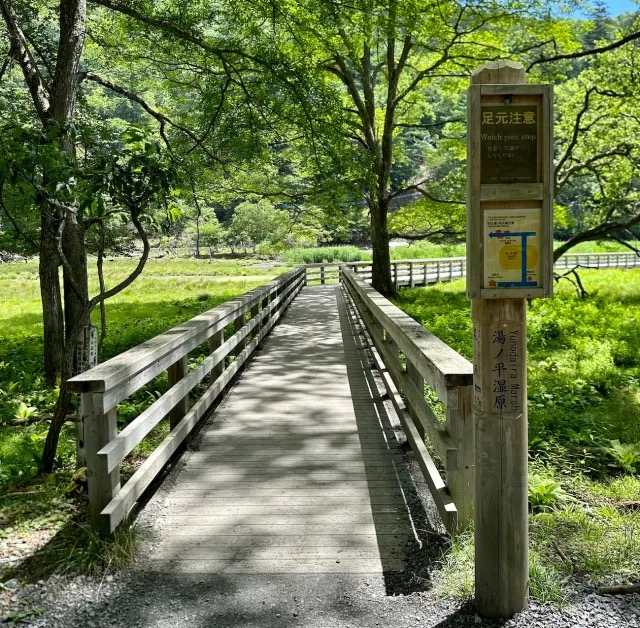
A path made up of wooden planks stretches out into the wetland, taking visitors past a series of hut-like structures. These structures are used to conceal unsightly pumps that draw water directly from the hot springs that gush from the ground here.

▼ This is where the Yumoto Onsen region sources its hot spring water.

Because hot springs gush out from this wetland, it doesn’t freeze in winter, which means you can see many animals stopping by here throughout the year. The smell of sulphur hangs thick in the air, but it’s an amazing place that makes you stop and realise the beauty, wonder and power of Mother Nature.

So if you’re looking to go on a day trip while visiting Tokyo, it’s worth adding Onsenji to your itinerary. It’s a beautiful place to relax and rejuvenate your body and soul, and if you’d like to venture further from the tourist path, there are even more sites in Tochigi to explore.

Temple information

Nikkozan Onsenji / 日光山温泉寺
Address: Tochigi-ken, Nikko-shi, Yumoto 2559
栃木県日光市湯元2559
Open: 8 a.m.-5:00 p.m.
Closed: End of November to end of April
Bathing fee: 500 yen (adults), 300 yen (children)
Website

Photos © SoraNews24
● Want to hear about SoraNews24’s latest articles as soon as they’re published? Follow us on Facebook and Twitter!


Credit:
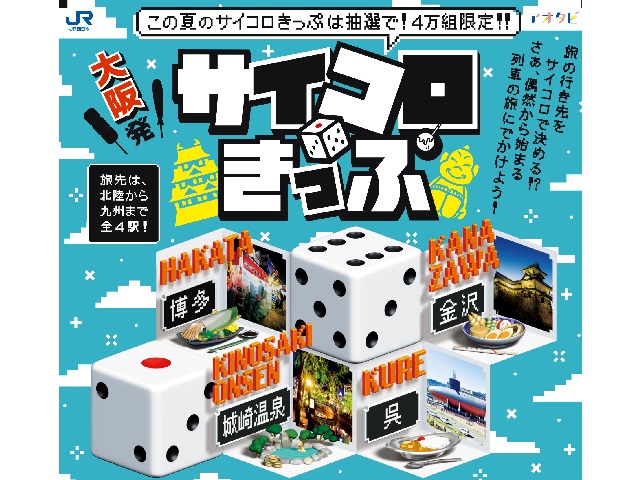
Japan’s new random-destination die-roll train tickets — Amazing bargain for just 36 bucks

If luck’s on your side, you can save 83 percent off normal train fare, and even if it’s not, you’ll still save at least 34.

We recently got some bad news with the announcement from JR East (a.k.a. East Japan Railway Company) that they’re indefinitely suspending sales of their rechargeable e-money Suica cards, which are amazingly convenient to use when buying train tickets. Fortunately there’s something for train travelers to smile about over in JR West’s part of Japan, as the Osaka-based rail operator has announced a new random-destination train ticket that’s guaranteed to save you a ton on a train fare, even if there’s no exact promise as to where you’ll be going.

JR West will be offering a total of 40,000 sets of round-trip tickets in the latest incarnation of the Saikoro Ticket (saikoro being the Japanese word for “dice” or “die”). Officially, they’re called the Osaka-departure Saikoro Tickets, since the journeys start, and end, from the station of your choice within Osaka City.

As for where you’ll be going, that’s up to chance. When purchasing the ticket, your destination station is chosen at random from one of four possibilities:

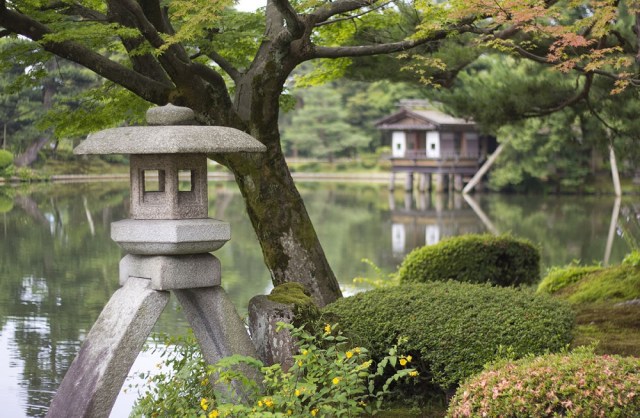
● Kanazawa (Ishikawa Prefecture), the cultural and historical heart of Japan’s Hokuriku region, famed for its gardens, seafood, and goldsmiths
● Kure (Hiroshima Prefecture), an old-school shipbuilding town with acclaimed maritime history museums
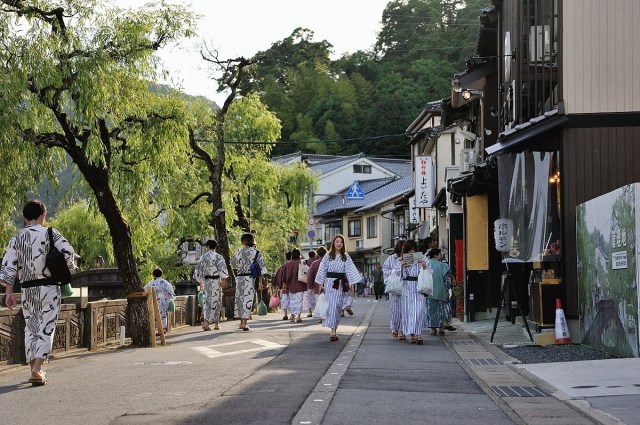
● Kinosaki Onsen (Hyogo Prefectue), a hot spring town with a wide variety of day-use baths and a beautiful canal that runs through the city center
● Hakata (Fukuoka Prefecture), the main rail hub of Fukuoka, the largest city on Japan’s southwestern island of Kyushu

▼ Kanazawa’s Kenrokuen garden, considered one of the most beautiful in Japan

The price of the Saikoro Ticket depends on the day of the week you want to depart. If you’re leaving between Monday and Thursday, the price of the round-trip Saikoro Ticket is 5,000 yen (US$36), and if you’re leaving on a Saturday, Sunday, or holiday, it’s 8,000 yen. Either way, though, it’s a huge savings compared to the normal cost of a round-trip fare from Osaka, which are:

● Kanazawa: 15,580 yen
● Kure: 22,560 yen
● Kinosaki Onsen: 12,280 yen
● Hakata: 30,080 yen

That means that at the very least you’ll be saving 4,280 yen (for a weekend trip to Kinosaki Onsen) and as much as 25,580 yen (a weekday trip to Hakata), or between 34.8 percent and 83.3 percent compared to the regular prices.

▼ Kinosaki Onsen

There are a few catches to be aware of, though. First, the odds of getting each of the four destinations is not even. The chance is one in three for both Kanazawa and Kure, two in nine for Kinosaki Onsen, and one in nine for Hakata (so really some sort of nine-sided die would have made more sense for the promotional poster than the six-sider it shows). Also, you must use your return ticket on the day after you use your outbound one, so the Osaka-departure Saikoro Ticket is really designed just for one-night trips.

Still, if you’ve got an unplanned day in your Japan travel itinerary following a day in Osaka, this is an amazing bargain. The Saikoro Tickets also get you discounts at restaurants and tourism attractions in the area around your assigned destination station, and you even have the option of switching your destination to anywhere closer to Osaka along the route than was randomly selected for you.

▼ In the case of Osaka to Hakata, that gives you a lot of potential places, and it appears that the Osaka-to-Hakata and Osaka-to-Kure Saikoro Tickets both allow you to use the Shinkansen.

The Osaka-departure Saikoro Ticket is being offered through a lottery system administered through JR West’s Wester app. After downloading the app, you can register for the lottery through its “Otoku ni Go” section for special promotions, and you can apply for up to three sets of tickets for the single destination randomly awarded to your group, in case you’ve got an open-minded-about-where-we’re-going-together travel companion or two. Applications are open now and can be made until August 14, and winners can use their tickets for departure dates between August 23 and October 31.

Related: Osaka-departure Saikoro Ticket official website
Source: JR West via IT Media
Top image: JR West
Insert images: Wikipedia/Japanexperterna.se, Wikipedia/Mypom9
● Want to hear about SoraNews24’s latest articles as soon as they’re published? Follow us on Facebook and Twitter!


Credit:
We get lucky with a Wagyu beef gacha vending machine at 3,000 yen a pop

There are no losers with this, but we think we won big.

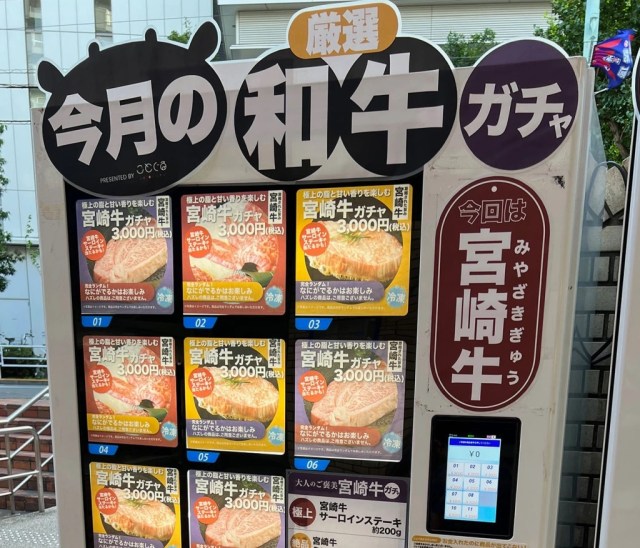
Japanese Wagyu gacha vending machines are nothing new to the SoraNews24 team, but that won’t stop us from trying every new one we find. Our Japanese-language reporter Yuuichiro Wasai found one such vending machine that serves up different cuts of a new kind of Wagyu every month.

▼ This particular month, it was high-quality Miyazaki beef from Miyazaki Prefecture.

For 3,000 yen (US$21.10) a pop, he could get a 200-gram (7-ounce) sirloin steak, a 160-gram (5.6-ounce) blade steak, 200 grams of boneless short ribs, or 150 grams of upper short ribs. They were ranked from ultra-super-premium to premium, starting with the sirloin steak.

There was also a note reading “If you don’t see your prize listed, then you’ve won the secret prize!” Yuuichiro was hoping to get the secret prize, but with the way his luck worked, he’d probably end up getting the sirloin steak if he wished hard enough for the secret prize.

▼ He simply had to choose one of the numbers on the screen for his random prize–for some reason, nine was missing.

Yuuichiro thought long and hard about which number to pick. For previous gacha machines like this, he had gone with numbers that people wouldn’t normally choose as lucky digits. Long story short, it didn’t work out for him. This time, he wouldn’t fail.

▼ He picked the luckiest number he could think of: seven.

When he got his prize, it was…

▼ “Wagyu For Yakiniku – 200 grams”

That wasn’t listed in the four prizes on the vending machine. That could only mean one thing…he’d won the secret prize!

▼ Woo hoo!

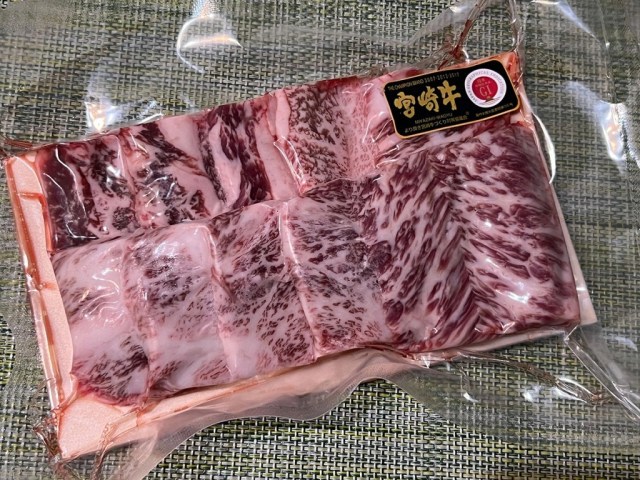
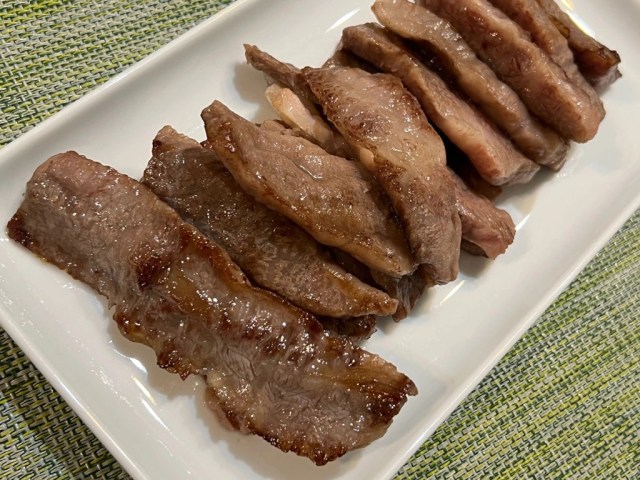
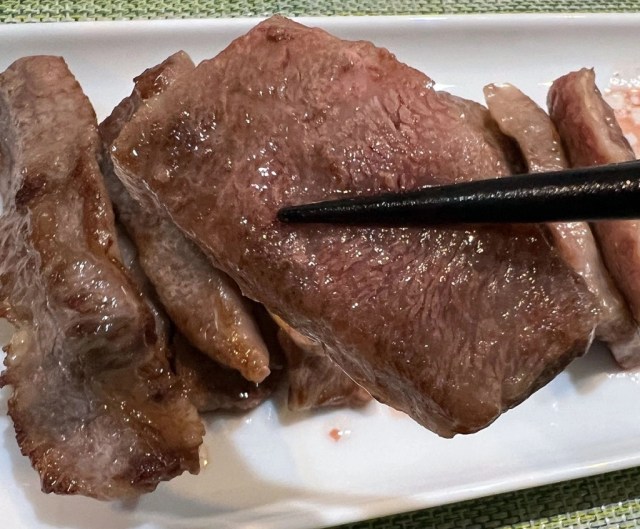
He excitedly opened his prize and gazed in awe at the beautiful marbling on the beef. He fried it up, yakiniku barbecue style and took a bite.

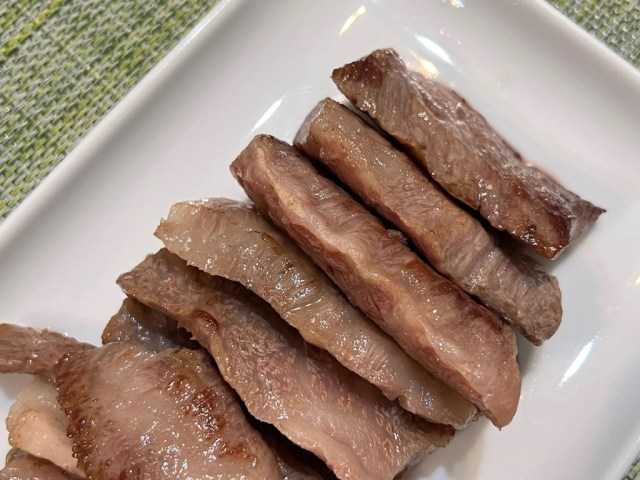
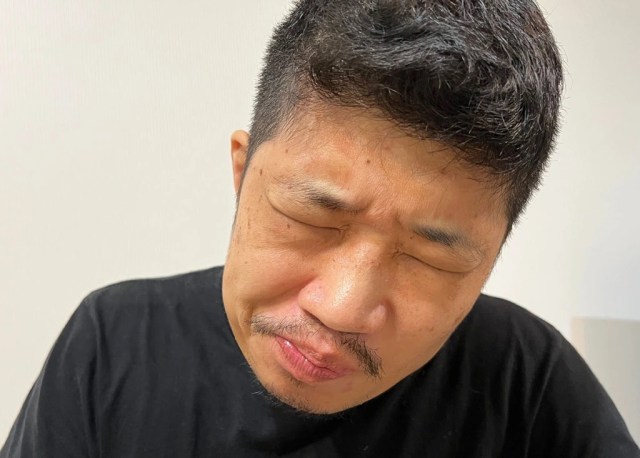
▼ Too good to be true!!

▼ The fact that it was the secret prize made it seem even more delicious.

But it wasn’t until a few days later as he penned his review article that he took a closer look at his packaging photos.

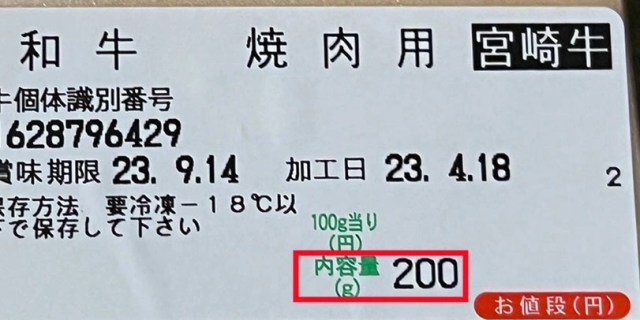
▼ It says 200 grams.

Then he got to thinking…the short ribs were also supposed to come in 200-gram portions. Since that particular cut is often used for yakiniku-style cooking, it could only mean one thing…

▼ …it probably wasn’t the secret prize after all.

Well, there’s still a possibility it was the secret prize. We’ll never know since it was written so vaguely. It didn’t change the fact that Yuuichiro got a delicious, luxurious, and exciting meal out of his adventure.

Photos ©SoraNews24
● Want to hear about SoraNews24’s latest articles as soon as they’re published? Follow us on Facebook and Twitter!


Credit:
2025 Osaka World Expo aims to be first in the world to allow dogs, possibly cats too

These expos are going to the dogs.

We’re just a little more than a year away from the 2025 Osaka-Kansai Expo, where wonders of the modern age and possibly Pokémon tour guides await. A lot of details about the massive event are still under wraps, aside from its really weird mascot, but now it’s been revealed that they are planning to allow dogs and possibly other pets for the first time ever.

The idea was said to have been put forward last summer by the then-mayor of Osaka Ichiro Matsui, who is said to have a fondness for cats. Earlier this year, the Japan Association for the 2025 World Exposition set up a task group consisting of veterinary association members and event organizing officials to discuss the feasibility of allowing animals into the venue.

▼ Up until now, your only chance was probably those big platform shoes with fish inside.

As a result, they found that small domesticated dogs could be permitted as long as their owner provides proof that they had their shots in advance. Owners must also declare that their canine doesn’t bite, doesn’t bark, isn’t in heat, and is small enough to take on a train, which according to Japan Railways Group, means they must be able to fit in a case with a combined length, height, and width of less than 90 centimeters (35 inches), be under 70 centimeters (27 inches) long, and weigh under 10 kilograms (22 pounds).

Other conditions include only one dog per adult human visitor and for a period limited to May and June to avoid the hotter season. Domesticated cats are also under consideration, but if I’m to believe what my Saturday morning cartoons taught me, they should probably be at different times than the dogs.

Readers of the news online remained skeptical about the idea, with even dog owners joining the comments, saying that pets and major international festivals might not be a great mix.

“I don’t feel like taking my pet into a crowded place like that.”
“Are they going to make it a dog park?”
“They’ll have to hire some pooper-scoopers.”
“I wonder if they’re going to charge an additional admission.”
“How can you guarantee your dog won’t bark or bite?”
“Poop and pee on the ground, dogs fighting each other, biting kids, howling at the noises from attractions, and all that is just off the top of my head.”
“I would never take my dog there. I’d be too worried about his leash getting tangled or people kicking it.”

There does seem to be a bit of natural selection at play here, since a vast majority of dog owners probably won’t even consider this. The rest will either be responsible enough to know whether their dog can handle a situation like that, or be so irresponsible that they probably won’t be able to clear what appears to be a considerable amount of paperwork to get their dogs admitted in the first place.

We won’t know for sure though until we see pets at a World Expo for the first time in history. The Japan Association for the 2025 World Exposition still has to submit their proposal to the Bureau International des Exposition and a decision is expected around September.

In the meantime, you can consider getting your pet a treadmill or some exotic foods to see if they’re adventurous enough to take on a world exposition.

Source: The Sankei News, My Game News Flash
Top image: Pakutaso
● Want to hear about SoraNews24’s latest articles as soon as they’re published? Follow us on Facebook and Twitter!


Credit:
Studio Ghibli perfumes capture the magic of three anime films

Studio Ghibli perfume fragrance body splash Fernanda anime Kiki's delivery Service Howl's Moving Castle Whisper of the Heart shop photos

Add a splash of Ghibli to your every day.

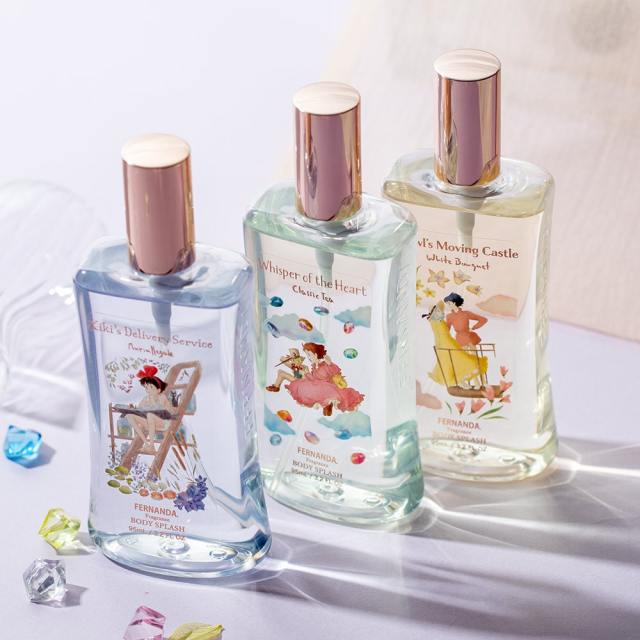
Studio Ghibli films are known for their magical settings, where adventure awaits and almost anything can happen. Now, fans can sprinkle themselves with a splash of that special magic, thanks to a trio of body splashes being released by the anime studio.

Produced in collaboration with fragrance brand Fernanda, these body splashes have a subtle scent that’s ideal for spraying on the skin after bathing or for use throughout the day as a light substitute for perfume.

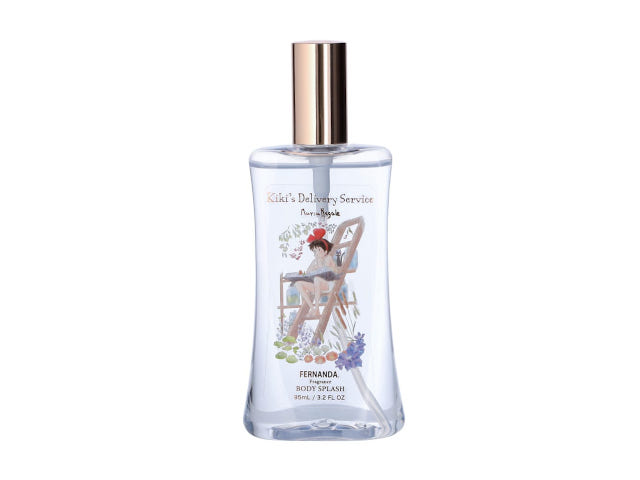
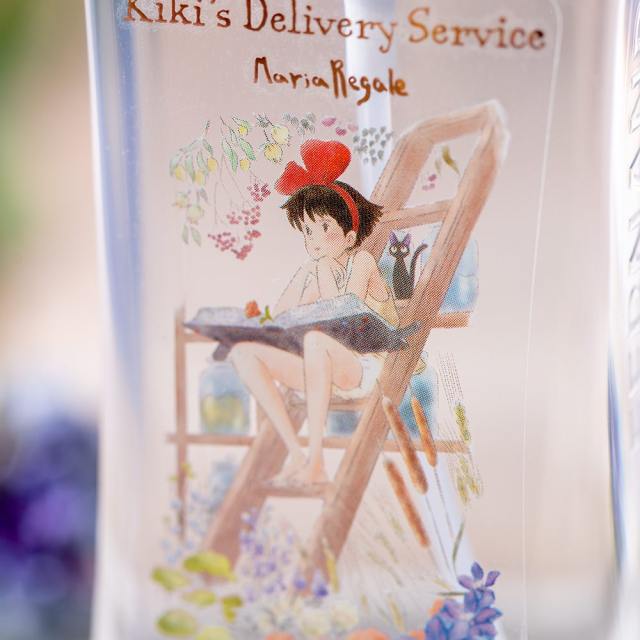
The first fragrance in the range matches the mood of Kiki’s Delivery Service in its design, showcasing some of the medicinal herbs and blooms seen in Kiki’s family home, where potions are concocted.

▼ The magical setting appears on the front of the bottle.

The scent is Maria Regale, a pre-existing Fernando fragrance that’s extremely popular with young women for its elegant freshness. The blend is jasmine, pear and Lily of the Valley, which produces a fruity floral scent.

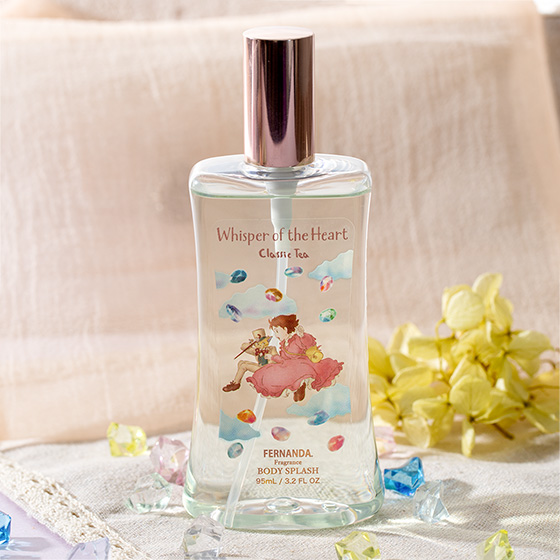
▼ Next up, we have the Whisper of the Heart Body Splash.

This one is an original scent called Classic Tea, which contains a blend of yuzu, black tea and amber to create a delicate fragrance that’s similar to Earl Grey tea. On the bottle, the artwork harks back to the theatrical poster for the film, with Shizuku and Baron in the sky, only this time they’re surrounded by colourful jewels.

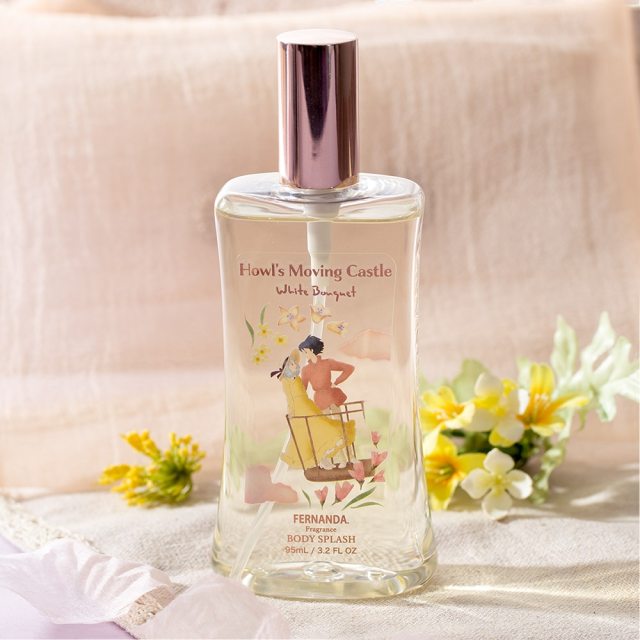
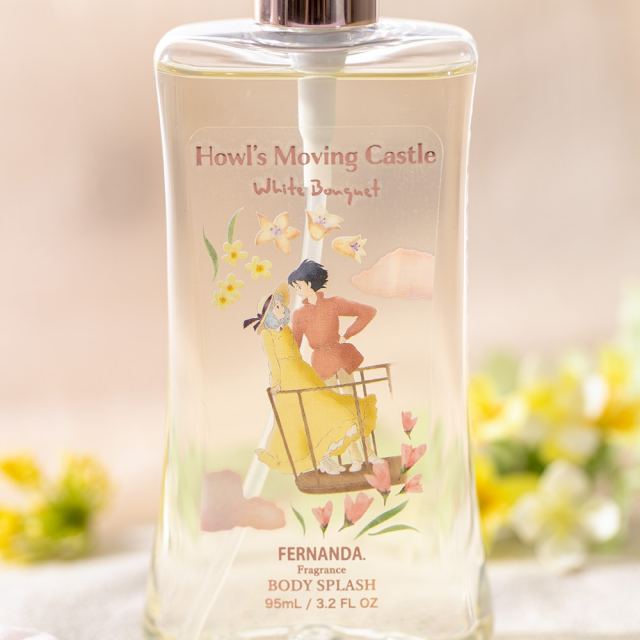
▼ The final fragrance in the lineup is dedicated to Howl’s Moving Castle.

The scent of this body splash, called White Bouquet, whisks us away to the floral fields from the movie, with notes of lily, rose and cedarwood. It’s said to be as elegant and soothing as the artwork on the bottle, which shows Howl and Sophie smiling at each other on the terrace of the moving castle, surrounded by flowers from Howl’s secret garden.

All three scents went on sale at Donguri Kyowkoku stores and online from 29 July, priced at 2,200 yen (US$15.50) each.

While the fragrances will make you smell beautiful, the bottles will make your space look beautiful too. And if you’d like to fill your home with the scent of Ghibli, these gorgeous candles and reed diffusers will definitely entice you!

Source: Donguri Kyowakoku
Top image: Donguri Kyowakoku
Insert images: Donguri Kyowakoku (1, 2, 3)
● Want to hear about SoraNews24’s latest articles as soon as they’re published? Follow us on Facebook and Twitter!


Credit:

Japan’s Princess Aiko won’t have tiara made for her, in consideration of hard economic times

Break with tradition continues.

By custom, when a female member of Japan’s imperial family turns 20 years old, a tiara is made for her. Though the legal age of adulthood was recently changed to 18, 20 is still culturally considered the start of adulthood in Japan, as it’s the age at which individuals take part in coming of age ceremonies. Members of the imperial household wear their tiara for their coming of age ceremony and also at formal official functions they attend as adults.

In a break with tradition, though, when Princess Aiko (the only daughter of Japan’s current emperor and empress) turned 20 in December of 2021, no tiara was made for her. Instead, she appeared before the press wearing the tiara of her aunt Sayoko Kuroda, the youngest daughter of the former emperor and empress.

▼ Aiko, wearing the borrowed tiara

At the time, the Imperial Household Agency, which manages the royal family’s affairs, said that the family felt it would be unseemly to spend the money for such a lavish luxury while the coronavirus pandemic was having such a negative effect on ordinary citizens’ lives. With Japan still operating under pandemic protocols through 2022, no tiara was made for Aiko last year either, and that’s not going to change for this year, according to the Imperial Household Agency’s latest budget requests for the upcoming fiscal year, which were submitted this week and contain no request for the production of a tiara for Aiko.

Japan has now largely entered a post-pandemic phase in terms of public health protocols. However, the country is experiencing its worst inflation in more than a generation, with prices for necessities such as food, clothing, and utilities rapidly rising without comparable increases in workers’ wages. Given that economic climate, the imperial family has once again decided that it’s not the best time for it to be purchasing jewel-encrusted hair accessories, especially since such expenses are paid out of public funds allocated to the family. The deadline for amendments to the agency’s budget requests is at the end of this month, but a late addition of a request for tiara funds is unlikely.

As custom-made items, the price of the imperial family’s tiaras varies by the individual piece. The most recent tiara, crafted for Aiko’s cousin Princess Kako in 2013, cost 27.93 million yen (roughly US$286,000 at that time), and the 2010 piece made for then-princess Mako was 28.56 million yen, so if a tiara were to be made for Aiko, it likely would be of a similar cost. The “then-princess” designation for Mako is significant as well. When Japan’s princesses marry, they are considered to have joined their husband’s family and left the imperial household. As the tiaras are purchased with state funds, upon leaving the imperial family the former princess is required to return the tiara, as Mako did following her marriage in 2021.

▼ Mako’s tiara can be seen in the video here, in a clip recorded in 2011.

At the present time, there are eight returned tiaras being stored, unused, in the Imperial Household Agency’s warehouses. Assuming they’re all of values similar to those of Kako’s and Mako’s, that would be somewhere around 224 million yen’s worth of publicly funded jewelry, and one could make the argument that with so many pricy family heirlooms sitting idle, there really isn’t much need to acquire any more during tough economic ties for the nation.

Source: YouTube/テレ東BIZ via Jin, Nikkan Gendai
Top image: Pakutaso
● Want to hear about SoraNews24’s latest articles as soon as they’re published? Follow us on Facebook and Twitter!


Credit:

Pikachu-lid Cup Noodle design could be the cutest instant ramen package ever

Fingers crossed that Pikachu’s ears will be on Cup Noodle lids soon.

We all know how to make Cup Noodle, right? Just peel open the lid, pour in the hot water, and wait three minutes.

Believe it or not, though, it’s possible to screw up cooking Cup Noodles if you don’t cover, re-seal, or otherwise close the lid back up to trap the heat in while the noodles are cooking. That’s why Cup Noodle maker Nissin designed the otherwise circular lid with a pair of paper protrusions, which you can fold back down under the rim of the cup to lock the lid in place as the ramen cooks.

In constantly cuteness-craving Japan, people have noticed, and appreciated, how this makes the Cup Noodle lid look like a kitty-cat. But it turns out there was still untapped adorableness potential to those tabs, as proven by this recent tweet from the official Cup Noodle account.

“Who’s that?” asks the tweet, but you’d have to have been living under a rock/inside of a cup for the past 25 years not to recognize the silhouette of Pikachu, the most famous and beloved of all Pokémon.

Now before you go running out to the store to buy as many Pikachu Cup Noodles as you can carry home, there’s something to note. Nissin has become almost as famous for their creatively silly marketing as they have their tasty instant ramen, and the Cup Noodle Twitter account posts both official product announcements and one-off quirky art projects. Sometimes the images they post are sneak peeks at upcoming products, and other times they’re just for fun. Quite often it feels like it could go either way, like with the coveted Cup Noodle-specific measuring cup that the account shared a photo of back in the spring, and it’s entirely possible that Nissin itself gauges the reaction to its offbeat ideas before deciding whether or not to go ahead with making them commercial available.

As of this moment, Nissin hasn’t officially announced that the Pikachu Cup Noodle design will go on sale, but it wouldn’t be a shock if it does make it to market. From a production standpoint, lengthening and reshaping the tabs to match the shape of Pikachu’s ears doesn’t look like it’d be a monumental manufacturing challenge. Second, this year’s Pokémon World Championships are about to open in Yokohama, the first time ever that a Japanese city has hosted the annual event, and Yokohama also just so happens to be the site of one of Japan’s Cup Noodle Museums.

▼ Speaking of which, the Yokohama Cup Noodle Museum currently has two Pikachu Cup Noodle photo spots, with the giant-sized one shown in the left photo letting you get in the cup too.

So fingers crossed that Pikachu-lid Cup Noodles are going to be a reality, even if only as some sort of limited-time promotion for the Pokémon World Championships while they’re going on from August 8 to 14.

Source: Twitter/@cupnoodle_jp
Featured image: Twitter/@cupnoodle_jp
Top image ©SoraNews24
Insert image: Nissin
● Want to hear about SoraNews24’s latest articles as soon as they’re published? Follow us on Facebook and Twitter!


Credit: