We eat at a brand new pasta shop with all-you-can-eat tofu run by one of our favorite restaurants
They exclusively serve fancy Japanese-style pasta dishes at this restaurant, and the tofu is made in-house!
One of our favorite restaurants, Kamakura Pasta (which we love for its all-you-can-eat homemade bread) just opened the first branch of a brand new line of restaurants called Odashimon in the northern Tokyo neighborhood of Kita-Senju, a popular residential area. Even though it’s different from Kamakura Pasta in that it focuses on Japanese-style pasta dishes, we heard it also offers all-you-can-eat options, so naturally, we had to go check it out.
As it turns out, what they offer for all-you-can-eat is not homemade bread, but actually homemade tofu! This piqued the interest of our Japanese-language reporter Mr. Sato, so he visited the new restaurant without delay.
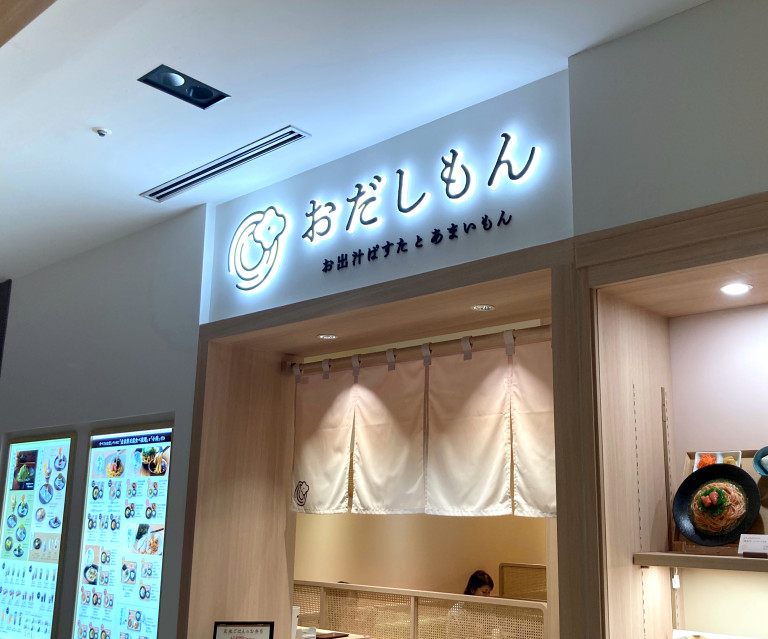
Odashimon, which opened on July 7, is on the 9th floor of the Kita-Senju Marui department store, which also happens to be its restaurant floor. Though the name might inspire thoughts of Doraemon, Digimon, or even Pokémon, sadly there’s no affiliation.
Instead, Odashimon follows in the footsteps of Kamakura Pasta by specializing in the ingredients used in every dish. The menu incorporates some of the best products from around the country, including many even from Mr. Sato’s home prefecture of Shimane. For example, they use traditional soy sauce from a Shimane-based manufacturer called “Inoue Traditional Joyu Soy Sauce”, which uses a natural fermentation method.
▼ The ingredients that go into Odashimon’s signature dashi broth

The dashi they serve alongside the pasta is also an original recipe that’s made in-house with eight ingredients, including katsuo bonito flakes, mackerel, horse mackerel, and round herring. What’s more, every brothy pasta dish also comes with all-you-can-eat homemade tofu, whose soybeans are cultivated in different parts of Japan. The menu was obviously crafted with mindful use of high-quality local ingredients.
▼ Every brothy pasta dish also comes with a side of grated carrots and warabimochi.

There are four kinds of pasta dishes on the menu, which are differentiated based on the broth: Kakedashi, Tsukedashi, Okin Dashi, and Toridashi. Kakedashi comes with one of two sea bream-based broths served in a separate pot, to be poured over the pasta when you’re ready to eat. Tsukedashi, like tsukemen, comes with a rich broth on the side, in which you dip your pasta noodles. Okin Dashi is their signature eight-ingredient dashi, which the pasta arrives already dressed in. Lastly, Toridashi is also poured over the pasta before it’s served, though it’s made with rich chicken broth instead of standard fish-based dashi.
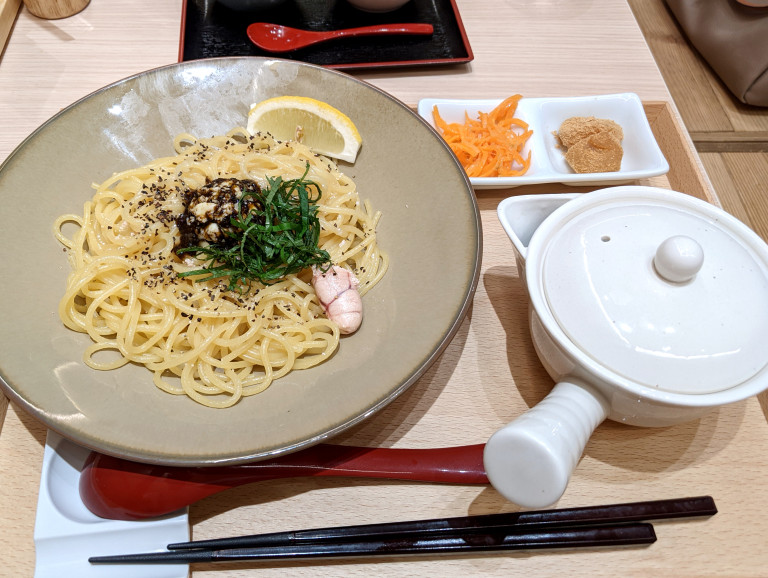
You can also choose between regular and large sizes, so you won’t go home hungry from this restaurant. Mr. Sato chose a regular “Puchi Puchi Tarako and Nori Butter Kakedashi Pasta” (1,419 yen [US$9.98]), which comes with “puchi puchi” (plump and juicy) cod roe and seaweed-flavored butter. For his broth, he decided on the one made from sea bream and Soda skipjack tuna.
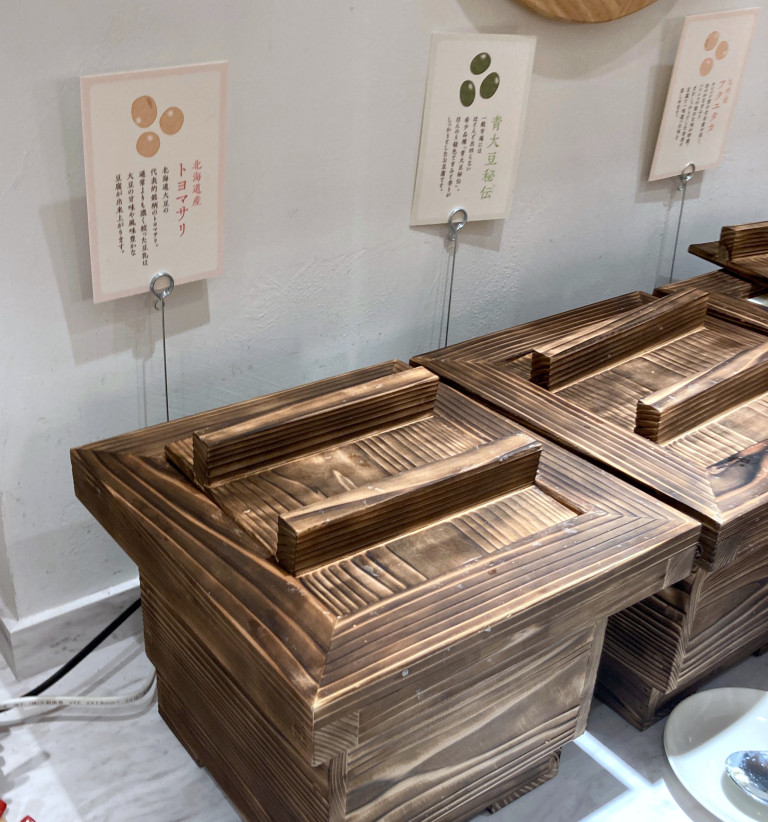
With his order in, Mr. Sato headed not for the self-serve drink bar, which is a common accessory at Japanese restaurants, but for Odashimon’s original tofu bar. There were four different kinds of tofu stored in wooden tubs that day, but even though their names were listed on labels behind the tubs, Mr. Sato had no idea what each one was without lifting the lid and peeking inside.
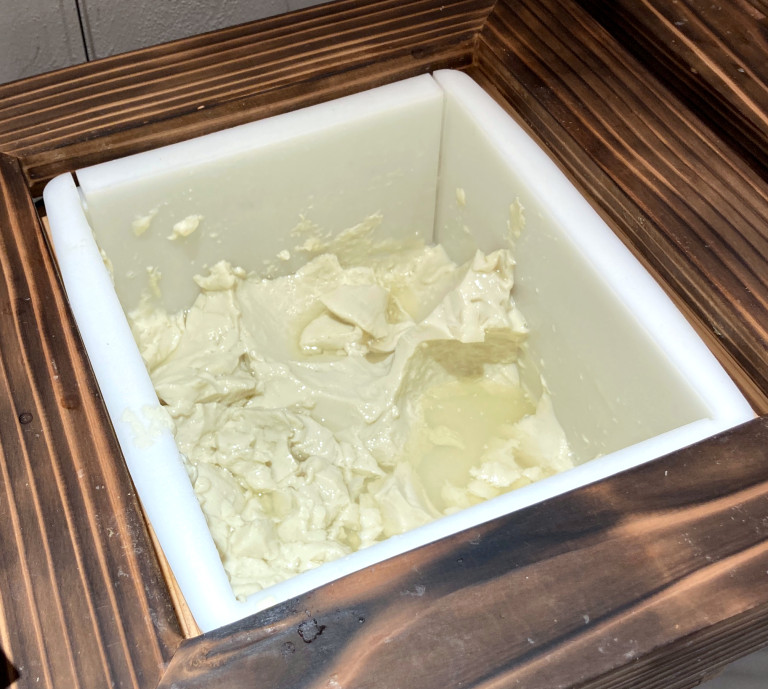
He decided to start with what was called “Toyomasari”, which seemed to be a softer kind of tofu, and “Black Soy”, which was a gray color.
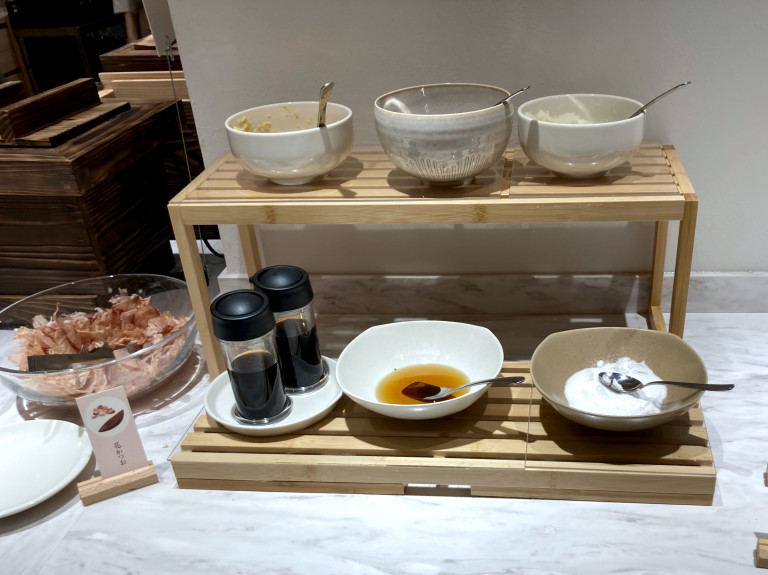
With tofu now in hand, he proceeded to the seasonings bar, where ginger, black pepper, grated daikon, traditional Joyu soy sauce, sesame oil, Hakata no Shio (a special salt made from a combination of Japanese sea salt and imported, sun-dried salt), and dried bonito shavings awaited. Obviously, customers have free rein to choose what they like. Mr. Sato chose to put bonito shavings, grated daikon, and ginger on his.
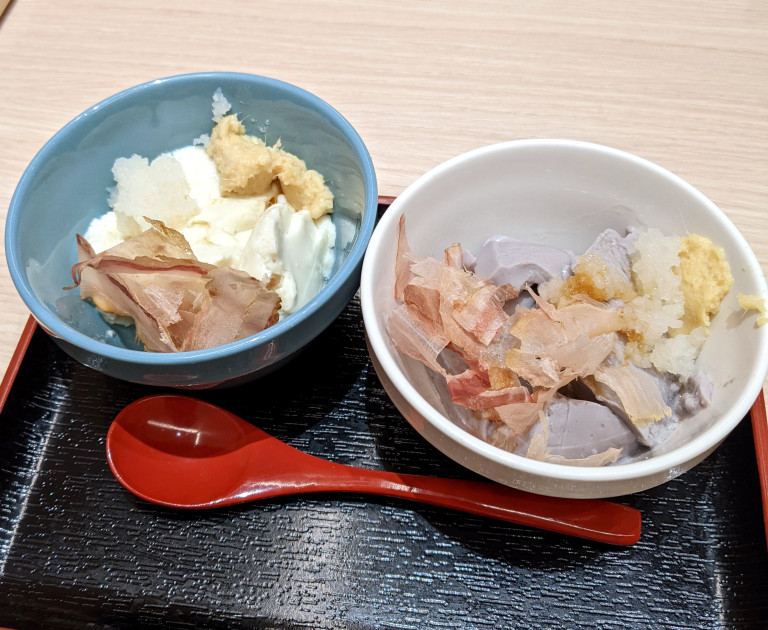
He’s actually a pretty big fan of tofu, and since you rarely ever get the chance to eat tofu made fresh from high-quality beans, he was pretty happy. Knowing his pasta was coming, he didn’t go up for seconds, but he could see someone who is a huge fan of tofu coming here just for that.

Soon his cod roe and seaweed butter pour-over pasta arrived, together with a pot of broth and a serving of grated carrots and warabimochi, a chewy type of mochi.
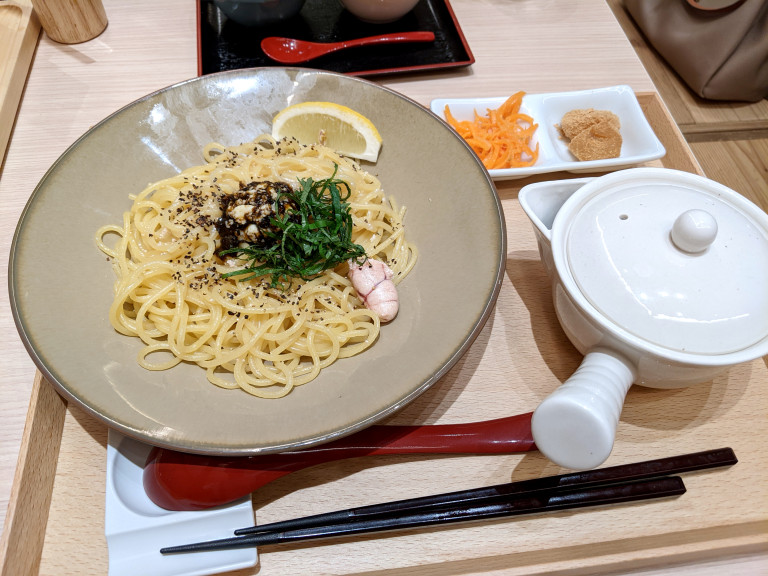
The pasta was dressed with butter and topped with seaweed, shredded shiso leaves, black pepper, and two clumps of cod roe.

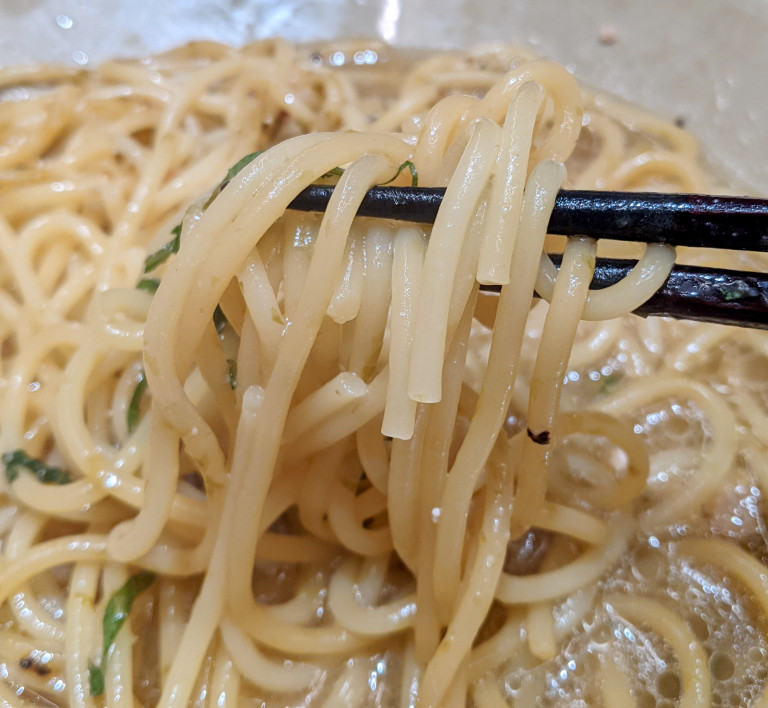
The menu had recommended that he first try the pasta without the broth, so he dutifully mixed it up and took a bite. It was very rich! Mr. Sato had ordered this dish with the intention of enjoying the cod roe, but the strong flavor of seaweed greatly overpowered the flavor of the fish eggs. Even so, he wasn’t mad about it; he likes richly flavored foods. The delicious flavor of seaweed and butter filled every corner of his mouth, and he enjoyed how viscous and sticky the sauce was.

Since this dish was served with a pour-over broth, however, the sauce was most likely designed to be watered down, so Mr. Sato reluctantly poured the broth over the pasta and its rich sauce and gave it a good stir.
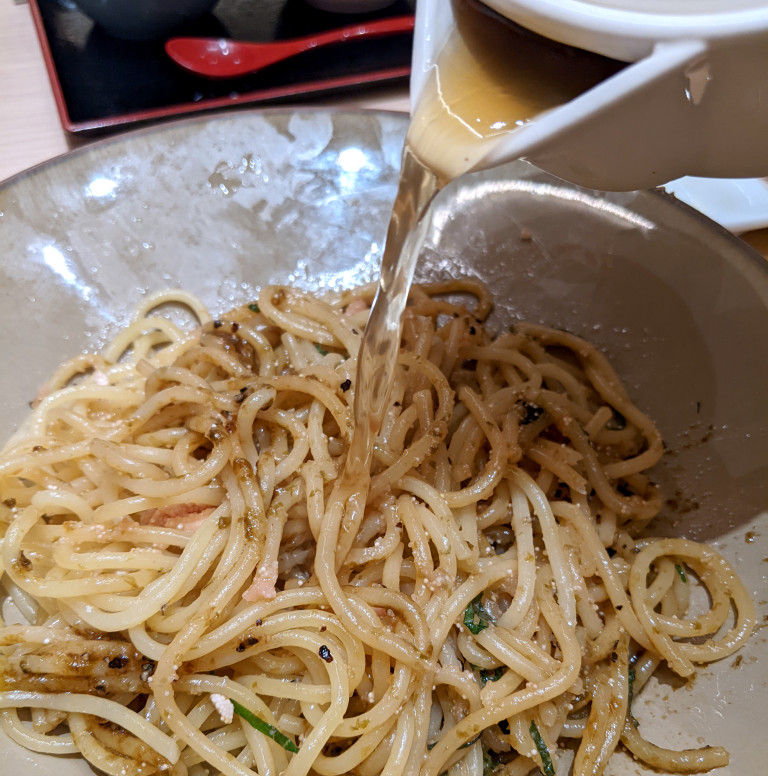
As expected, that toned the flavor down quite a lot. It was pretty good in that it added umami to the sauce and gave the flavor a certain depth, but Mr. Sato missed the richness of the undiluted sauce. He almost wished there was an option to order the pasta without the broth since it had been delicious on its own.
Desserts–including beautiful matcha options–are also part of the flagship products of Odashimon, so Mr. Sato had to try one. Ever the contrarian, he decided on the most unusual option, the Soy Sauce Soft-serve Ice Cream (418 yen).
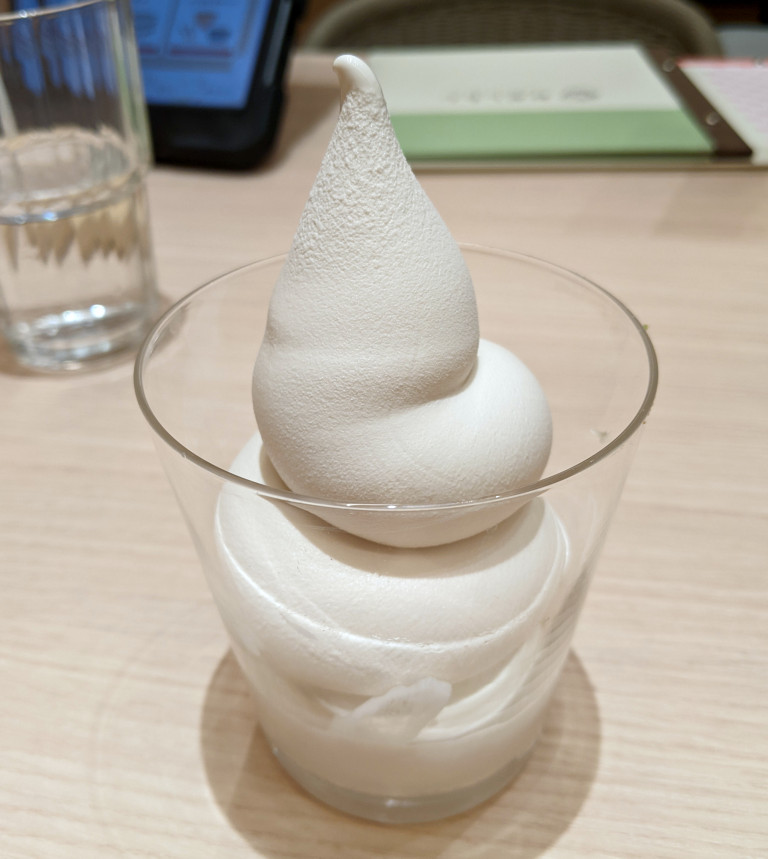
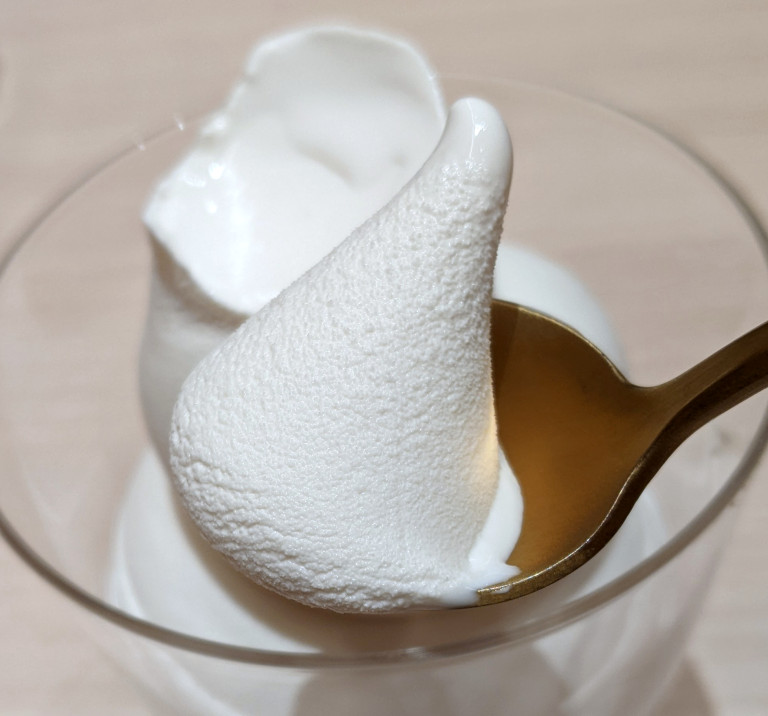
It didn’t look soy sauce-flavored at all; on the contrary, it looked sweet and milky. But its looks were deceiving! It was shockingly salty, and the soy sauce flavor was intense. There was sweetness in there, for sure, but it was balanced out by the saltiness of the soy sauce for a very unexpected salty-sweet flavor. Don’t be fooled by its innocent, pure-white appearance!
In the end, Mr. Sato had to admit that this is a restaurant that puts a lot of care into its menu. Their dishes are intricate and unique and really embody Kamakura Pasta’s spirit of quality. Odashimon is definitely worth visiting, even if Kita-Senju isn’t a regular stop on your commute.
They’re calling it the “first” branch, so that must mean there’s more to come. If Kita-Senju is out of the way for you, you might see a branch open up near you sometime soon. And who knows? Perhaps Odashimon will grow into something that rivals even its parent company one day!
Restaurant information
Odashimon / おだしもん
Tokyo-to Adachi-ku Senju 3-92 Kita-Senju Marui 9th Floor
東京都足立区千住3-92 北千住マルイ9階
Hours: 11 a.m. to 10 p.m. (last order at 9 p.m.)
Open every day (subject to the facility’s hours)
Website
Images © SoraNews24
● Want to hear about SoraNews24’s latest articles as soon as they’re published? Follow us on Facebook and Twitter!
Credit: