Japanese convenience store creates a frappe from a popular candy

Family Mart frappes are becoming more iconic by the day.

Recently, Japanese convenience store chain Family Mart has become known for its frappes, which are sold in the freezer section and blended by customers at a machine on the counter. Every now and then, the chain adds a limited-edition frappe to its freezer section, and its newest release has everyone excited, not only because of the flavour but because of the nostalgia served up with it.

Called “Yoglet Frappe“, these frappes aren’t a misspelling of the word “yoghurt” — they’re made with a Japanese candy called “Yoglet“, which has been around since 1979. The sweets in the frappe are described as “yoghurt-flavoured ramune candy” —  “ramune” here refers to small, crunchy candies that taste like ramune, or lemonade-like fizzy drinks — which have a delicious, sweetly tart yoghurt flavour.

▼ The candies can be seen in the poster below.
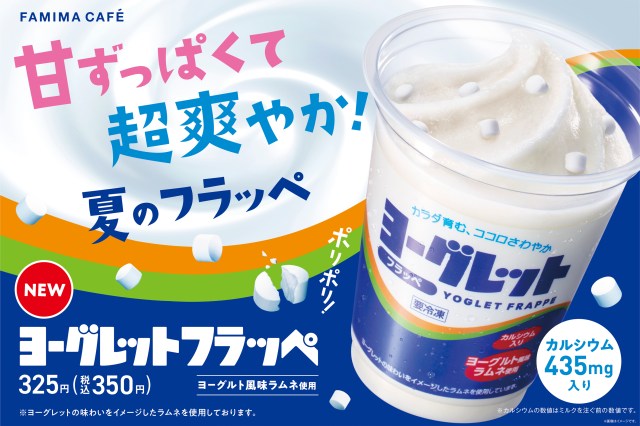
Image: Press Release

While the candies taste fantastic, they also contain the goodness of yoghurt, so you don’t have to feel too guilty about drinking them in Frappe form. In fact, Family Mart says each cup contains 435 milligrams of calcium, or roughly half the recommended daily intake, which they say is good for helping the body to adjust to temperature changes, making it perfect for summer, when people are constantly switching from extreme heat to air-conditioned environments.

Our reporter Anji Tabata is a big fan of Yoglet, and looking after her body, so she went out to purchase one of the new frappes as soon as they were released on 1 August. Before placing it in the machine, she lifted off the lid and was surprised to find…

▼ …it really did contain pieces of candy!

Yoglet candies are like big tablets in their original form, and although smaller varieties have been produced over the years, these were the smallest Yoglet candies Anji had ever seen. As mentioned in the store’s promotional materials, though, these are small, ramune-style candies, and they appear to have been specially made to blend perfectly with this drink.

Sure enough, once it had been blended in the machine, none of the candies remained whole — they’d crunched down beautifully to meld with the milky yoghurt base of the drink. And when she got to taste it, it was absolutely delicious — the refreshing flavour of yoghurt instantly spread throughout her palate upon first sip.

It had a mellow mouthfeel and a perfect balance between sweetness and tartness. The aftertaste was also refreshing, making it incredibly easy to drink, and though the texture was mostly smooth, the tiny candy granules in the mix helped to create a nice textural contrast.

▼ It was like drinking a frozen yoghurt, or frozen Yoglet, as the colour scheme and familiar font matched the ones used on Yoglet candy boxes.

Anji says the frappe far exceeded her expectations, which had already been high before even trying it, seeing as the candy has such a longstanding history of popularity in Japan. Priced at 350 yen (US$2.45), she’ll definitely be enjoying it again while it’s around during summer, and highly recommends you try it too, next time you visit Family Mart for their generous sandwiches.

Images © SoraNews24 unless otherwise stated
● Want to hear about SoraNews24’s latest articles as soon as they’re published? Follow us on Facebook and Twitter!


Credit:

Pokémon card shop in Osaka says it will refuse to buy cards from any Vietnamese people

Broad-brush policy is lacking in fine details.

Gotcha is a store in downtown Osaka that deals primarily in Pokémon cards, and to a lesser extent Yu-Gi-Oh! ones too. Like a lot of collectibles shops, Gotcha operates as a buyer and a seller, both offering its stock for purchase to customers and also appraising and buying cards brought in by individuals.

However, as of August 5, Gotcha has installed a new policy, and says it will not purchase any cards or items from people of Vietnamese nationality. The statement, posted here through Gotcha’s official Twitter account, reads:

Announcement of refusal of purchase from one portion of customers

Going forward, we will refuse to purchase any items from customers of Vietnamese nationality. This is a comprehensive decision by our store, and we will not be answering any [questions] related to the detailed reason.

Going forward, we will continue to aim for a safe, secure way of business.

Thank you for your understanding.

It’s a bold move to thank people for their understanding while offering no details for the drastic policy change, and saying in advance that you have nothing more to say obviously invites speculation, which leads us to a few likely possibilities.

In recent years, there’s been a sharp rise in reseller activity for collectible and hard-to-find hobby items in Japan, such as Gundam plastic models PlayStation 5 hardware, and collectible trading card game cards. Launch/restock days for such items now often see long lines of not just fans, but speculators looking to buy as many as they can in order to flip them for a profit as prices rise due to stock-outs (which speculators’ bulk-buying itself contributes to), frustrating ordinary shoppers. While both Japanese and foreign resellers are involved in such bulk-buying, it’s often the foreign resellers who get the most attention in online discourse, perhaps out of pure prejudice or perhaps because those doing the grumbling find it easier to give Japanese bulk-buyers the benefit of the doubt that they’re buying so much simply because they’re picking up spares for friends or family who are fellow fans. The surge in the bulk-buying-to-reselling cycle has even caused one Tokyo Pokémon card shop to enact a policy of reserving sales of certain items to kids only, in an attempt to make sure that younger fans can still enjoy the hobby.

However, Gotcha doesn’t seem to be at all opposed to the speculative profiteering nature of collectible cards. In the store’s most recent tweet, posted two days after the no-buying-from-Vietnamese people one, Gotcha lets everyone know that it has unopened Yokohama Memorial Pikachu Decks in stock. These special decks, produced for the 2023 Pokémon World Championships that start this week, were released on July 28 with an official price of 3,500 yen (US$25) and sold out almost immediately. So how much is Gotcha selling theirs for? 35,000 yen, 10 times the original price, so clearly they’re OK with people making money off of card scarcity.

▼ The Yokohama Memoria Pikachu deck

So maybe Gotcha’s concern about buying from Vietnamese sellers isn’t about reselling cards at a mark-up, but the cards themselves? Another issue that’s been popping up in the collectible card scene in Japan these days is an increase in card shop thefts and burglaries. If a shop has reason to believe that the cards someone is offering for sale are stolen, or maybe counterfeit, than it makes sense that they’d refuse to buy them. What makes less sense, though, would be an assumption that all of the 400,000-plus Vietnamese people living in Japan are involved in some sort of criminal card activity.

It’s also worth noting that it’s unclear whether its policy is actually legal, or has simply been flying under the radar due to the recentness of the announcement and the store’s low-profile on a national scale. With Gotcha itself offering no explanation, its broad-brush policy feels hypocritical, discriminatory, or both, and hopefully a more appropriate way to address whatever problems prompted the store’s decision will be enacted.

Source: Twitter/@cardshop_gotcha (1, 2), Pokémon Card Game official website, Immigration Services Agency
Top image ©SoraNews24
Insert images: Pokémon Card Game official website
● Want to hear about SoraNews24’s latest articles as soon as they’re published? Follow us on Facebook and Twitter!


Credit:

This “Texas Pile” set lured us into a fried chicken shop for the first time, and we have no regrets

Big food, big flavor, big satisfaction…We’ll be headed to this restaurant again!

Our Japanese-language reporter Masanuki Sunakoma happened to be diving by Karayama, a karaage fried chicken specialty restaurant, when a sign for “Garlic Texas Karayama” caught his eye. This was unfortunate (or possibly fortunate?) timing, because Masanuki happened to be hungry at the time, and the words “garlic” and “Texas” drew him like a moth to flame.

He parked his car in the parking lot, walked inside, sat down at the end of the counter seating, and ordered the Texas Mori (Texas Pile) Teishoku (979 yen [US$6.84]), as if he’d been a lifelong customer. That was strange because it was the first time he’d ever stepped foot in a Karayama. But just ten minutes later, Masanuki’s first-ever dining experience there would change his life forever.

While he waited, Masanuki did some snooping. It turns out that Karayama is part of the same string of businesses as Katsuya, which has produced crazy dishes like Tonkotsu Ramen Rice Bowls and Cold Katsu Soba. This leveled up his excitement; there was no way Karayama’s food wouldn’t be delicious in that case.

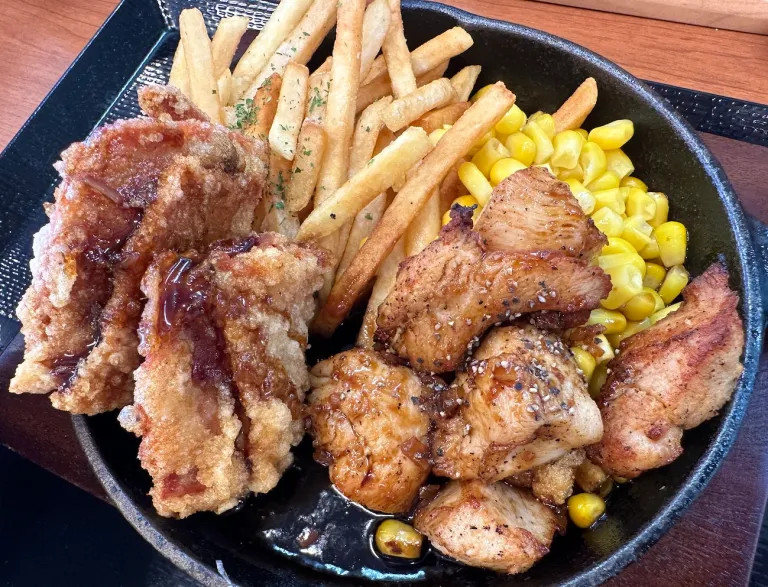
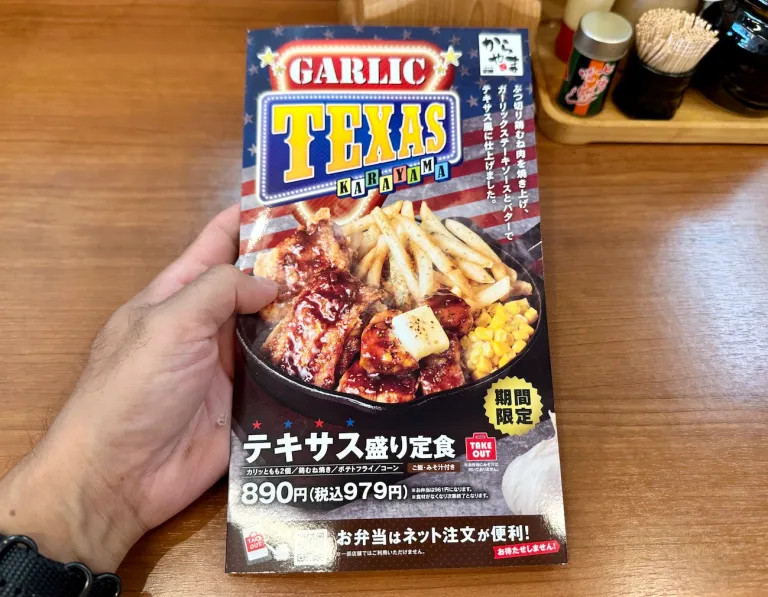
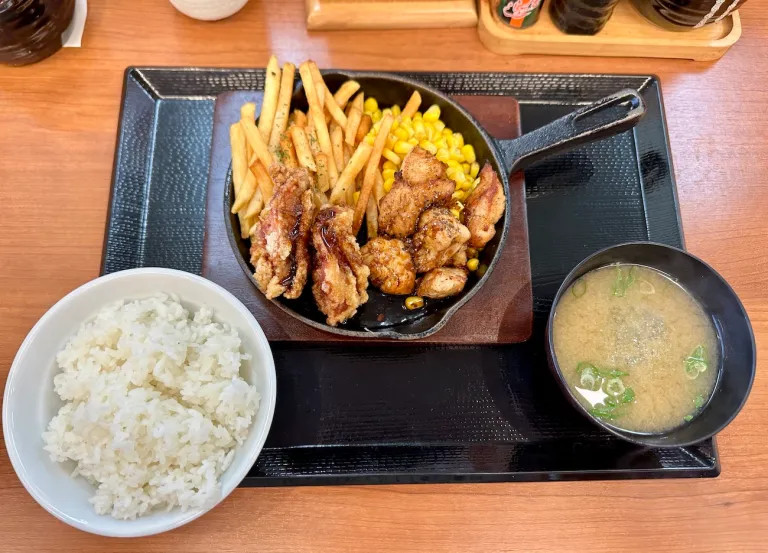
▼ In 10 minutes, his meal, the Texas Mori Teishoku, arrived, a set meal that had both Texas-level portions and flavors.

It was a new, limited-time-only menu item just introduced on July 21, and it seemed like the perfect meaty dish for a hot summer’s day. It also came with rice and miso soup. Seeing it, Masanuki had a strange visual of a young cowboy coming to stay at his family’s farm, though said cowboy would probably be trying miso soup for the first time, and possibly be baffled by it.

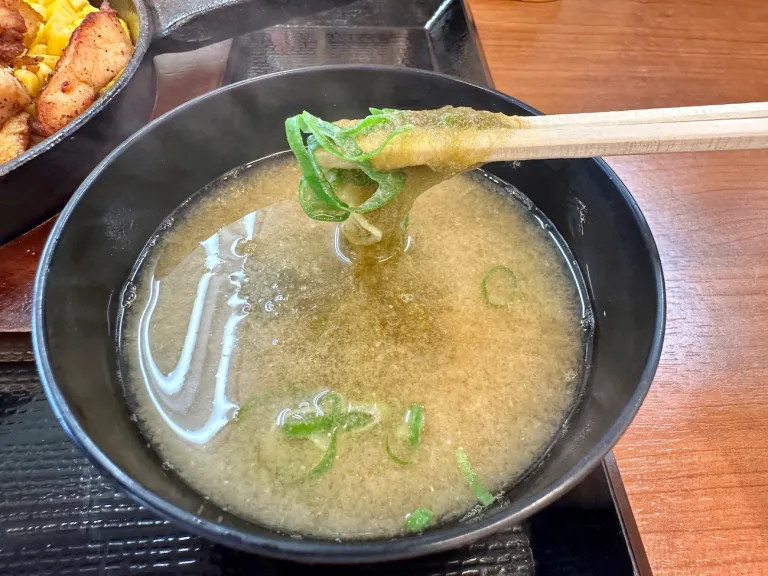
▼ Speaking of which, the miso soup was unusual in its own right.

▼ It contained shredded konbu kelp!

Most chain restaurants serve basic miso soup with tofu or wakame seaweed, but this miso soup was full of thick and viscous konbu. It would be shocking enough for a native Japanese diner, never mind a cowboy eating miso soup for the first time.

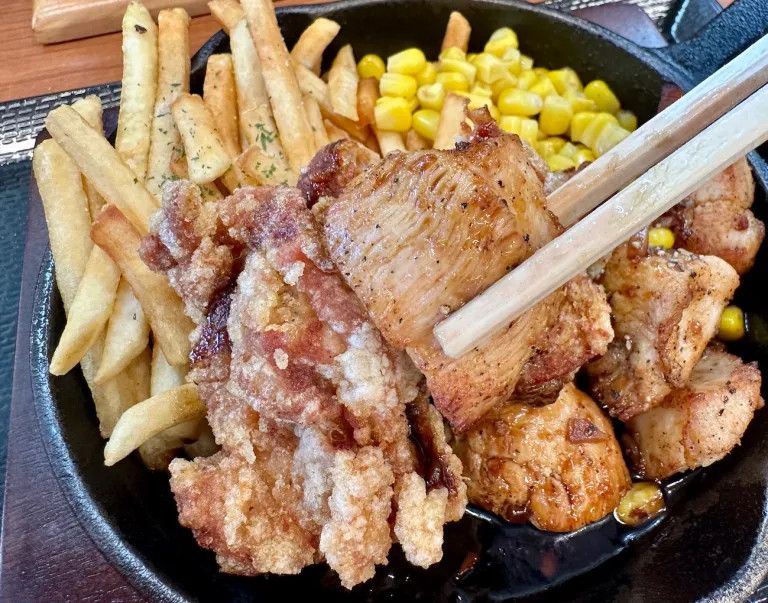
Anyway, the components of the Texas Mori were, according to the menu, two pieces of crispy-fried chicken thigh karaage, multiple thick cuts of grilled chicken breast, a mountain of French fries, and sweet corn. To add to the appeal, the meat was dressed in a “Garlic Texas Steak Sauce,” which is presumably where the Texas influence comes from (besides the portion size), and a thick sauce made from garlic, butter and soy. It was the type of dish to zap Masanuki’s appetite into overdrive.

Even so, it was a pretty ridiculous plate. Masanuki had never seen such a huge serving of French fries and corn, at least not in Japan. What he could only assume would be American-sized karaage (if America had a culture of eating karaage) was doused in garlic butter soy sauce, giving it a ridiculous flavor punch. The juicy grilled chicken breast pieces were also insanely delicious.

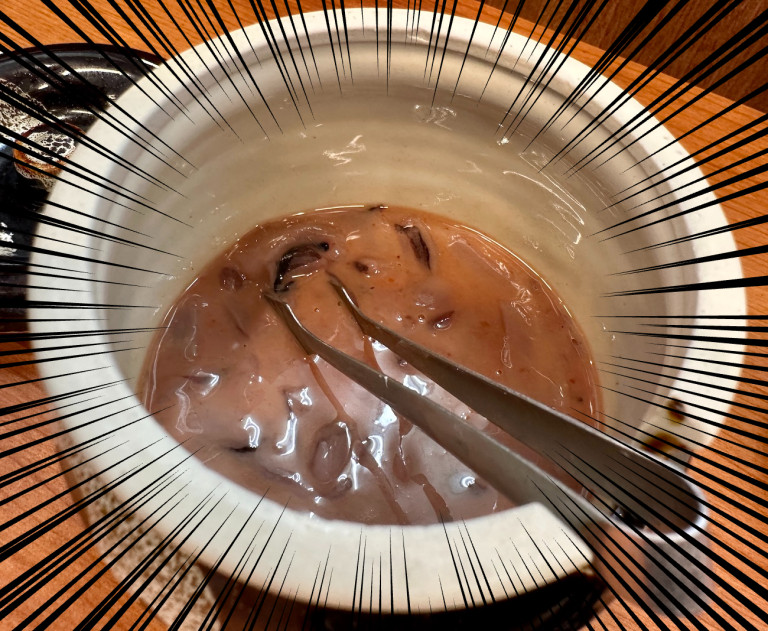
It was an extremely rich meal which made Masanuki glad he’d ordered a large rice (which came free for him, though at some branches it costs an extra 33 yen). Hoping for some pickled vegetables or something to cleanse his palate with, Masanuki explored some of the condiments lined up along the counter until he found a jar that looked promising.

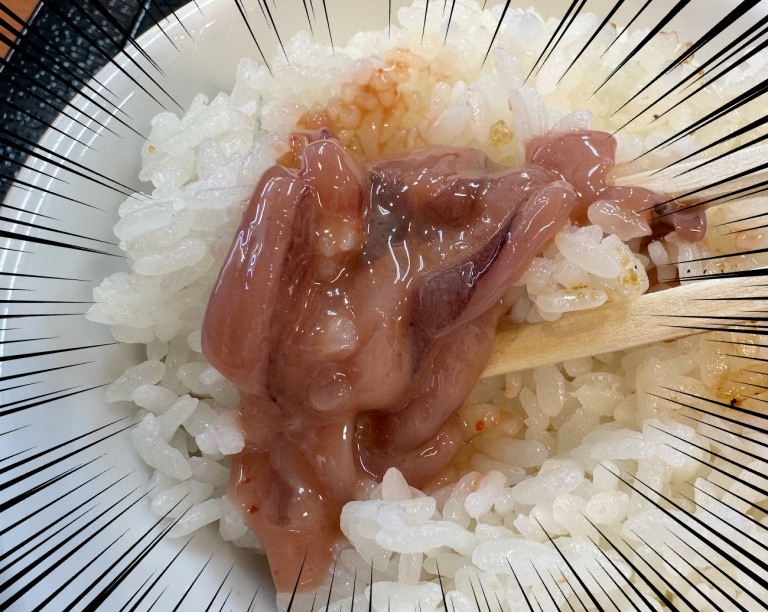
▼ But what was inside was not vegetables but squid shiokara–salted, fermented paste made with squid!

Masanuki didn’t expect to see such a thing at Karayama, but he did not mind in the least. It was extremely tasty–so tasty, in fact, that Masanuki no longer cared about the poor, lost cowboy in his vision, who would surely be confused by the idea of fermented squid. The karaage with a punch, the huge serving of fries, and the squid shiokara had helped him achieve max satisfaction beyond his wildest imagination.

Even though the main attraction was the Texas Mori, Masanuki had to admit that the squid shiokara was the highlight of his visit. To be able to eat it at a casual karaage specialty shop was a joy well worth discovering–in fact, his best discovery of the season, if he were to be honest.

Of course, since shiokara is one of those foods that might not appeal to people who didn’t grow up eating it, this may not be the main draw for you. And that’s okay–you can leave it hiding in its little ceramic jar while you indulge in a pile of crispy fried chicken dressed in a rich garlicky sauce. If that sounds good to you, definitely head over to a Karayama near you and give it try, especially since the Texas Mori will only be around for a limited time!

Related: Karayama Store Locations
Images © SoraNews24

● Want to hear about SoraNews24’s latest articles as soon as they’re published? Follow us on Facebook and Twitter!


Credit:
Limited-edition Black Thunder chocolate merch is now permanently available due to high demand

Rep one of Japan’s most popular chocolates with some sweet swag that’s now available for everyone.  

Black Thunder might be the king of Valentine’s Day obligation chocolate, but no one can deny that it’s a supremely delicious candy bar. With a chocolate cookie center embedded with pieces of plain cookie all covered in a delectable chocolate coating, it’s arguably one of the most delicious chocolate sweets ever. And it’s only 35 yen (US$0.25) a pop!

All that considered, it’s no wonder that Black Thunder has a well-established legion of fans, and they’re probably why some super exclusive, official Black Thunder merchandise has transitioned from limited-quantities-only to freely-available-for-anyone-to-buy-forever.

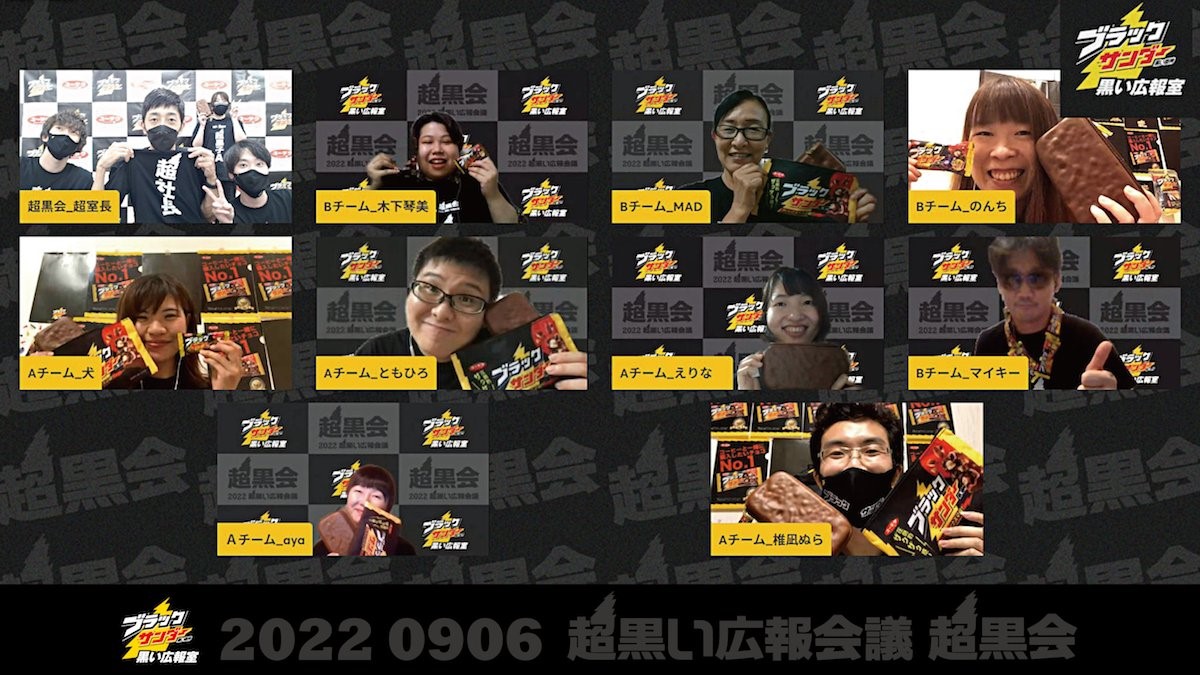
Yuraku Confectionery, the company that makes Black Thunder, actually developed the merchandise together with specially selected fans in a meeting called the Black Thunder Super Black Public Relations Meeting, which was held on September 6, 2022 (which also happened to be Black Thunder Day, since six and nine are pronounced “kuro” in Japanese, which is the same word for “black”). Yuraku Confectionery’s president, Tatsunobu Kawai, led the group of fans to decide which Black Thunder merchandise fans truly want.

▼ The members of the Black Thunder Super Black Public Relations delegation

The products originally went on sale on May 1 and were only intended to be sold in limited quantities, but they proved so popular that Yuraku Confectionery decided to offer them as permanently available products, so that more people could enjoy stylish items decorated with the candy’s iconic slashing thunderbolt.

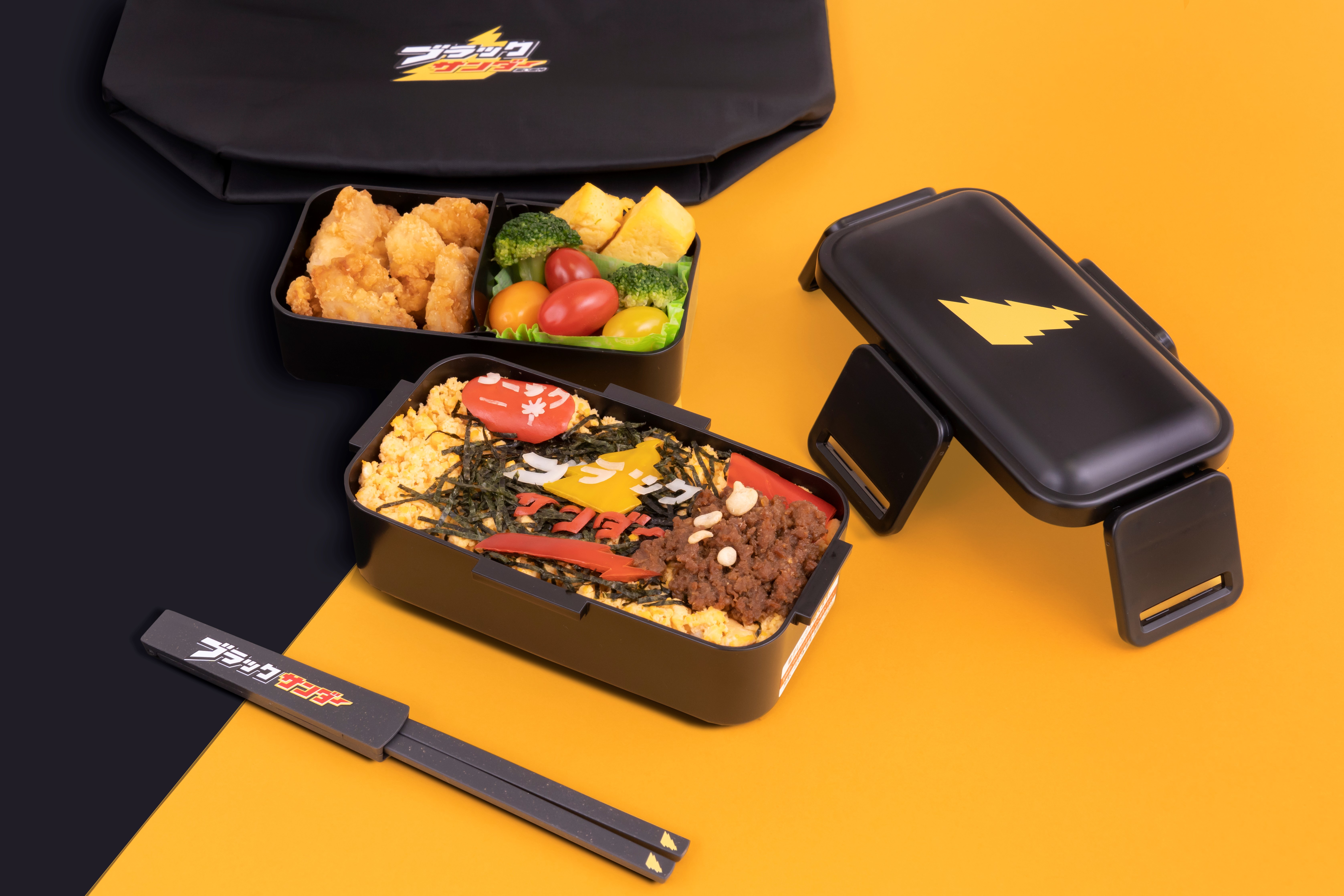
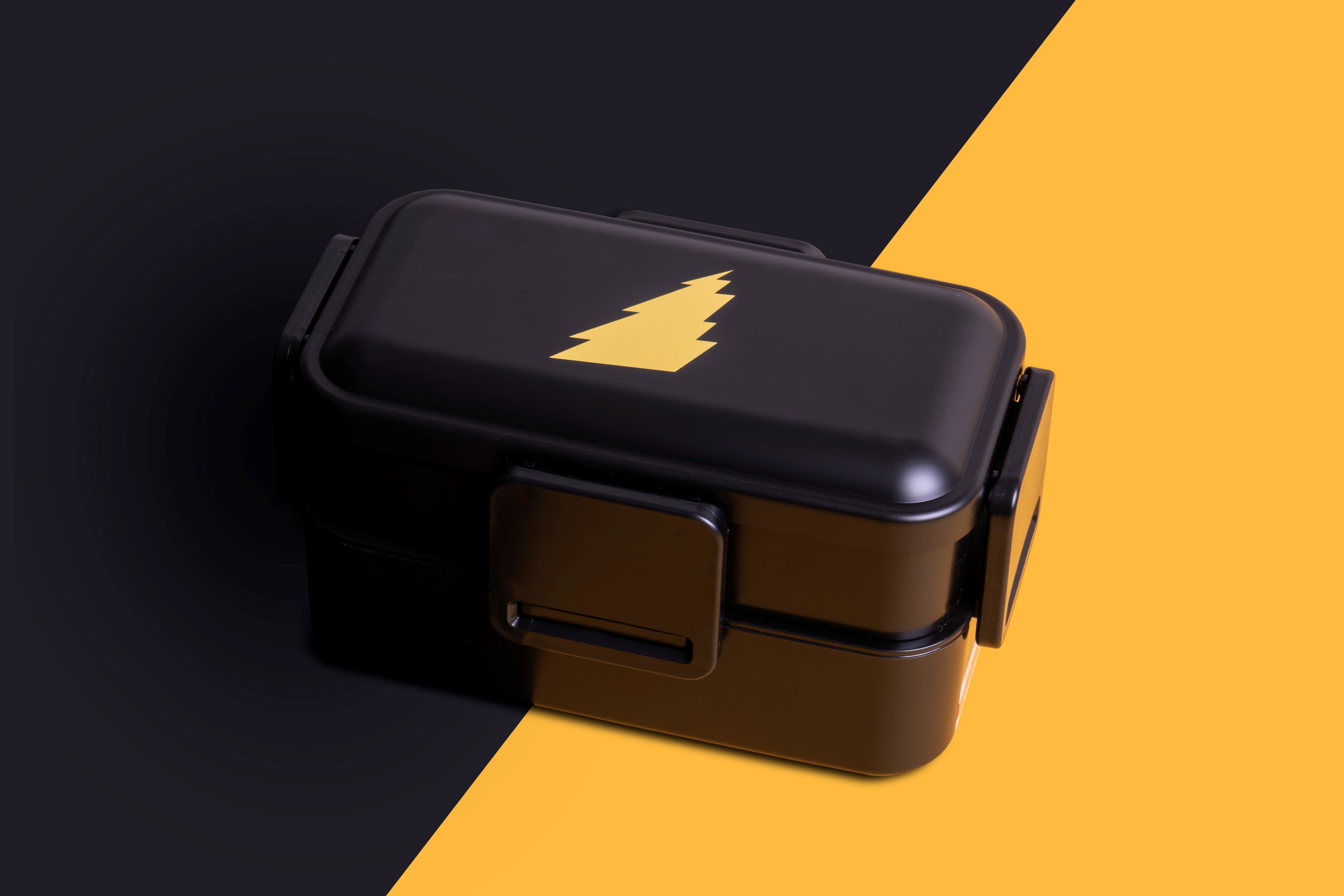
There are five items to choose from. The first is a black, two-layer bento box with a yellow lightning bolt on the top (1,800 yen [US$12.56]).

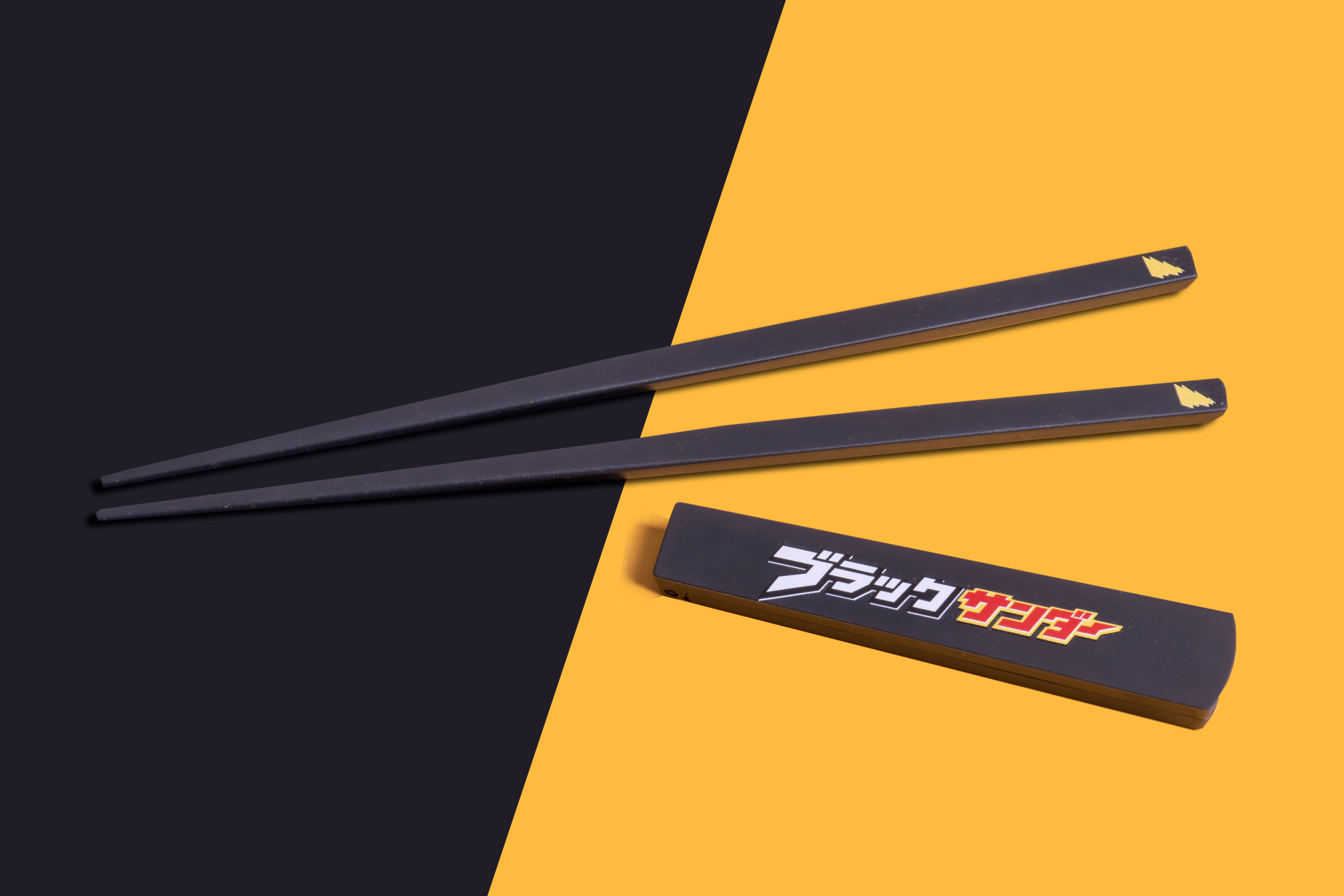
Such a box would be incomplete without a matching pair of chopsticks (700 yen), so of course they’ve supplied those…

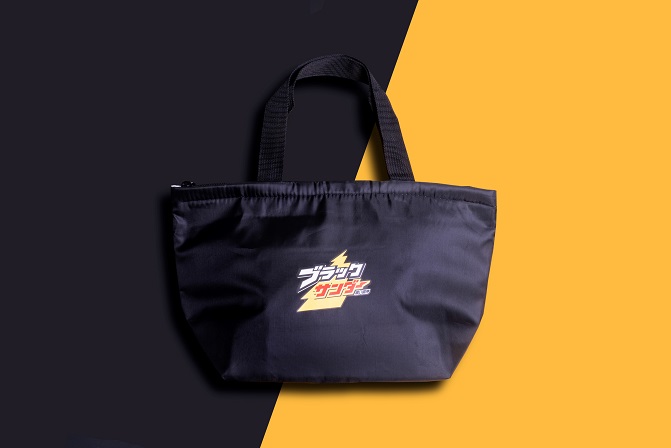
…and the set is rounded out with a temperature-preserving carrying bag (1,400 yen).

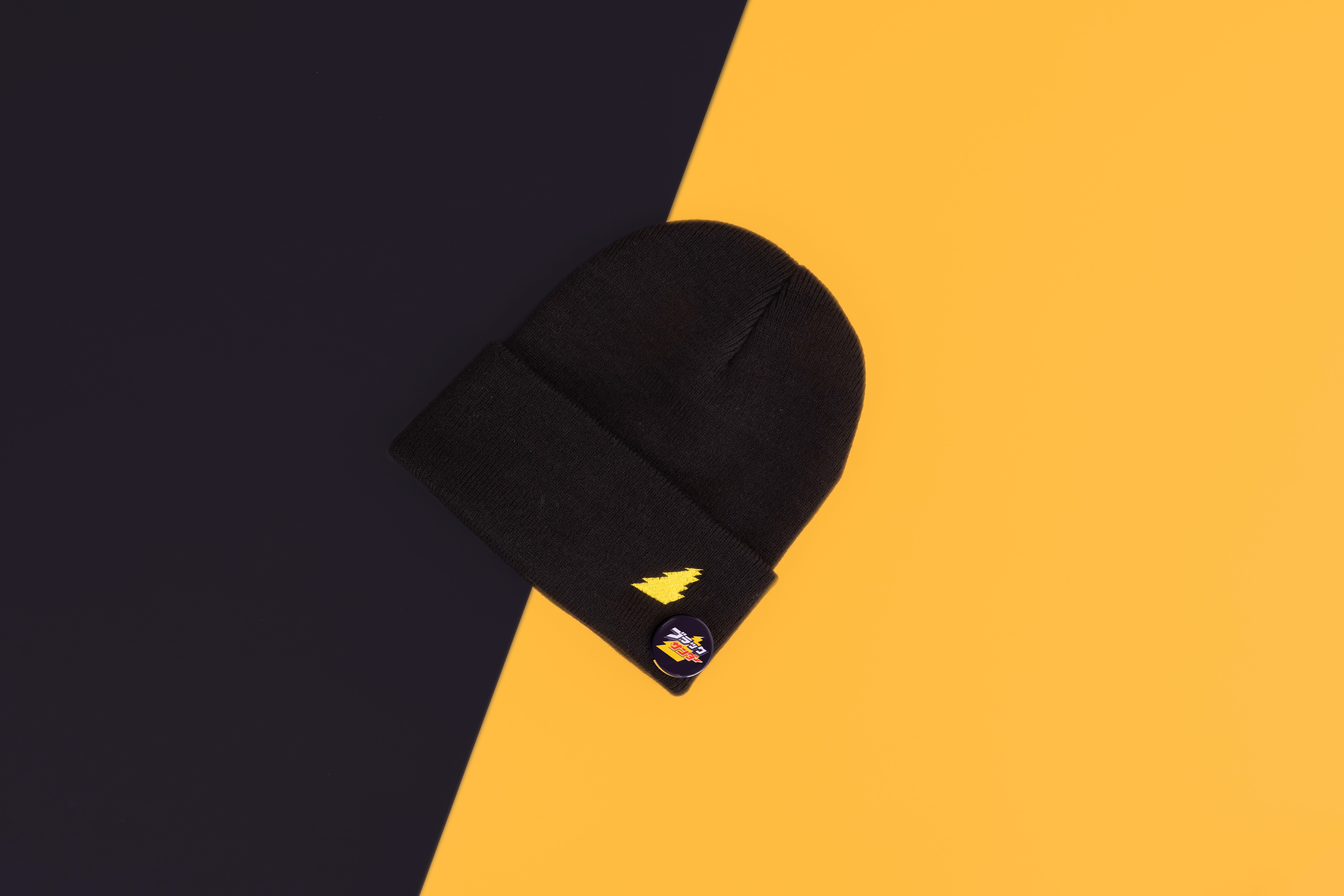
▼ There’s also a knit cap (1,800 yen)…

▼  …and a metal badge (120 yen), both of which are black with the Black Thunder logo.

You can find these now fully-available goods at the Yuraku Chocolate Shop in Tokyo, the Black Thunder Toyohashi Shop, and Yuraku Confectionery’s online shop. Don’t miss out on the chance to show off your love for one Japan’s most popular chocolates while you wait for its next cafe tie-in!

Source, images: PR Times
● Want to hear about SoraNews24’s latest articles as soon as they’re published? Follow us on Facebook and Twitter!


Credit:
Tokyo entertainment complex remodels restroom to remove gender-neutral setup

Tokyu Kabukicho Tower’s genderless restroom had attracted negative reactions since the building’s opening last spring.

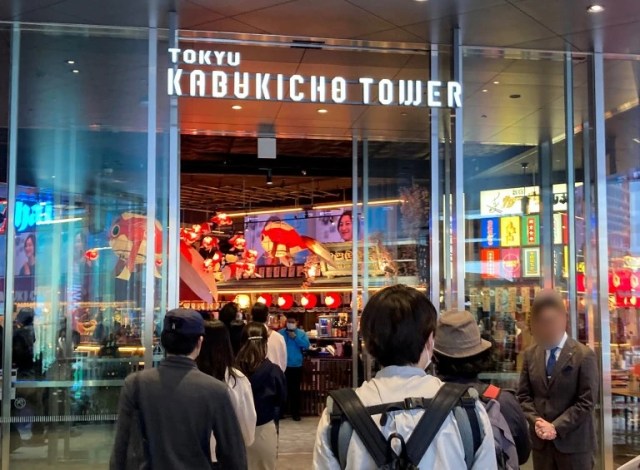
Prior to the opening of the Tokyu Kabukicho Tower last April, the project was primarily known as the latest move to spruce/clean up the Kabukicho district, a part of downtown Tokyo with a lively but seedy reputation. Once the high-rise entertainment complex started welcoming visitors, though, the thing that grabbed many people’s attention wasn’t the 53-story building’s shops, restaurants, arcade, or Evangelion stage play venue, but its bathroom facilities.

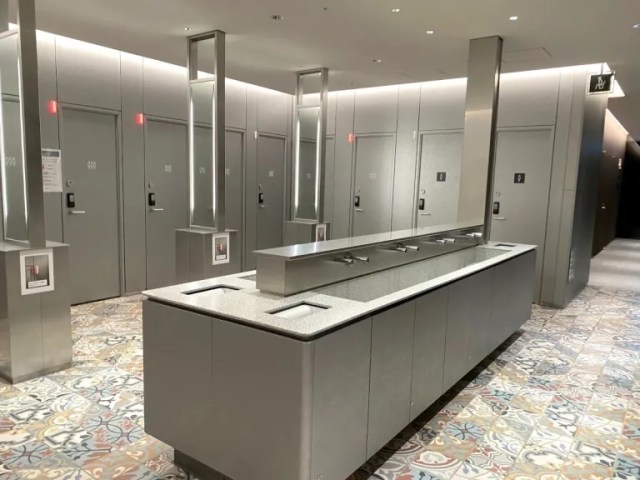
The building’s basement level 2 restroom, connected to a dining/drinking area, was designed as a “genderless restroom,” the term used in Japan for a gender-neutral setup. Initially, all of its fully enclosed stalls were designated as gender-neutral, with a shared island-style hand-washing station outside of them. This arrangement was met with a strong negative response, though, with many voicing concern about the personal safety implications of men being able to loiter and congregate near restrooms being used by women.

▼ The genderless restroom, as it appeared when the building opened

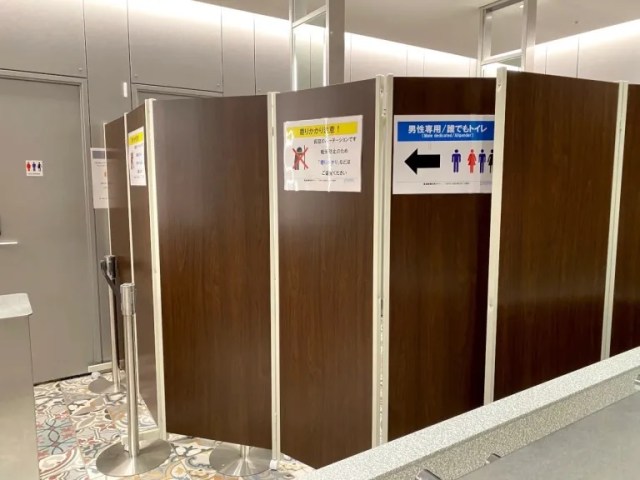
The building’s management responded by quickly instating security guard patrols through the restroom, then in May installed temporary-looking partitions to funnel men and women towards separate gender-dedicated stalls, as seen in the photo below.

On July 24, permanent renovation work began, and as of the restroom’s reopening on August 4, the restroom is no longer designated as genderless, and is now separated into an area with seven stalls for women only, three for men, and two “multi-purpose” stalls (referring to a restroom that can be used by visitors with disabilities, caretakers, and parents with young children regardless of gender).

Gender-neutral restrooms aren’t unheard of in Japan, and are in fact fairly common in small shops and restaurants, which may only have one or two booths for the whole facility. The associated hand-washing stations also tend to be either within the booth or in a space outside that’s easily visible. Though such layouts are generally a product of limited space more than anything else, they also alleviate concerns of being isolated with a stranger in/around the bathroom or of someone blending in with a large crowd to cover up sudden unscrupulous acts. By comparison, the Tokyu Kabukicho Tower’s larger gender-neutral design, especially being located on the restaurant/pub level of a building in a part of town known for hard-drinking and rowdy partying, had more potential to make some feel a sense of unease, and ultimately that’s what the management has chosen to address.

Source: Tokyo Shimbun via Hachima Kiko
Images © SoraNewws24
● Want to hear about SoraNews24’s latest articles as soon as they’re published? Follow us on Facebook and Twitter!


Credit:

An anime pilgrimage even non-anime fans will love: Visiting the Slam Dunk movie shrine【Photos】

The real-life version of the newest Slam Dunk movie’s shrine is worth working up a sweat to see.

When it comes to pilgrimages to real-world places seen in anime, fans of Slam Dunk are known for heading to Kamakura, the Kanagawa Prefecture coastal town that serves as the model for the town where the series’ basketball-playing teens attend high school. These days, though, there’s a new Slam Dunk pilgrimage site, one found far, far to the north in Akita Prefecture.

Moriko Omonoimi Shrine isn’t mentioned by name in The First Slam Dunk, the CG anime movie that came out late last year and is the most recent piece of Slam Dunk animation so far. However, fans can’t help noticing how the shrine visited by Eiji Sawakita, star player of the powerhouse team the Slam Dunk protagonists go up against, looks an awful lot like Moriko Omonoimi. The shrine is located in the town of Yurihonjo in Akita, the same prefecture where Saakita’s fictional Sannoh High School is supposed to be.

Akita, part of Japan’s northeastern Tohoku region, is one of the most rural prefectures in the country, and stepping out of Kurosawa Station on the Chokai Sanroku Line (the closest stop to the shrine), we had our breath taken away by the idyllic Japanese summertime view of a bright blue sky, pure-white clouds, and green fields stretching all the way to deeply forested mountains.

The station itself is a tiny, unmanned building, but clean and well maintained.

▼ If you’re visiting the shrine by train, you’ll want to snap a picture of the timetable, as trains only come by once or twice an hour.

Like we mentioned above, The First Slam Dunk never explicitly says that Moriko Omonoimi is the shrine Sawakita visits to pray for success in his sporting endeavors. Those who have visited the shrine and seen the movie say the visual similarities are clear, though, so much so that…

…the town and station have leaned into the reputation. At the bottom of the Kurosawa Station sign is a picture of a basketball jersey that looks just like Sawakita’s, right down to his number, 9. The sign also greets visitors with the written message “You’ve come to Kurosawa Station,” which in Japanese is “Kurosawaeki ni kita yo,” and sure enough, the sawa and kita parts are written in green.

▼ The route from the station to the shrine

It’s about two kilometers from the station to Moriko Omonoimi, a walkable distance, but there’s also a parking lot near the shrine entrance if you’re arriving by car. Along the way, we even spotted a sign directing visitors.

▼ 森子大物忌神社 = Moriko Omonoimi Shrine

▼ Even the sign for the parking lot has a cool countryside vibe.

In the movie, Sawakita visits the shrine while out running to condition himself for the upcoming game. Elite athlete that he is, he bounds up the stone staircase that leads up to the shrine’s main building.

Stepping through the torii gate, though, we figured we should pace ourselves, because there are roughly 300 stone steps.

On the plus side, you’ll have plenty of beautiful scenery to admire as you take your time, since the path you walk on leads through a dense forest of cedar trees.

As we walked, we didn’t encounter a single other person, and the solitude created a serene, sacred atmosphere. We were far from alone, though as there were tons of bugs: dragonflies, butterflies, bees, horseflies, and mosquitoes.

▼ “Beware of bees”

Since we were visiting in the summer, there was probably more insect activity than usual, but we’d definitely recommend wearing long sleeves to prevent getting bit or stung on your arms. Another thing we’d recommend is bringing some water with you to rehydrate. The cedars provide a measure of shade even at midday, but you’re still likely to work up a sweat climbing up to the shrine.

When we eventually did make it up there, the shrine building was both rustic and majestic. The unpainted wood gives it a very old-school, local-community feel, but the carvings are complex and exquisite.

Just like on the trail, we didn’t see anyone else at the shrine that day. We weren’t its first visitors, though. Set up on a small table was a row of hand counters and a multi-lingual request to press the one corresponding to your country of origin, either Japan, Korea, China, Taiwan, or “English-speaking countries.”

Lumping all English-speaking countries together might seem kind of unusual, but language is clearly the focus of the tally-taking, so that the shrine, and by extension the town of Yurihonjo, can know where its visitors are coming from and how to make their time in the area enjoyable, such as by providing tourism information in their native languages. It’s a kind-hearted and admirable initiative, since as a small rural town there isn’t a lot of non-Japanese-language sightseeing information available about the town yet.

Moriko Omonoimi is actually the start of a trail for shugendo, mountain hiking pilgrimages began by ascetic monks and now enjoyed by outdoorsy types in a secular sense too. With daylight running short and our legs already tired from the climb up, we decided to save the shugendo trail for another time, and headed back down the steps.

It may not have the flash of historical significance of the country’s more famous shrines, but visiting Moriko Omonoimi is one of those quintessential small-town experiences that make getting off the beaten path in rural Japan so enticing. Even though it was the Slam Dunk connection that drew us there, you don’t have to be a fan of the series, or even anime in general, to get something out of climbing those steps and visiting the shrine, and the memories of our day at Moriko Omonoimi will be with us for a long time…

…even longer than the bug bites we still have to put anti-itching ointment on.

Shrine information
Moriko Omonoimi Shrine / 大物忌神社
Address: Akita-ken, Yurihonjo-shi, Moriko Yaotome-shita 99
秋田県由利本荘市森子八乙女下99
Website

Photos ©SoraNews24
● Want to hear about SoraNews24’s latest articles as soon as they’re published? Follow us on Facebook and Twitter!


Credit:
Shocking cat graffiti at centuries-old Japanese temple is shockingly uncute【Video】

Vandalism is already a crime, but it feels like being this bad at drawing should be too.

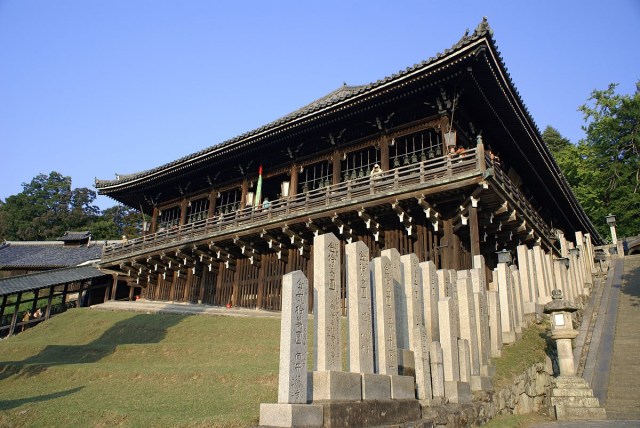
Todaiji Temple is one of Nara’s most beautiful and culturally significant locations, and a major draw for travelers both from across Japan and abroad. So the nation was shocked to see that the temple had been vandalized…and in a shockingly uncute way to boot.

On Thursday morning, a worker at the temple noticed discoloration on the exterior side of a door in the Nigatsudo prayer hall complex (pictured above). Upon closer inspection, it was discovered to be a drawing of a cat, or as many media outlets in Japan are describing it, “a cat-like shape.”

Why the lack of certainty? Well, because it looks like this.

You could make a pretty solid argument that anyone with drawing skills of that humble caliber shouldn’t be displaying their art in public under any circumstances, let alone committing vandalism to do so. Reports also pointedly mention that the graffiti, which measures roughly 30 by 40 centimeters (11.8 by 15.7 inches), was drawn on the door at a height of about 180 centimeters (70.9 inches), so while it may look like it was drawn by a small child, the actual perpetrator is someone with adult, or at least teenager, height.

The specific building on which the graffiti was found is the Nigatsudo’s dining hall, which was constructed in the Kamakura period of Japanese history (1185-1333) and has been legally designated as a national important cultural property since 1906. Surprisingly, the “cat” appears to have been drawn by someone simply pressing their finger strongly enough against the wood to leave lasting marks, as the graffiti shows no signs of painting.

The section of the complex where the graffiti was found is not off-limits to visitors, but Todaiji head abbot Eisho Kamitsukasa has said that the temple will be considering countermeasures to prevent such an incident from occurring again. “This is very regrettable,” Kamitsukasa commented. “Not just cultural properties, but all things should be treated with respect.”

Graffitiing such specially designated buildings does come with its own supplementary charge to common vandalism though, violation of the law for the protection of cultural properties, and the police are now analyzing security camera footage as part of their efforts to identify the culprit.

Source: Nitele News, NHK News Web, MBS News, The Sankei News
Top image: Wikipedia/663highland
● Want to hear about SoraNews24’s latest articles as soon as they’re published? Follow us on Facebook and Twitter!


Credit: