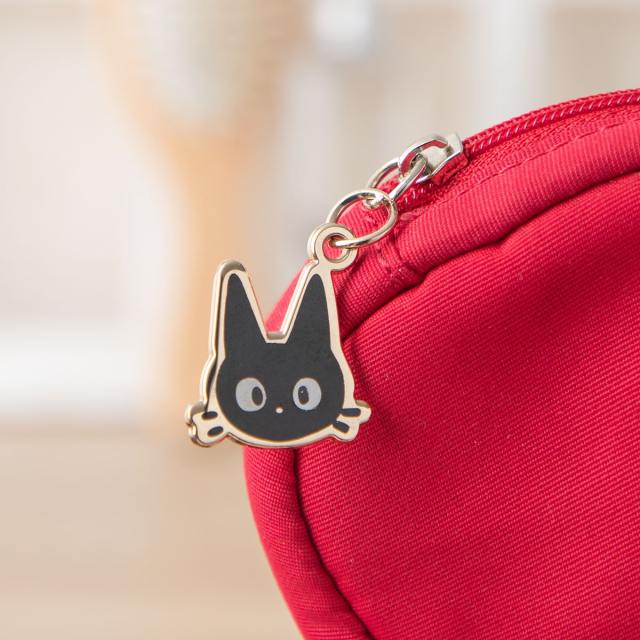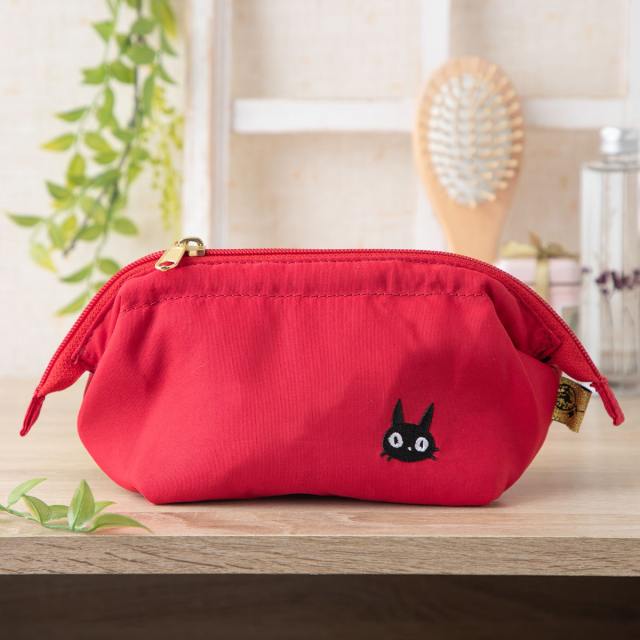
Studio Ghibli releases new Kiki Silhouette pouches with gold details

Kiki’s Delivery Service characters get a golden makeover.

Studio Ghibli characters are so well-known that sometimes they’re recognisable purely by their silhouette. That’s certainly the case with young witch Kiki and her feline friend Jiji from the 1989 movie Kiki’s Delivery Service, and the studio is highlighting this fact with a couple of new pouches that show just how beautiful this hint of the characters can be.

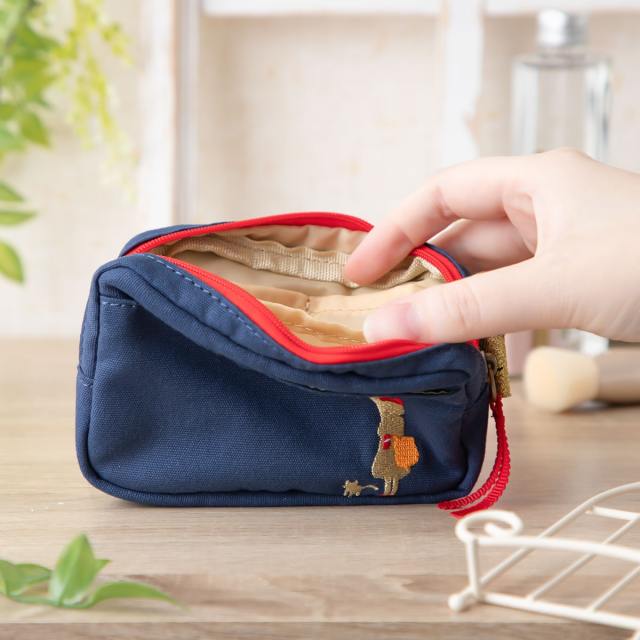
▼ The first pouch is the Kiki’s Delivery Service Kiki Silhouette Series Mini Pouch (2,530 yen [US$17.44]).

This pouch measures 12 x 8 x 2.8 centimetres (4.7 x 3.1 x 1.1 inches) and features gold embroidery on the side tag and silhouettes.

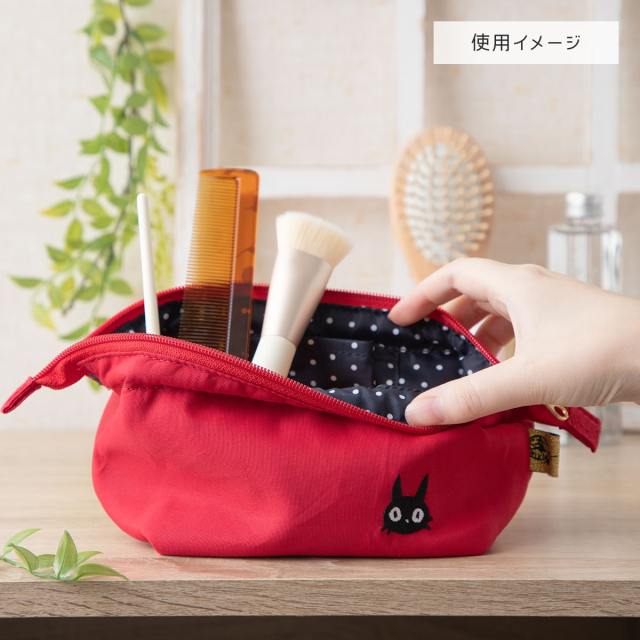
The inside fabric is beige in colour, to help hide any marks or stains from foundation and concealer products. With pockets inside for storage, the pouch can be use to store makeup or other small items and accessories.

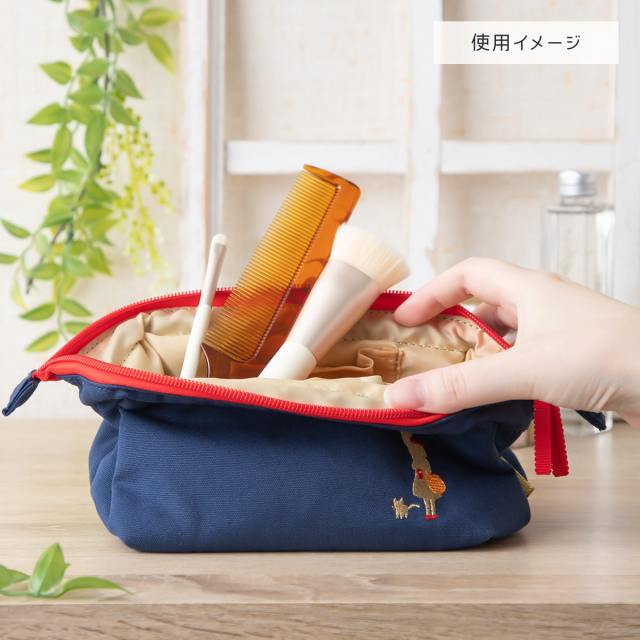
▼ Those wanting more storage can opt for the Kiki’s Delivery Service Kiki Silhouette Series Stand Pouch (2,970 yen).

At 14.5 x 11 x 10 centimetres, this pouch is slightly larger than the first and has a sturdier shape, with wire along the zippered section to help it stay open, giving you ample room to reach inside and easily retrieve your items.

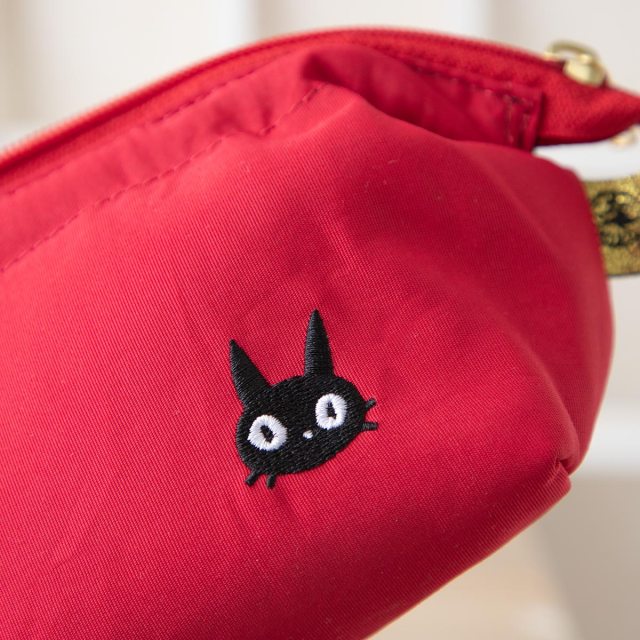
▼ Like the first pouch, this one also features gorgeous embroidered silhouettes.

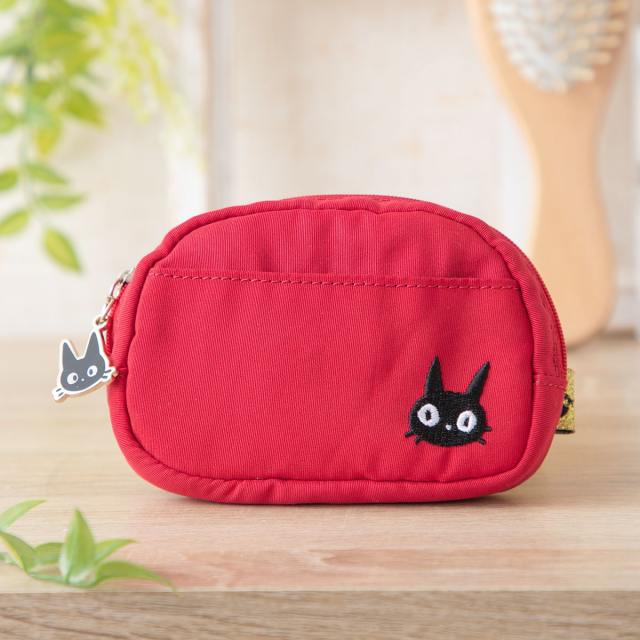
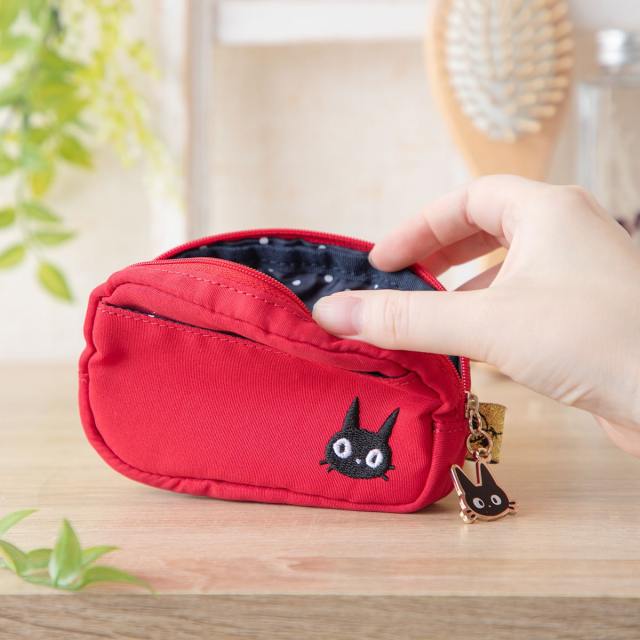
While the two pouches above are brand new additions to the Kiki’s Delivery Service range, fans of Jiji will be pleased to know that two pouches dedicated to the feline have been restocked after selling out due to popularity.

▼ Kiki’s Delivery Service Kiki’s Red Ribbon Series Mini Pouch (2,530 yen)

▼ Kiki’s Delivery Service Kiki’s Red Ribbon Series Stand Pouch (2,970 yen)

Both the new Silhouette series and the restocked Red Ribbon series will be on sale at Donguri Kyowakoku stores and online from 31 August. With a whole treasure trove of other goods dedicated to Kiki and Jiji in store at the moment, its definitely a good time to be a Kiki’s Delivery Service fan!

Source: Donguri Kyowakoku
Top image: Donguri Kyowakoku
Insert images: Donguri Kyowakoku (1, 2, 3, 4)
● Want to hear about SoraNews24’s latest articles as soon as they’re published? Follow us on Facebook and Twitter!


Credit:

Can you defeat curry stains by hanging your clothes in the sunshine?【Experiment】

Summer sun versus curcumin – FIGHT!

There are three things that you can be certain will happen in Japan. In spring, the sakura will bloom. In fall, the leaves will turn red. And, eventually, you’re going to spill curry on your clothes.

It’s just inevitable, really. Between the easy access to and delicious flavor of Japanese curry, it’s something everyone ends up eating a lot of, and with enough gusto that sooner or later some roux is going to find its way onto your wardrobe. Even worse, curry’s deep color and non-solid texture mean that it’s not the sort of thing you can just quickly and easily brush off to avoid staining. The really big problem is the curcumin, a yellow pigment that’s found in turmeric, one of the key ingredients in curry. Curcumin is highly resistant to breaking down in water, so once it gets onto your clothes, it’s not likely to come out so easily in the wash.

So our Japanese-language reporter Anji Tabata was very interested when she heard that even though curcumin is resistant to water, it’s weak to ultraviolet light, meaning that you can fight curry stains with sunlight. This might sound too good to be true, but the information came from none other than S&B Foods, one of Japan’s biggest curry roux makers, who mention the tip on their official website.

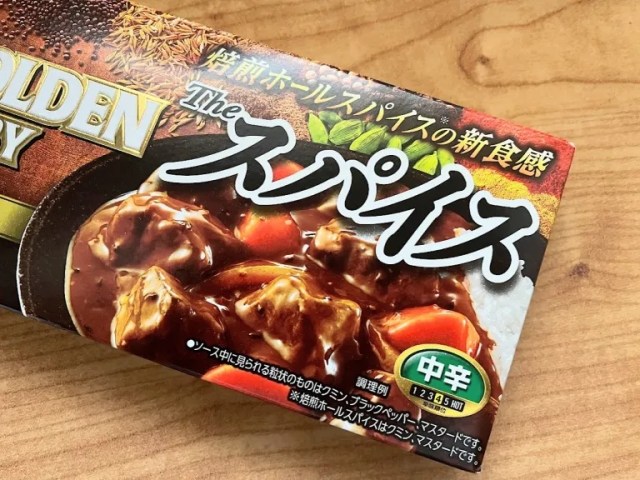
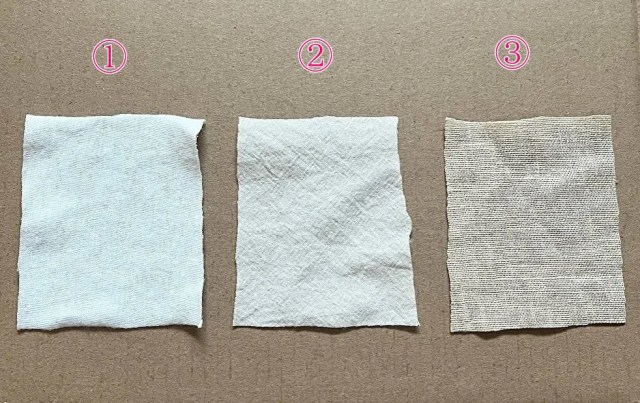
Though it probably wouldn’t have been that long until our next unintended curry spill, Anji decided to kickstart our test of this technique by purposely staining three pieces of fabric with some S&B curry roux. In order to approximate clothing someone might be wearing, the first piece was a 93-perceent-cotton, 7-percent-polyurethane blend, the second piece 100-percent cotton, and the third 100-percent linen, shown left-to-right in the photo below.

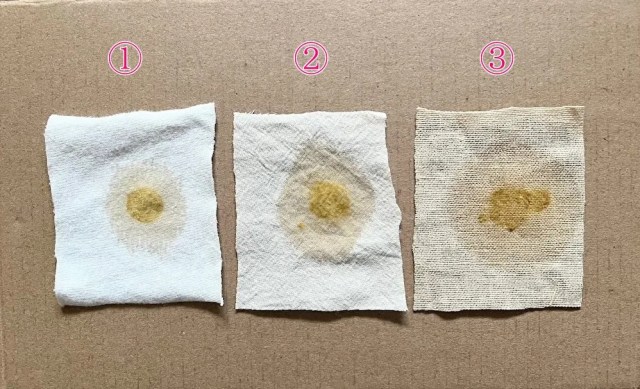
She plopped a drop of curry roux onto each of them and let them sit for an hour for the stain to set. Next, she quickly hand-washed each of them with laundry detergent, after which they looked like this.

Then, it was time for the battle between sunshine and curcumin to commence. Anji decided to hang the three cloths on her balcony for eight hours, from 8 a.m. to 4 p.m., straddling morning and afternoon since her balcony has lots of direct sunlight in the morning, but less in the afternoon, which she figured would balance out to a moderate ultraviolet light total.

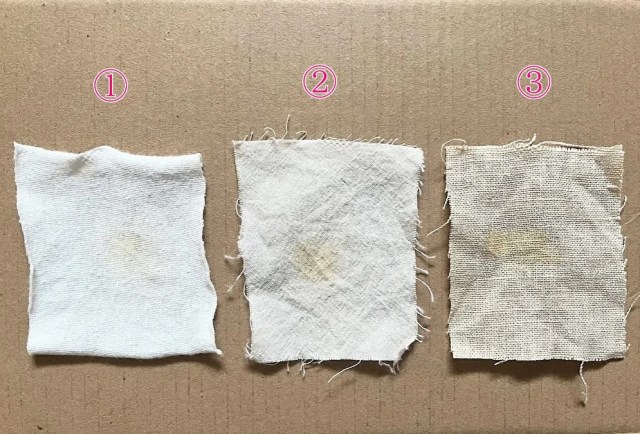
At 4 o’clock, she took them back in to check the results, and sure enough, the sunlight had done a pretty effective job erasing the curry stains!

No, they weren’t completely gone, but the progress was remarkable, considering she’d used no extra water or cleaning agents since putting them outside. Anji was particularly happy to see how much better cloth #1 looked, since the blended material is the same material as a lot of her shirts. Even if there’s still some discoloration, the vastly smaller and fainter staining means that there’s much less fabric that’s going to need bleach or other chemical stain removers applied to it, both of which themselves can actually damage the color of clothing if overused.

So in the end, Anji is happy to report that while the sun won’t do all of your curry stain removal work for you, it is a powerful ally, and one whose help you should probably enlist first so that you can then use more pinpoint accuracy for the potentially harsher methods. It’s good to know that an errant drop of curry doesn’t mean we need to throw out an item of clothing, especially since avoiding unnecessary clothes replacements leaves us more room in our budget at a time when the cost to cook curry rice is rising.

Reference: S&B Foods
Photos ©SoraNews24
● Want to hear about SoraNews24’s latest articles as soon as they’re published? Follow us on Facebook and Twitter!


Credit:

Foreigners living in Japan have surprisingly old top Japanese karaoke song picks in survey

Top-ranking songs have average age of over 30 years old.

For foreigners living in Japan, speaking in Japanese is obviously a big part of adapting to the local lifestyle, but so is singing in Japanese. Develop much of a social life in Japan, and eventually you’re going to wind up at a karaoke box with friends, and while most of them offer English songs too, you cold make an argument that you haven’t really had the full karaoke in Japan experience until you’ve sung karaoke in Japanese.

So what Japanese songs are Japan’s foreign population singing? To investigate, for-foreigners employment site Yolo Work conducted a survey of 369 foreign residents in Japan, asking them “What Japanese song do you often sing at karaoke?”, with the results producing the following top five list.

5 (tie). “Yuki no Hana” (Mika Nakashima)

5 (tie). “Mayonaka no Door~Stay with Me” (Miki Matsubara)

Though they finished at the same ranking, there’s a 24-year-gap between Mika Nakashima’s plaintive winter ballad from 2003 and Miki Matsubara’s more up-tempo, but still filled with longing, city pop classic from 1979. Something they both have in common, though, is being extensively covered by artists elsewhere in Asia, with covers for “Mayonaka no Door” coming as part of the surge in international interest in Japanese city pop that started a few years ago.

4. “We Are!” (Hiroshi Kitadani)

It’s pretty easy to guess how “We Are!” made the list. In the course of its 25-years-and-counting broadcast run, there have been a lot of opening themes for the One Piece TV anime, but none of them have left as deep an impression on the franchise’s international fanbase as the original, sung by Hiroshi Kitadani and first heard in 1999.

3. “Ue wo Muite Arukou” (Kyu Sakamoto)

The most golden of golden J-pop oldies, 1961’s “Ue wo Muite Arukou,” which translates loosely to “Keep Your Head Up and Keep on Walking,” is better known in English-speaking countries as “Sukiyaki” or “The Sukiyaki Song.” Arguably the biggest international success ever of a Japanese song not directly linked to a specific media tie-in or broad Japanese pop culture boom, “Ue wo Muite Arukou’s” relaxed, easy-to-sing-to rhythm and relatively non-challenging vocabulary also make it a favorite of singalong lessons in overseas classes for students learning Japanese, and that familiarity probably helped contribute to its number-three ranking.

2. “Dry Flower” (Yuuri)

The 2022 breakout hit of singer/songwriter Yuuri, “Dry Flower” also has a popular cover, this time performed by the original artist himself. Add in the Japanese version sitting at the top of Oricon’s karaoke popularity ranking for three years running, and “Dry Flower” is currently riding the cyclical trend of exposure leading to karaoke picks leading back to more exposure and more picks.

1. “First Love” (Utada Hikaru)

And at the top of the list we come to an unquestionably evergreen karaoke pick. Since its release in 1999, Utada Hikaru’s signature ballad hasn’t really dipped at all in reverence, and it’s a song that just about anyone of karaoke-going age, from teenage students to mature adults, will instantly recognize. Yolo Work credits Netflix’s 2022 series First Love, which drew inspiration from the song and borrowed its title with giving it a boost in the foreigner karaoke rankings, but the fact is that it’s pretty much impossible to have spent very much time listening to J-pop medleys or recommendation paylists at any time in the past two and a half decades and not stumble across the undeniably memorable “First Love.”

Looking over the list, it is a little surprising to see only one song from the 2020s in the top five/six, and those songs’ average age works out to 30.2 years. In terms of nationality of respondents for the survey, 20.6 hail from the Philippines, 8.7 from Brazil, 7.3 from the U.S.A., 6 percent from Indonesia, and 3.5 percent from Nepal, so it’s possible a more North American/European-centered poll would yield different results.

Source: PR Times, Yolo Work
Top image: Pakutaso
● Want to hear about SoraNews24’s latest articles as soon as they’re published? Follow us on Facebook and Twitter!


Credit:

Tasting Domino’s Japan’s new tsukimi moon-viewing pizza before its official release

A pizza so popular it sold out in days last year…but will this year’s version be a sell-out hit?

When tsukimi (“moon-viewing”) season rolls around in early autumn, fast food chains in Japan add limited-edition tsukimi items to their menus to mark the occasion. Out of all the tsukimi options, though, Domino’s Japan’s moon-viewing pizza is one of the most popular, selling out in less than a week last year.

This year, the chain is going even bigger with a new Tsukimi Quattro, and in order to prevent it from selling out in days, the chain says it has stocked up on five times as much of the raw ingredients compared to last year. We were lucky enough to be invited to a pre-release tasting event in Tokyo, so our reporter P.K. Sanjun headed over to get a taste of the new pizza and see how it compares to last year’s sell-out variety.

▼ The star ingredient is egg, as “tsukimi” is shorthand  for dishes containing egg in Japan, due to the round egg yolk’s resemblance to the full moon.

▼ The CEO of Domino’s Japan, a Dutchman named Martin Steenks, was also at the event.

Like the 2023 tsukimi pizza, this year’s is also a Quattro, but instead of containing Creamy Egg Genovese, the new Cheeseburger Pizza will be taking its place, joining the Teri Chiki EggCreamy Egg & Bacon, and Creamy Egg & Four Mushrooms that appeared in the Quattro last year.

▼ The Tsukimi Quattro is priced from 1,890 yen (US$13.04) for a small.

Domino’s says every slice of this pizza is stronger in flavour compared to last year, and when P.K. got a taste of it, he wholeheartedly agreed. Each quarter contains a different sauce: white sauce, Camembert cheese sauce, demi-glace sauce, and mayonnaise sauce, so there’s a wide variety of flavours to excite the palate, but what was most surprising to P.K. was the taste of the eggs.

Usually, the egg flavour in tsukimi items tends to be mild and mellow but here it left a strong and impactful impression. This was actually a good thing, as each pizza slice contained so many ingredients that the taste of egg would otherwise be swallowed up by them, but here the eggs were allowed to shine as bright as the harvest moon.

Domino’s says the strong flavours is intentional, as the pizza is designed to be enjoyed with alcohol while viewing the moon. P.K. agrees it’ll be ideal for that, as the abundance of white-based sauces and lack of tomato sauce in the pizza makes it fairly heavy, so it would go down well with some liquid refreshment.

▼ While the Tsukimi Quattro is designed for sharing, solo diners can enjoy the moon with a limited-edition “Pizza Bento” containing the Creamy Egg & Bacon pizza, priced from 990 yen.

Both the Quattro and Bento pizzas are absolutely delicious, with hearty ingredients and flavours perfect for the cooler days and nights of early autumn. It’ll be a great accompaniment to the rising moon on the official night of tsukimi, which this year falls on 17 September, but the pizza can be enjoyed anytime while it’s on the menu from 9-29 September.

Images ©SoraNews24
● Want to hear about SoraNews24’s latest articles as soon as they’re published? Follow us on Facebook and Twitter!


Credit:

A trip to the other side of Matsushima, a mysterious power spot with an otherworldly atmosphere

The eerie ruins on this island will take your breath away. 

Matsushima in Miyagi Prefecture is a tourist spot so beautiful it’s ranked as one of Japan’s three most scenic views, alongside Amanohashidate in Kyoto and Miyajima in Hiroshima.

With a name that translates as “pine tree island”, Matsushima is actually a group of islands, and although they’re best explored by sightseeing boat, some can be reached by foot via bridges from the mainland. One land-connected island is particularly special, as it’s considered a sacred place, with mysterious stone structures that create an otherworldly atmosphere. Known as Oshima, this is a hidden “power spot” that’s not often spoken about, so today we’d like to take you there, and introduce you to the “other side of Matsushima”.
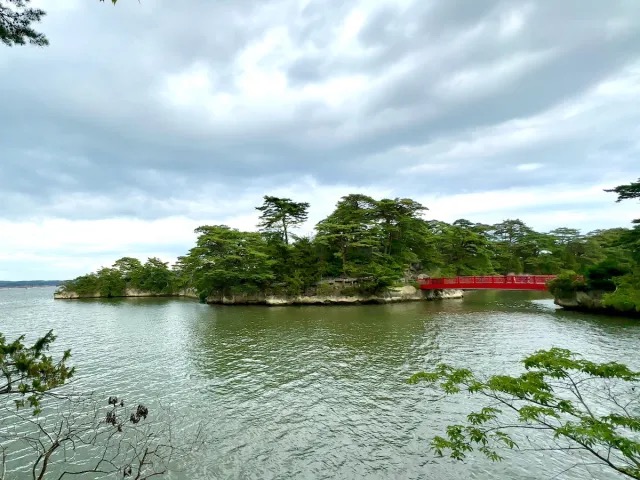
The quiet entrance to the island lies on the sea side of Matsushima Seaside Park, which isn’t far from JR Matsushima Kaigan Station.
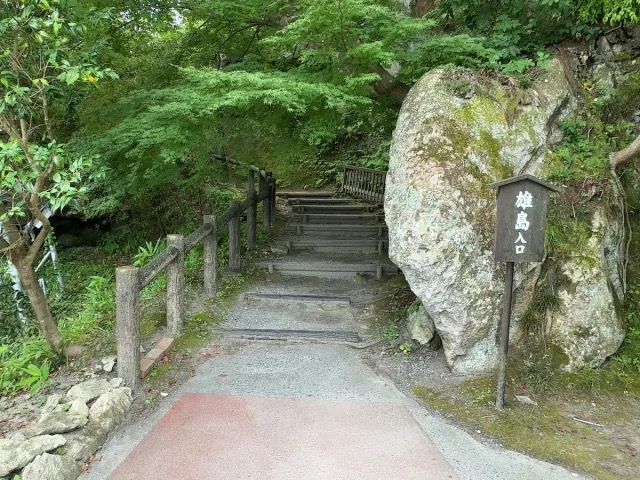
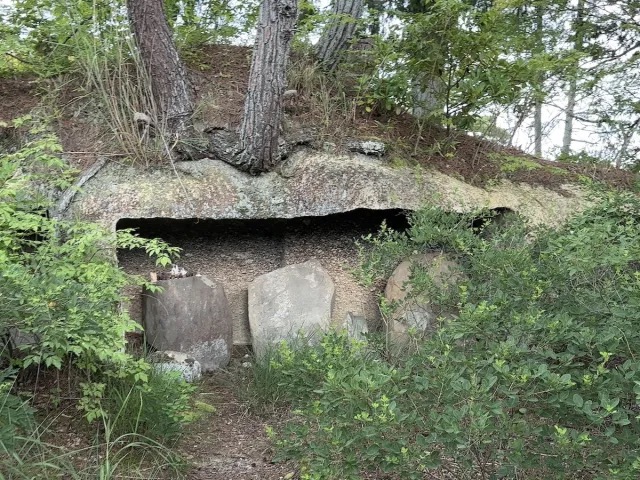
There are caves even before you enter the island, and you’ll be immediately struck by the unique atmosphere.
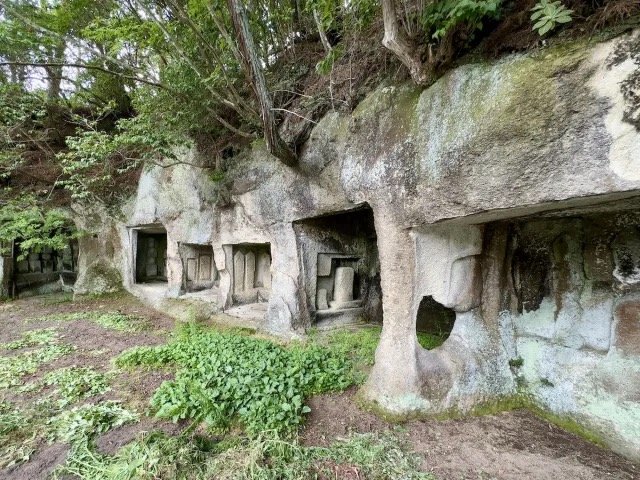
To understand the mysteries of Oshima, we have to go back to a time when it was a place of training for monks and pilgrims from all over the world…and a place for burial. The monks spent a long time reciting sutras, erecting stone pagodas, and carving stone Buddha statues as part of memorial services for the dead.

Some of them were high priests who severed ties with the secular world and lived on the island for more than 10 years. Visiting today, their presence lingers in the air on the island, and it can be felt as soon as you step onto the vermilion bridge, which has the same name as a famous bridge in Kyoto, “Togetsukyo,” and is said to be a bridge that ends bad relationships.

▼ It’s also acts as a boundary line between this world and the world of the unknown, kind of like the bridge in the Studio Ghibli film, Spirited Away.
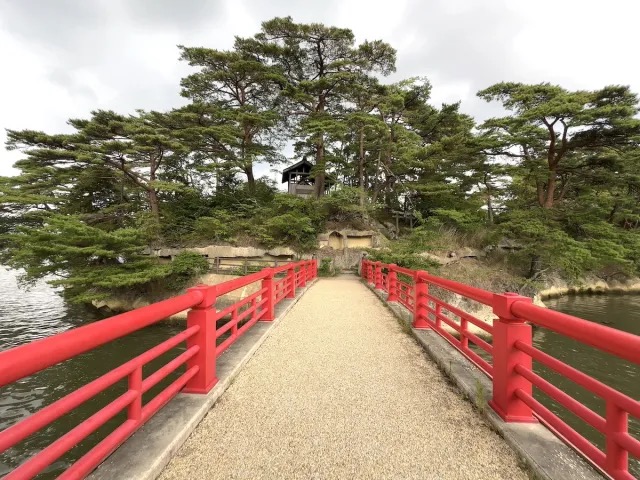
There are walking trails on the island, with both clockwise and counterclockwise routes. While we weren’t sure of the official etiquette, we recommend heading clockwise for sightseeing, and the reason for that we’ll explain a little later.

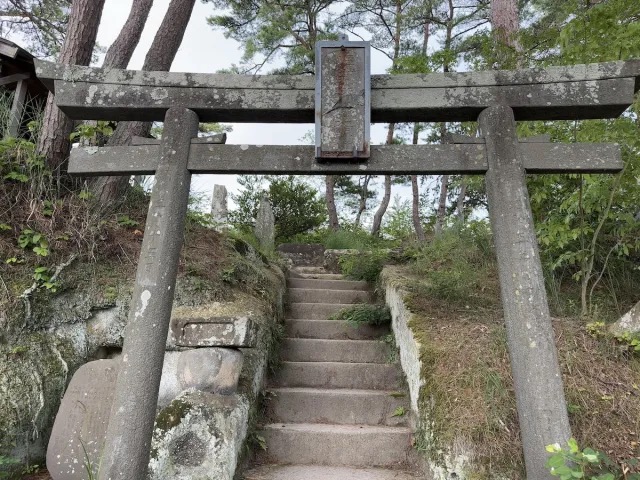
The first thing you’ll see on this route is a torii gate. You’d be forgiven for wondering what a shrine is doing at a sacred site for Buddhism, but this is an Inari shrine which, according to an anecdote from the Edo period, was erected when a ship that was on the verge of becoming lost and was rescued by a white fox.

▼ Inari shrines are dedicated to the god of inari, which is connected to foxes.
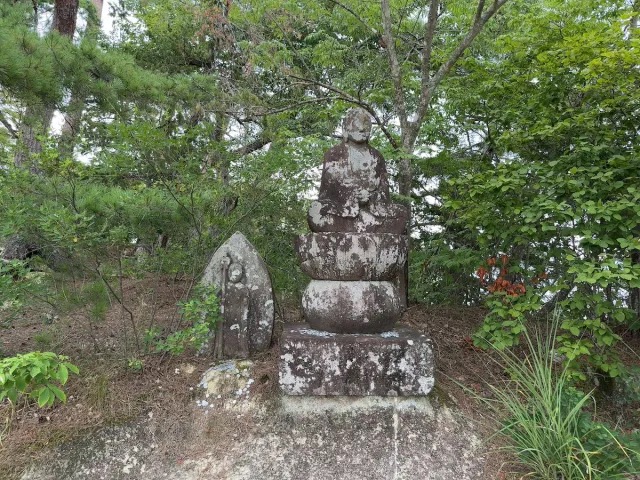
As you continue walking, you’ll come across stone monuments, stone Buddha statues, and five-storey pagodas, all lined up on the side of walking trails, in the bushes, on the sides of cliffs…everywhere.

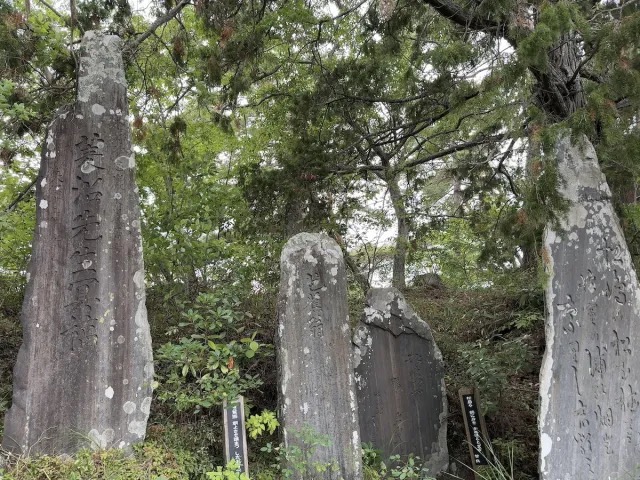
Some of the oldest statues have been discoloured by the wind and rain, making the inscriptions hard to read.
Although there are “haiku monuments” inscribed with the writings of Matsuo Basho (1644-1694), the esteemed poet who described Matsushima as the most beautiful place in all of Japan, most of the stone structures are “itabi”, a type of Buddhist memorial stone that was commonly used during the Muromachi (1336-1573) period.
There are also “cave ruins” at nearby Zuiganji temple, which indicate that the custom of excavating rocks for the purpose of holding memorial services for the dead was quite popular in this region. However, only a small portion of these stone structures can be seen now. There used to be dozens of them, and many of them were thrown into the ocean, so they were relocated when the park was being developed.
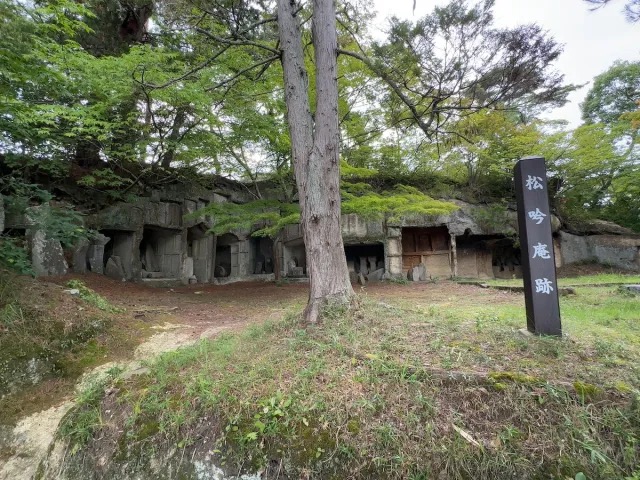
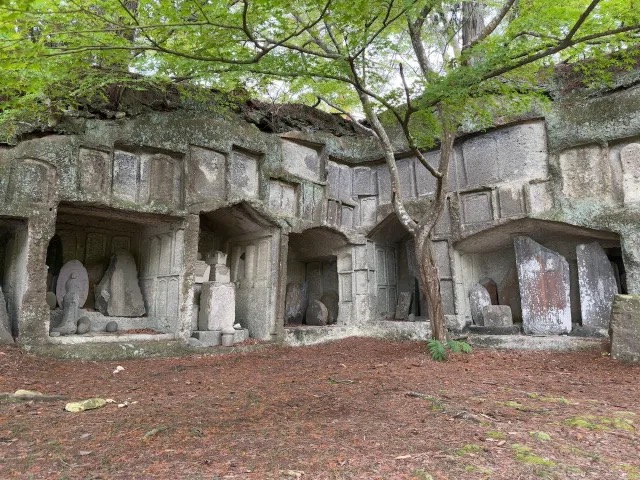
One of the highlights of Oshima is the site of a hermitage called “Shogin-an Ruins”. Although the building here no longer exists, there are countless stone monuments and names inscribed on the walls here.
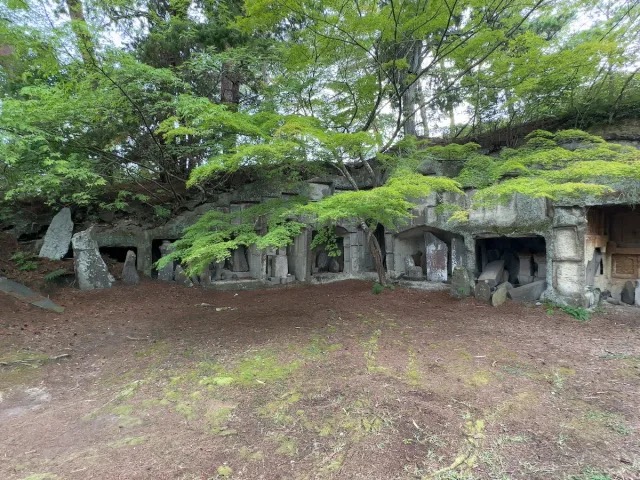
This is where you feel the strong presence of…something. Whether it was spirits from the past or the energy from the people who once lived devoted lives here, there’s certainly an otherworldly feeling here that would move even the hardest skeptic.

It’s not scary or creepy as such but it does have a unique atmosphere that will render you speechless. Just as spectacular views of nature that surpass human understanding can leave people with feelings of awe, places that people have poured their deep thoughts and efforts into can also leave the same impression, becoming a so-called “power spot” for its feelings of intense energy.
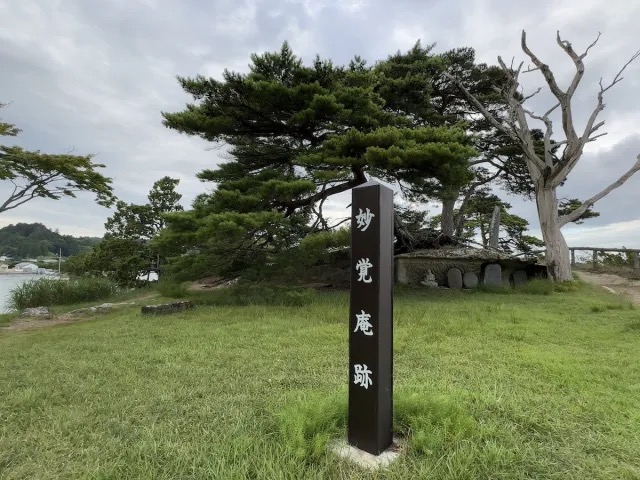
Continuing along the trail, you’ll come to the “Myokakuan Ruins” at the tip of the island. This is the place where Kenbutsu Shonin, a high-ranking monk who practiced asceticism in seclusion on the island for 12 years, and Raiken, who followed suit and practiced asceticism for 22 years, lived.
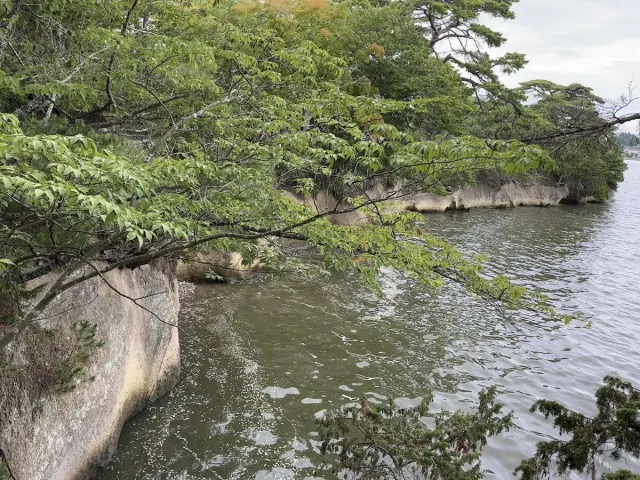
This life of isolation is similar to those of other monks, such as those at Mt Koya, but here things feel different as it’s an island that’s so small you could probably walk around it in five minutes at a brisk pace. Isolating here would be quite difficult, as there’s no way to go for a long walk, and no opportunity to enjoy vast differences in terms of scenery, seasonal flowers or wild birds. This would’ve been the site for a truly ascetic life.

▼ Proceeding further, you’ll come to the highlight of the island, Okunoin.
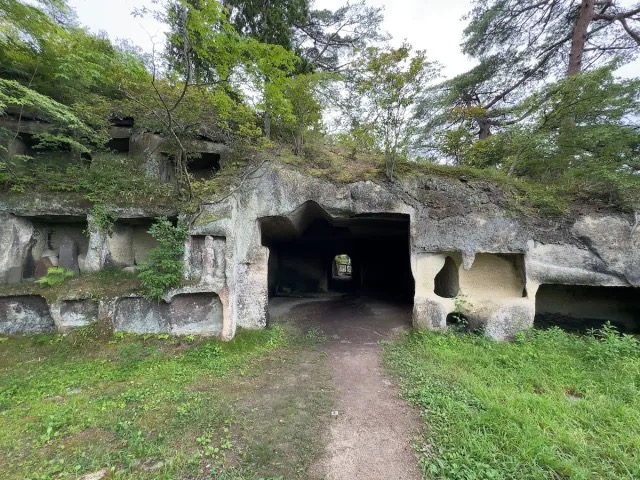
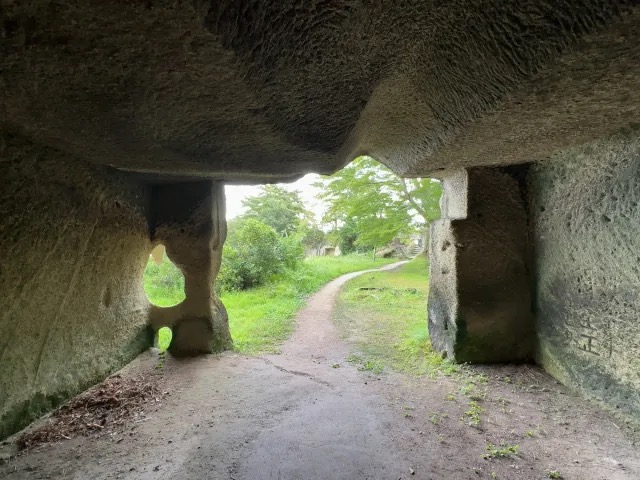
Surrounded by trees, Okunoin is a dark place even during the day, and there’s an eerie tunnel that people can pass through, adding more mystery to the site. There used to be a hall called Kenbutsu-do here, where the aforementioned Kenbutsu Shonin is said to have recited 60,000 copies of the Lotus Sutra.
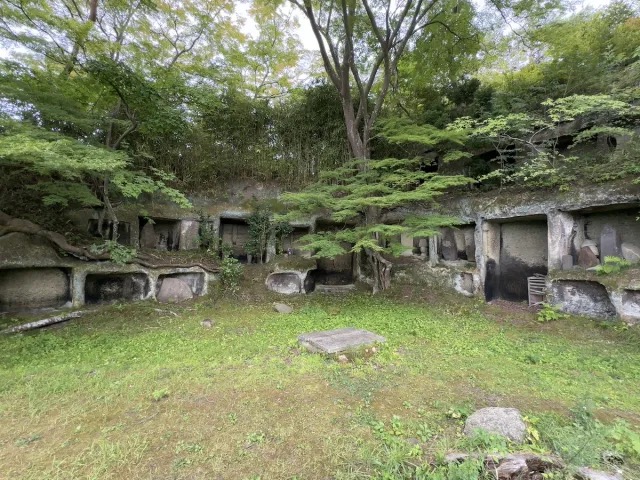
It is said that Kenbutsu Shonin gained spiritual power through his training and performed various miracles. There may be some exaggeration to the legend, but everyone agrees that the monk displayed an amazing mental strength.
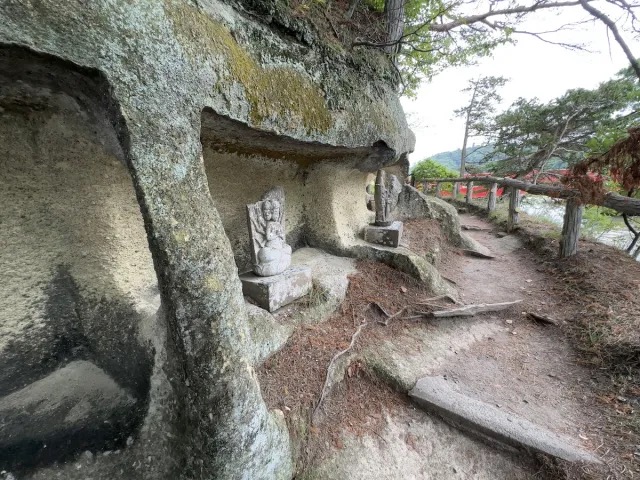
After passing through the tunnel, you’ll return to the Togetsukyo Bridge, and this why we recommend going clockwise around the island. The exit from the tunnel just before crossing the bridge will make you feel as if you’ve been reborn as you return to the real world. 
It’s said that in the early modern period, Matsushima became more and more popular as a scenic spot, largely due to Matsuo Basho introducing it to other countries as the most beautiful spot in Japan. After visiting the island, you’ll really get a sense of the awe-inspiring beauty that Basho was talking about, and there are plenty of other unique sites in the area waiting to be discovered as well, which will look even better when seen through the local warlord’s single eye.

Related: Matsushima Tourism Association, Matsushima Town Industry and Tourism Division, Tsunagu Bay Project
Images © SoraNews24
● Want to hear about SoraNews24’s latest articles as soon as they’re published? Follow us on Facebook and Twitter!


Credit:

Japanese public toilet in Tokyo has windows that change colour when you use it

Join us as we use one of Japan’s most unusual restrooms.

Public toilets in Japan have been known to impress visitors, but in Tokyo’s Shibuya Ward, you’ll find 17 restrooms that are on a whole other level. Designed by 16 creative professionals from around the world, these restrooms were created as part of a project called The Tokyo Toilet, which overhauled old restrooms and transformed them into more welcoming public spaces.

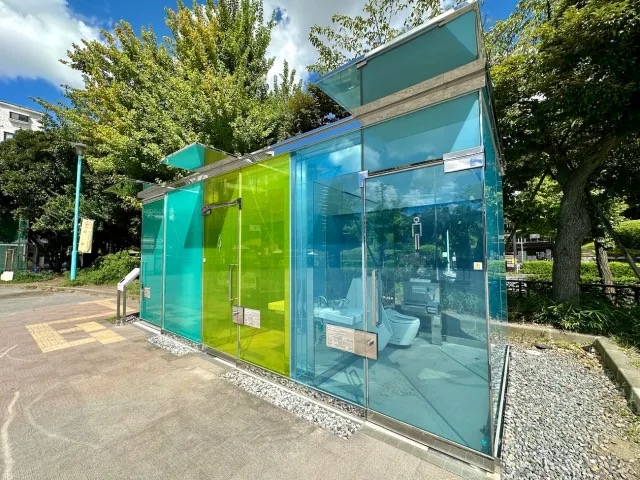
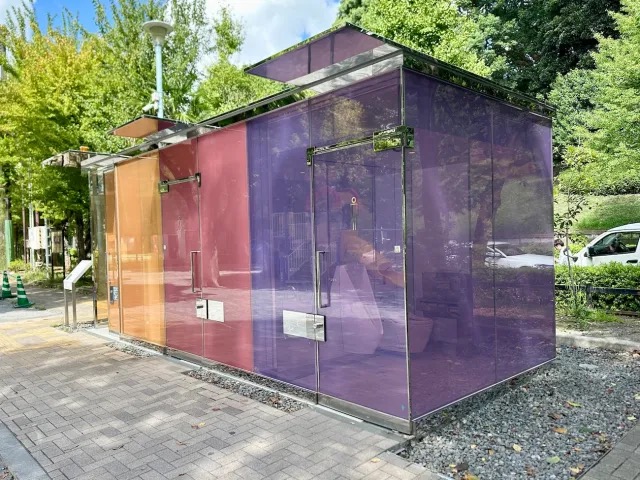
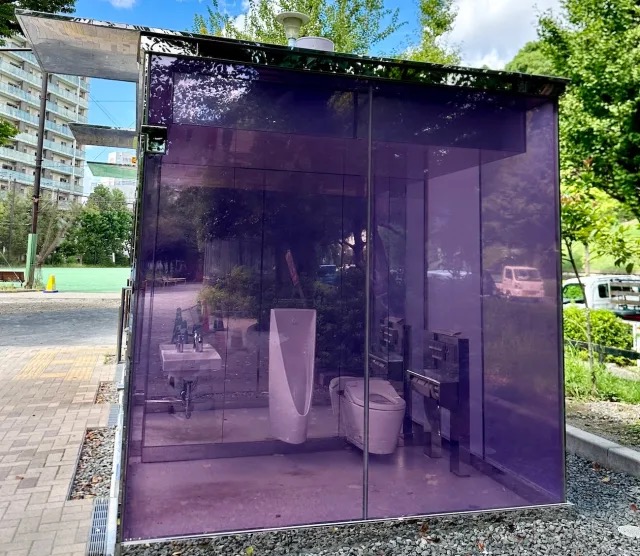
▼ One of the most stunning is a toilet known as the “Transparent Toilet, because, well, its windows are see-through.

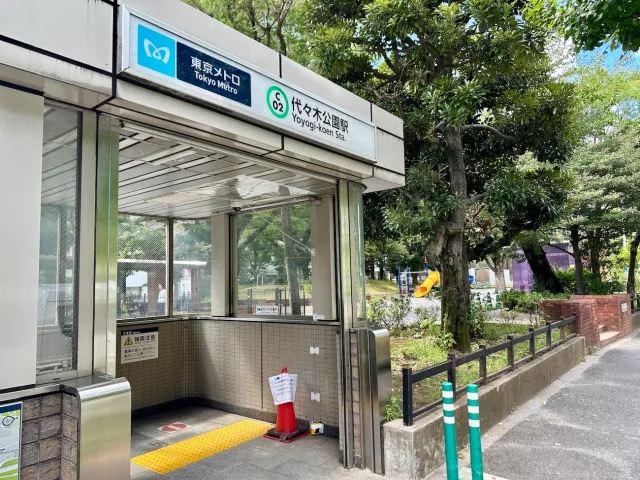
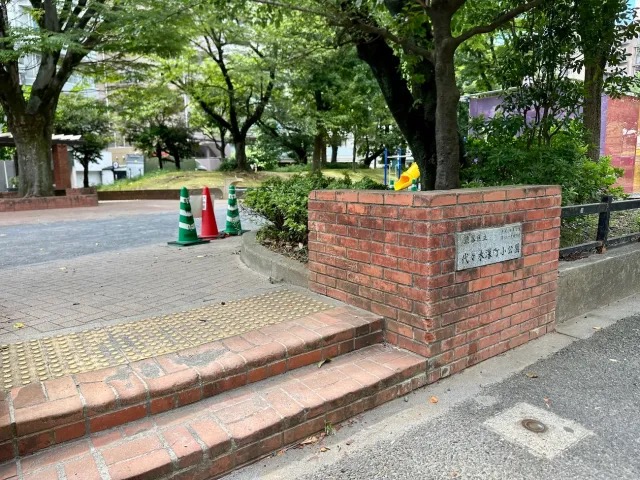
This unusual restroom, which first opened to the public in 2020, is located in Yoyogi Fukamachi Kokoen, and can be easily accessed from Exit 3 of Yoyogi-koen Station.

The previous toilets at this little park were previously uninviting, but now they’re so stunning that tourists from overseas even make the trip to use them.

Designed by architect Shigeru Ban, these toilets were inspired by a skeleton, and there’s nowhere to hide as you can tell at a glance whether there are any suspicious persons hiding in it or not and you can also tell whether it’s clean or not.

▼ Certainly nowhere to hide here.

It’s absolutely stunning to look at, but it actually has a few drawbacks, which our reporter Masanuki Sunakoma discovered upon visiting it recently. The first thing is, well, it can be embarrassing to use the toilet, seeing as it’s become so famous that tourists and passersby stop to photograph it.

Mustering up his courage, and ignoring the photographers nearby, Masanuki opened the glass door to the toilet.

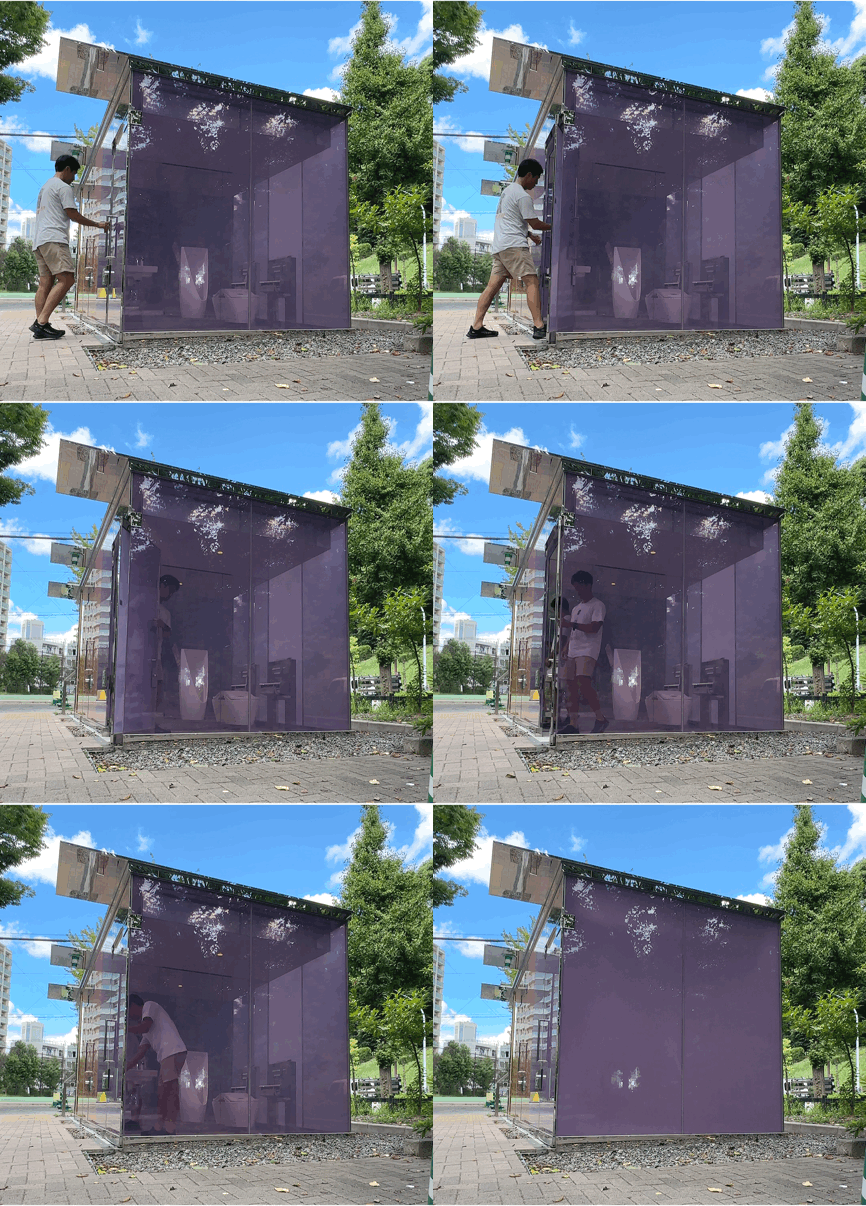
Once he was inside, he turned to lock the door, and breathed a sigh of relief when the transparent glass became frosted, making it impossible for the people outside to see inside.

Apparently, this glass wall maintains its transparent state with the help of energy — when you lock the door, the power is removed and the door becomes opaque. It was fascinating to see it in action, and just to check it really was working, Masanuki took a video from outside, which proved that it really was impossible to see inside.

According to reports he’d heard, though, there seems to have been an issue in the winter where it took a long time for the glass to become opaque, and currently they are switching between transparent and opaque modes every six months. Apparently, the particles that become opaque solidify as the temperature drops.

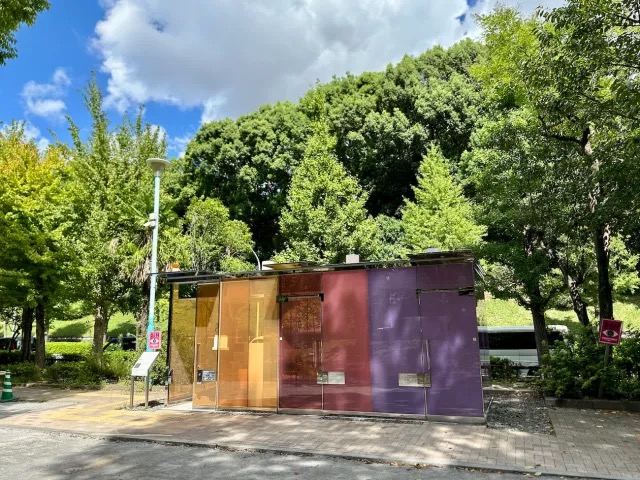
Thankfully for Masanuki, it was midsummer when he visited so he didn’t encounter any problems. And with another transparent toilet just a five-minute walk away, at Haruno Ogawa Community Park, this is definitely a site worth visiting.

▼ The Haruno Ogawa Community Park toilet uses the same technology, but with brighter blue-and-green hues.

With two of Japan’s most unique public restrooms within walking distance of each other, this part of Shibuya is the place to go when you need to pee. And that’s not all, as there’s another restroom in the area that looks more like a restaurant, and all the toilets in the Tokyo Toilet Project can be visited in a “Tokyo Toilet Tour” that’s proving to be popular with foreign tourists. And if visiting them isn’t enough, you can watch Perfect Days, an award-winning film about the toilets directed by Wim Wenders, which will make you cry…and want to pee.

Toilet Locations

Yoyogi Fukamachi Small Park Toilet / 代々木深町小公園トイレ
Address: Tokyo-to, Shibuya-ku, Tomigaya 1-54-1
東京都渋谷区富ケ谷1丁目54-1

Haruno Ogawa Community Park Toilet / はるのおがわコミュニティパークトイレ
Address: Tokyo-to, Shibuya-ku, Yoyogi 5-68-1
東京都渋谷区代々木5丁目68-1

Images © SoraNews24
● Want to hear about SoraNews24’s latest articles as soon as they’re published? Follow us on Facebook and Twitter!


Credit: