3,000-year-old tree in Japan’s Princess Mononoke forest snapped in two by typhoon【Video】
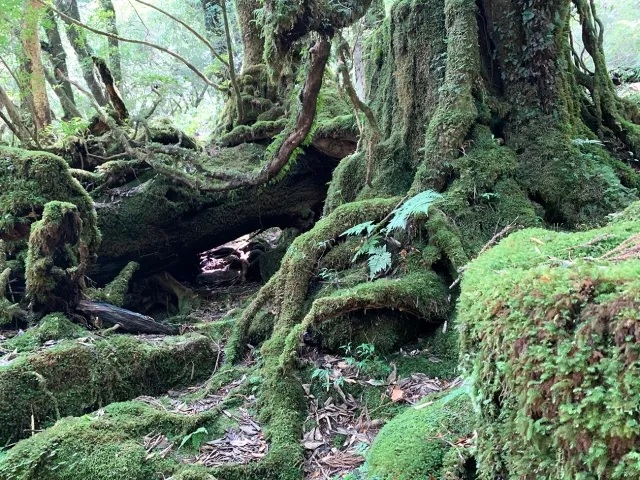
Yakushima’s ethereally beautiful valley closed to visitors following storm damage.

With Typhoon Shanshan (or Typhoon Number 10, as it was called in Japan’s numerically based naming system) having dissipated, the time comes for Japan to survey the damage caused. As with most typhoons, Shanshan came up from the southwest, hitting that part of Japan the hardest, and its winds were so strong that it snapped a 3,000-year-old tree on the island of Yakushima in two.

The Yayoi Sugi/Yayoi Cedar is, or rather was, a 26.1-meter (85.6-foot) tall cedar tree standing in Yakushima’s Shiratani Unsuikyo, an ethereally beautiful, densely forested valley that famously served as inspiration for the mystical setting of Studio Ghibli’s Princess Mononoke anime film. The Yayoi Cedar is estimated to be 3,000 years old, and its majestic, humbling presence makes it one of the primary attractions for hikers on Yakushima, so much so that there’s a specific Yayoi Sugi trail that leads to it.

▼ The Yayoi Cedar (top left) and Yayoi Cedar trail, prior to the typhoon

▼ This video opens with footage of the tree in 2004, and though that was 20 years ago, that’s a pretty small span of time compared to its total age.

Sadly, after the typhoon passed out of the Yakushima area, on August 31 a local tour guide went out to check the conditions of the Yayoi Cedar trail, and found the path blocked by landslides at multiple points. Worst of all, when the guide eventually did manage to reach the Yayoi Cedar, she saw that the trunk had snapped near the roots, with the broken off portion lying horizontal after falling.

Mercifully, the entire tree wasn’t uprooted, but it’s unclear if the damage is something that the Yayoi Cedar can recover and grow back from. The local forestry authorities are currently investigating the best course of action to take, and for the time being Shiratani Unsuikyo is closed to visitor access while the trails are being repaired.

Source: Yomiuri Shimbun via Livedoor News via Jin, Yakushima no Tabi
Top image ©SoraNews24
● Want to hear about SoraNews24’s latest articles as soon as they’re published? Follow us on Facebook and Twitter!


Credit:
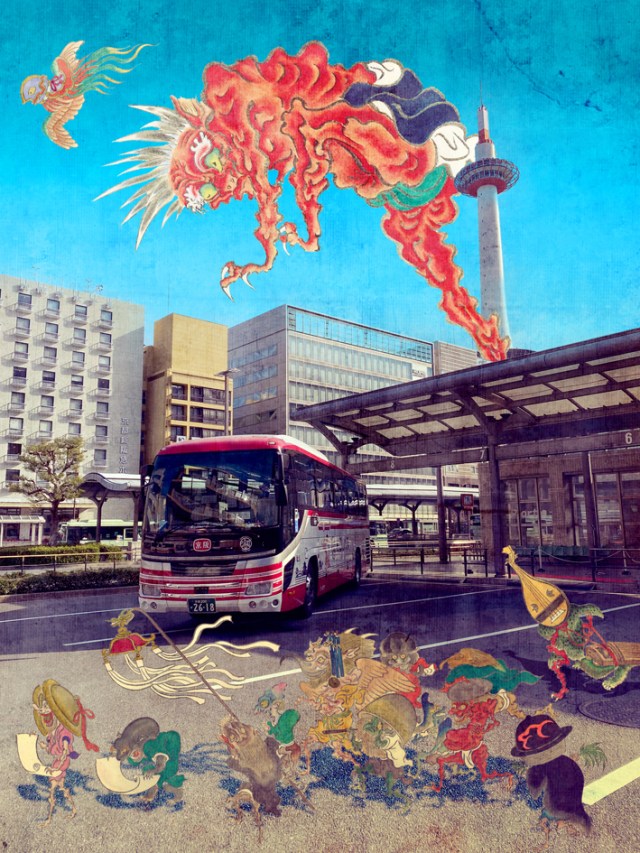
Kyoto becomes City of Yokai, with Night Parade of One Hundred Demons festival this autumn

Japan’s supernatural world springs to life in a special Hyakki Yagyo event you won’t want to miss. 

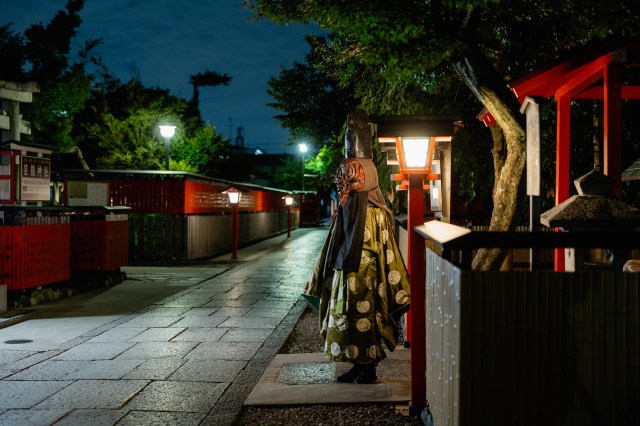
Many traditional festivals take place in Japan’s ancient former capital city of Kyoto, but for a lot of tourists this autumn, none of these events will hold a candle to Hyakki Yagyo. Literally translating as “Night Parade of One Hundred Demons“, Hyakki Yagyo has long held a place in the country’s folklore as a night in which supernatural beings known as “yokai” parade through the real world…and any humans who come across the procession are in danger of losing their lives and being spirited away.

In Kyoto, the myth has seeped into real life, with a parade called Ichijo Hyakki Yagyo taking place in the city’s Taishogun Shotengai shopping street in April. This parade, which began in 2005, recently ran into problems after the number of spectators surged, causing organisers to set up a crowdfunding campaign to help pay for crowd control. Now, realising the immense popularity of the event, the organisers are putting on another parade at a different location that runs for a longer period, so more visitors will be able to experience the fascinating, mysterious beauty of the monster parade.

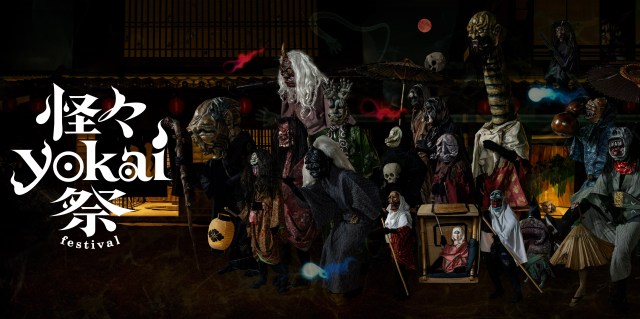
▼ The event is called Kaikai Yokai Sai, which loosely translates as “Strange Yokai Festival”.

“Kaikai Yokai Sai” has a whimsical rhyming quality to it that matches the eerie yet endearing vibe of the monster parade. Held at Toei Kyoto Studio Park, this venue provides more room for the yokai to move, and more scope to expand the festival to include a number of events.

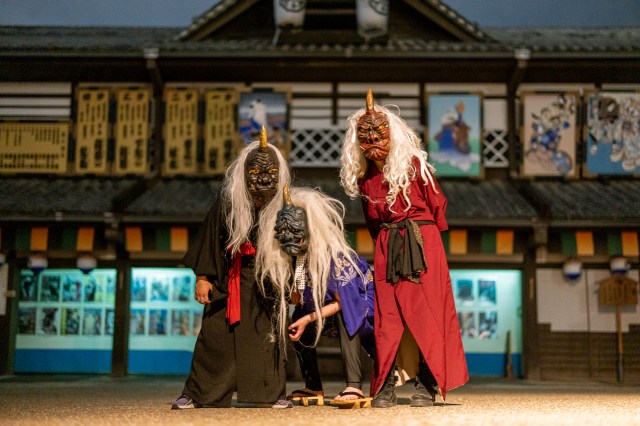
The main event is, of course, the parade, which features a number of famous yokai, including the uncatchable Nurarihyon, plague-protector Amabie, wedding dress-wearer Ohaguro Bettari, small river monster Hyosube, three-eyed Yagyodoji, and Tenome, who has its eyes in its palms.

▼ The park has created a series of “teaser videos” featuring yokai in some famous locations around Kyoto to show just how fantastic they look.

The festival will run from 14 September to 8 December, with the parade taking place at 2:15 p.m. and 5:30 p.m. on Saturdays, Sundays, and public holidays during the event period (excluding 2-3 November). On 14 September, 26 October and 8 December, a bigger procession called The Grand Parade will take place at 2:15 p.m. and 7:30 p.m., with 100 yokai appearing.

▼ Yokai will also be wandering around the park during the event period, scheduled to appear at various locations at 10:15 a.m., 11:45 a.m., 2:15 p.m. and 3:45 p.m. on weekdays and at 10:15 a.m., 11:45 a.m., 1:15 p.m., 3:30 p.m. and 4:45 p.m. on weekends and public holidays, so you never know who you might bump into.

Yokai will be making an extra appearance at 5:45 p.m. on 14 September, 26 October, and 8 December, and visitors who take a photo with one of them and post it on the spot with the hashtags #KaikaiYOKAImatsuri #kyotoyokaifestival, will receive a sticker to commemorate their new friendship with the yokai. Stickers will also be given to visitors who complete the “Yokai Transformation Rally“, following instructions set up at various locations to “breathe life into an antique and watch it transform into a yokai“, with the help of popular GIF animator misato.

▼ Although the exclusive yokai GIFs are yet to be revealed, this is a sample of misato’s GIF wizardry.

There’ll also be a collection of art and videos on display, as well as yokai-themed food and souvenirs throughout the park for visitors to purchase during the festival. Die-hard yokai enthusiasts can even take things up a notch by signing up for one of two afternoon bus tours that take visitors out to various yokai-related sites around Kyoto.

▼ The “World of Demons” bus tour.

Full details for the bus tours and festival events are available at the official website, with even more bonuses like ghost stories and a costume contest yet to be finalised. There’s definitely a lot to see and do at the festival, and by combining it with a sword-fighting ninja or samurai photo shoot at the studio, it’s a place you’ll want to dedicate a full day of your itinerary to when visiting Kyoto this autumn.

Source, images: Press release
● Want to hear about SoraNews24’s latest articles as soon as they’re published? Follow us on Facebook and Twitter!


Credit:

Mister Donut’s autumn donut flavors are the chain’s biggest shake-up yet with chestnut and more

We indulge in all five new offerings to determine how the new ones compare with those of autumns past.

Even though the outdoors in Japan still feels decidedly like summer, food makers have already begun shifting their focus to autumn selections. That grouping includes the highly anticipated release of this year’s Mister Donut‘s autumn-themed donuts.

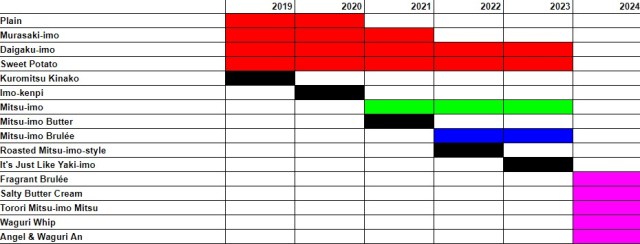
After learning that the popular donut chain would be significantly renewing its offerings from last year’s lineup, we decided to do a little digging into the past to see just how much the chain’s autumn-themed donuts have evolved since their introduction. The results of our research are summarized in the chart below.

While this is the sixth consecutive year that Mister Donut has sold sweet potato-flavored donuts, there’s not a single 100-percent carry-over from years past in this year’s lineup. Interestingly, even the Daigaku-imo and Sweet Potato donuts, first introduced in 2019, aren’t making an appearance this year for the first time ever. Would this be a cause for crying, or would the new donuts more than make up for the loss of the old ones?

There was only one way to find out, so we headed to our local Mister Donut branch after this year’s autumn flavors were released on August 28.

▼ Mister Donut’s five autumn-themed donuts of 2o24

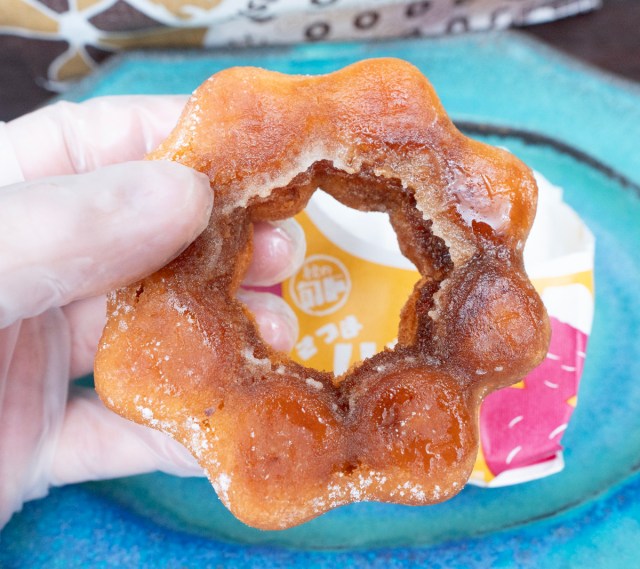
We elected to focus on the sweet potato offerings first, starting with the Fragrant Brulée (Kobashi Buryure) donut. While the brulée style of donut was first introduced in 2022 for the Mitsu-imo Brulée donut and returned the following year exactly as is, the chain announced that it would be adjusting its ratio of Beni Haruka and Anno-imo varieties of sweet potato mixed within, along with changing the texture of the dough to be a bit more viscous, for this year’s iteration.

The outside of the pastry was caramelized and sprinkled with sugar. At the time of purchase, the sugar coated its entire surface in a gentle white dusting, but after running for cover in heavy rain, it had gotten a little jostled and lost part of its blanket. Nevertheless, the outside was crispy and paired well with the moist sweet potato inner dough. The whole taste left us with the impression of having eaten a sweet potato-flavored brulée.

Fragrant Brulée donut (194 yen/US$1.32)

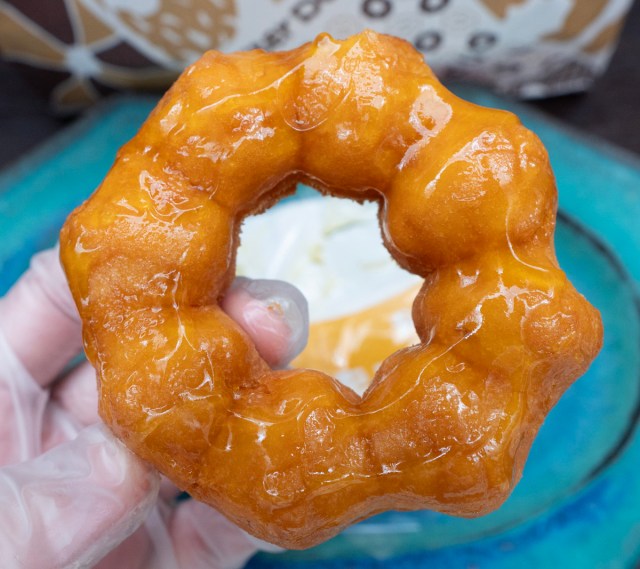
Next up was the Sticky Sweet Potato Honey (Torori Mitsu-imo Mitsu) donut. A past donut similar to this used to have syrup blended into the dough, but this year’s version has a thick and sticky mitsu-imo glaze on the outside. We thought the contrast between the previous versions of this donut was more striking than the contrast between the brulée-style line.

Sticky Sweet Potato Honey donut (172 yen)

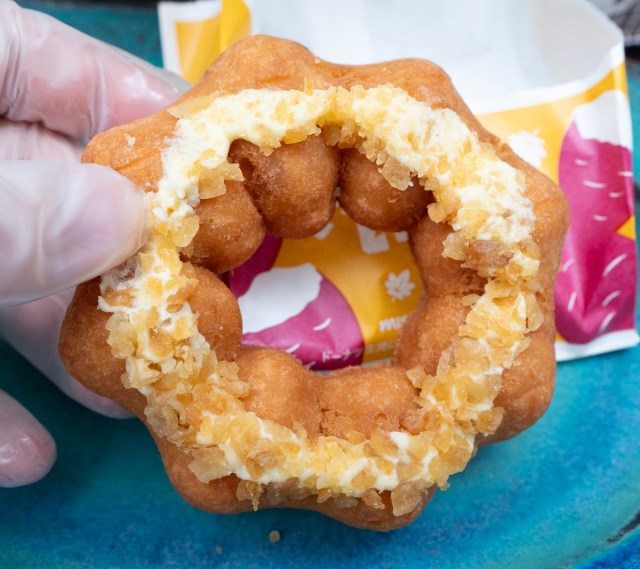
The Salty Butter Cream (Shio Bataa Kuriimu) donut was the third and final sweet potato-themed treat. It bore a strong resemblance to the standard Sweet Potato donut of years past, but this time the top was covered in a luxurious layer of salted butter cream. A sprinkling of imo-kenpi (strips of fried and sweetened sweet potatoes) decorated the ring of that. Perhaps it’s the true spiritual successor of the Imo-kenpi donut that made its one-and-only appearance in 2020.

Salty Butter Cream donut (194 yen)

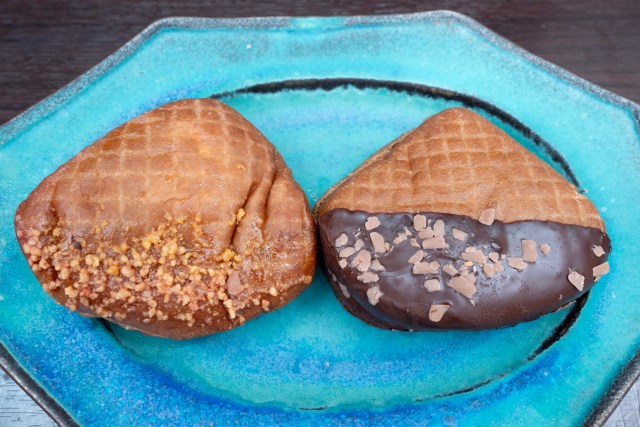
That brings us to this year’s two completely new chestnut-flavored donuts. These looked quite different from the previous ones, being in the shape of chestnuts with an almost waffle-ironed pattern on the outside. A scattering of chocolate and chestnut flakes also graced the exteriors.

Japanese Chestnut Whipped Cream donut (left) and Angel & Japanese Chestnut Paste donut (right), each 237 yen

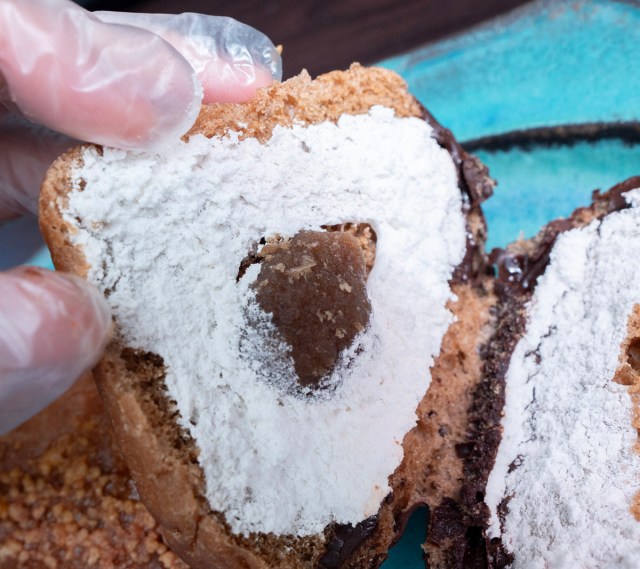
First, the Angel & Japanese Chestnut Paste (Angel & Waguri An) donut was hiding a dollop of concentrated chestnut flavor in the center of a bed of whipped cream. It certainly packed a stimulating punch.

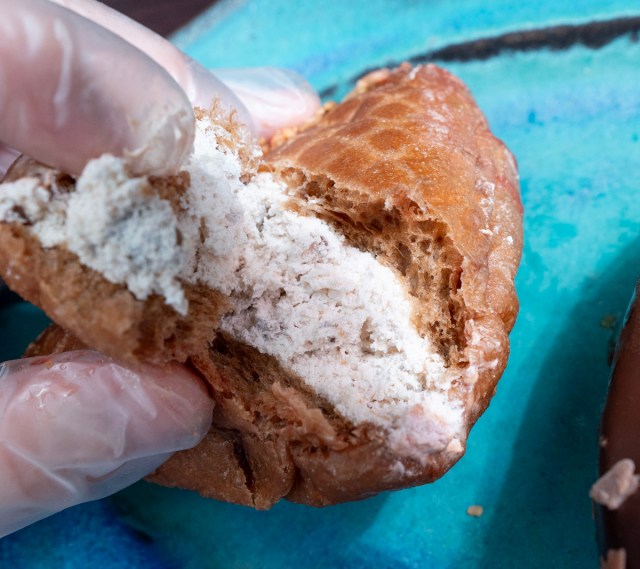
Meanwhile, the Japanese Chestnut Whipped Cream (Waguri Whip) donut looked like it was filled with ordinary whipped cream at first glance, but actually, the cream itself held the flavor of Japanese chestnuts. That led to its overall taste being the most consistently chestnut-like of the pairing.

It’s hard for us to pick a single favorite because each of the above donuts shines in its own unique way. We can confidently say that none of this year’s lineup is a complete miss, and the chestnut-flavored offerings add a pleasant element of novelty to the mix.

Luckily, if Mister Donut has whetted your appetite for even more seasonal food and drinks, there are plenty more to be found–such as Starbucks’ latest autumn beverage as well.

Reference: Mister Donut, PR Times (1, 2, 3, 4, 5, 6)
All images © SoraNews24
● Want to hear about SoraNews24’s latest articles as soon as they’re published? Follow us on Facebook and Twitter!


Credit:
Netflix is launching a canned cocktail in Japan

Netflix and drink.

As we transition from summer to autumn, the days are going to start getting shorter and the temperatures cooler. With that comes a need to transition from outdoor fun in the sun to more indoor activities, such as checking out what’s new in the online streaming sphere.

Netflix Japan, for example is getting set to launch a slew of content in the coming weeks. In addition to new and returning streaming series, though, it’s also launching a Netflix canned cocktail.

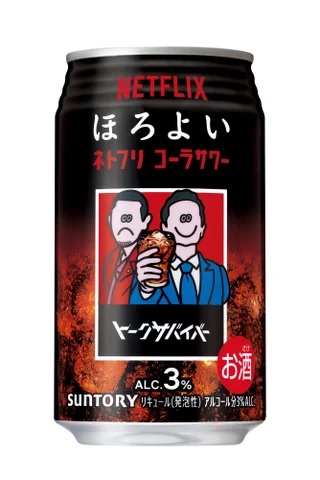
The beverage is a collaboration between Netflix Japan and Suntory’s Horoyoi brand of “sours,” fizzy shochu cocktails with fruity or sweet flavors that are popular in Japan and a mainstay of convenience store alcohol sections. Horoyoi is also a Japanese word meaning “buzzed” or “slightly drunk,” referencing Horoyoi sours’ light 3-percent alcoholic content, a percent or two lower than standard sours.

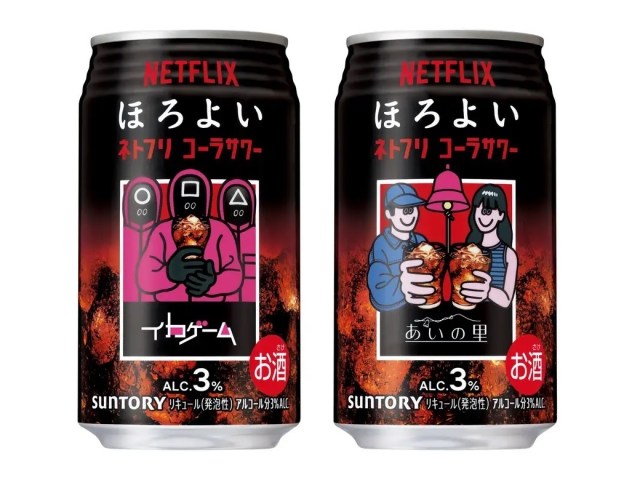
This doesn’t appear to be just a case of slapping Netflix artwork on preexisting Horoyoi cocktails, though, but a new drink called the Horoyoi Netflix Cola Sour, with a cola base.

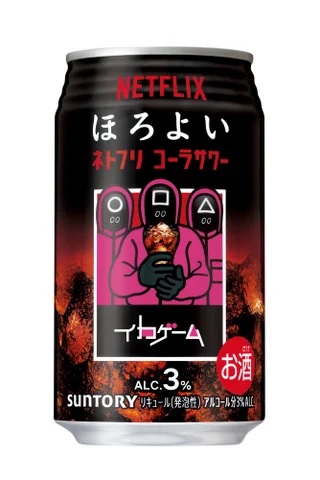
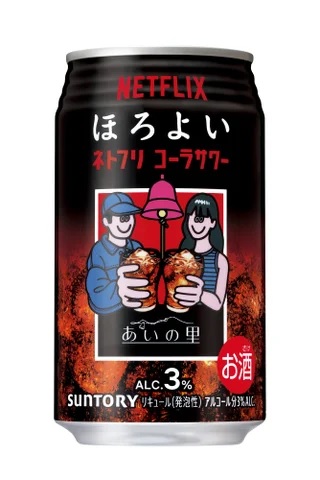
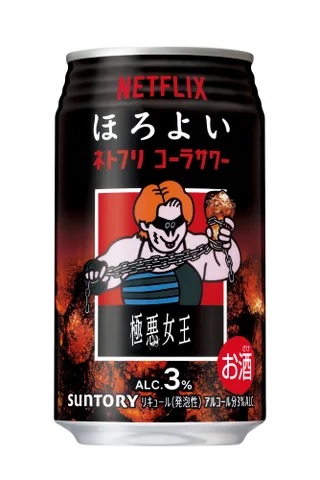
There are two different can designs, both highlighting big-name upcoming streaming series on Netflix Japan. One can features Squid Game and Ai No Sato/Love Village, both starting their second seasons this fall, while the other is decorated with illustrations for The Queen of Villains and Talk Survivor.

▼ The Queen of Villains takes place in the world of 1980s Japanese women’s pro wrestling.

Netflix and Suntory say the idea for the Netflix cocktail came about as a result of their shared desire to make customers’ free time more fulfilling, with the mild amount of alcohol enough to relax you without making you so sleepy that you doze off before getting to the end of the episode you’re watching.

The Horoyoi Netflix Cola Sour is priced at 148 yen (US$1) and is scheduled to go on sale November 5.

Source, images: PR Times
● Want to hear about SoraNews24’s latest articles as soon as they’re published? Follow us on Facebook and Twitter!


Credit:
Shrimp Tail cafes open in Japan, love of cuteness recommended, eating shrimp tails not required

Sumikko Gurashi’s Ebiten no Shippo and Ebufurai no Shippo idols get themed cafe.

Japan is a country that’s known for having high standards when it comes to dining out, so it might be a little jarring to hear that there’s a Shrimp Tail cafe that’s just opened in Tokyo, with an additional branch in Osaka. Capitalization is key here, though, because this isn’t a cafe where they expect you to eat a bunch of shrimp tails. Instead it’s a cafe to celebrate the adorable character Ebiten no Shippo, or “Tempura Shrimp Tail.”

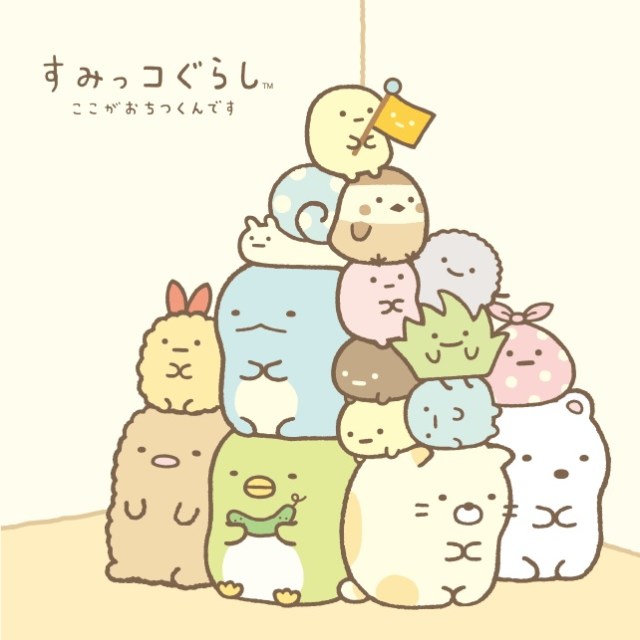
OK, some explanation is probably in order. One of Japan’s most popular lines of character goods these days is Sumikko Gurashi. Some media outlets have described the characters as having “slightly negative personalities,” but it’s probably more accurate to say they’re a little on the timid, insecure side, hence the name Sumikko Gurashi, which means “living in the corner” and alludes to having a cozy personal space where they feel safe and reassured.

▼ Sumikko Gurashi

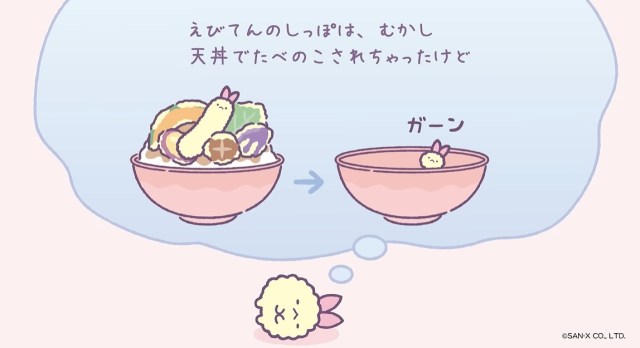
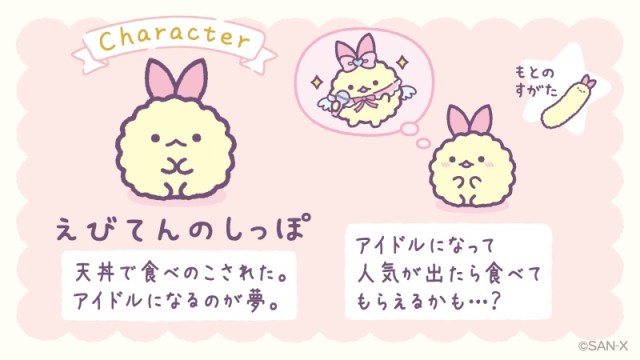
This summer, the newest Sumikko Gurashi character, Ebiten no Shippo, made her debut. As her name implies, she’s the tail portion of a piece of shrimp tempura, and once upon a time she was part of a tendon, or mixed tempura rice bowl. However, since it’s not customary to eat shrimp tails in Japan, Ebiten no Shippo was left uneaten.

Feeling unwanted and unappreciated, Ebiten no Shippo was left with a desire to win people’s hearts, and her plan to do that is to become an idol singer.

▼ Ebiten no Shippo, dreaming of becoming an idol and with her “original appearance” (as a whole piece of shrimp tempura) shown on the far right

▼ Ebiten no Shippo’s introduction video

Assisting Ebiten no Shippo on her path to idol stardom is fellow Sumikko Gurashi Ebifurai no Shippo (Fried Shrimp Tail), who, like Ebiten no Shippo, felt a lack of purpose after being left uneaten.

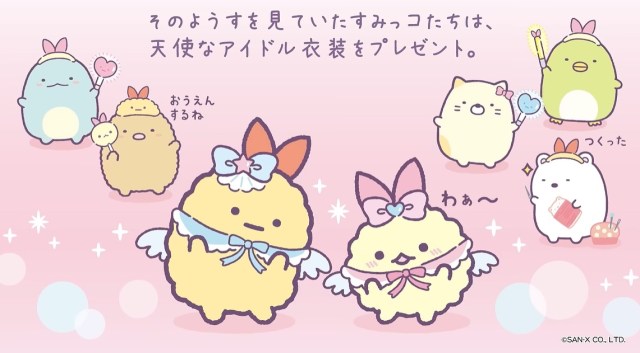
▼ Ebiten no Shippo and Ebifurai no Shippo wearing their idol costumes, which were given to them by the other Sumikko Gurashi characters who’re cheering them on

▼ The first Ebiten no Shippo and Ebifurai no Shippo music video, for the song “Ebi Ebi Every Day!!”

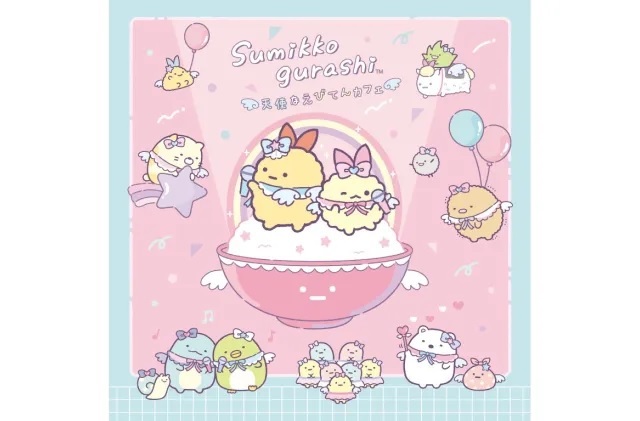
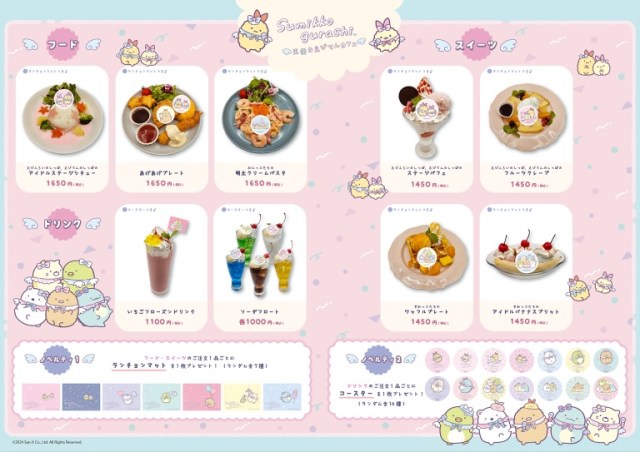
With the Ebi idols rising in popularity, the Angelic Ebiten Cafe opened on August 30 at Magnet by Shibuya 109 in Tokyo and Community Food Hall Osaka Nipponbashi in Osaka. The menu is full of fun and figuratively frilly food and drinks, with entrees including fried shrimp and shrimp pasta, and desserts featuring depictions of the aspiring idols. Each food order gets you an illustrated place mat to take home with you, while each drink order comes with an illustrated coaster.

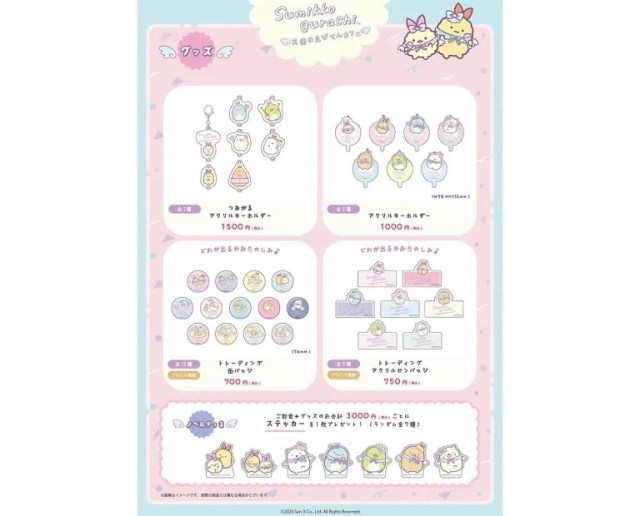
There’s also a line of exclusive merch at the attached gift shop, with items such as key holders, pins, and acrylic mini character standees on offer.

According to their official backstories, both Ebiten no Shippo’s and Ebifurai no Shippo’s ultimate goal is still to be eaten. Again, though, most people in Japan don’t eat shrimp tails, so there’s no actual pressure to eat them at the cafe.

Both Angelic Ebiten Cafes are limited-time operations, with the Tokyo branch open until October 14 and Osaka until October 6, with reservations available online (Tokyo here, Osaka here).

Source: PR Times
Top image: PR Times
Insert images: PR Times, YouTube/San-x Channel
● Want to hear about SoraNews24’s latest articles as soon as they’re published? Follow us on Facebook and Twitter!


Credit:

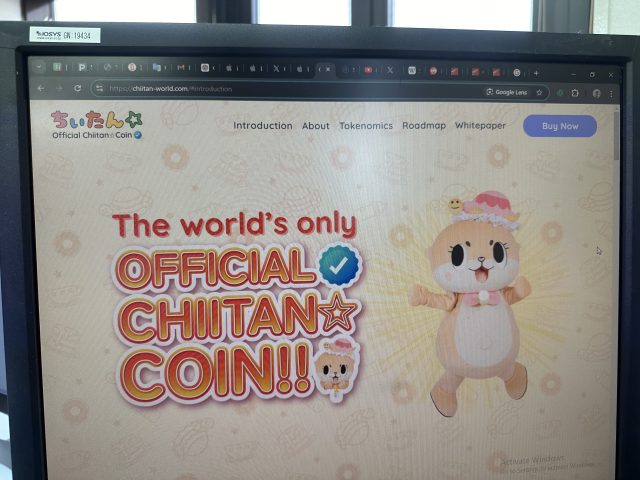
Chiitan launches official cryptocurrency Chiitan☆Coin, understands if you don’t want to buy it

This otter fairy only put it out there for those into that kind of thing.

Remember NFTs? That was a pretty wild ride where people were paying thousands and thousands for jpegs of punk rock monkeys and Donald Trump shooting lasers out his eyes. While the sun appears to have set on all that, crypto in general is still going strong with a bevy of meme coins – highly unstable cryptocurrencies based on Internet memes that often don’t go anywhere – coming out daily, it seems.

One prime target for meme coins is the fairy otter mascot Chiitan. From its humble and rocky beginnings as a regional mascot, it catapulted itself to global fame and is now an omnipresent being on Twitter where it creates ads to help stop us all from having to see stupid ones. In an announcement posted to the official Chiitan☆Coin Twitter account here, the character says:

We hope you will listen to our thoughts on why an officially authorized meme coin was minted this time.

Many fake coins were created to take advantage of Chiitan’s popularity. We have sent out many messages to them asking them to stop, to protect Chiitan’s fans. However, the blockchain service is not easy to stop once it starts, and without knowing the creator of the fake coins, many people bought it day by day. In order to protect the Chiitan fan community, we have decided to approve the official meme coins.

Although we did not intend to mint official meme coins, we could not stand to see more fakes being created on a daily basis.

Please don’t feel obligated to make a purchase. It’s perfectly fine if you decide not to. We just want those who participate to enjoy the Chiitan meme!!

Chiitan also appears to not want anyone to fall victim to pump-and-dump crypto scams in its name. So, it set up its own official “mascot meme coin” called Chiitan☆Coin.

https://twitter.com/ctancoin/status/1804183225528717349

Despite Chiitan’s impressive online saturation, you might still not have heard of Chiitan☆Coin even though it was minted back in June. Chiitan’s normal social media accounts realize that a lot of people are really turned off by hearing about crypto and don’t seem to mention it at all. That makes sense since the self-proclaimed core purpose of Chiitan’s ads is to reduce people’s exposure to ones like those from crypto-related businesses.

Instead, separate accounts for the official Chiitan☆Coin have been set up so that those who are interested in it can follow it while everyone else can remain insulated from it, though judging by the replies, many people seem to think the official account is just another fake.

There also appear to be attempts made to help keep the growth of Chiitan☆Coin stable such as no pre-sale, a limited supply of 1 billion coins, and a 30-percent lock-up rate to help prevent a sudden mass dumping that would crash the price. Rather than a focus on making tons of money, Chiitan☆Coin seems to be emphasizing a philosophy of slow and prudent growth.

If you’re intent on owning some Chiitan☆Coin despite Chiitan’s insistence that you don’t need to, it can be purchased using the Solana cryptocurrency and the official website sends me to Raydium to make the purchase, but it’s possible to do on other platforms like Telegram if you have the right code (the contact address for the official Chiitan☆Coin is A3gMddXMAhmc3P9dLjHv2n6ywWWzpGZbRCH6y8sta8ug; anything else is fake).

If you’re willing to go through all that to get some Chiitan☆Coins in the hopes of getting rich, I strongly recommend you don’t. Meme coins – which, despite its safeguards, Chiitan☆Coin still basically is – all have varying degrees of diceyness and carry a substantial financial risk. If you don’t feel comfortable dealing with that, then follow Chiitan’s own advice above and don’t buy it, because this is solely to give a scam-free space for people who both like to dabble in meme coins and like Chiitan.

You’d be better off thinking of Chiitan☆Coin purchase like buying a Chiitan T-shirt – just something for kicks that will make you feel like a part of the fairy otter community with no expectation that you’ll get your money back.

Source: Twitter/@ctancoin, The World’s Only Official Chiitan Coin
Featured image: The World’s Only Official Chiitan Coin
● Want to hear about SoraNews24’s latest articles as soon as they’re published? Follow us on Facebook and Twitter!


Credit:
Tea Master Anywhere service offers tea ceremony matcha meditation session anywhere in Japan

No matter where you are, you’re in the right place for chazen, Kyoto tea seller says.

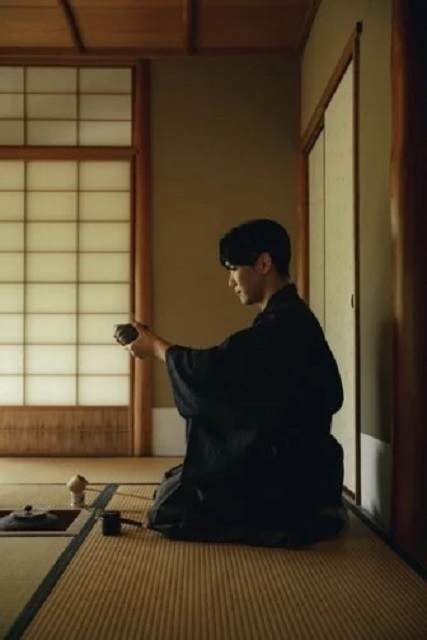
Sense of Matcha is a Kyoto-based tea provider, but it’s clear that they think of matcha as more than just a beverage. They’re fully committed to the concept that a cup of green tea is an opportunity for a relaxing ritual of wellness, and so they’ve developed a program they call “chazen,” which combines aspects of tea ceremony and Zen meditation.

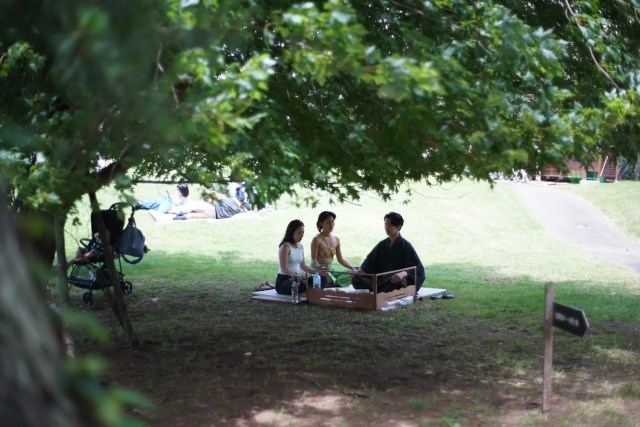
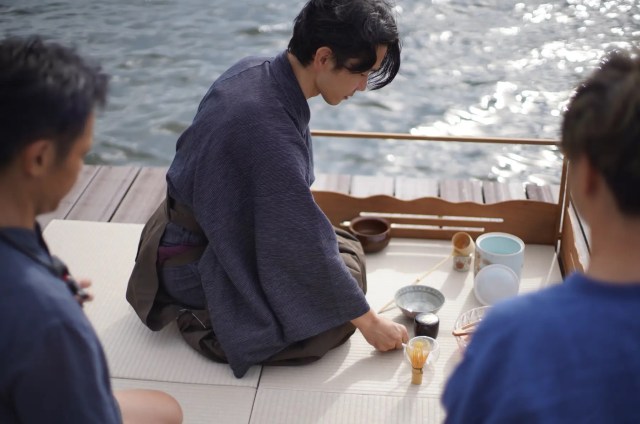
Ordinarily, Sense of Matcha’s owner and tea master Akira Nagasawa conducts chazen sessions at traditional tea room venues in Tokyo and Kyoto. However, under its new Tea Master Anywhere (Dokodemo Shuccho Chajin in Japanese) service, you can arrange for matcha meditation in the location of your choice, anywhere in Japan, with the tea master coming to you.

The chazen session consists of five stages, starting with Purification, in which participants cleanse their hands and mouths with water, followed by Preparation, in which the matcha is prepared and drunk. Next comes Reflection, the meditation period, followed by Expression, a notebook writing/illustration activity, and, finally, Appreciation, in which participants express gratitude for things that bring them comfort and joy in their daily lives.

Sense of Matcha believes that incorporating these processes into daily life can promote a sense of tranquility and self-understanding, with the mixture of caffeine and theanine in matcha having both relaxing and focus-sharpening effects.

Tea Master Anywhere chazen sessions are two hours long, and Sense of Matcha can be contacted through its website here.

Source, images: PR Times
● Want to hear about SoraNews24’s latest articles as soon as they’re published? Follow us on Facebook and Twitter!


Credit: