Kintetsu Curry boasts “ordinary deliciousness” but can it really deliver an average taste?
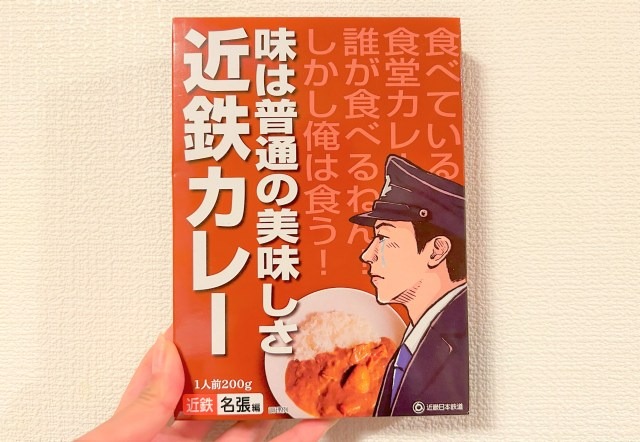
Abnormally normal.

The difficulty of being ordinary is often taken for granted. After all, everyone’s understanding of what is “normal” can vary quite a bit from person to person, so when making a claim that something is truly “ordinary” you’re really opening yourself up to criticism.

But the one segment of Japanese society that perhaps comes closest to the ideal of normalcy is the railways. Although abnormal things are known to happen from time to time, they pride themselves on being as consistent as possible in order to keep on schedule.

To see how deep this goes, one only needs to visit an employee cafeteria in a Japanese train station where the food is not amazingly amazing and not terribly terrible either. It’s just… normal.
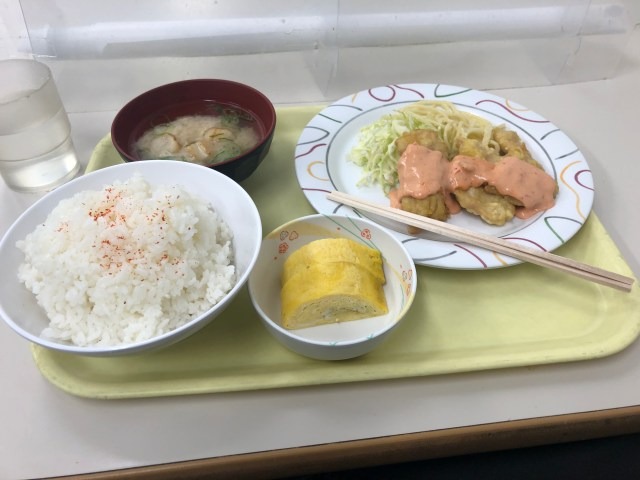
Now, this ordinary taste experience can be enjoyed by all with Kintetsu Curry (Nabari Edition) from mid-western Japan’s Kintetsu Railway. The curry inside these retort pouches is the same that can be found in the employee cafeteria at Nabari Station in Mie Prefecture, but this product can be found at various souvenir shops along the Kintetsu lines such as Namba Station in Osaka, where our reporter K. Masami found hers.
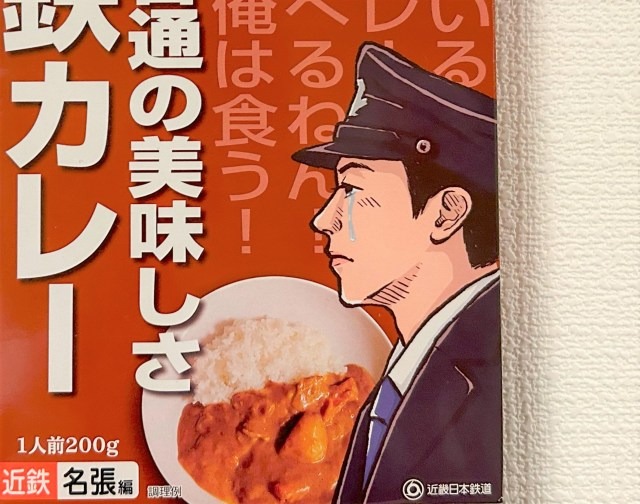
Written on the box in large lettering is: “ordinary deliciousness.” There’s also an illustration of a crying station worker who seems to be moved by the sheer mediocracy of his food. Behind him, “I’m eating cafeteria curry. Who the hell eats that? But I eat it,” is also written.

Masami was intrigued and bought a box for 700 yen (US$5), but to see if it was really as normal as it claimed to be, she also bought a pack of Java Curry, a common brand of roux sold in supermarkets by House Foods. If Kintetsu Curry stood out in any away when eaten alongside Java Curry, they’d have a lot of explaining to do.
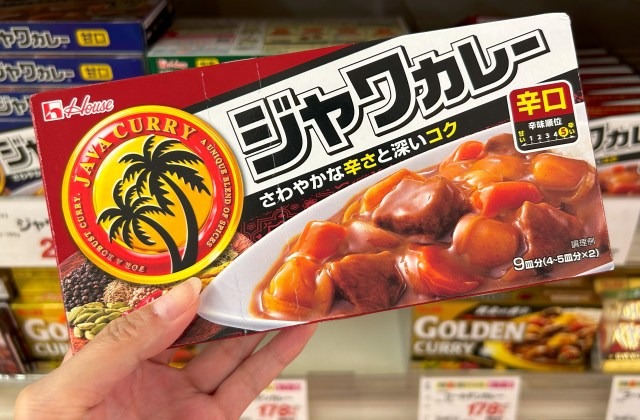
The Kintetsu Curry was certainly easy to make. Masami only needed to put it in some hot water for a few minutes and serve. And to really put it to the test, she made sure to prepare the Java Curry exactly as its directions said so that it tasted as unadventurous as possible.

Left: Java Curry, Right: Kintetsu Curry
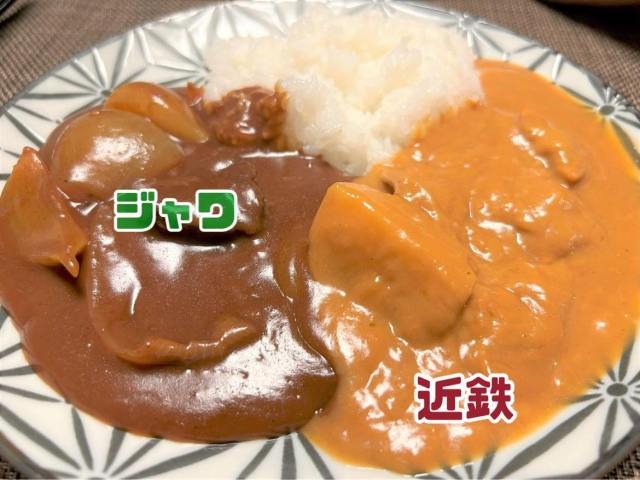
They looked surprisingly different, and yet they both also looked rather normal. Masami took a benchmark reading by taking a bite of the Java Curry. It’s slightly tangy but rather bland overall – truly the paragon of normalcy.

Then, she had a bite of the Kintetsu Curry…
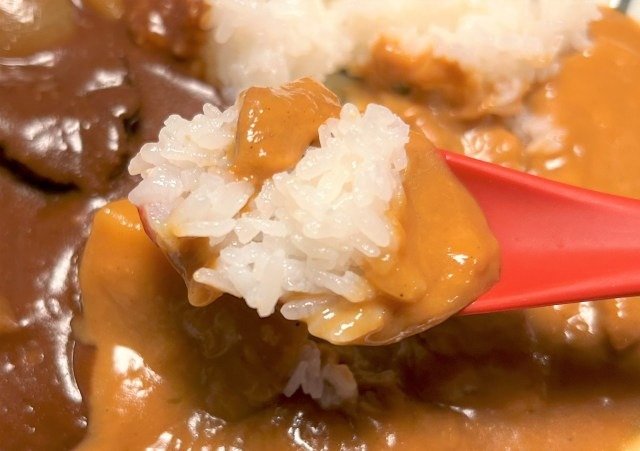
It wasn’t too spicy and it wasn’t too sweet, making it very easy to eat. It was delicious, but not in any particular way. She then had another spoonful of Java Curry and determined that the Java did have more of a distinct taste. In other words, Kintetsu Curry truly was indeed the most normal curry she had ever eaten.

For that reason alone it is worth trying. Its taste could also make it an easy curry to eat on a regular basis, but because of its price, it’s probably better suited as a one-time souvenir or gift while riding the rails through the Kansai area.

Photos ©SoraNews24
● Want to hear about SoraNews24’s latest articles as soon as they’re published? Follow us on Facebook and Twitter!


Credit:

“Sipping meat,” the semi-secret Osaka food that sounds like a joke, is seriously tasty

Leave it to Osaka to turn a comedian’s hungover quirkiness into a delicious meal.

The two things Osaka is most famous for are food and comedy, so it makes a certain kind of sense that one of its unique local dishes is something that sounds like a joke and was created thanks to an entertainer.

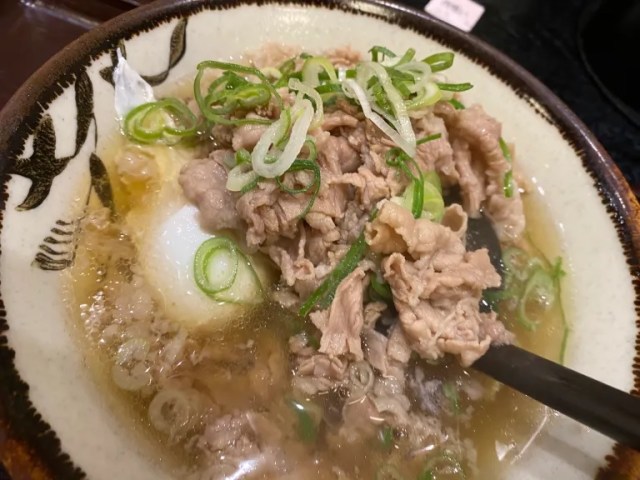
Nikusui is a combination of niku, meaning “meat,” and sui, “sip” or “slurp.” So what is it? It’s udon noodle soup with beef, but without the udon noodles.

That unusual order is what popular comedian Kyo Hanaki  asked for one day back in the 1980s when he walked into an Osaka noodle joint while nursing a hangover, and his order of “Niku udon, hold the udon” eventually came to be known as nikusui. The strips of beef are still served in a bowl of udon broth, with a pinch of sliced negi (green onions) across the top, but you won’t find a single noodle mixed in with them.

When you ask most people what Osaka’s representative foods are, they’ll tell you takoyaki and okonomiyaki. But our Japanese-language reporter Ikuna Kamezawa has heard some show biz celebrities talking about nikusui for years, and when it just so happened that she found herself in Osaka the other day, she knew it was time to try it for herself. If she was going to eat local food, she figured she should have a local pick the restaurant, and in a happy coincidence at the same time that Ikuna was in Osaka, so too was fellow reporter and Osaka native Seiji Nakazawa, who was back home visiting his family during the summer vacation period.

Seiji agreed to meet up with Ikuna in downtown Osaka’s Namba neighborhood. In Ikuna’s eyes, nice guy he may be, Seiji often seems shy and awkward when they’re at SoraNews24 headquarters in Tokyo. So she was surprised to see that when he showed up at their meeting place, he was radiating an aura of dependable confidence.

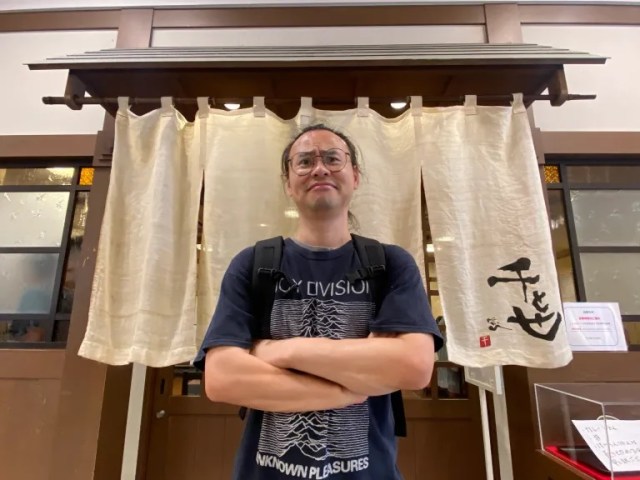
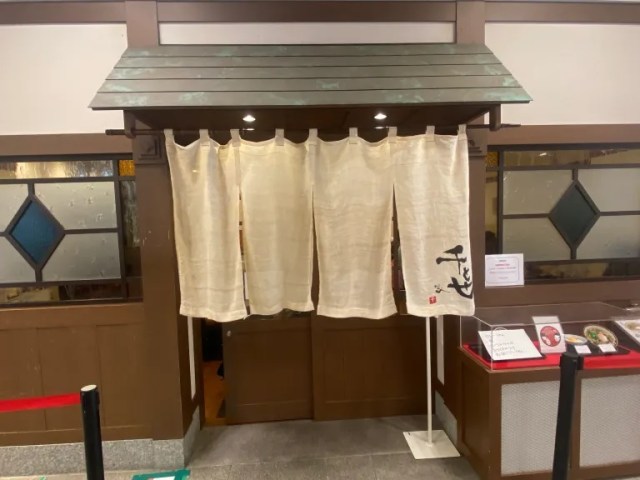
Takoyaki and okonomiyaki joints are easy to find in Osaka. You can’t go much more than a block in Namba without running into at least one of each. Nikusui is, by comparison, much more elusive, but Seiji knew just the place: Chitose, the very Namba udon restaurant where nikusui was first made!

Chitose is just a three-minute walk from Namba Station. However, the convenient location means that the restaurant can also get very crowded, and there was a huge line of people waiting to get in. Once again, though, Seiji showed his Osaka savvy. Just a few blocks up and one street over from Chitose is Chistose Bekkan, or “Chitose Annex,” Chitose’s newer and larger restaurant that’s usually easier to get into.

▼ The walk from Chitose to Chitose Bekkan

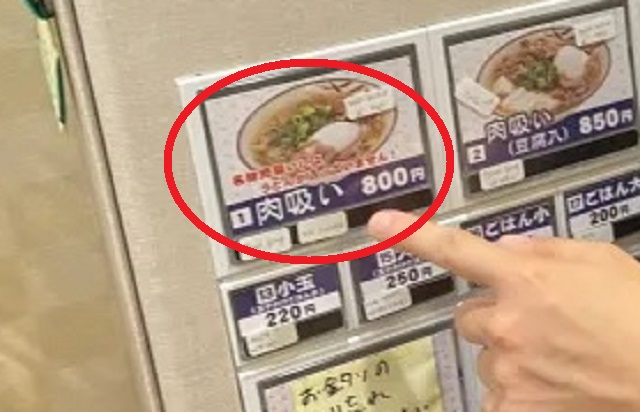
Chitose and Chitose Bekkan may be famous among nikusui fans, but that doesn’t mean they’re stuffy or pretentious. You order by buying a meal ticket from a vending machine, and though you can still get udon noodle soups, the first button on the machine is for nikusui.

▼ 肉吸い = nikusui

Obviously, the nikusui was what Ikuna ordered. She couldn’t help noticing, though, that the nikusui was the same price as the niku udon, 800 yen (US$5.55), even though the niku udon has all the ingredients the nikusui does plus noodles too.

But the prices made sense once Ikuna had her bowl of nikusui before her, since it has a lot more meat in it than the niku udon does.

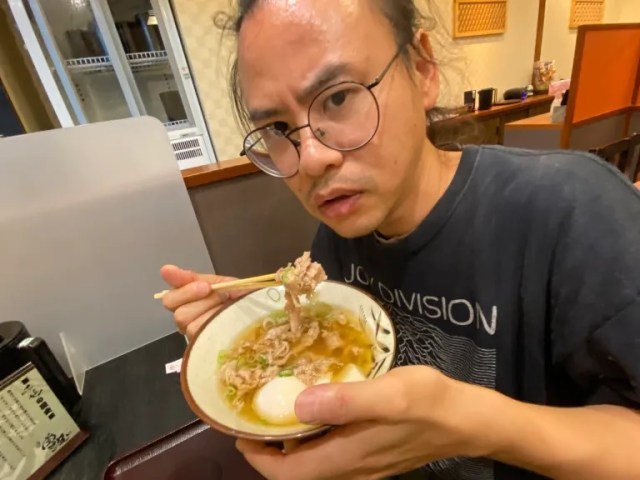
It’s rare to have meat like this in Japan without it being served with noodles or over a bowl of rice, so the focus on beef, with no accompanying carbs, made Ikuna’s nikusui feel luxuriously protein-packed. The meat was tender and delicious, and the broth on an exalted plane of culinary excellence. In Osaka and the surrounding Kansai region, udon broth has a lighter flavor and more kombu stock whereas in Tokyo and the eastern Kanto region the broth is darker and made with bonito stock and stronger seasoning. Which is better is really a matter of personal preference, and many people like both, but with Ikuna having become accustomed to the Tokyo style, Chitose’s broth felt both exquisite and novel to her palate.

The meat and broth were so captivatingly satisfying that Ikuna didn’t even realize that Chitose’s nikusui comes with a soft-boiled egg. By the time she noticed it, the broth had cooked it into a hard-boiled egg, but that also had given it plenty of time to soak up the broth’s flavor.

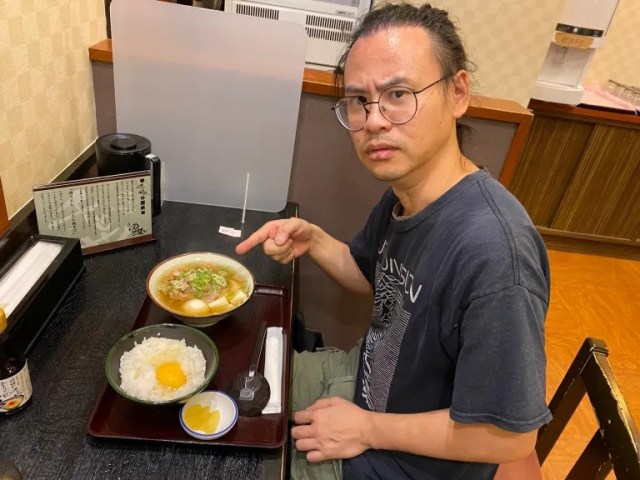
Something else Ikuna hadn’t noticed was that in addition to the standard nikusui that she’d ordered, Chitose also offers nikusui with some blocks of tofu as an add-in for 850 yen, and small bowls of tamagakake gohan (raw egg over a bowl of white rice) for 220 yen more.

That’s what Seiji ordered, and seeing him dig in with gusto, Ikuna felt that this, too, was a sign of Seiji’s latent confidence and coolness coming out while he was in the familiar surrounding of his own town. Of course the Osaka guy would know the best customizations for an Osaka specialty! “Wow, you really know all about this nikusui stuff, don’t ya, Mr. Osaka?” she said with a smile…only for Seiji to react with a confusedly furrowed brow.

“Huh? This is the first time I’ve ever eaten nikusui either.”

Yep, it turns out that while nikusui is popular among in-the-know foodies and celebs, and despite its affordable price, it’s not something that everyone in Osaka knows about or eats regularly. Before meeting up with Ikuna, Seiji had asked his parents about nikusui, and neither of them had heard of it.

It just goes to show that there’s really no end to the delicious discoveries waiting for you in Japan.

Restaurant information
Chitose Bekkan / 千とせ べっかん
Address: Osaka-fu, Osaka-shi, Chuo-ku, Namba Sennichimae, Namba Grand Kagetsu 1st floor
大阪府大阪市中央区難波千日前11-6 なんばグランド花月 1F
Open 11 a.m.-8 pm.
Website

Photos ©SoraNews24
● Want to hear about SoraNews24’s latest articles as soon as they’re published? Follow us on Facebook and Twitter!


Credit:

Our Osaka native taste-tests the extra-expensive, extra-large Bikkuri Takoyaki octopus balls

Seiji goes big as he goes home.

There’s no food more strongly associated with Osaka than takoyaki (spherical octopus dumplings). So when our Japanese-language reporter and Osaka native Seiji Nakazawa heads back to his hometown to visit his family, he always makes sure to visit a few takoyaki joints too.

On his most recent trip, he came away less than impressed with one takoyaki shop that’s been getting a lot of online buzz from foreign visitors to Osaka. So for his next takoyaki fix, he hit up one of his personal favorites, takoyaki chain Kukuru.

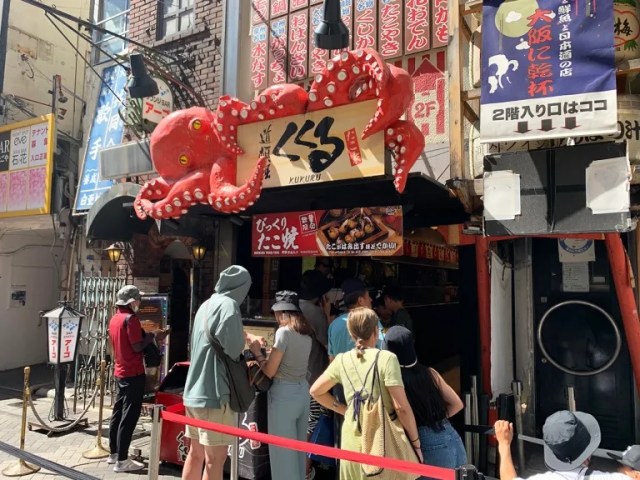
To get the maximum Osaka feeling, Seiji headed to Kukuru’s main branch in Dotonbori, the bustling entertainment district right smack dab in the middle of downtown Osaka. With takoyaki being Osaka’s most popular street food, Kukuru actually has three branches in the Dotonbori neighborhood, but the one across the street from the Osaka Shochikuza Theater is officially designated as the “main branch.”

▼ Kukuru Dotonbori Main Branch

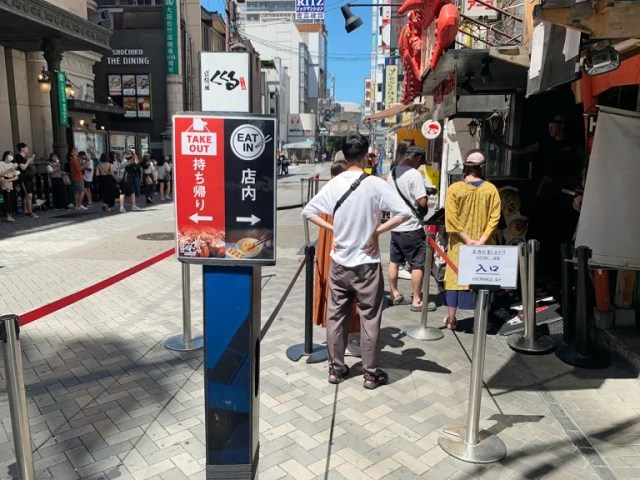
This Kukuru branch is a popular place, so you can expect a line pretty much no matter what day or time you go. But while takoyaki is primarily thought of as a grab-and-go kind of food, the Kukuru Dotonbori Main Branch offers eat-in dining too, and there’s usually a fair number of people waiting to get in. That’s because there are a number of special takoyaki offerings that are exclusive to this branch, and only available as eat-in orders.

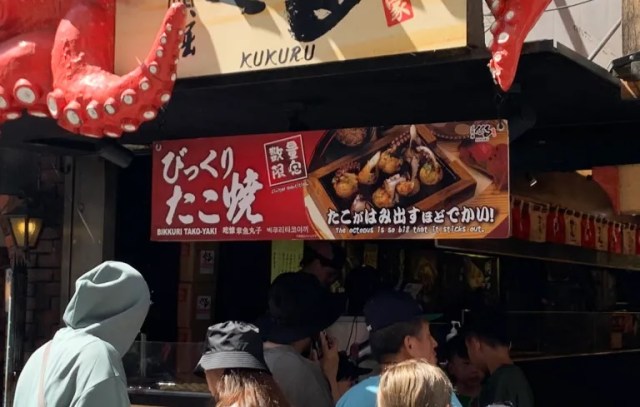
It was one of those that caught Seiji’s eye: the Bikkuri Takoyaki, or “Surprising Takoyaki.”

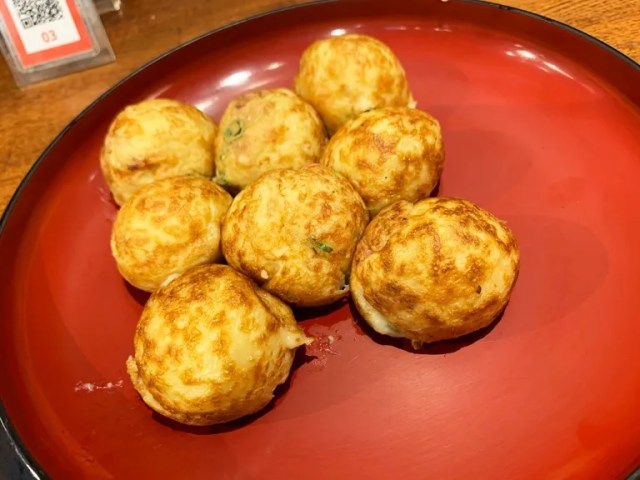
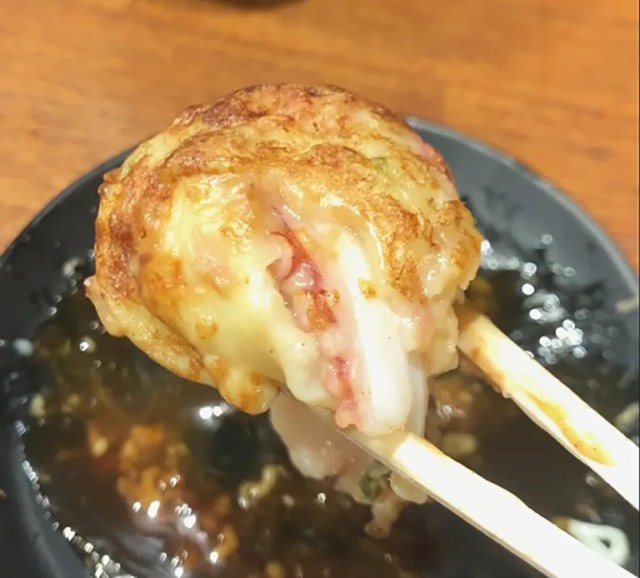
The surprise here is two-fold, but we’ll start with the one that’s wholly intentional on Kukuru’s part: the Bikkuri Takoyaki has a lot more octopus per dumpling than normal takoyaki does. For example, here are some of Kukuru’s regular takoyaki, which are pretty indicative of what they look like at most other chains too. Inside each of those is a bite-size bit of octopus, completely contained within the orb of batter.

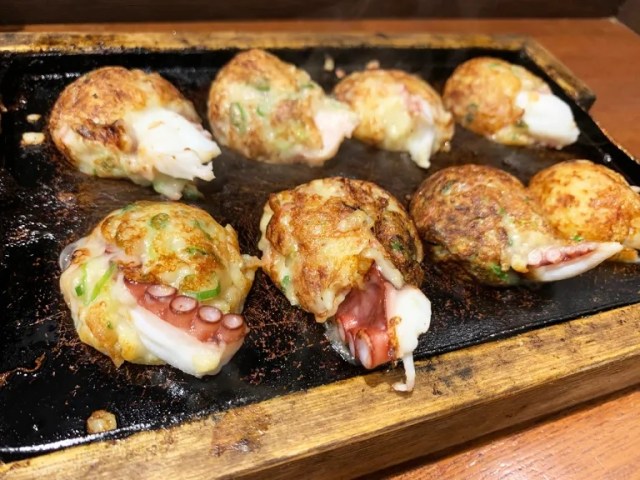
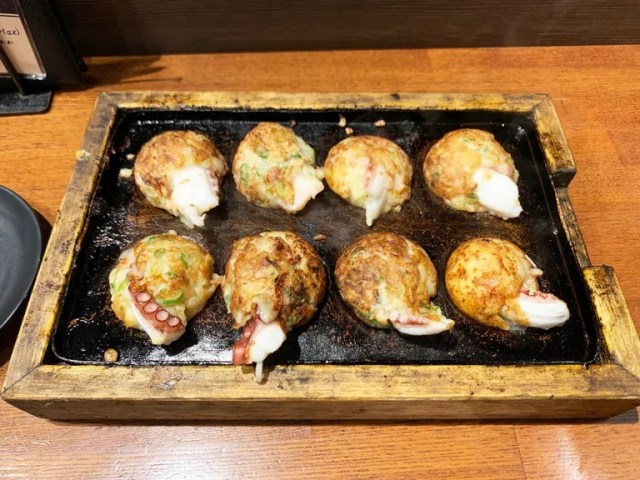
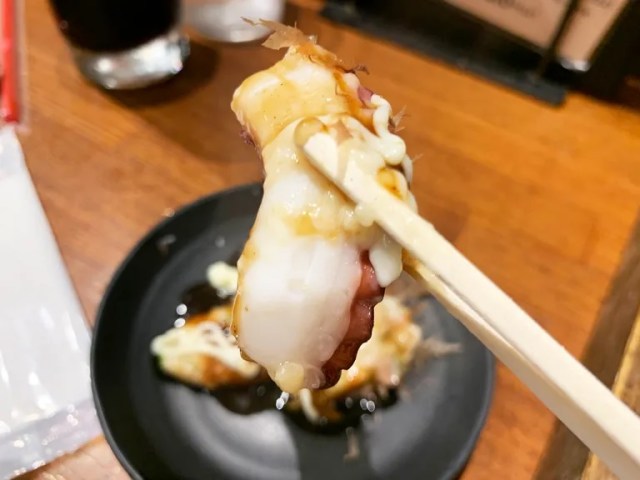
But the Bikkuri Takoyaki? They look like this.

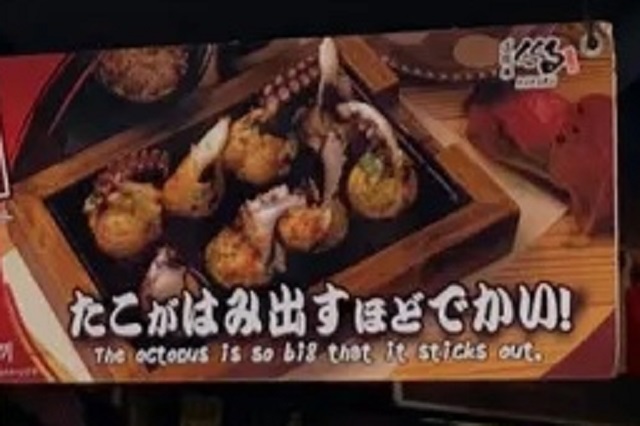
“The octopus is so big that it sticks out,” promises the sign’s English text, so yes, this really s a surprising amount of seafood per dumpling.

The other surprise? Well, normal takyaki are usually about 100 yen (US$0.70). Maybe a little more, maybe a little less, but roughly 100 yen is a pretty normal price to pay. The Bikkuri Takoyaki, though? A plate of eight, after sales tax, is 1,980 yen (US$13.75), making them more than double the price of their non-surprising brethren.

Interest piqued, Seiji decided to splurge on these premium-priced takoyaki. Unfortunately, the Bikkuri Takoyaki are only offered in limited quantities each day, and with it already being around 3 in the afternoon, they were sold out. So Seiji came back earlier the next day, arriving at 2 p.m., and when he did the staff told him that he was again too late, and that the day’s stock was all gone.

The third time was the charm, though, as Seiji made sure to get to Kukuru shortly before their opening time of 11 a.m., and this time he finally got to put in his order for a plate of Bikkuri Takoyaki.

When you get them as street food, takoyaki are usually served in a little boat-shaped paper container. The Bikkuri Takoyaki, though, come in their own little iron plate with dome-shaped indentions in which the takoyaki have been cooked.

Taking a bite, Seiji’s taste buds were met with the same delicious flavor that makes Kukuru one of his all-time favorite takoyaki shops. The octopus is delicious, the sauce is flavorful without getting in the way of the seafood star of the show, and the dumpling batter is invitingly tender, with an almost creamy texture at the center.

However, that texture can make the Bikkuri Takoyaki a little tricky to eat. Since the octopus chunk is so big, they’re not so easy to quickly pop into your mouth, and so some of the dumpling batter might drip away as you pick one up with your chopsticks. Thankfully, eating inside the restaurant means you’ve got a little dish you can use to catch ant drippings, so that you won’t miss a single bit of the Bikkuri Takoyaki experience.

Because of their size and cost, Seiji doesn’t seem himself eating the Bikkuri Takoyaki every day when he’s in Osaka. As a special treat, though, they’re hard to beat in terms of taste and impact.

Restaurant information
Kukuru (Dotonbori Main Branch) / くくる(道頓堀本店)
Address: Osaka-shi,, Chuo-ku, Dotonbori 1-10-5
大阪市中央区道頓堀1丁目10-5
Open 11 a.m.-7 p.m. (weekdays), 11 a.m.-8 p.m. (weekends, holidays)
Website

Photos ©SoraNews24
● Want to hear about SoraNews24’s latest articles as soon as they’re published? Follow us on Facebook and Twitter!


Credit:
All-you-can-eat sashimi from Tokyo’s fish market, convenient location make this budget hotel great

And the free ochazuke makes it even better.

A convenient location and affordable prices are the two things a Japanese business hotel has to have. Since their main target demographic is budget-minded business travelers, and their second is budget-minded leisure travelers, business hotels tend to pare back their other amenities.

It’s a tradeoff most business hotel guests are OK with. Since they’re going to be in meetings or out sightseeing during the day anyway, they wouldn’t be making use of a pool, hair salon, or piano bar. But if there’s one amenity that really is nice to have in a business hotel, it’s a good hotel breakfast, to fuel you up and power you through those a.m. conferences and travel itineraries.

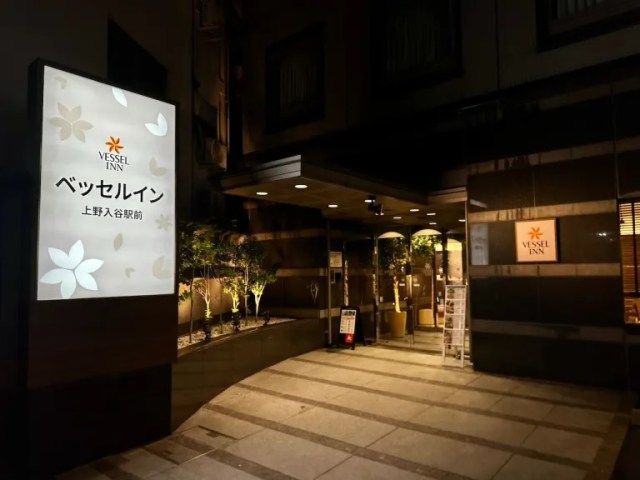
And it’s very hard to top the breakfast buffet at Tokyo’s Vessel Inn Ueno Iriyaeki-mae business hotel.

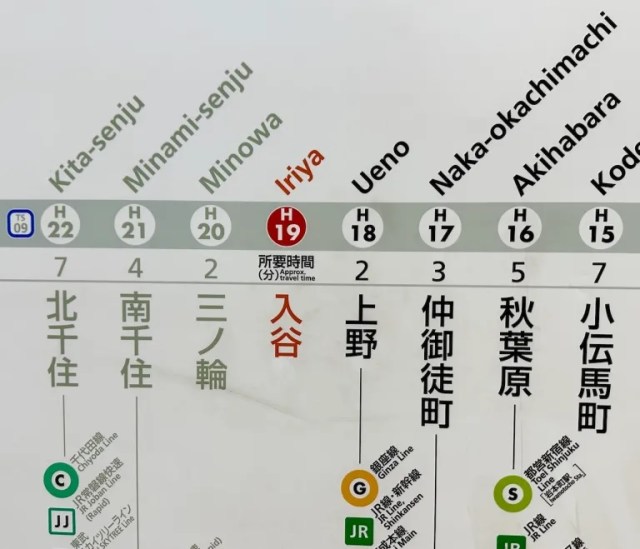
First, let’s talk about that name. “Iriyaeki-mae” translates to “in front of Iriya Station,” referring here to the Iriya Station in downtown Tokyo on the Hibiya subway line. The hotel is just a one-minute walk out of station exit 3 or 4, and while Iriya might not be a name you’re familiar with, if you’ve looked into travelling in Tokyo you’ll definitely have heard of Ueno and Akihabara Stations. Those are both on the Hibiya Line too. Ueno Station, with its park and museums, is just a two-minute ride from Iriya, and Akihabara, the mecca of electronics shops and otaku attractions, is a five-minute ride away.

But like we said, it’s the breakfast that makes this hotel really special, because it includes all-you-can-eat tuna sashimi shipped directly from Tokyo’s Toyosu fish market, the biggest seafood market in the entire country and where Japan’s capital gets its best fish from.

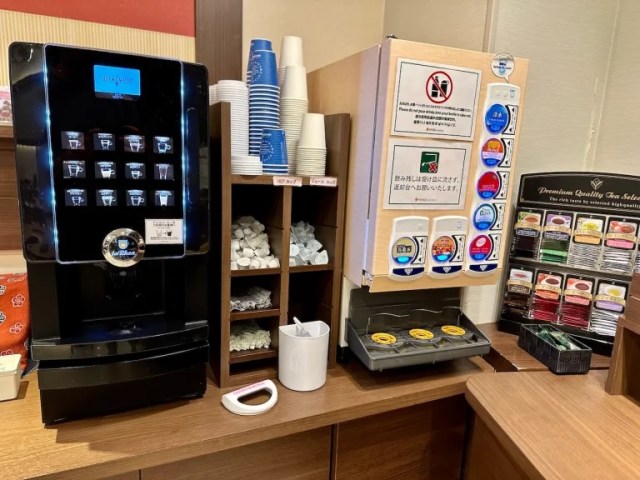
Of course, if you’re checking in in the afternoon or evening, you’ve got some time until you can start chomping away at that breakfast. Even when you’re not blissing out at the sashimi, though, the Vessel Inn does a lot to make you feel welcome. For example, the common-area lounge on the first floor has a self-serve welcome drink bar with free beverages from 2 to 11 p.m. with a variety of teas, coffees, and other soft drinks.

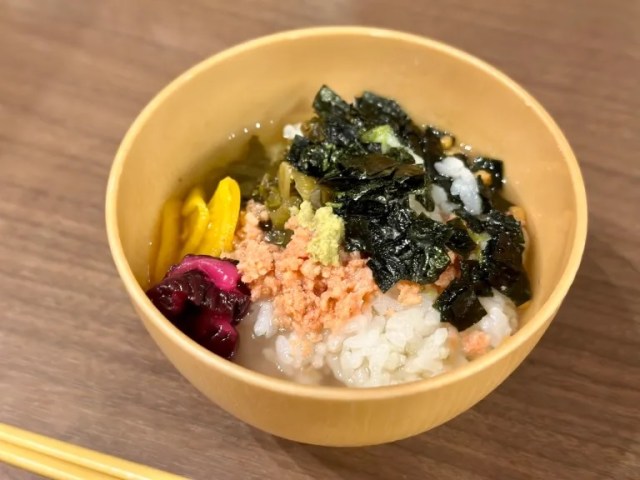
If you stop by the lounge between 9 and 11 at night, there’s also a free self-serve ochazuke bar.

Ochazuke is a traditional Japanese dish of green tea poured over rice. It makes for a delicious late-night snack since it’s tasty and filling without being heavy or bloating, and it’s loved by everyone from little kids with growling tummies to buzzed salarymen who want to cap a night of drinks with friends with a quick snack before bed.

Vessel Inn thoughtfully provides signs with English instructions on how to prepare a bowl of chazuke (though basically all you do is add white rice, green tea, and toppings of your choice to the bowl) plus little indicators of what each bowl of toppings is (salmon flakes, seaweed, pickles, etc.).

▼ This totally hit the spot!

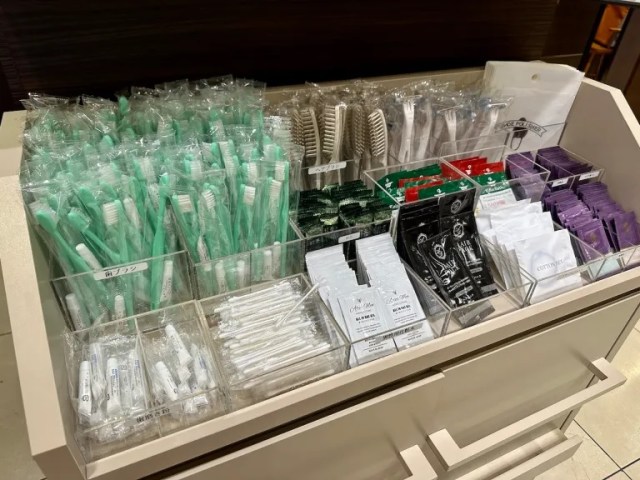
Like with a lot of business hotels, at the check-in desk there’s a rack stocked with toothbrushes, combs, and other toiletries/amenities to grab if you need them.

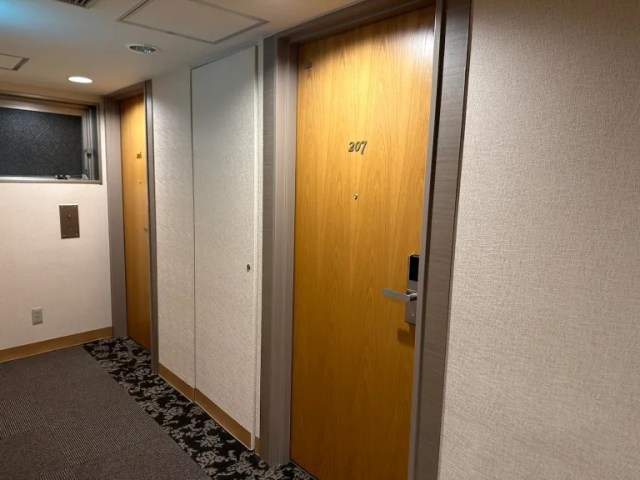
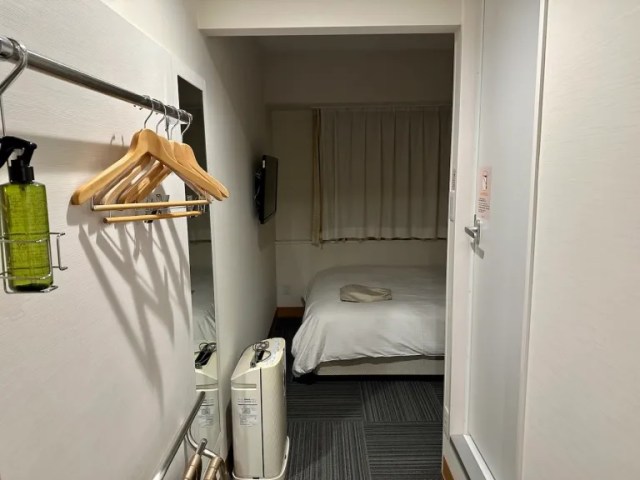
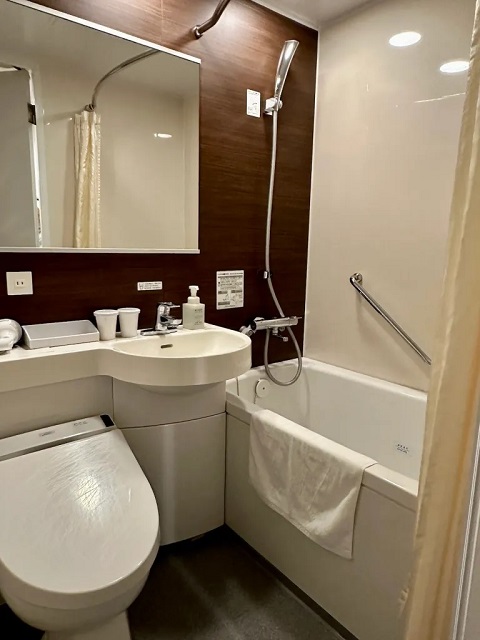
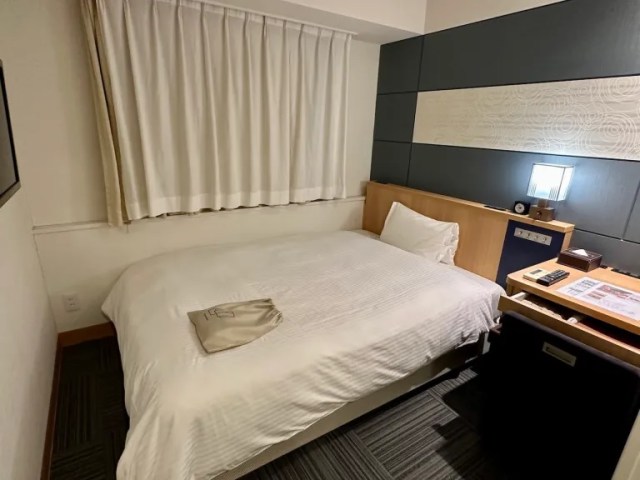
The hotel was fully renovated in 2017, and while you wouldn’t call it luxurious, it’s clean, tidy, and well-maintained.

The beds have high-quality Simmons mattresses, a nice luxury for a business hotel. Ours quickly coaxed us into a cozy sleep, and when we woke up, it was finally time for breakfast!

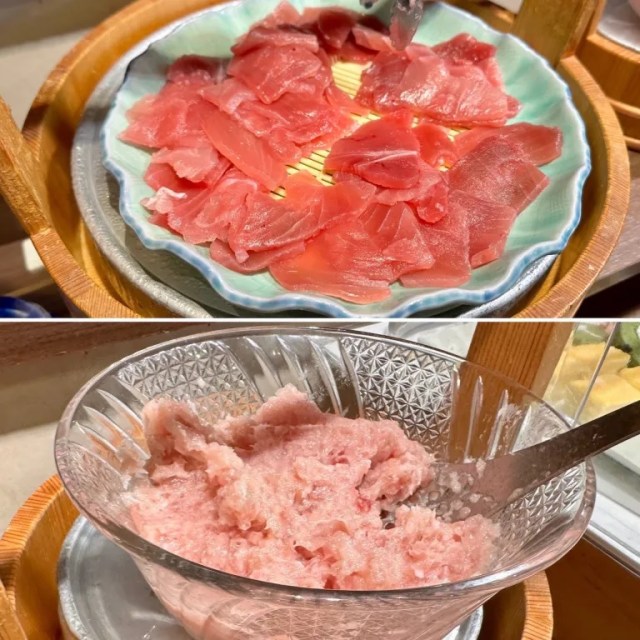
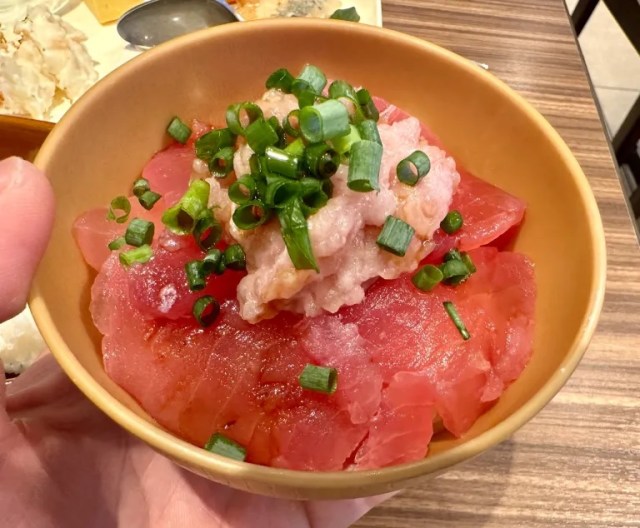
And that breakfast did not disappoint. In addition to slices of tuna sashimi, there was also a bowls full of minced tuna belly (toro) and sliced green onions (negi). Add in the rice cooker filled with white rice, and this was all we needed to make a tuna and negitoro rice bowl, which, if you have the opportunity, is absolutely a great way to start your day.

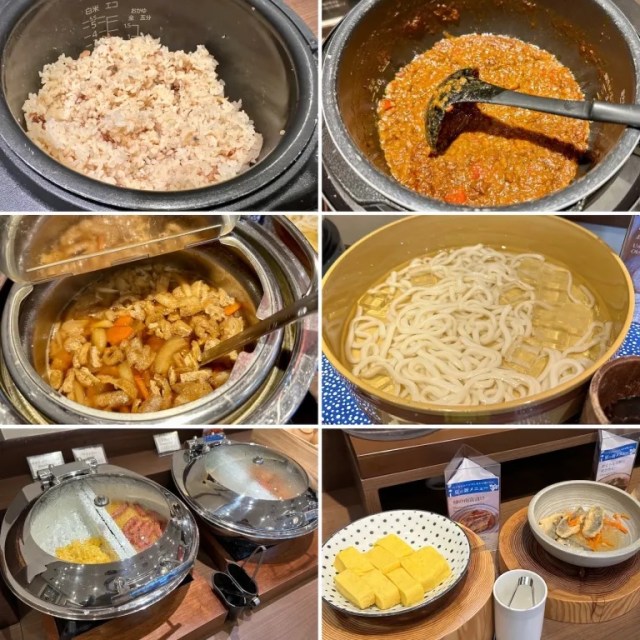
Since the breakfast, which is served in the first-floor lounge, is all-you-can-eat, we could have just gone back and made negitoro bowl after negitoro bowl for ourselves. That was a tempting scenario, but we figured we should try some of the other food available in the hotel’s breakfast, like the Fukagawa-meshi (a local Tokyo specialty of rice and clams cooked together), tamagoyaki omelets, chilled udon noodles, and spicy tomato curry.

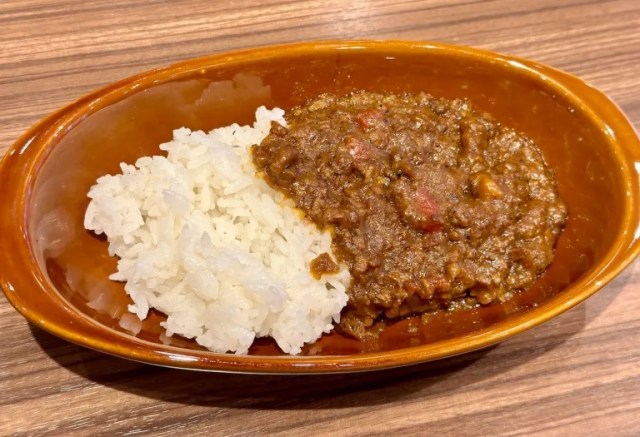
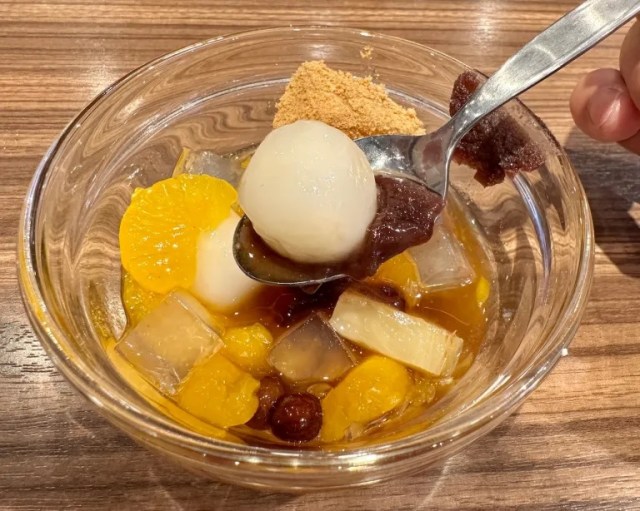
Out of those, the curry in particular was a standout, and after we’d enjoyed it’s spicy kick, we next indulged our sweet tooth with a dish of mitsumame, a dessert popularized in Tokyo’s old town Shitamachi district that contains shiratama (mochi dumplings), sliced fruit, sweet syrup, azuki (sweet red beans), and kinako (roasted soybean powder).

Breakfast is served from 6 to 9:30 a.m., but it’s definitely worth waking up early for. Our single-occupancy room with a breakfast-included plan cost us 10,350 yen (US$72), which is actually a little on the high side for a business hotel, but with a location this convenient, and a breakfast this satisfying, it felt like money well spent to us.

Hotel information
Vessel Inn Ueno Iriyaeki-mae / ベッセルイン上野入谷駅前
Address: Tokyo-to, Taito-ku, Iriya 1-25-6
東京都台東区入谷1丁目25番6号
Website

Photos ©SoraNews24
● Want to hear about SoraNews24’s latest articles as soon as they’re published? Follow us on Facebook and Twitter!


Credit:
Sliced cheese-style apple pie sheets you cook in toaster oven may be Japan’s latest dessert hit

Bourbon is ready to give us great toast with the flavor of fresh baked apple pie in just three minutes.

Apple pie is a dessert that’s best enjoyed right when it gets out of the oven, with the filling still warm and melty and seeping into the dough below. The problem, though, is that baking a pie takes a lot of time and prep work, so if you’ve got a busy schedule, aren’t that skilled in the kitchen, or simply dealing with the sudden onset of pie cravings, you’re out of luck as far as enjoying that freshly baked deliciousness goes.

This is just something we’ve had to accept until now, but there’s a solution on the way from Japanese company Bourbon. Because of its name, you might expect the Japanese company Bourbon to be a whiskey distiller. Really, though, they’re a candy and confectionary maker, and their latest creation is sliced apple pie sheets.

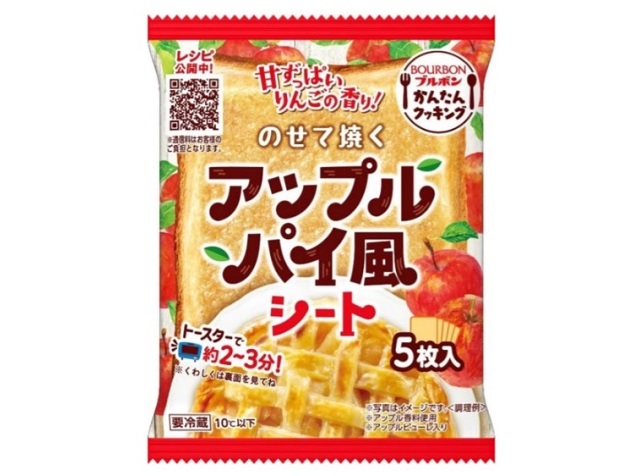
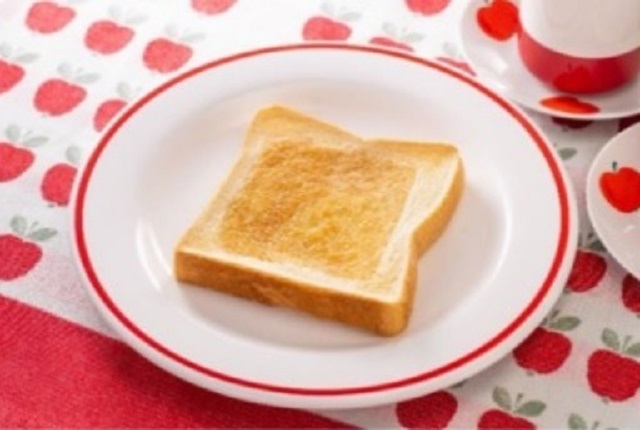
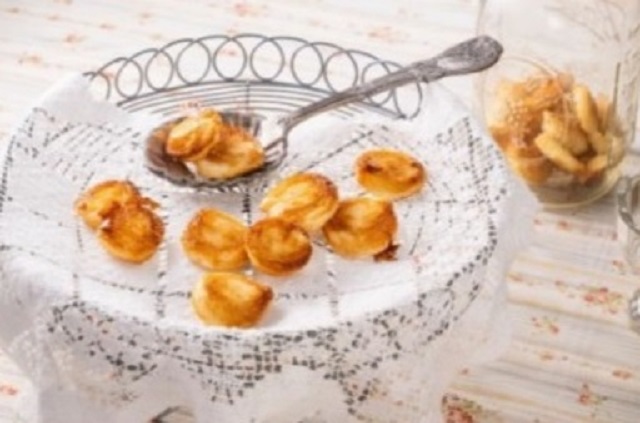
You may remember Bourbon from a few years back, when they blew our minds by introducing the concept of sliced chocolate. Their new innovation, called Nosete Yaku Apple Pie-style Sheets (“Set and Bake Apple Pie-style Sheets”) is a similar idea. Each sheet is roughly the size and shape of a slice of sandwich cheese, but instead of cheese it’s a soft confectionary made with apple puree and cinnamon. Simply put an apple pie slice on a piece of bread, then heat the bread in your toaster oven for two to three minutes. Bourbon promises the result is a sweet and tart treat that both tastes and smells like freshly baked apple pie.

As with Bourbon’s sliced chocolate though, that’s only one way to use the apple pie sheets. You can also use them for all sorts of rolled wrapped, or stacked cakes and dessert platters, and it looks like Bourbon themselves also whipped up a batch of apple pie scones in their preview photos.

Nosete Yaku Apple Pie-style Sheets come five to a pack, with prices to be determined by individual retailers. They go on sale September 1, which is also the same day that Bourbon is rereleasing its Nosete Yaku Melon Bread Sheets, so we’ll have to put both of them, as well as an extra-large loaf of bread, on our shopping list.

Source: @Press via IT Media, Bourbon
Images: @Press
● Want to hear about SoraNews24’s latest articles as soon as they’re published? Follow us on Facebook and Twitter!


Credit:

Become snoozing Pikachu Snorlax with new Pokémon Sleep line from Japan’s coziest sleepwear brand

Just the thing to wear for your next Pokémon Sleep session.

Last month saw the release of Pokémon Sleep, the mobile game that encourages healthy habits by rewarding you with Pokémon for getting solid and consistent sleep. Of course, it’s easier to catch some solid Zs if you’re dressed in comfortable, relaxing attire, and here to help with that is Gelato Pique.

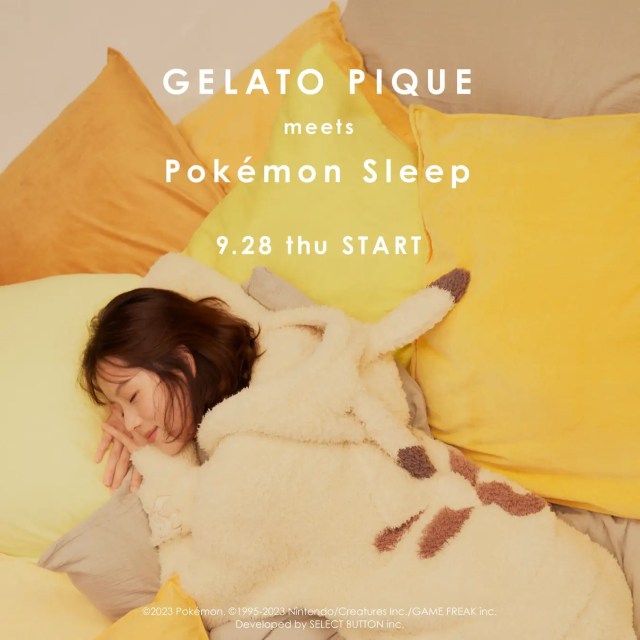
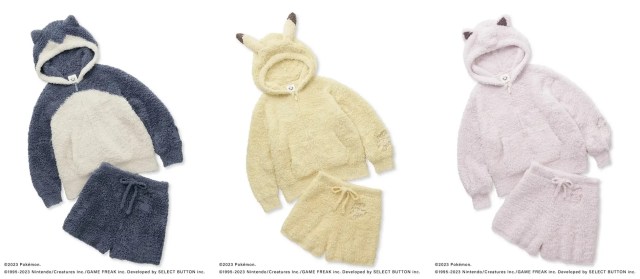
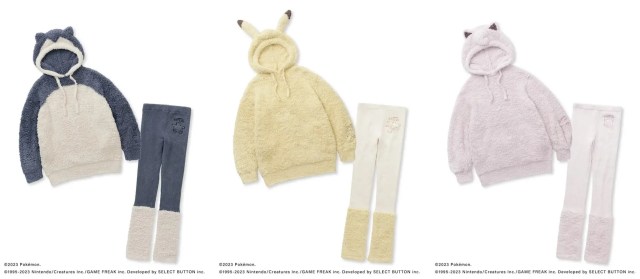
Gelato Pique actually does sell gelato, but that’s really a tiny side gig for the company, whose primary focus is on making some of Japan’s coziest roomwear/pajamas. They’ve just unveiled a new Pokémon Sleep collaboration line, and the most eye-catching items in the lineup are definitely the fuzzy hooded parkas.

You can’t expect a Pokémon team-up to not include Pikachu, and since this is Pokémon Sleep we’re talking about, naturally Snorlax, the sleepiest species of Pocket Monster, is represented too. Rounding out the parka trio is Jigglypuff, who to less knowledgeable Pokémon fans might just be thought of as “that pink round one that was a donut for a while,” but which more knowledgeable Poké-scholars recognize as a Normal/Fairy-type Pokémon that has the power to put others to sleep with its singing voice.

Gelato Pique is best known for their extra soft garments, which feel almost like a fluffy sheep. Add in the ears on the hoods, and a promised tail on the back of the Pikachu parka, and it looks like wearing these will feel like getting a great big hug from your companion Pokémon.

The women’s parkas are offered in top/bottom sets, with either shorts or leggings with a leg warmer-style design below the knee.

Gelato Pique is also offering the Pikachu and Snorlax parkas, though not the Jigglypuff one, in men’s sizes, with comparatively longer “half pants” shorts.

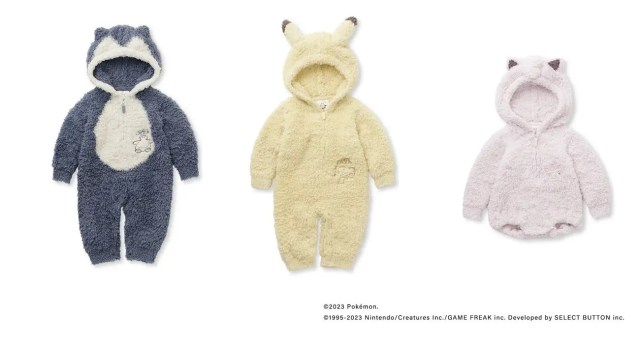
Since Pokémon is a franchise with both adults and kids in its fanbase, all three parkas are also available in sets with shorts in “junior” (130 or 140 centimeters [51 or 55 inches] in height) sizes plus smaller “kids” sizes, and for even littler Pokémon Trainers, there are even baby onesies/rompers.

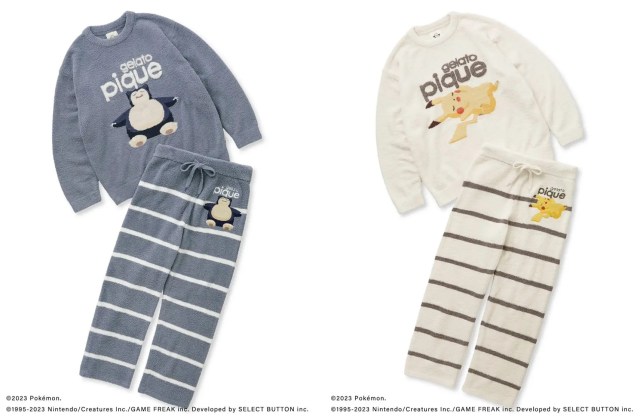
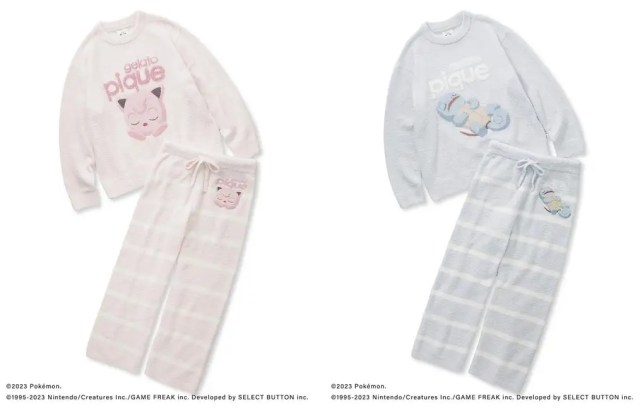
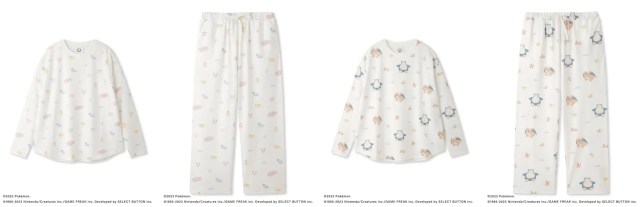
On the other hand, if you want your sleepwear to feature art used in Pokémon Sleep itself, there are pullover/long pants sets with pictures of snoozing Pokémon on the chest and hip.

These too come in both men’s and women’s sizes, though the guys’ garments are only for Pikachu and Snorlax, while the ladies’ choices also include Jigglypuff and Squirtle.

▼ The Squirtle one is a little light on lore, seeing as how Sleep Talk is the only sleep-related move the species learns, but the illustration is adorable.

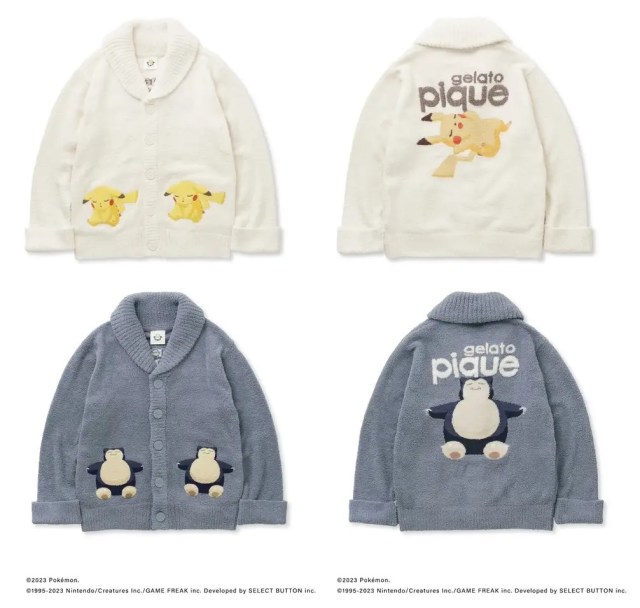
Pikachu and Snorlax also show up on a pair of button-up shawl cardigans, with two different types of drowsy Pikachus.

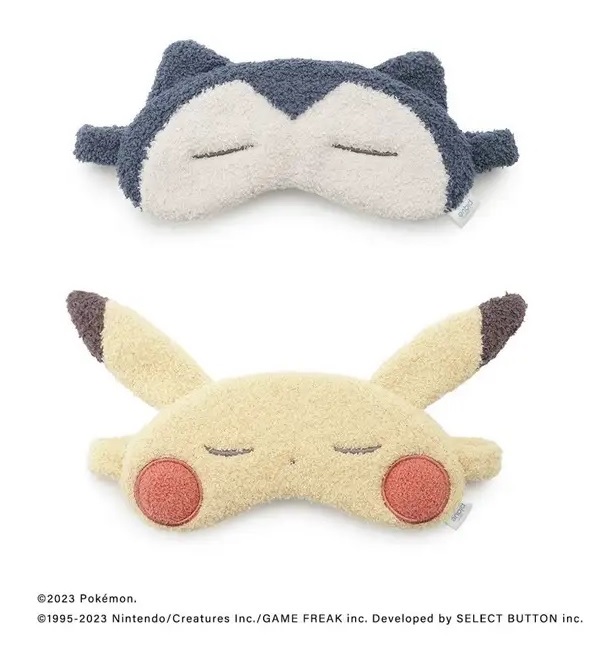
Oh, and if you’ve found that using an eye mask improves the quality of your sleep, Gelato Pique has ones that, if used in conjunction with their corresponding parkas, will make you look exactly like a slumbering Snorlax or Pikachu.

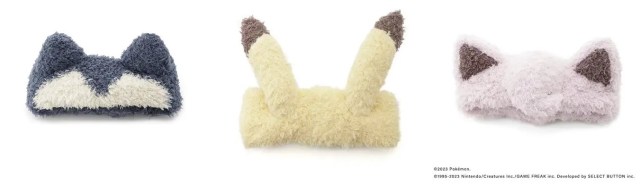
Rounding out the collection are headbands, long T-shirts for sleeping in, and a few more pajama sets.

As with Gelato Pique’s previous Super Mario and Animal Crossing collaborations, it’s a cute and clever lineup. The brand isn’t known, though, for particularly low prices. The adult-size parka sets range in price from 17,490 yen (US$121) to 18,290 yen, while the junior sizes are 16,930, the kids’ 14,960, and the baby rompers 8,910. Fans do rave about how incredibly comfortable Gelato Pique’s roomwear is, though, so if you’re interested, you’ll probably want to put your order in quickly on the Gelato Pique online store here once the line goes on sale at noon on September 28.

Source, images: PR Times
● Want to hear about SoraNews24’s latest articles as soon as they’re published? Follow us on Facebook and Twitter!


Credit: