All Lotteria fast food restaurants in Japan to close by the end of March

21:13 cherishe 0 Comments

Lotteria is dead. Long live Zetteria.

It is always sad when a trusted friend and upstanding member of the community passes away, so it’s with heavy hearts that we announce all of the remaining Lotteria fast food burger joints in Japan will be no more by 31 March.

The first Lotteria appeared back in 1972, originally as a way for the snack company Lotte to let people sample their ice cream, with the name being a mash-up of “Lotte” and “cafeteria.” However, as the years went by, they found a niche in more Japanese-oriented fast foods like their shrimp burger, which was a novelty at the time.

▼ We have Lotte to thank for those delicious Yukimi Daifuku mochi-covered ice cream balls.

The chain’s growth in Japan peaked in 2009 with 524 locations nationwide, but that number has been on a steady decline ever since. Currently, there are only 106 Lotteria restaurants in operation across Japan. However, this wasn’t due purely to closures. A number of these former Lotteria locations have been reinvented as Zetteria restaurants since 2023.

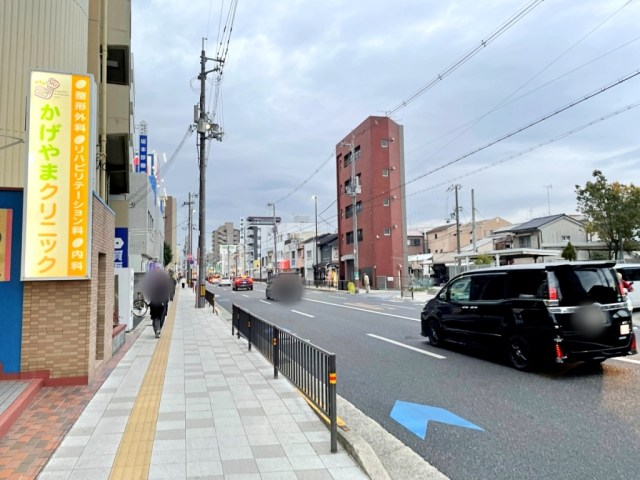
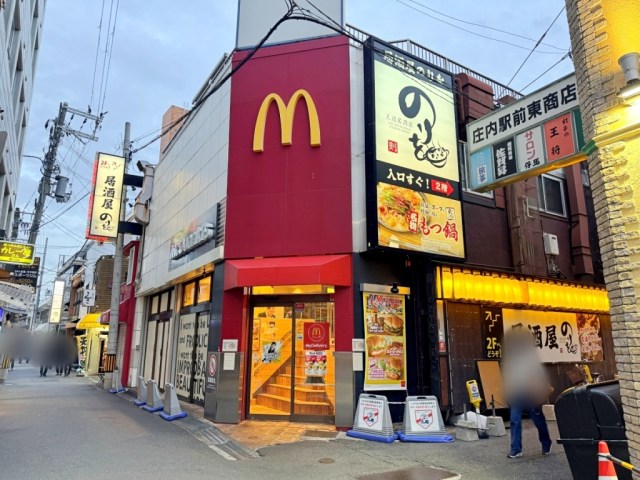
▼ This is the exact same restaurant branch as the one pictured at the top of this article.

Zetteria both is and isn’t Lotteria. The name is a result of Lotte Holdings’ controlling stake in the chain having been bought by Zensho, a holding company that owns a number of other restaurant chains, such as beef bowl dealer Sukiya and Japan’s version of Big Boy, which mostly sells steaks and hamburgers without the buns.

Zetteria’s menu shares many of the same names as Lotteria’s, but the presentation may vary. For example, Lotteria’s popular Zeppin Burgers can be found in Zetteria, but are sometimes differently shaped and use different buns. On the other hand, limited-edition sandwiches like Lotteria’s Okonomiyaki Burger were just as easily found at Zetteria.

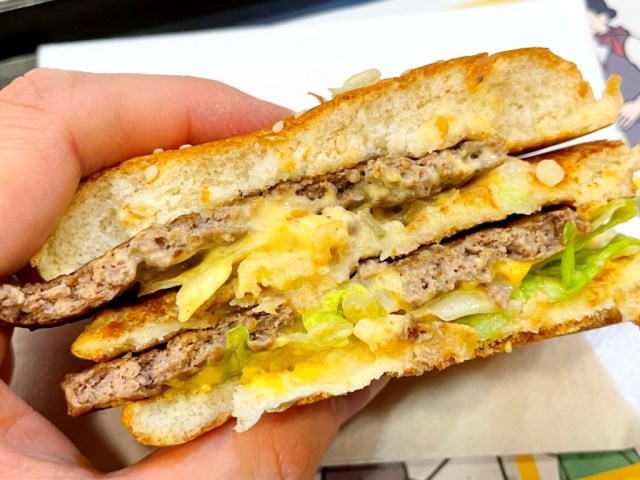
▼ Mr. Sato found these Zeppin burgers at Zetteria in September 2023…

▼ …but then found these different Zeppin Burgers there in May 2025.

Now it looks like Zensho is finally ready to deliver the coup de grâce and will replace all remaining Lotteria restaurants with Zetteria by the end of this fiscal year. If anything, this ought to put an end to all the confusion of having Lotteria and Zetteria coexisting was causing, according to online comments about the news.

“I just thought those were knock-off restaurants.”
“I can’t blame them, I guess. Why keep another company’s name on it?”
“I just hope they keep the shrimp burgers.”
“They should have done it sooner.”
“The old Zeppin Cheeseburgers were too small and never left me satisfied.”
“Lotteria’s better than Burger King.”
“I really like how they put lots of pepper on stuff.”
“Zetteria always gives discounts on Uber Eats.”
“I hope they don’t screw around with the menu too much.”

Some readers in other countries might be wondering what this means for the Lotteria restaurants near them. Well, the answer is absolutely nothing.

That’s because Lotteria restaurants in Japan were owned by the original company, Lotte Holdings, whereas all Lotteria restaurants outside of Japan are run by Lotte Group, the subsequent but more powerful Korean arm of the Lotte business empire. Their subsidy Lotte GRS is currently still in charge of all non-Japanese Lotterias and doesn’t seem like it’s making changes anytime soon. In fact, the very first American Lotteria just opened last year.

As for Japan, whether this is good news or bad depends on whether you see the brand name as half empty or half full.

Source: Nikkei Shimbun, My Game News Flash, Fullerton Observer
Photos ©SoraNews24
● Want to hear about SoraNews24’s latest articles as soon as they’re published? Follow us on Facebook and Twitter!


Credit:
0 comments:

Mister Donut releases a secret Godiva doughnut you won’t find in stores

19:13 cherishe 0 Comments

With four doughnuts in one, this might be Japan’s most decadent doughnut – but there’s a hack to buying this hidden treat. 

Mister Donut is Japan’s leading doughnut chain, and this year it’s celebrating its 55th birthday. As part of the celebrations, the chain is sharing the love with a very special hidden doughnut that captures the spirit of the brand slogan, “Always there, always new. Mister Donut“, proving that the chain is always striving to provide us with new and exciting discoveries.

This latest release is a true discovery in many ways, mostly because you won’t find it in the display case with all the other doughnuts. Only those in the know will be able to get their hands on the exclusive new doughnut, as it will only be available via pre-order on the website or the mobile app.

Called the Trio Heart Chocolate & Praline, this is a doughnut that’s well worth seeking out as it’s one of the most decadent to ever be produced by the chain. Produced in collaboration with luxury chocolatier Godiva, the doughnut us said to “embody meticulous attention to detail”, from its creative construction to its perfectly placed toppings.

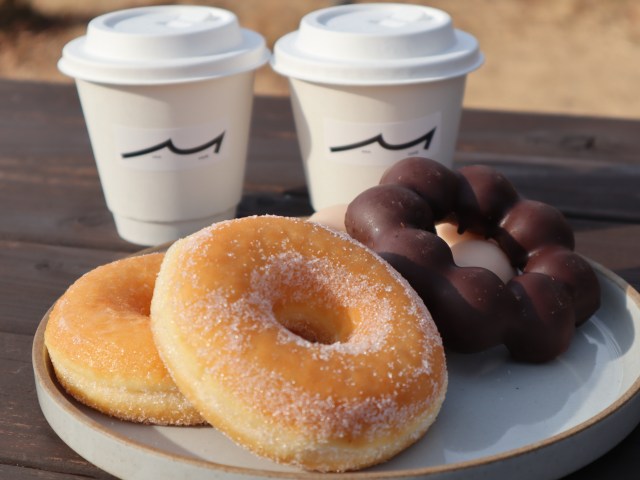
At its base is a smooth chocolate doughnut topped with praline whipped cream and coated in chocolate to evoke the taste and texture of a chocolate truffle. Sitting upon the base are three adorable heart-shaped churros, layered with praline whipped cream, ganache cream, and ganache whipped cream, before being finished with cocoa powder, strawberry chocolate and strawberry sugar, and chocolate, respectively.

This special treat essentially consists of four doughnuts in one, and Mister Donut says you can enjoy them in a variety of ways – by eating them as is, splitting them up to enjoy separately, or even dipping them into a hot beverage like a coffee or hot chocolate.

Available while stocks last from 4-28 February, the doughnut is priced at 669 yen (US$4.24), and can only be ordered for takeout, with pre-orders being accepted online or via the app from 22 January to 27 February.

▼ 1. Scan the barcode 2. Choose your pickup store 3. Select your items 4. Pay Online 5. Pick up at your chosen store

Orders must be placed at least one day before pickup, so you’ll need to plan ahead before purchasing, but on the upside you’ll be able to receive your order without waiting in line at the register. Plus, you’ll be walking out with an exclusive, secret doughnut that isn’t on display in stores, which is sure to make it taste even more delicious.

Source, images: Press releases
● Want to hear about SoraNews24’s latest articles as soon as they’re published? Follow us on Facebook and Twitter!


Credit:
0 comments:

Pokémon popcorn buckets coming to Japan’s first-ever permanent Pokémon theme park zone

17:13 cherishe 0 Comments

Shhh…Snorlax is sleeping, and munching.

Novelty popcorn containers may be a relatively new addition to fandoms in western countries, but here in Japan, character-themed popcorn buckets at amusement parks have been a thing for a while. So with the Pokémon franchise getting set to open its first permanent theme park area, Poképark Kanto, next month, of course it’s going to need a Pokémon popcorn bucket too.

Ah, but which species of Pocket Monster is the best choice for this important role? Since Poképark Kanto is focusing on the Kanto region/Gen-1 Pokémon, you won’t find a candidate with a stronger love to munch on tasty treats than Snorlax, so he’s the muse for the park’s popcorn bucket.

In addition to appearing in illustrated artwork on the bucket’s side, Snorlax is rendered three-dimensionally on the lid, recreating his unforgettable first appearance as an adorable, and immobile, sleeping roadblock. As Pokémon Masters will remember, the only way to wake Snorlax up and get him out of the way was by playing a Poké Flute, one of which can also be seen in the preview photo, though it’s not clear if it comes included with the bucket or is just a prop they added when snapping the picture.

If you’re wondering whether Snorlax is more of a sweet or savory kind of snack fan, the answer, apparently, is both, as the official Poképark Kanto website describes the item as the Snorlax “Popcorn Box Set (Barbeque Flavor + Milk Caramel Flavor).” It’s not entirely clear whether that means you choose one flavor or if the set comes with both of them, but given Snorlax’s legendary appetite, it’s not like a huge quantity of popcorn would be going against canon.

If you want something less bulky, but also with a dash of Poké-fun, the barbecue and milk caramel popcorn flavors will be available in Snorlax-themed paper containers too.

Poképark Kanto, which is part of the larger Yomiuriland amusement park in Tokyo, itself consists of two sections, the Pokémon Forest and Sedge Town. With Pokémon Forest being primarily a nature walk/exploration area, odds are the vendors serving up Snorlax popcorn will be located inside Sedge Town, which is also probably where you’ll find the amazingly cute Vee Vee Voyage Eevee merry-go-round.

Related: Poképark Kanto
Source: Poképark Kanto
Top image: Poképark Kanto
Insert images: Poképark Kanto
● Want to hear about SoraNews24’s latest articles as soon as they’re published? Follow us on Facebook and Twitter!


Credit:
0 comments:

Tokyo pub explicitly soft-bans customers older than 39 from entering

08:13 cherishe 0 Comments

Other nearby restaurant sets minimum-age of entry as well.

Like a lot of value-conscious izakaya (pubs), the Dogenzaka branch of Tori Yaro in downtown Tokyo’s Shibuya neighborhood has a bunch of signs near the entrance trumpeting their special offers and most popular menu items. However, one of the posted notices isn’t something much less common, and reads:

“Entrance limited to customers between the ages of 29 and 39

This is an izakaya for younger generations!
U-40
Pub for under 40-only”

Though not a chain-wide policy, this branch of Tori Yaro makes it very clear that it wants to be a place for 20 and 30-somethings. The sign does include the annotations that as long as one person in the party is 39 or younger, older customers will be admitted with them, and also that friends or family members of employees, as well as business partners of the restaurant, are excepted from the age restriction, but these are in much smaller print than the much more noticeable warnings that people 40 and up will not be allowed in.

▼ The restaurant and its sign

So why the age restriction? Toshihiro Nagano, a PR representative for the chain, says it’s about ensuring a match between customer preferences and the in-pub atmosphere. “Essentially, our customer base is young,” says Nagano, as the chain’s combination of low prices, casual interiors, and a boisterous vibe are all things younger diners/drinkers show a strong appreciation for. “With older customers, they tend to make a lot of complaints about the restaurant being too noisy and such, so we decided to limit who’s coming in, so that everyone can go home happy about the experience they had.”

Tori Yaro isn’t the only izakaya in the neighborhood that’s put an age restriction in place beyond that of Japan’s legal drinking age of 20. Yaoya Ba (the second restaurant shown in the above video) is a more upscale izakaya that’s also located in Shibuya, but has gone the other way, putting in admission requirements in order to keep its clientele from being too young by letting it be known that it only welcomes customers age 25 and up (though under-25s can dine if they’re in the company of an older customer). “We want to be a place where adult customers can relax and enjoy their meals,” says owner Masayuki Segawa. In order to let people who enjoyed going out in Shibuya 10 or 20 years ago enjoy doing so again, we limit admission to those 25 and older.”

The concept of different restaurants tailoring their mood and menu to cater to one demographic or another is nothing new, and, in fact, even without the explicit age restrictions, it seems like things would have naturally shaken out to Tori Yaro’s customers being primarily in their 20s and 30s, and Yaoya Ba’s skewing older. Aside from their interior designs and acoustics, theere’s a wide gulf in prices between the two, with some of Tori Yaro’s drinks so cheap that you can get a cocktail and three side dishes for about 2,000 yen (US$13), whereas that price might only get you a single dish at Yaoya Ba. Nevertheless, the two dining establishments have decided to make explicit rules about who is and isn’t being welcomed with open arms, and Japanese online reactions have been divided.

“That’s fine. As you get older and make more money, go to higher-class places.”
“Yeah, I don’t think people making regular 40-something salaries are going to go to a low-level place [like Tori Yaro].”
“This is definitely a good way to handle things. Less stress for everybody.”
“That’s discriminatory.”
“I really don’t like that there are places like this popping up.”
“I think they should find a better way communicate what sort of place their restaurants are than putting in age restrictions.”
“The average age in Japan is [over 48 years old] now.”
“Feels like this is gonna turn the [young people-only] pubs into pickup spots.”
“I think places that do this will have a hard time earning enough money and will be bankrupt within 10 years.”
“There’s a difference between people’s physical and mental ages.”
“So people from the Ice Age Generation are shut out [of Tori Yaro]?”

The “Ice Age Generation” comment is a reference to Japan’s so-called Employment Ice Age, a social phenomenon that took place from the mid-’90s to mid-2000s. With the collapse of Japan’s Bubble Economy, companies severely cut back on hiring, new-employee salaries, and the regular wage increases which had been the norm for decades before. The result is a generation of Japanese adults who were too young to enjoy the steady income growth that their parents did, and who are also too old to benefit from the boost to new-hire salaries being offered by large companies in Japan in the current entry-level job market. As such, the idea that people in their 40s and up have no interest in, or need for, affordable dining options isn’t really true, and explains who a large number of commenters have bristled at the idea of an upper-age limit for a lower-priced restaurant.

As for the question of whether or not the age limits constitute an illegal form of discrimination, it’s a bit of a gray area. When asked what they would do if someone from outside the stated allowed ages were to ask for a table or reservation, Yaoya Ba (which allows customers under 25 if they’re dining with someone who’s older) says that it instead recommends one of its nearby affiliate restaurants with younger clienteles. Tori Yaro, meanwhile, admits that, despite the sings saying no one over 40 can get in without an under-40 companion or a personal connection to the staff, the restaurant actually will admit over-40 customers, after some negotiation. “We explain that ‘Our restaurant is noisy. Is that OK with you?’” says Nagano, and that if the customer is agreeable to the condition, they may enter. “’If we talk and it’s a case of ‘I’m older than 40, but I have the spirit of a 20-something,’ then they’re welcome.”

It’s worth noting, though, that asking someone to bend the rules for you is something that, culturally speaking, isn’t done very often in Japan. With Tori Yaro’s pre-posted sign saying that diners over 40 aren’t admitted, and the workaround of “unless you’re OK with the noise level” being something that is kept, essentially, a secret until someone asks if it’s OK for them to break the rule, for the vast majority of would-be customers the result is likely to be the same as an iron-clad ban.

Source: Tele Asa News via Yahoo! Japan News via Itai News, YouTube/ANNnewsCH
Top image: Pakutaso
Insert image: Pakutaso
● Want to hear about SoraNews24’s latest articles as soon as they’re published? Follow us on Facebook and Twitter!


Credit:
0 comments:

Studio Ghibli releases new “komorebi” plush toys from Princess Mononoke and Spirited Away

05:13 cherishe 0 Comments

Three anime characters bring a dash of magic with them into the real world.

Just as Studio Ghibli creates mystery and intrigue in its movie worlds, it also creates mystery and intrigue with its merchandise. Case in point is this brand new release from Ghibli specialty retailer Donguri Kyowakoku, which adds three new characters to its “Komorebi” plush toy collection.

The word “komorebi” often tops the list as people’s favourite Japanese word, and for good reason. Not only does it roll off the tongue beautifully, it means “dappled sunlight“, evoking images of forests and a sense of magic, with the possibility that something might appear in the liminal space between light and shadow.

It’s a perfect moniker for this range of plush toys, which brings some of the studio’s magical characters into the spotlight, and now there are three more to choose from, starting with…

▼ …the Kodama from Princess Mononoke.

Measuring 15 × 13 × 9 centimetres (5.9 × 5.1 × 3.5 inches), this plush kodama is a lot softer than the characters in the film, who bobble their heads to make a clacking sound like creaking bamboo.

While this sweet Kodama might not clack its head, it does have the same imploring expression as the forest spirits from the film.

▼ Sharing the spotlight with the Kodama is the Ootori from Spirited Away.

These giant duck-like birds (“ootori” literally means “big bird”), like to soak in the tubs inside Spirited Away‘s magical bathhouse.

Measuring 21×19.5×16 centimetres, and complete with a leaf on its head and giant, unblinking eyes, this is a perfect mini replica of the big birds seen in the movie.

▼ Finally, we have Boh in mouse form, also from Spirited Away.

This plush toy replicates all the cute details of the lavender-hued mouse, including its pink tail.

At 22×13×22 centimetres, this sweet baby is perfectly sized to be your desk buddy, and is always ready to receive breaktime cuddles.

Despite being similarly sized, the three new characters are differently priced, with the Kodama retailing for 2,640 yen (US$16.72), the Ootori for 3,960 yen and Boh in mouse form for 4,180 yen. Combined with the previous character release, this new trio now brings the total number of plushies in the Komorebi range to 13, and with the promise of more characters to come, we can’t wait to see who’ll be joining them next.

Source: Donguri Kyowakoku
Top image: Donguri Kyowakoku
Insert images: Donguri Kyowakoku (1, 2, 3)
● Want to hear about SoraNews24’s latest articles as soon as they’re published? Follow us on Facebook and Twitter!


Credit:
0 comments:

Heart/body-warming anime video is a beautiful love letter to family and miso soup【Video】

19:13 cherishe 0 Comments

Based-on-true-story shows how woman and her grandmother stay close even when they’re far apart.

There’s an old marketing maxim that says you don’t sell the steak, you sell the sizzle. The idea is that no one really cares about the item or service itself, they care about the feeling of satisfaction, security, or happiness it can give them.

Of course, miso soup doesn’t actually sizzle, but the concept still applies in this beautiful short anime video that in which Japanese miso soup maker Marukome isn’t really talking about the soup, but showing you its warmth, both literal and figurative.

Based on the actual family situation of a real-life Marukome employee, the anime video has two key characters: Mai, a Marukome employee working at one of the company’s offices in Tokyo, and her 97-year-old grandmother, who lives by herself in Hokkaido, Japan’s northernmost, and coldest, prefecture.

Though Grannie is a cheerful spirit with friendly neighbors, Mai worries about her, as it’s getting harder for her to make shopping runs and cook full meals as she gets older. The two keep in touch by text message, though, and Mai also sends care packages of Marukome instant miso soup mix, which her grandma can make by simply adding hot water.

While the soup itself looks tasty, the real star of the show here is how the animators depict the chilly conditions of a Hokkaido winter, and contrast them with the comforting warmth of home.

The short is full of little visual details like the kettle that Grannie keeps on top of her living room space heater, an old-school way of adding a little extra heat and humidity to home interiors in Japan. She also sets her boots and gloves in a tray and places them in front of the heater, rather than leave them in her entryway, so that the slush they’ve picked up while she was outside don’t harden into ice, and also so that the melted snow doesn’t get on her floor. Then there are the subtle indicators of the gap in age between Mai and her grandma. While Mai whips out her smartphone to send messages, Grannie is still rocking a flip phone, or “garakei,” as they’re called in Japanese. Then there’s the stool Grannie has in her entryway to help her get her shoes on and off without having to put extra strain on her nearly century-old knees and back.

If you’re thinking there’s a sort of Ghibli-esque quality to some of the scenes, especially the cut that shows the bowl of miso soup, the anime short was directed by Sunao Katabuchi, assistant director for Kiki’s Delivery Service, who also directed In This Corner of the World and the very tonally different Black Lagoon. Meanwhile, the character designs come from Satoshi Kadowaki, Attack on Titan’s chief animation director, and a number of artists from anime studios MAPPA and Wit Studio also contributed to the project.

The video ends with Grannie showing that she’s not too old to learn new tricks, as she fires off a thank-you message that concludes with a stamp and the message “Living a long life is awesome!”

All in all, not a bad way to sell the “sizzle” of easy-to-make miso soup.

Source: Marukome
Top image: YouTube/マルコメ公式チャンネル(marukomeOfficial)
Insert images: YouTube/マルコメ公式チャンネル(marukomeOfficial), PR Times
● Want to hear about SoraNews24’s latest articles as soon as they’re published? Follow us on Facebook and Twitter!


Credit:
0 comments:

Time to open the final Village Vanguard Luck Bag of 2026, the magical girl Red Lucky Bag

17:13 cherishe 0 Comments

Another year, another assortment of weird cushions…

It’s certainly been a long, hard New Year’s season in Japan. Normally, this is the time that our reporters get to buy and open fukubukuro lucky bags, which often contain loads of limited edition merchandise. But for our writers P.K. Sanjun and Ahiruneko, it’s a painful ordeal.

This is because every year they are tasked with opening the fukubukuro sold by the novelty goods chain Village Vanguard, and every year they write scathing reviews about the uselessness of virtually everything inside. Despite this, the retailer seems to send them even more bags the following year, with a total of seven to ring in 2026.

Having gone through six of the bags, the results were admittedly not all bad, but having done this for so long, we figure they occasionally mix in good stuff to make the bad stuff sting more. There was only one bag left, however, and it was time for P.K. to open the Red Lucky Bag, which sold for 3,850 yen (US$24).

If these bags were a Super Sentai team, then logically, the red one would be the strongest. But it’s also among the cheapest of the group, so who’s to say? Well, let’s get this over with…

Every Village Vanguard bag color has a certain theme, and, as we can see, the theme for this one is magical girl anime aesthetic. Of course, P.K. is not the core demographic for magical girl anime, but if the items were even conceivably useful to him, he’d give this bag a passing grade.

This brings us to the centerpiece of this bag, a ribbon-shaped cushion. We’ve seen that cushions make frequent appearances in these bags, and even if they have horrendous designs, they can still be good for lying on.

However, due to its shape of a ribbon, this cushion didn’t look comfortable at all. You’d normally want to rest a weary body part on the center of a cushion, but this one was all bunched up there, leaving only the sides with reduced cushiony goodness. It was an unforgivable design flaw.

Then, there was a compact mirror, only made considerably less compact with a large, bulging plastic ribbon on the outside.

There was also a toothbrush with its bristles in the shape of a magical star. P.K. highly doubted this configuration bristles was approved by the Japan Dental Association to reduce plaque build-up.

It was accompanied by a pen with a heart at the end. However, it looked like more effort was put into making the decoration than the pen itself. It was hardly a writing instrument our reporter would rely on in a pinch.

The only saving graces of this bag were the hair iron and stickers, because P.K. could probably give those to his daughter.

These kinds of 3-D tactile stickers are all the rage now in Japan, so they were an especially good addition. Still, nearly 4,000 yen for some stickers and a hair iron was hardly a good deal.

It was just another swing and a miss from Village Vanguard, and as P.K. lamented the lack of a magical girl multitool or mustache trimmer, he handed down his verdict…

▼ Lucky Bag Verdict: Magically Disappointing

But in the sake of fairness and realizing that he clearly wasn’t the type of person Village Vanguard was marketing this bag to, he decided to call in fellow writer Ikuna Kamezawa, who just happened to be dressed like a magical girl, for a woman’s perspective.

Ikuna: “Oh, it all looks nice.”

Ikuna: “I’ll take all of it, if you don’t mind.”

Ikuna: “I like the hair iron most of all, though.”

She even liked the impractical ribbon cushion and thought it would look nice in her room. It turns out that one writer’s trash truly is another’s treasure. Perhaps, we’ve been too hard on Village Vanguard’s lucky bags and projected our own biases onto them, when really, they were just sacks of harmlessly fun items intended to put smiles on our faces.

Could it be that, rather than constantly putting down this purveyor of playfulness, we should look inwards and understand why we feel the need to reject their offerings year after year?

No, it’s Village Vanguard who are wrong.

Photos ©SoraNews24
Bag design ©Chocolate
● Want to hear about SoraNews24’s latest articles as soon as they’re published? Follow us on Facebook and Twitter!


Credit:

0 comments:

Denny’s Japan created crazy split-in-half parfaits to target social media photo-snapping foodies

08:13 cherishe 0 Comments

Clever visual design keeps your parfait looking Instagram-worthy even as you eat it.

Foodies in Japan are very much believers in the idea that food should look beautiful. That goes double for discretionary dining options like desserts, and triple for parfaits, one of the most photogenic types of sweet indulgence. As a matter of fact, it probably wouldn’t be an exaggeration to say that the majority of people who order a restaurant parfait in Japan snap at least one photo of it, and sometimes many more, before they take their first bite.

However, parfaits come with a frustrating photography challenge, in that while they look great as-served, everything sort of crumbles and mixes as you eat them, making them much less Instagram-worthy. In particular, it’s almost impossible to fully capture all of their delicious ingredients in cross-section…unless, that is, you’re eating Denny’s Japan’s new desert, which has a clever construction that’s designed specifically for those wanting to take pictures to share with friends or post online.

Denny’s calls it the Split-in-Half Parfait (or Mapputatsu Parfait, if you’re ordering in Japanese), and if you’re wondering how they achieved this visually split stasis, it’s thanks to a special parfait glass produced for the chain by Nakamura Glass, a glassworks company in Tokyo’s Kamitakada neighborhood.

With its half-circle rim and tall, narrow body, the glass not only lets you see what would be both the external and interior-angle views of a parfait, it also helps keep all of the ingredients more neatly arranged as you eat, thus solving the dilemma of having to resist taking the first bite of your dessert until after you’ve taken every snapshot you want to.

It should also be pointed out that Denny’s Japan is fully committed to both parts of the “Desserts should taste and look good” philosophy, and for the Split-in-Half Parfait it uses premium amaou strawberries, renowned by fans as among the best-tasting strawberries in the world. And if you’re worried that Denny’s is trying to sell you half a parfait for the price of a full one, you can put your mind at ease, since at 990 yen (US$6.409 the Split-in-Half Parfait is also just about half the price of the chain’s full-size strawberry parfaits.

Probably because of the unique glassware involved, the Split-in-Half Parfait is only being offered at two Denny’s Japan’s branches, both in trendy parts of Tokyo: the Denny’s Shibuya Koen-dori and Ikebukuro Meiji-dori branches. It’s also a limited-time dessert, on offer from now through March 3, so maybe after that the special glasses and the special parfaits will move to other Denny’s Japan’s locations.

Source: Denny’s Japan via Walker Plus via Yahoo! Japan News via Hachima Kiko
Top image: Denny’s Japan
Insert images: Denny’s Japan (1, 2)
● Want to hear about SoraNews24’s latest articles as soon as they’re published? Follow us on Facebook and Twitter!


Credit:
0 comments: