
7-Eleven Japan’s cooked-in-store takoyaki is here! How does it fare against the street food king?
We pit the convenience store challenger against Tokyo’s favorite maker of Japan’s beloved octopus dumplings.
Takoyaki (octopus dumplings) are one of Japan’s best kinds of street food. Now, though, there’s an alternative to buying freshy cooked takoyaki from a street stall, since 7-Eleven sells them too!
Takoyaki started showing up in the “hot snack corner” of 7-Eleven Japan branches on April 21, the same section of the store where you’ll find things like their cooked-in-store fried chicken or pork buns. Priced at 214 yen (US$1.40) for a pack of three or 428 yen for six, these are more than you’d pay per-dumpling than with a pack of frozen takoyaki that you’d need to cook yourself at home, but still within the realm of relatively guilt-free snack expenditures.
When we rolled into our local 7-Eleven to secure some takoyaki for a taste test, there didn’t happen to be any already cooked up and ready to go, so after we ordered a three-pack at the counter, the clerk got to work making ours. The cooked-in-store takoyaki, somewhat ironically, start out frozen, but the clerk dropped them into a vat of hot cooking oil and fried them up in a flash, with hardly any time spent waiting after finishing the payment transaction.
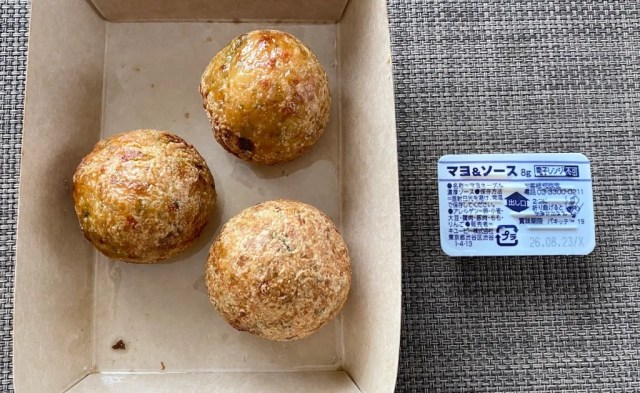
The takoyaki come with a combo pack of mayonnaise and Worcestershire-like takoyaki sauce to pour over them, but if you’re a takoyaki veteran, you might notice that the third standard topping, bonito flakes (called katsuobushi in Japanese) are nowhere to be seen. That’s because 7-Eleven instead mixes dashi (bonito stock) directly into its takoyaki batter, to provide the flavor even without the flakes.
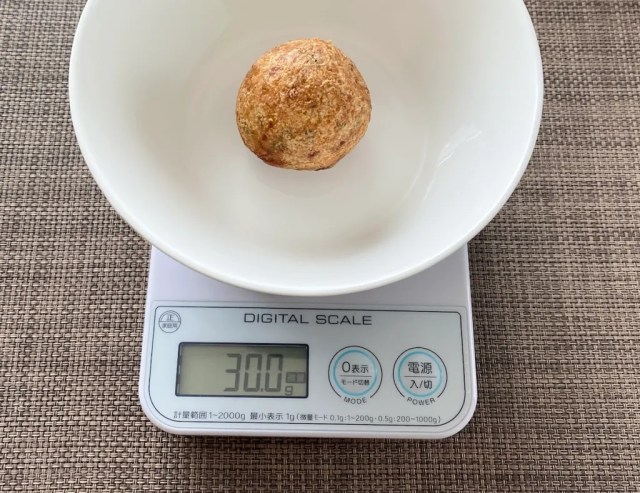
Before starting our taste test, we wanted to know exactly what we were working with here. Separating one dumpling from its brethren, we weighed it with our kitchen scale and found it to weigh 30 grams (1.1 ounce), about 50 percent more than an average takoyaki. Of course, that could just mean a lot of extra batter was used to hide a miniscule amount of octopus, so next we used a knife to slice the dumpling open, and waiting inside was a reassuringly large chunk of seafood.
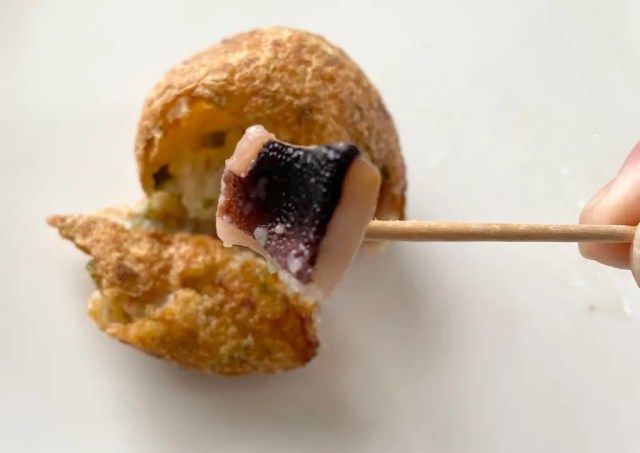
OK, now it was time for the tasting! The customary way to eat takoyaki is to skewer them with a toothpick, then pop the dumpling into your mouth (being careful not to burn your tongue with the heat trapped on the inside). As we bit into the dumpling, the outer surface of the dough had the ideal level of light crispiness to it, which gave way to a softer, then melty consistency as we approached the center, where the octopus was nice and firm.
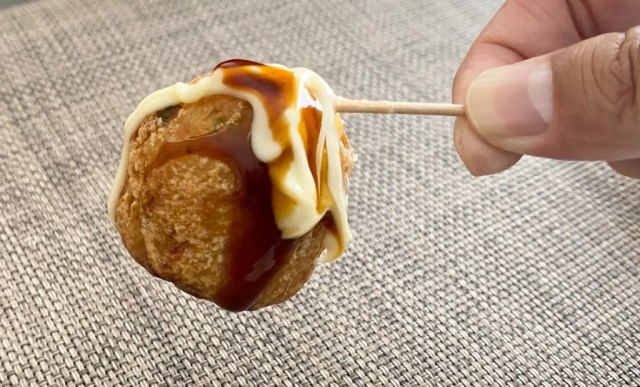
Everything tasted great, and, unorthodox as it may be, 7-Eleven’s decision to mix the bonito stock right into the dough as opposed to sprinkling bonito flakes on top worked out just fine, with the flavor readily apparent and evenly distributed. Overall, this is a very high-quality takoyaki, and tasty enough to enjoy even without pouring the mayo and sauce on it. So yes, even at a price that works out to 71 yen per cooked-in-store takoyaki, about double what you’d pay for cook-yourself frozen takoyaki (provided you’re buying them in bulk), 7-Eleven’s new cooked-in-store takoyaki feel like a very good value, in addition to being extremely satisfying in the flavor department.
However, 7-Eleven offering freshly cooked takoyaki means that they’re now, in essence, competing with specialized takoyaki stands, so how do they fare in that comparison? Searching for that answer, we rushed back out and hit up our local branch of Gindaco, east Japan’s favorite takoyaki chain.
▼ 7-Eleven takoyaki on the left, Gindaco takoyaki on the right
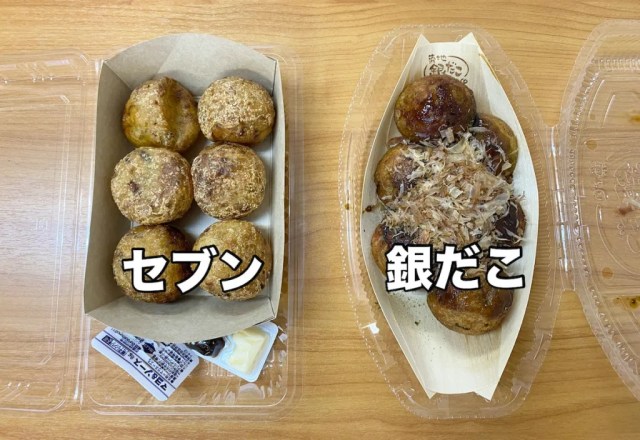
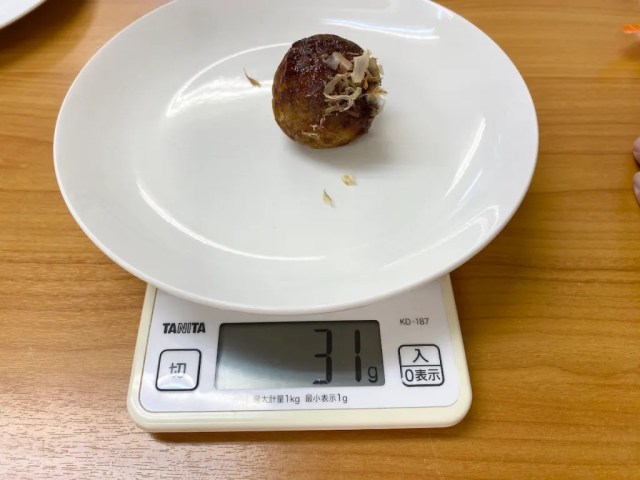
A six-pack of Gindaco’s standard takoyaki costs 615 yen, working out to 102.5 yen each, so they represent a pretty significant step up the price ladder from 7-Eleven’s. They’re also on the large size, with our Gindaco weigh-in showing a weight of 31 grams.
Gindaco’s octopus pieces aren’t small either, though they’re also not necessarily any bigger than what 7-Eleven gives you.
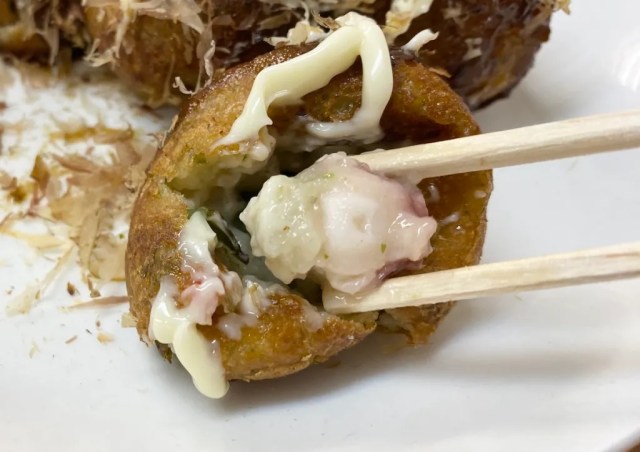
After getting multiple taste-test impressions from members of the SoraNews24 staff who were in the office at the time, we came away with the impression that Gindaco’s octopus has more of a “snap” when you bite into it, whereas 7-Eleven’s is more consistently firm all the way to the core. In terms of overall flavor, though, they’re very similar, so much so that if you like one, odds are you’re going to enjoy the other very much too. The biggest difference ended up being the presence or absence of bonito flakes, which does affect the overall texture and mouthfeel, but if the flakes aren’t a must-have in your book, you’ll probably be just as satisfied with 7-Eleven’s takoyaki as with Gindaco’s, and considering how 7-Eleven is a newcomer to this field, this is an extremely impressive debut.
Photos ©SoraNews24
● Want to hear about SoraNews24’s latest articles as soon as they’re published? Follow us on Facebook and Twitter!
Credit:

0 comments: