
Evangelion beautifully reimagined as iconic classical Japanese folding screen art series [Photos]
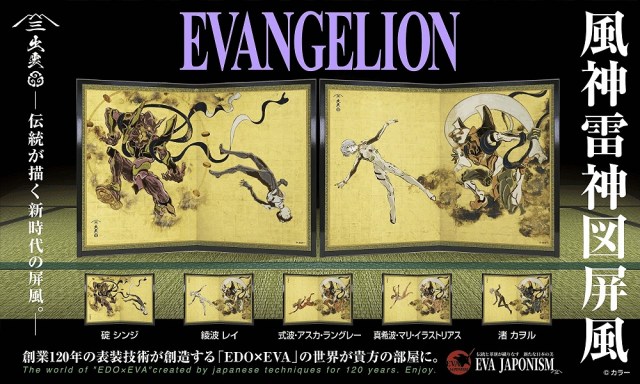
Fujin and Raijin take a break and leave divine duties up to the Eva units.
Before solidifying their reputations as some of the most iconic designs in the history of anime, back when Evangelion first started airing on TV in 1995, the series’ robots looked pretty weird to a lot of viewers. Instead of taking styling cues from suits of knightly armor like so many other animated robot series, the major inspiration for the Eva units were oni, the horned demons/ogres of Japanese legends.
But as Evangelion went on, not only did viewers become accustomed to the unorthodox mecha designs, they proved to be an apt fit for the series’ tone and its characters’ psyche-shaking identity crises. The Eva units radiate an aura that feels at once both destructive and divine, so much so that they don’t look at all out of place subbing in for a pair of deities depicted in one of Japan’s most famous pieces of art.
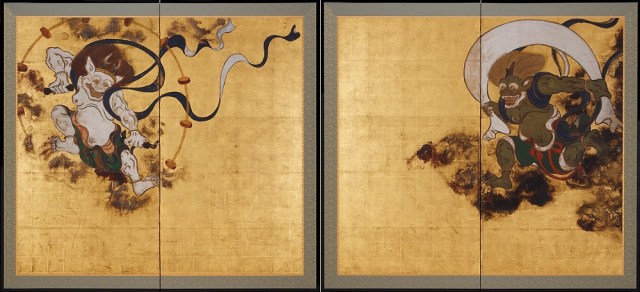
Wind God and Thunder God, or Fujin Raijin Zubyobu, is a folding screen painted by Tawaraya Sotatsu sometime in the late 16th or early 17th century. Pictured on the left is Raijin, a god of thunder and lightning in Shinto and Japanese Buddhist tradition, and on the right is Fujin, Raijin’s brother and god of wind.
As part of the Eva Japonism project from design company Hanzo, the siblings will be taking a breather, with Eva Unit-01 and pilot protagonist Shinji filling in for Raijin.
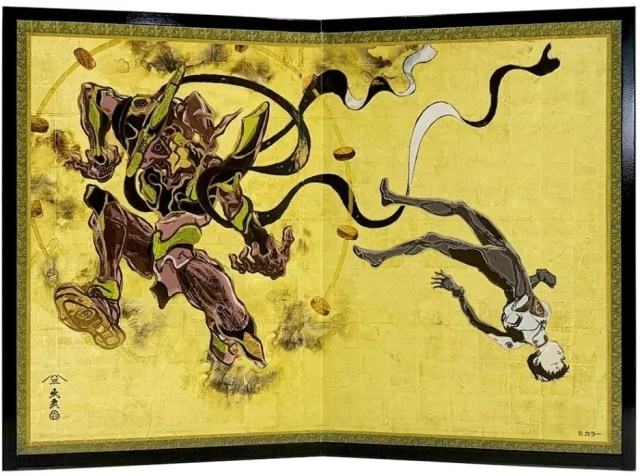
Within Japanese mythology, Raijin is usually described as being the more mischievous and potentially dangerous of the siblings, an aspect of the legends with similarities to the question as to whether Shinji and Unit-01 are going to be humanity’s saviors or lead the species to a much less pleasant future. For the Evangelion Fujin Raijin Folding Screen series, artist Izumo makes use of intricate brushwork as an homage to Tawaraya’s technique, and while anime character designs always have an abstract quotient to them, Izumo is particularly unconcerned with attempting anything close to photo-realism for the human cast of Evangelion here, instead choosing to paint them with expressive poses and facial expressions as they drift through empty golden space.
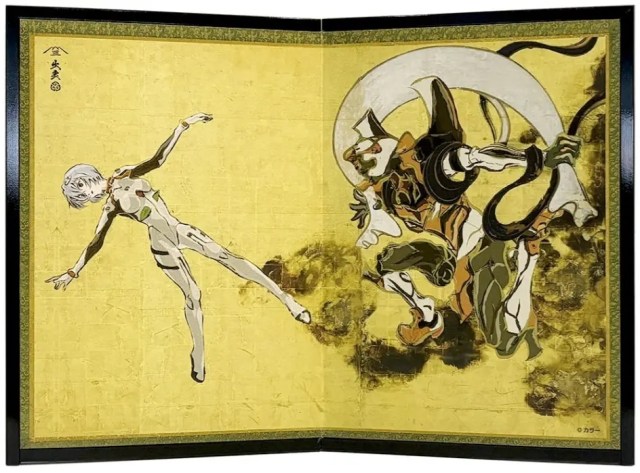
On the other side of the composition, four different Eva/character pairs take the place of Fujin, with their personal ways of trying to support or protect Shinji echoing the wind god’s comparatively more benevolent, yet still intimidatingly powerful, image compared to his brother. In addition to Rei and Unit-00, the collection consists of Asuka and Unit-02…
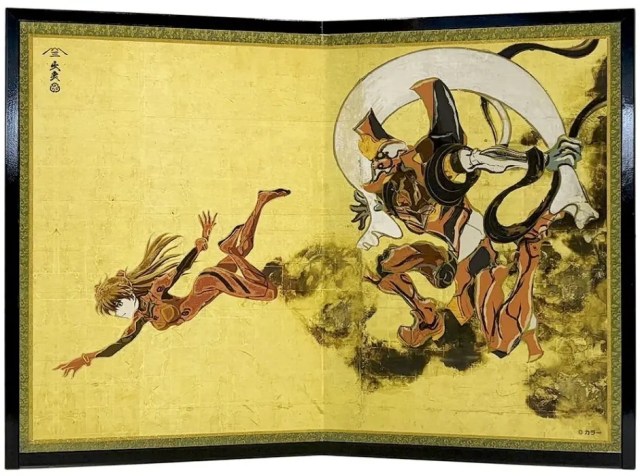
…Mari and Unit-08…
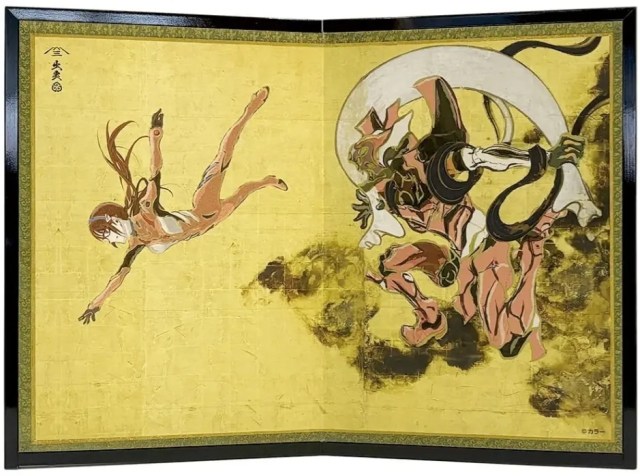
…and Kaworu and Evangelion Mark.06.
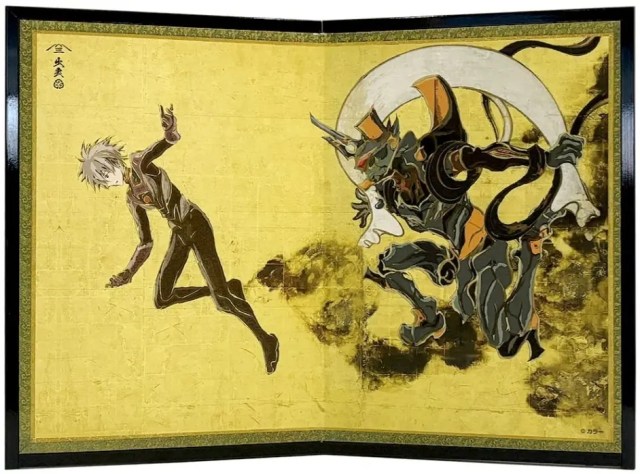
While it’s often the norm for newly commissioned anime artwork like this to get put on a huge array of items, Hanzo looks to be sticking to the original Fujin Raijin Zubyobu format and offering the Evangelion Fujin Raijin Folding Screens as just that: folding screens. They do realize, though, that not everyone who wants one lives in a feudal-era castle with entire rooms to spare for art displays, and so the Eva screens are a manageable 31.4 centimeters (12.4 inches) in height and 43.7 centimeters across, and can be folded to bring their width down by a half.
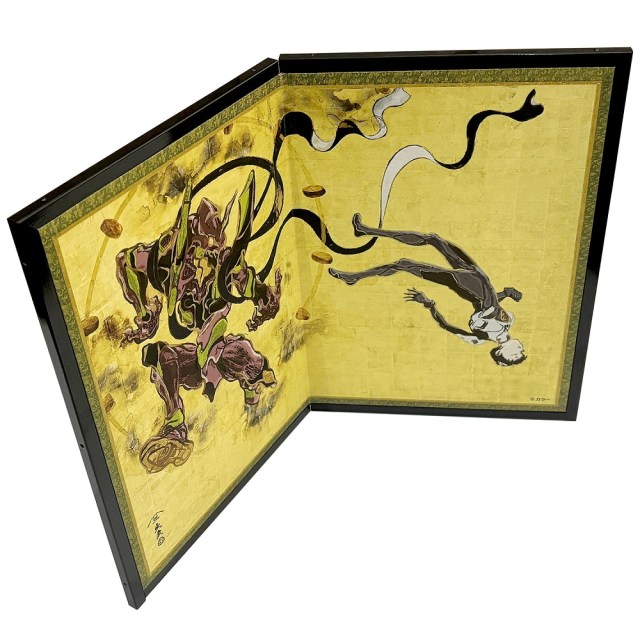
▼ Alternatively, you can hang the unfolded screens on your wall like you would conventional paintings, since they already have a frame of sorts to facilitate their folding.
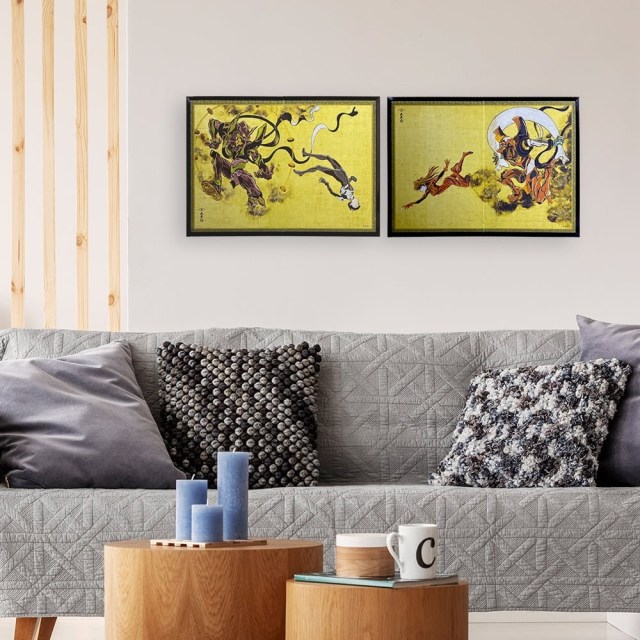
Also, though customarily displayed as a pair, Tawaraya’s Wind God and Thunder God is actually two separate two-panel screens, and that’s the case for the Eva reimaginings too, as each design is sold separately, priced at 29,700 yen (US$185).
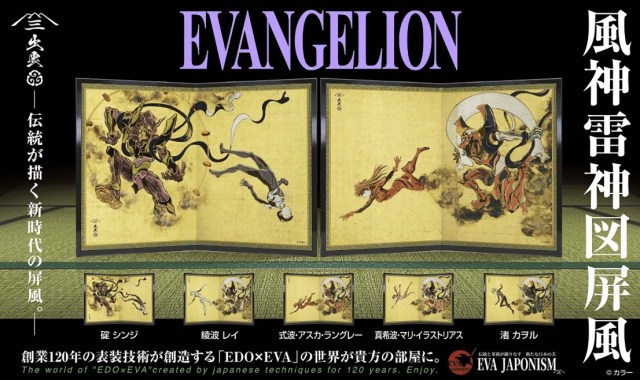
The collection goes on sale through Hanzo’s Ukiyo-e Works online store (also known as Hanzo Ukiyo-e Kobo) here at noon on July 17.
Source: PR Times, Hanzo
Top image: PR Times
Insert images: Wikipedia/Calksmods, PR Times, Hanzo
● Want to hear about SoraNews24’s latest articles as soon as they’re published? Follow us on Facebook and Twitter!
Credit:


0 comments: