
Tons of used books in Japan being bought up by someone or something
The purchasers are unknown, so let’s call them “anonymous individuals” or “AI” for short.
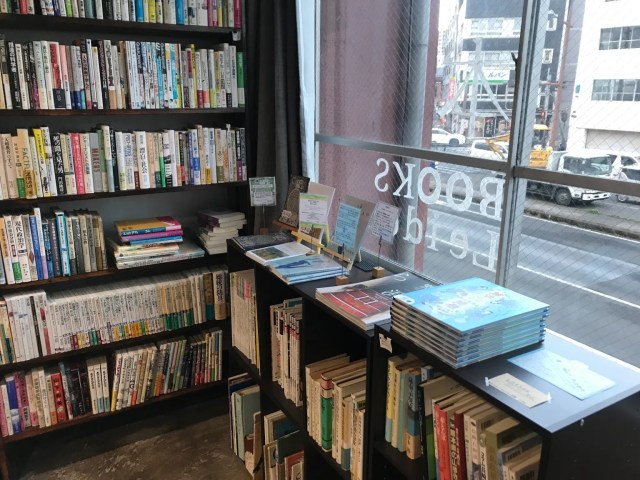
There is perhaps no better example of an independent business than the neighborhood used bookstore. But like many such businesses these days, it can be really hard to make ends meet as they compete with cheaper chain stores or faster and more convenient electronic alternatives.
So at first, it must have been a huge relief when a number of used book stores, in various parts of Japan, started getting huge volume orders for high-end books on non-fiction topics like history, medicine, and philosophy. However, when more and more such orders kept coming in at bizarrely regular intervals, things started to get creepy.
One bookstore in Tokyo sold more than 1,000 books in total to a single shipping address, but when the owner looked more closely, he noticed that each order was made at inhumanly precise intervals. Another owner in western Japan said that he received an order for tens of thousands of books from a company overseas. And in almost all cases, the orders are for non-fiction books rather than the usually top-selling fiction and manga titles.
Many of these orders are shipped to a logistics center in Okayama Prefecture, but when approached by the media, they refused to divulge who or where the purchaser is. Meanwhile, according to trade data, a major Japanese book distributor had sold over 50 tons of books in the United States in the last year but also declined to give specifics about what the sales entailed.
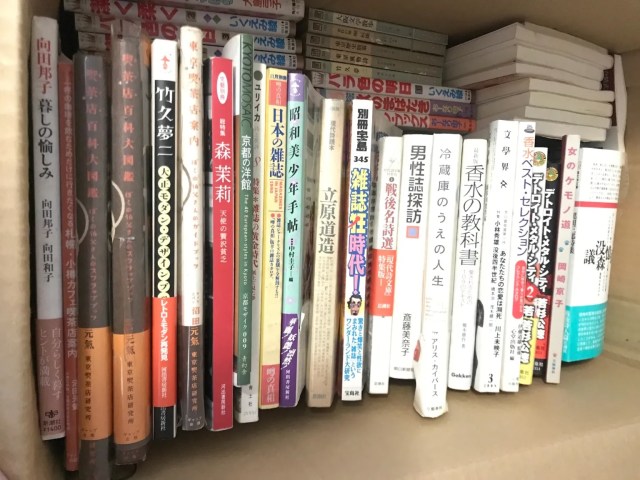
Those in the used book business, however, are growing increasingly concerned that these are being used to train AI models. Earlier this year, AI firm Anthropic revealed that they had been purchasing books to train their Claude AI chatbot and that it was a common practice in the industry. In most, if not all, cases, the books are destroyed in the scanning process and rendered useless afterward.
The likelihood that this is what their stock is being used for has left Japanese booksellers feeling conflicted. On one hand, the sudden boost in revenue is nice. On the other, having your stock of acquired human wisdom be sent to a shredder in order to feed a technology that may one day wipe out your own business is not an overly pleasant thought.
Online comments regarding this news seem to be split right down the middle, with some decrying this as the possible end of civilization and others believing that giving more Japanese culture and concepts over to foreign AIs might ultimately make the technology more useful to Japanese people.
“The books are cut, scanned, and tossed. And how faithful is this digital reincarnation? If the AI just devours it, then we risk losing our own history.”
“Books weren’t made for this. Foreign interests are exploiting Japan, and this represents an overall spiritual poverty around the world.”
“One time I asked an AI about a typo in a rather obscure book, and it could identify the exact page and line where it was. That’s when I knew it had been used for training.”
“Considering the current state of the used book market, shouldn’t these shops be thrilled?”
“A lot of them would have just been thrown away and incinerated anyway. Just don’t sell those things any rare or valuable books.”
“This is terrifying. I don’t go to bookstores much, but if I ever pop into one, I’d hate to see a bunch of empty shelves.”
“It looks like a win-win for both sides.”
“I’m worried that if AI gets better at Japanese, fraud attempts will become more believable.”
“If they aggregate all these old books into AI, I wonder if connections that humans haven’t seen will be revealed.”
“We’re getting to a point where if data centers go down, our whole culture goes with it.”
“In a lot of ways, used bookstores are like graveyards for books that no one buys, so export them and put them to good use.”
“At least they’re paying money for it, rather than stealing it from the Internet.”
There is also the issue of copyright and how Japanese law applies to the practice of destructive scanning to train AI models. Japan has some rather unique conditions for fair use in this regard.
First, a book’s copyright can be infringed upon on the condition that the infringer is not enjoying the content. I think we all can agree that AI models are not enjoying the works, which would make the action legal. However, there is also an exception where, if the infringement creates an “unreasonable prejudice” against the copyright holder then the act is not legal. Unreasonable prejudice means that the action obstructs the copyright holder’s ability to earn revenue on their work, and while you can certainly make the argument that AI does that, proving it in court is much harder.
Clearer legislation needs to be made to deal with this complex issue, but it would seem AI is growing at a much faster rate than lawmakers work, so we probably won’t figure this out until a lawmaking AI is developed to do it for us.
Source: NTV News, Hachima Kiko, BBC
Photos ©SoraNews24
● Want to hear about SoraNews24’s latest articles as soon as they’re published? Follow us on Facebook and Twitter!
Credit:

0 comments: