
Modern exosuits are opening up ancient Japanese castle climbs to everyone
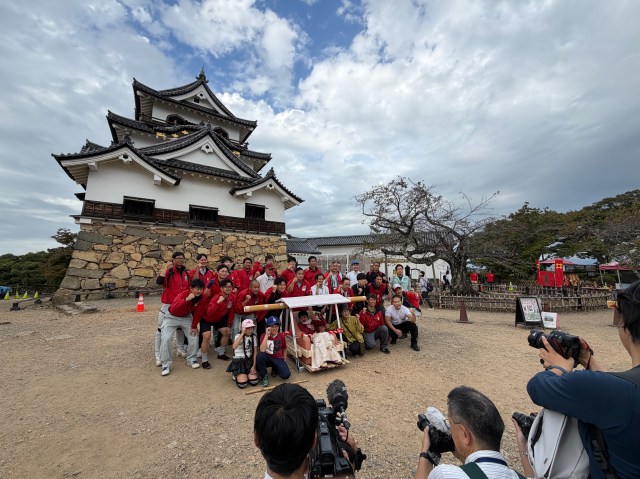
Combining palanquins and muscle suits to make historic sites accessible for all.
Along the eastern shores of Lake Biwa, Japan’s largest freshwater lake, in Shiga is the city of Hikone, home to one of only twelve castles in Japan with its original main keep still standing.
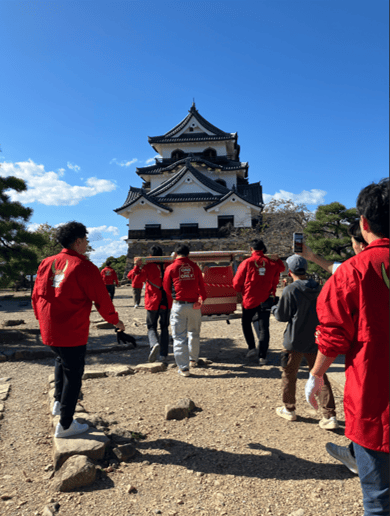
However, reaching the top is not a casual stroll, being guarded by 140 steep, irregular stone steps explicitly designed to exhaust invading samurai, and now those same steps present a modern dilemma.
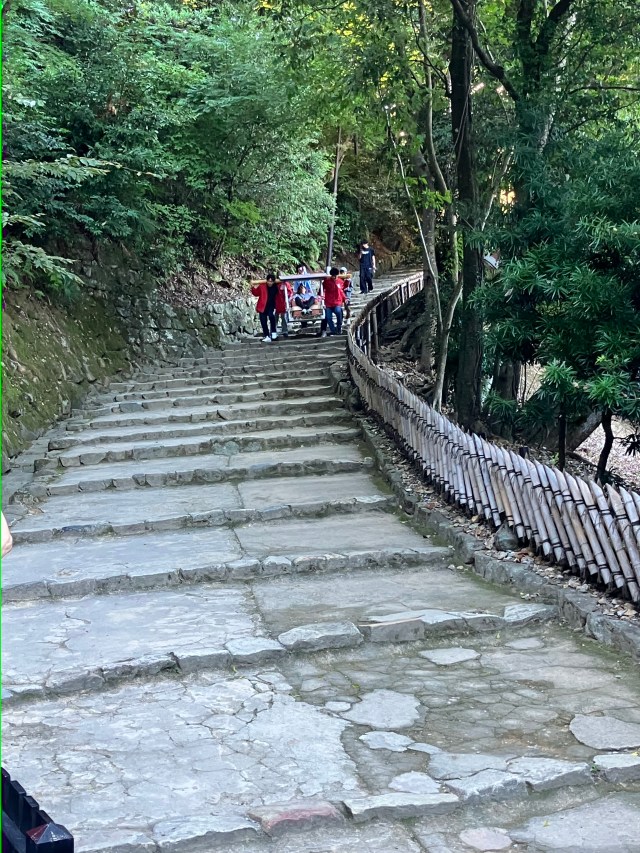
Being a National Special Historic Site, and a possible candidate for UNESCO World Cultural Heritage status in 2028, how can the site be made more accessible for visitors who use wheelchairs or have mobility impairments, especially when pouring concrete ramps over 17th-century masonry isn’t exactly an option that would be enthusiastically received?
On October 19, Hikone City staff and volunteers conducted a trial, where they took turns acting as carriers, carrying wheelchair users up to the main enclosure (honmaru) using a traditional wooden mountain palanquin (yamakago). The trek covered a 285-meter (935-foot) round-trip with a 50-meter (165-foot) vertical rise and an average 18-percent incline, which is not an easy feat for two people to do.
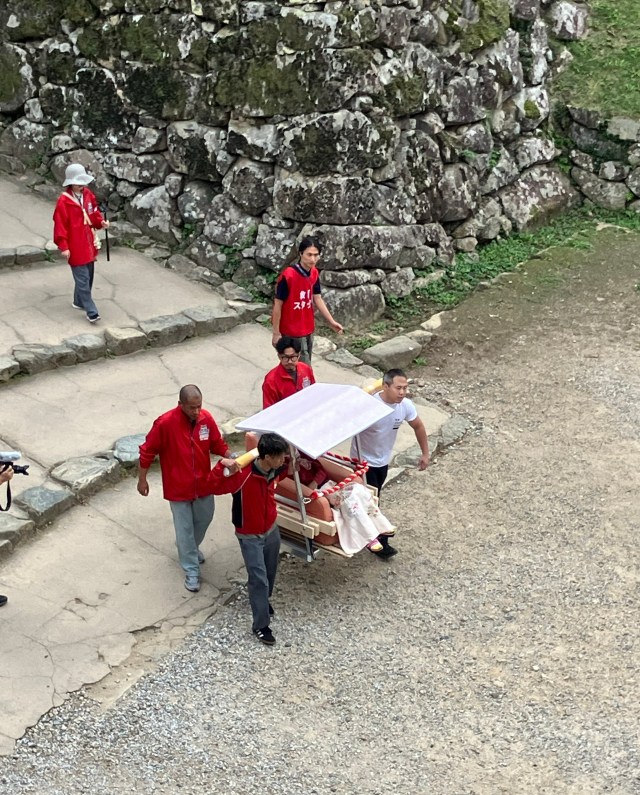
So, to lighten the load for the team of six carriers, trial participants strapped on state-of-the-art, non-motorized wearable assist suits, with two wearing the Muscle Suit Soft-Power Easy-Lift and four equipping the Mediaid Firm Guard Waist EX Hard.
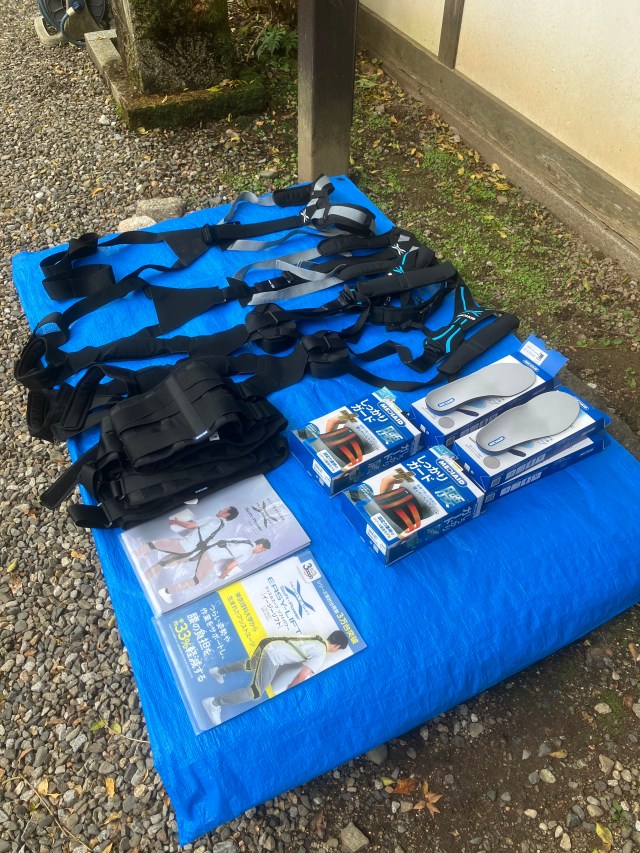
▼Muscle Suit Soft-Power Easy-Lift
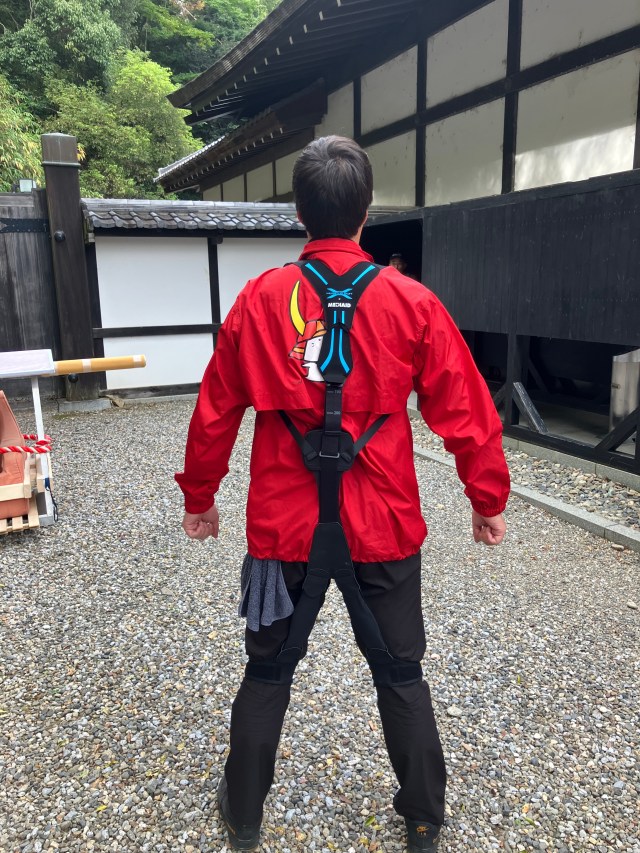
▼Mediaid Firm Guard Waist EX Hard
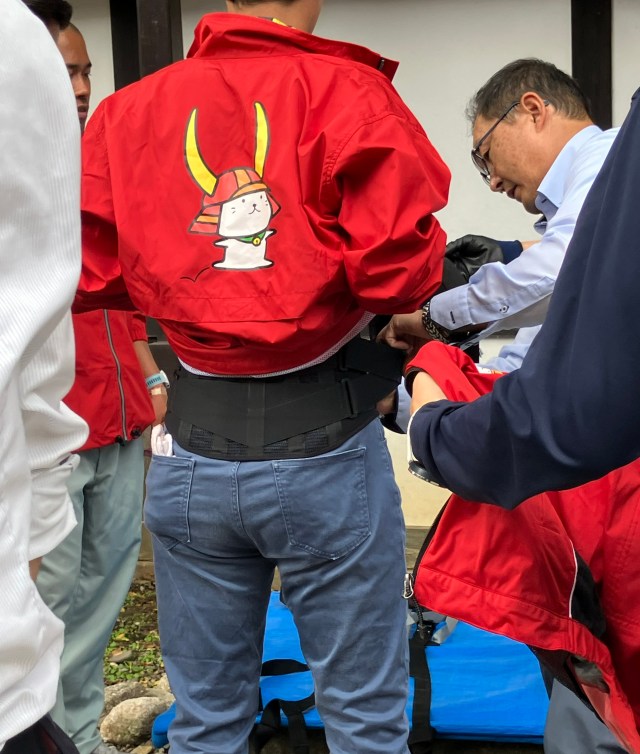
The reaction from the carriers was enthusiastic, receiving comments like:
“Because I injured my lower back in the past, wearing it gave me a real sense of security.”
“It is attached at the base of the knees, but when standing upright it is loose, so it does not get in the way of going up and down the stairs.”
“The moment I took it off, I realized just how much it had been helping me.”
Standing up while balancing a palanquin on your shoulders normally feels like tipping backward, causing some difficulty in maintaining balance, but the back-and-leg support makes rising smooth and stable.

Beyond opening up easier physical access to a historic tourist site, the trial offered a glimpse into an exciting future for Japanese tourism, with accompanying curators explaining the history and scenery of the location, creating an opportunity for visitors to get a taste of what it would be like to travel around the mountain like nobility in the time of the samurai.
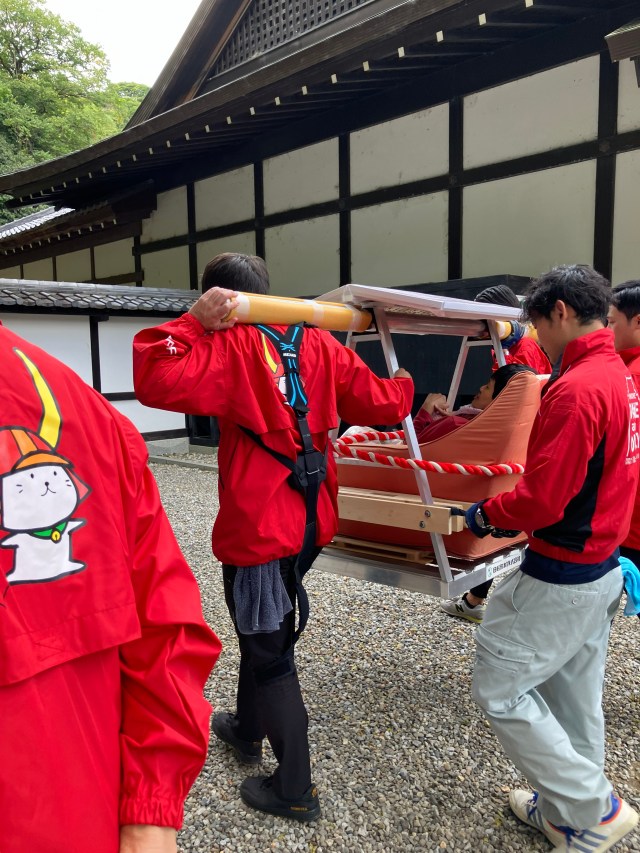
Similarly, it could also open up another bucket-list item for many travelers along with sitting on the back of a human-powered rickshaw, being chauffeured around Japan’s historical districts. If wearable assist suits can help bridge the gap between 17th-century architecture and 21st-century accessibility, it opens up countless possibilities for historic castles, mountain temples, and heritage sites all across Japan.
Source and images: PR Times
● Want to hear about SoraNews24’s latest articles as soon as they’re published? Follow us on Facebook and Twitter!
Credit:

0 comments: