Japanese woman reported to police for “not looking right in a suit,” turns out she’s a crook

How do scam artists keep getting caught in Japan by “not looking good in a suit?”

“Taxi driver” is one of those jobs that can involve a broad range of activities. Obviously driving the taxi is the main one, but they might also find themselves filling the role of travel guide if an out-of-town tourist has some questions about the community, or even just lending a friendly or sympathetic ear when a passenger is feeling chatty.

And then there’s the driver of a cab in Hyogo Prefecture, who suddenly became a crime fighter this week. On Tuesday morning, the driver picked up a passenger in the town of Ako, a 27-year-old woman with brown hair wearing a suit. She asked him to take her to a private residence elsewhere in the city, and he did. After he dropped her off, though, instead of going cruising for his next fare, the taxi driver called the police and told them “I gave a ride to a young woman with brown hair, but she didn’t look right in the suit. I think she might be involved in some kind of scam.”

▼ Yes, he literally called the fashion police on her.

The jump from “wearing a suit” to “pulling a scam” might seem strange, but the most common frauds in Japan involve criminals posing as respectable businesspeople to cheat gullible or confused senior citizens out of their money, and so the police decided to look into the matter. Before an officer could arrive on scene the young woman had already left in a different cab, but investigators were able to contact the second driver and find out where he’d taken her. From there, it was only a short time until they located the woman, having changed into a different outfit but with the suit she’d been wearing during the cab ride still in her possession. Also in her possession: the ATM card of an 88-year-old woman who lives in the home the first cab driver had taken her to.

Upon questioning, the younger woman admitted that she’d called the older woman on the phone earlier that morning, telling her a made-up story about a medical care insurance refund that she was eligible for. Posing as an intermediary agent handling the transaction, she convinced the elderly woman to give her her ATM card and tell her the PIN, ostensibly with the lie that she needed them to transfer the refund into the victim’s bank account.

Luckily, the police were able to take the woman into custody before she could withdraw funds with the ill-gotten card and PIN. She’s now been arrested for attempted fraud and has admitted to the charges, though investigators believe she is likely a runner for a larger operation.

Getting back to the fashion-critiquing cabbie who called the police, this isn’t the first, or even the second, time a crime in Japan has been prevented because someone didn’t look good in a suit. Strange as it may seem, there’s actually some plausible logic behind the deductions. If a suit doesn’t look right on someone, that generally means they don’t look comfortable in it. Maybe it’s ill-fitting, or maybe they’re unusually fidgety and tugging at the shoulder or sleeves. But in general, white-collar wear-a-suit jobs in Japan require you to wear one every day, so most people actually working in such professions get used to them pretty quickly.

But what about younger workers who haven’t been in their position very long? Don’t they still feel, and look, kind of awkward wearing a suit? Maybe, but that’s where the importance Japanese work culture places on experience, and senpai/kohai (senior/junior) relationships come into play. If an employee is still inexperienced enough that they’re not used to wearing a suit (i.e. they don’t look comfortable/”right” in one), it’s unlikely that they’re getting sent out to visit clients in their homes, at least not by themselves. If they are making house calls, they’re probably tagging along with a more experienced coworker for a watch-and-learn experience, not handling customer interactions solo.

So odds are when these criminals are getting caught for not looking good in a suit, it’s not because the people reporting them don’t like the fabric or number of buttons, but because they’re dressed like businesspeople without seeming used to an intrinsic part of Japanese business, tipping careful observers off that they might be posing as someone they’re not, and also up to no good.

Source: Kobe Shimbun Next via Hachima Kiko
Top image: Pakutaso
Insert images: Pakutaso (1, 2)
● Want to hear about SoraNews24’s latest articles as soon as they’re published? Follow us on Facebook and Twitter!


Credit:

All-time greatest anime song singer releases all albums, 41 singles for online streaming services

On her birthday, Megumi Hayashibara gives fans a reason to celebrate too.

There are a lot of anime voice actresses, but there’s only one Megumi Hayashibara. After making her debut by voicing an unseen (and upset) neighbor in Maison Ikkoku in 1986, Hayashibara has been working in the industry non-stop with no ebb in her popularity, currently enthralling viewers of Evangelion: 3.0+1.0 Thrice Upon a Time as the voice of Rei Ayanami. What’s more, since 1991 she’s also been providing opening and ending themes for several of the series she stars in.

Last Tuesday was Hayashibara’s birthday, and with this year marking the 30th anniversary of her professional singing debut, she decided to celebrate by announcing that she’s made her music catalog available on multiple online music subscription services. The collection includes all 14 of her albums, from Half and, Half (released in 1991) to Fifty~Fifty (2018), plus all 41 of her singles released between “Nijiiro no Sneaker” (1991) and “Imawa no Shinigami” (2017) and various best-of and compilation albums.

▼ Hayashibara’s newest song, “Denim,” from her latest compilation album Vintage Denim

The decades-spanning selection includes a number of themes from hit franchises such as Slayers, Shaman King, Blue Seed, and even Evangelion, as Hayashibara’s jazz-style “Ayanami Rei covers” of both Cruel Angel’s Thesis and Fly Me to the Moon are part of her seventh album, Bertemu.

▼ “Soul Salvation,” Hayashibara’s new theme for Shaman King, will also be available.

Hayashibara’s catalogue is available for audio streaming now on Apple Music, Spotify, Line Music, Amazon Music, AWA, KKBox, RecMusic, and d Hits, with links to individual services here.

Source: Ongaku Natalie via Hachima Kiko, Megumi Hayashibara official blog
Top image: Apple Music
● Want to hear about SoraNews24’s latest articles as soon as they’re published? Follow us on Facebook and Twitter!


Credit:

Saitama officially forbids walking up and down escalators

They’ve become the first prefecture in Japan to do so.

Masahiro Kawase is a 48-year-old office worker who suffered a stroke six years ago and is paralyzed on his left side. However, in Saitama Prefecture custom dictates that everyone who rides an escalator stands on the left and walks – or in some cases runs – up the right side.

This makes what ought to be a normal commute for Kawase a harrowing experience. When boarding the escalator he must grab the right side handrail, steady himself, then slide over to the right. He also must do all this before others shove him and shout at him to get out of the way.

Now, however, Kawase and others like him may find some relief in Saitama’s new ordinance that was passed on 26 March to prohibit any movement while riding escalators. The ordinance, which will take effect next October, also requires places with escalators to put signage asking riders to refrain from walking or running on the machines.

▼ As seen in this news report, some make-shift signs have already gone up, but people are still running

While consideration for people like Kawase is one of the motivating factors for this ordinance, Saitama is also hoping to help curb the roughly 775 escalator injuries that happen a year in Japan, a little over half of which are caused by not standing still and holding handrails.

NHK spoke with Edogawa University Professor Emeritus Masakazu Toki, who said that the custom began during the bubble era when work efficiency took precedence over consideration for weaker people. “Manners are usually created through people’s behavior and thinking,” said Professor Toki, “so it’s a little disappointing that this time they need to be stipulated in an ordinance. However, there have been calls for this for over 10 years and little has changed, so I appreciate that this was established. The ordinance respects autonomy rather than surveillance and penalties.”

As Prof. Toki said, like with other ordinances that made headlines in the past, there are no punishments for violating them. The goal instead is to put the matter at the forefront and hope people take the time to consider it and change their behavior accordingly. That might not sound so effective, but in some cases it has been enough to create significant change in the past.

Most comments about the news generally support not walking on escalators, but some people took issue with making a law out of it in this way.

“Next time I see someone blocking the escalator, I’ll know they’re from Saitama.”
“Great job Saitama! If you want to walk, use the stairs.”
“I don’t know. This problem won’t be solved until it’s nationwide.”
“I don’t really understand ordinances. What do they do?”
“I’m always worried when riding with my child that someone will rush by and knock them over. I hope this spreads.”
“I admit I run up sometimes, but I still think this is a good idea. If you can run, then you can use the stairs.”
“Just make all escalators wide enough for one person and watch the problem disappear.”

Changing all of the escalators in Japan is a solution, but probably more long-term than some people want to see. However, a similar effect might come about naturally anyway.

With Japan’s aging society where already one in four women is over 70, the balance of escalator climbers versus escalator riders will surely continue to shift. As Prof. Toki mentioned, the culture of escalator-climbing came about naturally at a time when the number of young business people rose sharply. Now, as we enter the age where the population is dominated by the elderly, what’s considered appropriate on escalators could also change naturally.

Source: NHK, My Game News Flash
Top image: Pakutaso
Insert images: Pakutaso (1, 2)
● Want to hear about SoraNews24’s latest articles as soon as they’re published? Follow us on Facebook and Twitter!


Credit:

Original Tokyo Olympics opening ceremony plans leaked, with Akira and Mario taking centre stage

An opening ceremony so good it gave Naomi Watanabe goosebumps.

As the Olympic torch currently makes its way through the country, the postponed Tokyo 2020 Olympics is now barrelling full-steam ahead, with the opening ceremony set to be held, without overseas spectators, on 23 July.

However, in light of the recent resignation of Hiroshi Sasaki, the chief creative director for the Olympics and Paralympics opening and closing ceremonies–who quit after receiving backlash for suggesting plus-size celebrity Naomi Watanabe dress as a pig at the opening ceremony–there’s been some debate as to whether or not the disgraced director’s vision for the Games should go ahead as planned.

▼ Watanabe was scheduled to appear at the opening ceremony, but the suggestion she dress as an “Olympig” was never discussed directly with her.

Sasaki’s appointment to the role of chief creative director in December last year was the result of a reshuffle to streamline the planning process following the postponement of the 2020 Games. Prior to that, acclaimed Kyogen actor Nomura Mansai was in charge, leading a creative team with a different vision for the ceremonies–a production so good Watanabe sang its praises on her YouTube channel, saying “it gave me goosebumps”.

One member of the creative team was famous choreographer Mikiko, who was given the role of chief operating officer for the Tokyo Olympics opening ceremony. Though her proposal for the ceremony was shelved following the reshuffle, weekly magazine Shukan Bunshun–who broke news of the “Olympig” scandal that resulted in Sasaki’s resignation–has since obtained 280 pages detailing the original proposal.

▼ Mikiko (below right) has choreographed routines for big names in the music industry like Perfume.

According to Shukan Bunshun, the original plans for the ceremony were presented to the International Olympic Committee in April last year, shortly after the decision was made to postpone the event due to the growing coronavirus pandemic. The IOC was said to be delighted with the plans, and acknowledged that some mention of the pandemic would need to be made, allowing for revisions before the actual event.

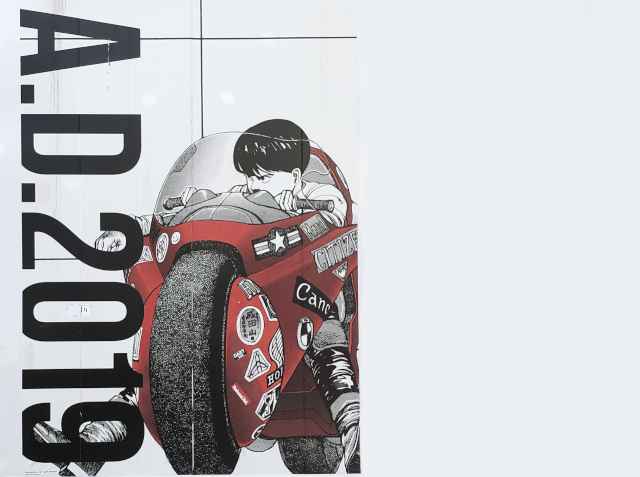
The plans included an homage to the 1988 animated feature film Akira, a particularly apt reference, given that the film was set in a futuristic Neo-Tokyo in 2019, amidst a pandemic ahead of the 2020 Tokyo Olympics. To have the actual Games take place in Tokyo in 2020, just as they were “predicted” in the anime some 32 years ago, is a coincidence worthy of acknowledgement in the opening ceremony, and had the original proposal gone ahead, we would’ve seen protagonist Shotaro Kaneda at the very beginning of the show, entering the stadium on his iconic red motorcycle and circling a dome-covered Neo Tokyo on the stage.

The performance was set to be enhanced by projection mapping, displaying images of Tokyo around the venue, with the words “Neo Tokyo in 2020” drawn by Akira creator Katsuhiro Otomo.

A “Welcome to Neo Tokyo” performance was set to follow, featuring world-famous Japanese dancers such as Daichi Miura and Koharu Sugawara, alongside performers dressed as Tokyo Station staff.

After looking back at the 1964 Tokyo Olympics, Naomi Watanabe would then take the audience through the years from past to present, in front of a huge “Ready?” display as the athletes march into the stadium for a section entitled “The Last Mission”.

Then, as the ceremony draws to a close, Mario would appear, jumping between two giant “lantern” screens suspended above the performance space. Below, a dance performance inspired by synchronised swimming would take place.

▼ Some of the visuals from the above-mentioned performances can be seen in the tweet below.

Following Sasaki’s resignation on 18 March, the President of the Tokyo 2020 Organising Committee, Seiko Hashimoto, said there was not enough time to alter the current plans for the ceremony, suggesting that Sasaki’s vision for the Games would be going ahead as planned.

However, now that the original plans for the ceremony have been revealed by Shukan Bunshun, it looks likely they will stir up debate amongst the general public. A number of commenters are already saying that an opening ceremony like the one envisioned by Mikiko would be just the thing to save the Tokyo Olympics. And with all the scandals and backlash surrounding the current Games, the organisers might need to give the public what they want, especially if it’s a performance so good it gives viewers goosebumps.

Sources: Shukan Bunshun via Hachima Kikou
Featured image: SoraNews24
● Want to hear about SoraNews24’s latest articles as soon as they’re published? Follow us on Facebook and Twitter!


Credit:

Entire crew of Going Merry arrested by police in Japan (no, not on April 1)

The sea cucumbers they poached along the way actually are a sort of treasure.

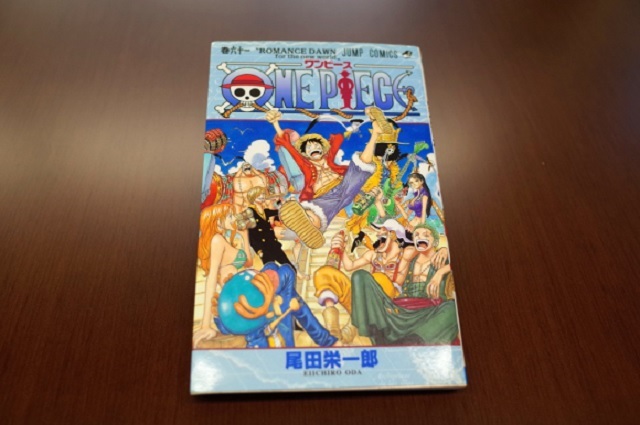
In a shocking development for fans of anime/manga mega-hit One Piece, each and every member of the crew of the seafaring ship Going Merry has been arrested. Almost as surprising is that it wasn’t the Marines, CP9, or any other agents of the World Government that captured the oceanic scofflaws, but the plain old Aomori Maritime Security Department, off the coast of Japan’s Aomori Prefecture.

In total, nine crew members were taken into custody, all men ranging in age from 29 to 53 years old. Those demographics might seem too old and uniformly male for the Straw Hat Pirates, but the arrests aren’t part of the anime pirate saga, and instead are the result of a real-life crime that took place involving an actual six-meter (19.7-foot) pleasure boat named after the One Piece heroes sailing ship, the Going Merry.

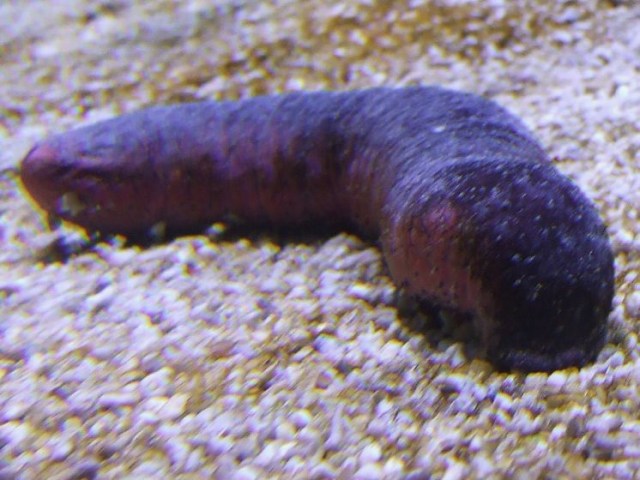
At roughly 9 p.m. on March 8, officers from the Maritime Security Department observed divers going over the side of the Going Merry approximately 1.7 kilometers (1.06 miles) southeast of the fishing port in the town of Yomogita. The submarine treasure they were after: sea cucumbers, the “black diamonds” of the ocean, as authorities say the creatures are now called among the criminal undersea underworld.

Sea cucumber poaching has become an increasingly large problem in Japan in recent years, and the high prices they can fetch in illicit overseas trade, particularly to buyers elsewhere in Asia, have made the black diamonds an attractive line of revenue for Japan’s yakuza criminal organizations. On the night of March 8, investigators say the Going Merry crew hauled up 802.5 kilograms (1,769 pounds) of sea cucumbers, which would have a street value of approximately 3.2 million yen (US$30,920).

▼ Sea cucumber weights can vary greatly, but the largest are said to reach a weight of around 10 pounds, meaning the Going Merry crew hauled up at least 150 of these guys.

Five of the nine Going Merry crew were arrested on the spot, with the remaining four escaping into the night. Their victory was short-lived, though, as they too were found and arrested between March 17 and 23.

The poachers are the first to be arrested since the implementation of stricter anti-sea cucumber poaching laws went into effect in Aomori, and so they now face fines of up to 30 million yen, up from the previous maximum of two million. The police are also looking into probable ties to yakuza organizations, which would likely involve additional charges and penalties.

Luffy, Nami, and their cohorts, meanwhile, remain at large.

Source: To-o Nippo via Yahoo! Japan News via Anime News Network/Kim Morrissy
Top image © SoraNews24
Insert image: Wikipedia/Erin Silversmith
● Want to hear about SoraNews24’s latest articles as soon as they’re published? Follow us on Facebook and Twitter!


Credit:
Japan’s Olympic stadium to fill thousands of empty spectator seats with waifu pillows

Not sure if creative or cringey.

Due to the coronavirus pandemic, the Tokyo Olympics has suffered setback after setback ever since their postponement last year. Between a majority of Japanese people thinking the games should be cancelled, and top officials making embarrassing remark after embarrassing remark, it’s been a bumpy road.

Even recently, it was declared that the Olympics will not allow overseas spectators, resulting in a huge financial loss and thousands of empty seats in the stadium.

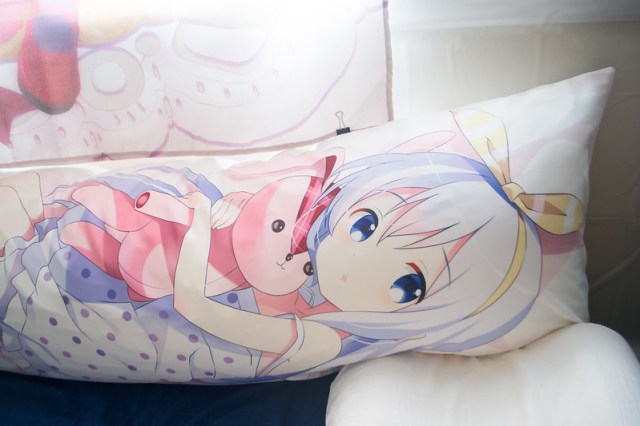
However, in an unexpectedly smart move, the Olympic committee has announced that they’ll tackle this problem in an unconventional way. Rather than having the seats between the few spectators stay unfilled, open seats will instead be occupied with body-sized waifu pillows.

▼ Will this be the average audience member for the 2021 Olympics?

While anime-girl pillows might seem like a strange choice at first, spectator-safety committee chairman Mr. Yome Oreno explained the situation:

“We took inspiration from other countries using cardboard cutouts at their own sporting events. The spirit of the Olympics is all about cultural exchange, so this is our chance to show the world the Japanese take on the idea.

“Additionally the costs were minimal, since we were able to purchase used, unwanted pillows from secondhand shops.”

Examples of discounted, forgotten waifus included Faye Valentine from Cowboy Bebop, female Ranma from Ranma 1/2, and perhaps most ironic, Narusegawa from Love Hina.

▼ I guess we didn’t keep our childhood promise to never forget her after all….

One concern that’s been raised is the possibility of lewdness from the human spectators sharing neighboring seating with the pillows.

Thankfully, those worries have been addressed. Select pillows have been installed with microchips programmed to scream “Kyaaa, hentai!” when touched, aiding Olympic staff in dealing with perpetrators.

While actions of up to Class-2 lewdness will be permitted within the stadium, anything Class-3 or above, including hand-holding or accidentally tumbling into pillow cleavage, will result in the offender being thrown into horny jail for the duration of the Olympics.

▼ Originally, perpetrators were simply reassigned to the Piccolo-pillow section,
but then everyone started getting in trouble on purpose to be sent there.

While anime waifus will make up a majority of the filled seats, there will also be idol pillows, shiba inu pillows, and sentient vegetable pillows as well.

When asked why, Mr. Oreno had this to say:

“The main purpose of the pillows is to brighten the athletes’ moods, to make them smile. And frankly it’s impossible not to smile when you’re looking at Carrot-san. I mean, just look at it! Isn’t it so cute. I just want to rub my cheeks on it. Gaze at its smooth orange body. Peel it and put it in a salad!”

▼ Mr. Oreno was then swiftly bonked on the head and taken away to horny jail.

So what do you think? Will the body-pillow strategy protect spectators and breathe life back into forgotten waifus? Or will it end up another governmental gaffe, like last year’s council on self-quarantine strategies headed by a hikikomori?

Let us know and remember to have a happy April Fools’ Day!

Source: April Fool’s!
Top image: Flickr/Michael Ocampo, Pakutaso (Edited by SoraNews24)
Insert image: Flickr/C. Fountainstand, Flickr/Clyde Adams III
● Want to hear about SoraNews24’s latest articles as soon as they’re published? Follow us on Facebook and Twitter!


Credit:

Valentino sparks outrage with insincere apology for disrespecting Japanese culture in photo shoot

Model daughter of former SMAP member gets caught up in controversy involving shoes and kimono. 

There are a lot of rules surrounding polite and respectful behaviour in Japan, particularly when it comes to traditional culture like kimono and everyday customs like removing your shoes when indoors.

Showing respect for these traditions is such an important part of Japanese culture that any departure from convention is likely to spark ire and disdain, so when luxury Italian fashion house Valentino released images showing a Japanese model walking on a kimono obi sash while wearing shoes, the Internet erupted in outrage.

The photo shoot, for the brand’s spring/summer 2021 Valentino Collezione Milano for Women collection in Japan, featured Japanese model Koki, the well-known daughter of Takuya Kimura, a former SMAP boy band member and one of the nation’s most famous stars.

▼ Takuya Kimura, or “Kimutaku” as he’s widely known, pictured on the left, with daughter Mitsuki (professionally known as “Koki”) on the right.

Since making her modelling debut in 2018, Koki has worked with famous fashion houses around the world, including Valentino back in 2019.

It was this year’s Valentino shoot that really caught everyone’s attention, though, as photos for the collection showed Koki sitting on a narrow strip of cloth resembling an obi sash, which is usually worn around the waist with kimono.

▼ She was also photographed walking on the fabric while wearing high heels.

The images from the photo shoot shocked people around Japan, who couldn’t believe the disrespectful behaviour they were seeing.

“This makes me feel as if Japanese culture is being trampled on.”
“If an obi artisan were to see this, they’d keel over.”
“Japanese people know to treat obi carefully, so the idea of sitting or trampling on it is inconceivable.”
“It’s like walking on a Valentino dress with shoes on. How would they feel about that?”
“This is terrible…the obi is neither a ‘runway yukata’ nor a tarpaulin. It’s part of a kimono. The person in charge should come out and explain themselves.”

Adding insult to injury was the fact that the promotional video for the collection showed the model wearing shoes while inside what appears to be a Japanese home, another cultural taboo that viewers were quick to criticise.

Following the negative reaction online, Valentino pulled the photos and video from their official website and social media accounts, and issued an apology in both Japanese and English.

The apology above reads:

“It has recently been brought to our attention that the Valentino Collezione Milano visuals shot in Japan featuring a Japanese model, includes cuts that unintentionally feature the model sitting or stepping on a Japanese fabric which recalls a traditional obi and involves her wearing shoes on the doorstep or inside a Japanese traditional home.
The fabric unwittingly resembles the Japanese traditional obi and Maison Valentino deeply apologises for any offense caused.
Valentino holds a strong commitment to nurturing a culture of inclusion on a global scale that respects the individuality of every single member of the Community, artistic work, designs and artistic craftsmanship.
The brand has developed a broad campaign empowering the deep connection with different cultures embracing all communities globally and respecting all forms of creative expression, all identities and values.
Maison Valentino is based on a future-focused culture that thrives on creativity and fresh perspectives, while fostering protection, inspiration and exploration.
The brand confirms that the content has been entirely removed.
Maison Valentino is committed to further cultivating a culture of inclusion on a global scale and would like to turn this event into a powerful learning moment for the brand and its Community.”

The apology seems to have missed the mark in Japan, however, with a lot of people taking issue with the fact that the company appears to be trying to dodge criticism by claiming any similarity between an obi and the cloth used in the images was unintentional. 

“The problem isn’t whether the fabric is an obi or not, it’s the fact that someone is trampling on something that looks like an obi–like a foreign country trampling on Japanese culture.” 
“What kind of cloth is it if it isn’t an obi? It’s an obi. Their bad-loser behaviour makes me feel sick.”
“This isn’t an apology at all. It’s like they’re making us out to be fools. Do they really think it’s okay to say it’s not a kimono obi?”
“This ‘apology’ is just adding fuel to the fire.”
“This isn’t good enough–this is not an apology. I loved this brand but I’m so shocked I’ll never buy from them again.”
“If you think of kimono as a type of national costume, you can see why this is out of line. If a Japanese clothing maker made a commercial showing someone trampling on national costumes from other countries, it’d be serious.”
“I’m surprised to see the apology exists online only as an image.”

The majority of Japanese comments online say the apology lacks sincerity, and the fact that it’s only been issued as an image on the brand’s Japanese and English-language Twitter accounts has left a bad taste in people’s mouths as well.

One thing a lot of people do agree on, however, is that 18-year-old model Koki shouldn’t receive any hate for the images–which is what happened to American-Japanese model Kiko when she controversially posed with her legs spread apart on a table in a Japanese room–as she was merely following instructions from the creative team.

With Valentino now involved in a second backlash from the campaign, it’s yet to be revealed whether the company will attempt to redeem themselves with a reworded apology. It’s something the company should seriously consider, though, because with the Asian community feeling particularly vulnerable at the moment, admitting to your mistakes and accepting full responsibility for them is the real “powerful learning moment” the world needs to see right now.

Source: Twitter/@Valentino_Japan via Hachima Kikou
Featured image: Instagram/koki_kimura.ph
● Want to hear about SoraNews24’s latest articles as soon as they’re published? Follow us on Facebook and Twitter!


Credit: