Shimane has a secret hot spring town that feels like stepping into an old Japanese film

09:13 cherishe 0 Comments

A World Heritage hot spring town with retro bathhouses and seafood feasts.

We love uncovering hidden travel sites around Japan that take us away from the crowds and lead us to discovering a myriad of culturally rich places. Shimane Prefecture has proven to be a veritable silver mine of them, as our Japanese-language reporter Marie Morimoto discovered on her previous visit there earlier in the year.

Marie recently found herself back in the region, and decided that she’d explore a hidden hot spring town that is included in part of the World Heritage Site collectively called Iwami Ginzan Silver Mine and Its Cultural Landscape. While eager to find out more about a place so culturally significant, she was also intrigued by the town’s name: Yunotsu Onsen.

Looking at the Japanese kanji characters for Yunotsu Onsen, 温泉津温泉, they kind of resemble a hot spring sandwich, where you have the character tsu/津 (meaning “harbor”) surrounded on both sides by the characters for onsen/温泉 (“hot spring”). So, for the unaware, you could very well read the town name as Onsen-tsu Onsen, instead of Yunotsu Onsen.

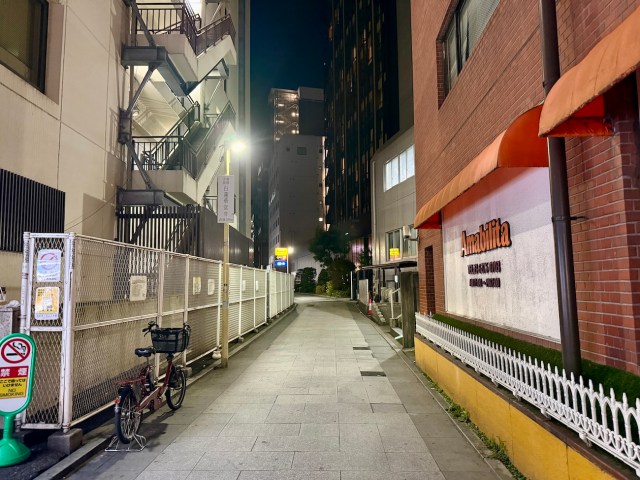
The town itself is located in the city of Oda and is easily accessible from Yunotsu Station on the JR San-In Main Line, with most of the town being within a 30-minute walk. The moment Marie got off the train in the evening she was overwhelmed by the nostalgic atmosphere and scenery. Looking around at the facade of the bathhouses, and the light spilling out from the buildings, it all felt strangely familiar to her, despite it being her first visit there, like a town taken straight out of a movie.

What was once an important port town when the silver mine was thriving, is now supported by tourists who love it as a hot spring destination, with another of its major draws being the fresh seafood caught in the sea right in front of the town.

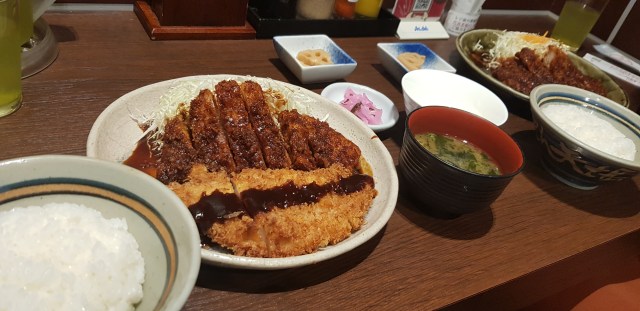
For dinner, Marie visited Minato no Shokudo Kan, which serves set meals and izakaya-style dishes centered on the local seafood.

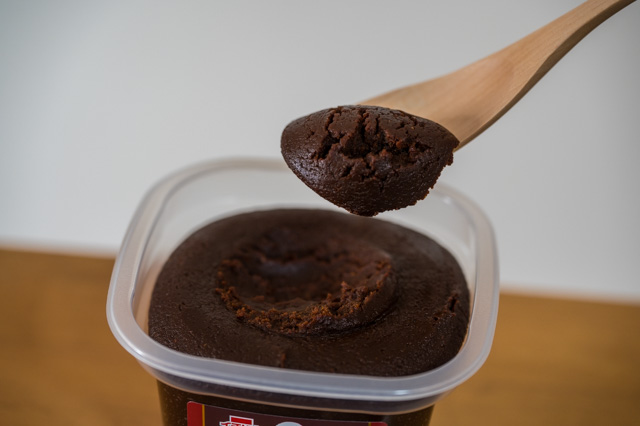
Whether it was fried or plain raw sashimi, the fish were delicious, and so were the oden and locally grown vegetables. She particularly loved the super rich Yunotsu Pudding she had for dessert.

Marie’s accommodation for the night was Hisom Hiso, a whole-house rental renovated from a traditional home and located about 20 minutes on foot north of the part of town in which she’d had dinner.

The house retains the charm of an old home nestled in the mountains, yet it comes with many modern comforts. The warmly lit interior in the dark, quiet surroundings made her feel wonderfully cozy.

While the house includes a large, fully equipped kitchen, it is also possible to have breakfast, lunch, and dinner catered for and delivered with an advance reservation.

Although Marie didn’t have time to visit, there is also supposedly a beach just a three-minute walk away that is perfect for seeing the sunset across the Sea of Japan.

Another charm of Yunotsu Onsen is that you can enjoy the hot springs both at night and early in the morning. Yakushiyu, with its gorgeous stained-glass exterior, is beautiful at night and open year-round until 9:00 p.m. It’s even possible to enjoy views of the town from the rooftop.

In the morning, Marie visited Senyakuto Yunotsu Motoyu Onsen, which opens at 6:00 a.m., and is perfect for people who want to soak as much as possible, morning and night. Both Senyakuto and Yakushiyu have a natural spring and are located relatively close to the source, so the temperature of the water is quite hot.

Senyakuto has three different temperatures: hot water at 46–48 degrees Celsius (114–118 degrees Fahrenheit), warm water at 43–44 degrees Celsius, and baths recommended for first-time visitors at 38–40 degrees Celsius. With most people having baths in their home at less than 42 degrees Celsius (107 degrees Fahrenheit), it seems evident that the locals of Yunotsu take pleasure in boiling themselves.

If you’re worried that you might accidentally put a toe into the wrong bath, the staff will explain which bath is at what temperature before you start to get undressed. Upon leaving, you can even take home a little pouch of hot spring water as a souvenir, though it’s probably best that you don’t collect it yourself and risk some odd looks from other guests.

Despite Marie’s one-night stay, the charm of the nostalgic scenery, delicious food, cozy lodging, and relaxing hot springs, struck a deep chord with her, and she would have loved to have stayed longer, visit more cafes, and see the ocean. It really makes you wonder about what other secret treasure troves of places Japan has in store for intrepid explorers.

Location information
Minato no Shokudo Kan / 港の食堂 KAN
Address: Shimane-ken, Oda-shi, Yunotsu-cho, Kohama-i 1109-17
島根県大田市温泉津町小浜イ1109-17
Open 7:30 a.m.–9:00 a.m., 11:30 a.m.–2:00 p.m., 5:30 p.m.–9:00 p.m.
Closed Mondays (subject to change)
Website

Hisom / ヒソム日祖
Address: Shimane-ken, Oda-shi, Yunotsu-cho, Yunotsu-i 588-1
島根県大田市温泉津町温泉津イ588-1
Website

Yakushiyu / 薬師湯
Address: Shimane-ken, Oda-shi, Yunotsu-cho, Yunotsu 7
島根県大田市温泉津町温泉津7
Open: 9:00 a.m.–9:00 p.m. Monday to Friday, 8:00 a.m.–9:00 p.m. Saturday, Sunday, and Holidays (last entry for both is 8:30 p.m.)
Admission: Adults 600 yen (US$4), children 300 yen
Website

Senyakuto Motoyu Onsen / 泉薬湯 元湯温泉
Address: Shimane-ken, Oda-shi, Yunotsu-cho, Yunotsu-ro 208-1
島根県大田市温泉津町温泉津ロ208-1
Open: 6:00 a.m.–8:00 p.m. March to November, 6:00 a.m.–7:00 p.m. December to February
Fee: Adults (junior high school and above) 500 yen, children (one-year-old to elementary school) 250 yen
Website

Photos ©SoraNews24
● Want to hear about SoraNews24’s latest articles as soon as they’re published? Follow us on Facebook and Twitter!


Credit:

0 comments:

Tokyo station platform to transform into sake bar with hot drinks, hot oden, and hot kotatsu

05:13 cherishe 0 Comments

Limited-time event returns to Ryogoku this winter.

Last month, travelers passing through downtown Tokyo’s Ryogoku Station were treated to the sight of a giant (and blue) sumo wrestler stopping a train to protect a cute kitty. And while that event, courtesy of Sony’s PlayStation team, isn’t going on anymore, there’s something else coming to Ryogoku Station soon that’s very cool too…and also very warm.

In what’s become an annual winter tradition, Ryogoku will be hosting Oden de Atsukan Station, a four-day celebration of three of the best ways to cope with the winter cold in Japan: oden (meats, vegetables, fish cakes, and tofu simmered in dashi broth), atsukan (hot sake), and kotatsu (traditional Japanese low tables outfitted with heaters on their undersides and blankets to keep you nice and toasty). Kotatsu will be set up Ryogoku Station’s number-three platform, and oden and atsukan will be served for you to enjoy while sitting at them.

The event will take place on Ryogoku Station’s number-three platform, which actually stopped being used for passenger trains three decades ago, so not only is this an opportunity to enjoy the triple comforts of oden, atsukan, and kotatsu, it’s also a rare chance to hang out in a part of the facility that’s usually off-limits to the public.

▼ The platform is decked out with lanterns during the event, for an even more festive mood.

The sakes served are no slouches, either, as they’re all award winners from the All-Japan Hot Sake Contest, which honors the brews best suited to being served warm (as not all sakes are suited to this style). The knowledge serving staff will be ready to help even total sake newbies find the brews that best suit their palates from a selection provided by brewers in Yamagata, Aomori, Gifu, Chiba, Akita, Tokushima, Fukushima, and Iwate Prefectures.

Oden de Atsukan Station will be held from January 29 to February 1, with one-hour sessions starting at the following times:
● January 29 and 30: 2:30, 3:50, 5:10, 6:30, and 7:50 p.m.
● January 31: 12:30, 1:50, 3:10, 5:10, 6:30, and 7:70 p.m.
● February 1: 11:10 a.m., 12:30, 1:50, and 3:10 p.m.

Admission is priced Tickets are priced at 3,500 yen (US$23) and include what the organizers are calling a “starter pack” of a mixed oden serving and 10 drink vouchers, with the apparent implication that more can be purchased on-site if you’re still thirsty/hungry after that. Advance reservations are required and can be made starting at noon on December 22, with full details on the Oden de Atsukan Station website here.

Source: Oden de Atsukan Station official website, Sumida Keizai Shimbun
Images: Press release
● Want to hear about SoraNews24’s latest articles as soon as they’re published? Follow us on Facebook and Twitter!


Credit:
0 comments:

Totoro gamaguchi pouches will hold whatever you want them to, but already captured our heart

22:13 cherishe 0 Comments

Ordinarily fluffy and fuzzy, Totoro goes smooth and sleek in these adorable pouches.

The Japanese word gamaguchi translates literally into English as “frog mouth,” but the language didn’t really need a single, specialized vocabulary word for discussing that part of amphibian anatomy. You’re much more likely to hear gamaguchi being used in its fashion-related figurative meaning, where it describes a pouch with a metal clasp that stretches from one end to the other and lets you open it up wide, resembling a frog with an open mouth.

Because of this, the only time you’ll encounter gamaguchi pouches that actually look like frogs are if the designer has a thing for puns. For example, today we’re taking a look at some gamaguchi pouches that are shaped like Totoro!

Recently restocked at Studio Ghibli specialty store Donguri Kyowakoku, these Totoro gamaguchi pouches forgo the fuzzy fur of a plushie and are instead made of smooth, sleek silicone. That makes them sturdy without being bulky, and in a clever design idea, Totoro’s ears are actually the prongs you push on to open up the clasp.

Two designs are available, the gray and blue Totoro.

Within the My Neighbor Totoro anime movie the gray version is the “big” Totoro and the blue one the “medium,” with quite a big height difference, but the two pouches are identically sized, with matching proportions and a “height” of 9.5 centimeters (3.7 inches).

Donguri Kyowakoku recommends them for holding accessories, keys, and coins, and they look like they’d also be handy for keeping candies in, or acorns, if you’re out for a stroll in some Ghibli-esque woodlands.

The pouches are priced at 2,970 yen (US$19.50) each, and can be ordered through the Donguri Kyowakoku online store here.

Source: Donguri Kyowakoku
Top image: Donguri Kyowakoku
Insert images: Donguri Kyowakoku (1, 2)
● Want to hear about SoraNews24’s latest articles as soon as they’re published? Follow us on Facebook and Twitter!


Credit:
0 comments:

Japanese man who didn’t know how banks work defrauded out of 21 million yen

17:13 cherishe 0 Comments

But now he knows, and knowing is half the battle.

We all have certain gaps in our knowledge that are widely known to others. They say even Einstein couldn’t drive a car because he found it too complicated, though in fairness, cars were a lot more complicated when he was growing up than they are now, what with the hand cranks to start the engines and all.

Anyway, the point is everyone has their blind spots, and we can only hope they don’t emerge in embarrassing or damaging situations… or both, as happened to one man recently in the city of Otsu, Shiga Prefecture. According to the Shiga Prefectural Police, on 5 December, a 53-year-old office worker received phone calls and video calls over the popular Japanese messaging app Line from men claiming to work for a major telecom company and a man posing as an officer from the Hyogo Prefectural Police.

The victim was told that 40 million yen was deposited and then withdrawn from a bank account in his name, implicating him in a potential crime. They then told him they needed to confirm the serial numbers on the banknotes in his account to know for sure. To do this, he would have to transfer the money from his bank account to theirs, so they could examine his bills and then transfer them back.

Now, it’s possible these con artists were remarkably smooth talkers, and the shock of being confronted by “the police,” among other daily stresses of being an office worker, frazzled him enough that he momentarily forgot that bank transfers don’t actually involve sending literal cash from one physical location to another. It’s unlikely though, because he made three separate transfers over two days.

▼ He could have thought banks were full of little ceramic pigs with everyone’s names on them.

It wasn’t reported how he finally realized he’d been had, but it was probably after none of the money he sent was being returned. He then contacted the real police, who are currently investigating it as a case of “special fraud” (tokushu sagi), referring to scams that randomly target people over the phone or online.

The victim did get a fair bit of ribbing in online comments, but a lot of people also lamented that someone with a rather vague understanding of how banks work has more money than they do.

“Did he really think he was sending physical bills?”
“How can someone with that level of intelligence have so much money?”
“Just use the banknote teleporter.”
“It must have been an inheritance.”
“The only people who ever call my telephone are scammers pretending to be the power company.”
“When you transfer money, they roll up the bills really tight and send them through the wires.”
“How does this guy have more money than me?”
“Maybe he has an old-fashioned bank that still uses pneumatic tubes.”
“This fraud certainly is… special…”

Based on reports, this victim seems to be an average adult with an apparently well-paying job. He just seems to have thought everyone’s money is kept in stacks of cash in a bunch of boxes, and perhaps when you use an ATM, a little robot whizzes over and takes out whatever you need.

But I say let those without ignorance in any area of knowledge throw the first stone. I, for one, don’t fully understand how a refrigerator works. I’m just lucky the only thing that makes me vulnerable to are prank calls.

Source: Kyoto Shimbun Digital, Itai News
Top image: Pakutaso
Insert image: Pakutaso
● Want to hear about SoraNews24’s latest articles as soon as they’re published? Follow us on Facebook and Twitter!


Credit:
0 comments:

Record number of foreign children in Japan need help understanding Japanese in school

10:13 cherishe 0 Comments

As Japan’s foreign population grows, its foreign kid count is getting bigger too, and educational systems might not be keeping up with the country’s changing demographics.

As Japan’s foreign population continues to grow, the number of foreign-nationality kids living in the country is rising too. Unfortunately, the number of kids living in Japan who aren’t proficient in communicating in Japanese is growing too.

According to Japan’s Ministry of Education, Culture, Sports, Science and Technology, which publishes such data roughly every other year, in 2008 there were 28,757 foreign-nationality children enrolled in public elementary and middle schools in Japan who required additional instruction in order to become proficient in speaking Japanese, relative to other children of their age. This number stayed more or less consistent for the next several years, but jumped noticeably in 2016, and has been rising at an accelerating rate ever since, almost doubling between 2014 and 2023.

● Number of foreign-nationality children in public elementary and middle schools requiring additional interaction to learn Japanese
2008: 28,575
2010: 28,511
2012: 27,013
2014: 29,198
2016: 34,.335
2018: 40,755
2021: 47,619
2023: 57,718

Statistics for 2025 aren’t available yet, but considering recent inbound immigration trends, it’s a pretty safe bet that’ll it’ll be a new record high, and an absolute certainty that it’ll be a very large number.

When it’s determined that a child is insufficiently proficient in Japanese for their age, they’re given supplementary Japanese-as-a-second-language (JSL) lessons, up to 280 hours’ worth for a school year, under a framework called the “special curriculum for Japanese language guidance at the compulsory-education level.” Lessons in this system are supposed to be taught by an instructor with certified teaching credentials, but according to a JSL instructor interviewed by magazine Toyo Keizai, schools often lack staff with the recommended credentials who are capable of teaching such classes. As a compromise, many then turn to outside educational services, contracting for JSL teachers to come to the school and teach the special classes, even if the instructor does not have a full-fledged teaching license.

The lack of specialized JSL staff at many schools reflects a challenging part of the situation, which is that while Japan’s foreign population is growing, the concentration of non-Japanese children at any one particular school usually isn’t high enough to warrant a full-time dedicated JSL instructor. Because of that, JSL teachers often have to make the rounds to multiple schools, sometimes in a single day. This, in turn though, puts a great strain on the teachers, and it’s not like the difficulties end once they do complete their journey to their next classroom.

For students with the lowest level of Japanese proficiency, and thus the ones who need the most help, a common plan is to start by instructing the child in their native language, then transitioning to more and more Japanese as they build vocabulary and grammar skills. However, with Japan’s foreign population growing more diverse and hailing from an increasing number of different countries, the pool of native languages for foreign-nationality children has become larger, meaning there’s less chance of a teacher speaking any given child’s mother tongue. This is also an issue when the JSL teacher needs to talk with the child’s parents to discuss their development and coordinate with moms and dads regarding homework, drills, and other practice and retention work that needs to be done outside of class. Sometimes the parents themselves are also less than proficient in Japanese, meaning that in addition to teaching the children during class, the JSL teacher has to take on the role of interpreter in order to keep moms and dads in the loop.

Foreign-nationality kids needing JSL instruction isn’t something Japan has seen as an especially pressing social issue. For many years, a lot of Japan’s adult foreign residents were fairly young, and early in their careers to boot. Many were single or married recently enough that they weren’t ready to start families yet, and by the time they were, many were also ready to move back to their home countries. Out of those who stayed, a large proportion were married to a Japanese national, meaning their kids had at least one parent speaking Japanese at home and exposing them to the language on a daily basis before they entered elementary school. Among long-term resident families where both parents were foreigners, oftentimes the family was in Japan for government or high-level executive work, with salaries or lifestyle assistance packages that allowed them to send their children to private or international schools where Japanese proficiency wasn’t so important because classes were taught in a different language.

The foreign resident lifestyle in Japan has become much more diverse nowadays, though. Following relaxations of restrictions on work and student visas in the mid 2010s, as well as increased internationalism in hiring by Japanese companies, Japan now has a much larger number of long-term, family-starting-age foreign residents who aren’t in the upper income brackets than it used to, and also more married-couple households in which neither spouse is a native Japanese-speaker. This is a relatively new societal development, and one that educational and government systems haven’t fully caught up with yet, as illustrated by the reliance on the existing pool of JSL teachers to bear heavy workloads.

If not properly addressed, foreign-nationality children struggling with the Japanese language is only going to become a bigger problem in years to come. Inability to fully understand and effectively communicate not only makes it harder for children to keep up in all of their subjects, it can also create disciplinary problems. A child who’s unable to follow along and engage with the material during class time is likely to become bored, restless, and disruptive, which can in turn affect their social development in areas such as making friends and working as part of a team.

Unfortunately, as in many countries, teaching classes in public schools isn’t exactly a path to riches in Japan, and between low pay, the difficulties discussed above, and the necessary specialized teaching skills, there’s not likely to be a spike in the number of JSL teachers without some sort of change in the current pipeline. The teacher who spoke with Toyo Keizai says one bottleneck that needs addressing is the current system of staffing and administering JSL instruction is being handled mainly at a very local level that stretches resources thin as a small number of teachers have to scramble to meet all of their area’s diverse needs. A more centralized system of administration could alleviate those issues, the teacher theorizes, by doing things such as bringing foreign-nationality children with similar needs from different schools into the same JSL classes, allowing teachers to tailor their lessons for them and in the process increase both efficiency and effectiveness.

There’s also a ticking-clock factor, since in Japan only elementary and middle school are compulsory education. While there are public high schools, they’re similar to public universities in countries such as the U.S., in that they receive government funds, but parents still have to pay tuition and applicants have to meet entrance requirements, such as sufficient test scores or grades, and with teens not being legally required to attend high school, there’s less pressure to relax standards to let in someone who didn’t perform well academically in middle school.

However, it’s very difficult to earn a living in Japan with just a middle school education, so falling behind at the elementary and middle school levels creates a risk of economic hardship later in life if those early struggles make it more difficult for a child to attend high school and possibly continue on to higher education. Looking at the situation through an even longer-term lens, Japan doesn’t have a system of birthright citizenship, which could make it more difficult for those foreign-nationality children to obtain certain forms of government assistance should they reach adulthood and find themselves facing economic hardship exacerbated by the ripple effects of language and educational difficulties they faced as kids, so the sooner the situation can be improved, the better.

Source: Ministry of Education, Culture, Sports, Science and Technology, Toyo Keizai via Itai News
Top image: Pakutaso
Insert images: Pakutaso (1, 2)
● Want to hear about SoraNews24’s latest articles as soon as they’re published? Follow us on Facebook and Twitter!


Credit:

0 comments:

Kyoto samurai house wants to share its history of seppuku, torture and gold coins with visitors

21:13 cherishe 0 Comments

If these walls could talk, they would probably scream.

Nothing brings the story of samurai warriors to life quite like seeing and touching the marks left in wood by their swords in battle. You can almost hear the desperate shouts and feel the wind slicing through the air with the thrusts that must’ve occurred when these marks were made, and one place where you can see them is at the Former Maekawa Residence in Mibu, Kyoto.

The Shinsengumi, a police force of elite swordsmen formed in 1863 to help protect the Tokugawa Shogunate, stayed in several houses in this area, and although they only lived here for about two years, the stories that unfolded during that time are legendary. While people who visit the area today can get a taste of the samurai life at the Yagi residence, once the headquarters for the Shinsengumi, the Maekawa residence just across the road from it has, curiously, long been closed off to the public.

▼ The Maekawa residence

Now, though, this residence is preparing to open its doors and share its previously guarded secrets with the public. As the site where anti-shogunate rebel Furuta Shuntaro was tortured and General Commander of the Shinsengumi, Yamanami Keisuke, committed seppuku, there are many stories this building can tell.

▼ This corner room, for example, was where Shinsengumi member Kenji Noguchi is said to have committed seppuku.

▼ Stepping through the grand entrance to the East Storehouse is like stepping back in time.

Though the Former Maekawa Residence has a shop that’s open on weekends and holidays, visitors can usually only tour the area around the entrance. The interior has long been closed to the public, save for a few limited occasions, when select visitors have been invited for special cultural property exhibitions, the memorial service for Yamanami Keisuke, and for crowdfunding campaign rewards.

▼ Currently, the shop is at the front, with the main house on the right, and the courtyard and storehouse on the back left.

The Shinsengumi banner displays the single kanji “誠” (“makoto”), usually shown in white on a blood‑red field. 誠 literally means “sincerity”, “truth”, or “fidelity”, and the character was chosen to express the corps’ ideal of absolute loyalty and honest devotion to duty.

The East Storehouse is well known for its connection to the Shinsengumi. It’s famous as the site where Vice Commander of the Shinsengumi, Hijikata Toshizo, is said to have tortured the anti-foreigner patriot Furutake Shuntaro. Based on testimony obtained through torture, the rebels’ meeting place was identified, leading to the infamous “Ikedaya Incident“, which became an important turning point in Japan’s history that led to the Meiji Restoration and the eventual abolition of the samurai class.

The Maekawas were a samurai family who ran a “kakeya“, a business dealing in currency exchange. As such, the storehouse was used to store gold coins (“ryo”), so thick, multi-layered walls and mechanisms to safeguard against fire, similar to modern-day automatic locks, can be seen everywhere.

With plenty of underground space, where rows of senryobako (thousand-ryo chests) would’ve been lined up, the storehouse essentially functioned as a vault for storing valuables. The Maekawa family was so influential that they could be considered a financial conglomerate by today’s standards.

Looking up, you can see the pulleys that were once used to lower cases to the basement…and they were also used to torture Furutaka Shuntaro by hanging him upside down.

If you go up to the second floor, you can get a good look at the ropes hanging from the beams, taking you right back to the pivotal moment that led to the Ikedaya Incident. The building’s structure, with an open ceiling all the way to the basement, and sturdy ropes to carry heavy cases up and down, suggests this would have been a convenient place for the Shinsengumi to conduct brutal interrogations.

As a storehouse, though, this is a magnificent building. The thick beams, which appear to be several times thicker than those in comparable buildings, and the wall panels, which are smoothed with a plane despite not being designed for public display, are indicators of luxury. However, it’s said that the Maekawa family was forced to move out when the Shinsengumi moved in to use it as one of their bases.

▼ It’s amazing to think that samurai once looked out this window.

Today, you can find a different man looking out from the windows, and his name is Hitoshi Tano. As the current owner and resident of the Former Maekawa Residence, Tano actually lives in the main building (the omoya) on the property.

Tano has been living here since his grandfather’s time, when the family purchased it without initially knowing it was a Shinsengumi site. After becoming aware of its history, Tano vowed to stay on the site for as long as possible, even dedicating his own money to preserving the building. We were privileged enough to be given a special tour of the main house where Tano lives, and he led us to the small room where Noguchi Kenji committed seppuku, before taking us to another room, where Yamanami Keisuke is said to have committed seppuku.

▼ This room is now being used as a Buddhist altar room.

The lattice window where Yamanami is said to have mourned his separation from a sex worker called Akari no longer exists. In fictional works, Yamanami is often portrayed as a knowledgeable and gentle man, but there are many mysteries surrounding his origins and school of thought, and the existence of Akari has not been confirmed or denied.

▼ Tano says the lattice windows were once in this area of the home.

▼ This location correlates to the Bojo-dori side of the building, which is where the latticework would’ve once existed.

Although our friendly host pointed out areas of note around the home in a casual, unassuming manner, we found ourselves trembling with excitement at every detail. Despite the homely ambience, remnants from the past remain in the building, including sword marks on the alcove pillars in the next room.

▼ Sword marks also remain on the removed latticework that once stood beside the tenement gate

The history of the building was absolutely captivating, and experiencing it was completely different from viewing displays behind glass like you would at other museums and tourist attractions. The Former Maekawa Residence is special in that it’s a home where people actually live – the entire mansion seems to be alive and breathing.

With extra details to be found around the home, it’s as if the breath of the warriors from centuries past can be felt all around you. Some of the valuable documents in Tano’s possession include feng shui charts that allow you to see changes in the house before and after the arrival of the Shinsengumi.

The Shinsengumi were wary of enemy attacks and strengthened the defenses of the Maekawa residence. Training mainly took place at the nearby Mibudera temple, but there was apparently enough land within the mansion grounds for training as well.

The diorama above, a three-dimensional representation of the mansion based on ancient documents, was created by Toshimichi Tabata, a private researcher of the former Maekawa residence. He refines the diorama and adds to it whenever a new discovery is made.

▼ Another diorama shows the surrounding area and its associations with the Shinsengumi.

▼ Former panoramic view of the old Maekawa residence.

Some of the items, like the piece below, which once belonged to Shinsengumi corporal and investigator Shimada Kai, are so valuable they wouldn’t be out of place in a museum.

Japan’s samurai can so often seem like distant, idolised characters from a fictional world, but here in this residence, their presence is palpable. The two years they spent in Mibu were a time of uphill struggle, with many of the samurai being young people who simply dreamed of success, with desires of making their mark on Kyoto.

▼ Knowing their future fate from the viewpoint of today makes those short days here feel precious.

So why was the former Maekawa residence closed to the public for so long? As it turns out, the entire residence was in a state of general deterioration, and with insufficient funds, repairs were impossible, making it unsafe for the general public.

In order to make it safe for visitors, two rounds of crowdfunding were conducted, and the funds kindly generated from those campaigns are now being used to improve and renovate the roof, gates, and passageways.

▼ Thanks to the efforts of Tano and his supporters, the number of days this gate opens to the public is increasing every year.

The aim is to have the East Storehouse open to the public on a regular basis, so that Tano’s dream of it becoming “a place where Shinsengumi fans can interact” can finally come true.

Although the large-scale crowdfunding campaign has now come to a close, the Former Maekawa Residence is currently working on a system for continued support through crowdfunding site “Readyfor with plans to allow people to submit even small amounts. It’s crowdfunding campaigns like this that help to keep the history of the Maekawa residence alive, so that future generations can immerse themselves in samurai culture and learn more about its secrets.

Related: Former Maekawa Residence, Previous Readyfor Crowdfunding Page
Photos ©SoraNews24

● Want to hear about SoraNews24’s latest articles as soon as they’re published? Follow us on Facebook and Twitter!


Credit:

0 comments: