Converse Japan and one of Japan’s greatest painters combine for fine fowl shoes [Photos]
22:13 cherishe 0 Comments

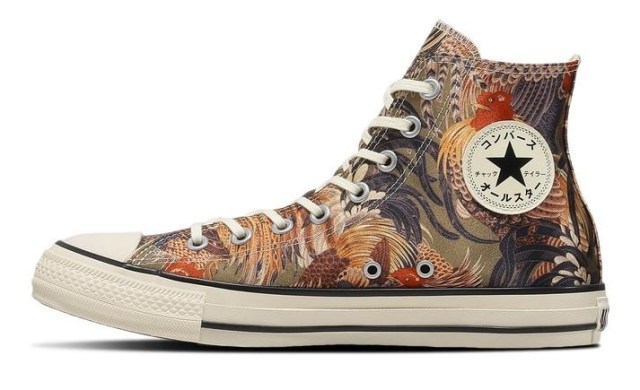
An all-star of the Edo period art world graces a new canvas.

The defining detail of Converse’s All Stars series of sneakers is that the shoes are made with canvas. Of course, linguistically, “canvas” can refer not only to sturdy woven fabric, but also a space in which an artist can create, and both of those meanings apply to Converse Japan’s newest model.

These hi-top kicks are called the All Star IJ HI, and while scholars of classical Japanese painting may be saying “Ah, of course!” as they look at the IJ part of the name, we’ll take a moment to delve into the letters’ significance. Actually, the IJ here is a set of initials, referring to Ito Jakuchu, one of the most celebrated artists of the mid-Edo period.

▼ Ito Jakuchu
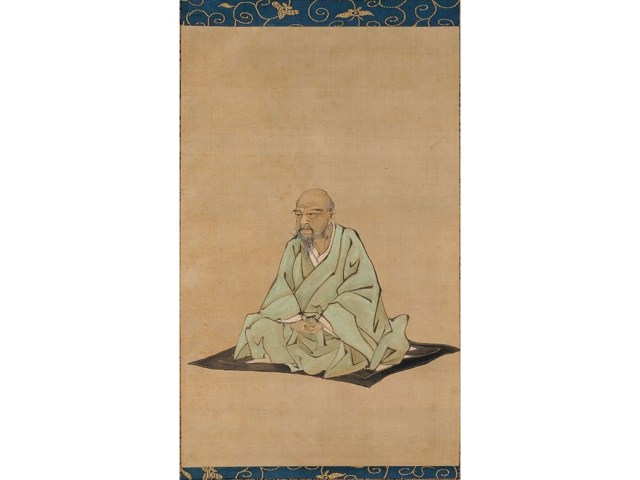
Born in 1712, Ito started out life as a grocer who took over his father’s business in Kyoto’s Nishiki Market (the same market that’s now become a major tourist attraction). But what Ito really wanted to do was paint, and what he really wanted to paint was birds…and the birds he really, really wanted to paint were chickens and roosters.

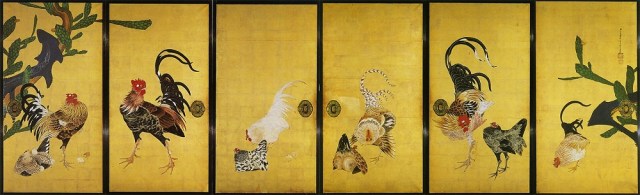
Though they weren’t his only subject matter, Ito found fowl such fine muses that he painted multiple pieces with gunkeizu, or “painting of chickens/roosters” in their title. For the All Star IJ HI, Converse Japan has chosen to adorn the shoes’ canvas with imagery from Ito’s Saboten Gunkeizu, which Ito painted on the sliding doors of Osaka’s Saifukuji Temple in 1789.

▼ Incidentally, while Converse was founded in the U.S. and has been a subsidiary of Nike since 2003, Converse Japan is a separate company, and part of Japan’s Itochu trading company conglomerate.

Having lived his entire life in the Edo period, when Japan was closed off to the rest of the world by decree of the Tokugawa Shogunate, Ito himself would have had little, if any, opportunity to see footwear beyond traditional geta and zori sandals. Nevertheless, his painting makes for a very stylish sneaker motif, mixing bold and colorful imagery without crossing the line into being garish.
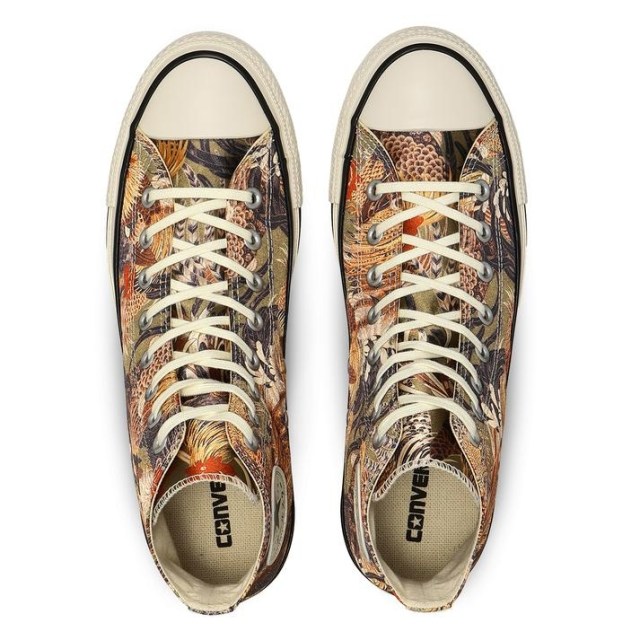
The All Star JB HI is priced at 14,300 yen (US$90) and availably exclusively through Japanese shore store ABC Mart, with orders placeable through the chain’s online store here.

Source: ABC Mart via Japaaan
Top image: ABC Mart
Insert images: ABC Mart, Wikipedia/Gryffindor, Wikipedia/Fraxinus2
● Want to hear about SoraNews24’s latest articles as soon as they’re published? Follow us on Facebook and Twitter!


Credit:

0 comments:

Bear found on Japanese fishing boat, escapes into the sea

20:13 cherishe 0 Comments

Just when you thought it was safe to go back into the water…

Long-time readers of news in Japan will undoubtedly know that we have something of a bear problem. Dwindling human populations in rural areas abandoning farms and homes have allowed a growing ursine population an opportunity to roam further in search of food. As a result, people and bears are increasingly coming face to face, often with tragic results.

And yet, with the vast majority of Japan’s population residing in urban areas, most of us feel like it’s not our problem. Even as bold as they’ve been becoming, bears still tend to stick to the mountains, so as long as we stay away from those, we stay away from bears.

It’s a luxury that fishermen also once enjoyed. After all, it’s not like a bear’s going to suddenly appear out on the open sea… right?

Such a scene was only narrowly avoided when a bear was found hiding out on a fishing boat docked on the coast of Shiogama, Miyagi Prefecture. On 19 September, the one-meter-tall bear was initially spotted on the wharf but took shelter in a longline tuna fishing boat nearby when police arrived.

▼ News report on the potential stowaway bear

The boat had three crew members on board who hid inside private cabins while the animal was roaming the decks. Meanwhile, police cordoned off the area and city officials also arrived to help monitor the bear’s movements.

They planned to wait until dawn to order local hunters in to kill the bear, but at around 1 a.m. the bear evaded local law enforcement by jumping from the boat and into the sea. Authorities monitored the nearby shoreline to see where it would surface but were unable to find the animal.

Bears have shown a very strong talent for evading police cordons in the past as well. That, combined with the fact that it only appeared to be innocently roaming around without injuring anyone, made it hard to not feel a little good that the situation was resolved without any human or animal getting hurt. As such, many online comments were quick with jokes about it.

“Looks like it ‘bearly’ got away!”
“Bear has learned the unique skill: Bear Swim.”
“A bear that doesn’t swim is just an ordinary bear.”
“Imagine going to the beach and seeing a bear swim in from the sea.”
“It’s surprising how many people know bears can swim really well.”
“Maybe it just wanted to apply for a job.”
“Shark bear.”
“If that bear managed to sneak aboard while they set sail, it would have been a perfect b-movie plot.”
“Bears are everywhere!”

That last comment is probably the key takeaway from all this. With each passing year, there are fewer and fewer places in Japan where we can safely say, “Well, at least I don’t have to worry about getting attacked by a bear here.”

But it still seems as if very little is being done to address the issue. Japan’s hunters are getting older with each passing year, and few younger people are interested enough to overcome the country’s strict gun laws to take up such work. Hopefully, those in the national government nestled in a relatively bear-free part of Metropolitan Tokyo won’t choose to ignore this particular problem until it swims up and bites them in the ass.

Source: TBS News Dig, Hachima Kiko
Images: Pakutaso
● Want to hear about SoraNews24’s latest articles as soon as they’re published? Follow us on Facebook and Twitter!


Credit:
0 comments:

New Cardcaptor Sakura fashion line delivers magical girl style for real-world ladies

18:13 cherishe 0 Comments

Anime-inspired looks with for-fans nods to the classic series.

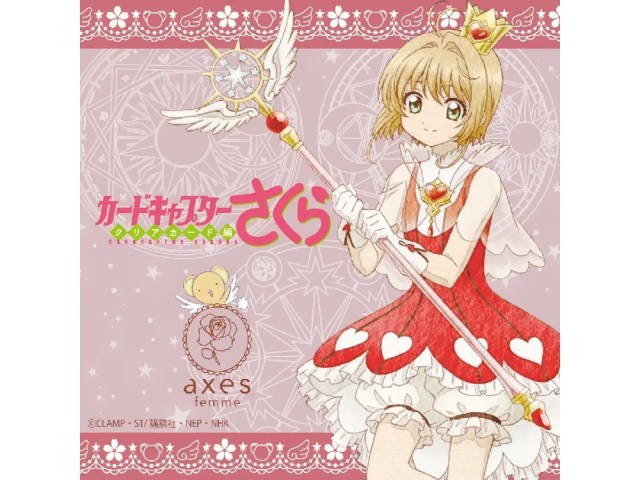
Creative costumes are a hallmark of the magical girl anime genre, and while Japanese fashion brand Axes Femme may not be able to provide you with a sparkly transformation sequence, they are ready to give fans a new line of Cardcaptor Sakura apparel items.

These aren’t full-blown cosplay items that recreate Sakura’s in-anime outfits with 1:1 fidelity, though. Instead, they’re playfully stylish creations that incorporate the visual motifs and iconography of the series in ways that can still be used in non-magical settings too, with separate tops and bottoms that allow you to put together an entire outfit or mix an item in with your preexisting non-Cardcaptor wardrobe.

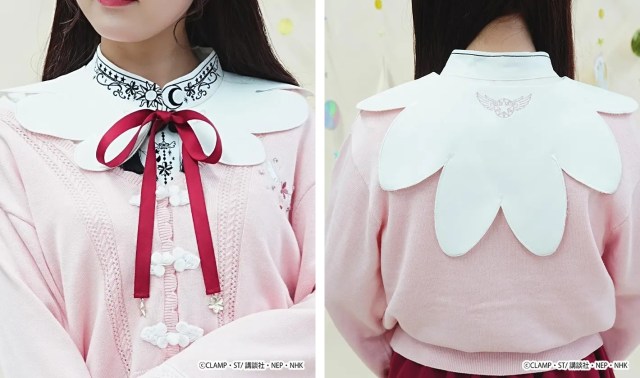
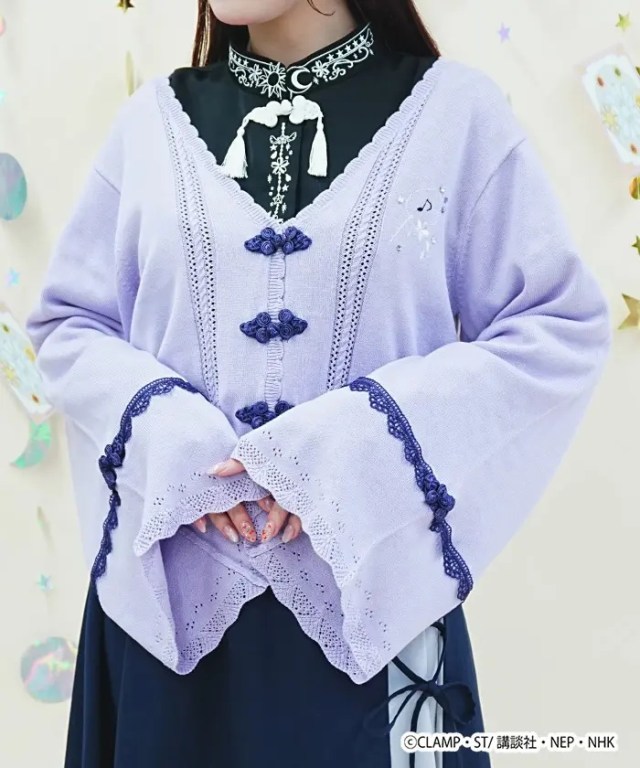
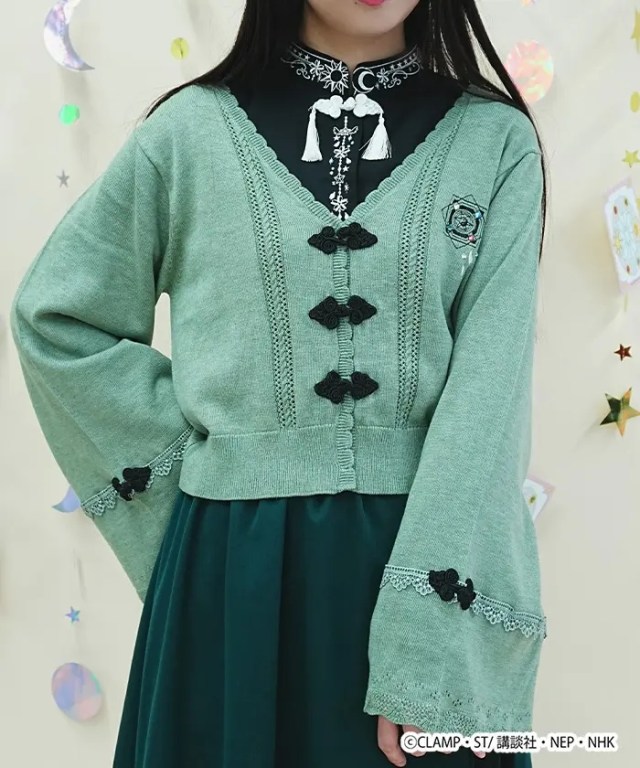
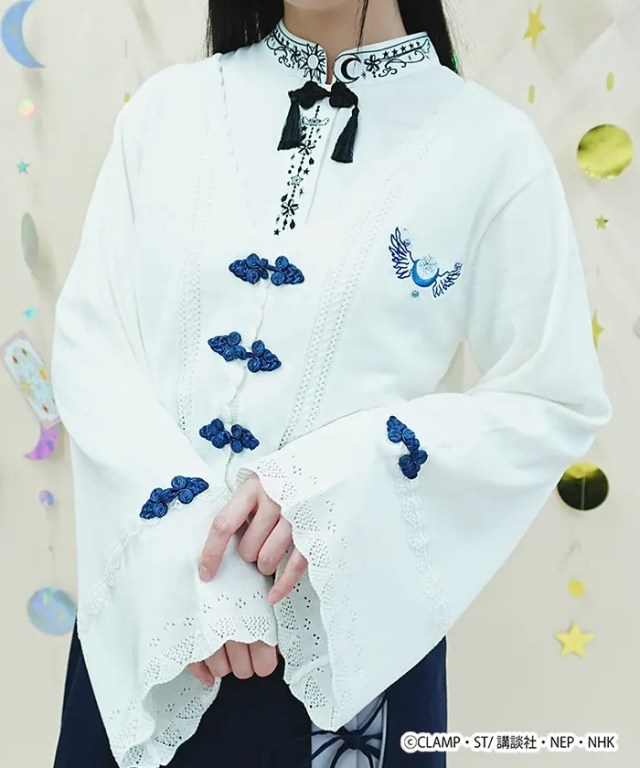
Starting things off is the Cardcaptor Sakura Cardigan, which comes in not just four colors, but four character themes. Pictured above is the pink Sakura Kinomoto version, and while all four designs feature frog-clasp closures and lacy accents on the sleeves, only Sakura’s has an embroidered crest of cherry blossom petals, feathers, and stars surrounded by rhinestones.

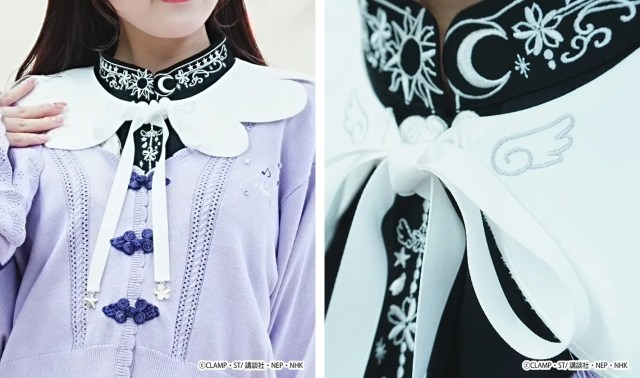
Alternatively, the lavender Tomoyo cardigan’s crest has musical notes and sakura petals. A compass is the crest for the minty green Syaoran design, and the snowflakes found on the back of the Clow and Sakura books represent Yue on the white cardigan.

The same character-inspired color schemes are utilized for Axes Femme’s Cardcaptor Sakura berets, although the Syaroan version is a less minty shade of green.

Aside from the different colors, the designs for the berets are identical, with each featuring embroidered wings, a tassel, and a Kero-chan charm.

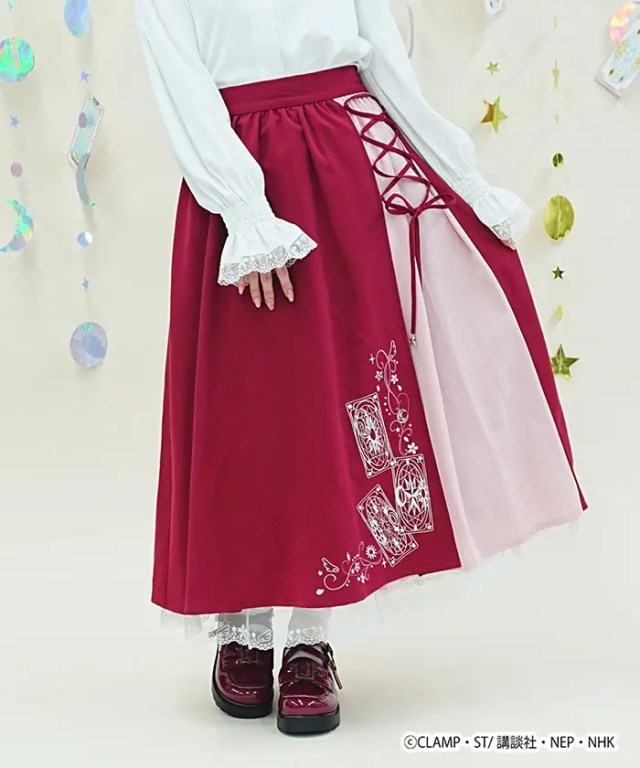
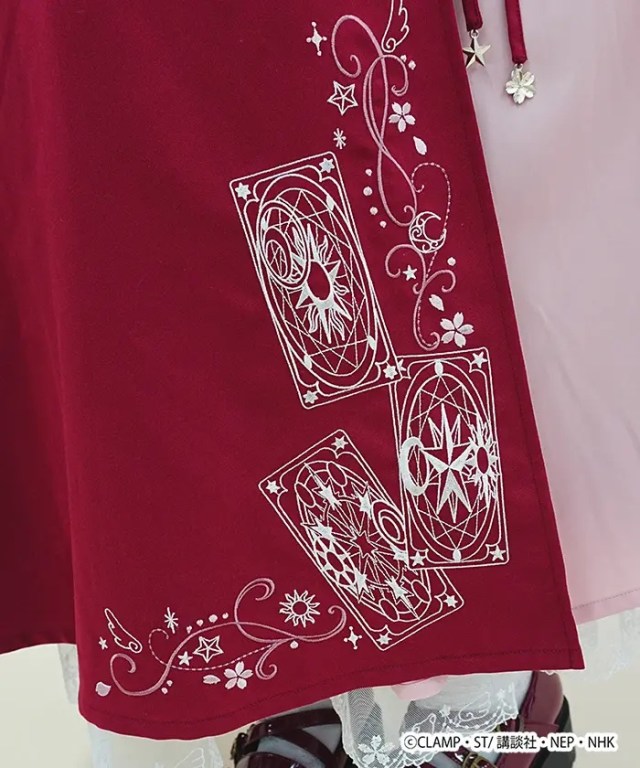
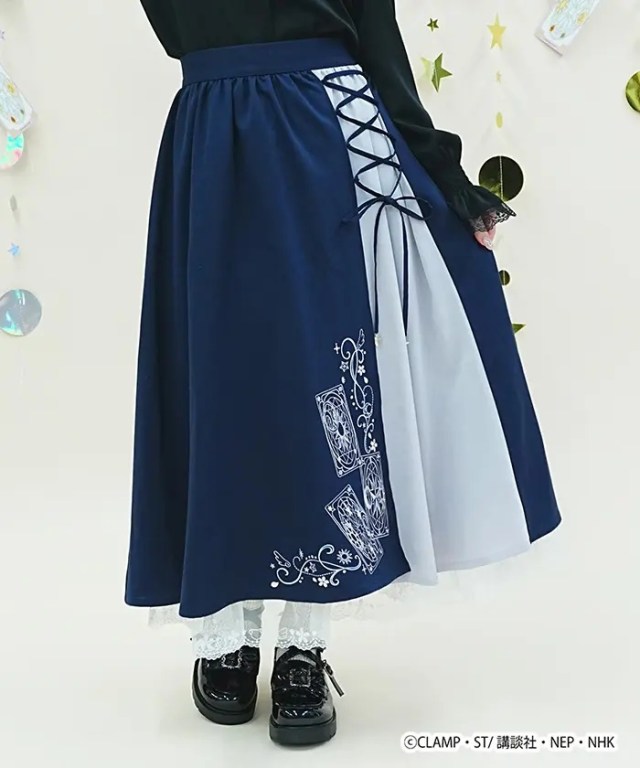
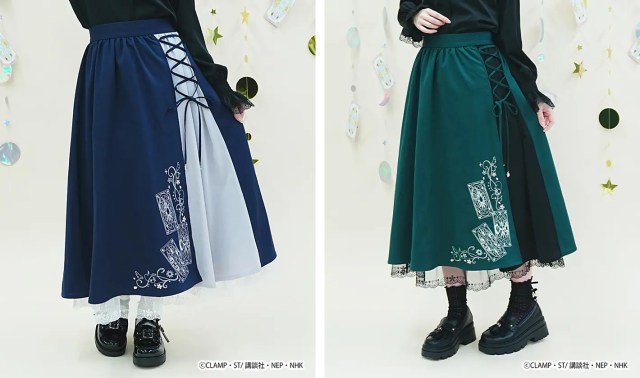
Options are a little more limited for the skirts, which have a flowing sequence of embroidered Clow, Sakura, and Clear Cards amidst suns, moons, and cherry blossoms.

The two-tone design, though, means that each of the three designs gives you a double-dose of colors to coordinate with.

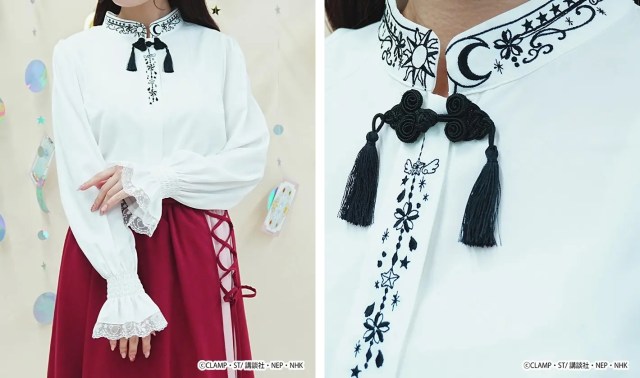
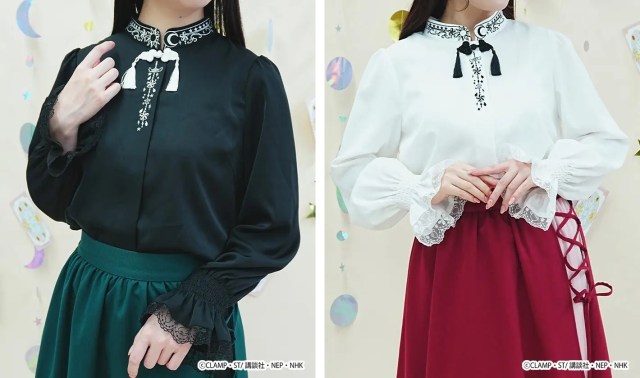
If it’s not chilly enough to use a cardigan, there are alternate top options with a pair of blouses.

The high collar features an asymmetrical pattern with the sun on one side and the moon on the other. Also, look closely and you’ll see that the lace trim on the cuffs has little Kero-chans in it!

Speaking of collars, you might have noticed that the photo of the pink cardigan up above features one that’s especially elaborate. This is actually a separate item.

Though the floral/feathery flares are always white, the attachable collar comes in two color schemes for the ribbon and embroidered wings and Sakura Card emblem.

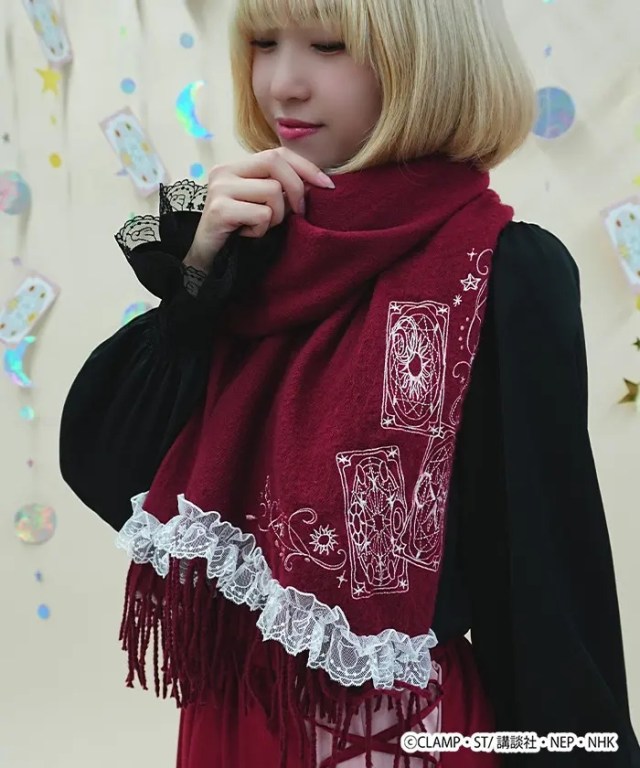
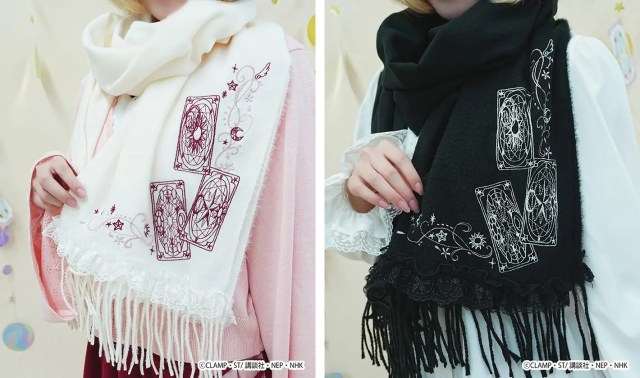
Finally, rounding out the collection is a trio of stoles, combining the card motif of the skirts with the lace trim of the blouses/skirt hems.

Prices range from 4,400 yen (US$28) for the beret to 5,500 yen for the collar and stole, 7,700 yen for the blouse and cardigan, and 9,900 yen for the skirt. The entire lineup is available through the Axes Femme online shop here.

Source, images: PR Times
● Want to hear about SoraNews24’s latest articles as soon as they’re published? Follow us on Facebook and Twitter!


Credit:

0 comments:

Famous Kyoto shrine has a message for foreign tourists who think it’s okay to dance at sacred sites

11:13 cherishe 0 Comments

Fushimi Inari Taisha asks visitors to show some respect after dance videos filmed beneath its famous torii gates spark criticism online.

One of the things that draws tourists to Kyoto is its shrines and temples, which have been beautifully preserved for centuries. However, as the world changes around these historic sites, new problems have cropped up, including overtourism and the desire for fame and likes on social media.

As a result, one of Kyoto’s most famous shrines, Fushimi Inari Taisha, has recently become the stage for a number of individuals who think it’s okay to perform dances on its sacred grounds, all in a bid to gain views. After these videos were widely circulated online, they received a fair amount of clapback from viewers who criticised the thoughtless acts, and now the shrine itself has come forward with a message in response to the social media storm.

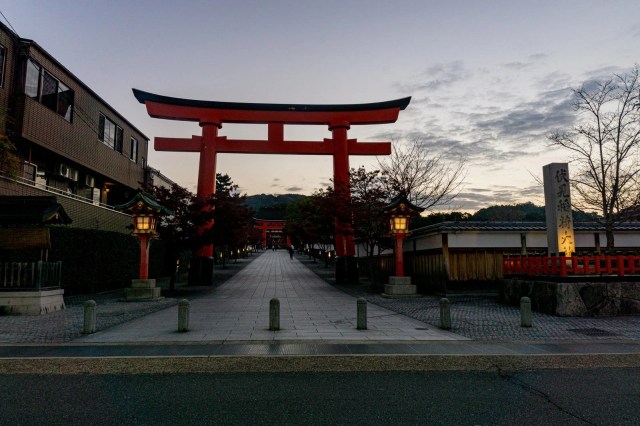
One of the recent videos, shared on TikTok and Twitter in early September, showed foreign tourists dancing beneath the shrine’s famous torii gates, blocking the path of other visitors who could be seen waiting for the group to finish their routine. Not only were they blocking the path, but members of the group could be seen entering from outside the walkway, interfering with the natural environment, which according to Shinto religion, is considered sacred.

In fact, the entire grounds is considered sacred, including the approach, where a group of Maori women from New Zealand recently filmed themselves while performing a traditional poi dance. This clip was also met with criticism from the wider community, including from New Zealand-born professional wrestler Henare, who is of Maori heritage. He pointed out that dancing in sacred places also goes against Maori customs and apologised for the incident. He said he had tracked down the people involved and asked them to make a substantial donation to Fushimi Inari Taisha as an apology.

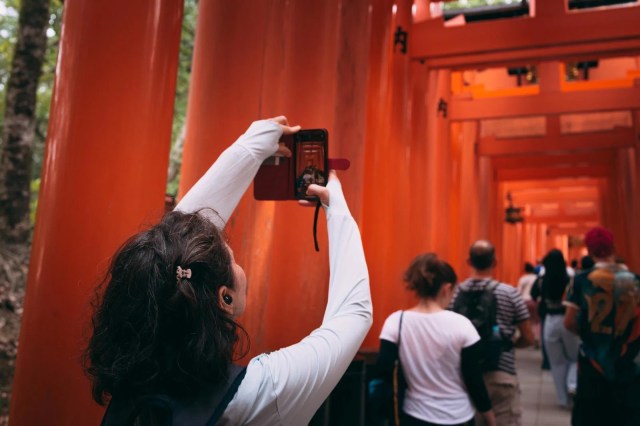
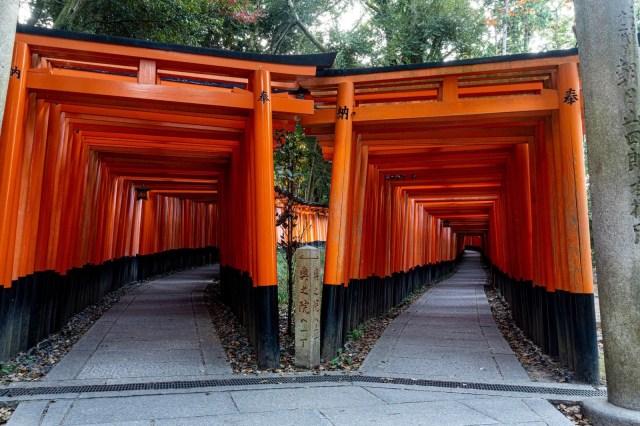
▼ The approach is said to be the pathway for the gods, and is so sacred that etiquette dictates visitors should walk on the sides rather than the very middle.

With other dance videos being filmed at the site and shared online, Fushimi Inari Taisha responded on 7 September with a notice in both Japanese and English reminding visitors to observe proper manners. It explained that the shrine grounds are a sacred area and place of prayer with more than 1,300 years of history.

In an interview with Japanese media outlet J-Cast News, the shrine confirmed that videos had indeed been filmed on its grounds and went on to say that staff will approach visitors whenever they spot prohibited or disruptive behaviour.

Although no damage had been reported in connection with the dancing, the shrine said it was disappointed that these visitors failed to understand the cultural significance of the site.

It’s worth remembering that although shrines like Fushimi Inari Taisha are places of beauty, they are not dance studios, and they are not spaces owned by tourists. They are places where spirits reside, gods are worshipped, and people come to pray. And as more people become familiar with temple and shrine etiquette in Japan, the video that you think will go viral might just land you in hot water and leave you being cancelled instead.

Sources: J-Cast News via Jin, Yahoo! Japan News
Featured image: Pakutaso
Insert images: Pakutaso  (1, 2)

● Want to hear about SoraNews24’s latest articles as soon as they’re published? Follow us on Facebook and Twitter!


Credit:
0 comments:

Final Fantasy VII’s Buster Sword gets real-world practicality as a giant towel [Photos]

22:13 cherishe 0 Comments

The fantasy of using Cloud’s sword every day can now become a reality.

There’s a whole lot of imagery in anime and video games that looks awesome but would be impractical in the real world. Even within that artistic subgenre, though, Final Fantasy VII’s Buster Sword is an especially extreme example.

Right off the bat, it’s a sword, something that most of us don’t have a use for in our daily lives. Should you somehow happen to have a melee weapon-intensive lifestyle, even then the Buster Sword isn’t a particularly viable choice, since while protagonist Cloud can swing the thing around with ease, it’d be too heavy and bulky to fight with for those of us who have to deal with actual weight and gravity without any assistance from an in-game physics engine.

And yet…the Buster Sword does look really cool, so thankfully Square Enix has come up with a version that can serve a useful purpose for those of us not living in the world of Final Fantasy.

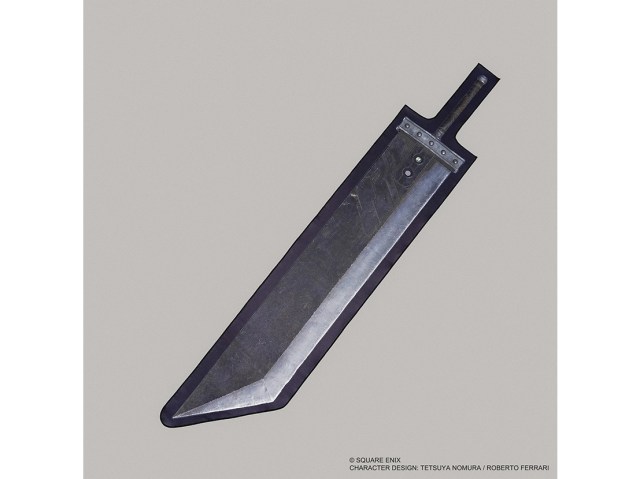
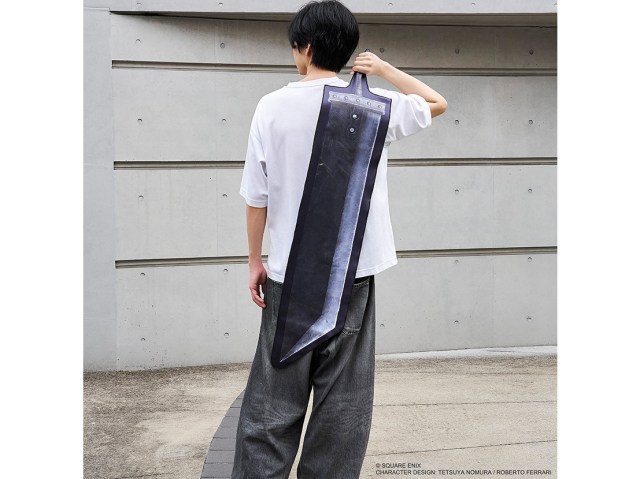
Draped over that dude’s back is the Final Fantasy VII Buster Sword Muffler Towel. Muffler towels (muffler here being used to indicate a scarf, not a part of a car’s exhaust system) are essentially a long face towel, made of material that’s pliable enough to drape over your shoulders or wrap around your neck. A lot of muffler towels bear the names and insignias of sports teams, bands, or idol singers, but this one instead features a print of Cloud’s Buster Sword.

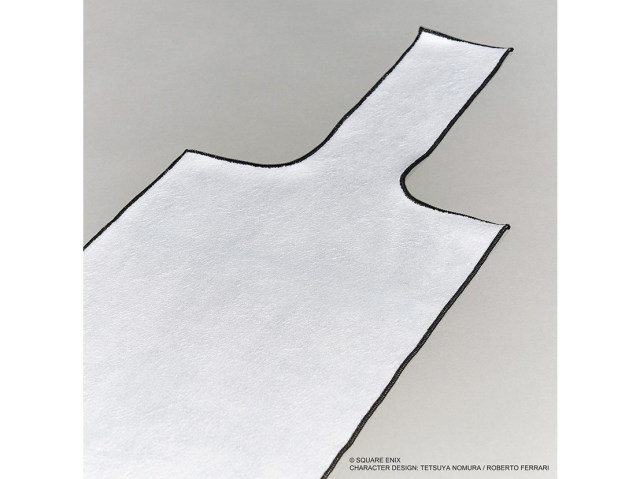
▼ The reverse-side has longer loops to better wick away moisture.

Muffler towels are especially popular at fan events, where dampening them with water before putting one on your shoulders is a great way to counteract the heat generated by large crowds. With a length of 128.5 centimeters (50.6 inches), though, the Buster Sword towel is large enough to make a striking statement as home décor, hung on a wall or next to a sink.

It’s available for preorder through the Square Enix online store here, priced at 1,980 yen (US$12.50) and with a release date of December 19. Just make sure your cat doesn’t get it mixed up with its Buster Sword scratching pad.

Source, images: Square Enix E-Store
● Want to hear about SoraNews24’s latest articles as soon as they’re published? Follow us on Facebook and Twitter!


Credit:
0 comments:

Denny’s Mapputatsu? Parfait is hiding a big secret in plain sight that splits us down the middle

20:13 cherishe 0 Comments

The Mapputatsu? Parfait tackles food waste without sacrificing visuals so that you can still happily feed both yourself and your phone.

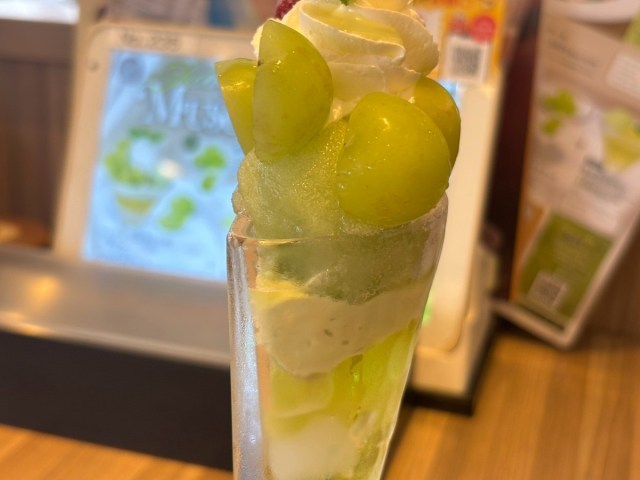
Back in January, a new style of parfait appeared at Denny’s Japan. From the front it appears as a regular parfait, but from the side, it looks like it’s been split in two–leading to its name, the Mapputatsu? Parfait (“Two equal parts? Parfait”).

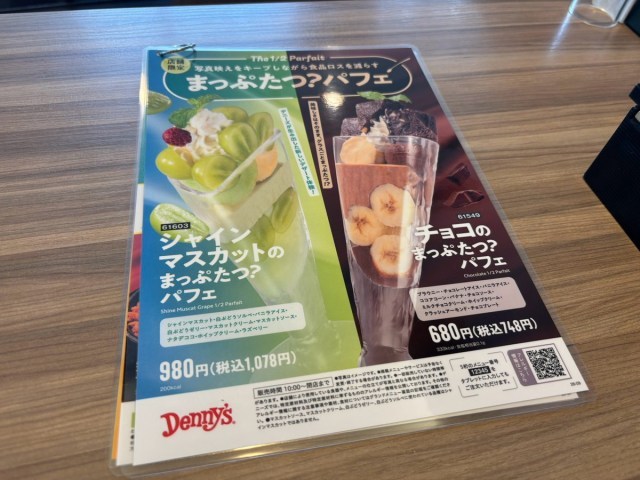
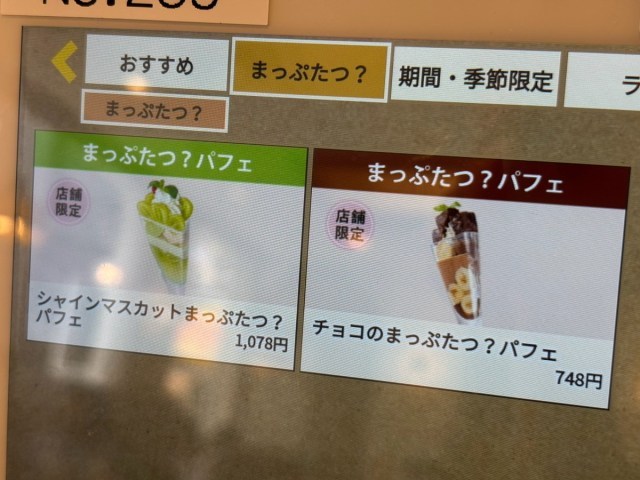
▼ Pictured below are versions with Shine Muscat grapes for 1,078 yen (US$6.87) and with chocolate for 748 yen.

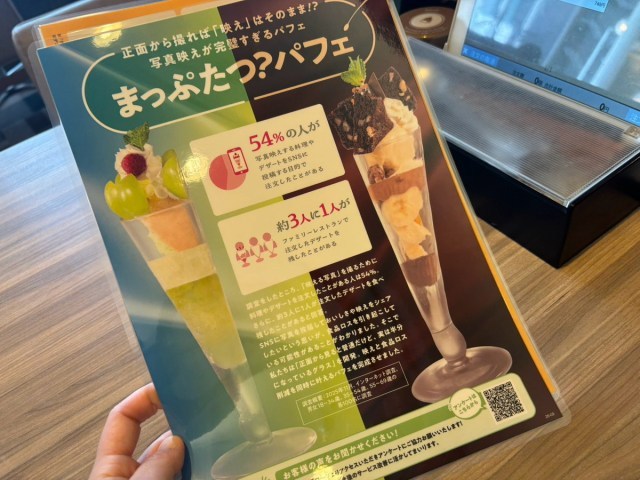
The purpose of this unusual setup is to reduce food waste while still providing a visually attractive, photo-worthy treat for diners. The menu even provides statistics that 54 percent of diners have ordered food for the sake of posting photos on social media and one out of three have left their dessert unfinished at family-style restaurants in Japan. With parfaits typically looking like veritable works of food art but also being on the larger side, we can assume that they’re one of the more common menu items that diners order for the visual spectacle but aren’t able to finish.

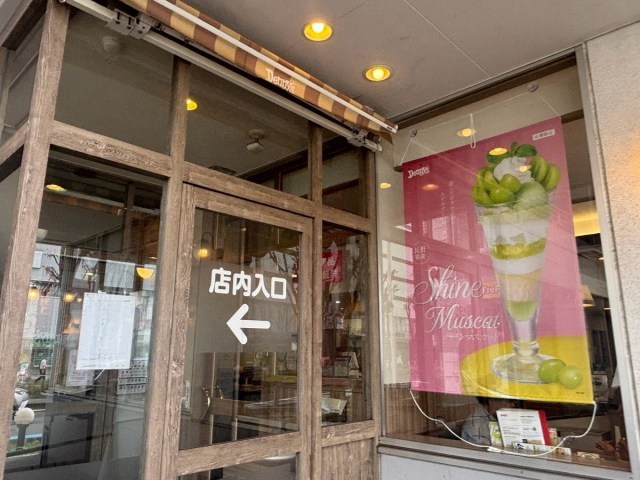
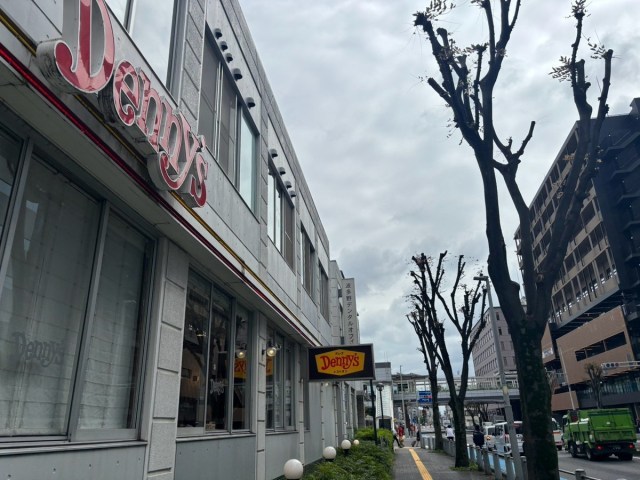
Initially, the Mapputatsu? Parfait was only available at two Denny’s Japan locations, but it’s been slowly expanding onto menus across the country. We happened to be in the area of Saitama-Shintoshin’s Cocoon City shopping complex branch recently and decided to swing by to finally try it out.

Once we sat down and peeked at the digital tablet menu, we were excited to see it in all of its question-asking glory. It was a tough choice but we ordered the Shine Muscat version.

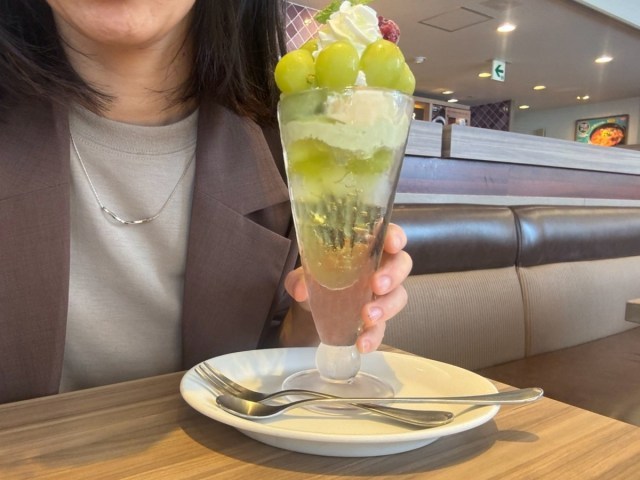
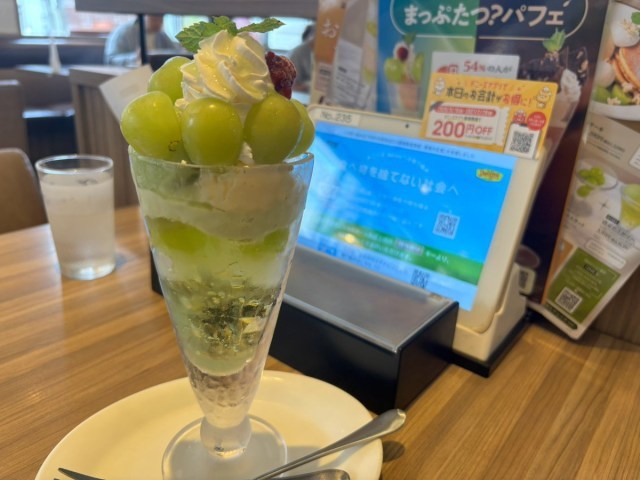
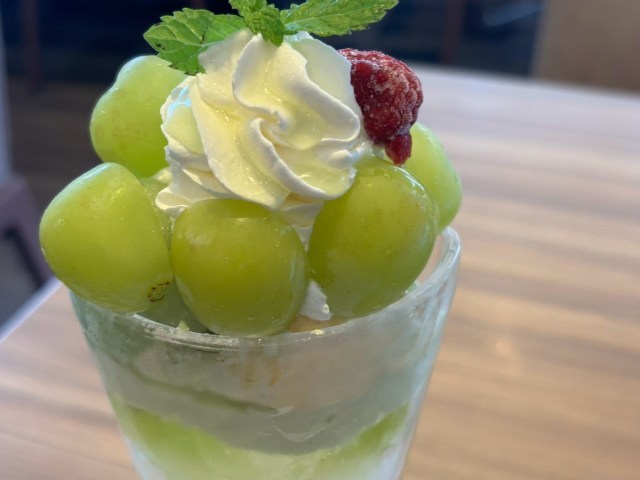
It arrived about 10 minutes later. We took a moment to admire its striking visuals from head-on, the way the waiter had placed it down on the table in front of us.

Unsuspecting diners would never know…

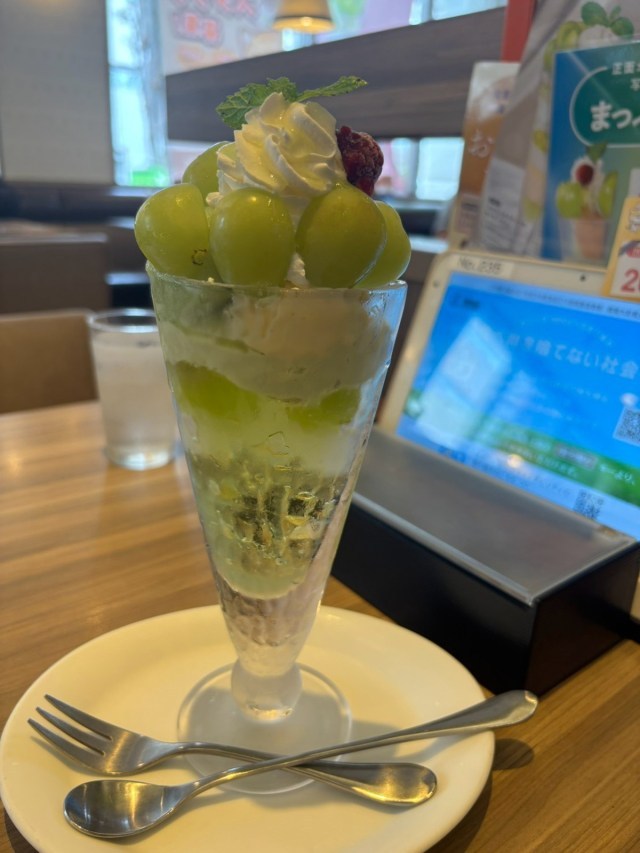
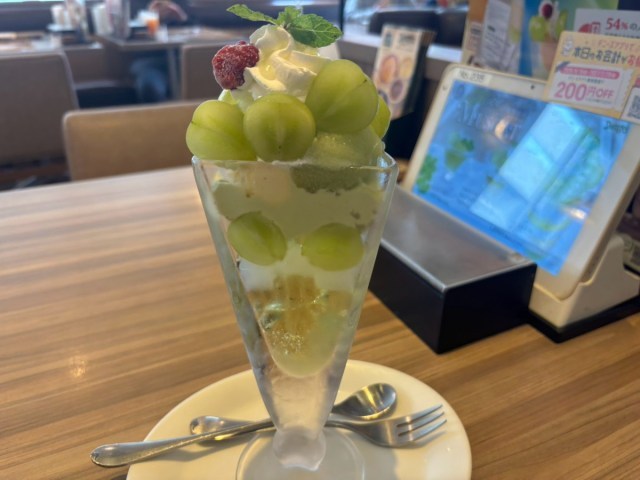
…that the reverse side held a big secret: the parfait glass indeed looked like it had been split straight down the middle!

▼ Even the grapes were cleanly sliced in half.

Thankfully, that didn’t mean the glass was in any danger of collapsing, but just that the vessel was only half the width of a regular one.

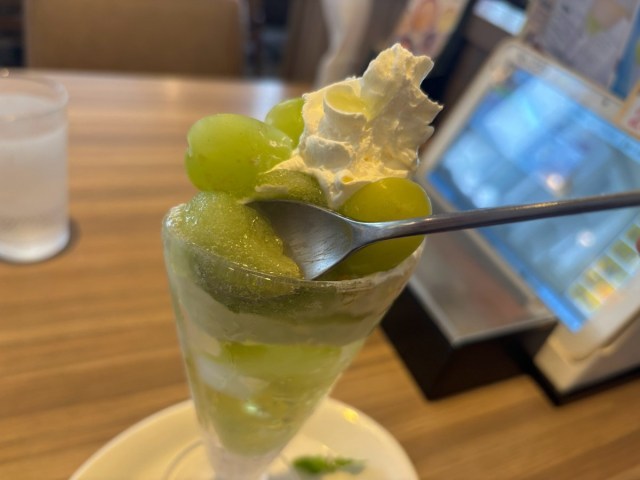
We had a train to catch soon, so it was time to dig in. It was still blowing our minds that even viewed from the top it looked like a perfectly ordinary parfait.

The Shine Muscat grapes were, as usual, tantalizingly sweet and refreshing. They meshed wonderfully with the layers of sorbet and jelly lining the inside of the glass. It felt good to know that we were still getting everything that we would from a normal parfait.

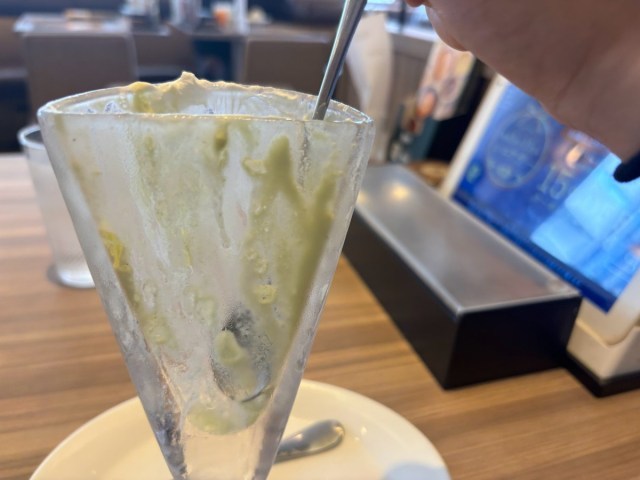
The sweet treat as a whole was truly the perfect size to feel full in a comfortable–not sickly–way.

Some readers might be asking, “Why not just order a mini parfait instead?” Mini parfaits in smaller glass dishes also exist at Denny’s Japan, so that’s always a possibility. However, we have to admit that there’s something special about the thrill of having a tall parfait placed in front of you that a shorter one just can’t replace.

Please note that not all Denny’s Japan locations may offer the Mapputatsu? Parfait. Those that do may not have all the same versions, either, so it’s best to check ahead of time if there’s a specific flavor that you want. We would strongly recommend the Shine Muscat variety–in fact, it was so good that we’re now hooked on anything with the same taste!

Restaurant information
Denny’s Cocoon City branch / デニーズ コクーンシティ店
Address: Saitama-ken, Saitama-shi, Omiya-ku, Kishiki-cho 4-263-8
埼玉県さいたま市大宮区吉敷町 4-263-8
Open: 6 a.m.-11:30 p.m. (last order at 11 p.m.)
Website

All images © SoraNews24
● Want to hear about SoraNews24’s latest articles as soon as they’re published? Follow us on Facebook and Twitter!


Credit:
0 comments:

Three amazing Japanese convenience store sweet potato desserts to eat right now (and 11 for later)

19:13 cherishe 0 Comments

A roadmap for starting your journey of eating your way through Family Mart’s sweet potato sweets lineup.

Though they usually have a little fruit and vegetable corner where you can pick up some bananas, a carrot, or half a head of lettuce, Japanese convenience stores aren’t really the best place to go if you’re looking for fresh seasonal produce. Japanese convenience stores are, on the other hand, exactly where you want to be if you’re looking for new seasonal sweets.

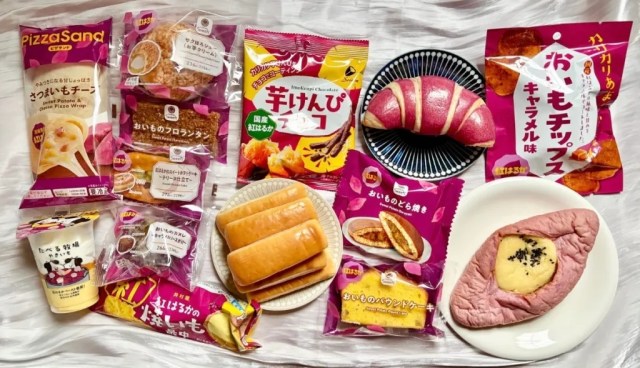
Sweet potato sweets season is here, and September 22 is essentially harvest day as Family Mart releases no fewer than 14 desserts that feature the flavor, and sometimes even the look, of sweet spuds. We realize that even the biggest sweets fans might have trouble fitting that many items into their snacking schedule, so our taste-testing reporter Natsuki Goto has sampled them all and prepared her personal list of the three she recommends eating first, then working your way to the rest if you have the time/stomach capacity.

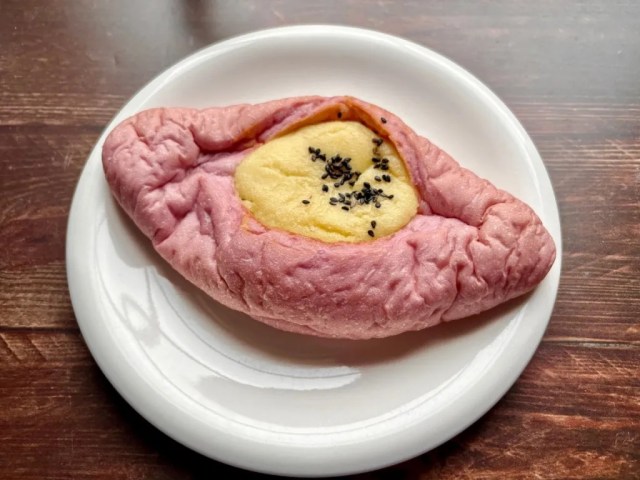
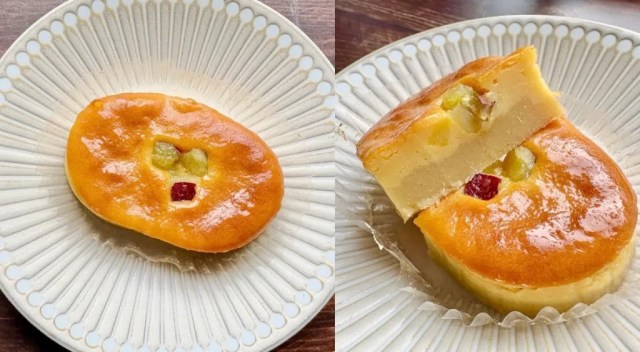
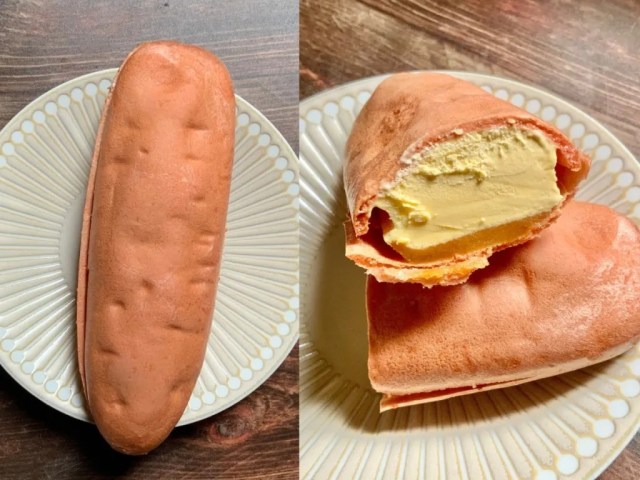
3. Mocchi Oimo Bread (Beni Haruka) (185 yen [US$1.15])

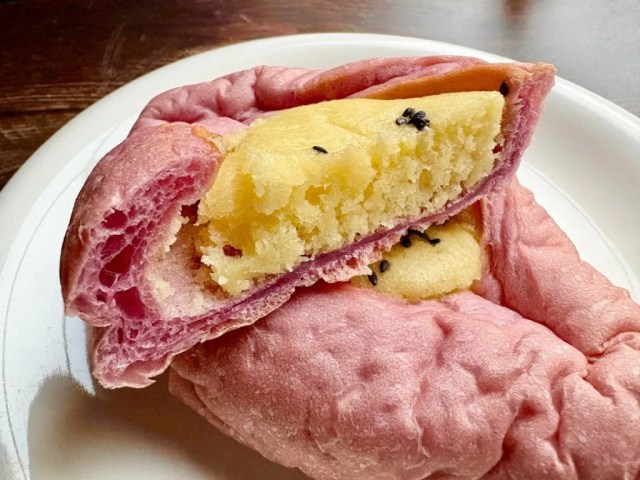
This pillowy soft pastry visually mimics a roasted sweet potato that’s been sliced open, with an eye-catching contrast of colors to go with its hybrid design. While the outside has the texture of a soft bread bun, the inner section is a moist sponge cake, thanks to the use of sweet bean paste flavored with Beni Haruka, one of Japan’s sweetest varieties of sweet potato.

The sprinkling of black sesame seeds, a common addition to roasted sweet potatoes in Japan, adds a touch of mature sophistication, and the overall flavor is excellent. Family Mart brings out some sort of sweet potato bread pretty much every autumn, but this is one of their best yet, and anyone who likes sweet potatoes will find a lot to love here.

Before we move on to Natsuki’s number-two pick, let’s take a look at some of the also-rans in the lineup. Honestly, there wasn’t a bad-tasting treat in the bunch, so you can think of these as “not as amazing as the top three” rather than not being recommended.

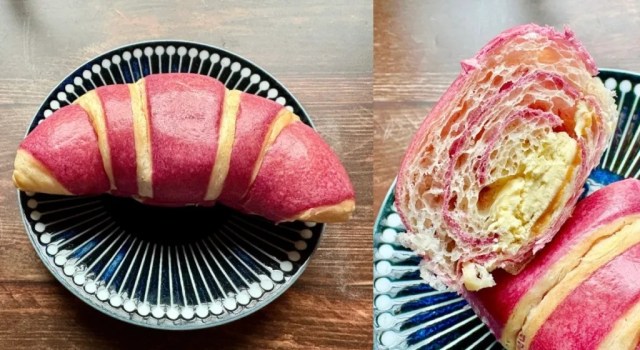
▼ Caramel-scent Sweet Potato Croissant (185 yen)

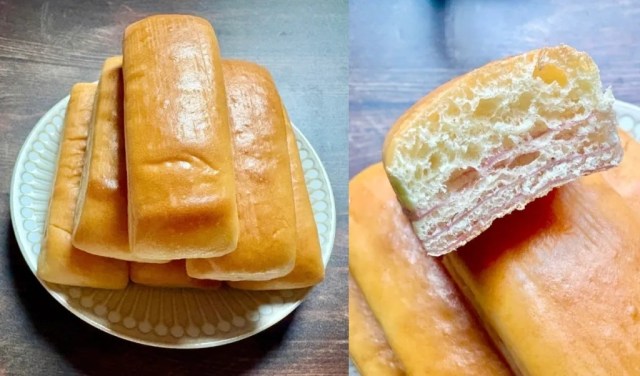
▼ Satsuma Imo Sweet Potato Stick (180 yen per bag)

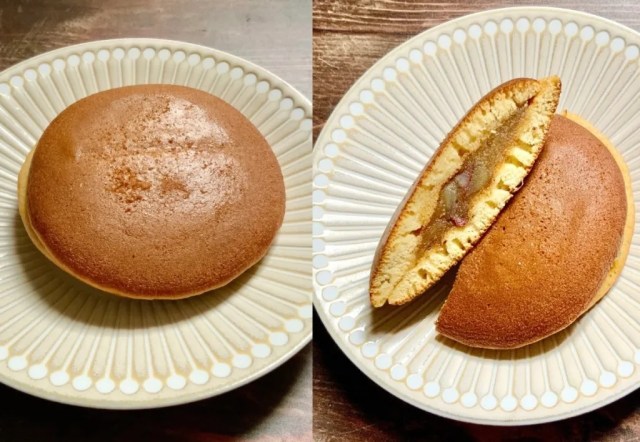
▼ Sweet Potato Dorayaki (216 yen)

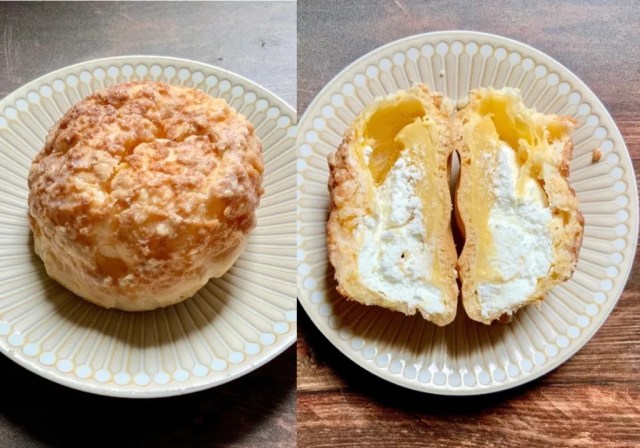
▼ Sweet Potato Zakuhoro Cream Puff (254 yen)

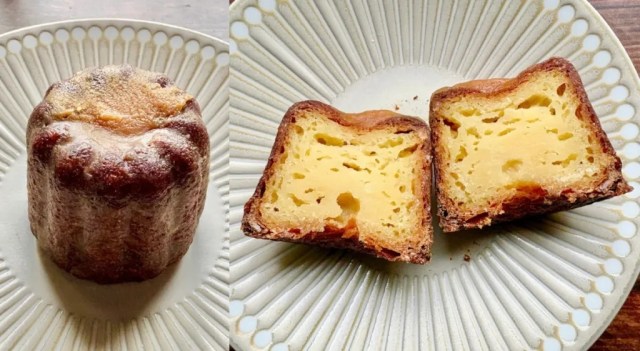
▼ Sweet Potato Canelé with Caramel Sauce (285 yen)

▼ Beni Haruka Sweet Potato Terrine (298 yen)

OK, let’s get back to Natsuki’s top picks with…

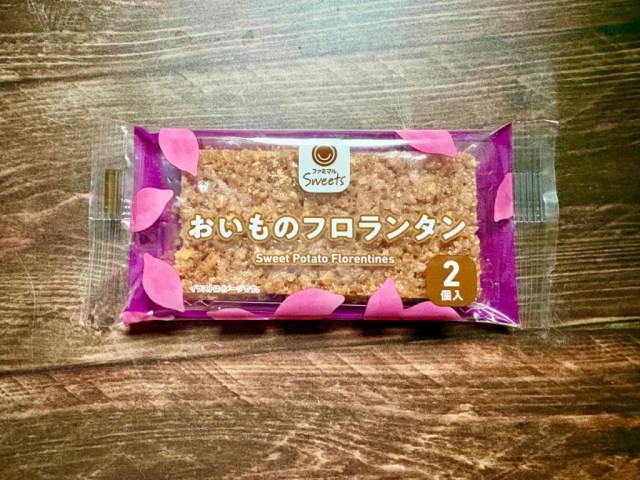
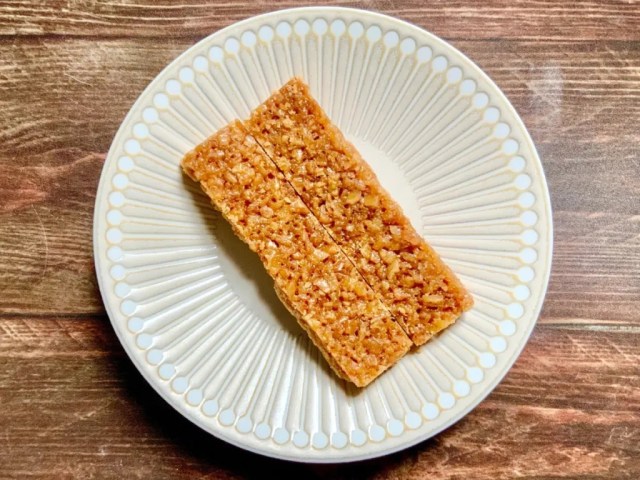
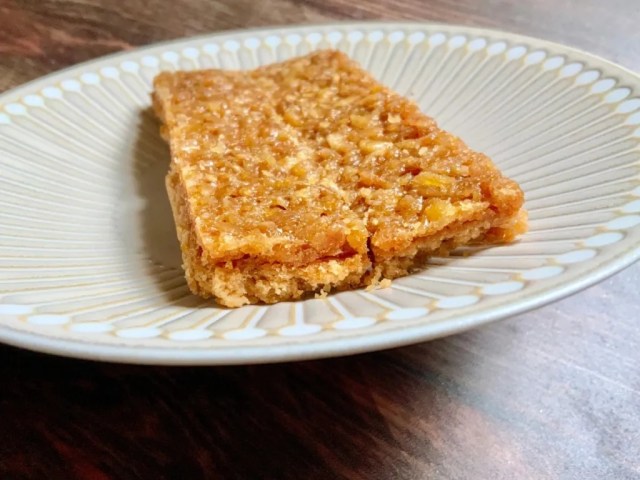
2. Sweet Potato Florentine (195 yen)

Japan has a pretty broad palate in terms of desserts with overseas origins, but you don’t often see Florentines at convenience stores. For those unfamiliar with the term, Florentines are a kind of French biscuit-type cookie, coated with caramel and topped with nuts.

For this version, though, Family Mart swaps out the crushed nuts and replaces them with imo kenpi, crisp, candied sweet potato chips.

The result is an understatedly classy confectionary, which still retains a bit of a nutty nuance thanks to the aromatic caramel, plus the crunch of a conventional Florentine while adding a strong sweet potato sensation. The only complaint Natsuki has is that the Sweet Potato Florentine is a little on the small side, but it’s photogenic and very tasty, so it still gets an enthusiastic thumbs-up from her.

And before we reach the king of this hill of sweet potato desserts, let’s look at some of the other items in the lineup.

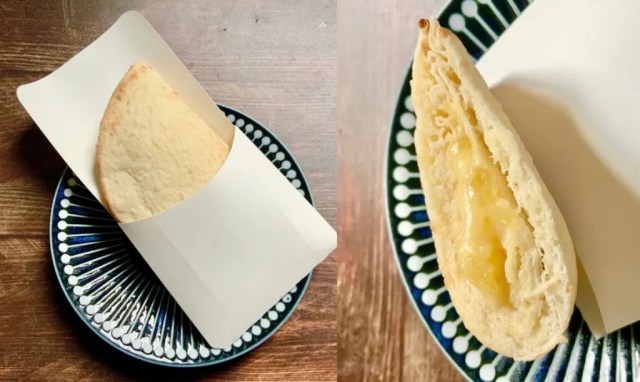
▼ Sweet Potato and Cheese Pizza Wrap (330 yen)

Imo Kenpi Chocolate (286 yen)

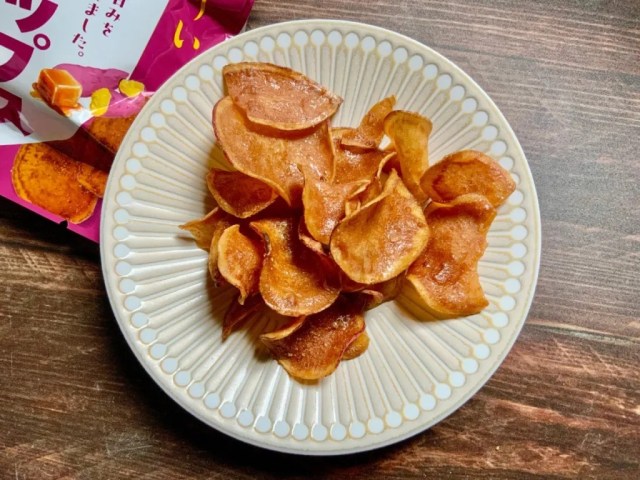
▼ Caramel Sweet Potato Chips (248 yen)

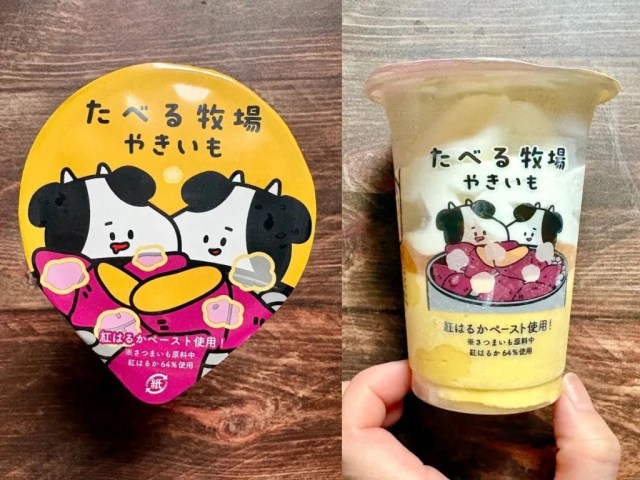
▼ Drinkable Dairy Roasted Sweet Potato shake (278 yen)

▼ Beni Haruka Sweet Potato Monaka (225 yen)

And now, we finally come to Natsuki’s absolute, can’t-miss, number-one Family Mart sweet potato sweets pick, which is…

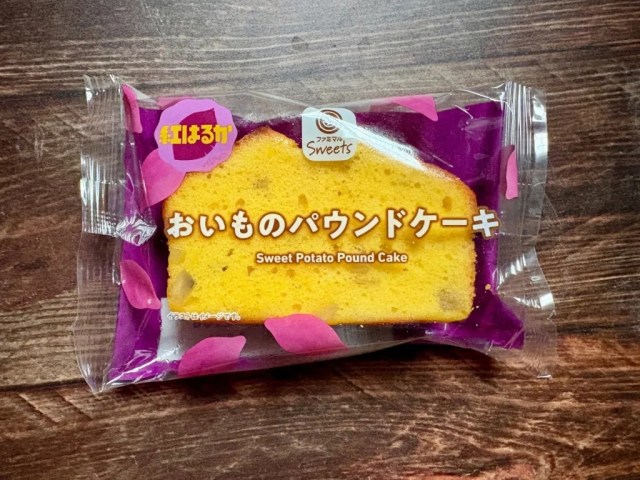
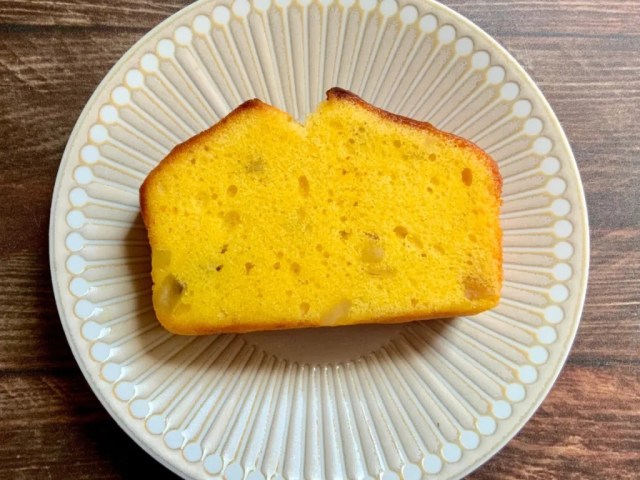
1. Sweet Potato Pound Cake (198 yen)

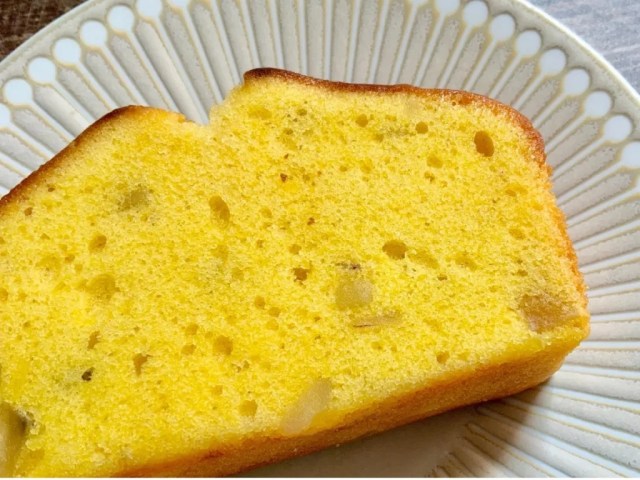
Once again the Beni Haruka sweet potato shows up to elevate this simple dessert to an exalted level, with Beni Haruka paste kneaded into the dough before baking, and chopped pieces of sweet potato added in too.

Aside from the bright, inside-of-a-sweet-potato color, there’s nothing fancy about the visuals, but that’s fine because this cake is all about pleasing the taste buds, and it does that magnificently. Family Mart actually offered a similar item last year, but the 2026 version ups the amount of Beni Haruka paste to make the taste even more richly sweet, and every bite of the soft but dense cake is a moment of joy.

As is often the case with seasonal sweets in Japan, these are listed as being available while supplies last, so you’ll want to grab yours sooner rather than later.

Photos ©SoraNews24
● Want to hear about SoraNews24’s latest articles as soon as they’re published? Follow us on Facebook and Twitter!


Credit:

0 comments: