World Record? Japanese trainer holds gym for 1,422 days and counting in Pokémon GO

We hear the tragic tale of a Blissey sent to fight overseas for nearly four years.

Long time readers of the site are probably aware that our writer P.K. Sanjun has fully immersed himself in Pokémon GO. In fact, on our Japanese-language site he runs a regular column discussing all the news and latest techniques to catching and battling Pokémon through smartphones.

▼ P.K. Is willing to put all dignity on the line for Pokémon glory.
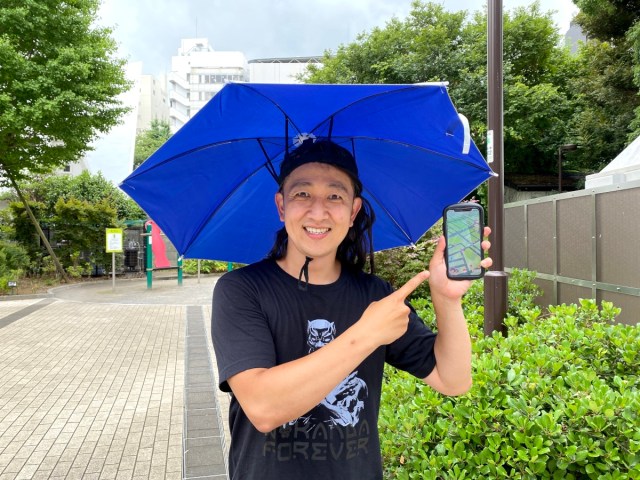
One day, P.K. was approached by another trainer with a miraculous accomplishment. For those unfamiliar with the game, one gameplay aspect is to claim gyms by defeating all occupying Pokémon and making it your own. Because of the many people playing, you might expect to hold a gym for a few hours, or maybe a whole day if you’re lucky.

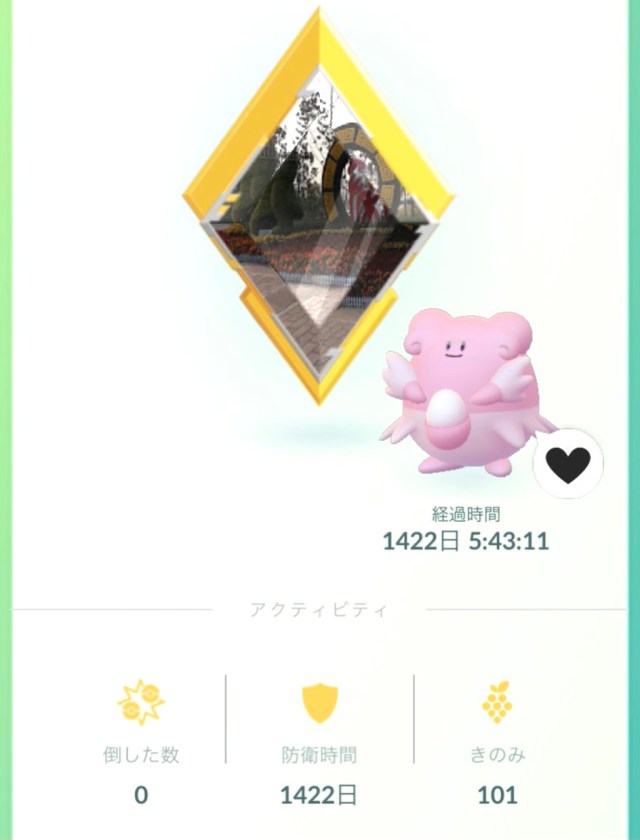
However, this trainer has had his gym for a whopping 1,422 days, which breaks down to three years and 325 days since he originally placed his Blissey. To put that in another perspective, Pokémon GO was released in Japan on 22 July, 2016 which was 1,804 days before this writing, which means that this trainer has been holding the same gym for about 79 percent of the time the game has been running.

▼ Screenshot of the trainer’s record gym holding status. The name of the gym is withheld.
The previous record is believed to be held by a trainer who goes by the Reddit handle of BootsMade4Walking who lasted 1,332 days and seven hours before having their gym tragically taken by someone faking their GPS coordinates.

Such underhandedness might be harder to do in the case of this trainer, whom P.K. spoke with to learn more about how the record was accomplished.

— Defending a gym for 1,422 days is amazing!

“It’s nice to talk to you! My name is Uchida and I’m a specially appointed professor for the Research Center for Advanced Science and Technology at the University of Tokyo.”

— Wow, a University of Tokyo prof…or “specially appointed professor”?! I’m not sure what that is but you must be smart!

“I’m still only level 46, but I’m proud to call myself the ‘University of Tokyo’s strongest Pokémon GO player.’”

— Indeed. I think the University of Tokyo cred gives you an honorary level 72 in the game. So where is your record-earning Blissey?

In August of 2017, there was an international conference on solar cells in Xianyang, China, just outside Xi’an, Shanghai.”

— Oh, but you can’t play Pokémon GO in China, right?

“That’s right. I didn’t usually have free access to the Internet there, but for some reason I was able to access my Google account that morning.”

— I see.

During a lunch break I wandered out into a suburb with my iPhone set to roaming. After catching a few Pokémon I found a gym and left a Blissey there.”

— Okay. So, that’s why it hasn’t been disturbed.

“Yeah. Technically you can’t play Pokémon GO in China, but the roads were mapped out and there was a Pokémon in the gym when I arrived.”

— I heard about that. It’s pretty much just an empty map out there.

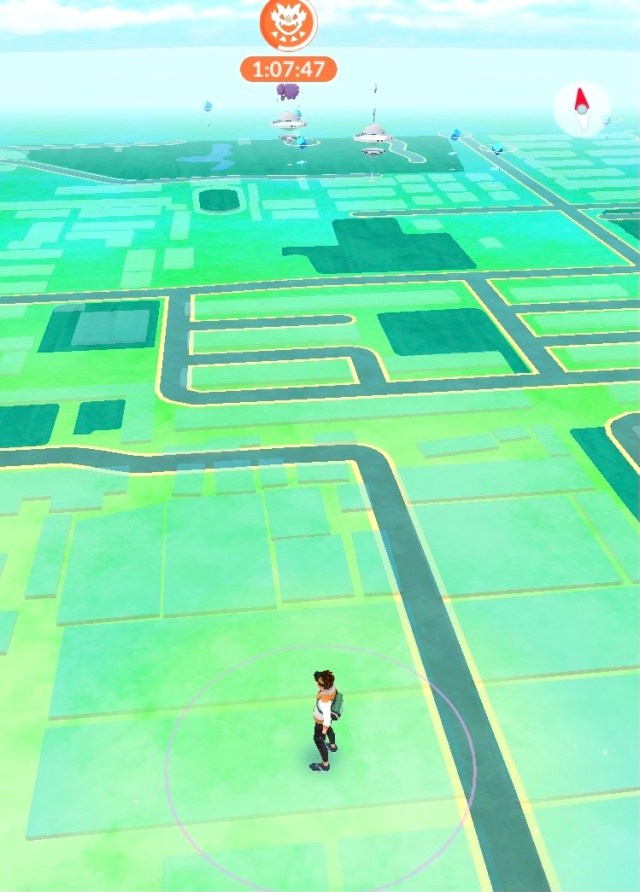
“Yes, there was a map, but I remember that the roads on the map and actual roads were off by dozens of meters in both directions. I had to make my way to the gym just by gauging my distance from it.”

▼ How a Pokémon GO screen might look in China
— I see. Well, it’s really amazing. It’s a miracle Blissey, but it must be really lonely out there all by itself.

“Yeah, China’s Internet is to tightly regulated that you can’t start up Pokémon GO normally. But I’m dreaming of the day that my Blissey will finally be set free.”

If the previous record is any indication, this trainer’s dream may soon come true. His gym has the added security of being in the GPS distorted map of China, but with the limited information he gave, surely some spoofers out there are going to take up the challenge.

But even if they do finally dislodge this Blissey, this trainer’s record will still be hard to beat. The bigger challenge will be helping the happiness Pokémon readjust to life in Japan after so long. When it left there wasn’t even online trainer battles or Raw Pepsi.

Screenshots: Pokémon GO (iOS)
Photo © SoraNews24
● Want to hear about SoraNews24’s latest articles as soon as they’re published? Follow us on Facebook and Twitter!


Credit:

Japanese basketball star Rui Hachimura joins with Nissin to make his own Cup Noodle ramen

Hachimura said “I want you to make a product for me” and Nissin was happy to oblige.

What’s the best part of being a beloved sports figure? Is it the riches? The fame? The fact that your words will be given more weight even after you retire? That last one sounds especially sweet.

Basketball player Rui Hachimura, who plays for the NBA team the Washington Wizards when he isn’t representing Japan on the national scale, didn’t even have to retire in this case! He mentioned that he wanted noodle-making company Nissin to “make a product” for him and his wish has been granted in the form of their new product, the Cup Noodle Himi Curry Big.

▼ The container for the ramen is plastered with Hachimura’s smiling face.

The container for the ramen is plastered with Hachimura’s smiling face and promises a taste of “Hachimura’s recommended local comfort food from Toyama,” meaning Himi curry. Himi is the town in Toyama prefecture where Hachimura was born, and what makes Himi curry special is the addition of Japanese-style dashi stock, including processed sardines, that blends into the onion-based curry roux and grants it a distinct flavor.

In their official press release Nissin boasts of the cup ramen’s thick, supple noodles, the spicy chili-accented broth, and the included packet of Himi niboshi powder—a powder made from ground, dried sardines. You can savor some of the unique flavors that Hachimura grew up with, and even eat alongside his beautiful grin. What more could you want for a suggested retail price of 220 yen (US$1.99)?

Hachimura’s tie-in ramen is only the latest in a proud line of Cup Noodle products, with the Big line, in particular, sporting an array of weird and wonderful flavors over the years. Slam dunk a cup of this Himi Curry version before it’s gone!

Source: Nissin via NariNari

Images: Nissin
● Want to hear about SoraNews24’s latest articles as soon as they’re published? Follow us on Facebook and Twitter!


Credit:
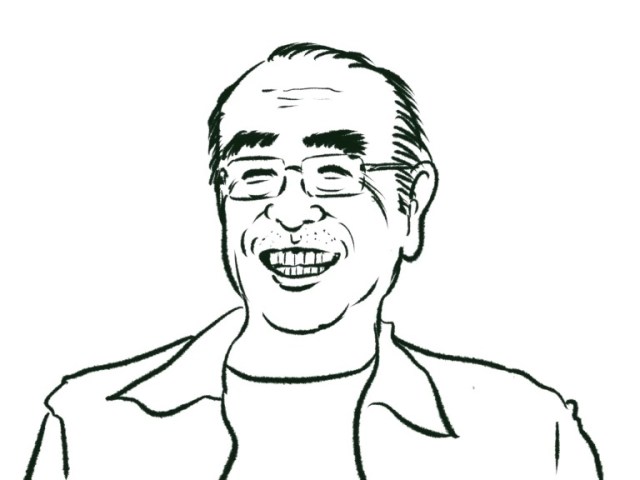
Statue of comedian Ken Shimura erected a year after death from COVID-19

A tribute to his contributions to Japanese comedy and culture.

One of the most high-profile casualties of the COVID-19 pandemic in Japan was comedian Ken Shimura. A member of the famous music and comedy group The Drifters, Shimura had a history of pneumonia and had just underwent stomach surgery a few months prior to coming down with the coronavirus in March of last year, all of which made it much harder for him to bear.

His passing sent shockwaves through the entertainment community with an outpouring of tributes and heartfelt eulogies by comedians and other TV personalities. And now, a little over one year since then, a bronze statue of Shimura was erected in his hometown of Higashimurayama, Tokyo.

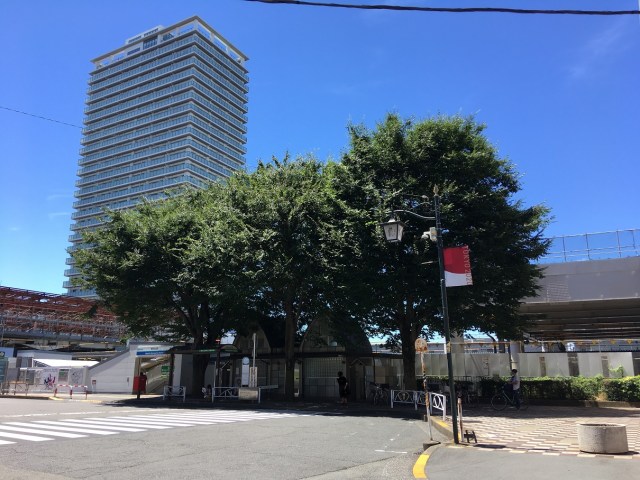
The statue was unveiled during a ceremony on 26 June attended by The Drifters member Boo Takagi and Ken’s brother Tomoyuki Shimura. It was placed outside the East Exit of Higashimurayama Station on the Seibu Line and near the Ken Shimura Trees, which are three Japanese zelkova trees planted in 1977 in honor of his cover of the city’s anthem “Higashimurayama Ondo.”

▼ The Ken Shimura Trees

Image: Wikipedia/Nishifutsu

The statue depicts Shimura wearing a traditional Japanese hakama and striking the pose he makes during his catchphrase of “aiiin.”

▼ Shimura doing the “aiiin” gesture with Kumamon

It’s an extremely well-made monument too, capturing both his likeness and warmth. Even comments online, which are always more than happy to point out faults in something, seemed to unanimously agree that this was a great statue.

“Wow! It looks just like him.”
“Mr. Shimura did a lot of fundraising and charity work, so this is a worthwhile [way] to honor him.”
“Because of the clothes he looks like a great historical figure too, LOL!”

“It’s like he’s alive. I’m definitely going to Higashimurayama!”
“It’s like it will come to life in the middle of the night and make people laugh.”
“It makes me cry because Shimura’s smile looks exactly like his brother’s.”
“It’s been a year already… It’s a really nice statue.”

It should be mentioned that although the city set up a committee to find a way to honor Shimura after his death, the statue itself was crowdfunded by fans across Japan who all chipped in a total of 27 million yen (US$244,000), well above the target budget of 24 million yen ($217,000).

That in itself is a testament to how many people he touched during his life. Although his comedy was not without controversy from time to time, Shimura’s mark on Japanese culture cannot be denied. Influences of his work pop up almost everywhere and he pretty much single-handedly shaped the way paper, rock, scissors is played in Japan, which is certainly no small feat.

Source: Yomiuri Shimbun Online, My Game News Flash
Top image: © SoraNews24
● Want to hear about SoraNews24’s latest articles as soon as they’re published? Follow us on Facebook and Twitter!


Credit:
All-frozen ramen restaurant appears in Tokyo, shows us we don’t really need the restaurant

Ramen Journey Showroom does things a little differently.

If you’re running a ramen restaurant in Tokyo’s Ikebukuro neighborhood, you’d better bring your A-game. Ikebukuro is a ramen-loving neighborhood in a ramen-loving country, with a high-concentration of high-quality noodle joints resulting in fierce competition for customers.

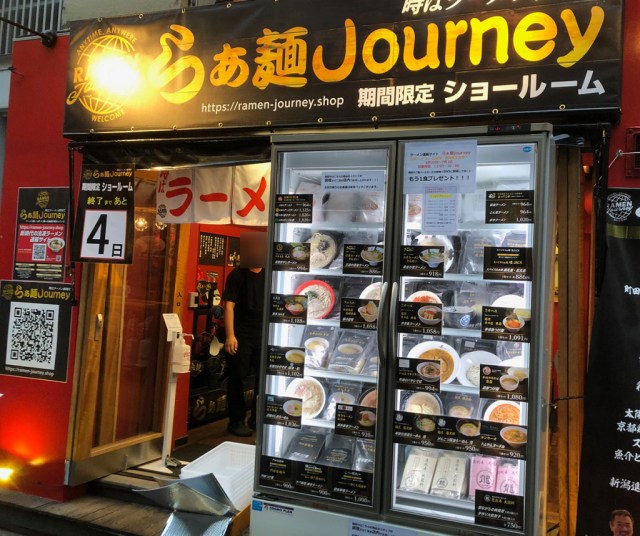
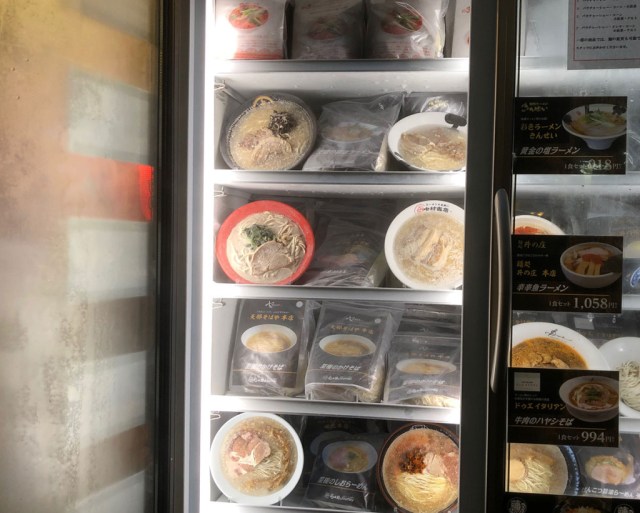
So imagine our surprise when we spotted an Ikebukuro restaurant that proudly boasts that all of its ramen is frozen.

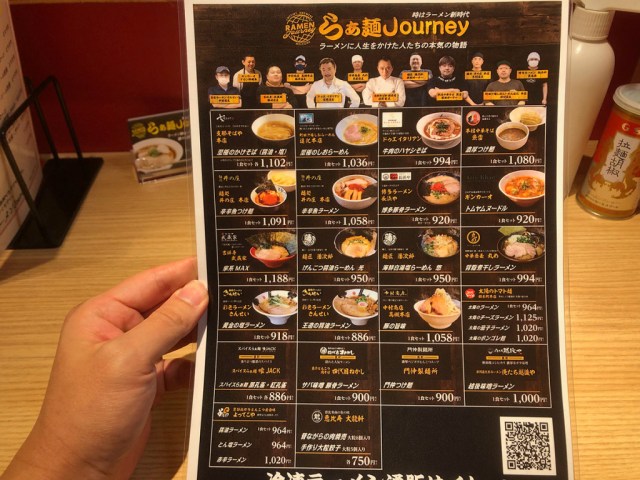
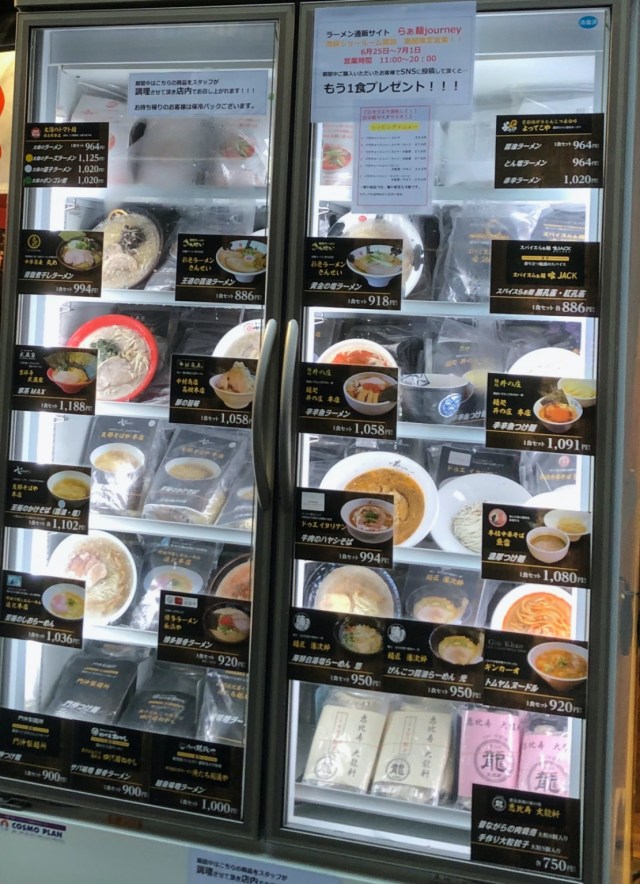
Equal parts intrigued and hungry, we stepped inside Ramen Journey Showroom and took a seat. An employee handed us a menu, and a quick glance at it revealed that the “Journey” part of the restaurant’s name isn’t just some stylish gratuitous English. Instead of a singular house ramen, Ramen Journey offers a variety of types of frozen ramen produced by popular and famous restaurants from different parts of Japan, which you can either take home and prepare or have the staff heat up so you can eat it right there.

In addition to ramen representatives from restaurants in Tokyo’s Shibuya and Nerima Wards, the options also included ramen from noodle houses in Yokohama and Osaka. With most prices hovering around 1,000 yen (US$9) they were a little on the pricy side, but not unreasonable for their pedigree.

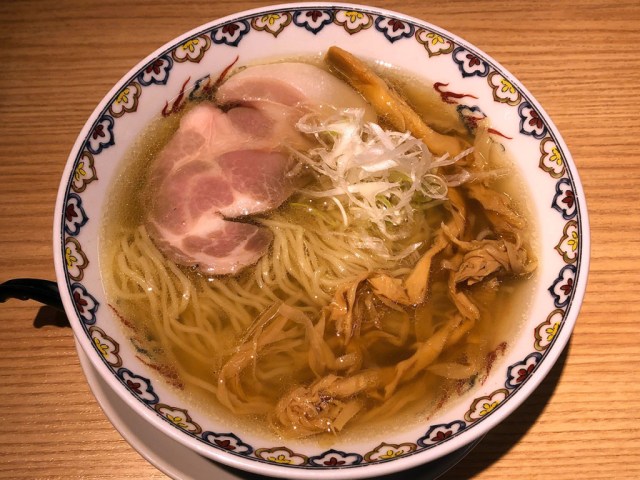
We were still a little apprehensive about paying so much for frozen ramen, but ultimately decided to order a bowl of shio (salt) ramen from Shinka, whose restaurant is located in Tokyo’s Machida City, with an added free topping of sliced onion, and this turned out to be a very smart choice.

The bowl of ramen the staff placed in front of us was immaculately beautiful, and also incredibly delicious. If we hadn’t known ahead of time that it was frozen, we never would have guessed from how it looked and tasted.

And that’s actually sort of the whole point of Ramen Journey Showroom. It turns out the place is an offshoot of the Ramen Journey online frozen ramen shop, and their main goal in opening the restaurant was to give people an opportunity to see that frozen ramen, when done right, can taste as good as the freshly made kind.

Unfortunately, Ramen Journey Showroom is a pop-up operation, and will only be open until July 1. On the plus side, the whole point was to show us that how good their frozen ramen tastes, and now that we know that, we can order it and eat it at home whenever we want.

Restaurant information
Ramen Journey Showroom / ラーメンJourney ショールーム
Address: Tokyo-to, Toshima-ku, Higashi Ikebukuro 1-23-5
東京都豊島区東池袋1丁目23-5
Open 11 a.m.-8 p.m.
In operation until July 1

Related: Ramen Journey
Photos ©SoraNews24
● Want to hear about SoraNews24’s latest articles as soon as they’re published? Follow us on Facebook and Twitter!


Credit:

Japanese TV show about women sprinting up hills and panting adds its first-ever male performers

After 15 years of a very focused formula, Zenryokuzaka is making a change.

Japanese TV has a reputation for being pretty weird sometimes, and things don’t get any less unusual once you hit the late-night time slots. Even in that niche, one of the odder programs is broadcaster TV Asahi’s Zenryokuzaka, which translates to “Full-Power Hill” or “All-Out Hill.”

Airing at 1:20 a.m. Monday to Thursday, each episode Zenryokuzaka is only six minutes long, including the credits and commercials. That’s because the concept is extremely focused. Each episode, the program introduces a new steeply sloping street, usually somewhere in Tokyo or other nearby cities. After setting the scene, a stylish young woman, usually an actress, entertainer, or other media personality, runs up the hill as fast as she can. As she pumps her legs narrator Mitsuru Fukikoshi intones “This, too, is a hill that makes you want to run up it.”

▼ A clip from Zenryokuzaka

TV Asahi leaves the specific appeal of the program up to the viewer to decide. Japanese TV has several programs that introduce walking or urban exploring courses, so maybe some enjoy Zenryokuzaka as a showcase of picturesque backstreets. Others may appreciate the whimsical athleticism of running full-speed along the street, something just about everyone enjoys doing as a kid, but stops indulging in once they grow up. And, almost certainly, some Zenryokuzaka fans are there for the final seconds of each episode, when the camera lingers on close-ups of the woman, having just come to the top of the hill, panting and sweating post-exertion.

Whatever the secret to Zenryokuzaka’s success, the overall package has proven popular enough that the program recently celebrated 15 years on the air. However, TV Asahi has announced that this summer they’ll be tinkering with the program by, for the first time in its history, showing men running up hills as well, starting with actor Ryosuke Miura, perhaps best known for his role of Ankh/Shingo Izumi in Kamen Rider OOO.

“It’s an honor to be the first person chosen for this new initiative,” says Miura, who has already completed filming. “I work out regularly, but I don’t often sprint up hills like this, so it felt great. I’m really happy to have been able to appear on Zenryokuzaka, which I’ve been watching since I was little, and to be accompanied by Fukikoshi-san’s narration.”

With Miura currently being 34, his recollection of watching Zenryokuzaka “when I was little” seems like a liberal use of the term. His enthusiasm appears genuine, though, as he’ll be appearing on the show twice, both times to run up hills in Tokyo’s Chofu City district.

Zenryokuzaka still plans to feature predominantly female talent, but says that men will appear on the first and third Thursday of each month, with Miura’s debut on July 1 and his follow-up on August 5.

Source: Oricon News via Otakomu
Top image: Pakutaso
● Want to hear about SoraNews24’s latest articles as soon as they’re published? Follow us on Facebook and Twitter!


Credit:

Eel-fortified chocolate now on sale in Japan

Just in time for the summertime heat, here comes unagi chocolate.

For sweets fans in Japan, Tirol Chocolate is an archetypal impulse purchase. Bite-sized, inexpensive, and available in just about every convenience store and supermarket in the country, deciding to buy one usually requires next to no cognitive self-convincing.

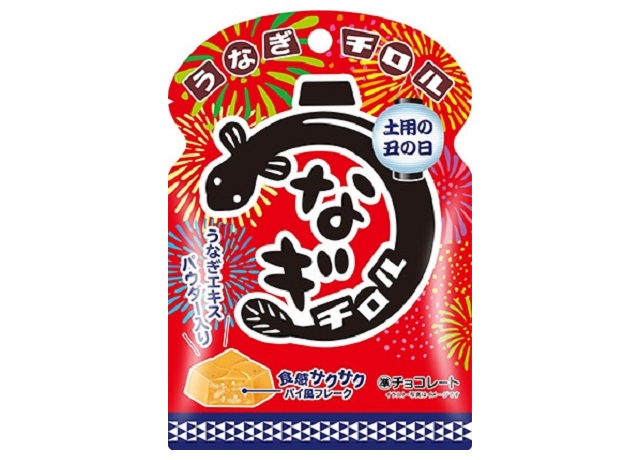
That said, the newest special flavor of Tirol is something you might need to spend some time mulling over before buying, because the special ingredient is eel.

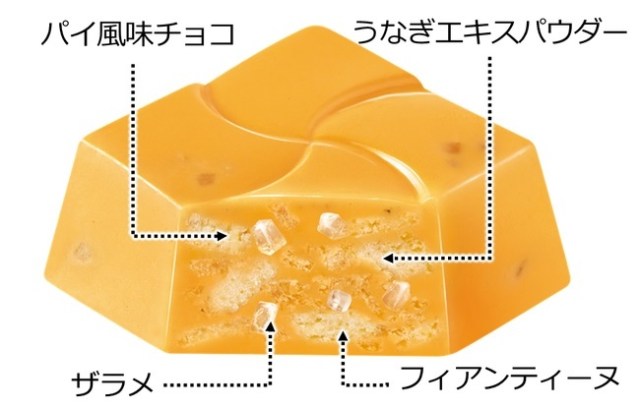
Yes, following up on last month’s Peach Parfait Tirol, this month the company is going with the less conventional pairing of chocolate with unagi, or freshwater eel. In the above cross-section, the top right arrow is pointing to powdered unagi extract, a measure of which goes into each and every piece of the eel Tirol. The other ingredients are less eyebrow-raising/spine-chilling, being pie crust-flavored chocolate, coarse granulated brown sugar, and fiantine (baked crepe dough).

In some ways, the idea isn’t as crazy as it initially seems. Grilled unagi is a popular delicacy in Japan, and there’s even a pre-existing snack food from Shizuoka Prefecture called Unagi Pie that’s made with eel. However, Unagi Pie is dry, wafer-like, and not all that sweet, and it’s going to be interesting, to say the least, to see what happens on the taste buds when unagi extract mixes with something as sugary and creamy as chocolate (maybe even as interesting as when we tried Tirol’s cheese pizza chocolate).

For their part, at least, Tirol is promising a sweet, crunchy, and “fragrant” morsel, with the intended aroma ostensibly being that of the pie crust-inspired chocolate, not a bouquet of sizzling eel flesh. They’ve also timed its release to coincide with rising temperatures in Japan, as many Japanese people believe eating unagi is a good way to ward off summertime heat exhaustion, and Unagi Tirol is on sale now, priced at 162 yen (1.50) for a pack of seven pieces.

Source: PR Times via Hachima Kiko
Images: PR Times
● Want to hear about SoraNews24’s latest articles as soon as they’re published? Follow us on Facebook and Twitter!


Credit:

We try Starbucks’ new Strawberry Choux Cream Frappuccino

Sure, we love puff pastry, but what’s it like to drink it?

One of the great things about our team having a reporter based in Taiwan is the fact that she’s able to give us a firsthand account of all the fantastic local Starbucks treats over there that we sadly miss out over here in Japan.

Now, she’s back to make us all green with envy once again, this time with Starbucks Taiwan’s newest limited-time offering: the Strawberry Choux Cream Frappuccino.

While this is the first time for the Frappuccino to land on Taiwanese shores, the Strawberry Choux Cream Frappuccino appeared in South Korea in 2017 and 2019 to huge acclaim. Now, it’s not only on the menu at Starbucks in Taiwan, but at a number of other Starbucks branches in east and southeast Asia as well.

The drink has been getting rave reviews from everyone who’s tried it so far, but our reporter Yui Imai wasn’t so sure if choux cream would make for a great Frappuccino, given that the milk bases they usually contain are already so creamy on their own.

Another potential problem was the fact that the drink doesn’t contain any cream puffs, which is the sweet Yui usually thinks of when she hears the words “choux cream”. Instead, the base is a blend of vanilla custard cream and milk, with plenty of strawberry pulp at the bottom.

Instead of cream puff pastry, the drink contains a topping of graham cracker pieces for a textural accent, and when Yui took her first sip of the drink, the initial flavour was similar to vanilla ice cream. A second or two later, the acidity and jelly-like texture from the strawberry pulp jumped into the flavour profile, providing a fruity refreshment to the creamy base.

Yui was almost upset to admit the beverage was actually amazing. And as for the missing cream puffs, the graham cracker pieces on top did a really good job of recreating the familiar pastry-and-cream combination. In fact, it was probably a better option than including real puff pastry pieces, which would have clumped together and created a cloying texture.

As she sipped through the drink, Yui was surprised to find that the crispy texture of the cookie, the mellow custard-flavoured Frappuccino base, and the strawberry pulp mix combined beautifully together to create an overall flavour that really tasted like a choux cream pastry.

This playful Frappuccino is available in three sizes, priced from 145-185 TWD (US$5.19-$6.63), and will be available for a limited time from 23 June.

Photos ©SoraNews24
● Want to hear about SoraNews24’s latest articles as soon as they’re published? Follow us on Facebook and Twitter!


Credit: