Literally hungry for new Nintendo Pikmin content? You can now eat the creatures in Japan

Bandai turns Nintendo’s mysterious creatures into double-flavor, 1:1-scale snacks.

Generally speaking, fans of Nintendo franchises are pretty well-served. It’s basically a given that every couple of years a highly polished, brand-new installment will be released for Mario, Zelda, Pokémon, Smash Bros., and many more.

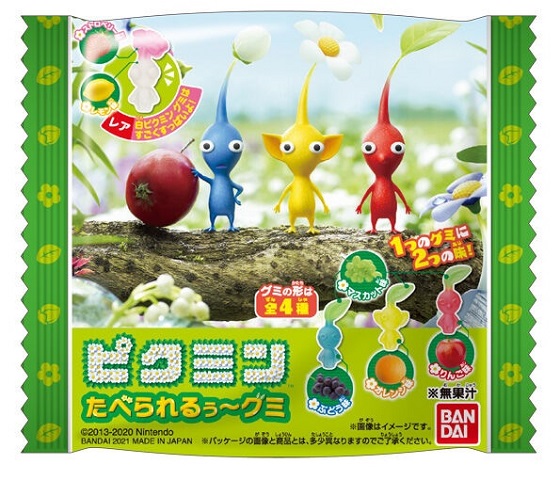
An exception to this rule, though, is Pikmin, which hasn’t gotten a numbered sequel since 2013’s Pikmin 3. That’s left fans of the franchise hungry for a true sequel, and while that craving isn’t likely to be satisfied anytime soon, fans hungry for actual food can now eat Pikmin themselves in the real world.

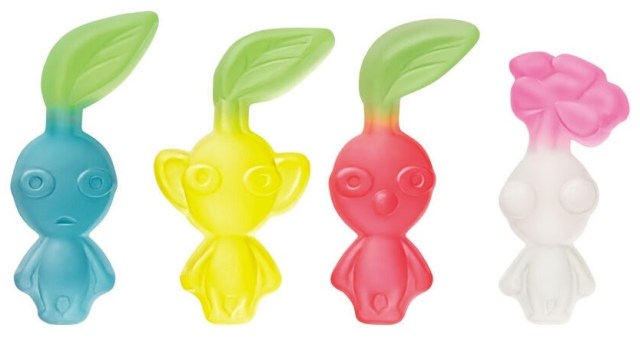
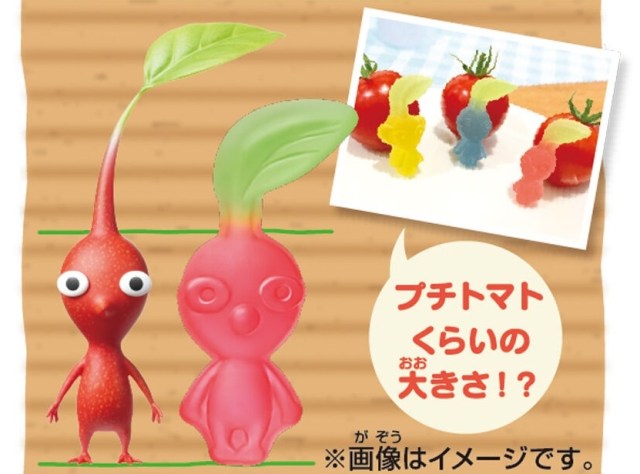
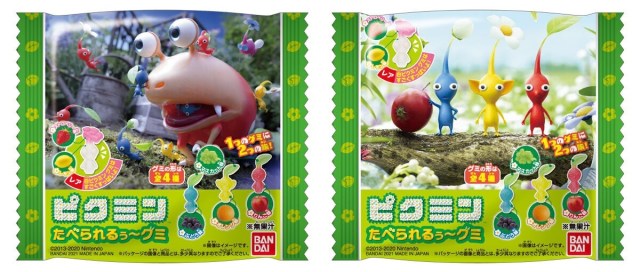
Bandai, who in addition to anime and video game merchandise also makes candy, has created Pikmin Edible Gummies (Pikmin Taberareru Gummies, in Japanese). They’re designed to match the in-game size of the little creatures, with each one being about as tall as a cherry tomato.

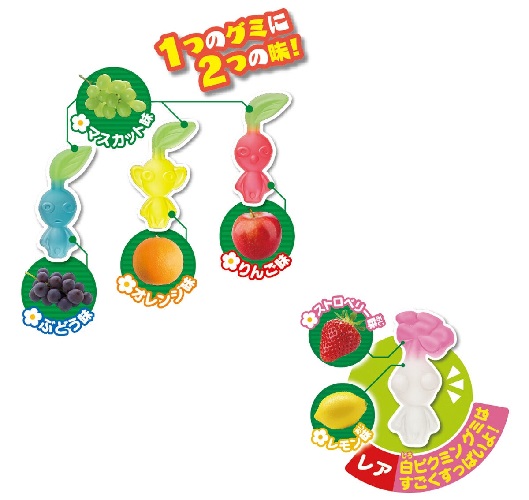
In keeping with their nature as “mysterious lifeforms,” each Pikmin has a complex taste made up of two different flavors. The red, yellow, and blue Pikmin are apple, orange, and grape-flavored, respectively, and the white one (the rarest of the bunch) is lemon. In addition to that, though, the green leaves growing out of three of the Pikmin’s heads are muscat flavored, and the pink flower for the white one is strawberry.

▼ This diagram will help you navigate the potential confusion of the orange-flavor Pikmin not being orange-colored, and that both of the flavors of the blue one are types of grapes.

The gummies are on sale now at Japanese convenience stores and supermarkets. Two different packages have been designed, though at just 100 yen (US$0.92) a bag the risk of hurting your wallet is far less than the risk of hurting your stomach if you scarf down too many Pikmin at once.

Source: Bandai via Livedoor News via Otakomu
Images: Bandai
● Want to hear about SoraNews24’s latest articles as soon as they’re published? Follow us on Facebook and Twitter!


Credit:

Pizza Hut sandwiches? Japanese lunch packs will never be the same again

Pizza chain joins the trend for premade sandwiches in Japan.

Sandwiches in Japan are kind of like the ones you get overseas, in the sense that there are two slices of bread and a filling involved, but over here you’d be hard pressed to find anything other than milky soft white bread being used, whether it’s with cream-filled fruit sandwiches or paper tiger ones from a convenience store.

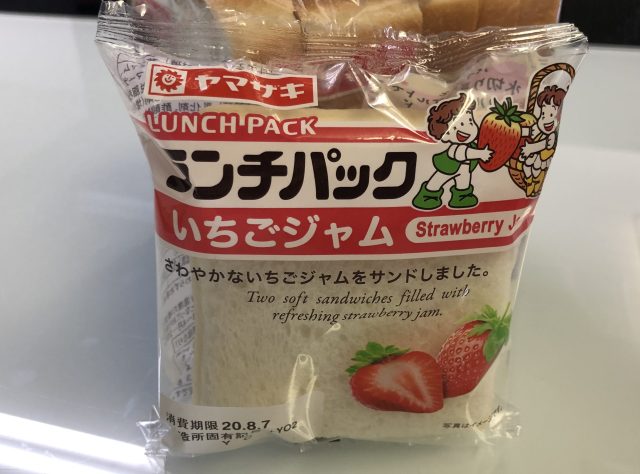
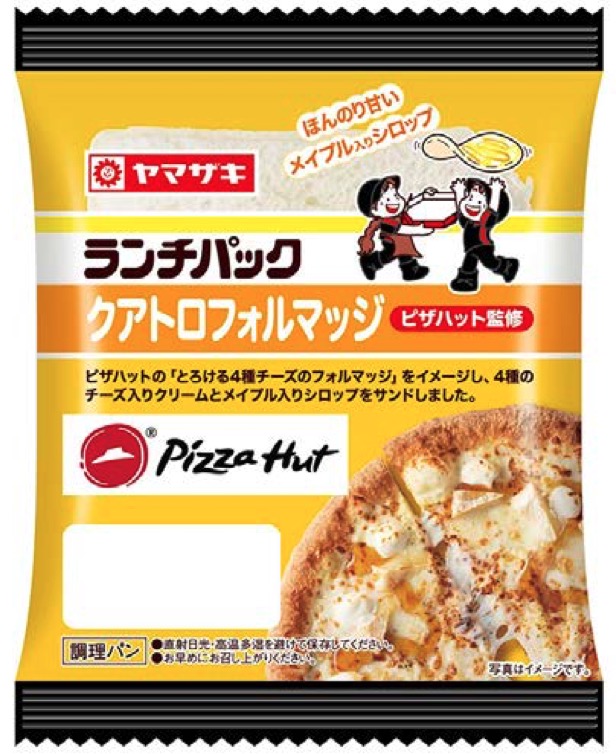
One of the most popular ways to enjoy sandwiches is with a “Lunch Pack“, made by Japan’s Yamazaki Baking Company, the world’s largest bread-baking corporation. Yamazaki mass produced 400 million of these lunch packs in 2020 alone, in over 150 varieties.

▼ Strawberry Jam is one of the company’s best-selling varieties.

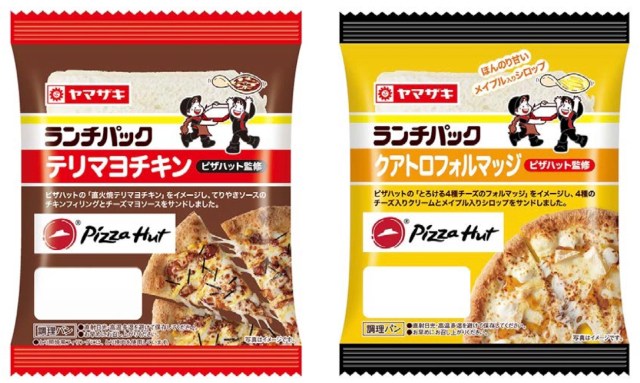
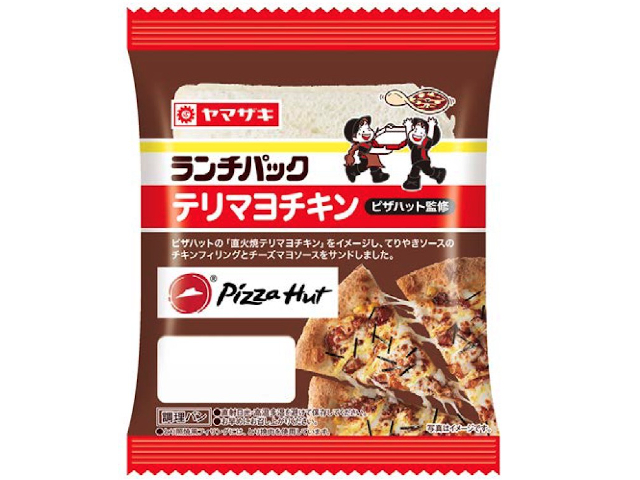
Yamazaki loves to walk on the wild side with some of their flavours, and this year they’re adding to their range with an exciting new collaboration with Pizza Hut, featuring the flavours used in two of the chain’s best-selling pizzas.

The Terimayo Chicken Lunch Pack contains a delicious chicken filling, which has been slathered in teriyaki sauce and a cheese mayo sauce. The fluffy white bread steps in to take the place of the pizza base, and the teriyaki sauce is said to be distinct, as it uses a ginger soy sauce base to help provide a good balance of sweet and spicy flavours.

The Quattro Formage Lunch Pack promises to make cheese lovers drool with its Camembert, mozzarella, Parmesan, and cream cheese filling. The addition of maple syrup helps to enhance the taste of cheese, creating a delightful blend of tart, sweet and salty flavours.

Both lunch packs were created under the supervision of Pizza Hut, so you can be sure that the flavours in these will closely replicate the original pizzas. Available from 1 October at supermarkets and convenience stores nationwide, these new varieties are well poised to cause just as much of a stir as the lunch packs that wowed foreign reporters at the 2020 Tokyo Olympics.

Source, images: Press Release
● Want to hear about SoraNews24’s latest articles as soon as they’re published? Follow us on Facebook and Twitter!


Credit:

Kamen Rider Revi’s hoverbike is a real thing that’s on sale now, delivery by early next year

By far the most expensive toy the long-running series has ever featured.

On September 5, the latest iteration of the 50-year Kamen Rider tokusatsu series began. Called Kamen Rider Revice, the series takes the parasitic-buddy-comedy tone of the Venom movies as its hero Kamen Rider Revi must learn to work together with his own inner demon, Vice.

▼ A promo video for the new season — pay particular attention around the five-minute mark

Like other chapters, this Kamen Rider series incorporates its own merchandise into shows to help streamline kids’ play-acting and thus sweeten toy sales. Also, like previous stories, the main character rides a motorcycle, but if you watch the above video closely, you may have noticed that this time it’s a flying motorcycle.

With all the monsters, lasers, and explosions flying around the show, it’s easy to just dismiss the hover bike as another prop. However, it’s actually a real, functioning hover bike developed by Tokyo-based A.L.I Technologies called XTurismo.

▼ An earlier model of XTurismo from 2019

XTurismo is 3.7 meters (12 feet) long, 2.4 meters (8 feet) wide, and weighs about 300 kilograms (660 pounds). It runs on both fuel and electricity but only has a running time of 30 to 40 minutes. Still, since flying motorcycles aren’t road legal, it should be plenty of juice for some fun off-roading in the most literal sense possible.

▼ A CGI simulation of the fun that can be had on an XTurismo

The good news is that improved batteries that can prolong flight times and make XTurismo completely electric are expected around the year 2025, by which time legal issues surrounding hoverbikes will also hopefully become clearer. A.L.I. President and CEO Daisuke Katano told Daily Shincho in an interview that the currently developing drone legislation will likely chart the course of licensing and rules for the XTurismo too, since they are so similar.

Until then, it can be used by anyone regardless of a license but only on private land. A.L.I. also hopes the technology can be used by aid workers in disaster areas where roads have been rendered unusable.

They don’t come cheap, however, and though Katano didn’t quote an exact price he compared the cost of an XTurismo to that of a luxury sports car, which is a fairly big ballpark but suggests perhaps around 10,000,000 yen (US$90,000). On the plus side, he said that delivery may be possible as early as the beginning of 2022.

▼ If that’s too steep, then there’s always the other main vehicle of Kamen Rider Revice: Sitting on a manifestation of your inner demon’s face to create a robot Tyrannosaurus

It should also be noted that the Limited Edition Basic Model currently for sale has a considerably different look than the one seen in Kamen Rider Revice. But if you’ve already put in the money for the actual bike and are really committed to the show then a little customization might not be a huge hurdle.

But that also means you don’t have to be among the legions of Kamen Rider fans to enjoy an XTurismo. It can be used to live out any number of sci-fi stories in which hoverbikes appear. In fact, I’m already working on a life-sized Battletoads course and putting the finishing touches on my will, because we all know how that will end.

Source: XTurismo, Daily Shincho
Top image: YouTube/バンダイ公式チャンネル BANDAI OFFICIAL
Insert image: PR Times
● Want to hear about SoraNews24’s latest articles as soon as they’re published? Follow us on Facebook and Twitter!


Credit:

Manga artist shares a genius-level trick to take the headache out of drawing interior scenes

A new perspective to solve a challenging problem.

It’s tempting to assume that drawing a manga is simpler than making a live-action movie or TV show. For example, manga artists don’t have to worry about constructing sets or procuring props. All they have to do is imagine the setting they want, then draw it, giving them complete control over the environment their story unfolds in.

Really, though, it’s anything but easy. Sure, live-action productions need to do more groundwork to build and dress their sets, but once that’s done, they can shoot scenes from whatever angle they want just by moving the camera. With manga, though, every time the artist wants to change perspective, they have to redraw the room. The art may be on a flat page, but it’s still supposed to represent a 3-D space, and keeping track of where the background elements and other environmental details are supposed to be in relation to each other can be a brain-busting challenge since they only exist in the mind’s eye of the artist.

Thankfully, manga artist and Japanese Twitter user Haru Amake (@BtRuzq) has come up with an extremely clever solution to that problem.

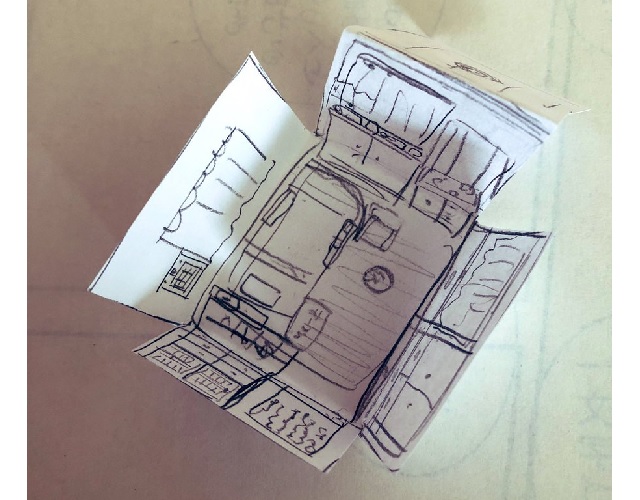
Using a piece of paper cut into a plus sign-shape, Amake has sketched the layout of a character’s bedroom. It’s nothing super complex or detailed, but all the major furnishings are there, like the bed, a table, and a chair. What makes the idea really brilliant is that Amake didn’t stop at the floorplan but also sketched the walls, where we can see curtains, cabinets, shelves, a closet, and even a calendar. “This makes it easy to understand what the room should be drawn like from different angles,” Amake explains.

With no fewer than 15 different things to keep track of in the room even before a single character sets foot inside it, this definitely looks like a more accurate and efficient way to do things than trying to work the whole thing out in your head. Amake’s method is also a lot quicker and less resource-intensive than building a dollhouse-like physical model or CF construct, giving you more time and energy to devote to drawing.

If you’re interested in seeing the results of this visual planning, Amake is currently illustrating the above-pictured manga series Catherine Has Been Kidnapped (Catherine ha Sarawareru), a free online preview of which can be found here. And if you’re looking for more mind-blowingly clever ideas, we recently found out we’ve been making our sandwiches wrong for years, and what we should be doing instead.

Source, image: Twitter/@BtRuzq
● Want to hear about SoraNews24’s latest articles as soon as they’re published? Follow us on Facebook and Twitter!


Credit:

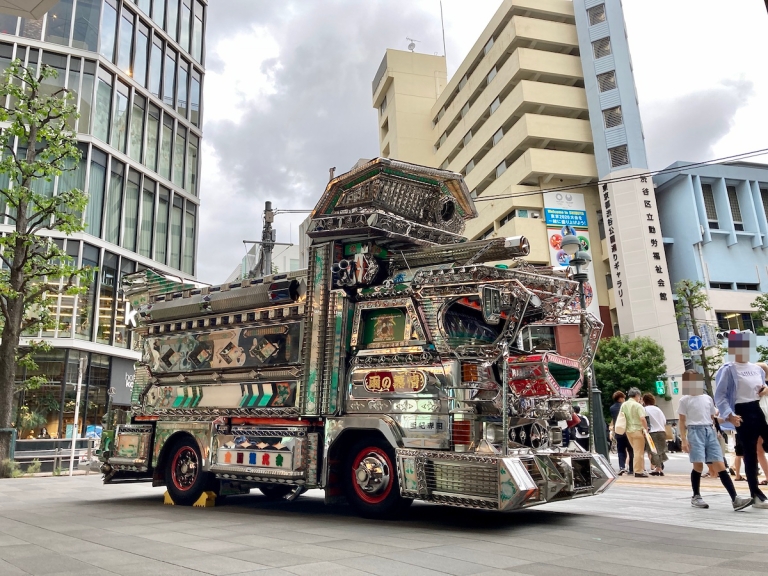
We spot the legendary dekotora Aki Kannon, dedicated to actress and singer Aki Yashiro

To celebrate Yashiro’s 50th anniversary as an entertainer, it was parked outside of Shibuya Parco for a limited time. 

In the 1970s there was a smash hit film series about a pair of truckers who drove around Japan in their gaudily decorated trucks helping women (that they inevitably fall in love with) out of tough spots, called Truck Yaro (loosely translated as “Truck Rascals” or “Truck Guys”). This comedy-action series spanned 10 movies between 1970 and 1979 and were so popular that they incited a trend among Japanese truckers known as dekotora (“decorated trucks”), where they decorate their trucks with as many lights, colors, and embellishments as they can

While each film starred a different love interest, the fifth film in the series featured a beautiful, enka-singing lady trucker (who wasn’t a love interest, just a cool character) played by singer and actress Aki Yashiro. Because of that role, she quickly became known as the “goddess of truck drivers”. This year marks Aki Yashiro’s 50th year as an entertainer, and so, in her honor, a super famous dekotora known as the “Aki Kannon” went on display in Shibuya for a limited time.

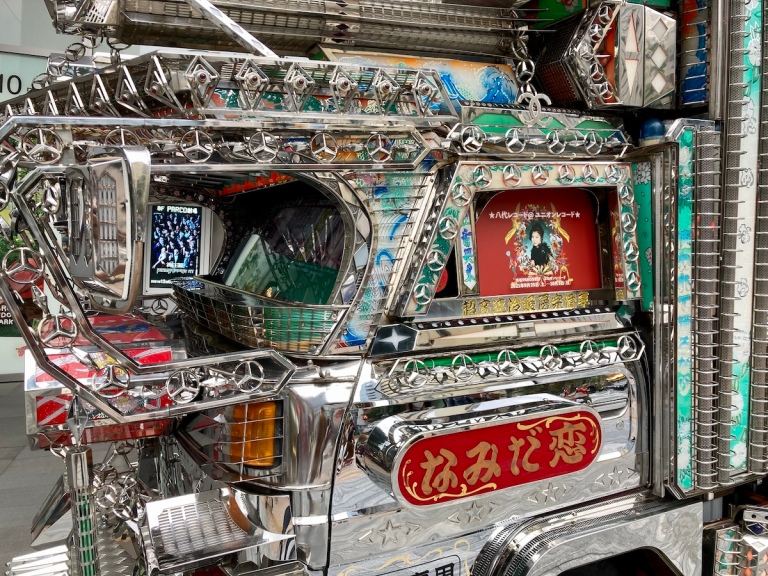
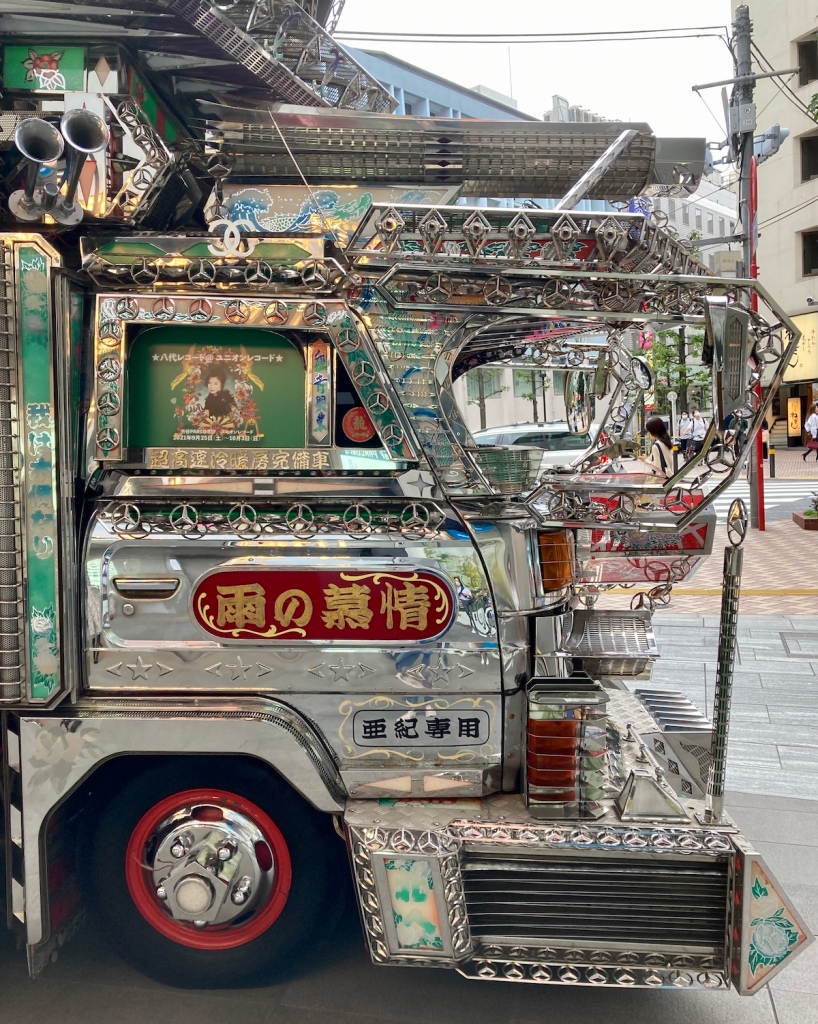
For the sake of those who couldn’t make it to the square in front of Shibuya PARCO before it was gone, we went to check it out…and man, was it cool!

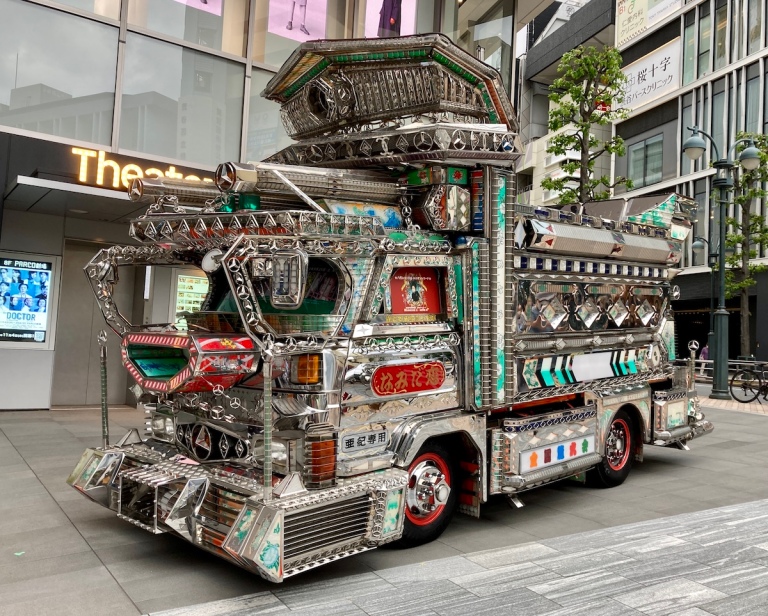
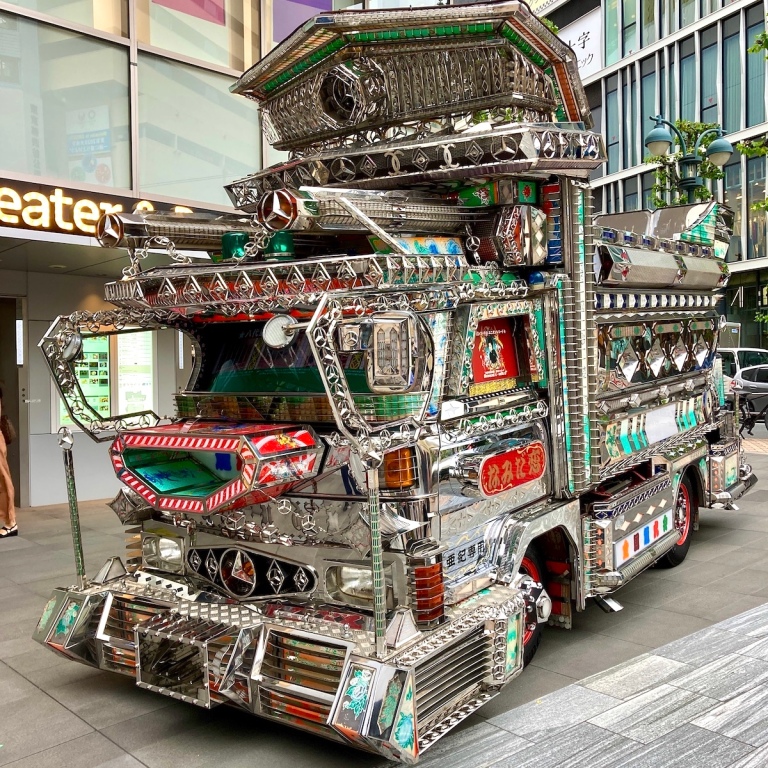
The Aki Kannon is famous for its crazy amount of bling. According to those in the know, the truck itself is a 1974 model of the Mitsubishi Fuso Third Generation Canter truck. Not only is it a classic vehicle, but its decorations make it super heavy, so it only appears at very select events. As a result, it’s often referred to as the “Mythical Dekotora” among fans.

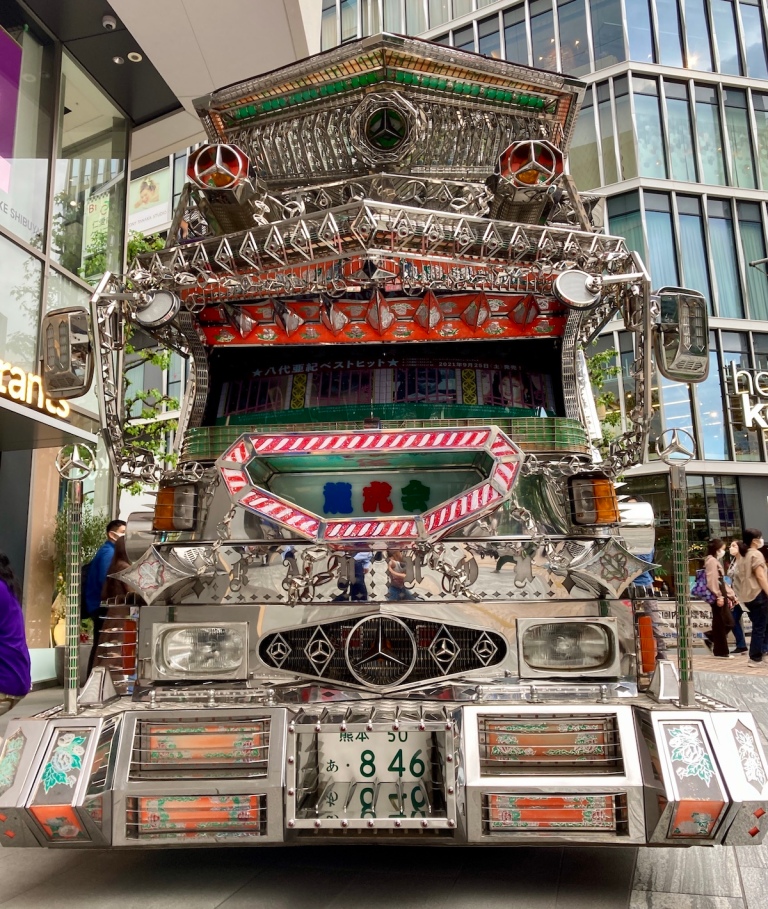
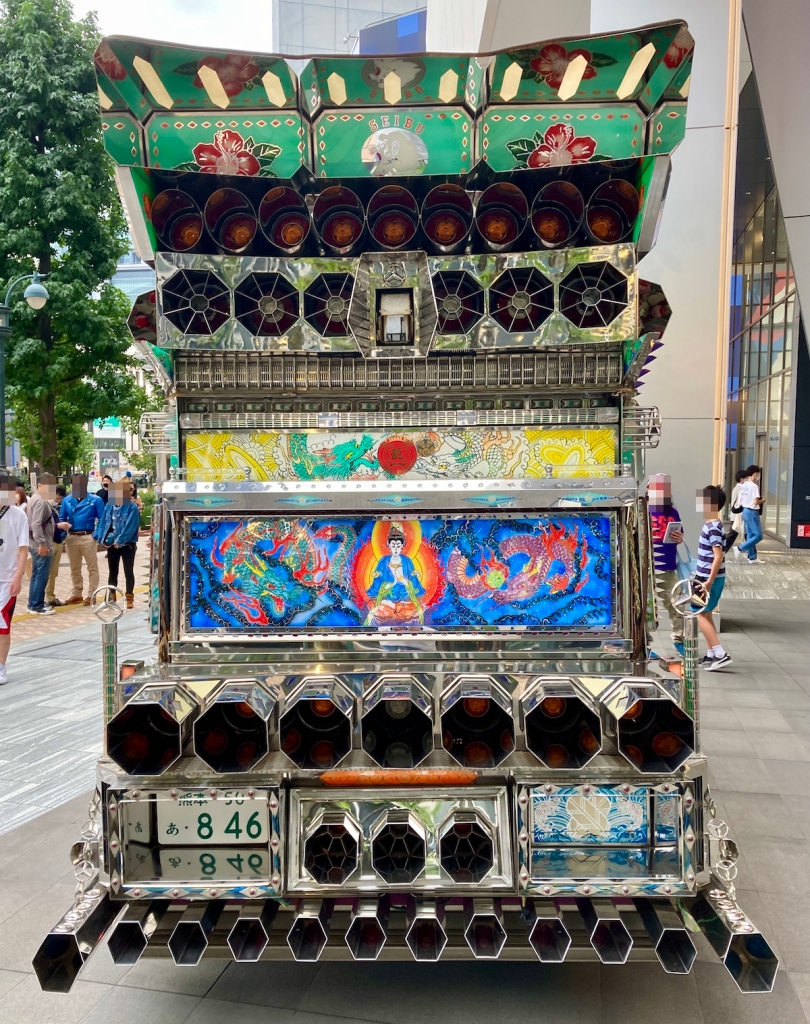
Like the Ichibanboshi dekotora from the Truck Yaro films that we got to see earlier this year, this legendary dekotora is completely decked out. It’s gorgeous, luxurious, and extremely elaborate, with shining silver trimming, bright, bold paint, and of course, plenty of lights.

It has a serious Showa vibe!

In honor of Yashiro, the license plates–though hard to see under the gloriously enormous bumpers–read “846”, which in Japanese can be read as “Yashiro”. It’s also a Kumamoto license plate, paying homage to Yashiro’s home prefecture.

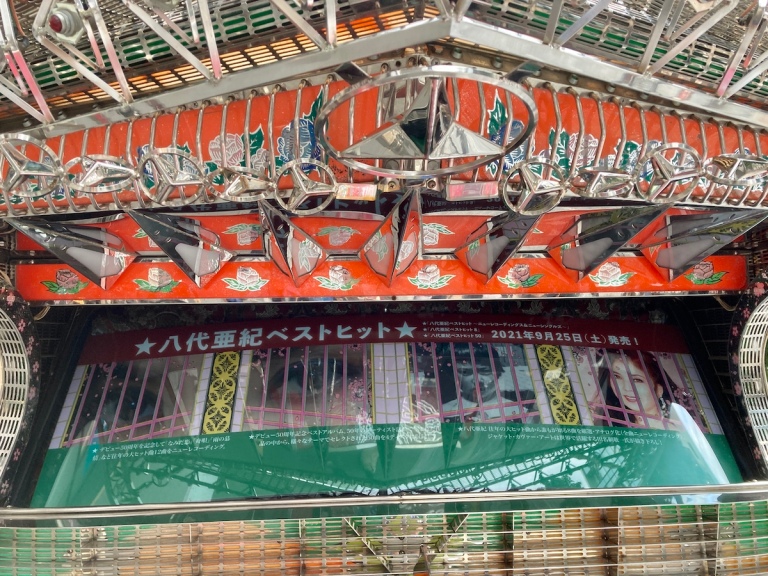
The names of Yashiro’s most famous songs, like “Funauta”, “Ame no Bojou”, and “Namida Koi”, are also carved into various places of the body of the truck.

The mournful melodies of her music and her sorrowful, husky voice made her a huge hit among Showa-era truckers, especially during the first wave of popularity of dekotora, and that’s represented in the decorations used on this truck.

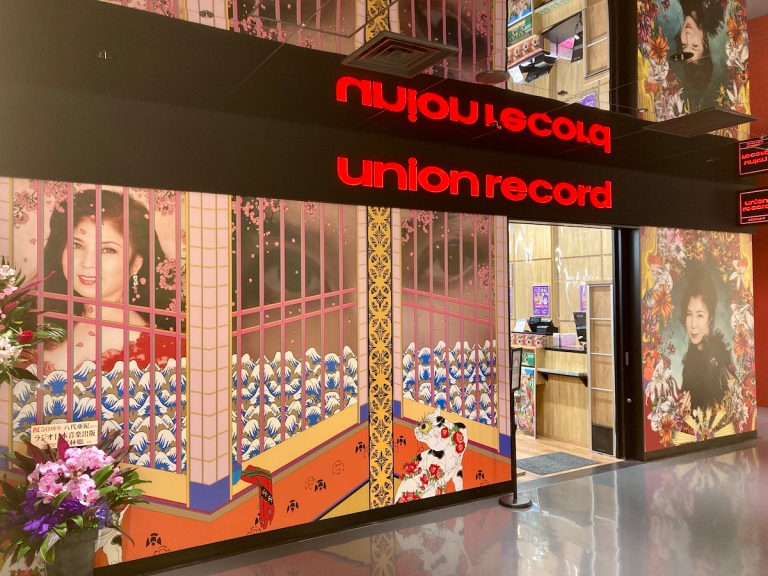
Unfortunately, the Aki Kannon has already been relocated, but Shibuya Parco–which is also home to the Nintendo Store–has launched a tribute to Aki Yashiro’s 50th anniversary through multiple special events throughout its shops. At the basement-level Union Records, for example, they’re selling limited-edition Yashiro Records until October 3.

We took the opportunity to buy an analog version of her single “Funauta” for 500 yen (US$4.49), and we took a photo of it with the Aki Kannon, to mark this special occasion. Look at the photo on the cover! Isn’t she just an eternal madonna?

▼ Absolute goddess

Though it was only around for a very short time, we’re glad we got to see the famous Aki Kannon dekotora. It exceeded our expectations! The world of dekotora, bursting with romance, is its own type of Japanese culture, and the Aki Kannon reminded us of that. We’re not sure when the mythical truck will make a reappearance again, but if you ever have the chance to see it, it’s totally worth checking out!

Photos © SoraNews24
● Want to hear about SoraNews24’s latest articles as soon as they’re published? Follow us on Facebook and Twitter!


Credit:

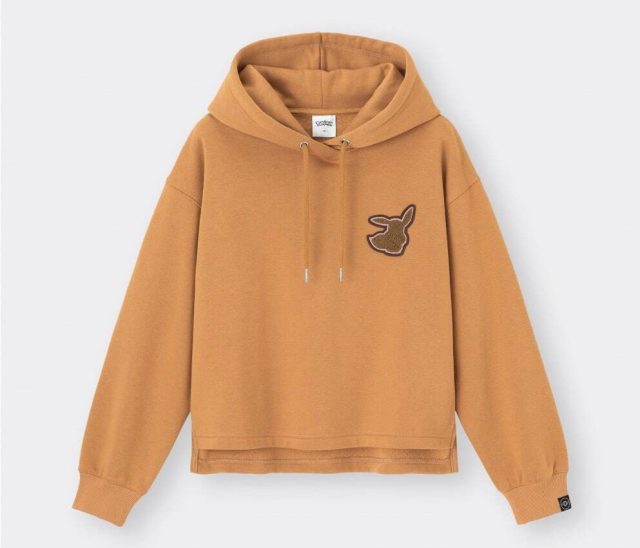
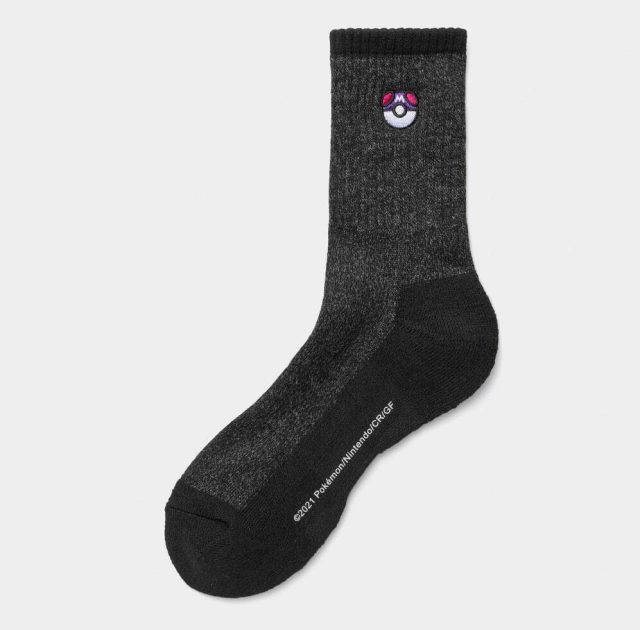
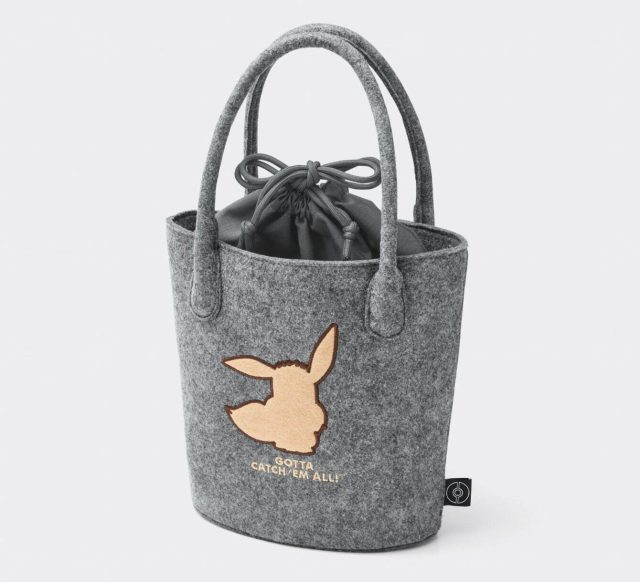
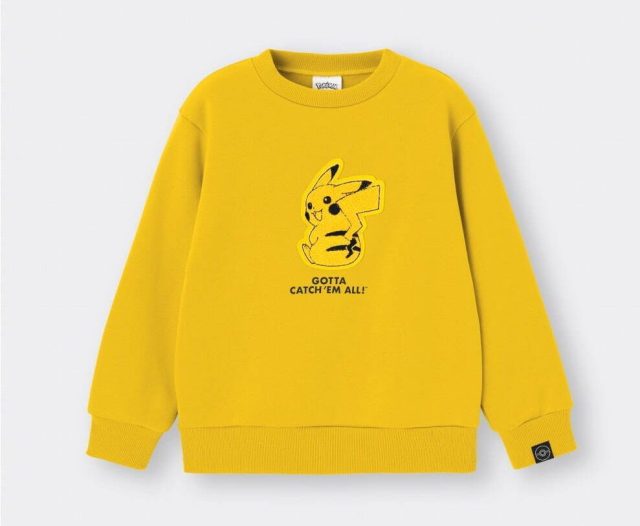
New Pokémon GU collaboration dresses all the family, including babies for the first time

Uniqlo’s sister brand wants everyone to catch ’em all.

Back in April last year, Pokémon fans queued around the block to get their hands on a tie-up collection exclusive to GU, Uniqlo’s sister brand, which specialises in latest trends.

The collaboration proved so successful it spawned another range in summer 2020, and now, we’re happy to announce there’ll be another collection, this time with a variety of items to keep us snug and cosy all winter long.

Based around the theme of a “home camp” shared by family and loved ones, the new Pokémon Winter Collection consists of a whopping 56 items. And this time there’ll be some baby products in the range, which is a first for the collaboration.

They’ve released a few photos to give us a sneak peek at what we can expect to find in store when the range is released, so let’s take a quick look at them below, starting with…

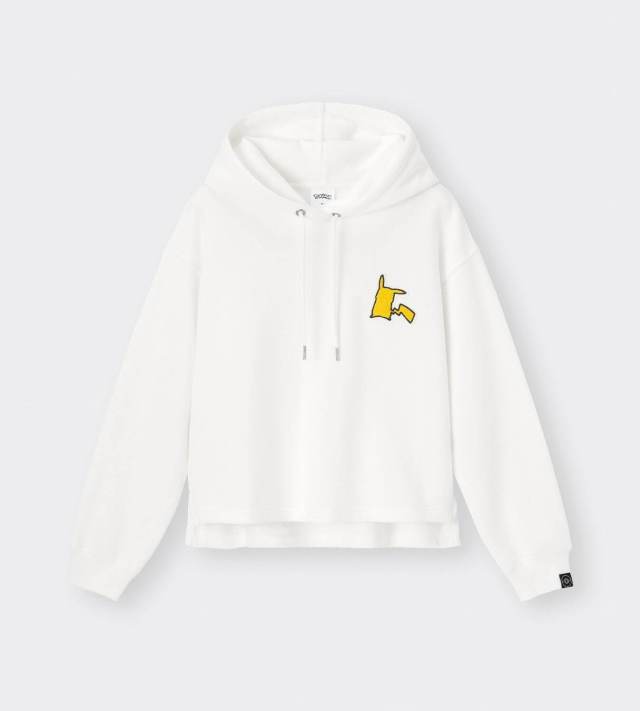
▼ …The graphic sweatshirts for adults, which come in sizes XS-XXL, priced at 2,690 yen (US$24.06) each.

▼ Look, it’s Eevee!

▼ Adults will also be able to add socks (390 yen) and bags (1,990 yen) to their trainer ensemble.

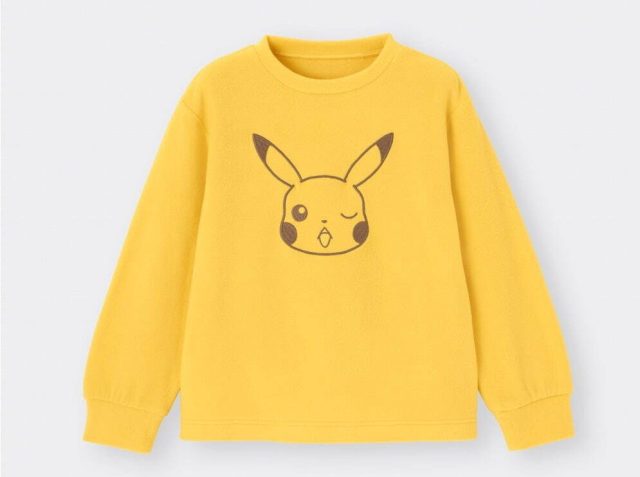
▼ Over in the kids’ section, there’ll be sweatshirts for 1,690 yen…

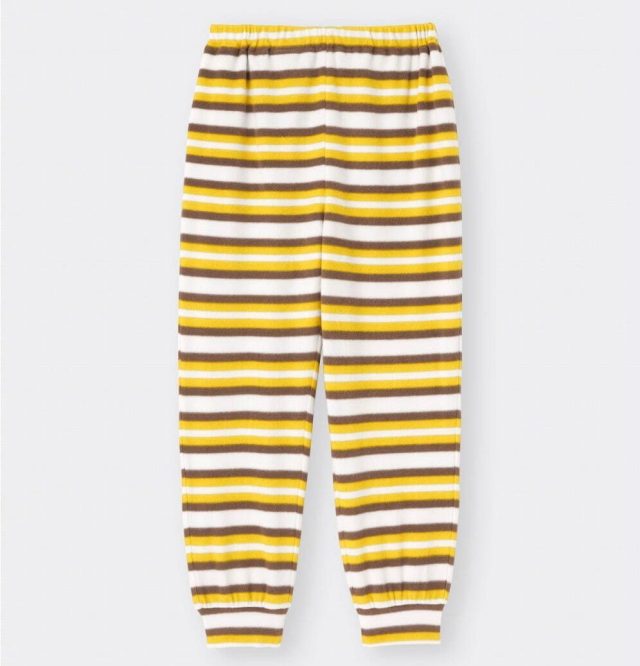
▼ …and two-piece lounge sets with a “soufflé feel” for 1,990 yen.

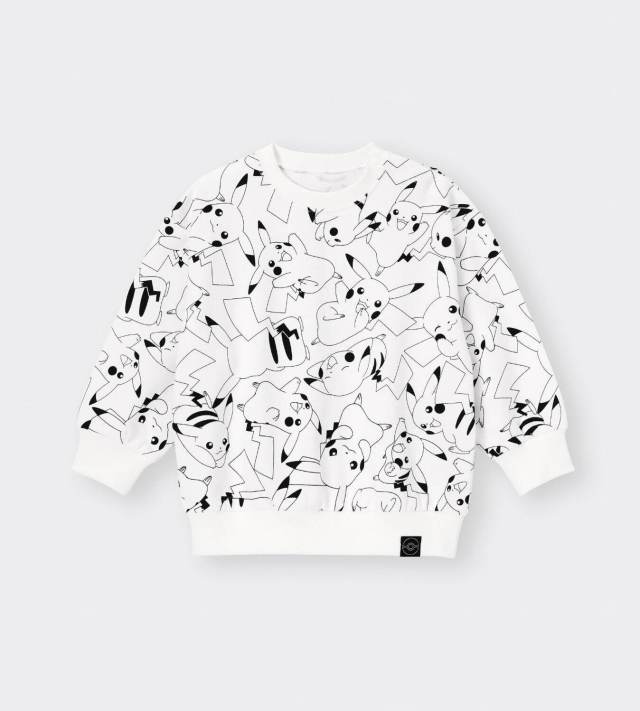
As mentioned previously, GU will be stocking Pokémon clothing in babies’ sizes for the first time ever, and judging by this adorable sweatshirt, priced at 1,690 yen, they’re bound to be incredibly sought-after.

With prices in the collection ranging from 390-3,490 yen, this is an affordable collection that Pokémon fans won’t want to miss out on. And it won’t just be fans in Japan that get to cosy up to the range in winter, as the collection will be available at GU branches in China, Taiwan and Hong Kong as well.

There’ll be 22 products for men, 18 for women, 12 for kids and 4 for babies, and the range is set to include pyjamas as well, so there’ll be something for everyone to wear while enjoying a “home camp” together this winter.

The collection will be available at stores and online from early November, but if you can’t wait until then, you can always browse the current Pokémon Uniqlo collaboration!

Source, images: Press Release, ©2021 Pokémon. ©1995-2021 Nintendo/Creatures Inc./GAME FREAK inc.TM,®,and character names are trademarks of Nintendo.
● Want to hear about SoraNews24’s latest articles as soon as they’re published? Follow us on Facebook and Twitter!


Credit:

How do European Cup Noodles taste to a Japanese palate?

A serious culinary deep dive for those who need their instant ramen to taste like Japanese instant ramen.

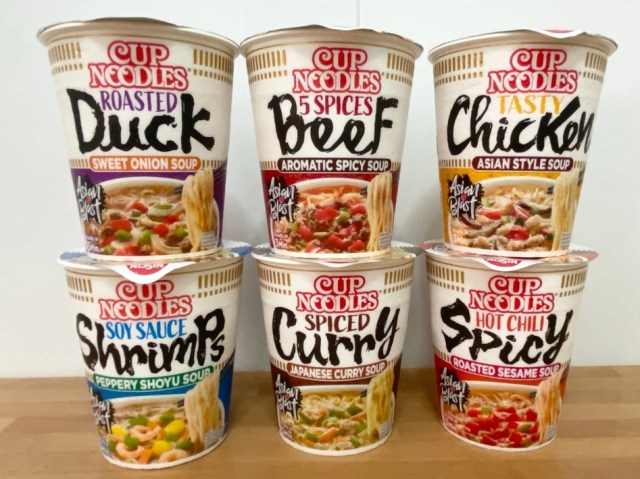
This year marks the 50th anniversary of the humble Nissin Cup Noodle, a common sight in any supermarket or convenience store both within Japan’s borders and outside of them. Fittingly, over 50 billion of these portable noodle meals have been sold worldwide! And so today we choose to celebrate Nissin Cup Noodle‘s global outreach by reviewing their international versions.

Our Japanese-language reporter Ikuna Kamezawa is currently residing in Spain, making her the perfect candidate to sample the European editions of our favorite cupped carbohydrate.
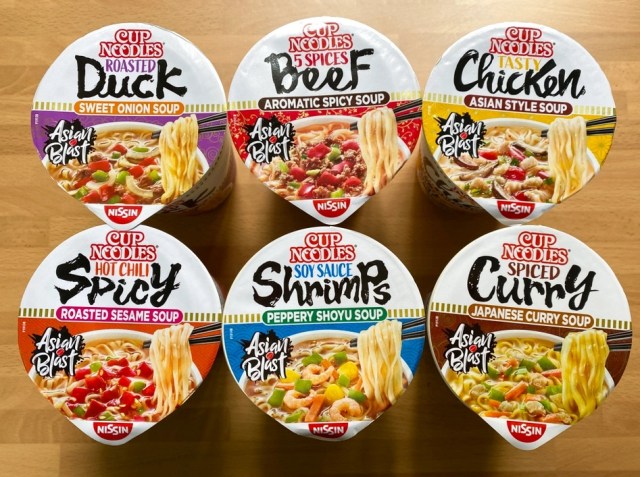
In Japan, Cup Noodle is known to use “mystery meat”—a blend of pork and vegetables that forms into dense, toothsome little cubes. Ikuna was surprised by how boldly each of these Cup Noodles proclaimed that they had…well, actual meat inside of them! And one of them even used duck meat. Intriguing.

First, we’ll preface this with something fairly obvious: these European Cup Noodles actually don’t taste very similar to the Cup Noodle products you can purchase in Japan. In fact, buying an imported Japanese Cup Noodle comes at a premium—they cost around 4.58 euros (US$5.35) while a locally produced one is 1.1 euros (US$1.29).

So with that in mind, let’s get tasting. First on the docket for Ikuna was this meaty marvel: the 5 Spices Beef Aromatic Spicy Soup.
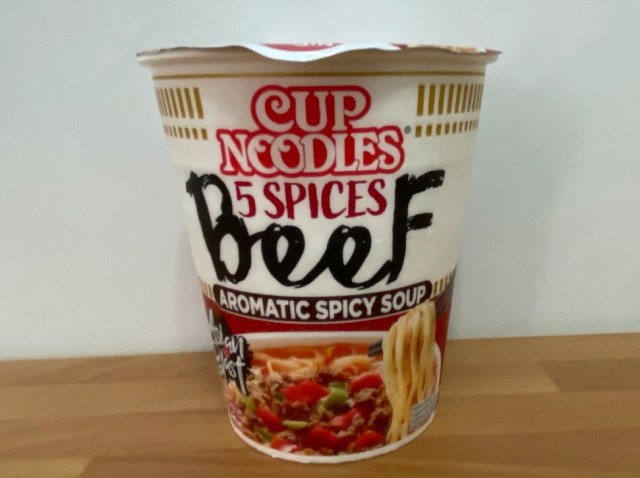
“Maybe it’ll taste like the beef-bone ramen we have in Japan?” Ikuna wondered. She popped open the container and peered inside. Ah, plenty of stock, minced beef, scallions, green onions, and paprika.

▼ Some seriously beefy instant noodles.
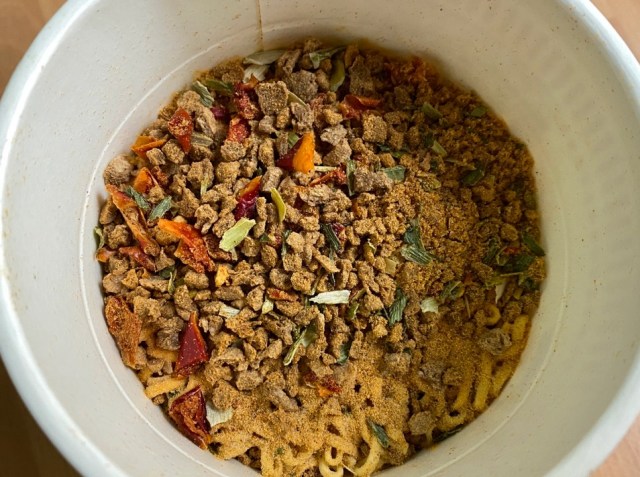
She prepared her noodles with some hot water and got ready to chow down.

▼ And to her surprise…
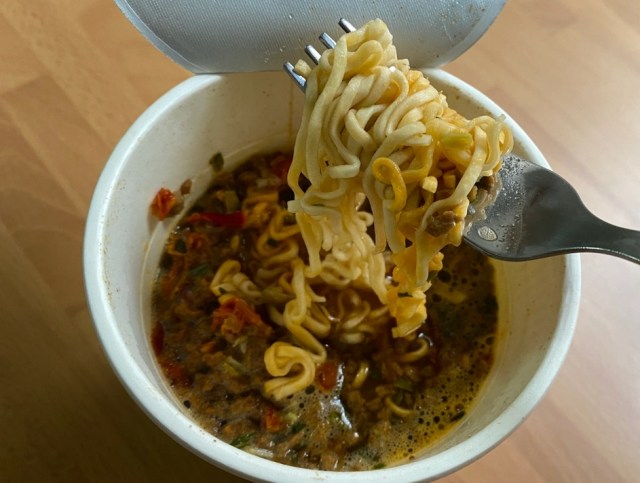
▼ It tasted…kinda weird!
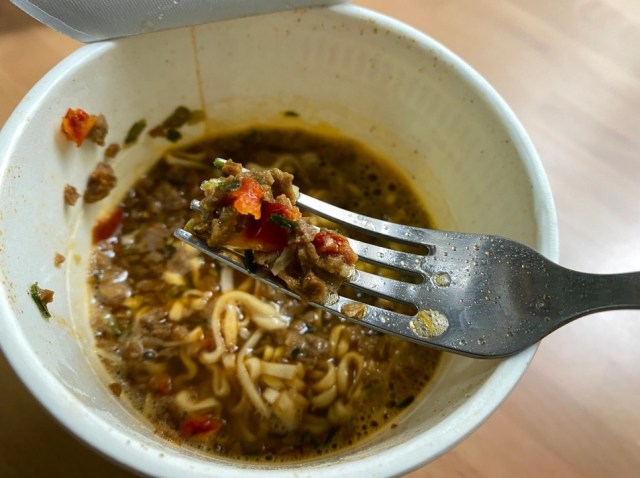
It was honestly hard for her to find the words to describe this flavor. The beef mixed in was tough and chewy, so it did feel meaty…in a sense. Meanwhile, despite the brown color of the broth, the taste was reminiscent of Japan’s Seafood Cup Noodle. The different flavors coalesced into something that felt similar to Chinese Sichuan dandan noodles.

On top of this, it was mildly spicy and had a strong aroma of animal flesh, so altogether Ikuna was left rather unimpressed.

Final score: 3/10.

Introducing our next challenger, the Tasty Chicken Asian Style Soup!

▼ After being shocked by the strange beef flavor, Ikuna opted for the safe-seeming chicken version.
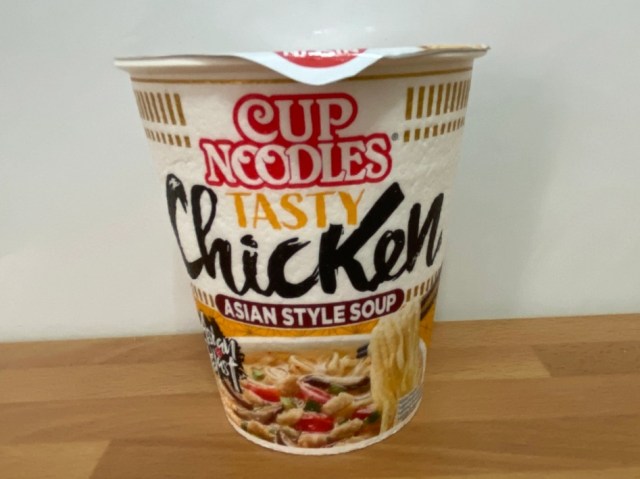
Chicken meat does pop up in Japanese Cup Noodles, most notably in their Chili Tomato flavor. Ikuna observed that this container boasted that it was “Asian Style”, but as we all know, that can mean anything in the West.

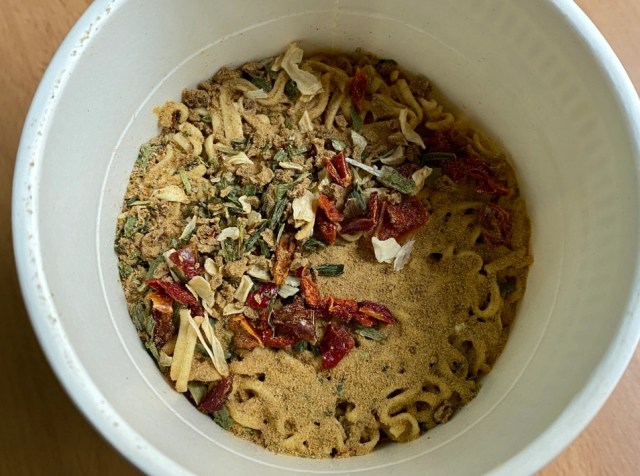
▼ Here are the contents before adding hot water…

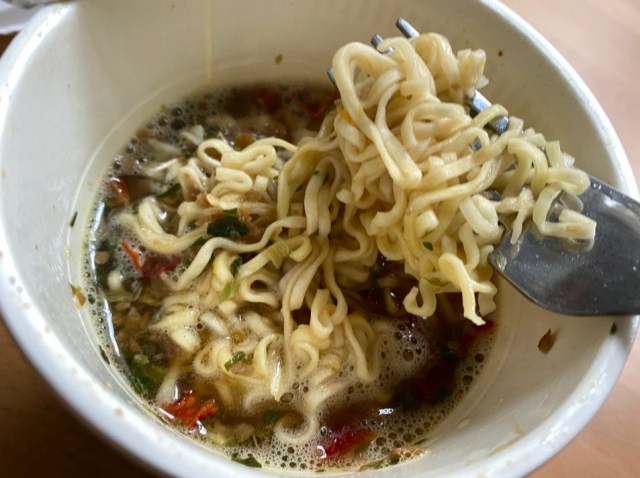
▼ And here they are afterward.

This one tasted not only of chicken, but of tomatoes, and shiitake mushrooms, and pepper, and ginger… The flavors were harmonious and delicious. Did it remind Ikuna more of Vietnamese pho or Taiwanese-style porridge? One thing was for sure: it was very, very tasty and Ikuna couldn’t get enough of it.

Final score: 8/10.

On to the third challenger: Roasted Duck Sweet Onion Soup.

Ikuna couldn’t help but feel some trepidation about this one. Can you blame her? This was the notoriously gamey duck meat. In instant noodles.

▼ Clearly, there were some spices meant to balance the flavor, but still…
▼ Quack, quack.
Turns out…it tasted very much like duck meat. While Ikuna was a bit alarmed by how much it tasted like duck, she would definitely recommend it to those of you who are desperate to try duck meat in a Cup Noodle. Because it really, really tastes like duck. It’s unavoidably duck-flavored. This is one ducktacular instant noodle product.

Final score: 1/10.

Hoping for a less unique flavor with her next attempt, Ikuna turned to the Spiced Curry Japanese Curry Soup version.

This had to be the safest bet out of all six cups. Ikuna was especially comforted by how it announced that it was Japanese curry flavor, specifically.

▼ The spicy-looking yellow powder certainly looked promising.
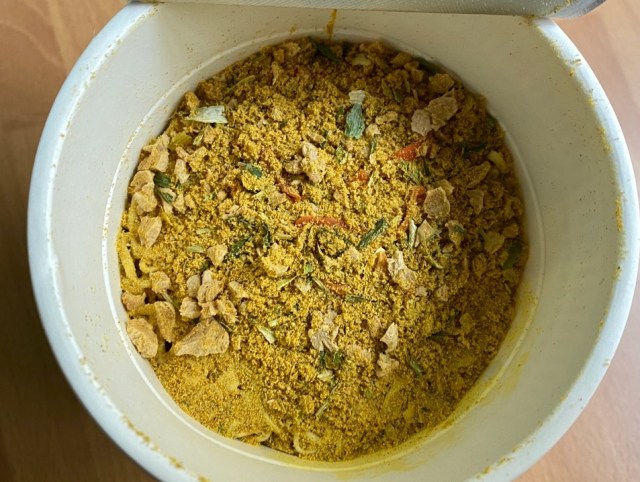
She prepared her cup and took a big mouthful, pleading that it would wash away the persistent duckish flavor lingering on her tongue.

Great news, everyone!

It tasted great!

Though it did taste a little distinct from Japanese curry-flavored Cup Noodle products. Those have more of a brown curry flavor, while this variety was more yellow. It had a thick, mellow flavor that evoked curry powder and wheat flour rather than a typical curry rice dish. It also held a hint of consomme flavor in its broth, and most importantly… It completely blasted away the remnants of duck ramen in Ikuna’s mouth.

Final score: 9/10.

As she approached the end of the gauntlet, Ikuna set her sights on the Soy Sauce Shrimps Peppery Shoyu Soup version.
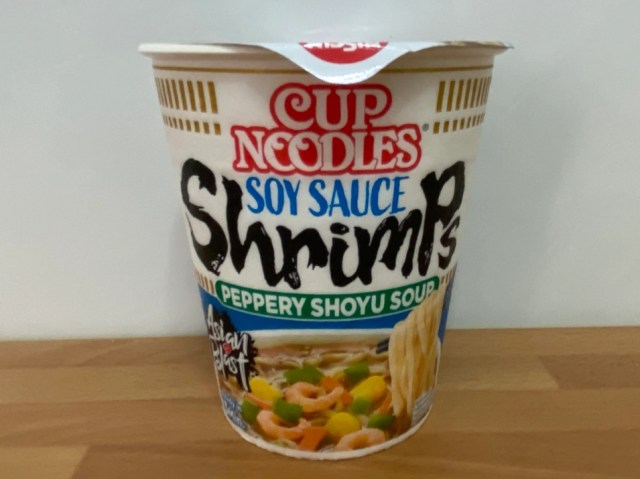
What an interesting sight. Shrimps are common enough to see in instant noodles of course, but they usually play a supporting role—they’re used in the original Cup Noodle flavor, after all. Could they handle the spotlight of being the main ingredient?

▼ Wait, shouldn’t there be more shrimp in here?!
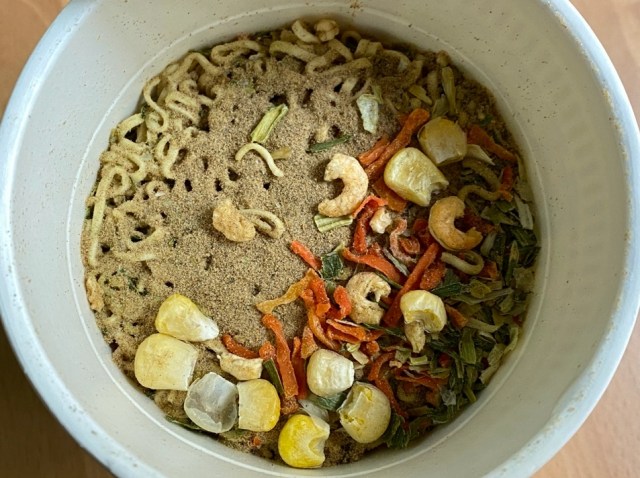
Ikuna ate up greedily and determined that this one is definitely the closest to an original, classic Cup Noodle in flavor. This would be a great option for any person yearning for Japanese Cup Noodle. As for Ikuna…she was a little disappointed. She wanted the shrimps to steal the show, and they ended as a sideline supporter once again. Sigh.

▼ Maybe next time, little shrimps.

Final score: 6/10.

Time for our final contender! Ikuna stared it down in all its sizzling glory: the Hot Chili Spicy Roasted Sesame Soup flavor.
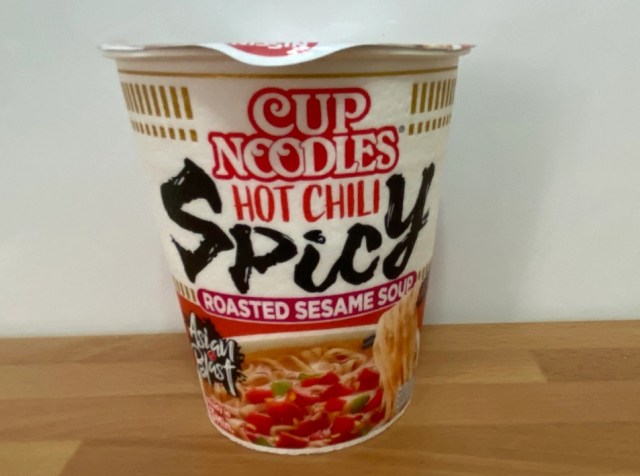
In Ikuna’s experience, it’s actually pretty tough to find places in Spain that satisfy her desire for spicy food. Even trying Korean and Indian restaurants in Spain left her yearning for something with some real heat. Oh well. She would still face this so-called spicy noodle cup with the respect it deserved.

▼ It looks pretty spicy…

Oho! After taking a bite, Ikuna was pleasantly surprised. These spicy roasted sesame noodles had a kick to them!

The chili peppers provided some pleasant heat, and the tomatoes in turn were delightfully sour. It still wasn’t quite spicy enough for Ikuna’s standards, but it was spicy, and she was very pleased with the high-quality sesame seeds sprinkled throughout. She decided it was a solid choice that tasted close enough to Japan’s Chili Tomato Cup Noodle, a variety she’d been missing since arriving in Spain a few weeks ago.

Final score: 6/10.

So what did we learn? Well, if you’re hankering for a Cup Noodle that’s at least similar to the ones sold in Japan you had best buy a chicken or curry flavor, whereas if you want to get adventurous then you should definitely try the duck. Despite Ikuna’s own hesitation around it, she thinks you should seek out special flavors that you can only get in that country and do your best to enjoy them!

Meanwhile, if you’re in Japan, you definitely owe it to yourself to try out the combination versions of the classic Cup Noodle flavors. What are you afraid of? Falling in love?

Images © SoraNews24
● Want to hear about SoraNews24’s latest articles as soon as they’re published? Follow us on Facebook and Twitter!


Credit: