Goodbye, Megaweb! Downtown Tokyo’s coolest car museum is closing for good【Photos】
An amazing collection of cars in a free museum is about to figuratively drive off into the sunset.

In September, we were saddened to see the closing of the Odaiba Oedo Onsen Monogatari, one of the most accessible and enjoyable places for a soak in downtown Tokyo. This week, it’s time to say goodbye to yet another awesome thing in the same neighborhood.

The Odaiba district’s Palette Town entertainment complex, which opened in the spring of 1999, is beginning a sequential shutdown prior to a redevelopment of the land it sits on. Among the building’s current tenants is the Megaweb Toyota City Showcase, which contains the automaker’s History Garage collection.
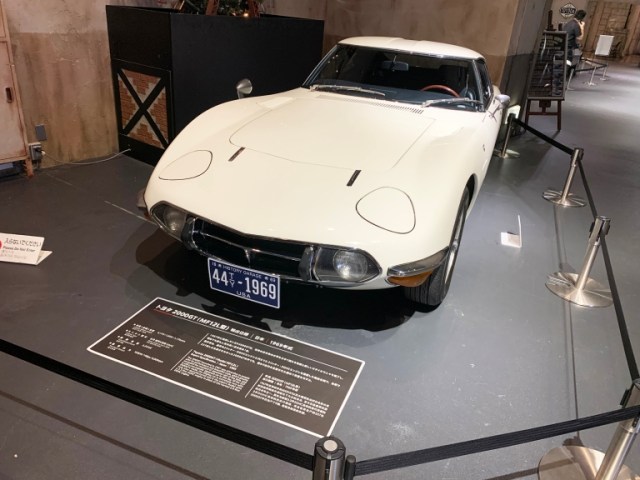
With Toyota running the place, there are, naturally, some sterling samples from the company’s product lineup of yesteryear, like this lovely 1969 Toyota 2000 GT, powered by a Yamaha-built engine.

Not nearly so sporty, but still exuding its own kind of charm, is this 1967 Toyopet (one of Toyota’s sub-brands) Corona.

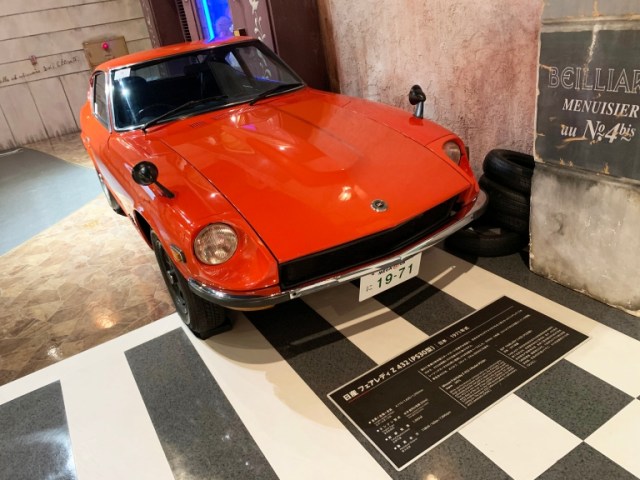
But the Megaweb History Garage isn’t just a place for Toyota to show off its own heritage, but to celebrate other manufacturers’ as well, such as in the form of this pristine first-generation 1971 Nissan Z.
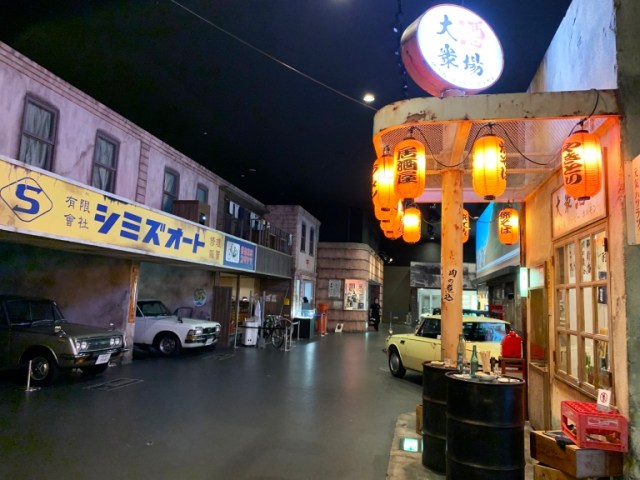
There’s even period-appropriate décor, such as this façade of an izakaya pub and auto garage from Japan’s Showa era of 50-odd years ago.
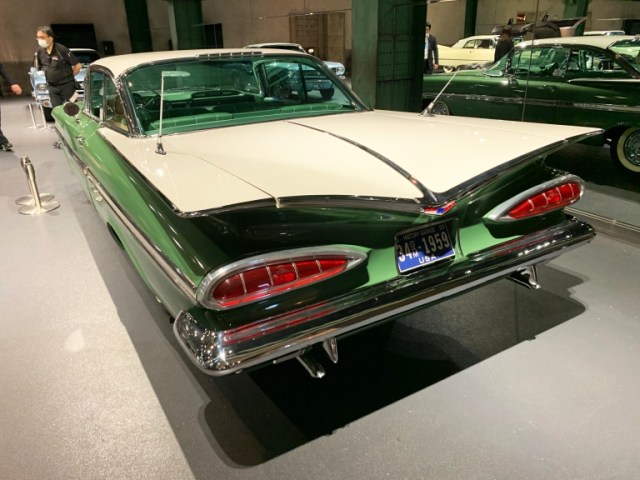
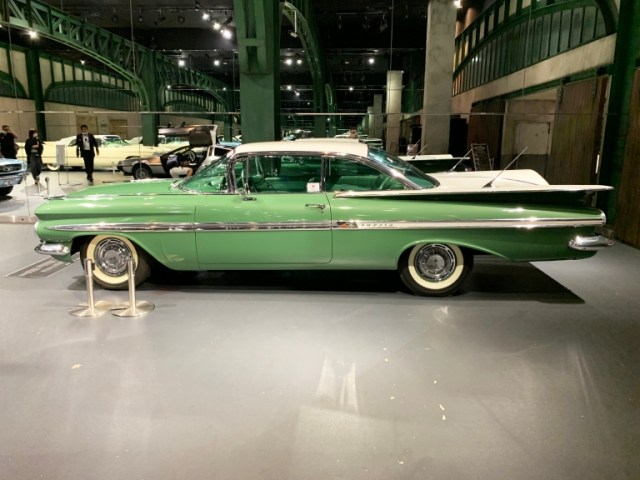
The History Garage isn’t limited to Japanese cars, either. It’s got examples of beefy American iron too.

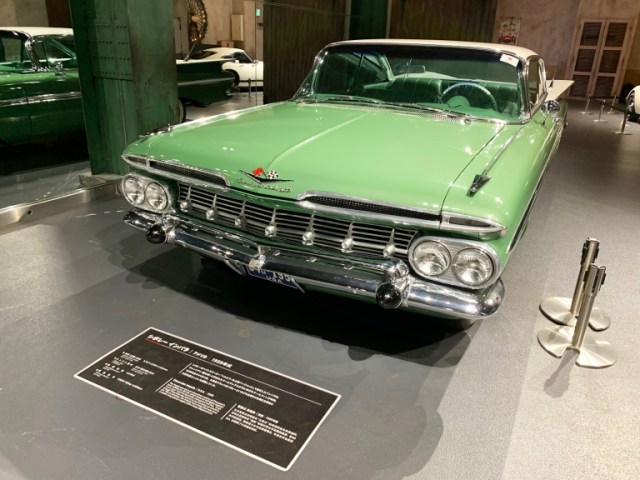
▼ This fin-tastic 1959 Chevy Impala convertible looks ready for a Friday-night cruise down to the local malt shop…
▼ …as does this 1964 Ford Mustang.

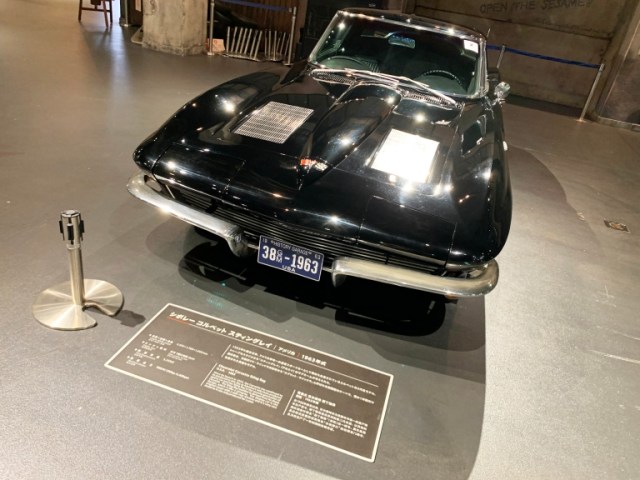
▼ A 1963 Chevy Corvette Stingray, one of the most iconic sports cars ever built
▼ And for those who prefer luxury to sportiness, a 1959 Cadillac Series 62

European cars are also represented, with a number of very distinctive designs like this 1954 Messerschmitt KR175.
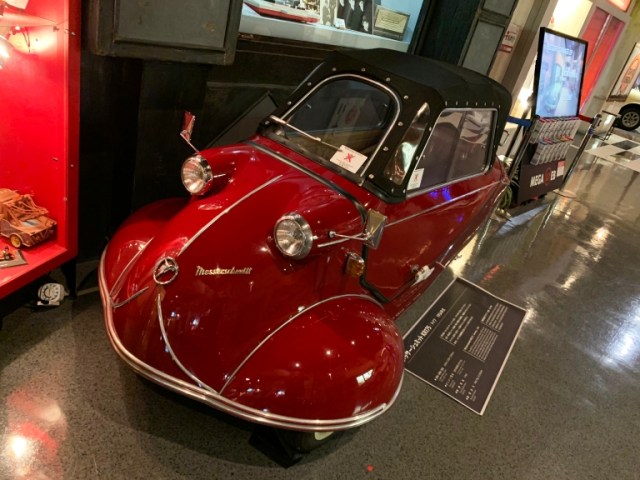
▼ The unusual shape is because the passenger sits behind the driver, like they’re in a two-person bobsled.

Meanwhile, the reason the 1960 BMW Isetta 300 looks the way it does is because the entire front end is a door that swings open to the side to let the driver get inside.

▼ An immaculately maintained 1957 Volkswagen Beetle Type 1

▼ A very old-school 1945 MC TC Midget


And even if you’re more of an anime enthusiast than a gearhead, you’ll probably still recognize the 1962 Fiat 500 D

…since master thief Lupin III drove a 500 in the unforgettable car chase sequence in the Hayao Miyazaki-directed Castle of Cagliostro anime film.

Speaking of memorable movie/motoring moments, arguably the biggest crowd-pleaser of all at the History Garage is none other than…
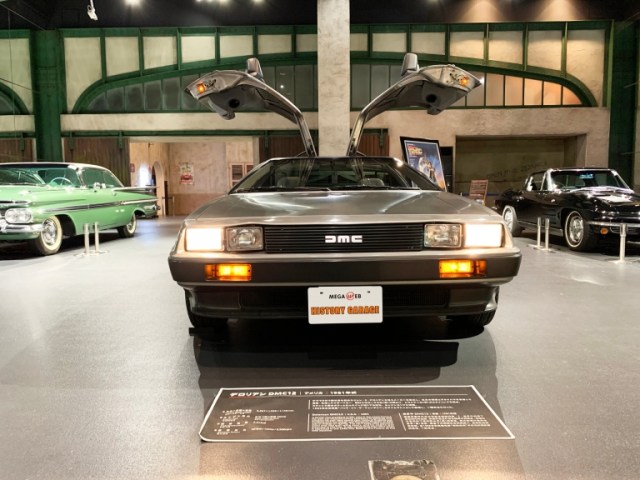
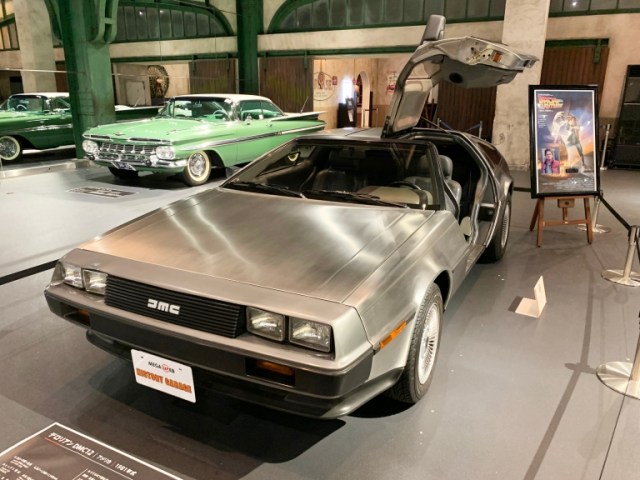
…it’s 1981 DMC DeLorean, also known as “the Back to the Future Car.”
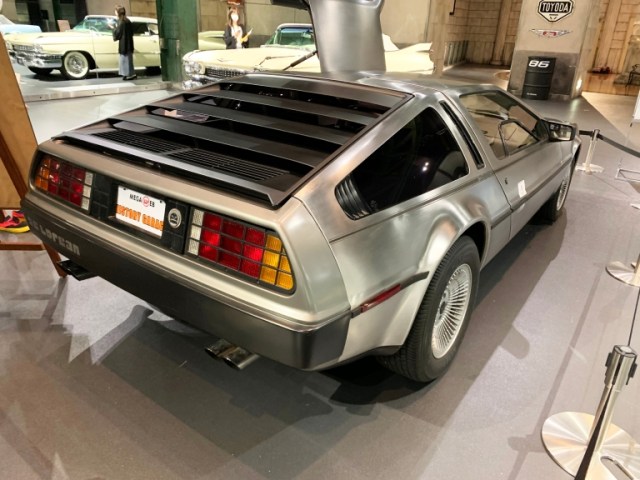
Since it’s been kept stock, it doesn’t have the various cosmetic accouterments of the one Marty McFly began his adventure behind the wheel of. The museum does occasionally hold special events where fans can climb inside, though, which our Japanese-language reporter Seiji Nakazawa was quick to do during his visit.
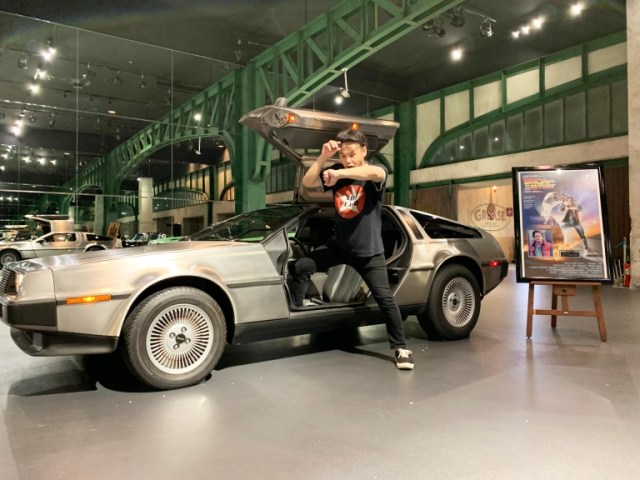
While it didn’t transport him to the 1950s, the car is still a time machine of sorts, as sitting in it gave Seiji of sense of what it must have felt like to then-new buyers 40 years ago.

Sadly, December 31 is the last day for the History Garage, and at the end of the day the Megaweb Toyota City Showcase, which also contains a car-focused book and memorabilia shops, cafe, test drive course, go-kart track, and working restoration mechanic’s shop, will be closing for good.
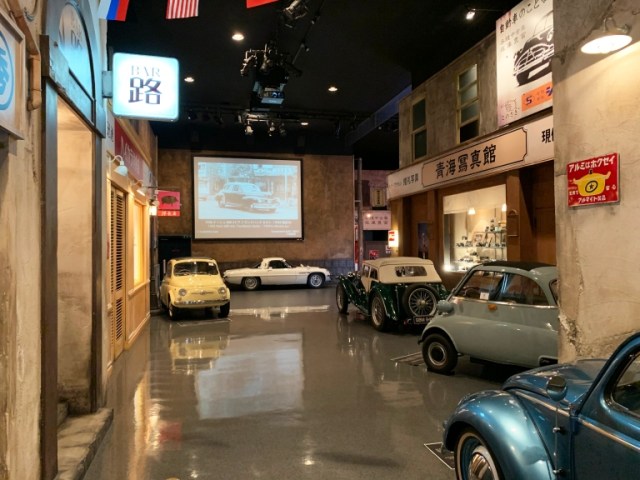
When we asked what’s going to happen to the cars, a Toyota representative said they weren’t at liberty to give us any exact details, but did put our minds at ease by telling us that the cars won’t be crushed or scrapped. Ostensibly that means they’re either going to be auctioned off or go into storage, but at least some of them, including the DeLorean, are likely to be exhibited in the future at one of Toyota’s other display facilities. We think the most likely suspects for those would be the Tressa Yokohama Auto Mall in Kanagawa Prefecture, the Toyota Kaikan Museum, Toyota Automotive Showroom Midland Square, and Sanage Adventure Field in in Aichi Prefecture, and Colorful Town Gifu Raanbow Mall in Gifu Prefecture.
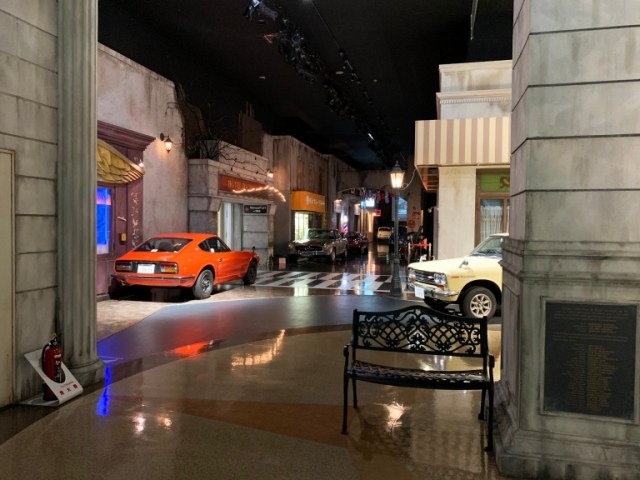
Unfortunately for Tokyoites, with the exception of the Tressa Yokohama Auto Mall, those are all pretty far outside the capital. But after all, they’re cars, so going far away is entirely in keeping with their original purposes, even if we’re sad to see them go.

Related: Megaweb History Garage website
Photos ©SoraNews24
● Want to hear about SoraNews24’s latest articles as soon as they’re published? Follow us on Facebook and Twitter!


Credit:

Which Japanese convenience store has the best premium pork buns?

This steaming hot showdown between Family Mart, Lawson and 7-Eleven produces a very surprising result.

In Japan, winter is the perfect time to enjoy a convenience store steamed bun, which is why our Japanese-language reporter P.K. Sanjun has been chowing down on so many of them lately.

After giving us his verdict on the best convenience store pizza buns, the best convenience store curry buns, and the best convenience store pork buns, P.K. decided it was time to up his game by going premium for his next tasting.

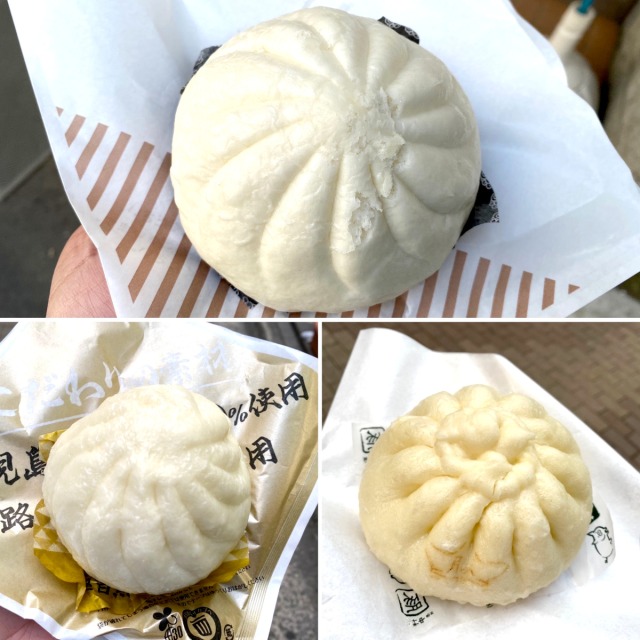
So he headed out to three of the nation’s top convenience stores — Lawson, 7-Eleven, and Family Mart — to try their premium steamed pork buns, which are priced in the 200-yen (US$1.75) range, making them around 60-70 yen more expensive than other buns in the hot display case.

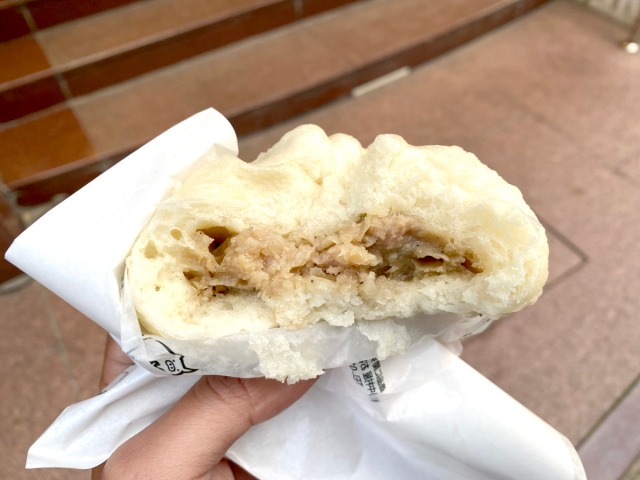
▼ The step-up in price means a step-up in size, making for some very meaty morsels.

P.K.’s always been a bit of a miser when it comes to konbini pork buns, so this would be his first time tasting premium pork buns. Brimming with excitement at the prospect, P.K. decided to start his virgin journey with…

 …the 7-Eleven Large Pork Bun (213 yen [US$1.86])

P.K. recently crowned 7-Eleven as the king of regular steamed pork buns, so he was curious to see if their premium pork bun would be equally impressive. This one contained large-cut pork pieces and sweet onions all encased in a perfectly plump dough.

It was absolutely delicious, and P.K. would go so far as to call it a “Chinatown-level” bun, a marker of excellence given to only the finest buns that taste as good as the ones you’d eat in Chinatown.

▼ Definitely worth the extra price.

▼ Next up, we have Family Mart’s Kurobuta Pork Bun (198 yen)

The 7-Eleven premium pork bun set a high bar for its competitors to beat, but Family Mart had its fighting gloves on, with a bun that P.K. deemed to be equally as good. If anything, Family Mart may have had the edge here, due to its use of kurobuta (literally “black pig”), a heritage breed prized for its quality and flavour.

The large pieces of kurobuta were plump and juicy, perfectly matched by the sweetness of the onions and the plump, firm dough. Though it was slightly smaller than the premium buns from competing chains, P.K. chose to overlook that fact, seeing as the expensive meat warranted a slightly smaller size to keep it within the 200-yen range.

▼ This one also had the chops to fight it out in Chinatown.

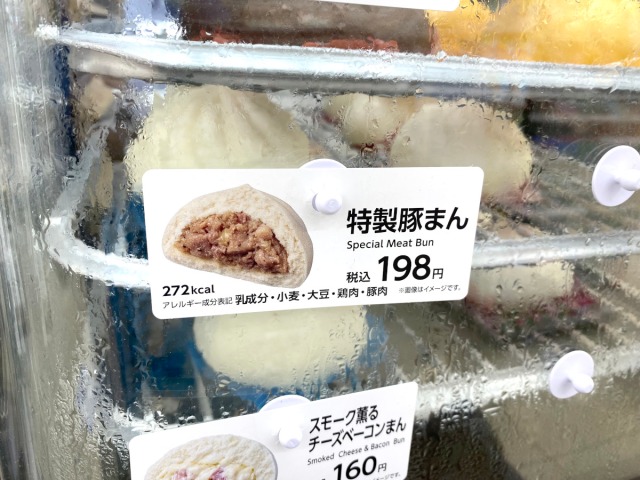
▼ P.K.’s final stop of the day was Lawson, to try their Special Meat Bun (198 yen)

Lawson’s regular pork buns have left P.K. feeling a little disappointed in the past, so he was pleasantly surprised to find that their premium bun was surprisingly good. It contained large-cut meat, sweet onions, and a moist and smooth dough. It was unmistakably delicious, and it too reached “Chinatown level” in P.K.’s eyes, leaving him in a bit of a quandary.

All three premium pork buns were of such high standard that it was difficult for P.K. to rank them. All of them contained large-cut pork, and all of them were good. Personally, he really liked Lawson’s Special Meat Buns, but unfortunately not a lot of branches stock them. Therefore, he came to the ultimate decision of declaring this a draw.

It’s not often that this happens, as P.K. always likes to crown a winner and rank the stores in order of most to least delicious, but it was just impossible for him to do that here. The one thing that did become clear to P.K. after this tasting was the fact that all the premium pork buns at these convenience stores are clearly tastier than their regular offerings. And it’s not just the taste that’s great — the value for money is impressive as well.

So next time you scoff at the extra price for the premium buns at the convenience store display counter, you might want to bite the bullet and give them a go. You’ll be surprised by the difference in flavour, which is evident in their premium beef stews too.

Photos ©SoraNews24
● Want to hear about SoraNews24’s latest articles as soon as they’re published? Follow us on Facebook and Twitter!


Credit:
Japan’s year-end Kohaku song battle rumored to end soon

Is 72 years long enough for this TV tradition?

Every New Year’s Eve, Japan’s public broadcaster NHK airs a musical extravaganza titled Kohaku Uta Gassen, which translates to Red & White Song Battle. This is where two teams whose rosters are filled with top-selling artists both past and present, perform songs while viewers vote for their favorites. The winners don’t really get anything as far as I know, but I guess it’s more about the journey than the destination. In that way, it’s not really so much a competition as it is a showcase of the biggest songs of the year mixed in with some timeless classics.

▼ Judy & Mary performing “Sobakasu” in 1996

However, the 72nd instalment in the competition has run into snags recently. First, there was a lot of talk that the show was struggling because there wasn’t really a definitive hit song of 2021. Also, about a week ago Kohaku announced that they would include a special tribute to anime and video game music for the first time ever with a medley from Evangelion, Dragon Quest, and Demon Slayer.

▼ They were undoubtedly inspired by the success such music had at the Olympic opening ceremony

Prior to that, it was also learned that the show’s hosts would not be divided by gender as they always had been. In Kohaku the white team is made up of male artists and the red team is female and they had always been introduced by a male and female host respectively. This year the gender divide will remain among musicians but the hosts will not be bound by it. The show said that the change was an effort towards move diversity in the program, indicated in part with this year’s theme of “colorful,” implying that everything isn’t just red and white anymore.

However, these changes may prove too little too late if gossip reported by Shukan Bunshun has any weight to it. According to their source, NHK’s president Terunobu Maeda told another executive that he would end Kohaku. Though he’s made no official declaration, the news comes days after NHK Vice President Satoru Masagaki announced a sweeping review of all programs, with an emphasis on long-running shows that they feel have become stale.

▼ To give you a sense of how fresh Kohaku can be at times, here’s the show from 2000 with Donald Duck dressed like a greaser and dancing to a song from 1936

The official plan will be announced next February but it is believed that Gatten!, Variety Sekatsu Shohyakka, and News Fuji 5:00 are on the chopping block. President Maeda is said to have been the driving force of reforms in NHK broadcast ever since he assumed the position in January, 2020. When a reporter asked him specifically about Kohaku, he replied; “I haven’t said it will be stopped this year, but I can’t say what will happen next year. It’s not unusual to re-evaluate any long-running program.”

While Kohaku‘s demise is still far from certain, it does appear to be on shaky ground, and some people couldn’t be happier according to online comments.

“If they do that then I will totally buy a TV and pay the license fee!”
“They should cancel all those crappy dramas too.”
“I agree with ending it. It’s been 72 years and to say it’s in a rut is an understatement.”
“If the Downtown ‘don’t laugh’ specials were ended, then Kohaku should totally end.”
“How about ending NHK, while they’re at it?”
“Music has become too diluted now. There are no more songs that a whole family would know.”
“The whole gender thing is incredibly outdated. Just pick team leaders and hold a draft. That would be way more exciting.”

Granted, netizens like these probably aren’t the core target market for Kohaku anyway, so we probably should take their individual opinions with a grain of salt. Still, that draft idea actually sounds really good, especially if rather than just performing their own music, the teams collaborate more on performances. This would also help solve the problem of diluted music that the other comment brought up by having cross-over acts that could potentially broaden everyone’s musical horizons, young and old.

▼ I’m thinking something along the lines of Marty Friedman and Sayuri Ishikawa

It would also appease the NHK brass who according to their comments, seem intent on phasing out anything that feels stodgy. I have nothing against Kohaku personally, but if I had to come up with an example of a stodgy TV show off the top of my head, that’d probably be it.

Source: @Nifty News, My Game News Flash
Top image: Pakutaso
● Want to hear about SoraNews24’s latest articles as soon as they’re published? Follow us on Facebook and Twitter!


Credit:

There’s a Tokyo vending machine that sells love in a can (or a shot at it)

And here we were thinking cans of hot green tea were amazing.

Japan has so many vending machines that they hardly register in the minds of most people walking down the street. However, an array of vending machines in Tokyo’s Kamata neighborhood has been catching eyes recently.

Occupying the curb and otherwise empty interior of a small bank of coin-operated lockers, the first thing you notice might be the machines outside offering canned drinks for as little as 50 yen (US$0.43), less than half the price of most vending machines in Japan, but the really unusual machine is the one found inside. The product display case is stocked with cans, but these they don’t contain beverages. Instead, you’re purchasing the path to a potential romantic partner.

▼ Photos of the vending machine that sells love

The pink cans represents women seeking companionship, and the beige ones men, each with the individual’s age written on it. The vending machine isn’t anything so vulgar as an anonymous hook-up provider, though, as its inventory is stocked and managed by Matching Advisor Press (which also goes by the acronym MAP), a matchmaking service for singles actively seeking a serious relationship that will hopefully lead to marriage, or konkatsu, as it’s called in Japanese.

Each can costs 3,000 yen (US$26), but it doesn’t necessarily guarantee you a date, let alone a spouse. Instead, what you’re purchasing is a voucher for a one-hour interview and advice session with a MAP advisor, whose name is also written on the can, ostensibly to see if you’re an amicable match for the single whose can you bought. If you are, then MAP will arrange a three-hour dinner date for the two of you, with an additional 9,000-yen service fee plus any associated food and drink costs to be paid by you.

Several of the details are on the hazy side, however. For example, the message on the can’s exterior is phrased as though the MAP advisor is the one speaking to you, such as “I am advisor Ishikawa. There is a 27-year-old woman who wants to get married. Won’t you meet with her? I will advise you.” However, the placard at the bottom of the machine shows a photo of a woman with her given name listed (all of the advisors’ names on the cans are family names), along with “My mobile phone number is on the back of my photo. Please call me.”

As such, it’s unclear if the 3,000-yen “interview” is a counseling session with the MAP advisor alone, a direct phone conversation between the can’s purchaser and the other single, or some kind of a three-person meeting between the purchaser, advisor, and the person represented by the can. It’s also unclear as to whether or not MAP, if you don’t hit it off with the person from the can, will help you find another of its clients you might be more compatible with, or whether that would require an additional fee.

Speaking of additional fees, the matchmaking vending machine’s signage also says that in the happy event that you and the person from the can do end up falling in love and getting married, you’ll be asked to pay an additional 300,000 yen (US$2,608) to MAP as a “successful marriage award payment,” though how the company confirms the marriage or enforces this is unknown. As a final head-scratcher, the machine is powered on and every can is marked as having been sold, but a sign inside the cans’ display case says that MAP won’t be starting operation until March 1. Whether the “sod-out” status of the cans is because people have already begun buying them three months in advance, or because MAP’s machine just isn’t actually allowing anyone to buy them yet, as well as how the company can be sure that the people represented by the cans will still be single at the start of spring, are just a few more of the mysteries surrounding the situation.

Source: Togetter
Top image: Pakutaso
● Want to hear about SoraNews24’s latest articles as soon as they’re published? Follow us on Facebook and Twitter!


Credit:
Pokémon Diamond and Pearl game music is now free to enjoy or download for a limited time

149 tracks from the games, including background music and sound effects, can now become the epic background playlist for your daily life.

There’s nothing quite like video game music to evoke a sense of childhood nostalgia–especially when it’s from a long-running franchise that has undergone just about every musical evolution there is over the past 25 years.

It’s hard for longtime Pokéfans to believe, but Pokémon Diamond and Pearl, the fourth generation of main RPG Pokémon games, were released in Japan in 2006 as the first in the series designed for the Nintendo DS. Updated remakes titled Brilliant Diamond and Shining Pearl were released last month as part of the eighth generation of main games for the Nintendo Switch, and in celebration of the remakes, the Pokémon Company has released a special Pokémon DP Sound Library to enjoy for free.

As of December 24, the sound collection is available for a limited time on YouTube for anyone in the world to access. The 149 total tracks consist of background music and sound effects used in the games. They’re sure to transport those who played the original games back to their younger selves 15 years ago, while younger players will recognize the themes from the newly arranged music in the remakes.

▼ The Pokémon Company’s Pokémon DP Sound Library on YouTube, clocking in at approximately 2.5 hours

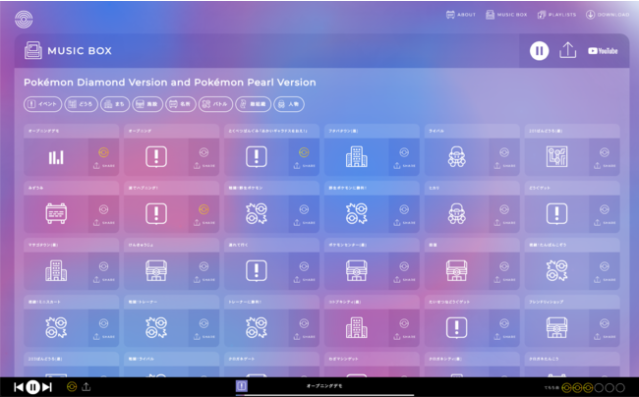
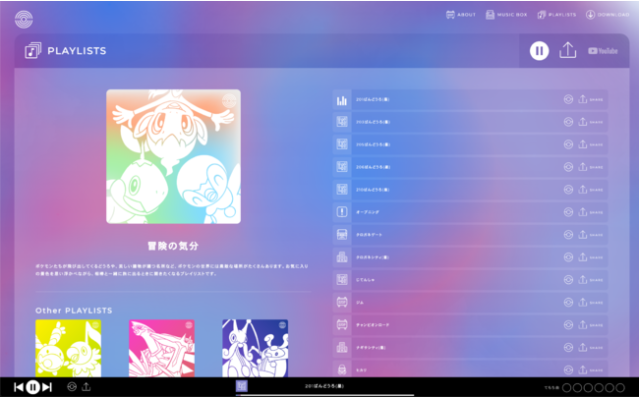
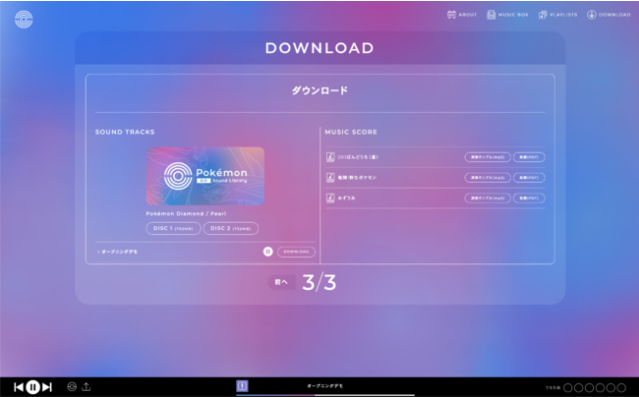
There’s also a dedicated, Japan-region website which offers a few special features. For example, listeners can select their six favorite tracks to create their very own special playlist, or jam to other officially prepared playlists as well.

▼ The main Music Box page

▼ Playlists galore!

As long as you agree to abide by the terms of use, you can even download the sound data and some sheet music for use in non-commercial purposes from the site. Example allowable uses include sampling the tracks in your own music, playing them as background music at school and other community events, dance performances, competitions, recitals, and even using them as a teaching tool in music education classes. Tracks being utilized in these manners can largely be shared over social media or on personal websites, with exceptions applying to the non-commercial use rule in these cases.

Whether you play gym battle music while prepping for an important work meeting or the bicycle theme while actually cycling around town, these tracks will lend a sense of epic adventure to your daily life so that you can continue to be the very best like no one ever was. While you’re riding your musical high, you might as well learn how to sing a festive holiday song in Japanese courtesy of these Santa Pikachu as well.

Source, insert images: PR Times
Top image © SoraNews24
● Want to hear about SoraNews24’s latest articles as soon as they’re published? Follow us on Facebook and Twitter!


Credit:

Sega builds “world’s fastest gaming PC,” is giving it away for free (processor speed unknown)【Vid】

Video backs up claim that this is the fastest PC ever made (by one metric), and also possibly the craziest.

There’s an entire generation of young gamers who only know Sega as a software publisher. For 18 years, though, the company also made home-use video game hardware, starting with the SG-1000 in 1983 and continuing on through its glory days of the Mega Drive/Genesis before finally throwing in the towel after the end of the Dreamcast’s lifespan and switching its business model to publishing games on systems from former rivals Nintendo and Sony and then-gaming newcomer Microsoft.

With the Dreamcast being discontinued in 2001, Sega’s post-home hardware era is now longer than its SG-1000-to-Dreamcast period. But this week, Sega showed it still knows how to build cool gaming machines by unveiling its newest creation: the fastest PC in the world!

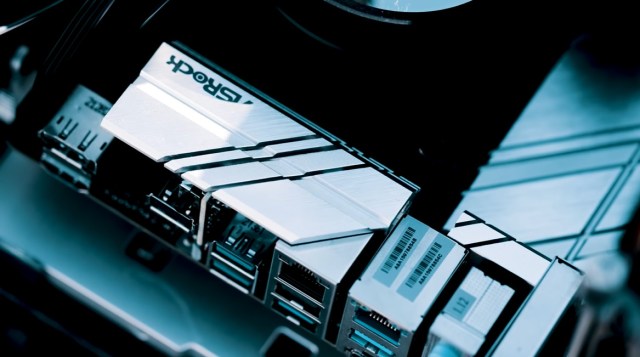
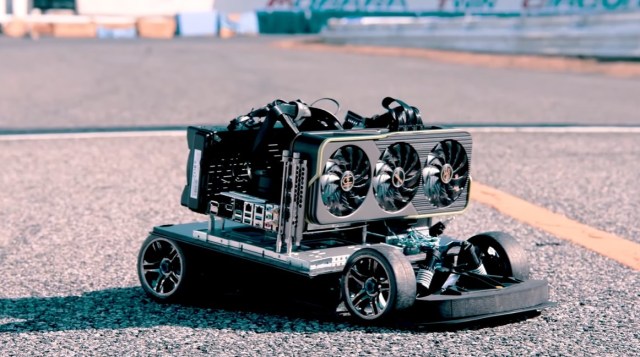
Developed in cooperation with Intel and ASRock, the unit is, naturally, a gaming PC, with a Core i9-12900K processor and ASRock Z690M-ITX/ax motherboard and 32 gigabytes of RAM.

Now, you might be thinking that while that’s a pretty nice setup, but still doubting whether such specs qualify for “fastest in the world” status. Rest assured, though, that Sega has provided proof of its claim in the form of this video that shows, quite clearly, that there’s no faster PC out there.

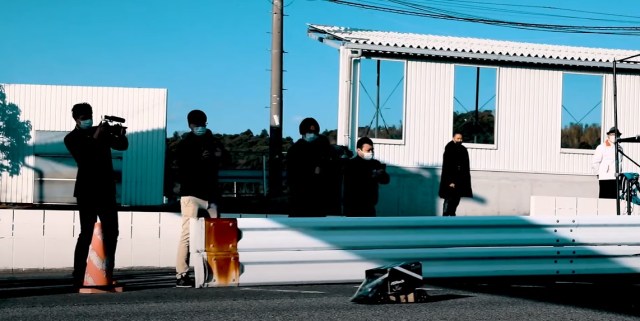
See, in addition to sporting an ASRock Radeon RX 6900 XT OC Formula 16GB and 2,000-gigabyte SSD, Sega’s PC is also equipped with wheels and a motor, and among the peripherals it supports is a remote control. To test its capabilities, Sega brought it out to Mobara Twin Circuit, a motorsports park in Chiba Prefecture, and turned the control over to 18-time world RC car racing champion Masami Hirosaka. With the help of a spotter in a tower, Hirosaka piloted the PC around the course, reaching a top speed of 100 kilometers (62.1 miles) per hour on the track’s final straight.

▼ The PC’s making-of video

Make no mistake, though, because while the PC can be used like an RC car, it’s fully functional and capable of playing games too. It was built in celebration of Sega’s current Steam Holiday Sale, and the company is actually going to be giving the PC away to one lucky fan who follows the official Sega Japan Twitter account and retweets the tweet below by January 5.

The winner will also receive a bundle of 23 Sega/Atlus Steam games, including titles in the Persona, Yakuza, Shin Megami Tensei, Puyo Puyo, and Shining series, so that they can make use their ultra-fast PC for many relaxing, slow-life weekends to come.

Source: Sega via Gamer via Hachima Kiko
Top image: YouTube/SEGA
Insert images: YouTube/SEGA (1, 2)
● Want to hear about SoraNews24’s latest articles as soon as they’re published? Follow us on Facebook and Twitter!


Credit:

2021’s top stories in anime, manga, and Studio Ghibli news 【SoraNews24 Year in Review】

Sexy voice actors, the end of Evangelion, and a message from Studio Ghibli founder Hayao Miyazaki.

You can’t spend a year watching the Japanese pop culture landscape without spending a whole lot of time looking at anime and manga. There were plenty of stories for us all to sink our otaku teeth into during 2021, so today let’s take a look back at 10 of the best, five from the anime/manga world at large, and five more specifically about the jewel in the Japanese animation crown, Studio Ghibli.

Top anime stories of 2021

The Japanese Internet chooses the top too-sexy-for-their-own-good male voices in anime

While it’s usually anime’s distinct visual styles that draw newcomers in, cultured fans know that the way their favorite character sounds works its way through their ears and into their heart, where it never lets go, especially when it’s a voice as sexy as these terrific ten.

Japanese manga lovers vote for top five shonen manga with the best endings

A key difference between shonen manga and American superhero comics is that instead of ascending to an endless cycle of reboots and retellings, shonen manga eventually end. These are five that stuck that totally landing, even if one of them is actually about volleyball, not gymnastics.

Final Evangelion movie is finally out, and we’ve seen it! Our Eva fans’ spoiler-free impressions

It’s so hard to believe that you might have convinced yourself that you imagined it, but yes, Evangelion: 3.0+1.0 Thrice Upon a Time really did come out in 2021. We had to wait nine years since the preceding Rebuild of Evangelion movie, but finally watching the very end of the franchise, 26 years after its TV anime beginning, is an experience we’ll never forget.

Netflix offering full Tokyo anime school scholarships with living expense support, open to foreigners

There’s been a lot of talk in recent years about the economic hardships faced by entry-level animators in Japan and the possible long-term effects they’re going to have on the country’s animation talent pool. Another point of discussion has been the financial muscle that Netflix brings to the industry with its recent anime awakening, and here’s one way those two topics are converging.

Top 100 manga of all time chosen by survey of 150,000 Japanese people

Sure, endings are important, but what really makes a great manga series is the entire reading experience, and here are 100 that fans say are worth your time from start to finish.

Top Studio Ghibli stories of 2021

Studio Ghibli helped create final Evangelion movie, since no one else had the right machine【Video】

Studio Ghibli co-founder Hayao Miyazaki and Evangelion creator go way back – it was Miyazaki himself who gave Anno his big break animating a key sequence in Nausicaaa of the Valley of the Wind. So when Anno needed a certain piece of specialized equipment to complete his vision for the final Eva movie, he knew just who to turn to.

Studio Ghibli’s first anime heroine (no, not Nausicaa) gets an awesome new figure【Photos】

Speaking of Nausicaaa, she’s actually not Studio Ghibli’s first heroine, since the first official Ghibli movie was Laputa: Castle in the Sky. But even within that movie, there’s a character who’s been at the heroine business longer than female lead Sheeta.

No Face lights the way in new lineup of Spirited Away anime merchandise from Japan

You could make a solid argument either way as to whether Spirited Away’s most memorable monster is cute or creepy. If you’re in the “cute” camp, though, this interior accent is a great way to give your home a special kind of warmth (or to freak out your housemates who are scared of No Face).

Ghibli Museum asking for donations from overseas fans to help it through hard times

The coronavirus isn’t known for its mercy, and the ongoing pandemic has put a serious hurt on Tokyo’s Ghibli Museum, which has reached out to its international fanbase for help weathering the storm.

New Studio Ghibli x Seiko watch comes with a touching message from Hayao Miyazaki

99 times out of a hundred, Hayao Miyazaki is too busy working on his next film to be bothered to be involved in marketing or merchandising. He made time, though, to talk about time.

Top image © SoraNews24
Insert images: Pakutaso, SoraNews24, Donguri Kyowakoku, Studio Ghibli
● Want to hear about SoraNews24’s latest articles as soon as they’re published? Follow us on Facebook and Twitter!


Credit: