The Big Bomb Onigiri Japanese rice ball helps us conquer mountain race but conquers us in the end
Our reporter completes a challenging race only to face a tougher challenge — a giant rice ball!

Our reporter Masanuki Sunakoma recently found himself in Niigata Prefecture, on the western coast of Japan. Niigata is famous for a number of things, like fighting alpacas, cursed toilet paper and the Nose Hair Pond. But while all of those things are worthy of a quick visit to Niigata,  Masanuki was actually there to take part in a Spartan Race, a notoriously tough race that’s both physically and mentally demanding.
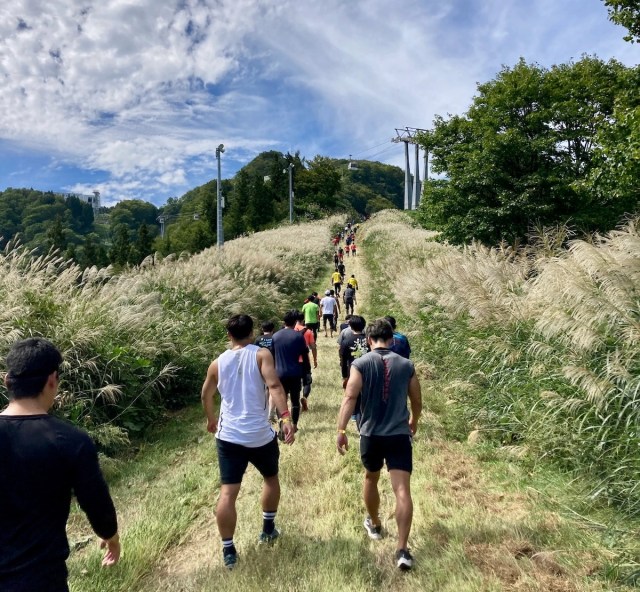
The race was no joke, and required a lot of preparation, as well as strength and stamina; the course was set in Niigata’s Gala-Yuzawa ski resort, and as such consisted of many challenging slopes. As he found himself jogging along the gruelling mountain paths, with his legs on fire and his lungs screaming out for a break, there was one thing that kept Masanuki’s legs moving, one in front of another.

As the French philosopher Blaise Pascal once said, “in difficult times, carry something beautiful in your heart,” and Masanuki, whose entire body was currently very much in the middle of a ‘difficult time’, had just one thing on his mind.
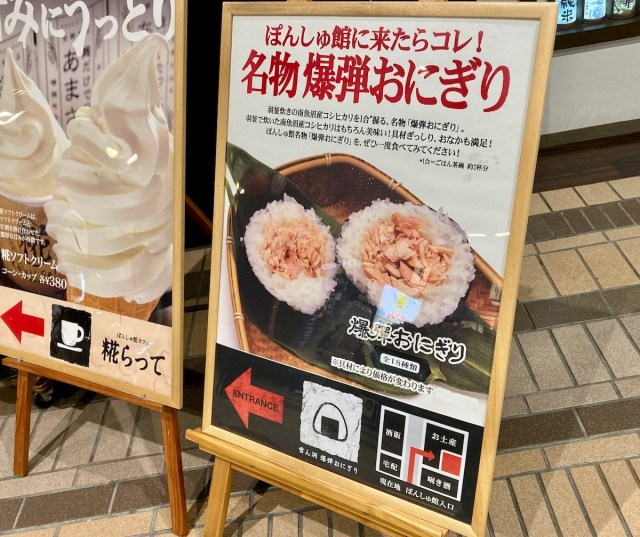
Yes, the only thing keeping Masanuki going through his demanding Spartan Race was the thought of eating a Bomb Onigiri, a spherical rice ball with a variety of fillings jammed into the middle. He’d spotted a sign advertising the rice bombs near the race’s starting line at Echigo-Yuzawa station, and it had been on his mind ever since.

The store responsible for the Bomb Onigiri in question was the Yukinto onigiri shop, which we’ve covered previously. Yukinto are known not only for their generous portions, but also making their rice balls using koshihikari rice, one of the most popular types of rice in Japan. It’s short, fat and sticky and Niigata Prefecture is responsible for producing most of it.

With each step, Masanuki fell into a rice bomb trance. No longer was he focused on how much his body was hurting–instead he turned to more pleasant thoughts, like “how big will the rice ball be?” and “what filling will I get?” And as Masanuki reached the finish line, he was sure that the only reason he was able to complete the race was the thought of tucking into a delicious Bomb Onigiri when he was done.
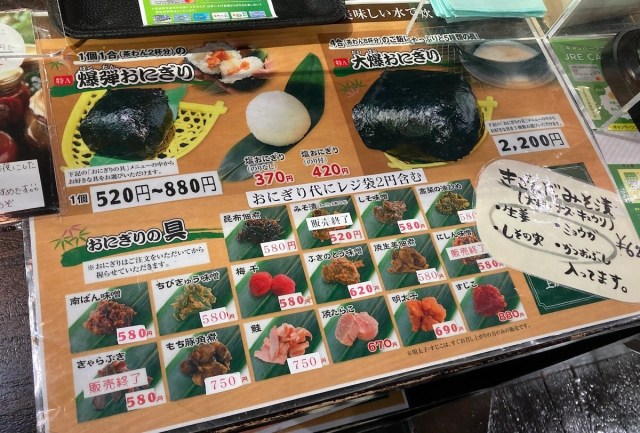
There are two types of Bomb Onigiri — the regular Bomb Onigiri (520 yen [US$3.59] – 880 yen [$6.08]) and the Big Bomb Onigiri (2,200 yen [$15.34]). Masanuki had just run a pretty tough race and was feeling good, so decided to go for a Big Bomb Onigiri. After all, if he could overcome literal mountains, he could surely eat a giant rice ball!
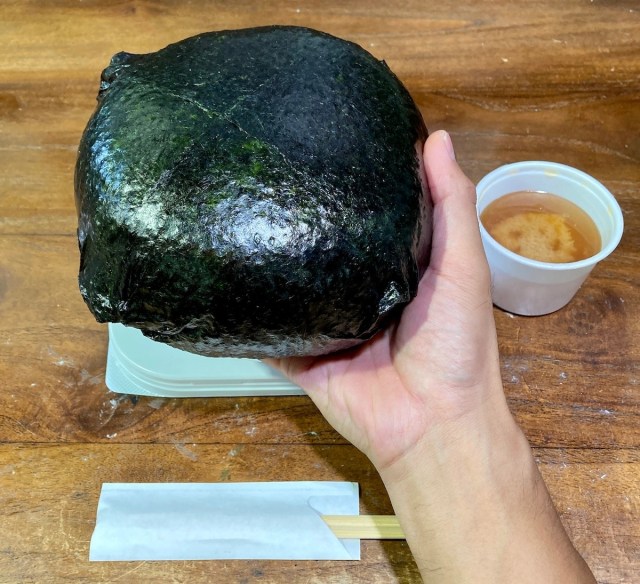
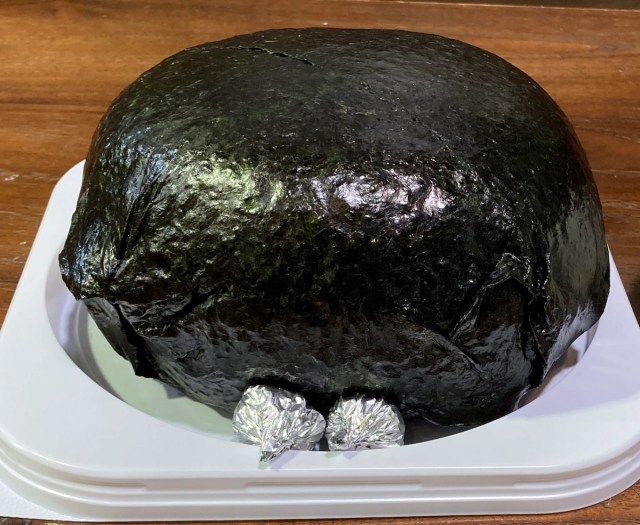
All the rice is cooked fresh once the order has been made, and the onigiri was in Masanuki’s hands after about eight minutes. Even though he’d been looking forward to this all day, upon seeing it in his hand, Masanuki felt a little intimidated. Was this really a giant rice ball? It looked more like a dinosaur egg!
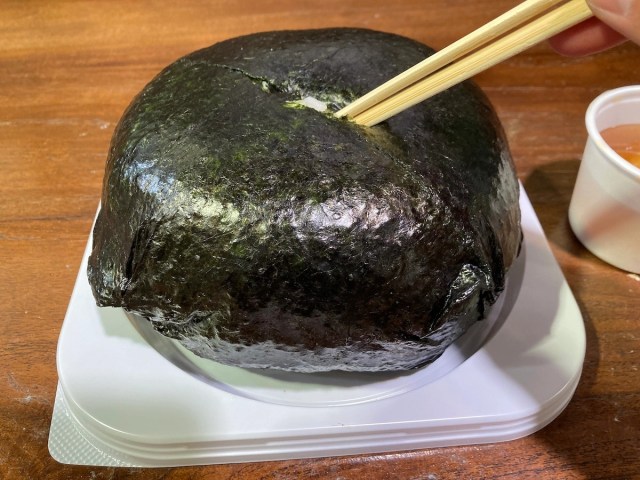
The Big Bomb Onigiri is made using around four cups, or 600 grams (21.2 ounces) of uncooked rice. Masanuki also got to pick five different fillings for his Big Bomb, so he went with stir-fried mustard greens, cod roe, salmon, shiso miso and braised pork.

With all the skills and finesse of a bomb diffuser, Masanuki carefully sliced the Big Bomb in two with his chopsticks to reveal the fillings.

▼ !!!
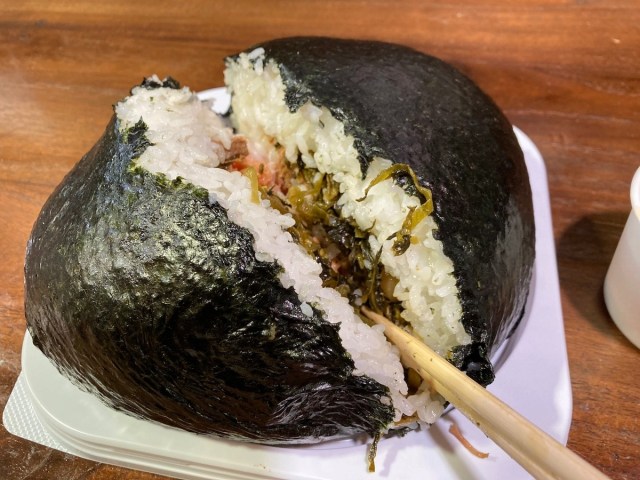
▼ “It’s huge!!”
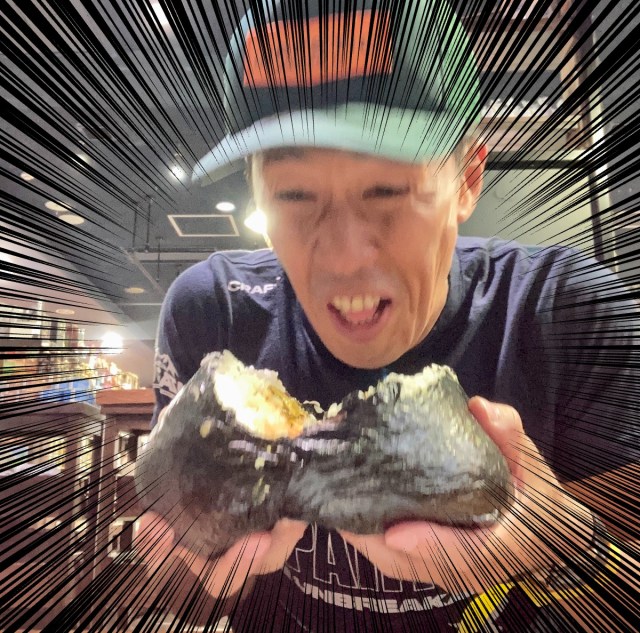
It was an absurdly large rice ball, but it was clear that Yukinto value quality as well as quantity. The rice ball was perfectly sweet and fragrant, and the rice was fluffy and delicious; as expected of the best rice in all of Japan.
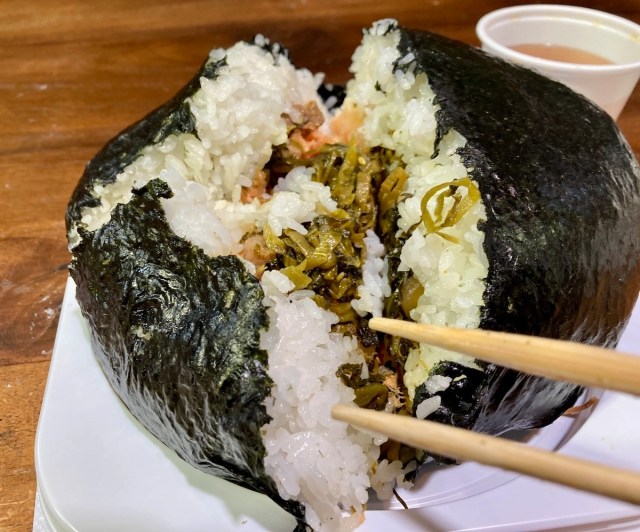
The rice ball was even better than Masanuki had been imagining mid-race, and the miso soup that came with it was equally delicious!

But…
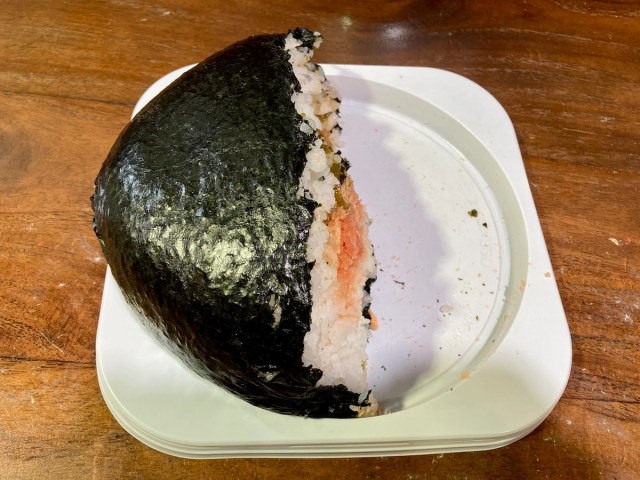
… it was too much for Masanuki to eat in one go.

Yes, the man who had just run a pretty gruelling race up and down literal mountains, the man who was wearing a t-shirt saying ‘be unbreakable’… was beaten by a rice ball.
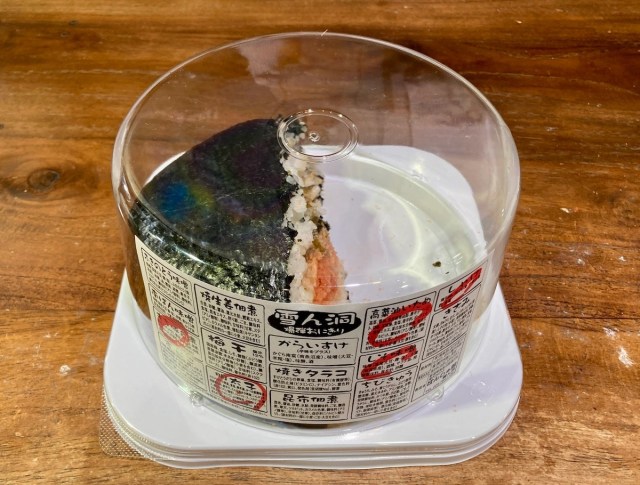
Masanuki took the remaining half home with him to eat over the next few meals, and decided that for next year’s race, he’d think about a normal sized Bomb Onigiri for motivation instead.

But if you’re ever in the Echigo-Yuzawa station and want to challenge the Big Bomb Onigiri, Masanuki recommends you give it a try. It’s certainly more than just your run of the mill onigiri, that’s for sure!

Restaurant information
Yukinto / 雪ん洞
Address: Niigata-ken, Minamiuonuma-gun, Yuzawa-cho, Yuzawa 2427−3
新潟県南魚沼郡湯沢町湯沢2427−3
Open 9:30 a.m.-7:00 p.m.

Images: ©SoraNews24

● Want to hear about SoraNews24’s latest articles as soon as they’re published? Follow us on Facebook and Twitter!


Credit:
The cool secret hidden in Tokyo Metro pillars at Ginza station

Subtle design details make the station and its passengers feel much more calm and pleasant.

If you haven’t noticed, we’re mad about Japanese design. Everywhere you go in Japan, you’re bound to come across clever design features and fine details here and there that make the everyday world just that little bit nicer and easier to navigate.

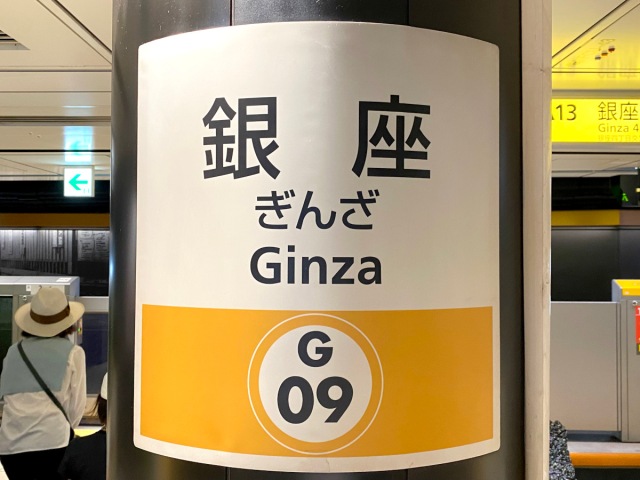
So when we came across a new series of pillars at Ginza Station, a subway station that first opened in 1934 and recently underwent renovations, we stepped closer for a more in-depth look.

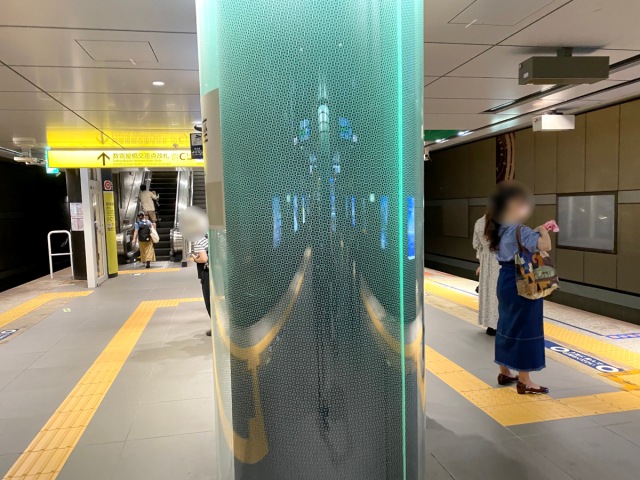
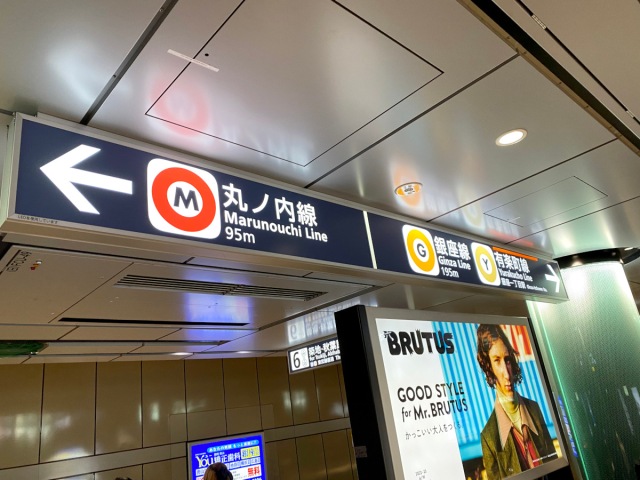
▼ Ginza Station is home to three lines: The Ginza Line, Marunouchi Line, and Hibiya Line (the Yurakucho line runs at nearby Ginza-itchome Station).

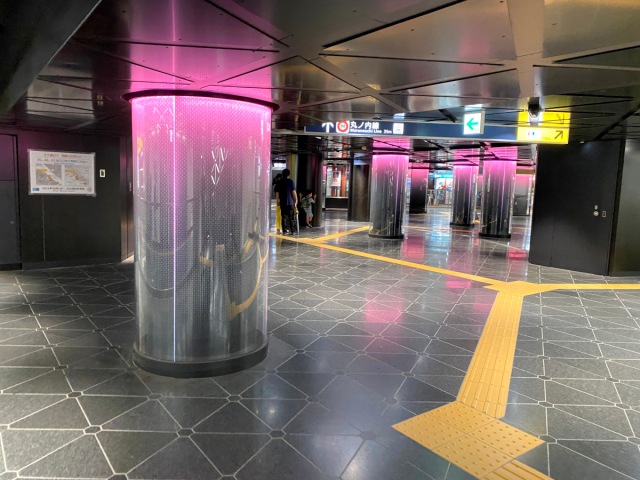
Ginza is known for its high-end fashion boutiques, where even the storefronts and streets look fashionable. The new pillars at Ginza Station now match the fashionable look of the area, with on-trend colours and gradated hues.

Its easy to walk by these pillars without giving them a closer look, but it’s worth doing so, as that’s where you’ll find a clever example of thoughtful design.

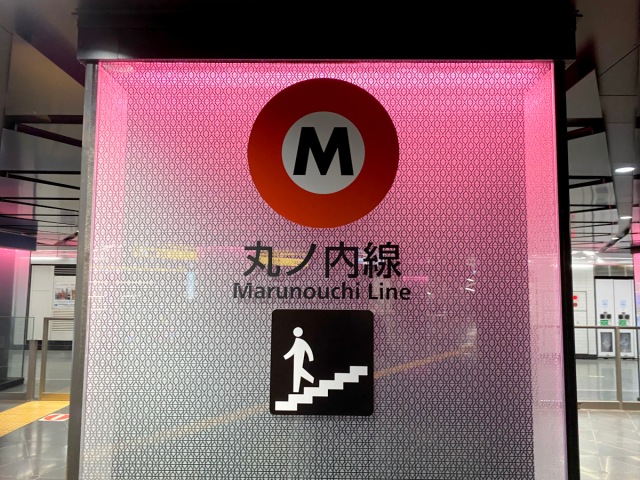
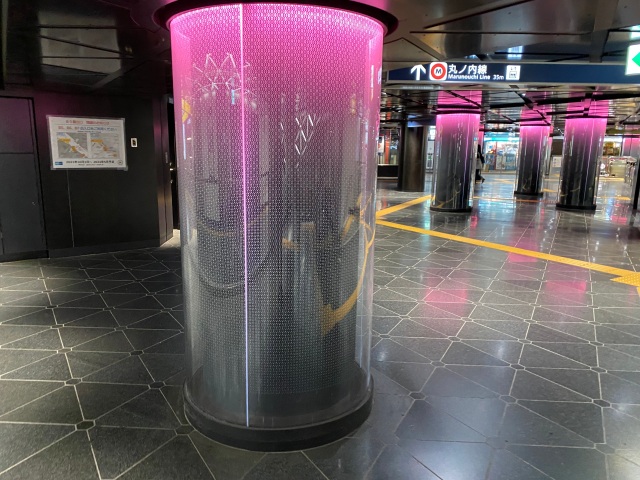
▼ Hidden in the design is the letter “M“…for Marunouchi!

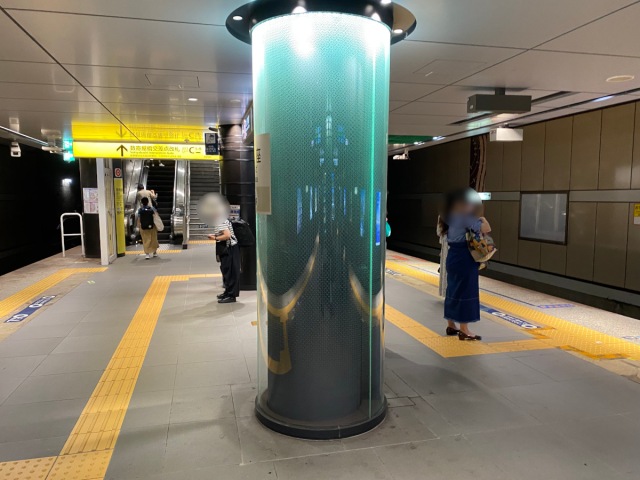
▼ What about the aqua green pillar?

▼ The letter “H“…for Hibiya!

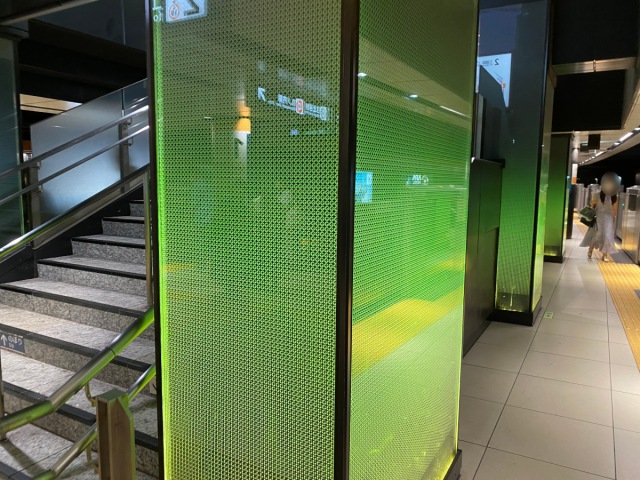
▼ And the yellow-green pillar?

▼ “G” for Ginza!

By incorporating the first letter of each line into the design, the pillars pay homage to the larger encircled letter that appears along their respective routes.

While some people might turn their nose up at seemingly inconsequential design details like these, for us, these understated features are exactly what makes Japan so…Japanese.

The team behind the station revamp could’ve gone in all sorts of directions when choosing the design for these pillars, even opting to just make them plain, gradated colours. But by pushing the envelope to explore new ideas, the result is a design feature that not only makes the station feel important, it makes the people who use the station feel important too. 

And isn’t that how we’d all like to be treated by the services we use every day? When transport operators go to great lengths to make station environments feel calm and pleasant, it has a positive effect on passengers, who then treat the service with respect, even keeping one side of the stairs dry when it rains, resulting in a win-win for everyone.

Photos © SoraNews24
● Want to hear about SoraNews24’s latest articles as soon as they’re published? Follow us on Facebook and Twitter!


Credit:
Japan’s new Melon Pan slices: Simply pop them on bread and heat and eat

Making Japanese melon bread at home is now easier than ever before!

We’re always looking for fast and easy cooking hacks to help us out in the kitchen, and now we’ve found one that makes all our Melon Pan dreams come true, thanks to Niigata-based confectionery and snack company Bourbon.

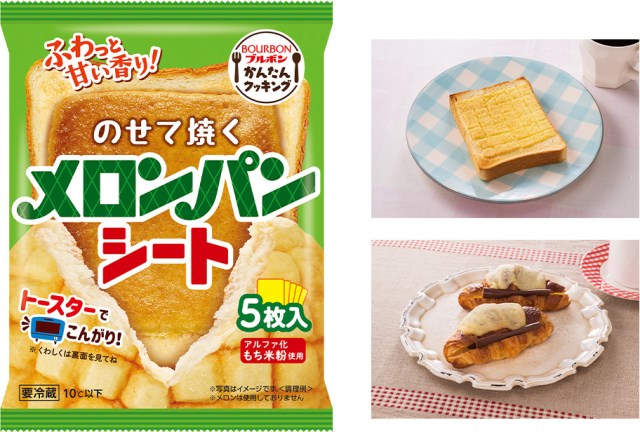
They’ve created the “Melon Pan Sheet“, with the word “sheet” referring not to a cover that belongs on a bed, but a cover that belongs on a slice of bread, much like a slice of cheese. These new sheets, or slices, are said to contain all the crispy, sugary, melony-flavours that usually adorn the outside of a melon bread, and they’re a cinch to use.

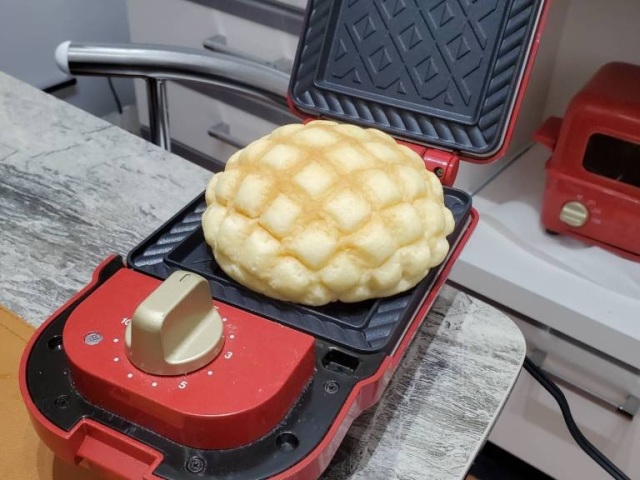
▼ A traditional-looking Melon Pan — before we did the unthinkable and grilled it in a sandwich maker.

Simply place a Melon Pan slice on a piece of bread and heat it in an oven toaster until golden. Then it’s ready to eat!

▼ The instructions really are as simple as described on the pack: のせて焼く (“nosete yaku”) “Put it on and grill”.

There are five sheets to a pack, all containing an instant form of glutinous rice flour, which likely helps the slice to puff and expand slightly after heating, as seen in the images above. This will no doubt add a crispy yet chewy texture to the bread, to give it the same mouthfeel as the round melon pan we’re used to eating.

Of course, you don’t have to use the sheet on a slice of bread — you can pop it on all sorts of things like buns, rolls, and pastries to add a taste of melon to anything you fancy, much in the same way you can use the spreadable melon pan tubes and tubs.

Unlike the spreadable melon pan, however, the new slices don’t require a knife or any spreading. It’s never been easier to make your own melon pan at home, and we don’t have to wait too long for it, as it’ll be sold at stores nationwide from 1 October.

Source, Images: @Press
● Want to hear about SoraNews24’s latest articles as soon as they’re published? Follow us on Facebook and Twitter!


Credit:
A beautiful, bittersweet interspecies anime romance that’s also an instant noodle commercial【Vid】

Kitsune udon and kitsune girl star in the latest gorgeous anime video from Nissin.

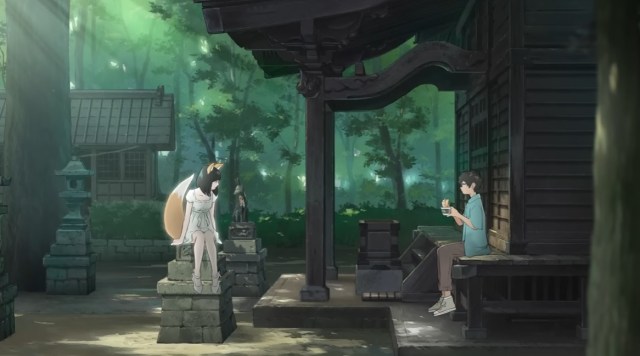
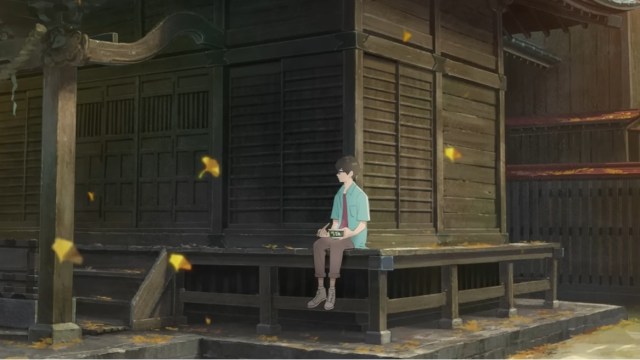
After passing his college entrance exams, a young man moves from the Japanese countryside to Tokyo. But the most populous city in Japan can be a lonely place, and months after starting university he hasn’t made any close friends or found a girlfriend.

So when vacation comes up, he’s not going to parties or on dates, but instead goes back to his hometown. Even there he’s sort of a loner, spending an afternoon by himself at a forested Shinto shrine…until he has a chance encounter with a mysterious and beautiful stranger that just might change his life forever.

It sounds like the premise of a heartstring-pulling anime romance, and it is. But it’s also the premise for the latest stylishly sentimental ad from instant noodle maker Nissin.

Though they’re best known for their Cup Noodle instant ramen, Nissin also makes a popular line of instant udon and soba noodles called Donbei. One of Donbei’s biggest sellers is kitsune udon, udon with a piece of fried tofu in the broth. By itself, though, kitsune is the Japanese word for “fox,” which is why after the video starts with a scene of the college student eating kitsune udon, he meets a fox girl. She gives her name as Dongitsune, and when the student asks how long she’s been there at the shrine without him noticing, she says, “From a long time ago.”

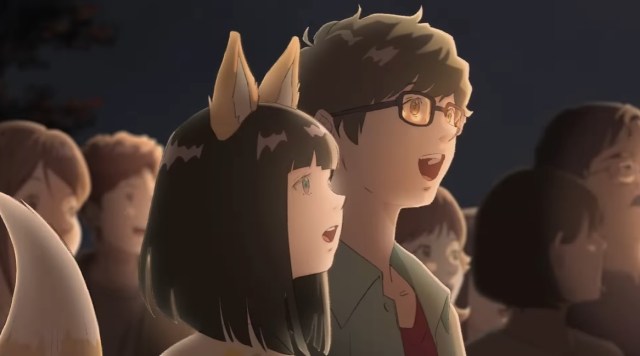
Though she winces when he takes a bite of his fried tofu, the girl tells him not to worry about it, and we next see them out and about at the local festival. Dongitsune has changed into a yukata, and there’s a sense of romance in the air as they watch fireworks and catch goldfish together.

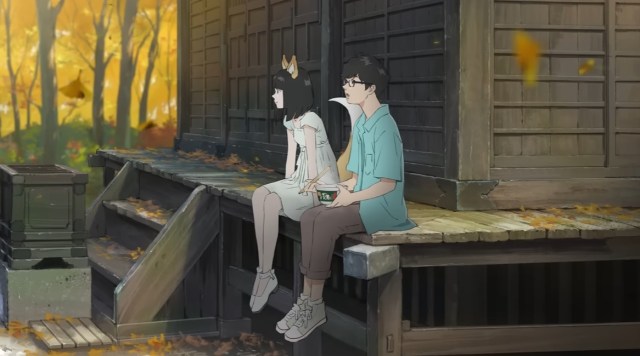
But eventually the student is going to have to go back to Tokyo, something underscored by the falling of the autumn leaves as the pair once again sits, now side by side, at the shrine.

“Dongitsune, let’s go to the fall festival together again next year,” he starts to say, but when he turns towards her…

…she’s nowhere to be seen.

The ending isn’t entirely bittersweet, though (which makes sense, as kitsune udon is really more of a salty/savory dish). As the video comes to a close, sharp-eyed viewers will notice there’s now one more fox statue in the shrine than there was in the previous scenes, so it seems like Dongitsune isn’t gone for good.

If the visuals seem somehow familiar, there are two possible explanations. First, the character designs are by manga illustrator Eisaku Kubonouchi, who also produced amazing anime ads for Nissin featuring high school-age versions of Kiki (of Kiki’s Delivery Service fame) and the One Piece Straw Hat Pirates. Alternatively, the anime short’s bespectacled young man and fox girl are modeled after actor Gen Hoshino and actress Riho Yoshioka, who have appeared in several live-action ads for Donbei.

Seeing as how Nissin’s previous collaborations with Kubonouchi were multi-video projects, hopefully this isn’t the last we’ll see of this burgeoning romance. Who knows, maybe Dongitsune will pay the student a visit in Tokyo this winter, so that he won’t need to make use of Donbei’s guide for how to spend Christmas Eve alone.

Source: YouTube/日清食品グループ公式チャンネル, Nissin
Top image: YouTube/日清食品グループ公式チャンネル
● Want to hear about SoraNews24’s latest articles as soon as they’re published? Follow us on Facebook and Twitter!


Credit:
Four bikers dressed as Spider-Man arrested in Saga City

With bitchin’ bikes come bitchin’ responsibility.

Although rarely the most pressing problem facing Japanese society, the issue of young Japanese men riding motorbikes wildly is a persistent one. Known as bosozoku, these often teenage riders enjoy stirring up trouble and noise on the roads of Japan late at night.

On 27 September four men aged 16 to 18 were arrested for just such behavior in the middle of the night before in Saga City, Saga Prefecture. However, unlike other bosozoku doing donuts in the middle of a busy intersection and setting off bottle rockets, these ones were dressed as your friendly neighborhood Spider-Man.

▼ A news report showing that three bikes and at least one spidey suit were confiscated

It should come as no surprise to any fan of the superhero that Japanese bikers would want to dress up as him, given his origin and all. It probably goes without saying, since Spider-Man is the main character of countless successful media franchises and the highest-grossing movie of all time, but just in case anyone out there is still unfamiliar with Spidey’s background, let’s recap.

Spider-Man started off as super-cool professional motorcycle racer Takuya Yamashiro whose scientist father was murdered by the evil Professor Monster. Not one to take any crap, Yamashiro went right after Monster and along the way encountered an alien spider named Galia who bestowed upon him the super spider powers, land-and-air vehicle, and giant robot needed to exact his revenge as an emissary of Hell.

It’s a story I think we all can relate to, but perhaps none more than motorcycle enthusiasts such as bosozoku. However, they appeared to let their spider-enthusiasm get a little out of hand, resulting in a major public nuisance.

The four were said to have announced what they were going to do in advance over TikTok. But apparently the spidey-senses of local police weren’t quite as sharp, because even having been tipped off, the bikers were able to revel for a good two hours after midnight and draw a crowd of some 500 people.

Netizens, however, were much quicker to pounce on these youngsters, and sentenced them to ridicule in the court of public opinion.

“What is the mental connection between wanting to ride a motorcycle and wanting to make an ass of yourself?”
“They sullied the good name of Spider-Man!”
“Arrest everyone who went to watch too.”
“Those are some cheap Don Quijote costumes.”
“Someone call Chibatman!”
“Halloween isn’t for another month, boys.”
“I guess they want to be heroes.”
“Welcome to 1978.”
“Where’s Leopardon?”

As for the real law, police are still investigating whether others were involved, but the penalties likely won’t be severe, especially for the minors who were there. Then again, maybe Sony and Marvel will go after them the same way Nintendo took out all the go-karters dressed as Mario.

Source: FNN Online Prime, NTV, Hachima Kiko
Top image: YouTube/The Cosmic Spidey
● Want to hear about SoraNews24’s latest articles as soon as they’re published? Follow us on Facebook and Twitter!


Credit:

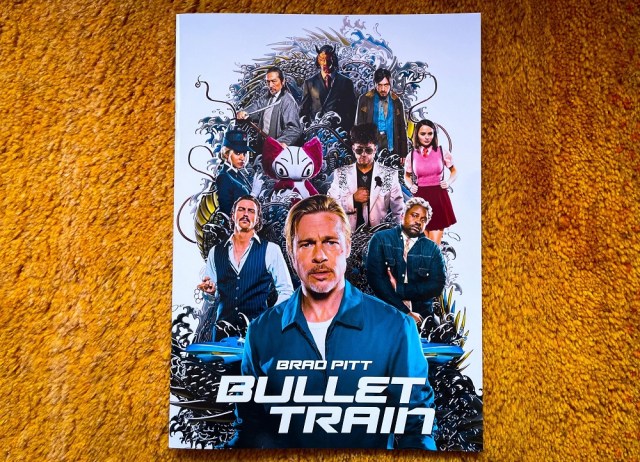
Brad Pitt’s Bullet Train adds Japanese subtitles for its Japanese dialogue, makes Japan happy

It might sound redundant, but sound really is the issue here.

Something cool about going to a movie theater in Japan is that films from overseas are shown in both Japanese-subtitled and dubbed-into-Japanese formats. Finding a subtitled screening doesn’t require you to go to some tiny arthouse cinema or wait until a late-night showing, either, as subtitled versions are regularly shown throughout the day at major theater chains.

So, for example, fans of Brad Pitt going to see Bullet Train, which was just released in Japan at the start of September, have the option of listening to the Hollywood star speak English while being provided with Japanese subtitles for what he and the rest of the cast are saying. Well except for the characters in Bullet Train (which takes place in Japan) who are already speaking Japanese, of course, since Japanese moviegoers don’t need subtitles for them, right?

That was the common logic, anyway. It’s something the film’s in-Japan producers have rethought, though, and now a new subtitled version of Bullet Train has been released, and this time all of the dialogue is subtitled in Japanese, even when the characters are already speaking Japanese.

The announcement tweet for Bullet Train’s new subtitled version (seen above) doesn’t mention a specific reason for the change, but the prevailing theory is the producers realizing that it’s not just linguistic purists (and foreign residents whose Japanese-language skills aren’t up to watching a whole movie in Japanese just yet) who choose subtitled screenings, but also people who are hearing-impaired.

Japanese-made movies (i.e. movies with Japanese dialogue from the beginning) don’t screen with subtitles at mainstream movie theaters, so people who are deaf or hard of hearing generally have to wait for a TV broadcast or streaming/home video release with captions. Foreign films, though, they can enjoy in the theater with everyone else, since they’ve got subtitles to read projected right up there on the screen…at least until Bullet Train’s original version dropped the subs when someone started speaking in Japanese.

The new version, though, allows hearing-impaired viewers to follow along as easily as anyone else in the audience, and the update is getting applause on Twitter with reactions like:

“I really appreciate how thoughtful this is.”
“Really been looking forward to this movie and now I can finally go see it!”
“Now a whole new group of people can fully enjoy it!”
“For people who are hearing-impaired dropping the subtitles when someone is speaking Japanese is like switching off the audio for people who can hear.”
“I hadn’t realized adding Japanese subtitles to Japanese dialogue could help more people enjoy a movie. Nice work!”

Bullet Train’s new subtitled version began screening just two days later, on September 23 (though not at IMAX or Dolby Atmos/Dolby Cinema theaters, perhaps because of technical issues). The announcement of the update came less than a day after Twitter user @defsapo, who has been deaf since birth, tweeted about going to see the film but being unable to know what actor Hiroyuki Sanada was saying in his Japanese-speaking scenes, and she happily retweeted the announcement of the new version.

Along with the positive reactions to the update, a number of commenters expressed their wish for this to become the norm for subtitled movie screenings in Japan, since Bullet Train isn’t the first foreign film to include patches of Japanese dialogue, and it won’t be the last either. That really does seem like a smart idea, seeing as how audiences choosing subtitled screenings are already OK with having text on screen during the movie, so a few extra lines so that more people can enjoy it doesn’t seem like very much to ask.

Source: Twitter/@BulletTrainJP (1, 2) via IT Media
Top image ©SoraNews24
● Want to hear about SoraNews24’s latest articles as soon as they’re published? Follow us on Facebook and Twitter!


Credit:
Fly-through video of Sailor Moon Museum exhibit shows what’s waiting for fans in Tokyo【Video】

Exhibit enters its second phase, which will still be open when Japan reopens to international tourism.

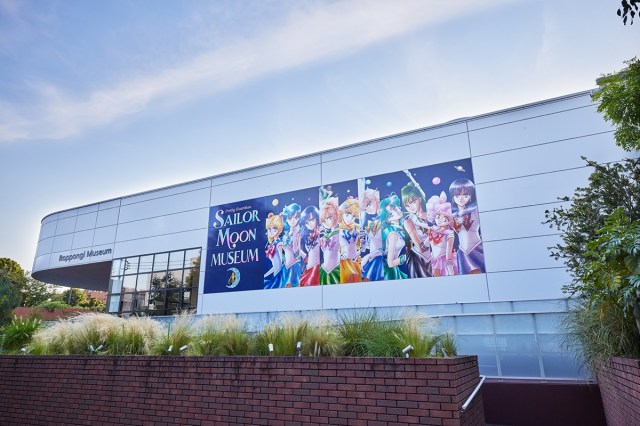
Back in July, the Sailor Moon Museum exhibit, hosted at Tokyo’s Roppongi Museum, opened. Given the long history of the franchise and its wealth of memorable artwork, the initial focus was on Sailor Moon’s first two story arcs, but this month the exhibition entered its “Volume 2” phase, which shifts the focus to the third and fourth, when the final Sailor Senshi join the cast.

The changeover to Volume 2 took place on September 10, and the exhibit’s management provided a peek at what’s new by releasing a few promotional stills of the 60 pieces of artwork that have been added to the display lineup.

But they’re also giving fans a much more dramatic preview with a video walkthrough…or, to be more precise, a video flythrough made by piloting a drone through the exhibit.

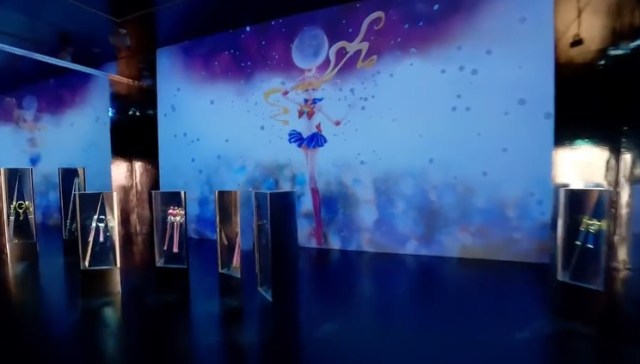
The video starts in the treetops outside the building, before the drone drops down and swoops through the entrance, across the lobby, and into the first room of the exhibit, with a mural of Sailor Moon standing tall behind an array of her transformation items and other magical regalia.

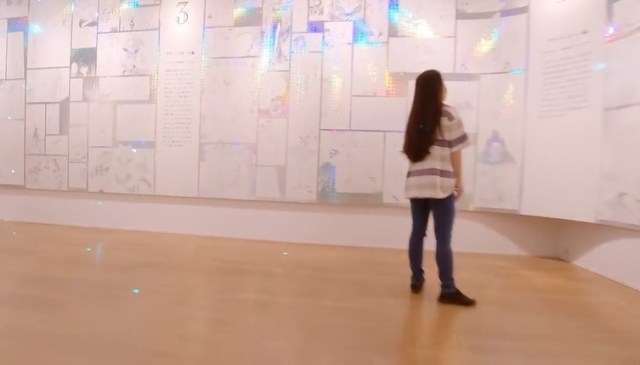
The next areas on the flightpath are hallways covered in artwork, first of black-and-white illustrations from creator Naoko Takeuchi’s original manga, and then the brightly colored anime adaptation.

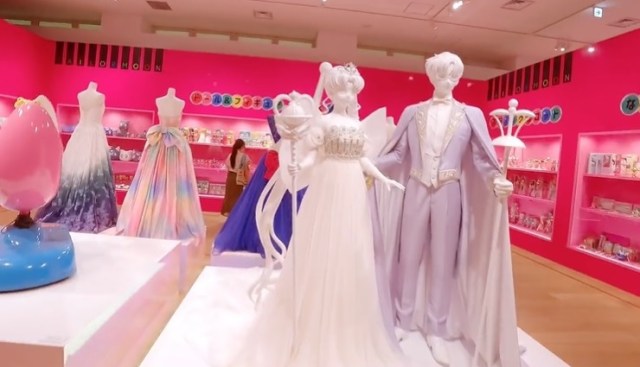
Other notable works of Sailor art we fly by include the Sailor Moon wedding dress collection

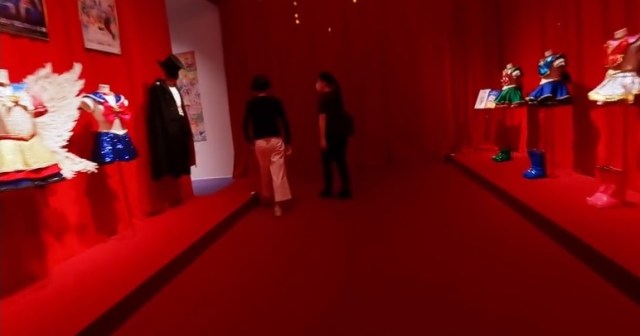
…costumes from Tokyo’s live stage show Sailor Moon restaurant (which, sadly, has not survived the pandemic)…

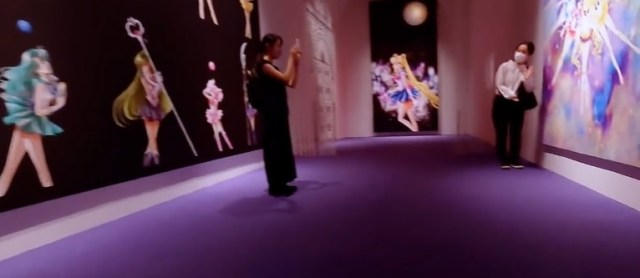
…and a hall of Sailor Senshi portraits where it appears guests are allowed to take commemorative photos with the magical girls.

Of course, with any anime event going on in Japan these days, the question that comes up is “Will foreign fans be able to go?” Thankfully Volume 2 of the Sailor Moon Museum event will run until November 6, so it’ll still be going on when Japan reopens to unrestricted international tourism next month, and even after that, there are going to be Volumes 3 and 4, with the exhibition as a whole continuing until December 30.

Related: Sailor Moon Museum official website
Source: Twitter/@sailormoon_ex
Top image: Sailor Moon Museum official website
Insert images: Sailor Moon Museum official website, Twitter/@sailormoon_ex
● Want to hear about SoraNews24’s latest articles as soon as they’re published? Follow us on Facebook and Twitter!


Credit: