The Ghibli theme park’s food looks good enough to be a reason to visit all by itself【Photos】

Ghibli Park’s restaurant has a mouthwatering menu with food culture both from around the world and right from its local community in Japan.

Like most theme parks, Ghibli Park is going to have an on-site restaurant where guests can grab a bite to eat while they relax and recharge before seeing the rest of the attractions. Inside the Ghibli’s Grand Warehouse section of the park, the Transcontinental Flight Cafe (or Cafe Tairikuodanhiko, to use its Japanese name), may not recreate the food from any specific Studio Ghibli anime, but the menu is made up of exactly the level of eclectic, original, and beautifully presented fare that you’d expect of the esteemed anime studio, and even includes a few creations specially crafted as salutes to the local food culture of the part of Japan the park is located in.

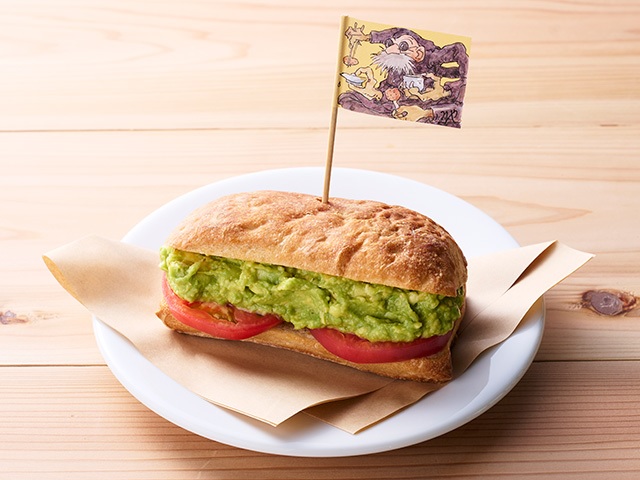
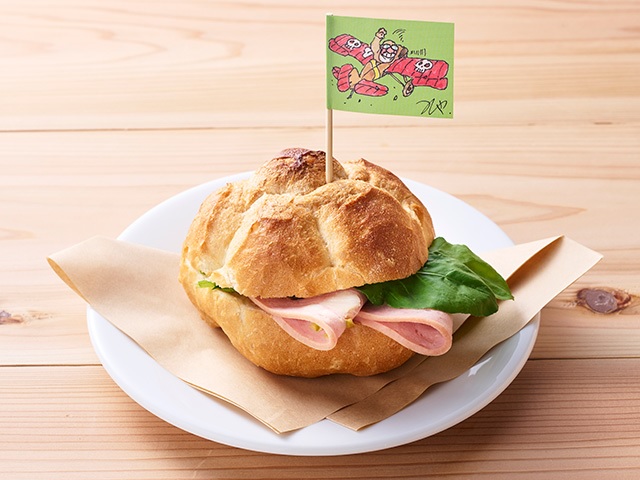
As the name implies, the focus is on light, easy-to-eat selections, just the sort of thing a pilot could chow down on before hopping in their flying machine and taking to the skies. Some of them, like the BLT above or the ham and cheese sandwich below, are solid, familiar options.

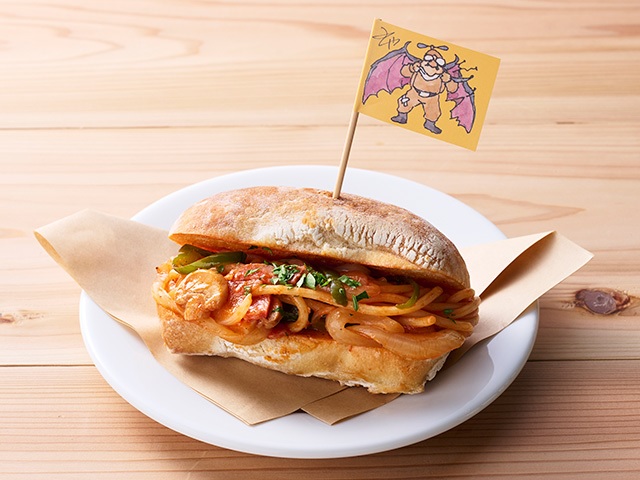
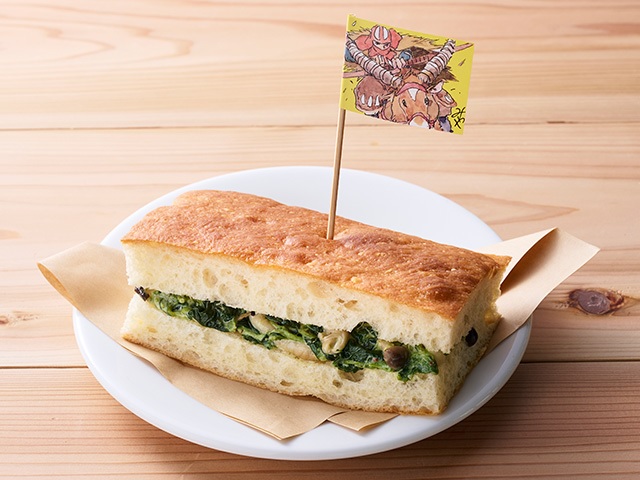
By the way, the cafe says the cool little flag illustrations were drawn by “Miyazaki-san,” without specifying whether that means father Hayao or son Goro.

But in keeping with the air of adventurous air voyages, the Transcontinental Flight Cafe also makes use of less orthodox sandwich elements, as in its hummus and tandoori chicken sandwiches, the latter of which looks to have saffron rice too.

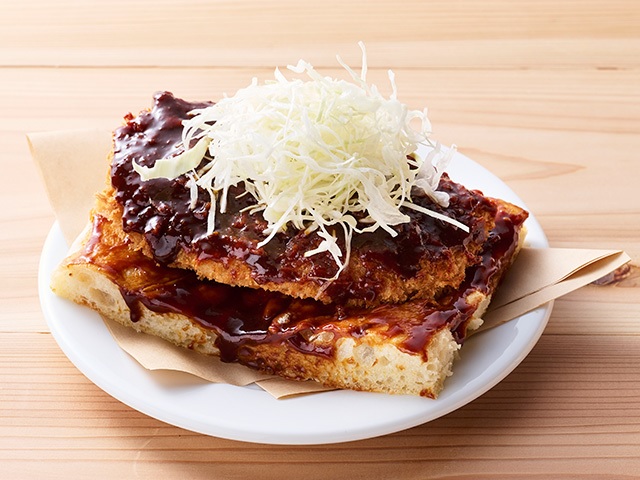
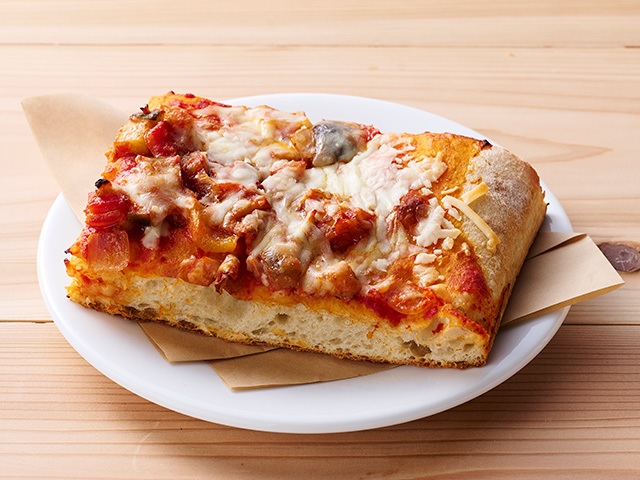
As for the local Japanese cuisine options mentioned above, Ghibli Park is in Aichi Prefecture, whose capital city of Nagoya is famous for miso katsu, a pork cutlet slathered with miso sauce. Miso katsu is usually served with white rice, but the Transcontinental Flight Cafe has adapted it into a flatbread pizza.

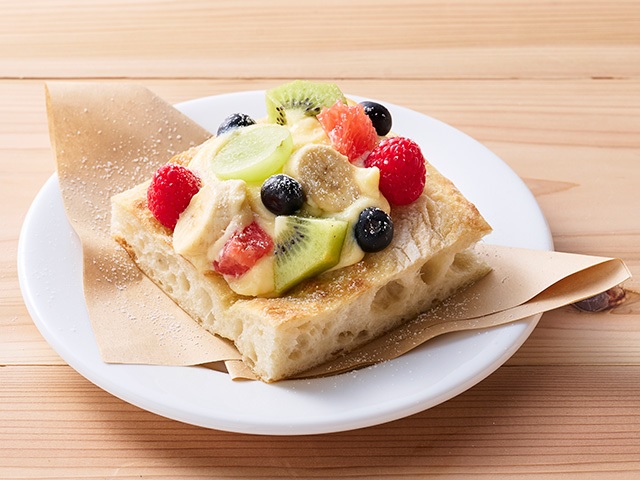
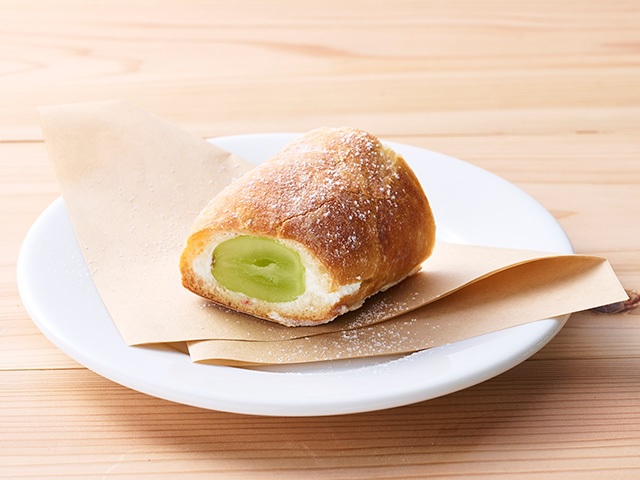
Also an Aichi specialty is an butter toast, a sweet snack or morning eye-opened of red bean paste and butter melting into a thick slice of bread. At the Transcontinental Flight Cafe, their take on this is an an butter dessert sandwich.

Another sandwich adaptation is the Napolitan pasta sandwich, which is Ghibli Park lead planner Goro Miyazaki’s favorite item on the menu.

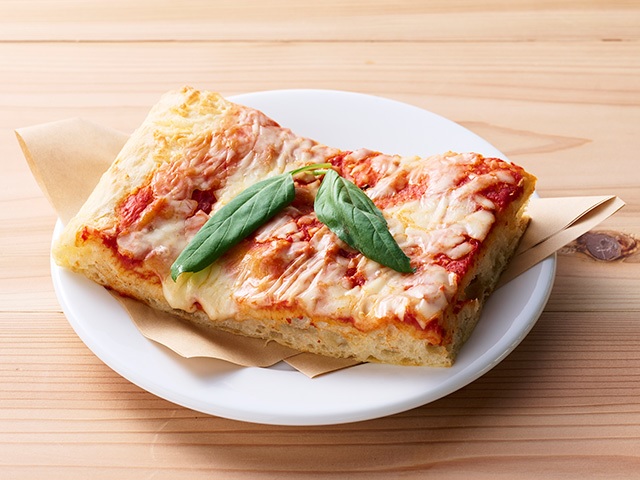
Oh, and getting back to the pizza lineup, in addition to a more or less traditional margherita

…the chefs will also be happy to whip you up a dessert pizza, with apple year-round or seasonal fruits, which promises to be full of melty, fruity sweetness.

Rounding off the sandwich selection are the spice shrimp

avocado guacamole

spinach mushroom

…and mortadella ham.

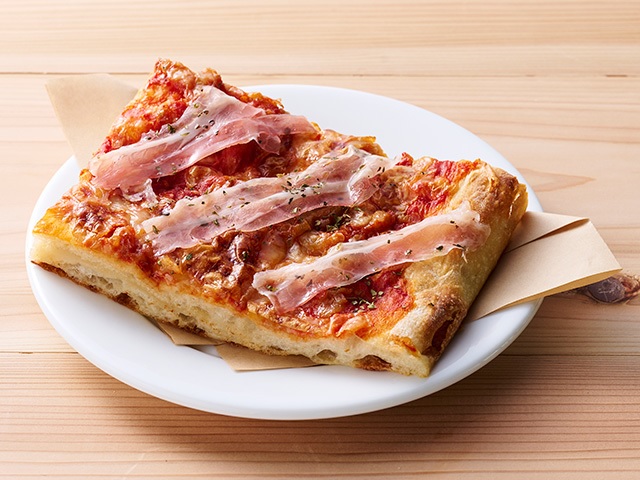
On the pizza list, there’s also a pancetta

caponata stewed tomato

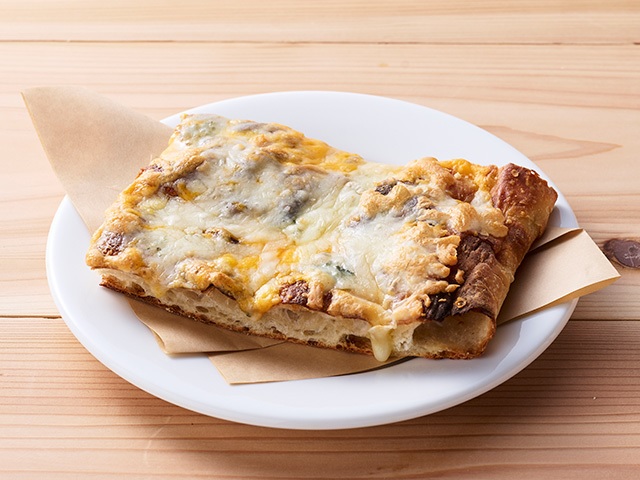
…and four-cheese.

Finally, as extra incentive to save room for desserts (yes, multiple ones), here are the seasonal fruit and banana chocolate dessert cream sandwiches.

The Transcontinental Flight Cafe also has a full drink menu, with both soft drinks and alcoholic beverages. It lists its red wine as “Kernai no Buta” (meaning “Crimson Pig,” and also the Japanese title of Ghibli’s 1992 anime Porco Rosso), and it appears to be a joint venture between Studio Ghibli and French winemaker Lou Dumont. The cafe’s beer, on the other hand, is listed as Moretti, not the Valley of the Wind beer served at the Ghibli Museum in Tokyo.

The food items range from 350 yen (US$2.40) for the banana chocolate sandwich up to 900 yen for the miso katsu pizza, reasonable rates for a cafe in Japan and without any of the price-gouging one might expect at a theme park. And for those who somehow don’t see anything to their liking here, be aware that outside food can’t be consumed inside Ghibli Park, but even then, they’ve put together an illustrated visitor guide with maps and recommendations for places to eat a bento boxed lunch elsewhere in the larger park that Ghibli Park is located inside.

Source: Ghibli Park, Twitter/@ghibliparkjp
Images: Ghibli Park
● Want to hear about SoraNews24’s latest articles as soon as they’re published? Follow us on Facebook and Twitter!


Credit:

Tokyo real estate agency sends beautiful women with you on apartment visits for date-like mood

Girls Chintai wants to help customers make the right chintai choice.

There’s a company in Tokyo called Girls Chintai. Chintai means “rental” in Japanese, so you might think that Girls Chintai is an escort service, but chintai here is referring to apartments, and Girls Chintai is a real estate agency.

So why “Girls?” Because…

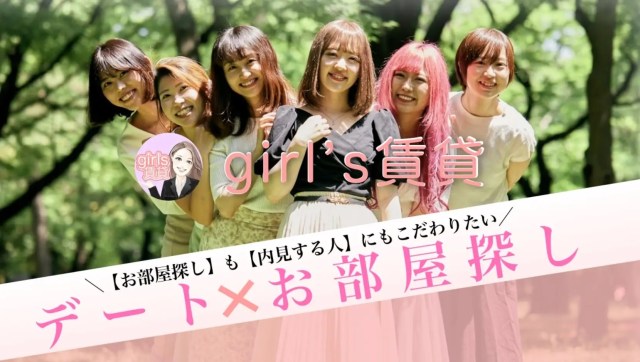
Girls Chintai’s staff is made up of fashionable young ladies, who accompany clients on their visits to apartments they’re thinking about renting while creating a “date-like atmosphere.”

▼ Riri Sakino, one of Girls Chintai’s agents

The company’s website asks:

Have you ever had these kinds of problems?
● “I wish the person showing me apartments were a beautiful woman.”
● “On my day off, I want to look for an apartment, but I also want to go on a date.”
● “I don’t know what sort of apartment women want a guy to have.”

In keeping with that third point, Girls Chintai seems to focus on smaller apartments, of the size a working adult might be living alone in, but also having a romantic partner come over, and possibly spend the night, if and when he finds one. However, the company says that it welcomes both male and female customers.

▼ Some of Girls Chintai’s recent videos have a Halloween cosplay theme.

In Japan, it’s common in Japan to have a real estate agent guiding you around on apartment tours. Japanese landlords generally don’t handle leasing themselves, and instead register their property with one or more agencies. So when you’re looking for a new apartment to move into, you start by looking through an agency’s listings, pick out a few that look appealing, and then go with the agent to visit the apartments before making a decision.

▼ This one-bedroom apartment is an eight-minute walk from Shibuya Station in downtown Tokyo.

Girls Chintai’s “beautiful young women” angle is unique, though, but it’s appealing enough to keep them in business for close to two years now. In addition to Tokyo, they also handle apartments in the neighboring prefectures of Kanagawa, Saitama, and Chiba.

Related: Girls Chintai
Source: Girls Chintai via Otakomu
Images: PR Times
● Want to hear about SoraNews24’s latest articles as soon as they’re published? Follow us on Facebook and Twitter!


Credit:

The Japanese convenience store with a secret DJ booth in the basement

“Record Conveni” is the coolest combini in town!

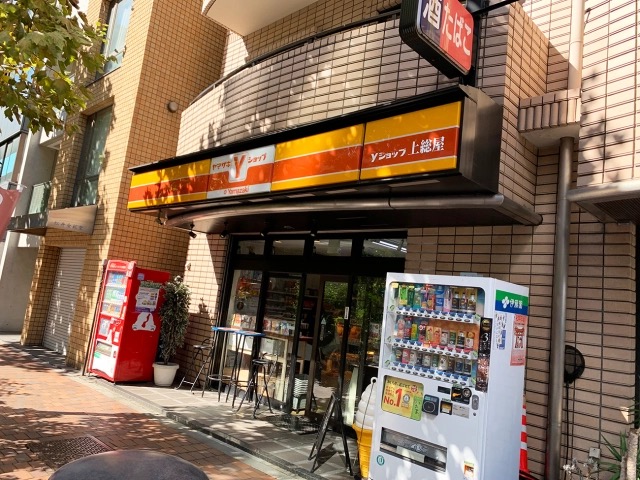
Japan’s top three convenience store chains — Lawson, Family Mart and 7-Eleven — might be famous around the world, but lying in their shadow you’ll find some other convenience store chains that are equally great, and Yamazaki Y Shop is one of them.

Run by Japan’s Yamazaki Baking Company, the world’s largest bread-baking corporation, this chain is known for its lineup of sandwiches and bakery products. However, at the Y Shop in Hamacho, in Nihonbashi, Tokyo, you’ll find much more than Yamazaki bread inside, because the owner is mad about music…and old records.
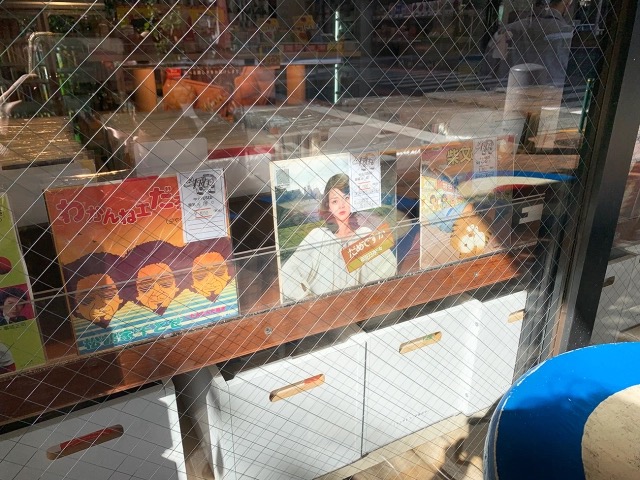
This branch of Y Shop looks like any other from the outside, but step closer and you’ll see a selection of records on display in the front window. As it turns out, these aren’t purely for decorative purposes, as there’s a sign that reads…
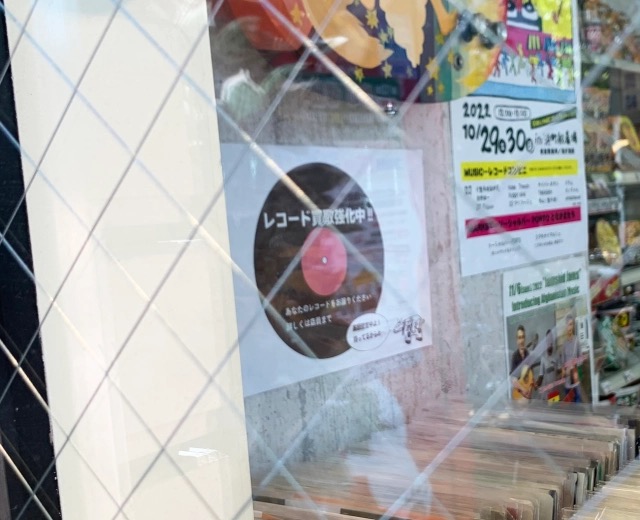
▼…”We Buy Records!! Please sell us your records. Enquire within.”
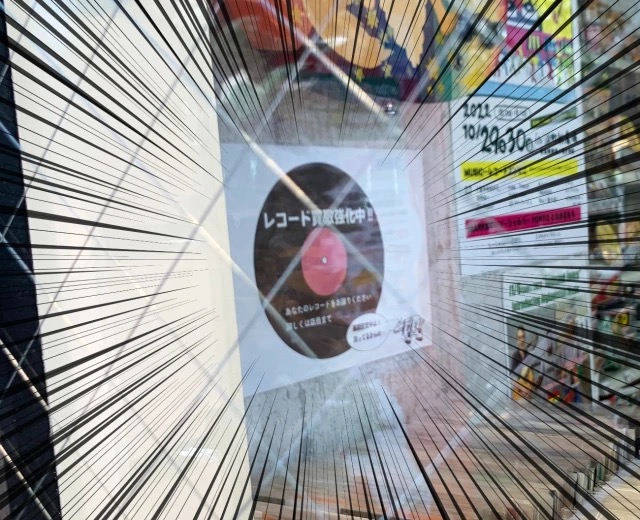
Our reporter Seiji Nakazawa is a musician who plays guitar in a band, so he’s seen signs like these at old-school record shops before, but this was his first time seeing it at a Yamazaki convenience store. Curious to learn more about the unusual music connection, Seiji stepped inside, and found that the interior looked just like a regular family-run Yamazaki corner store.
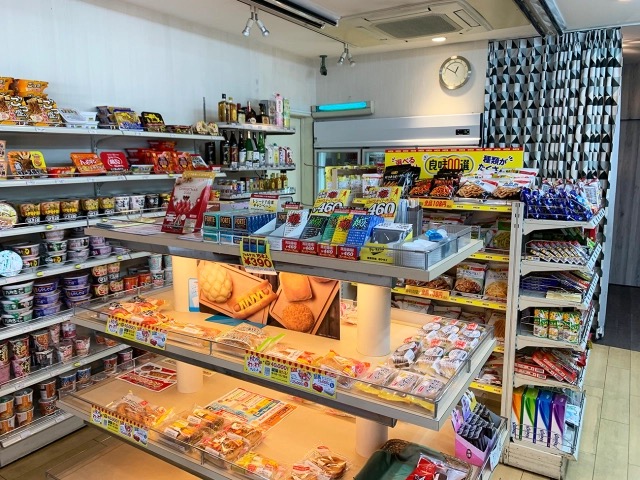
▼ There were drinks, snacks, sandwiches and bread…
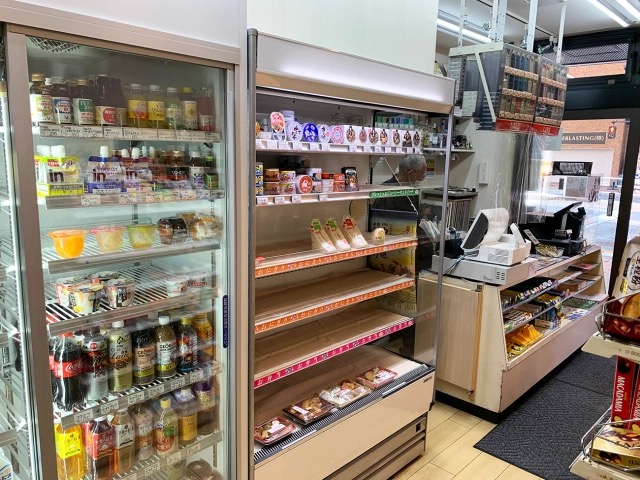
▼ …but there in the window was something you won’t find at any other convenience store — trays of records.
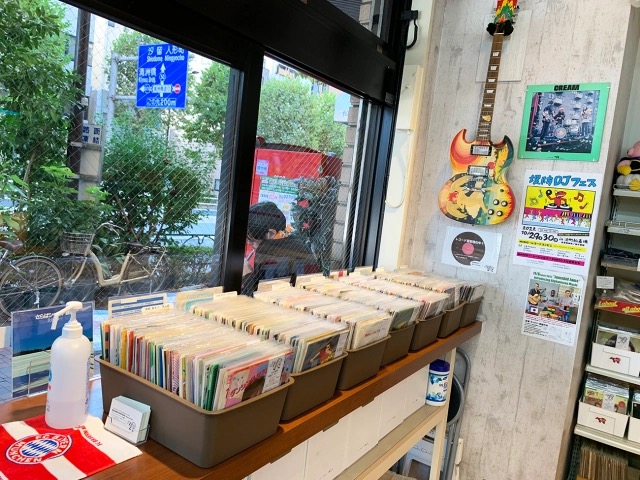
Rifling through the records by the window, Seiji saw there was a good selection of Japanese and overseas bands represented, and on the side there was a section filled with band-related merchandise like T-shirts, and even an electric guitar on display.

Seiji felt as if he were in an old record store rather than a convenience store, especially when he plucked out a couple of records that he particularly liked. Taking them over to the register to purchase them, Seiji found there were two people behind the counter, who looked like a friendly grandmother and grandfather, and when he struck up a conversation with them, they told him that the records were there because of the store manager’s son.

The friendly lady told Seiji that the son might be coming in soon, so our reporter bought a coffee and sat outside with his new Aerosmith and Monkees records in the hopes that he might be able to meet the son behind the unusual store.
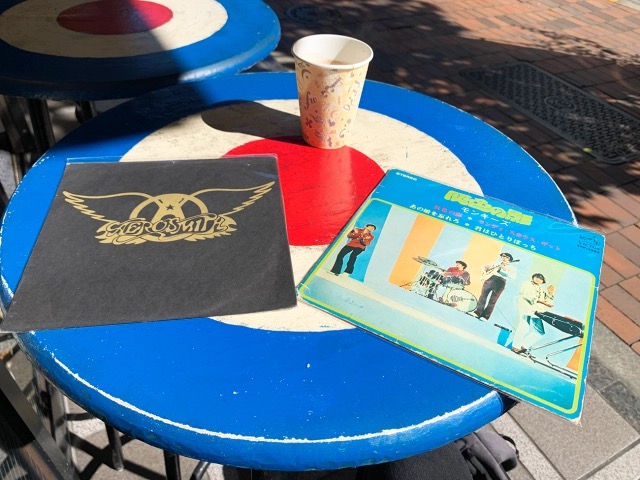
As he sat in the warm sunshine, Seiji saw a steady stream of customers come and go. While most people who stopped by left with snacks, quite a few of them also spent time perusing the record section by the window. It was rare to experience such a homely neighbourhood-type feel in the middle of the city, and just as Seiji finished his coffee, the manager arrived, and was more than happy to have a chat about the store.
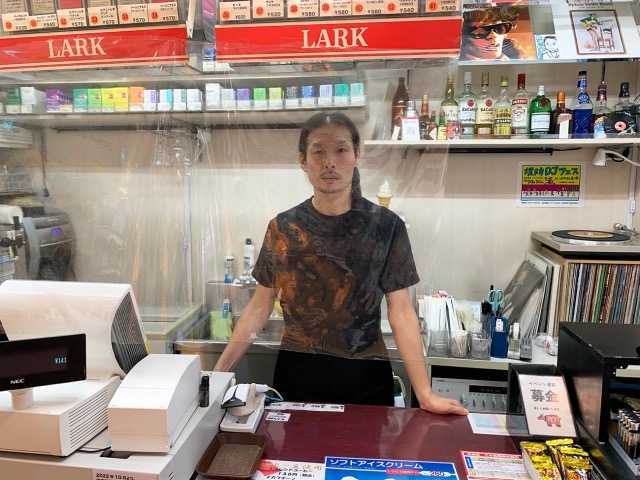
As with all first-meeting scenarios, Seiji whipped out his business card and handed it over to the manager before they began their conversation. The manager, in turn, handed over his business card, and the musician in Seiji felt a slight twinge of envy at how cool it looked.

▼ Not your average Yamazaki shop owner’s business card.
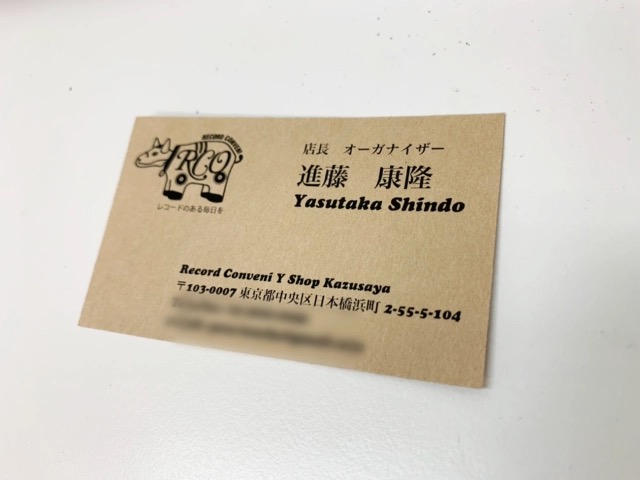
▼ His name was Mr Yasutaka Shindo, and his shop was dubbed the “Record Conveni”.
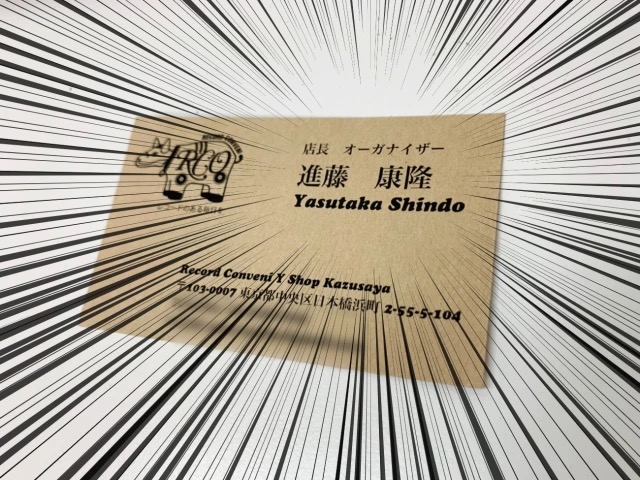
Rather than use the title of “store manager”, Mr Shindo instead called himself the “store organiser“, with organiser” being a cool title often used by organisers of projects and events. Curious to know more about the title, Seiji asked him if he does actually organise events, and was surprised to hear this reply:

Mr Shindo: “I do. I usually hold a DJ event inside this store about once a week. I’ve been invited to DJ at a sake event at the Coredo Nihonbashi shopping mall next week, so I’ll be DJing at other places for a little while, but whenever there’s an event, I announce it on Twitter and Instagram.”
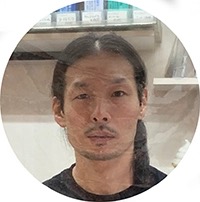
Seiji: Ah, so you’re a DJ?!

Mr Shindo: “I was originally a guitarist in a band, and at that time I performed at live houses [live music venues] in Shibuya, places like Crocodile and Shibuya Yaneura.”

Seiji: Actually, I’m also a guitarist in a band. It’s sad that Shibuya Yaneura is gone now. You must’ve been in the business for a while.”

Mr Shindo: “I guess so! I also ran guitar lessons for a while.”

Seiji: Eh!? You were a teacher?

Mr Shindo: “No, no, I called the teacher and held lessons in the basement. Rather than teach, I wanted to be taught!”

Seiji: Do you mean to say there’s a basement here in this Yamazaki store?

Mr Shindo: “Would you like to take a look?”

Everything Mr Shindo revealed to Seiji was a surprise, but he certainly wasn’t expecting there to be a secret basement in the store. Seiji felt butterflies of excitement begin to dance around in his belly as he was led towards the back of the store.
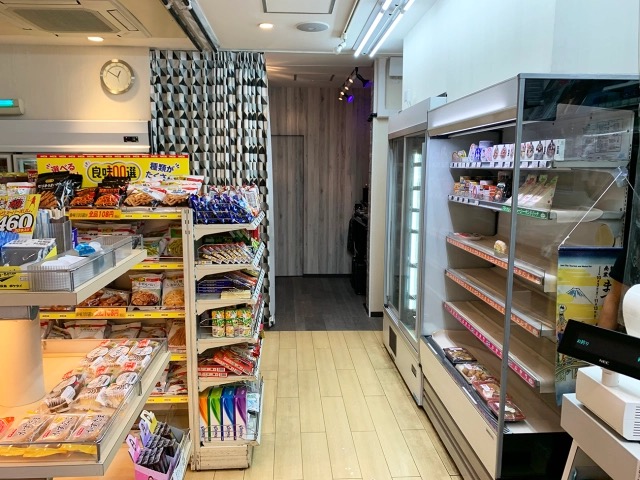
▼ There, next to one of the drink fridges, was a door that looked like it might lead to a restroom, but instead, when Mr Shindo opened it…
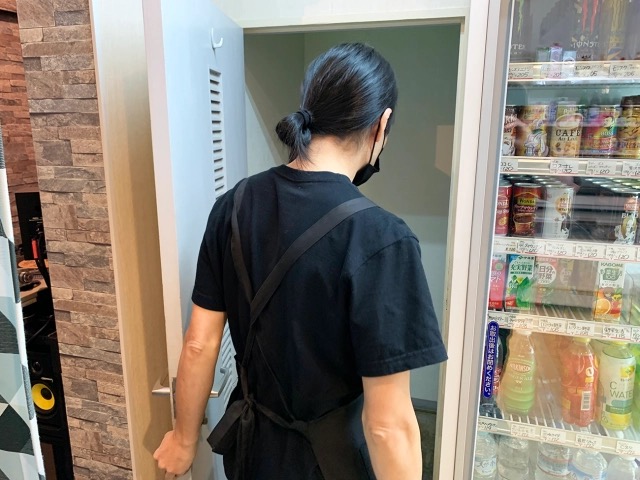
▼ …there was a narrow staircase leading to an underground floor!
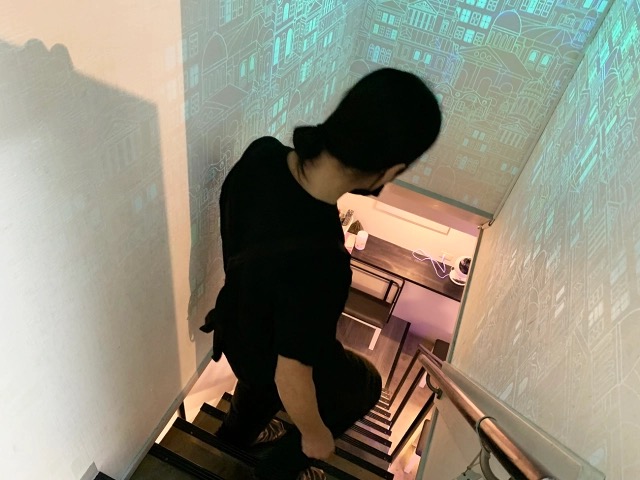
▼ What in the name of Yngwie Malmsteen???
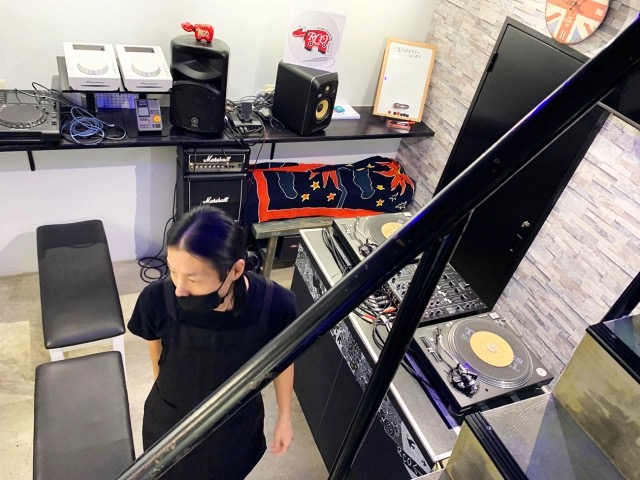
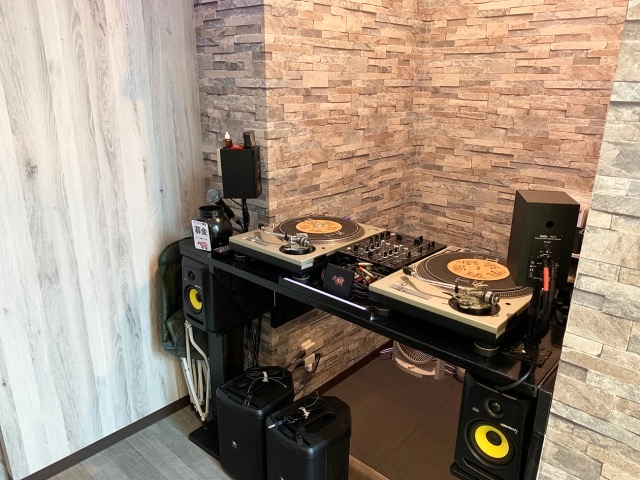
At the end of the stairs behind the door next to a fridge was a secret basement that looked like a music lover’s paradise. It was a fantastic setup — a personal studio filled with all sorts of fun equipment like electric guitars, amps, and even a DJ booth.
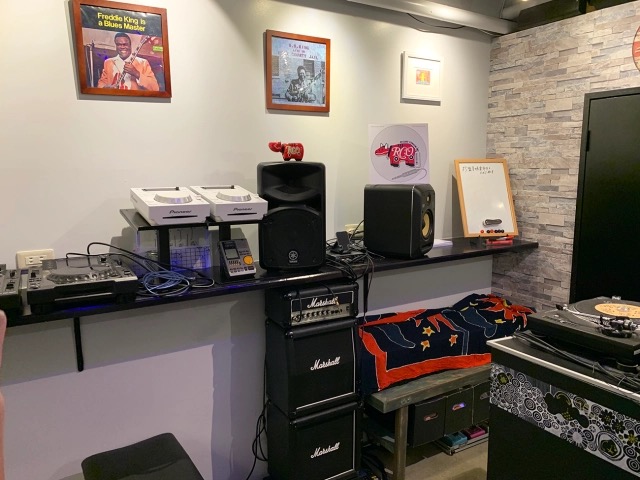
Seiji gazed around in awe at the space, taking it all in before continuing his conversation with the owner.
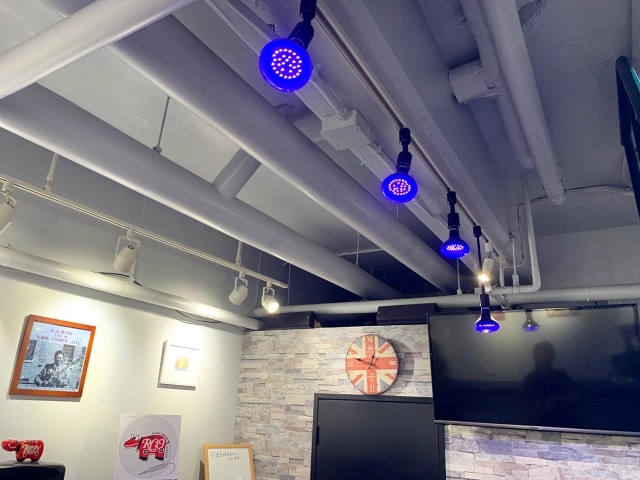
Mr Shindo: “By the way, we’re holding a DJ class today.”

Seiji: Really? Wow, you’re really making great use of the space.

Mr Shindo: “It was originally a stockroom, but it was so spacious that I turned half of it into a music studio.”

Seiji: It reminds me of the studio used by Kazuyoshi Nakamura [a Japanese singer-songwriter]. If it was originally a stockroom, though, where do you store things for the shop?

Mr Shindo: “I’m using the space on the other side of the back wall as the stockroom now.”
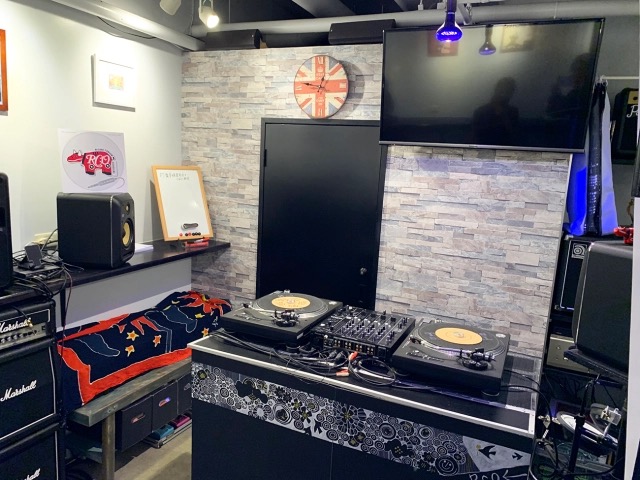
Seiji: I see. So when you hold an event inside the store, is this where it’s held?

Mr Shindo: “Well, during the pandemic we held a streaming event here. But for most of the DJ events we usually set up a DJ booth at the back of the ground floor upstairs so the music flows out into the store.”
Seiji: see. I’m curious to know, though, what made you decide to sell records inside a Yamazaki convenience store?

Mr Shindo: “That record shelf by the window was originally an eat-in space. It all started when I was talking to some of our regular customers and they said they’d like to hold a mini flea market outside the store. So we went ahead with it and I put out some old records and they sold quite well. That’s when I thought, ‘I could sell records’, so I thought I might try selling them inside the store, and that’s where I am now.”

Seiji: Being able to buy records here makes it feel like an old record store. 

Mr Shindo: “I’m glad to hear that. I became an authorised secondhand dealer so I could sell them.”

Seiji: Wow, that’s dedication! But what about Yamazaki? Are they really giving you this much freedom to do what you want?

Mr Shindo: “Yes, they are. You could say it’s all part of Yamazaki’s broad-mindedness. Originally, we were a liquor store for about 90 years, and I’m the third generation owner, but these days it’s hard to survive as a liquor store alone. In 2012, we decided to change the business to a convenience store.

At that time, I thought about going with Lawson or Family Mart, but Yamazaki was the only company that gave me this much freedom. The contract was like a voluntary agreement between both sides. As expected, a little bit was said about certain things, but the president seems to be happy about the arrangement!”
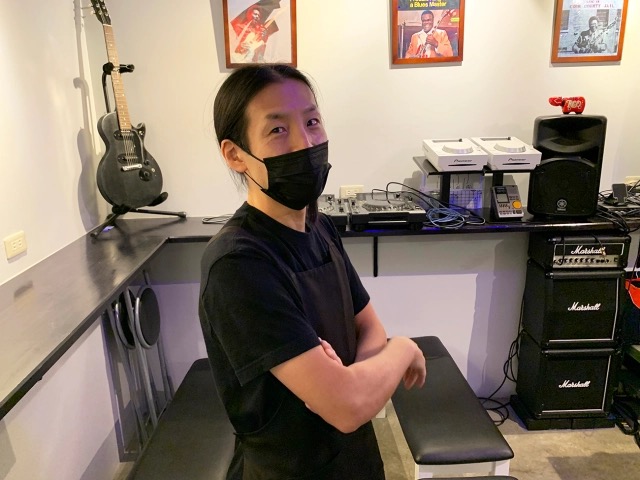
Well, there you have it — a look behind the scenes at one of the most unusual convenience stores in the country. After doing a little more research into the topic, Seiji discovered that all Yamazaki convenience stores operate on voluntary agreements between operator and owner, offering more freedom than a franchise contract with one of their big-name competitors.

In addition, it appears that the owner is free to choose whether or not they want to stay open 24 hours a day; another perk you won’t find when working for big convenience store chains, which require their outlets remain staffed around the clock, even when business is slow.

As we’ve seen in the past, the rigid rules for opening a big-name convenience store can cause some owners to feel disgruntled, leading them to go rogue against the company. So next time you pass by a Yamazaki Y store in Japan, you might want to pop in and support the smaller chain that values the happiness of its shop owners.

It’s no wonder Yamazaki is held in such high regard by the people of Japan. With more freedom for owners to run their business to appeal to locals as they see fit, you never know what you might find at a Yamazaki convenience store!

Store information
Y shop Kazusaya store / Yショップ上総屋店
Address: Tokyo-to, Chuo-ku, Nihonbashi Hamacho 2-55-5
東京都中央区日本橋浜町2-55-5
Open 7 a.m.-11 p.m. (Mon-Sat)
Closed Sundays and holidays

Photos ©SoraNews24
● Want to hear about SoraNews24’s latest articles as soon as they’re published? Follow us on Facebook and Twitter!


Credit:

We try Kaldi’s microwavable Omelet Rice to find out if it really cooks that easily【SoraKitchen】

Omurice in just five minutes? We had to try it.

Kaldi Coffee is a food shop that sells many things–coffee, of course, but also imported food products, wine, and lately unique and convenient edibles like spreadable french toast. We like to shop there to find out what kind of new, convenient, tasty food products they have, and our most recent trip didn’t disappoint.

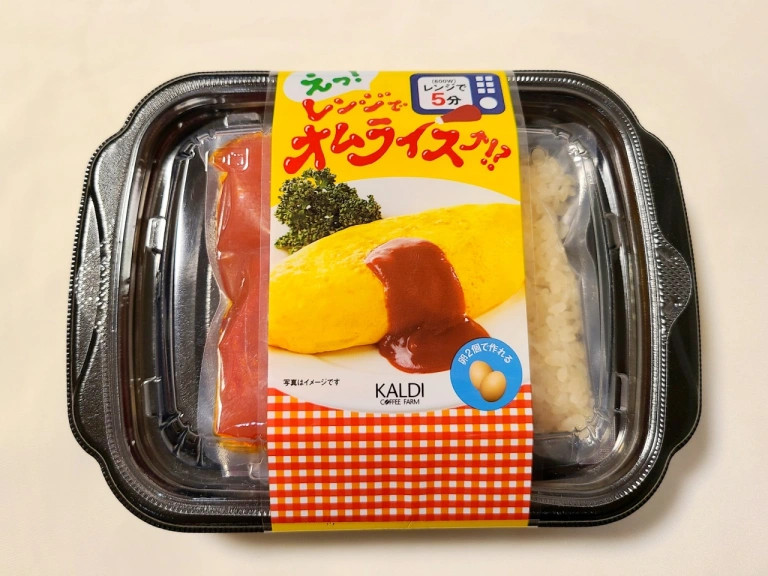
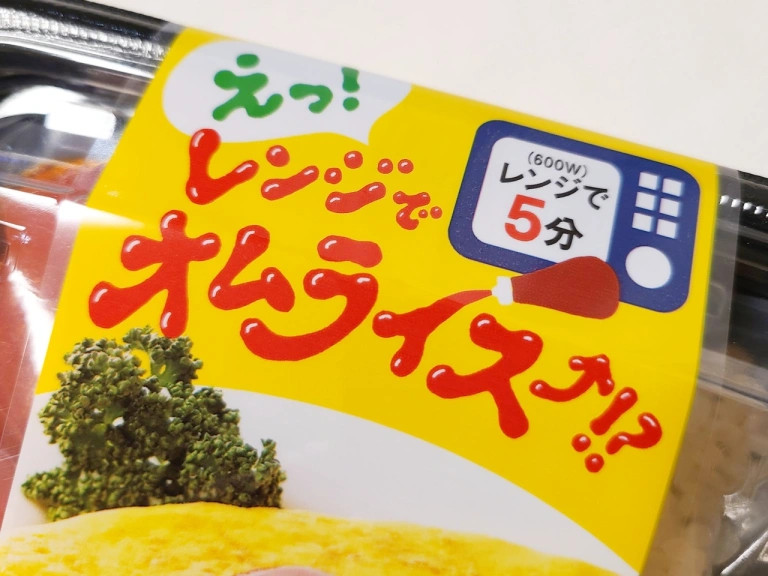
This time we found the “Eh?! Renji de Omuraisu!?” (“What?! Microwavable Omelet Rice?”) easy-cook set, which had us pretty excited. Though the name of the set initially inspired more surprise than the set itself, we couldn’t help but be intrigued by the prospect. Normally omelet rice (known as omurice in Japanese), though not a terribly complicated dish to make, requires more steps than simply popping it in the microwave, since you have to cook the veggies, rice, sauce, and omelet. That’s why being able to do it all with a single microwave showed incredible promise.

▼ “What? Microwavable Omelet Rice?!”

Naturally, it was only 410 yen (US$2.80), so we bought it and immediately whisked it home to try. All you need besides the kit is two eggs–the ketchup-based sauce, rice, and cooking container are all included.

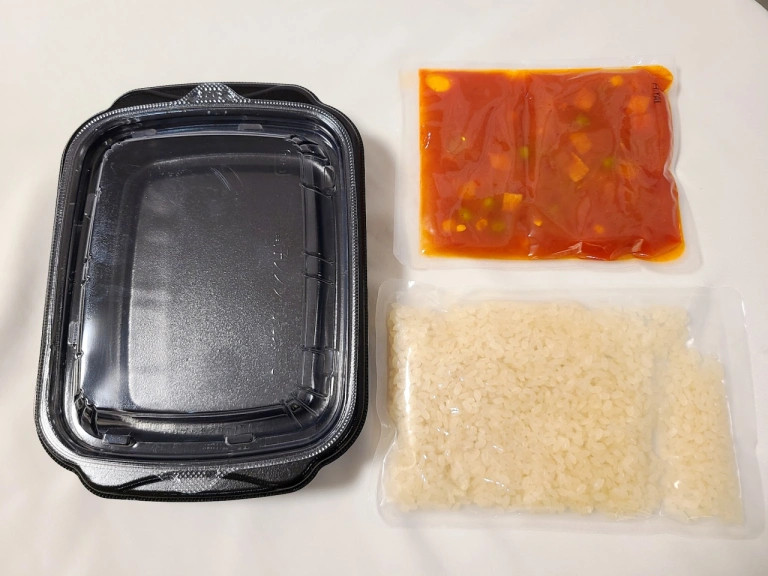
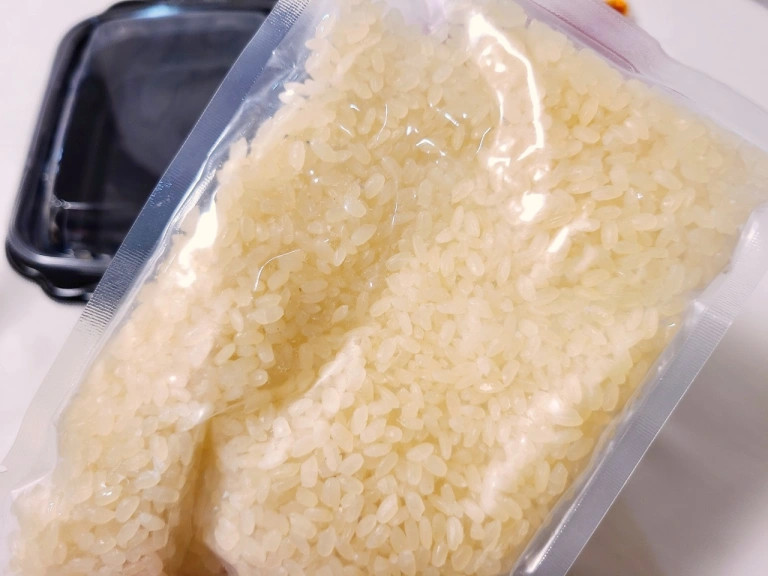
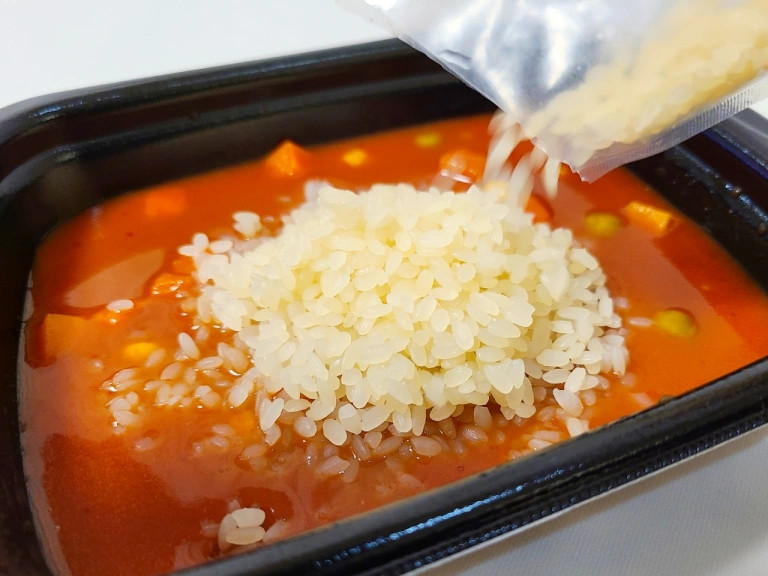
Inside the container were two sealed plastic packages: the “omelet rice ingredients” and the “rice ingredients”. The instructions said it would take only five minutes to cook in the microwave, but this we found hard to believe because the rice was still completely raw.

If you’ve ever cooked rice in the microwave, you’ll know it takes far longer than five minutes. We began to wonder if this particular omelet rice was going to have crunchier rice, like paella, maybe. Well, in for a penny in for a pound.

We followed the instructions on the box, mixing the “omelet rice ingredients” and “rice ingredients” together in the container. Then we put the lid on and microwaved it for three minutes.

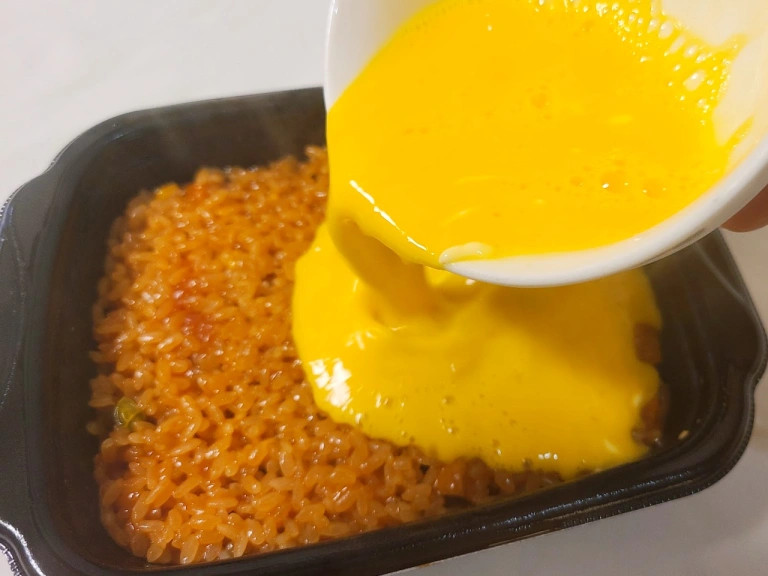
While we waited, we whisked our two eggs, and when the microwaved dinged, we poured them over the rice.

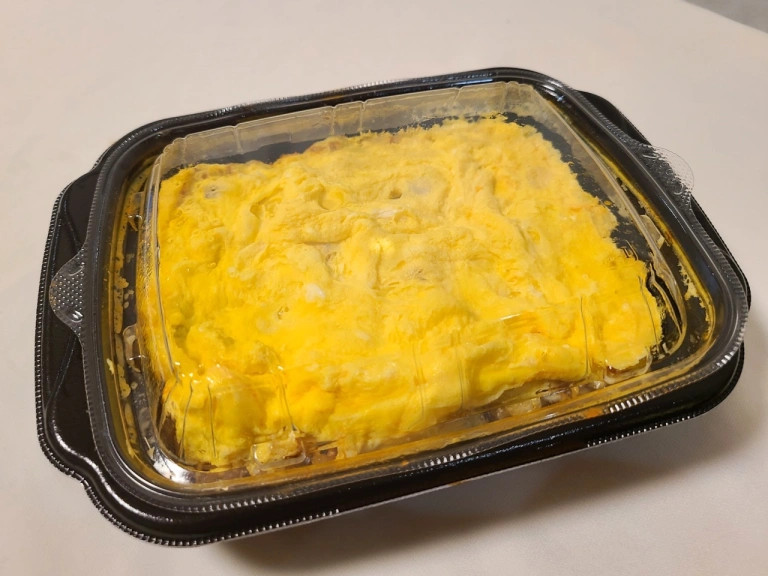
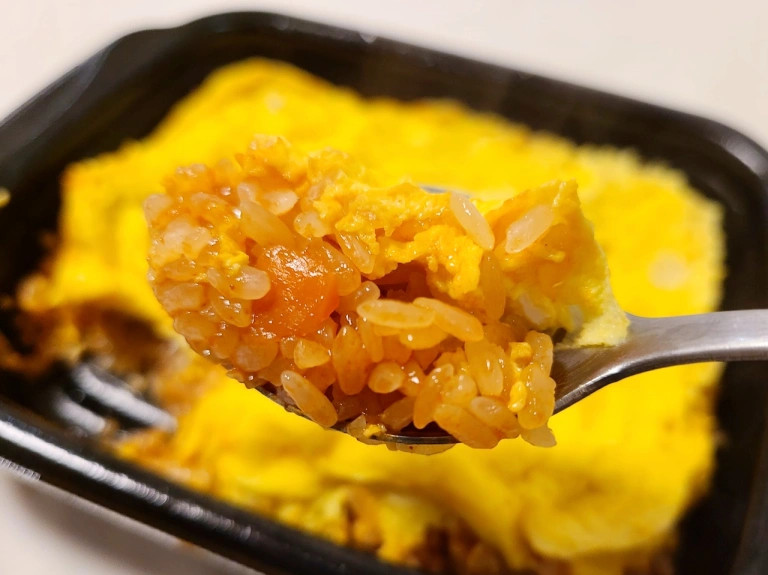
After that, it all went back in the microwave for two more minutes, and after a total of five minutes of cooking, it was apparently done! It did look more-or-less like omelet rice when it came out.

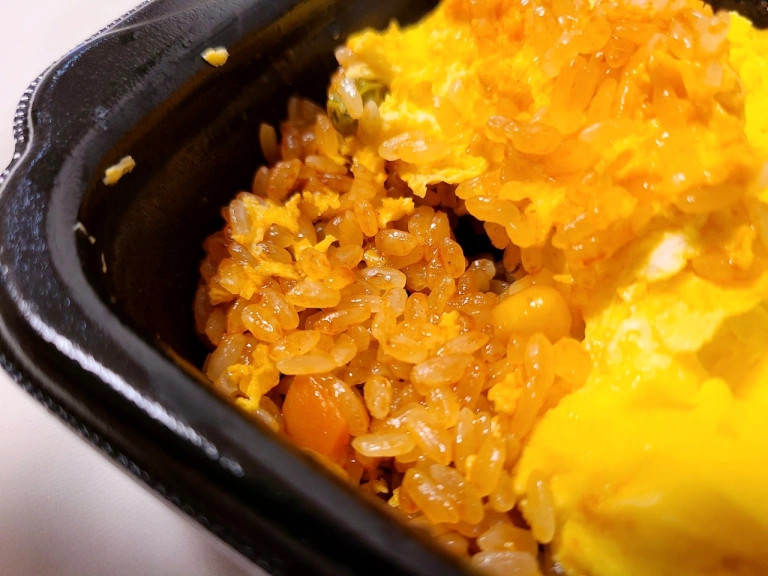
The most important thing for us was to check the rice. Contrary to our expectations, it was properly cooked, which was a relief. We had no idea how it cooked so quickly, so we took a gander at the website; apparently they use “microwaveable rice”.

Since the rice was cooked in the “omelet rice ingredients” sauce, it had soaked up a delightful ketchup flavor. It was soft, but not too soft, with well-defined grains, and we thought it was somehow even more delicious than microwavable rice packs.

With a decent amount of vegetables scattered throughout the rice, everything seemed comparable to a standard plate of omelet rice. Considering it was made in five minutes in the microwave, that’s honestly pretty exceptional.

However, we had yet to taste the crux of the recipe: the omelet. It was completely different from the type of omelet you would make in a frying pan. We wouldn’t say it was dry and tasteless, but it certainly was thoroughly cooked.

Those who like a well-cooked egg will likely enjoy this, but those who prefer their omurice omelets to be fluffy or even a little bit on the runny side will probably find this unacceptable. We, at least, wished we had cooked the eggs ourselves instead of putting them in the microwave.

Still, the fact that it was basically a proper omelet rice that was cooked in just five minutes, which was also piping hot all the way through when it was ready to eat, is quite impressive. Plus, you can eat it right out of the container it cooks in, so you can basically get by with just about no dishes to wash, which is pretty ideal.

If you’re not too picky about the way your omelet is cooked, and you want a quick, easy meal that’s no mess and no fuss, this is a great option. We guarantee that the raw rice will be done in those five minutes, so don’t worry about that part! And if you prefer big, fluffy omelets, you might also try using this handy device for microwaving eggs. If you can successfully combine the two microwave cooking devices, you’ve got yourself a winner!

Images © SoraNews24
● Want to hear about SoraNews24’s latest articles as soon as they’re published? Follow us on Facebook and Twitter!


Credit: