OxiClean officially sends detergent supply to Tokyo card shop struggling with sweaty, smelly otaku
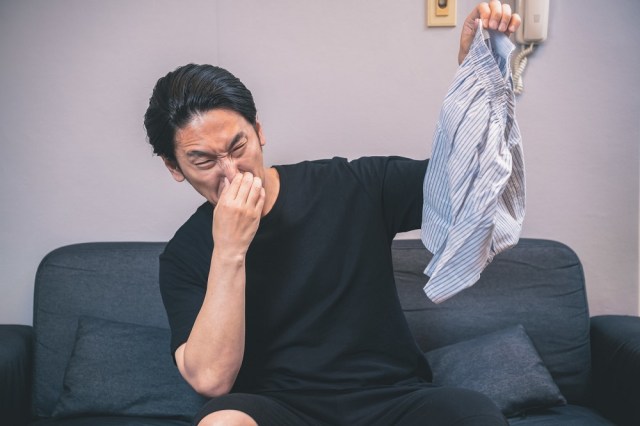
Even players who don’t go home with a tournament prize will go home with some OxiClean.

A lot of people in Japan will tell you that though spring ends in May, summer doesn’t really start until July. June, they’ll insist, is tsuyu, which translates to “the rainy season.”

Honestly, though, you might as well call June “the sweaty season,” since the high heat and maximum humidity combine for pinnacle of perspiration-producing conditions. Even now, the weather is gradually moving in that direction, which is causing figurative headaches and literal nose-lamentations for Cardland, a collectible trading card game specialty shop in Tokyo.

Cardland is located in the Akihabara neighborhood, Tokyo’s mecca for anime and video game enthusiasts, two demographics that aren’t traditionally renowned for their hygiene. In late May the shop sent out the above tweet, in which it says:

“A request from our shop.

The weather has become much hotter with the recent sudden jump in temperatures. With that, there’s been a small, but noticeable, increase in the number of customers coming to our shop in an unhygienic state.

We ask that customers thoroughly shower before coming to the shop and arrive in a clean state, especially when we are holding in-shop tournaments and many people will be sharing the same enclosed space for an extended period of time.”

Cardland also went on to inform prospective tournament participants that if their level of hygiene is judged to be a probable cause of discomfort for other players, they will not be allowed to participate.

However, bathing is only one aspect of proper hygienic grooming. Wearing freshly washed clothing is also important, and luckily about a week after Cardland’s request went viral, it received a care package from Graphico, the Japanese distributor of…

…OxiClean!

Inside the box were several stacks of sample packets of the world-famous laundry detergent. “We deeply appreciate this,” tweeted Cardland, who says they plan to give the samples to customers and tournament participants.

Online commenters have reacted with:

“This is the first step towards true peace in our world.”
“That’s some pretty smart marketing by OxiClean.”
“I’m envisioning OxiClean making special packaging designs with anime character on it.”
“They’d sell so much!”
“OxiClean really is very effective against accumulated proteins like sweat and body oil.”

Many, many others felt that their feeling could best be summed up with the word kusa, which means both “something stinks” and “this is funny.”

There is, unfortunately, no guarantee that Cardland customers who receive the OxiClean samples will use them. Still, anything that makes laundry less of a hassle makes it more likely to get done, and if nothing else the shop handing out detergent packs should be a pretty clear indicator of the consideration Cardland expects visitors to show before stepping through the door.

Related: Cardland
Source: Twitter/@cardland_akiba (1, 2) via Otakomu
Top image: Pakutaso
● Want to hear about SoraNews24’s latest articles as soon as they’re published? Follow us on Facebook and Twitter!


Credit:

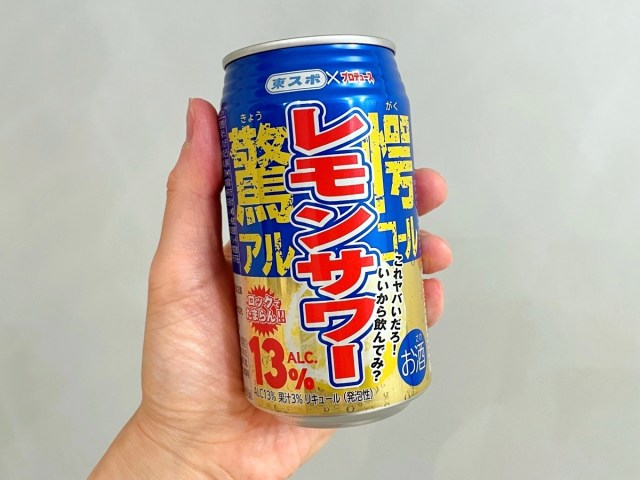
Japanese tabloid puts out Lemon Sour with 13 percent alcohol【Taste test】

Extra! Extra! Drink all about it!

Fruit-flavored canned cocktails have long enjoyed popularity in Japan, with the Strong Zero brand as the standard bearer for the high-alcohol, low-cost subsection of the alcopop market. But now we have an unexpected new contender in the alcopop market: Japanese news outlet Tokyo Sports or “Tospo” for short.

It isn’t exactly clear why a major tabloid decided to release Tospo Kyogaku Lemon Sour, but they did previously come out with Tospo Gyoza and Tospo Dynamite Organ Meat, so maybe this is just something to wash that all down with.

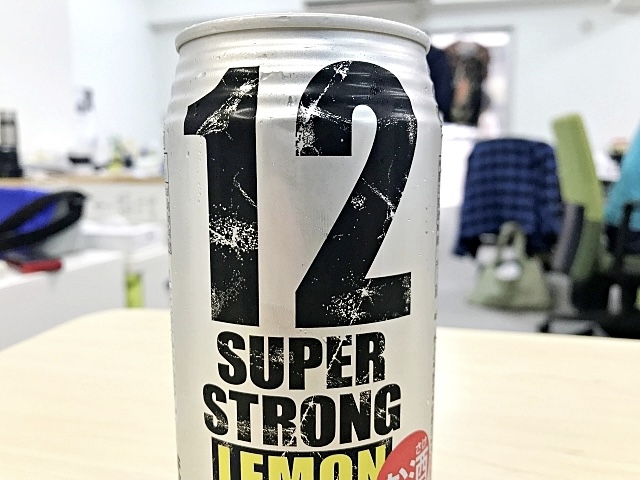
The brand of this drink isn’t the only remarkable thing either. Tospo Kyogoku Lemon Sour boasts and alcohol content of 13 percent, which might be a record for a drink of this kind in Japan. Our Japanese-language writer Ahiruneko, who often covers beverages, recalls the only other drink to come close was the Sangaria Super Strong 12 Lemon, which was sold at Lawson Poplar stores in 2018.

▼ Sangaria Super Strong 12 Lemon

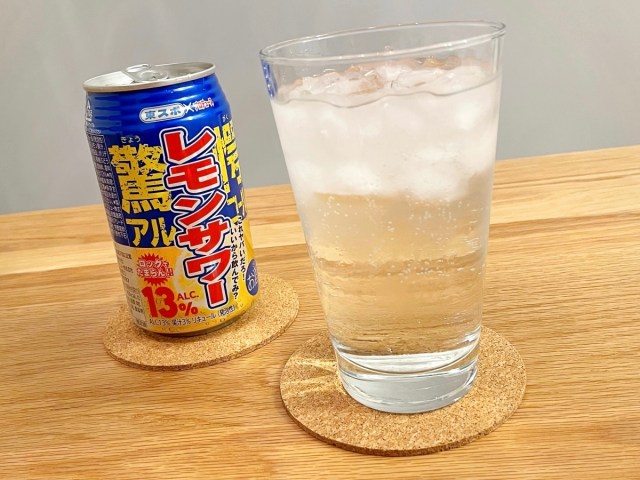
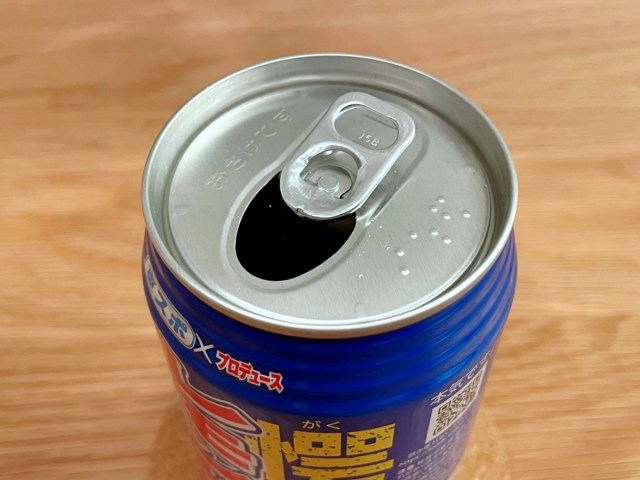
Most other canned lemon sours contain about five percent alcohol and even Strong Zero only goes up to nine percent. Tospo Kyogoku Lemon Sour is indeed on a whole other level, but its can read, “This is nuts! It’s all good though, so give it a try?” Ahiruneko decided to accept their offer and bought a can for 248 yen (US$1.76).

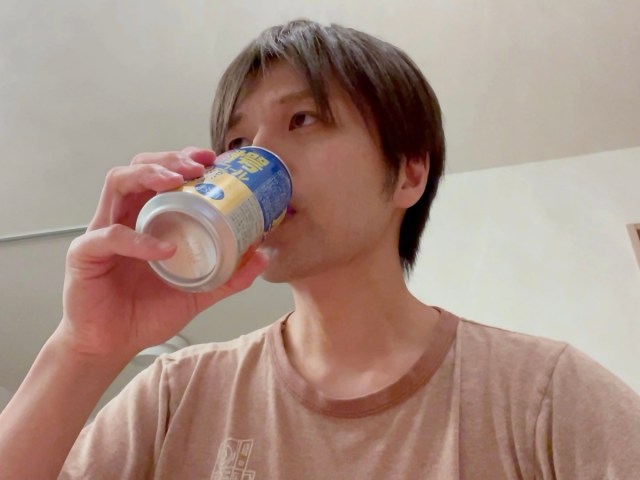
Although he often reviews alcoholic drinks, Ahiruneko doesn’t really fancy himself a hard drinker, so 13 percent was rather intimidating. Nevertheless, he cracked it open and took a swig.

▼ Ahiruneko: “Glug… glug…”

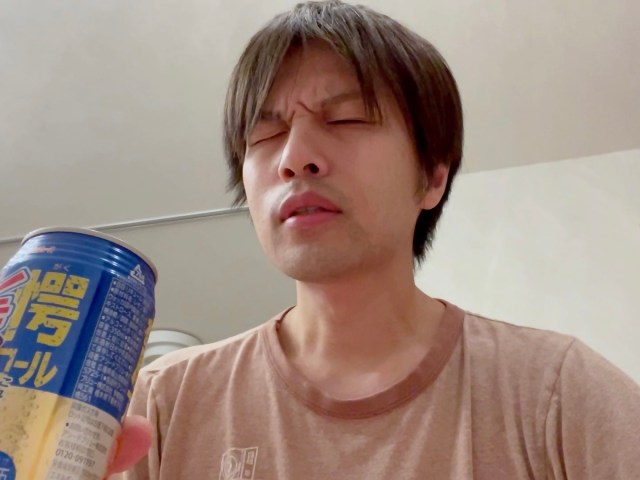
▼ Ahiruneko: “Ouch…”

In general, Japanese lemon sours have been leaning more towards the dryness of the vodka than the fruitiness of the lemon juice, but Tospo Kyogoku Lemon Sour pretty much just said to hell with sweetness altogether and smacked Ahiruneko in the face with a bitter sensation.

To say it packs a punch is putting it mildly, Ahiruneko felt it was more like a guy who’s constantly winding up to punch you just to see you flinch, but only actually takes a swing sometimes. In other words, it felt more like a constantly intimidating force than an occasional shot in the arm.

And it seems like Tospo Kyogoku Lemon Sour anticipated reactions like Ahiruneko’s because on the very verbose can they also wrote, “It’s irresistible on the rocks!” So, that’s just what he did.

Drinking it this way was far more palatable for our writer. However, after a few sips he started to realize that by watering it down, he was basically just drinking Strong Zero.

There’s wasn’t anything wrong with that, but it made him wonder what the point of this product is in the first place. He then thought that since the alcohol content of this drink was on the level of wine or sake, maybe it’s better enjoyed like those drinks instead.

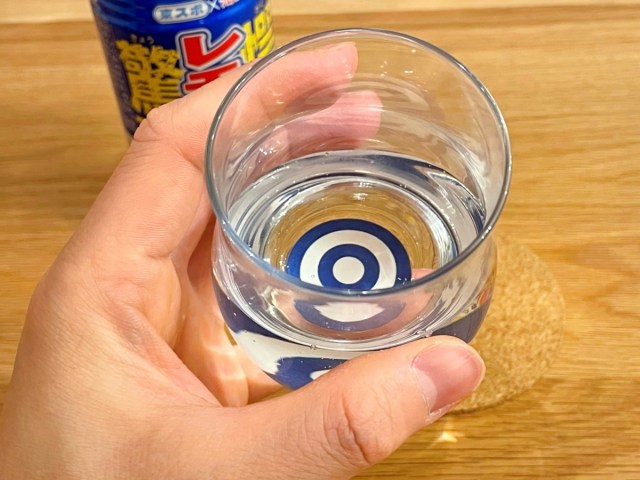
Pouring some into a sake glass proved to be a happy medium. Taking casual sips of Tospo Kyogoku Lemon Sour was far more enjoyable than chugging it from a can. It’s something to consider if you decide to try some yourself, but get some fast because while interesting, this probably isn’t the future of lemon sours in Japan.

Photos © SoraNews24
● Want to hear about SoraNews24’s latest articles as soon as they’re published? Follow us on Facebook and Twitter!


Credit:
Japanese convenience store ice cream solves plastic-vs.-wooden-spoon dilemma with edible spoons

Japan’s favorite convenience store for ice cream may have just invented the best way to eat it.

Going out to eat ice cream is one of those things in life that’s supposed to be a moment of pure joy. That good mood can be kind of spoiled, though, if you’re someone with both a sweet tooth and an eco-conscious mind who’s been given a plastic spoon to eat your ice cream with.

Wooden spoons are the more environmentally friendly utensil, but they present a different problem. They taste pretty gross if you happen to lick the material while trying to get every last bit of cream, and what’s the point of eating ice cream if it’s not going to taste good?

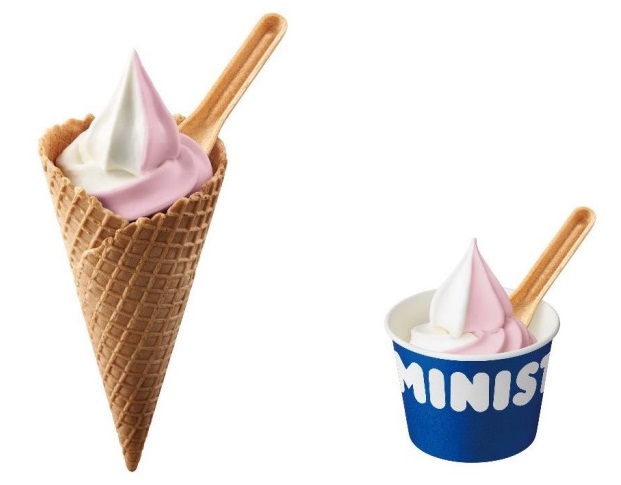
Faced with the dilemma of bad-for-the-planet plastic spoons and bad-for-your-taste buds wooden ones, it might seem like a no-win situation. Here with a solution that’s awesome in three different ways, though, is Japanese convenience store chain Ministop, who’s created an edible spoon.

Ministop introduced the edible spoons in spring of last year at select branches as part of a pilot test. The response was extremely positive, with over 90 percent of the 400 surveyed customers saying they thought the new utensils were good. Wanting to make them even better, though, Ministop took customer feedback into account, adjusting the shape and length of the edible spoon to make it even easier to eat with, and now the chain is ready to start supplying the edible spoon at all of its branches nationwide.

The most obvious benefit of the edible spoon is the reduced plastic waste, coupled with reduced carbon emissions from not needing to manufacture so many spoons in the first place. Customers also get a little more to snack on, since the spoon is, essentially, a wafer, and should taste pretty good with the accumulated ice cream that seeps into it as you eat. And last, not having a spoon left over when you’re done eating means less trash that you have to carry around with you until you can find one of Japan’s few-and-far between trash cans.

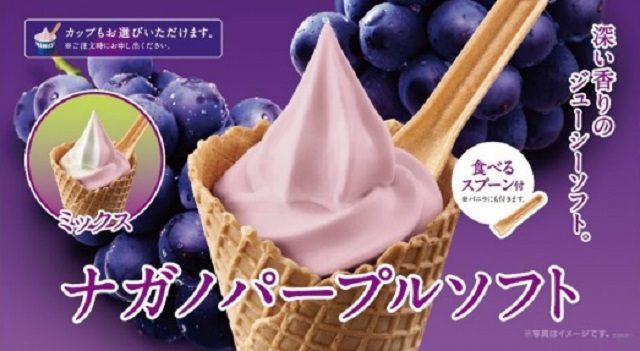
To really help the edible spoon make a splash, Ministop is rolling it out at the same time as a new ice flavor, Nagano Purple, based on the purple grapes grown in the mountainous prefecture of the same name.

Plastic spoons won’t be disappearing from Ministops entirely, though. Certain frozen treats that are served in extra-tall cups will still be served with plastic spoons, and the chain also advises customers with wheat or soy allergies to ask for a plastic spoon, as those ingredients are present in the edible ones. Still, the introduction of the edible spoon is a big step, especially since Ministop is widely considered to have the best-tasting ice cream among sweets fans in Japan.

The edible spoons are scheduled to start showing up in Ministop branches on June 9, and to be available at all branches no later than June 16.

Source: Ministop via Newscast via Hachima Kiko
Images: Ministop
● Want to hear about SoraNews24’s latest articles as soon as they’re published? Follow us on Facebook and Twitter!


Credit:
What it’s like to pray for concert tickets, money, and more at Tokyo’s specialty Fukutoku Shrine

Our reporter makes a long journey in the hope that some divine intervention will help her score tickets to her favorite idols’ concert this year.

In Japan, demand often surpasses the number of tickets available for many of the country’s most popular musical acts (think of Taylor Swift’s latest The Eras Tour in the U.S.). A common solution to ensure that everyone has an equal shot at scoring a seat is for tickets to be offered via a lottery-based system in which would-be attendees enter their names in the hope that they’ll be randomly selected.

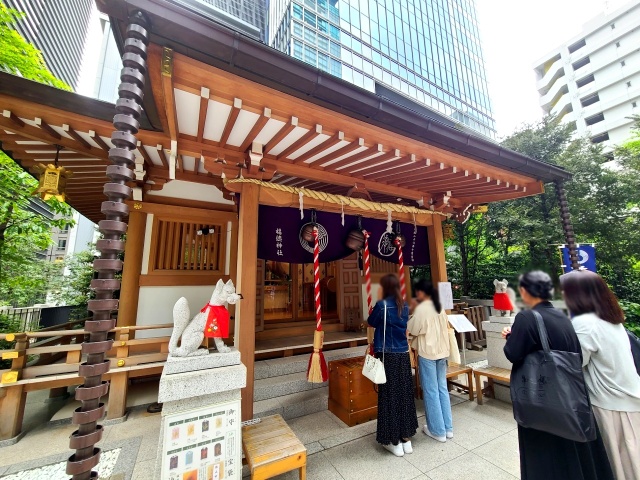
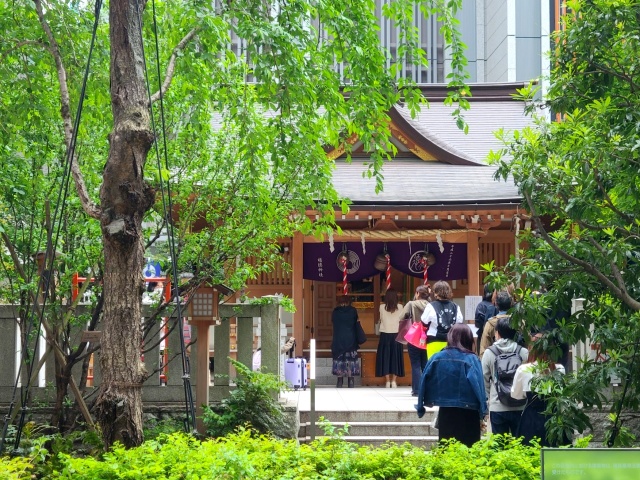
While that approach ensures fairness, it can also be an incredibly painful reason to miss out on your favorite shows. Our Japanese-language reporter Maro is someone who knows all too well the bitterness of not being selected in the lottery system when she didn’t win tickets to see her favorite idol group last year. Therefore, when the group recently announced a new nationwide tour, she was excited but also a little anxious. What if the same thing happened to her again and she missed out two years in a row? She decided that a little bit of extra luck wouldn’t hurt this time, so she traveled from her home in Shizuoka Prefecture all the way to Tokyo’s Nihonbashi district to ask for some divine oversight at Japan’s veritable “Idol Shrine.”

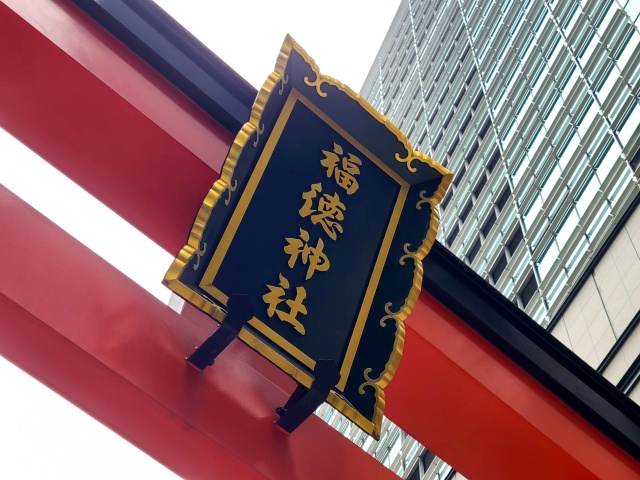
Fukutoku Jinja, originally founded around 865, is the actual name of this Shinto shrine known today as a power spot for praying to win the lottery, money, or concert tickets. As we’ve previously covered, it was one of the few shrines officially allowed to sell lottery tickets by the shogunate during the Edo period (1603-1867), and since then has become uniquely famous for anyone who wishes to win big.

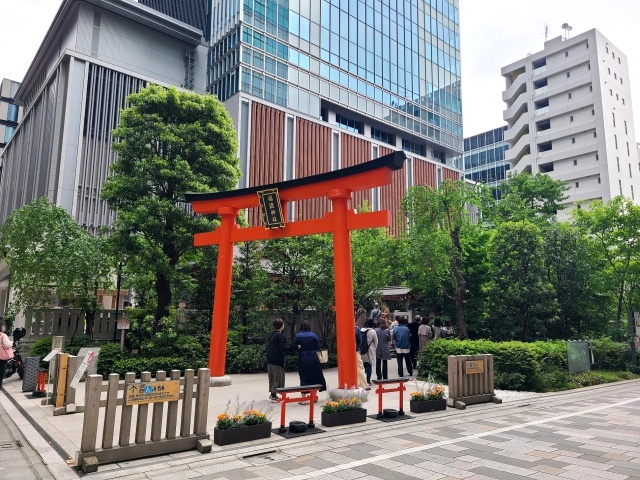
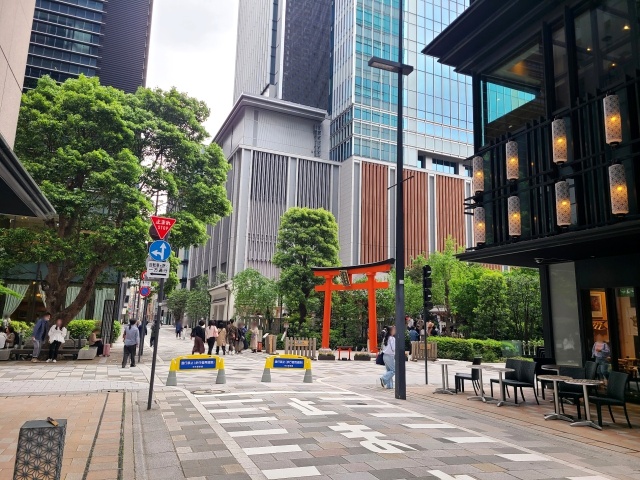
The shrine is located right in the middle of Tokyo’s swank Nihonbashi business district within an area surrounded by the Coredo Muromachi shopping complex. It seems like this little green oasis should feel very out of place among the surrounding tall office buildings, but there’s something about it that actually blends right in on the edge of a storefront outfitted in traditional architecture and lanterns that softly illuminate the ground at night. Regardless, its vermillion torii gate against the backdrop of modern buildings certainly seems to signal a threshold to another enchanted world.

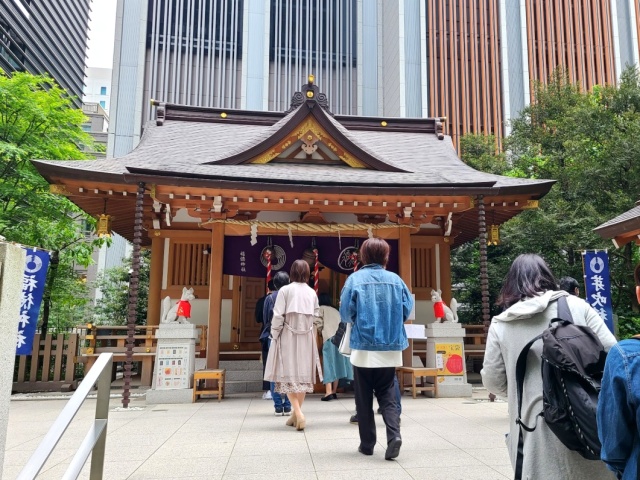
Maro visited on a Sunday when there was a considerable amount of visitors, but the line moved smoothly. While waiting for her turn in front of the main shrine, she gathered her thoughts about what exactly to say in her prayer to the enshrined kami here, Ukanomitama (associated with agriculture):

“Please let me score concert tickets.”
“An arena seat would be nice.”
“If possible, let me win tickets to multiple performance dates.”
“While I’m at it, it would be nice to win the lottery, too…”

She wondered if all of that was getting too greedy. After all, Ukanomitama must get tired of hearing these kinds of wishes all day long…

In any case, she successfully made her plea when it was her turn and then stepped over to the shrine counter on the side to purchase an omamori, or good-luck amulet, to take with her. Hopefully it would also strengthen her case.

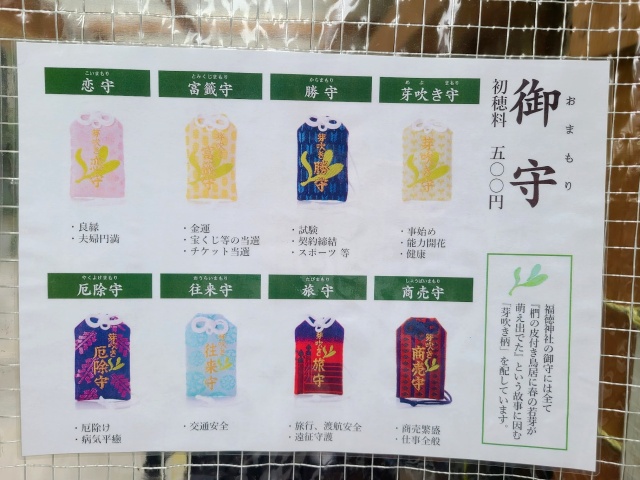
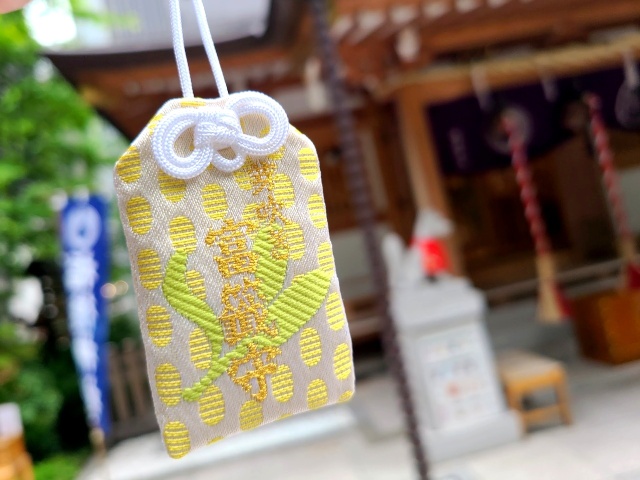
Fukutoku Shrine offers a variety of omamori for 500 yen (US$3.55) each, but she had her sights set on the particular gold-colored one called tomikuji-mamori (富籤守), which is specifically meant to grant good luck for winning the lottery, tickets, or other monetary endeavors.

▼ Tomikuji-mamori, second from the left in the top row

It was definitely a super popular one among the shrine visitors. She appreciated how it glittered in the sunlight.

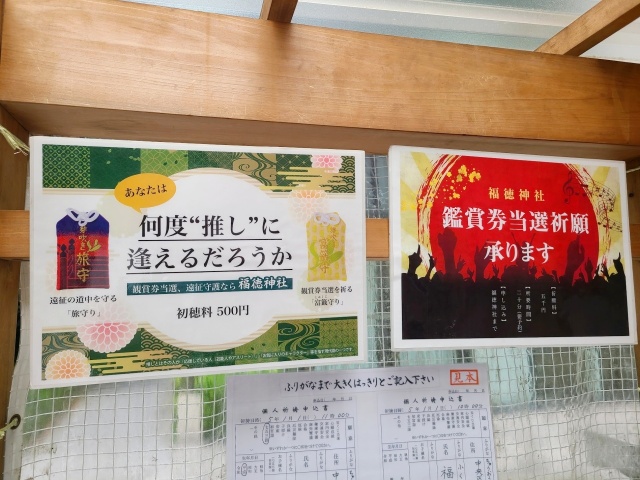
Another interesting service that the shrine offers is for the shrine workers to pray on someone’s behalf for them to win whatever they’re seeking. A prior reservation is required, so Maro gave up on it on this particular day. Depending on how her ticket lottery results turn out this year, however, she would definitely keep it in mind for the future.

At this point Maro’s prayer is out of her hands and in the care of the kami, and there’s nothing she can do but wait until the lottery results are announced. She hopes that her wishes will come true this year as a result of her extra efforts.

I’ve just entered the lottery for Ayumi Hamasaki’s 25th anniversary tour concert tickets myself in the past week, so I’ll certainly be holding on tightly to my own tomikuji-mamori that I purchased last year at Fukutoku Shrine. In the worse case scenario that I don’t score them, at least I can console myself by listening to one of her earliest hits that will be playing nonstop at McDonald’s this season.

Shrine information
Fukutoku Jinja Mebuki Inari / 福徳神社 芽吹稲荷
Address: Tokyo-to, Chuo-ku, Nihonbashi Muromachi 2-4-14
東京都中央区日本橋室町 2-4-14
Website

All images © SoraNews24
● Want to hear about SoraNews24’s latest articles as soon as they’re published? Follow us on Facebook and Twitter!


Credit:
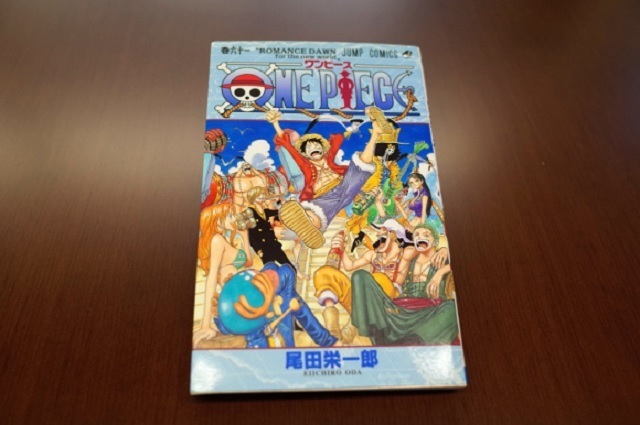
Fans in Japan don’t sound happy with Netflix’s One Piece live-action changes to the Going Merry

Photo of the Straw Hat Pirates’ ship has some fans wanting to burn it ASAP.

One Piece definitely doesn’t seem like the easiest anime/manga to adapt into live-action. It’s an epic seafaring story filled with fantastical locations, giant-sized villains, and zany superpowers, all rendered in an intentionally strange-looking art style.

And yet, Netflix is going to try it anyway, with its live-action One Piece series scheduled to premiere sometime later this year. The streaming giant has doled out precious few previews of what the series is going to look like, with only two in-costume pictures of the cast so far, both with them facing away from the camera and silhouetted by the sun.

So it’s a big development that Netflix has finally released one smile-for-the-camera photo for the live-action…but it’s not a smile a lot of fans in Japan sound very happy to see.

That’s the live-action One Piece’s Going Merry, proud ship of protagonist Luffy and his crew of Straw Hat Pirates. Except, as preexisting fans of the franchise have been pointing out, the sheep figurehead, carved into the ship’s bow, looks a lot cuter in the anime, and a lot more unsettling in the Netflix version.

The Japanese-language official One Piece Twitter account’s tweet doesn’t allow for comments, but the same photo of the Netflix Going Merry, when tweeted by Famitsu (Japan’s most prominent video gaming magazine), prompted comments such as:

“That’s kinda scary, isn’t it?”
“It’s way too scary.”
“Kill me…please…with fire…”
“Definitely gotta burn that.”
“That aint the Going Merry. It’s the Going Baphomet.”
“Do they think One Piece is a horror series or something?”
“I think the designers got the project mixed up with a live-action Berserk.”
“Those dead eyes…”
“It looks like a sheep that was suddenly petrified.”
“There was absolutely no need to screw with the Going Merry’s design like this.”
“All Netflix ever does is screw things up.”
“No desire to stay loyal to the source material, huh?”
“’It’s the live-action Wa Piece!’”
“This looks like it’s going to be on the same high level as the live-action Dragon Ball.”

It’s really pretty startling how just a few changes can have such a big impact on the impression the design gives off. In the anime/manga, the Going Merry’s figurehead has black pupils, a closed mouth, and no external ears. The Netflix version, though, has solid gray circles for its eyes, and the angles of its stuck-out-to-the-sides ears and open maw with an inky blackness inside make it look like it’s lunging at you to swallow you whole, or at least suck out your soul.

Perhaps making the changes even more startling for some Japanese fans is the fact that there used to be a real-world Going Merry that ferried passengers around Tokyo Bay. Pictured above, its figurehead was pretty much an exact match to the anime/manga version.

Of course, with Netflix still not having released any trailer for its One Piece, we’re all still unsure of what tone it’s going to have, and its possible the Tokyo Bay ferry’s design would have looked too cutesy for what Netflix is aiming for. It could also be that directly from the front is just the live-action Going Merry’s bad angle, as an image with a more offset perspective that Netflix released back in February didn’t provoke nearly as negative a reaction.

▼ Though that might have been because the glare of the sun here makes the ear sort of blend in with the horn and partially obscures the flat gray eye.

Luckily for Netflix, at the end of the day how the Going Merry looks probably isn’t going to be what sways people’s watch/don’t watch decision for the live-action One Piece. Making what appear to be changes just for the sake of making changes, though, isn’t exactly going to give the series smooth sailing with existing fans, though.

Source: Twitter/@Eiichiro_Staff, Twitter/@famitsu
Top image ©SoraNews24
● Want to hear about SoraNews24’s latest articles as soon as they’re published? Follow us on Facebook and Twitter!


Credit:
AI-generated swimsuit/lingerie model makes debut in Japan’s Weekly Playboy magazine【Photos】

“Even if she doesn’t actually exist, the love for her that sprouts in your heart is real.”

“Ai” is a pretty common name for models in Japan, and not just because it’s short and easy to remember. In addition to being a woman’s name, ai is also the Japanese word for “love,” so the flowery, feminine feeling it conjures up is one more way to catch the attention and affection of prospective fans.

For example, here’s Ai Satsuki, the newest model being promoted by Japanese publisher Shueisha.

But while Ai’s name was given to her by Shueisha, the publisher didn’t make that decision just because they hope people will fall in love with her, but because her images are generated by AI. Ai made her professional debut this Monday, appearing in the latest issue of Shueisha’s Weekly Playboy magazine. A separate entity from the American Playboy magazine), Weekly Playboy is best known for its gravure photo spreads focusing on models in swimsuits, lingerie, and other revealing outfits,

▼ In its announcement tweet, Weekly Playboy describes Ai as being “stuffed full of men’s ideals” and asserts that “Even if she doesn’t actually exist, the love for her that sprouts in your heart is real.”

Despite not having a physical form, Ai is officially listed as being 157 centimeters (61,8 inches) tall, as well as being born in Tokyo and enjoying playing video games as a hobby. Along with her appearance in this week’s Weekly Playboy, Shueisha has also released 50-page digital image album for Ai titled Umaretate (“Just Born”), featuring images not included in her Weekly Playboy spread, through its Weekly Playboy Gravure Japan website here.

“AI gravure models? What do you think?” asked Weekly Playboy in its tweet, prompting responses including:

“No scandals. No scheduling problems. No talent agency problems. No appearance fees. Sounds good.”
“I want Weekly Playboy to photograph real people.”
“Eventually, I think people will come around to appreciating AI gravure models.”
“She’s cute!”
“I hope this is a one-time thing, and doesn’t take page space away from real gravure models.”
“When are we going to see an Ai Satsuki video?”
“She’s cute! Following her account and going to keep an eye on what she does next.”
“If you put out a physical copy of her photo album, I’m buying it.”
“Things are going to get tougher for 3-D women.”
“AI gravure photos are beautiful, but I prefer real ones. Actual idols have daily lives and life experiences, and I think that’s what makes fans really feel attached to them and want to help them succeed.”

The last comment touches on a characteristic point of gravure idol marketing in Japan: the idea that by purchasing merchandise, attending paid-ticket meet-and-greet events, and otherwise financially supporting their favorite idol, fans are actively supporting her professional aspirations. That unique sense of satisfaction plays a big part in cultivating high-spending superfans, and whether or not a photo-realistic but AI-generated model can form the same emotional connection may be the determining factor in whether or not Shueisha, and other publishers too, press forward with AI gravure models.

Source: Weekly Playboy Gravure Japan (1, 2), Twitter/@shupure
Top image: Weekly Playboy Gravure Japan
● Want to hear about SoraNews24’s latest articles as soon as they’re published? Follow us on Facebook and Twitter!


Credit:
Curry house CoCo Ichibanya has 1,247 branches in Japan, but only one has this special topping

Tokyo’s biggest student town has a special CoCo Ichi menu item all its own.

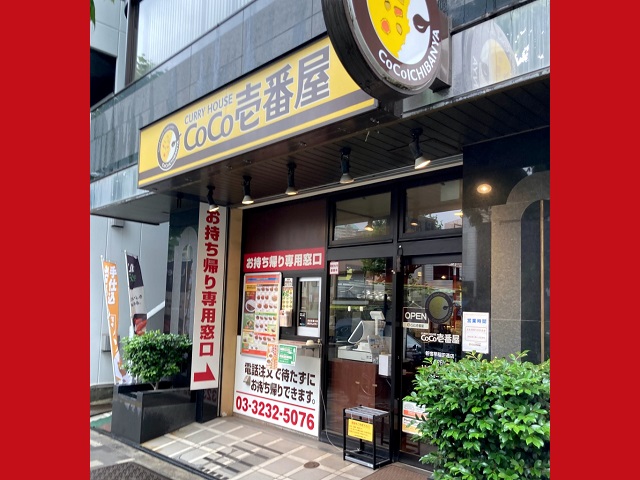
Curry rice restaurant chain CoCo Ichibanya has hundreds of branches in Japan, but one of the best-loved is the one on Waseda-dori in Tokyo’s Shinjuku Ward. The nearby neighborhoods of Waseda and Takadanobaba are home to multiple university campuses, specialty schools, and language academies, and with curry rice being an affordable, delicious, and filling meal, you can always count on a steady flow of students popping into CoCo Ichi for lunch or dinner.

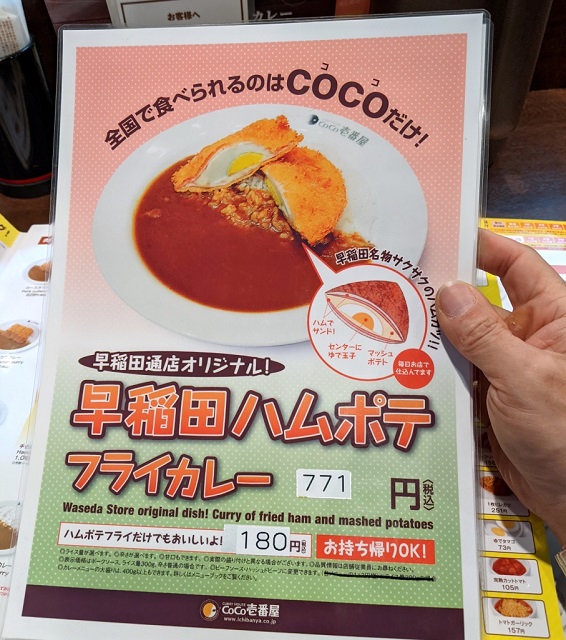
Even if you’re not attending classes in the area, though, there’s still a compelling reason to go to the Waseda CoCo Ichi for your curry fix: out of the 1,247 CoCo Ichi branches in Japan, there’s a special type of curry that’s only served at Waseda’s.

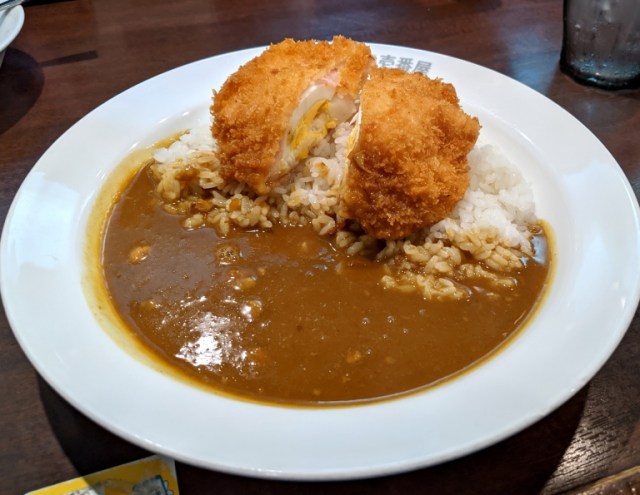
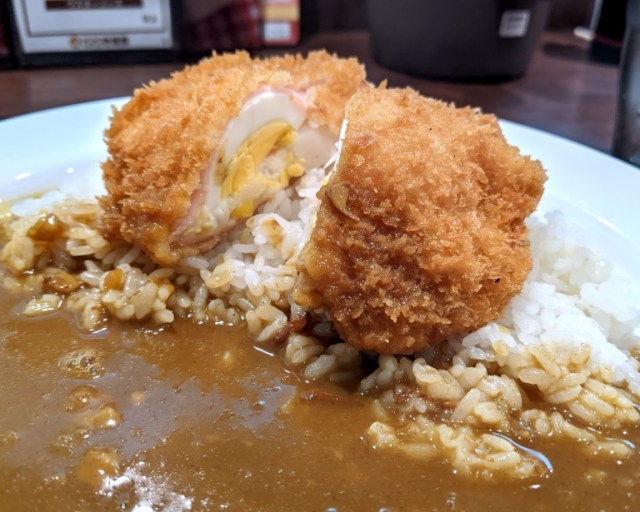
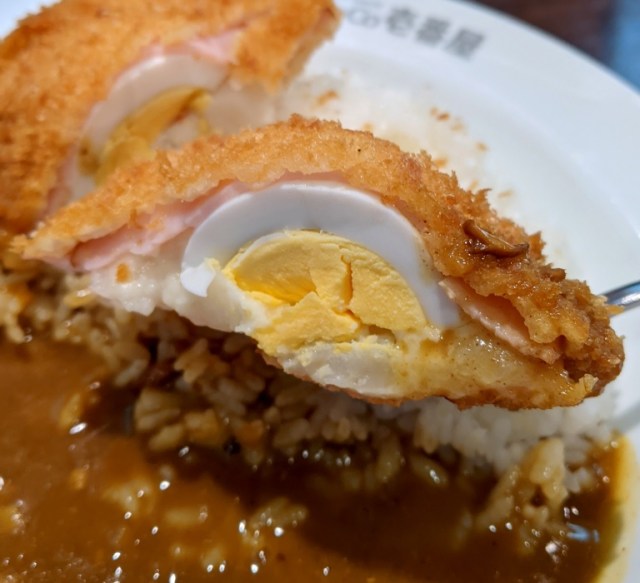
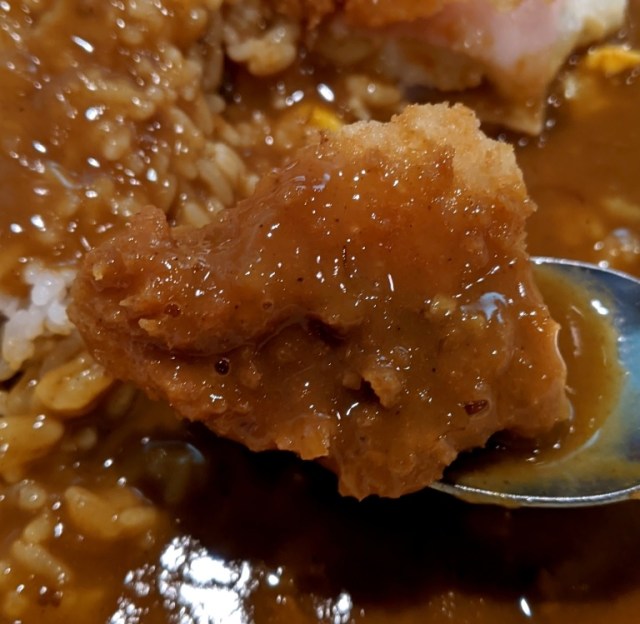
It’s called the Waseda Fried Ham and Mashed Potato Curry, or the Waseda Hamupotefurai Curry if you’re ordering in Japanese. Topping your plate of rice and CoCo Ichi’s familiar pork curry roux is a fried disc with a boiled egg at the center. The egg is encased in mashed potato, which is then wrapped in ham and deep-fried.

At 771 yen (US$5.70), the Waseda Hamupotefurai is as affordable as it is tempting, and so we quickly ordered a plate. One we had it in front of us, we were happy to see that our hamupotefurai (as we’re going to call the croquette-like topping) was even thicker than the one in the menu photo.

Also, since the hamupotefurai is exclusive to the Waseda CoCo Ichi, they make them right there in the kitchen, not as a central processing plant for the chain.

We took a bite, and it was wonderful, with the crispness of the breading giving way to the softer inside, curry seeping into the potato and egg and infusing them both with the spicy, savory, and sweet notes that make Japanese curry so giddily delicious. Add in the meaty flavor from the ham, and you couldn’t ask for any singular more satisfying mouthful than this.

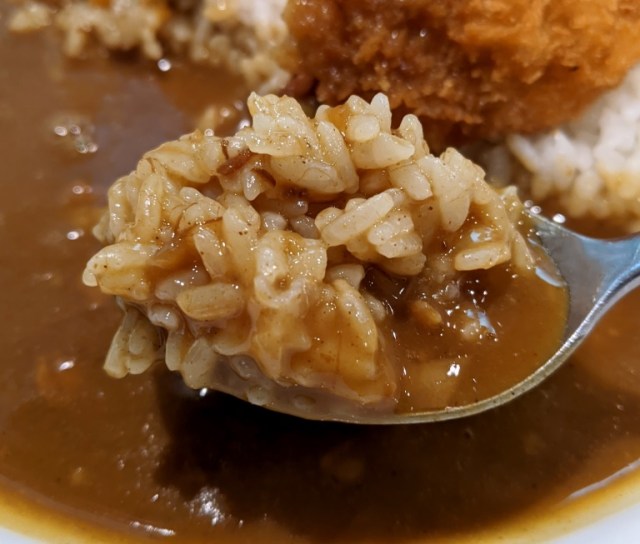
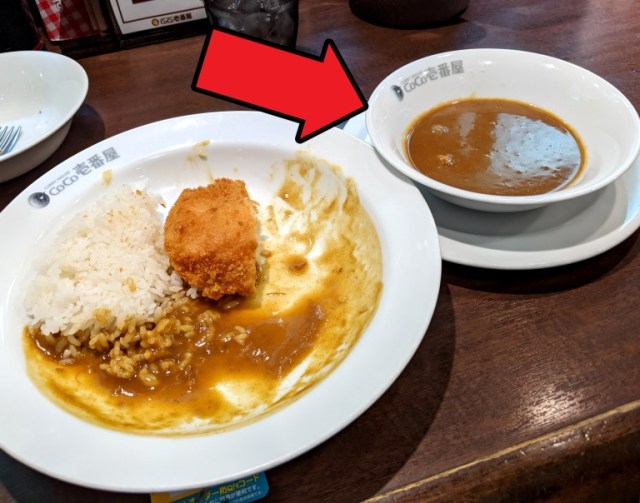
There’s one thing to watch out for, though. The hamupotefurai goes so well with the curry roux that you might momentarily forget about the rice. This can through off your pacing, causing you to alternate between hamupotefurai and roux but leaving the rice out of the rotation, so that your run out of roux while you’ve still got rice remaining. So we were happy to learn that CoCo Ichi will give you a refill of roux at a reduce price (145 yen).

Thanks to this supplementary curry supply, we were back in business, and even with our complete lack of restraint, we had plenty of roux all the way through to our very last bite.

Another hospitable offer from CoCo Ichi is that you can order the hamupotefurai croquette by itself, to-go, for 180 yen, from the window next to the restaurant’s entrance. So whether you want extra curry like us, or even no curry at all, the Waseda CoCo Ichi is definitely worth going to next time you’re hungry.

Restaurant information
CoCo Ichibanya (Shinjuku Waseda-dori branch) / CoCo壱番屋(新宿早稲田通り店)
Address: Tokyo-to, Shinjuku-ku, Nishi Waseda 2-18-23
東京都新宿区西早稲田二丁目18-23
Open 11 a.m.-10 p.m.
Website

Photos ©SoraNews24
● Want to hear about SoraNews24’s latest articles as soon as they’re published? Follow us on Facebook and Twitter!


Credit: