Creating an open-air hot spring bath (without a hot spring) at our cheap Japanese country house【Vids】

Thanks to the power of friendship, it’s outdoor bath time at the SoraHouse!

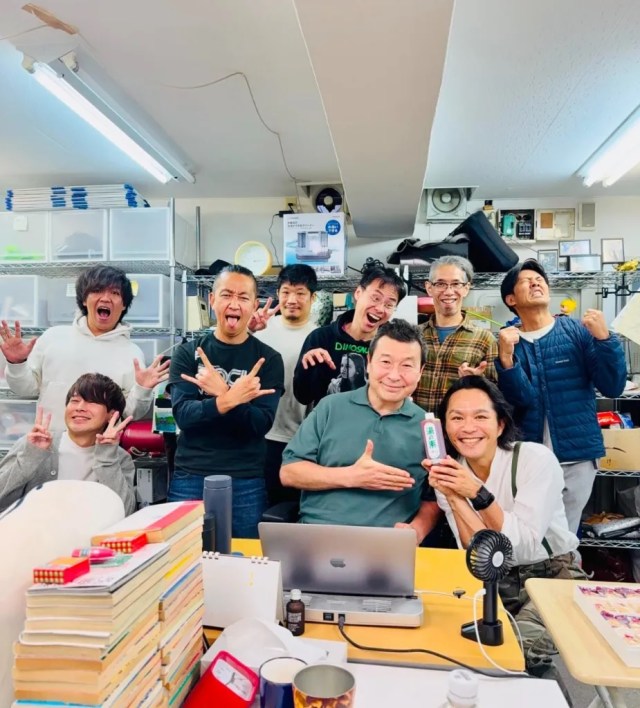
With things slowing down as Japan eases into the New Year’s vacation period, we figured it was time to head up into the mountains and spend a relaxing day at the SoraHouse, the countryside home in Saitama Prefecture that we bought for just one million yen (US$9,100 at the time of purchase). However, New Year’s is also when temperatures start to dip into serious winter-cold levels, which is where our good friend Butch, a.k.a. Big Wave, comes in.

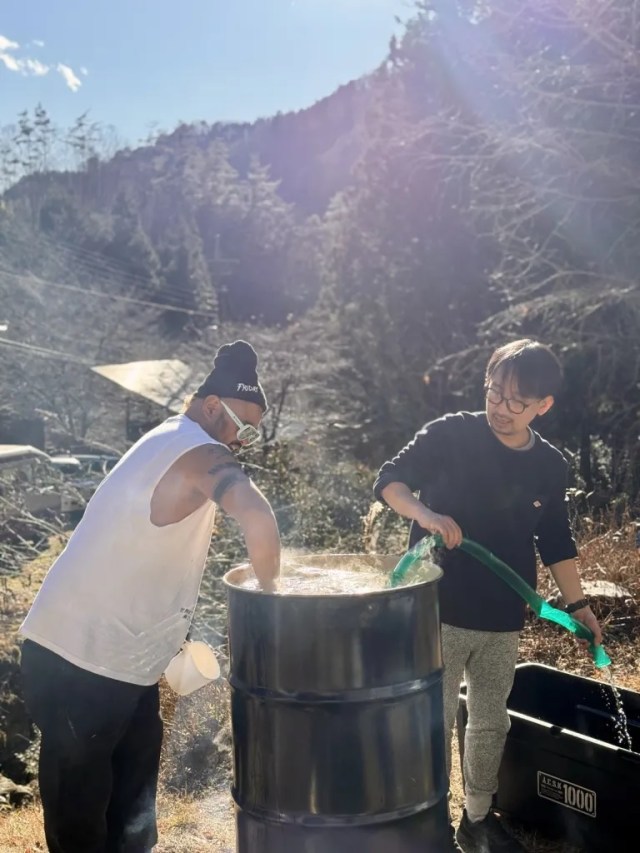
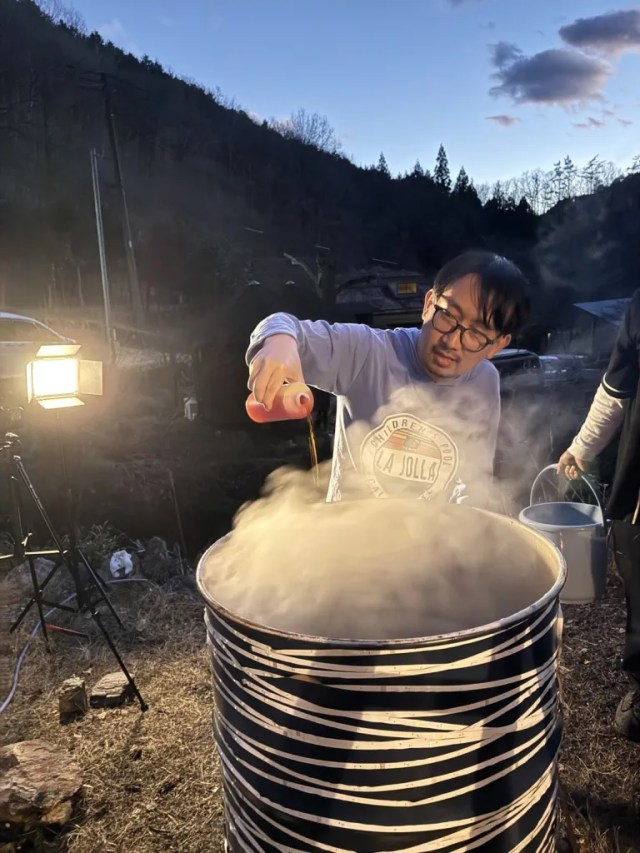
See, Butch knows that our boss, Yoshio, is a huge fan of long, hot baths, especially outdoor hot spring baths. Unfortunately, for all the cool stuff we’ve discovered on the SoraHouse property, an underground hot spring source isn’t one of them, but when Butch came to visit, he was happy to share his knowledge with of how to make a “drum bath” out of an empty oil drum-style container.

▼ The first part of the process (note that like Butch/Big Wave, the SoraHouse has two names, the other being Rocket-sou)

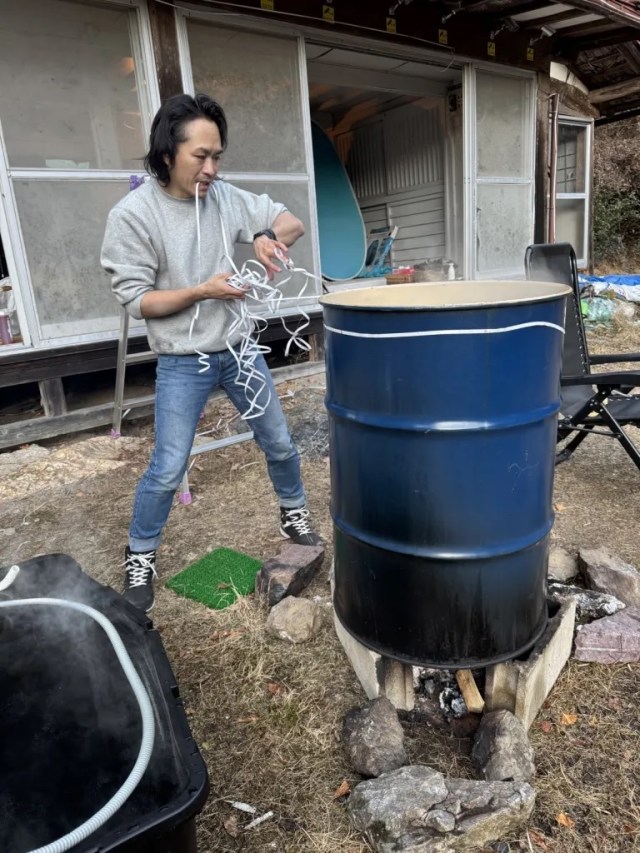
▼ The second part of the process

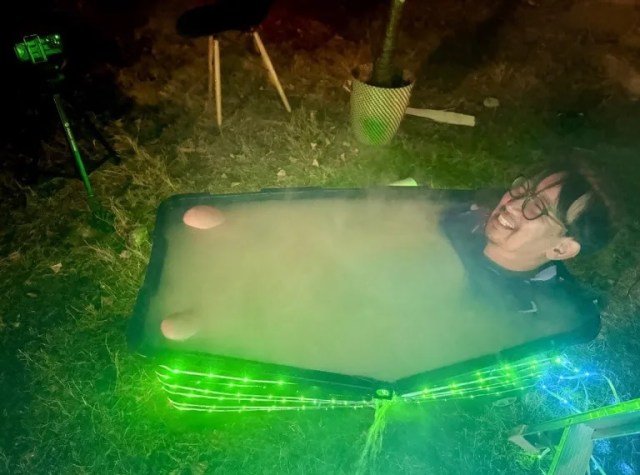
For all of its rustic charm though, there is a drawback to the drum bath set up, in that only one person can use it at a time. Instead of being left out in the cold while the boss bathed, though, our Japanese language-reporter Go Hatori, who was also part of this expedition to the SoraHouse, decided to once again rig up our ice chest bath that we developed last year.

▼ And yes, as linguists we appreciate the irony of using an ice chest to hold piping hot bathwater.

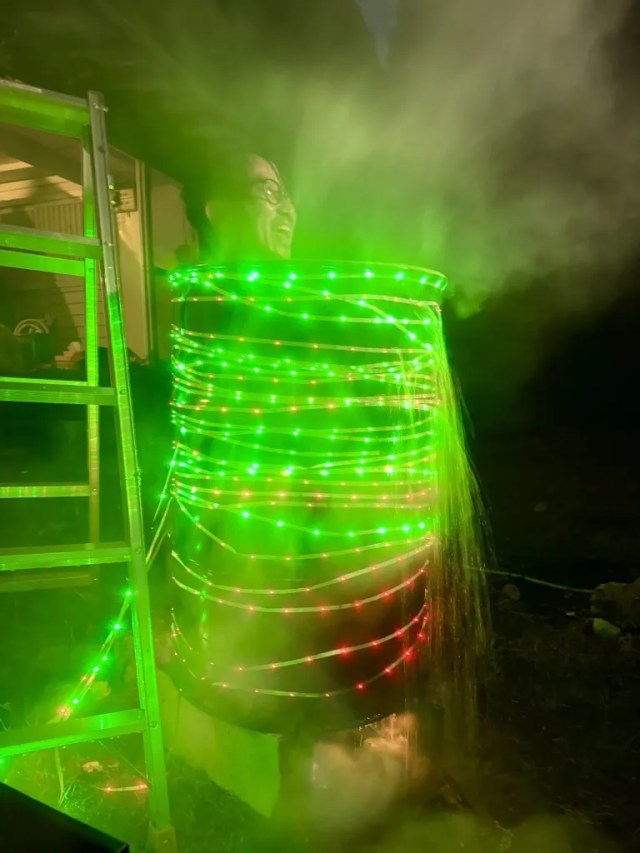
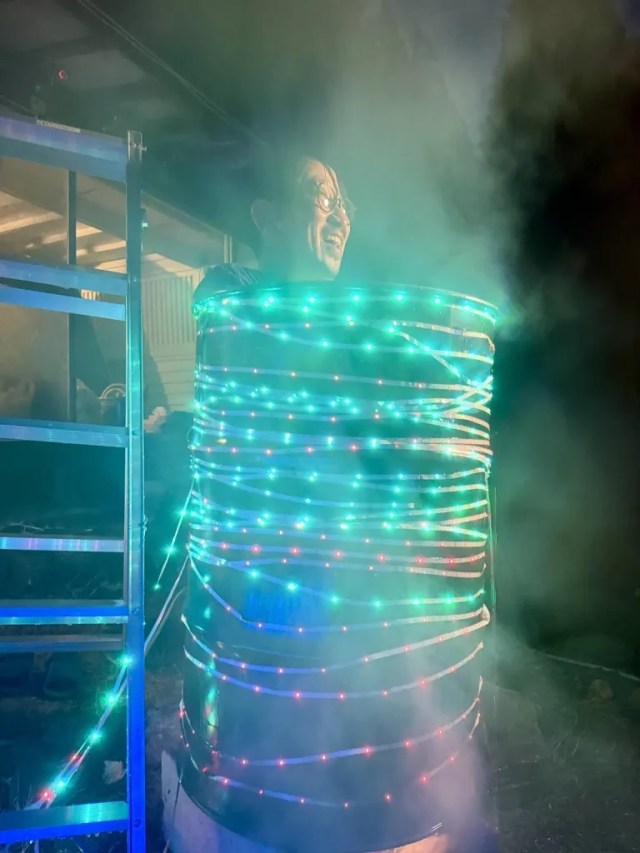
As the water was heating up and we were catching up with Butch, the conversation turned to the time we turned the SoraHouse into a “gaming house” covered in LED lights. We actually still have a lot of them at the place, so Butch suggested “Hey, wouldn’t it look cool to use them to light up the baths?”

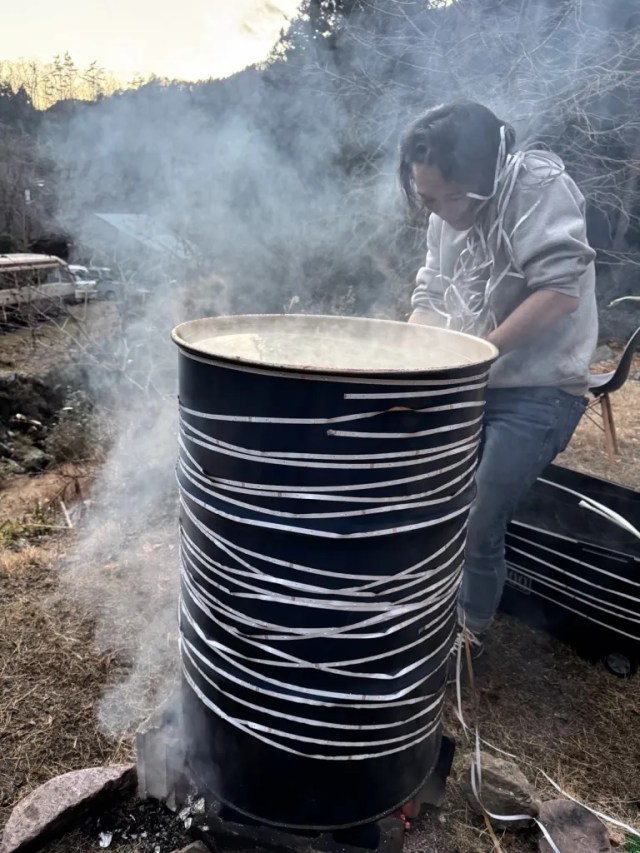
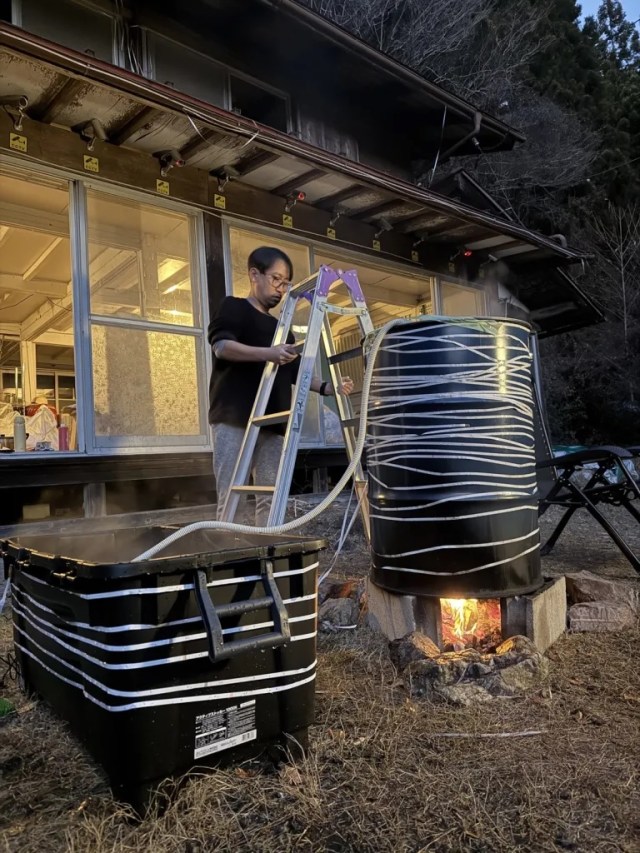
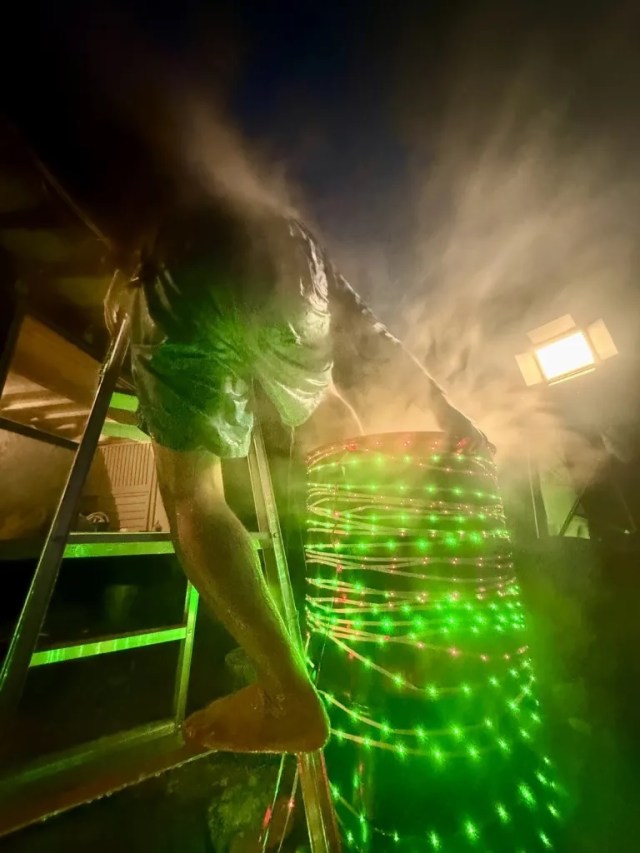
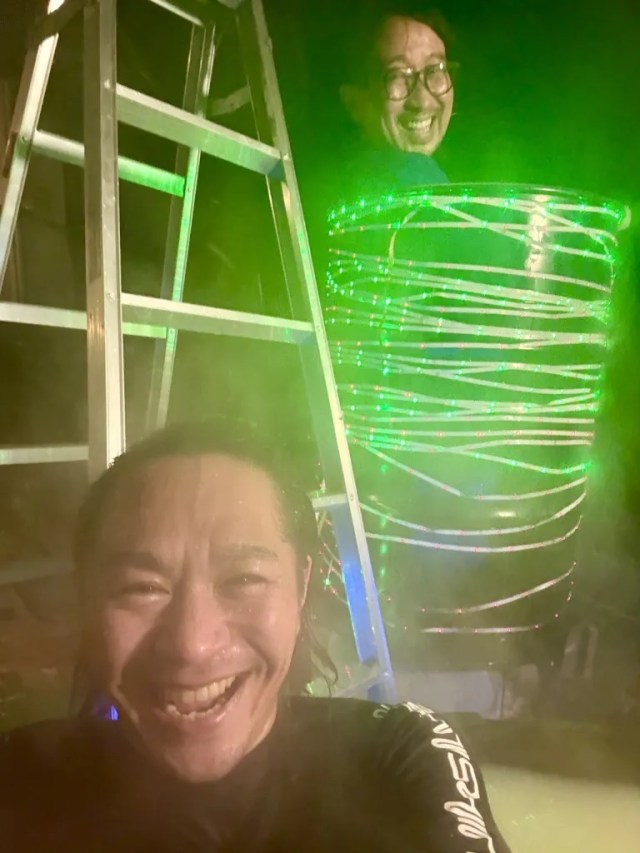
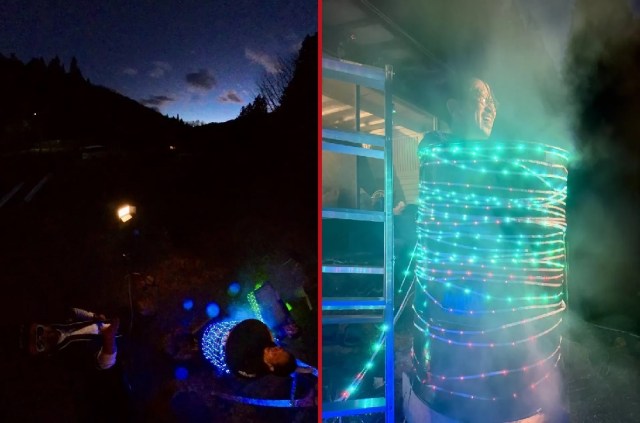
So Go got to work, grabbing spools of the adhesive-backed strands of LED lights and wrapping them around our two “tubs.” With the sun starting to go down it was now freezing cold out, and Go’s muscles were already tired from other work he’d been doing around the house earlier in the day, but he soldiered on, determined to have the lights ready to turn on by the time night fell.

▼ Please remember, though, that it’s extremely important to make sure that any electrical equipment near water is properly secured and positioned to prevent it from falling into the tub.

Since Butch’s drum bath construction method involves building a fire underneath the drum, the rim ends up being pretty high, higher than we were going to be able to just step into. We’ve always got one renovation project or another going on at the SoraHouse, though (provided you’ve got a loose definition of “renovation”), though, so this problem was easily solved by simply setting up one of our ladders.

Ah, but wait, we said what Yoshio was in the mooc for wasn’t just an outdoor bath, but an outdoor hot spring bath, right? With no hot spring source from below to draw on, we were going to have to take a top-down approach, and so Yoshio pulled out…

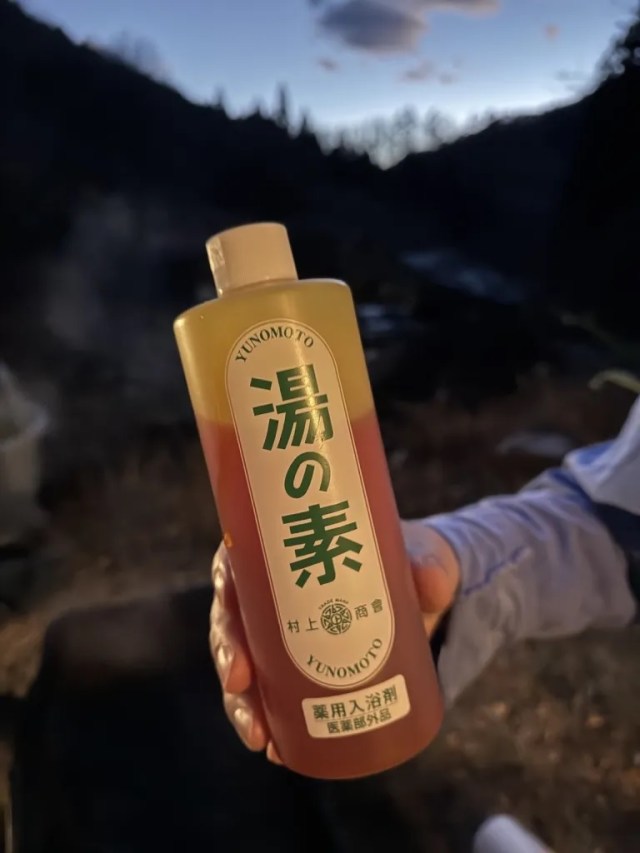
a bottle of yunomoto. Also called onsenmoto, yunomoto is essentially a hot spring base mix, containing the combination of minerals you’d find in the water of a naturally occurring hot spring. This yunomoto, produced by Murakami Shokai in Oita Prefecture, replicates the mineral mix found in the Oita town of Beppu, one of Japan’s top hot spring meccas. It also comes personally recommended by Professor Bath, the hot spring researcher who’s visited more than 2,000 hot springs, and who presented us with the bottle when he gave us his list of the eight most unforgettable hot springs in Japan.

▼ If Professor Bath hasn’t gifted you a bottle, it can also be purchased online.

As soon as Yoshio started pouring in the yunomoto, the water in the bath started to turn a milky white, and the unmistakable sulfurous sent of an onsen began bubbling up with the steam rising off the surface.

And with that, it was time to switch on the lights!

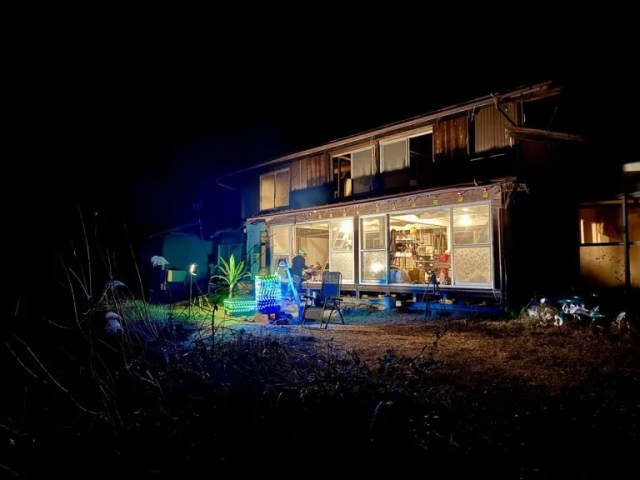
Being located on a rural mountainside, things get very dark around the SoraHouse after sundown. The shadowy surroundings made the pulsing LED lights all the more vibrant.

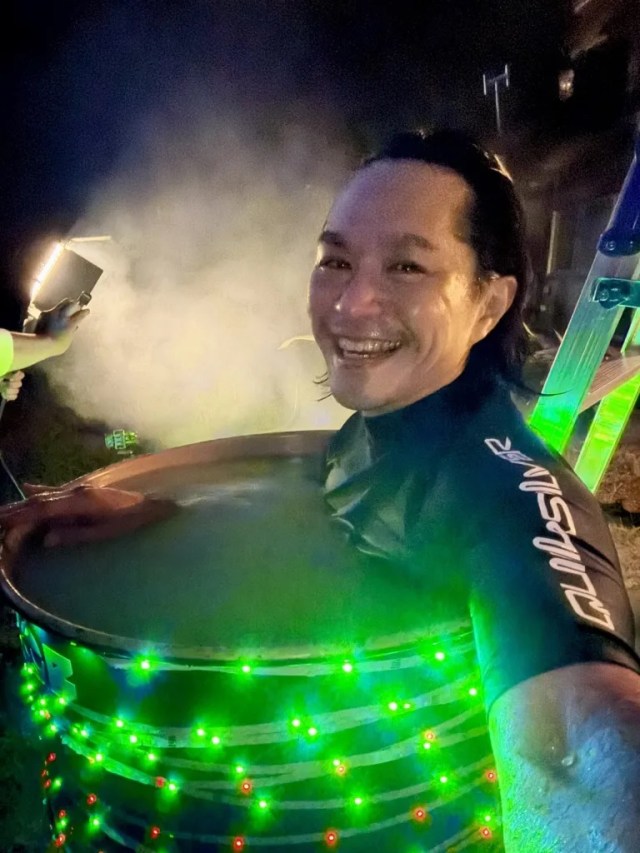
Now all that was left to do was hop in! Ordinarily, for hot spring bathing in Japan you’re supposed to be naked, but since the SoraHouse facilities don’t currently include a changing room of any sort, Yoshio and Go didn’t strip down entirely, but the baths still felt incredible.

As they soaked in their respective spaces, they felt the fatigue of a busy day, and, truth be told, a busy year, start to melt away.

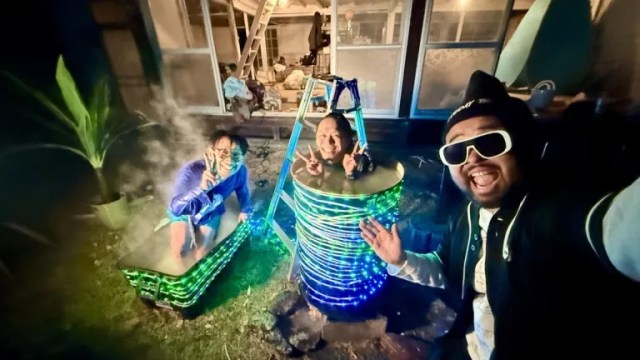
They also found a uniquely appealing combination of contrasts to an outdoor hot spring bath in a flashing LED light tub, part tranquil relaxing, part pumped-up excitement. And when they leaned back and looked at the sky…

…they were treated to another beautiful combo of the last rays of the sun sliding away and the stars starting to shine for the night.

Generous guy that he is, Yoshio didn’t want to hog the SoraHouse’s fancy new drum bath, so after a while he and Go then swapped places.

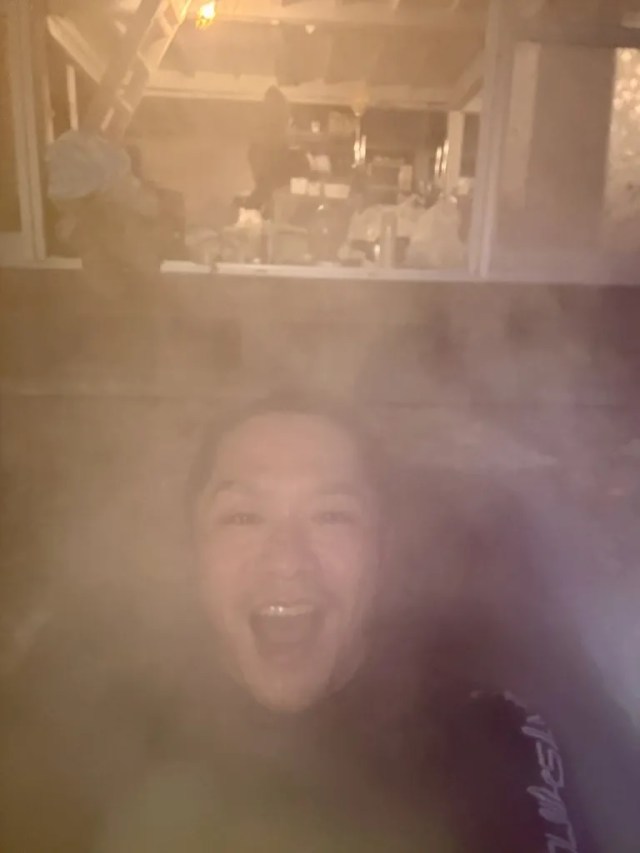
Already a drum bathing veteran, Butch declined to take a soak, instead opting to stay on selfie duty.

It may not have been fancy, but it was a lot of fun, and we hope that wherever and however you’re spending New Year’s, it’s as filled with warmth and laughter as our baths were.

Photos ©SoraNews24
● Want to hear about SoraNews24’s latest articles as soon as they’re published? Follow us on Facebook and Twitter!


Credit:

Akihabara curry restaurant declaring bankruptcy after 50 years in Tokyo’s otaku neighborhood

Goodbye, Bengal.

For all its focus on the newest anime and latest electronics, Tokyo’s Akihabara neighborhood also has a lot of local history. Sadly, a tasty piece of that history is disappearing, with the news that an Akihabara curry restaurant that’s been in business for 50 years will be filing for bankruptcy.

Bengal was officially founded in 1973 and started serving customers at its Akihabara curry restaurant in 1974, while also operating as a spice wholesaler. It was in business for so long that eventually the owners of the building that Bengal was a tenant in decided to demolish the structure, so Bengal ended up relocating to another location in the neighborhood.

▼ Bengal’s original (left) and new (right) locations

▼ A video taken at Bengal’s original location showing its interior, food, and happy customers

However, things haven’t gone well for Bengal since the move. The new location is larger than the old one, and with that came higher rent, as well as higher labor costs as the restaurant expanded its staff post-move. Then came the pandemic, which hit Bengal hard. Though the company’s restaurant sales have been slowly recovering, the rebound hasn’t been swift or substantial enough to offset the company’s losses, and its spice wholesale business hasn’t bounced back in any significant way.

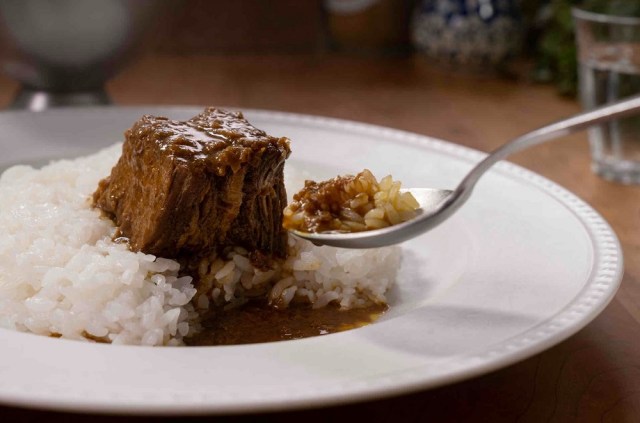
▼ Some plates of Bengal curry

Since November 30, the shutter has been closed at Bengal’s entrance, with a written notice posted that says “Due to circumstances, we will be temporarily closed today.” It now looks like the “temporary” part of that is going to become “permanent,” as on December 18, Bengal received authorization from Tokyo District Court to begin bankruptcy proceedings.

According to the filing, Bengal has 40 million yen (approximately US$258,000) in debt owed to 19 different creditors, and with so much money due to so many different people, it’s unlikely that a settlement that saves the restaurant, in its current form, is going to be worked out.

It’s a disheartening turn of events for fans of curry in general and Bengal in particular, but there is, perhaps, a small ray of hope in that Bengal’s bankruptcy doesn’t seem to have been the result of people not liking the restaurant’s curry. Instead, it looks like the problem was a combination of an overly ambitious expansion, the widespread restaurant industry downturn of an unexpected global pandemic, and an over-reliance on strong performance from its spice wholesale operations. Considering that curry itself remains extremely popular in Japan, both with locals and inbound foreign tourists (of which Akihabara has no shortage), perhaps there’s a chance for Bengal to come back with a new, more modestly sized Akihabara eatery, without the spice wholesale side business.

For now, though, it looks like the end of Bengal’s 50-year run of serving up curry in Akihabara, in yet another reminder that if there’s a restaurant you love, it’s important to support it.

Source: Yahoo! Japan News/Teikoku Databank via Hachima Kiko
Top image: Bengal
● Want to hear about SoraNews24’s latest articles as soon as they’re published? Follow us on Facebook and Twitter!


Credit:

The top 10 annoying foreign tourist behaviors on trains, as chosen by Japanese people【Survey】

Survey finds 10 things to avoid as Japan experiences record-breaking, sometimes patience-testing levels of inbound international tourism.

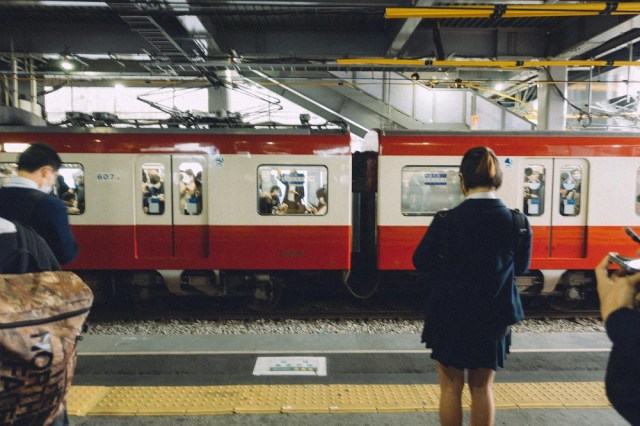
Japan is seeing more inbound foreign tourists than ever these days, which also means more inbound foreign tourists than ever on public transportation. But as locals and Japanese residents increasingly rub elbows on trains, that also means more chances for tourist behavior to rub locals the wrong way.

As part of its annual study on train/station etiquette, the Japan Private Railway Association collected responses from 5,314 participants via an online survey. 62.9 percent of the respondents said they’d been bothered by impolite behavior by foreign tourists, and the survey then asked them to designate up to two specific complaints, resulting in the following top 10 list (technically top 11, if you count the entry of “other”).

11. Eating or drinking on the train (chosen by 3.3 percent of respondents)
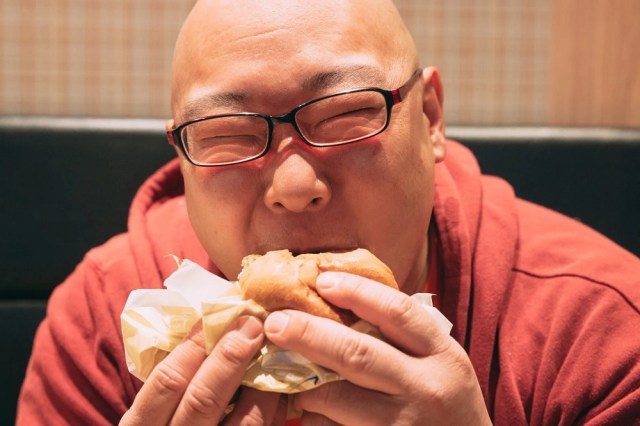
Though pretty much every station having at least a kiosk where you can buy snacks and drinks, if not a full-on convenience store or bento boxed lunch shop, eating onboard trains is generally frowned upon in Japan. It’s not absolutely forbidden, but there’s a general understanding that the only things you should eat on most trains are bite-sized snacks, ones small enough that you can pop them whole into your mouth without anyone having to see them, and also that there should be no audible chewing or crunching, and no noticeable smell either. So tiny rice crackers or cookies you might be able to get away with, but chowing down on a Mos Burger is a no-no.

An exception is made for the Shinkansen and other obviously leisure travel-oriented lines, which often have fold-down seat trays (like the ones on airplanes) for passengers to use, but otherwise, eating anything large enough to be considered a meal, or to require multiple visible bites to consume, is likely to be seen as slovenly.

For drinks, the gray area is wider, but the same principles apply: if you’re going to drink something, it should be something you can drink quietly and that doesn’t have a detectable aroma. Alcoholic beverages are OK on the Shinkansen and sightseeing trains, but widely considered crass for commuter and local lines.

10. Sitting on the floor of the train (4.2 percent)

Yeah, maybe your legs are worn out after spending all morning touring temple in Kyoto. Perhaps you’re doing a backpacker-style trip across Japan, staying in hostels, washing your clothes in the sink, and otherwise enjoying roughing it as you experience the country’s rustic charms. Doesn’t matter. If there are no empty seats on the train, you’re supposed to stand, since sitting on the floor takes up extra space, makes it hard for others to get on or off the train, and just looks sloppy.

9. Bad manners regarding priority seats (4.4 percent)
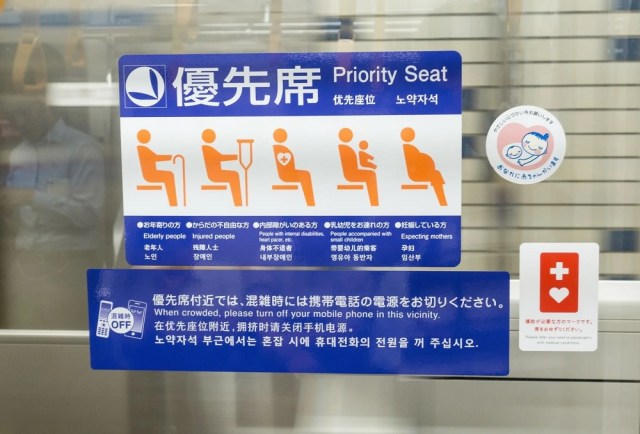
At the corner of many train cars in Japan is a short bench designated as priority seats (often with a sign above them with the kanji characters 優先席). These are meant to be used by elderly, injured, or disabled passengers, as well as those who are pregnant of traveling with small children. Other people aren’t necessarily prohibited from using those seats, though, which is where things get kind of tricky. You might think that even if you’re not part of any of those groups, it’s fine to sit in the priority seat and simply give it up if someone asks for it. However, some people in Japan believe that it’s inconsiderate to make someone else ask, and it becomes even more complicated since physical ailments aren’t always visually obvious. If a 60-year-old senior citizen with a bad back boards a train car and sees a much younger man sitting on a full priority seat bench, he might assume the younger man is, for example, recovering from a knee injury and needs to sit, and so not ask him for his seat. Meanwhile, the younger man might not actually have any such need to use the priority seat, but also might not be able to tell that the senior has back problems just from looking at him, so he won’t offer his seat either.

Such scenarios are why there’s a segment of the Japanese population that thinks if you don’t need to use a priority seat, you should leave it open for someone else who might. This isn’t something Japanese people have a consensus on, by the way, but it’s something that some people feel strongly about, and so they’re going to notice if seemingly able-bodied foreign travelers are sitting in the priority seats.

8. Leaving trash and drink bottles behind on the train (5.9 percent)

“Japan doesn’t have enough public trash cans!” is a very common complaint among foreign travelers. It’s also something you’ll rarely, if ever, hear Japanese people griping about. At this point, it’s common knowledge that it might not be easy to find a place to throw you garbage away while you’re out and about, so the local Japanese population takes it as a personal responsibility to take their trash home with them. If you’re uncomfortable putting your trash directly into your bag, keep a couple of plastic baggies in there so you can seal up whatever garbage you generate and then carry it back to your hotel to dispose of there at the end of the day.

7. Sitting style (9.6 percent)

No, this complaint isn’t about foreigners who can’t sit seiza-style. It’s about tourists who cross, spread, or stretch their legs while sitting on trains, taking up more space than is necessary, all of which are considered poor manners unless there are tons of empty space around, which is rarely the case on trains in big cities or near sightseeing destinations.

6. Talking on the phone (10.3 percent)

On any given train in Japan, you’ll see many, if not the majority, or passengers with a mobile phone in their hand. Very rarely, though, will you see anyone talking on them. In order to be heard over the sounds of the train itself, you’d have to speak loudly enough to be bothering the passengers around you, so barring legitimate emergencies, Japanese people don’t use their phones for talking while on the train.

As a side note, having sound playing from your smartphone speakers for non-phone call purposes is a major breach of etiquette too. Not everyone shares the same taste in songs or TikTok clips, so keep the sound off or use earphones if you’re killing time on the train watching videos or listening to music.

5. Other (12.1 percent)

4. Bad manners when boarding/getting off the train (16.5 percent)
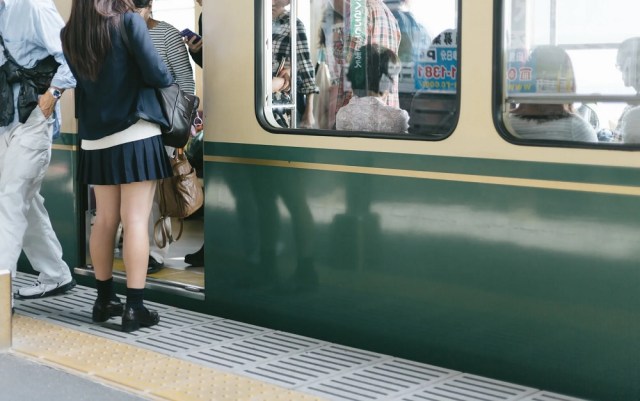
Japanese trains can get very crowded, and they also run on very precise schedules, and the only way that combination is possible is if everyone who needs to get on/off the train can do so in a swift, smooth manner. If you’re getting on the train, you should line up to the side of where the doors are opening, wait for everyone who’s getting off to do so, and then board, in the order that you’re lined up in on the platform. On the other hand, if you’re onboard a train that’s arrived at a station, even if you’re not planning to get off there, rather than blocking the door you’re supposed to step off onto the platform to let others get off, then reboard by the same door (and yes, the people who were waiting on the platform to get on the train are supposed to wait for the reboarders to reboard first).

3. Bad manners when walking through the station (24.8 percent)

You can’t use the train without using a station, so yes, there are manners to be aware of there too. Similar to the boarding process, everyone needs to work together to ensure a smooth flow of people through the station. Stations often have signs with arrows directing the flow of human traffic through walkways and on staircases, and these are supposed to be followed. Crossing over and walking against the flow can cause severe disruptions, or even collisions and injuries if someone gets bumped into and loses their balance in a crowd.

Another common complaint was foreign tourists stopping in the middle of walkways. Again, there’s an understandable reason for why this happens: some of Japan’s stations are massive and complex in their layouts, and even smaller ones can be confusing to navigate if it’s your first time in the country or you don’t read the language. Still, if you do need to stop and get your bearings, check a map, or converse with your traveling companions, first make sure you’ve moved to someplace out of the way (i.e. not the middle of a walkway or stairway) so that you’re not blocking traffic.

2. Not properly holding/setting down bags and luggage (37.1 percent)

Whether your bags are big or small, there are generally accepted rules for how to handle them. Starting with smaller ones, like purses or backpacks, it’s considered good form to hold them in front of yourself while on trains. The logic is that doing so takes up less space (essentially you transfer the space your bag would be taking up on your back or side to the otherwise unused space under your chin), and while that might not seem like it’d make much of a difference, when you multiply it by the dozens of people crammed into a rush hour train, it adds up. Likewise, sitting down on a seat and laying your bag next to you, as opposed to holding it on your lap or putting it on the overhead shelf, is considered rude, since it’s taking up a spot that someone else could be sitting in.

As for suitcases, it’s important to keep yours grouped together so as to take up as little space as possible. Even then, you should stay conscious of how much space you’re using, and also whether it’s blocking access to things like the doors or priority seats. An especially common problem is large groups of travelers essentially commandeering an entire section of a car with a cluster of suitcases, and to avoid doing so, you might want to split your party up within the train so that you’re not making any one section completely impassable.

1. Loud conversations/being rowdy on the train (51.8 percent)

Japanese people don’t expect library-level silence on trains, but there’s a general understanding that long and loud conversations should be saved for once you get off. That can be difficult to do if you and the rest of your traveling companions are pumped up with excitement about the cool stuff you’re on your way to see and do, and this complaint admittedly comes with a bit of an extra linguistic burden for foreigners. If the language you’re speaking isn’t Japanese, there’s an increased chance of it feeling like “noise” to Japanese passengers, making it more noticeable and annoying than the same conversation, at the same decibels, would in Japanese.

Still, the considerate thing to do, regardless of what language you’re speaking, is to keep your voice down. Likewise, other energetic antics, whether it’s scurrying around for group selfies, dancing for joy about making it to Japan, or anything else along those lines, is the sort of exuberance to keep a lid on until you’re off the train.

Now, having gone through all these, it’s worth pointing out that each and every one of these breaches of etiquette is something that you might see Japanese people doing too. However, that doesn’t make them acceptable behavior: it just means that some Japanese people have bad manners too. That said, most people who’ve lived or traveled in Japan would agree that, on average, Japan has a pretty high level of politeness in public spaces, and nothing on the list qualifies as esoteric-level  old-school Kyoto etiquette. They’re all things that you can expect would at the very least annoy most Japanese people. With Japan in the midst of trying to sort out its feelings about the unprecedented numbers of inbound foreign tourists its receiving these days, there’s increased consciousness of and attention being paid to how travelers conduct themselves. Like it or not, if you don’t look like a local, you’re likely going to be, to an extent seen as a representative of foreign tourism itself, so “more polite than a rude Japanese person” is definitely a standard to adhere to in how you conduct yourself.

Source: @Press
Top image: Pakutaso
Insert images: Pakutaso (1, 2, 3, 4, 5)
● Want to hear about SoraNews24’s latest articles as soon as they’re published? Follow us on Facebook and Twitter!


Credit:

Totoro, Spirited Away tenugui tapestries promise good luck at New Year’s, smiles all the time【Pics】

Traditional towels get playful Ghibli twists on symbols of prosperity.

Tenugui are one of Japan’s seemingly simple, subtly significant cultural items. The term literally translates as “hand towel,” but that’s a humungous reduction of all the things tenugui have been used for.

Back in the old days, tenugui were a combination towel and wrapping cloth. People would use them to carry things like bento boxed lunches, and they were also a must-have item if you were headed to a hot spring or public bath, to dry yourself off with after your soak. As the patterns on tenugui became more and more appealing to the eye, they started being used to wrap gifts, wear as fashion items, or even hung as decorative tapestries inside homes.

While they retain an old-school, nostalgic aura, tenugui aren’t bound to strictly classical motifs. For example, Studio Ghibli specialty shop Donguri Kyowakoku is offering tenugui inspired by beloved anime Spirited Away and My Neighbor Totoro.

Each of the cloths is 90 centimeters (35.4 inches) long by 34 centimeters wide, and is produced in partnership with Kamawanu, a tenugui design company that opened in Tokyo’s fashionable Daikanyama district nearly 40 years ago.

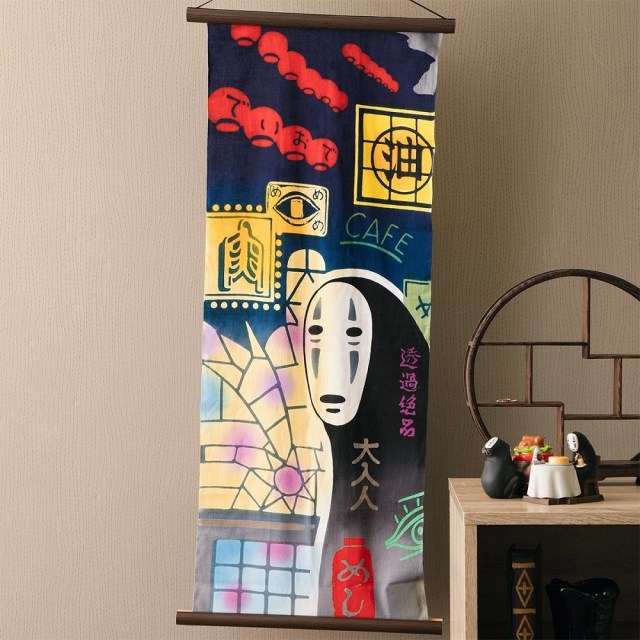
The above-pictured “World of the Mysterious Town” design, prominently featuring No Face, is sure to delight Spirited Away fans at any time of year. But with New Year’s approaching, Donguri Kyowakok has also restocked a pair of Ghibli tenugui with special good-luck imagery for the coming year.

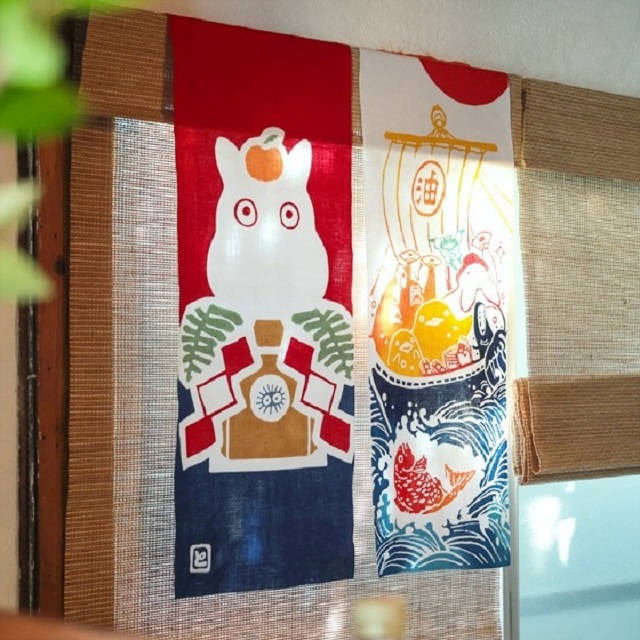
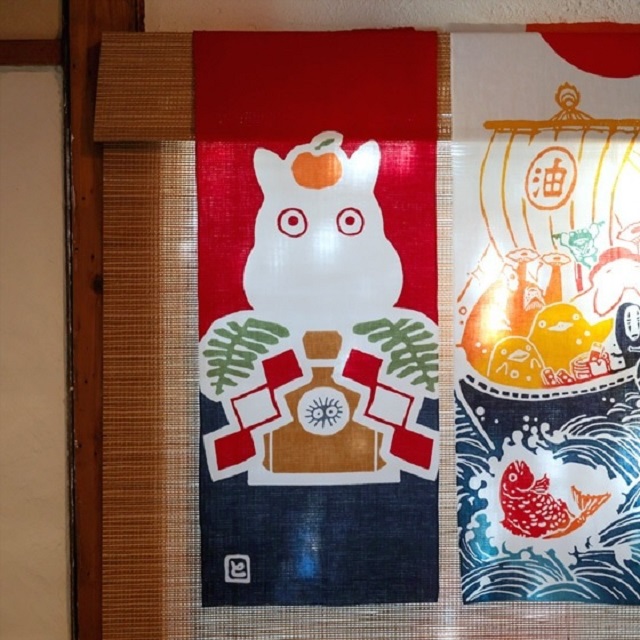
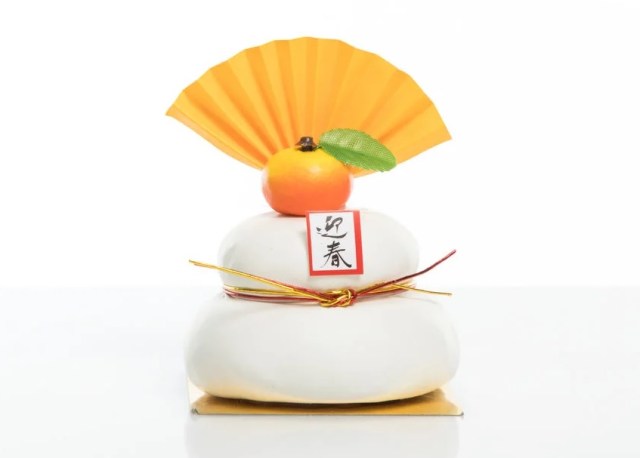
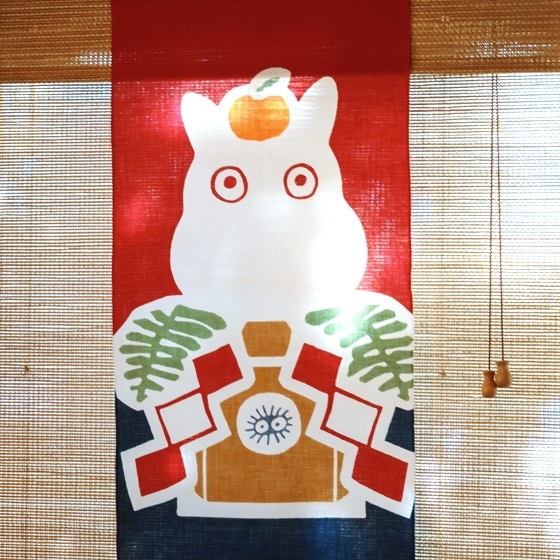
The first of them features Totoro, specifically the Small Totoro, since his white fur is the same color as kagami mochi, the bulbous stacked rice cakes placed in Japanese homes at New Year’s as a symbol of prosperity and safety in the year to come.

▼ Non-Totoro kagami mochi

Kagami mochi are often topped with a mikan (mandarin orange), so this Totoro is too, and he sits upon a stand with a drawing of a Soot Sprite.

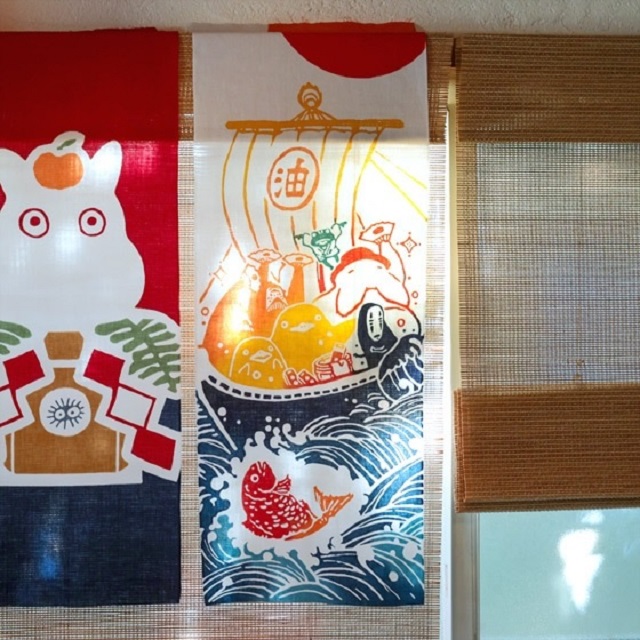
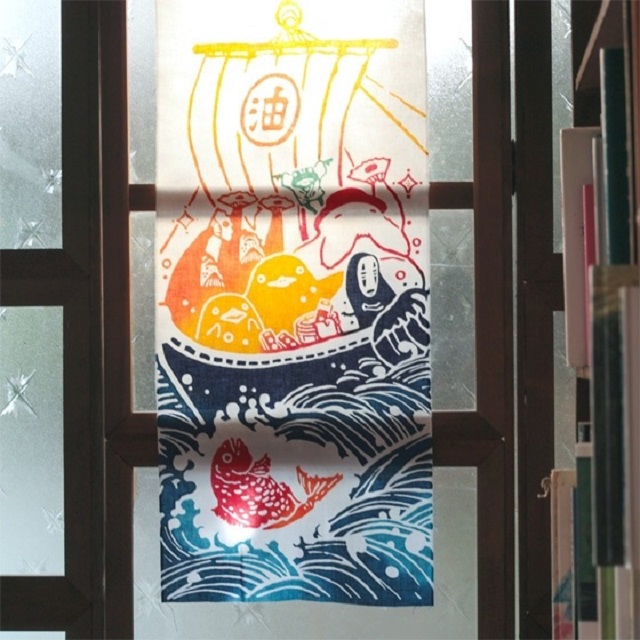
There’s more good fortune that could be sailing your way with the Spirited Away takarabune, or “treasure ship,” tenugui.

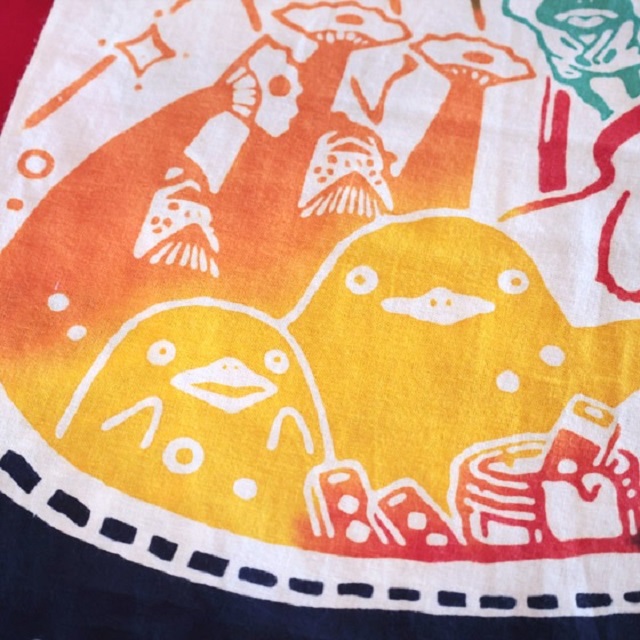
According to legend, over the first three days of the new year the Seven Luck Gods sail a ship filled with heavenly treasures into human ports. For this tenugui, though, it’s the cast of creatures from Spirited Away who are serving as ambassadors of auspiciousness, with No Face taking to the seas along with the Radish Spirit, green frog Aogaeru, two Otori-sama birds, and a pair of masked Kasuga-sama spirits.

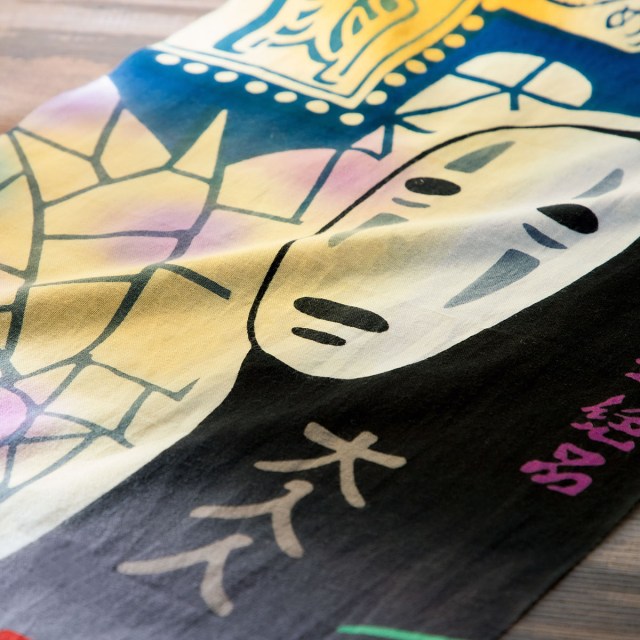
Though technically towels, tenugui aren’t terrycloth, but instead smooth cotton. That gives them an extra elegant appearance when hung as decorations, allowing for light falling on them or shining through from behind to add to the richness of the colors.

That also makes tenugui lighter than regular towels of their size. These ones, for example, weigh only about 35 grams (1.2 ounces), so between that and their soft, foldable nature, they’re beautiful souvenirs that are extremely east to transport as gifts to friends and family.

Oddly, despite all three of these designs being of identical size and material, they’re all priced differently. The non-New Year’s World of the Mysterious Town is the priciest, at 4,400 yen (US$28), while the Totoro kagami mochi is 2,640 yen and the Spirited Away treasure ship 2,860 yen. Regardless of which you choose, though, they’re all available now thanks to a restock on the Donguri Kyowakoku online store (here, here, and here).

Source: Donguri Kyowakoku
Top image: Donguri Kyowakoku
Insert images: Donguri Kyowakoku (1, 2), Pakutaso, Donguri Kyowakoku (3)
● Want to hear about SoraNews24’s latest articles as soon as they’re published? Follow us on Facebook and Twitter!


Credit:
We sample the deep sea fish and more at this delectable sushi restaurant in Shizuoka Prefecture

A visit to this restaurant that specializes in deep sea fish also teaches us that some of our favorite fish live deeper than we previously thought.

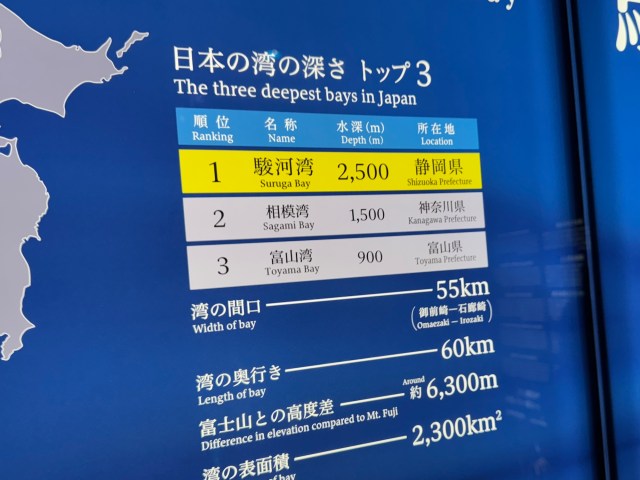
Numazu is a city nestled in Shizuoka Prefecture’s Suruga Bay, which happens to be the deepest bay in Japan at a depth of 2,500 meters (8,202 feet). Consequently, it’s famous for all things found in the deep, from the fish at the Numazu Deep Sea Aquarium to the deep sea pudding that we previously sampled. While our Japanese-language reporters Ikuna Kamezawa and Seiji Nakazawa were captivated by the gracefully swimming deep sea fish at the aquarium during their recent visit, they left with only one thought on their minds: “We want to eat you…”
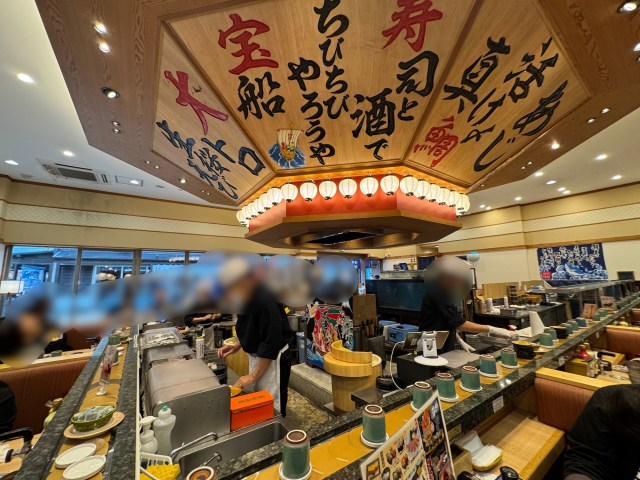
▼ Who knew that learning about the ocean’s depths would spark such appetites?

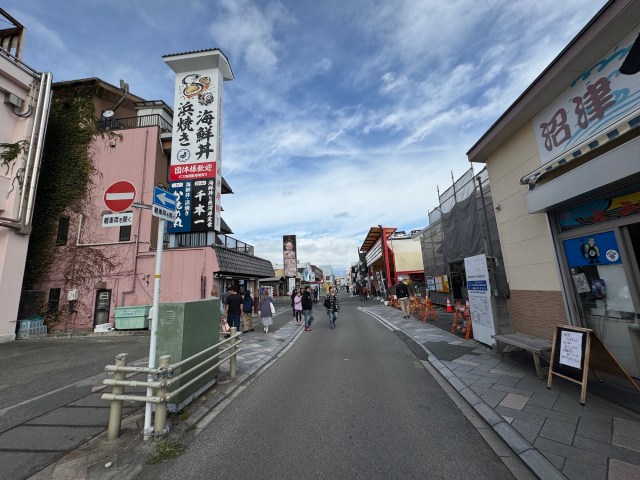
The aquarium is located very close to the bay, and the surrounding area has plenty of sites of interest to tourists. For instance, Ikuna passed by a large market selling plenty of marine products, but she didn’t see anywhere that looked like it was selling deep sea fish. Actually, there weren’t that many places selling live fish to begin with–perhaps due to the time of the day or the season. Instead, it seemed like dried fish were the main attraction since they were on display pretty much everywhere.

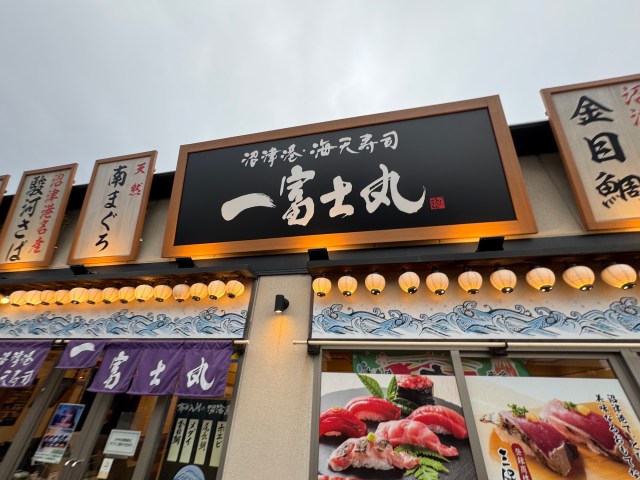
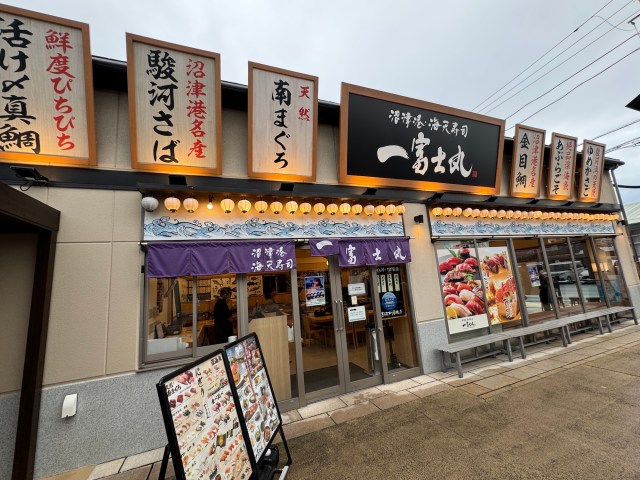
That’s when they spotted a conveyor belt sushi restaurant called Numazu Port Kaiten-zushi Ichifujimaru. In some clever wordplay, the word “kaiten,” while being the term for “revolving,” was instead written using two kanji that mean “ocean heaven.”

The restaurant’s interior had a somewhat classy vibe, but the sushi was indeed revolving around on a belt.

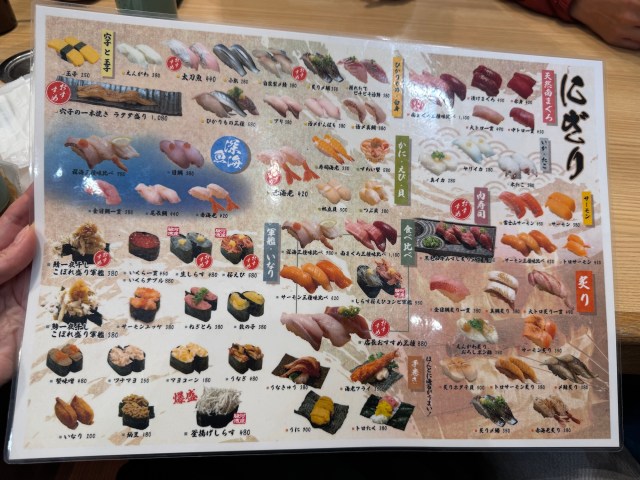
For reference, the egg omelet sushi was 250 yen (US$1.59), the salmon 380 yen, and the tuna 480 yen. Those prices were definitely higher than at widespread conveyor belt sushi chains like Sushiro, but there’s nothing wrong with local places charging a bit more. It also seems to be a bit of a trend recently.

Ikuna asked the conveyor belt sushi expert, Seiji, for his opinion. He thought that these prices were completely normal for slightly “gourmet” conveyor belt sushi places that often emphasize the quality of the toppings as well as local specialties.

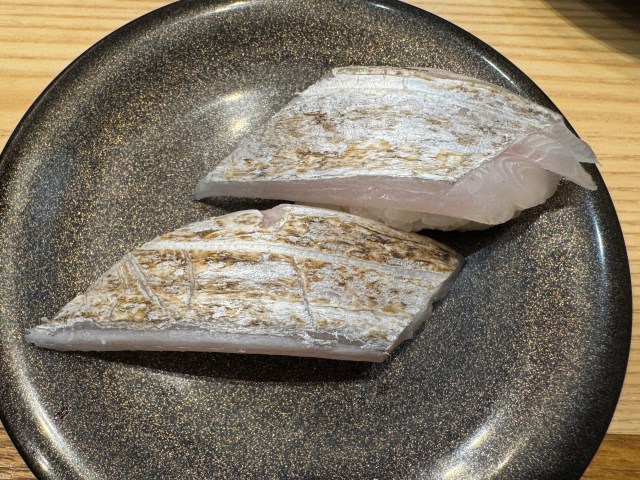
In any case, they proceeded to order some small plates of fish that seemed intriguing. First up was the largehead hairtail (tachiuo in Japanese), also known as the beltfish (440 yen), which happens to be one of Ikuna’s favorite fish in the whole world. Grilled, it absolutely melts in your mouth, and raw, it has a pleasant chewiness.

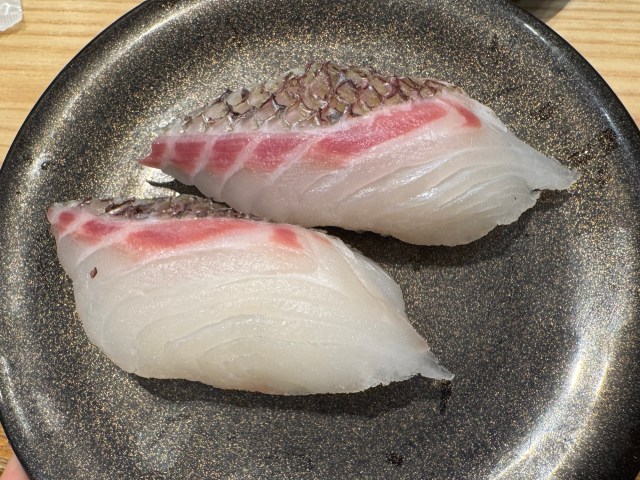
Next was the red sea bream/madai (380 yen). Even at cheap conveyor belt sushi places this fish tends to be a bit pricier than others, so Ikuna thought this was actually a pretty good deal.

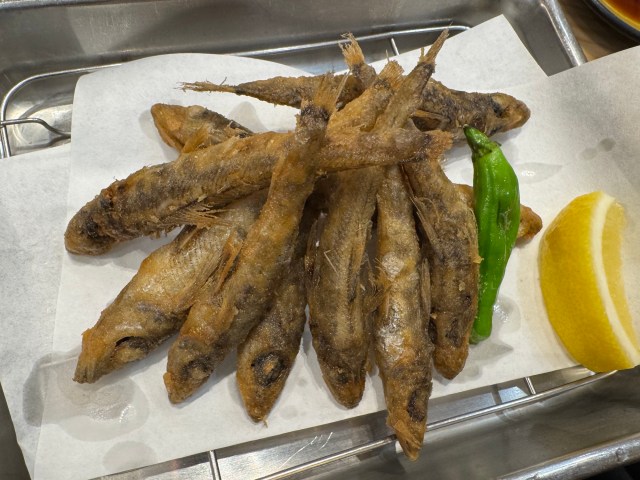
Finally, they sprung for a plate of deep-fried greeneyes/mehikari (580 yen). These fish live at a water depth of around 500 meters, so they’re  classified as a deep sea fish. While Ikuna is fond of small fish that are fried in general, these ones were light, almost fluffy, and especially delicious without even a hint of bitterness.

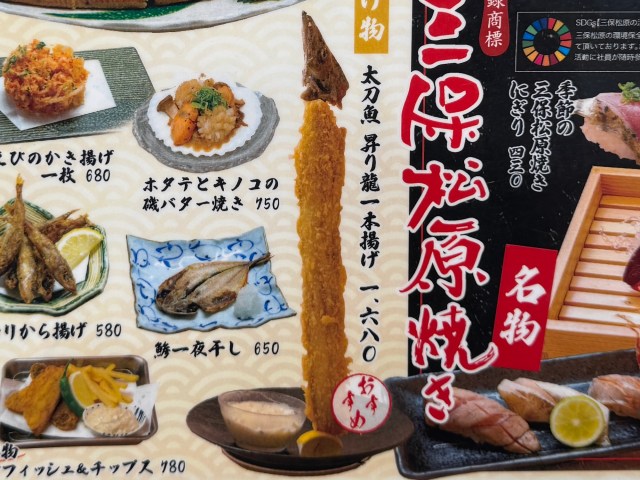
They thought about ordering the deep-fried “rising dragon-style” largehead hairtail (1,680 yen) based on the intriguing picture on the menu, but ultimately decided that it would be too much.

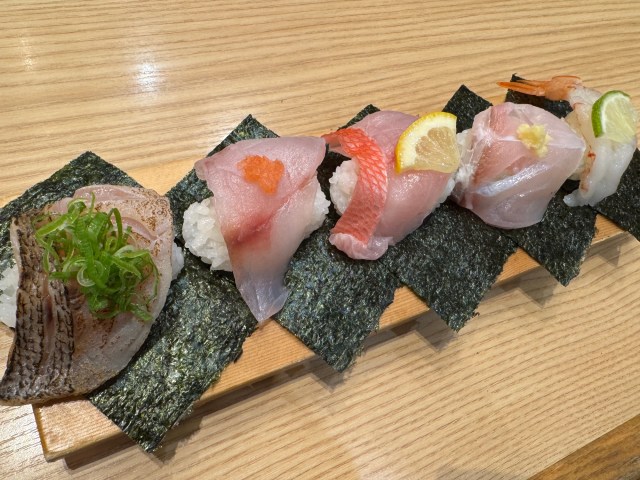
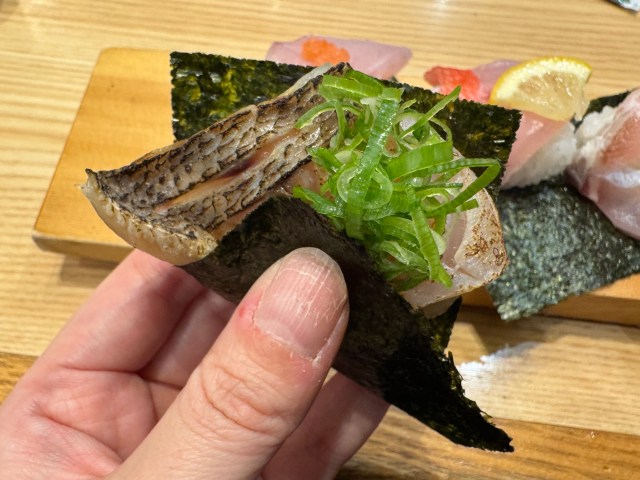
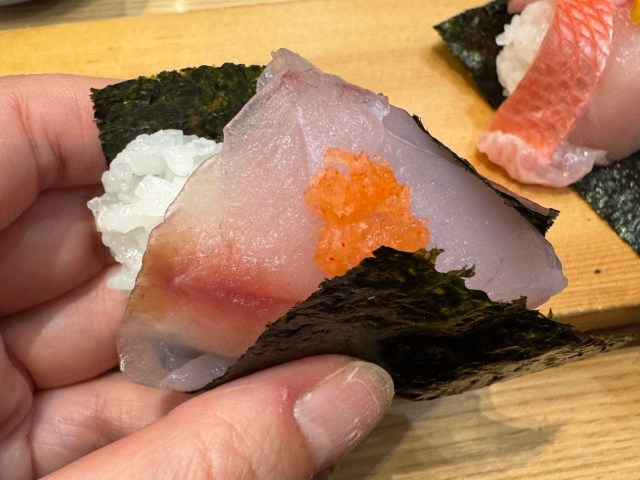
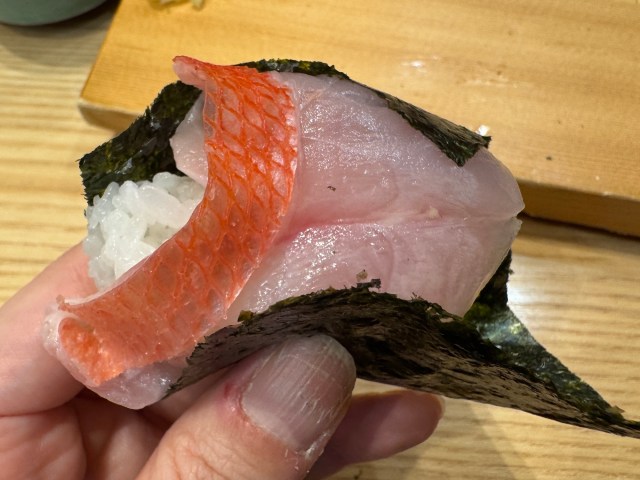
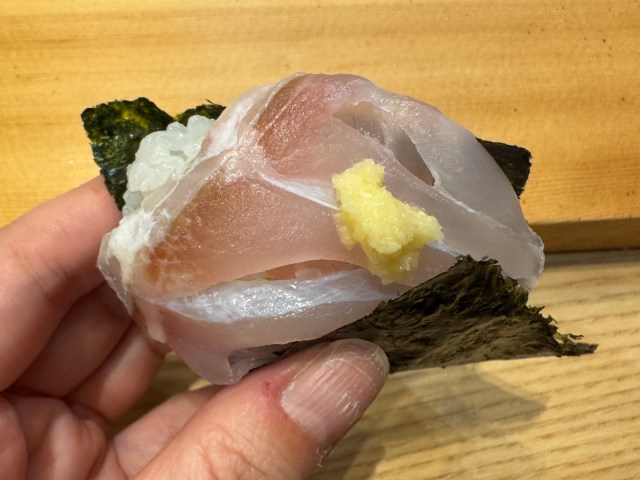
Now, though, it was time for the main attraction–Ichifujimaru’s Five Kinds of a Deep-Sea Fish Hand Rolled Sushi (1,380 yen).

▼ (Left to right) Black gnomefish, Pacific barrelfish, splendid alfonsino, longtail snapper, and whiskered velvet shrimp

The black gnomefish/kuromutsu was incredibly soft to the point that the two of them could have kept eating it forever.

Meanwhile, the Pacific barrelfish/medai was a lot firmer. It had a complex, deep flavor that was difficult to describe.

Ikuna has eaten splendid alfonsino/kinmeidai countless times before, but she never imagined in her wildest dreams that it was a deep sea fish. The fish was plump and tender with a refined taste.

The longtail snapper/onagadai was a bit sinewy with a hint of firmness and a taste that connoisseurs are bound to enjoy. Ikuna thought it was fascinating how different all of these fish tasted from each other. Even the whiskered velvet shrimp was on a completely different level than the kind that you can buy at a supermarket.

It’s not that Ikuna had never heard of these fish before going to Numazu, but she had never known that some of them are classified as deep sea fish. In her mind, it’s all the more reason to continue visiting local sushi restaurants and be a lifelong piscine learner.

Restaurant information
Numazu Port Kaiten-zushi Ichifujimaru / 沼津港・海天寿司 一富士丸
Address: Shizuoka-ken, Numazu-shi, Senbonminato-cho 83
静岡県沼津市千本港町 83
Open 11 a.m.-9 p.m.
Closed Wednesdays
Website

All images © SoraNews24
● Want to hear about SoraNews24’s latest articles as soon as they’re published? Follow us on Facebook and Twitter!


Credit: