What’s inside a Family Mart Grand Opening Lucky Bag?

We join the party at a new convenience store opening in Japan. 

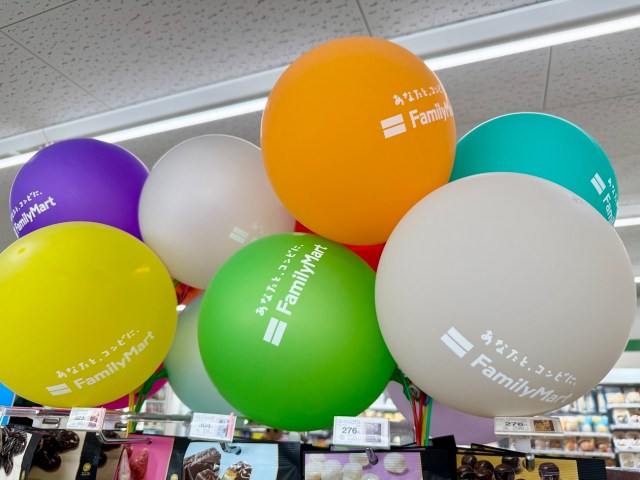
You never know what you might find at a convenience store in Japan, and that fact was never as clear as it was when our reporter Masanuki Sunakoma stumbled upon a Family Mart that had opened in his neighbourhood. Stepping through the sliding doors, complete with their distinctive melodic chime, he was greeted by a bunch of colourful Family Mart balloons to mark the grand occasion, but that wasn’t the only unusual thing about the place.

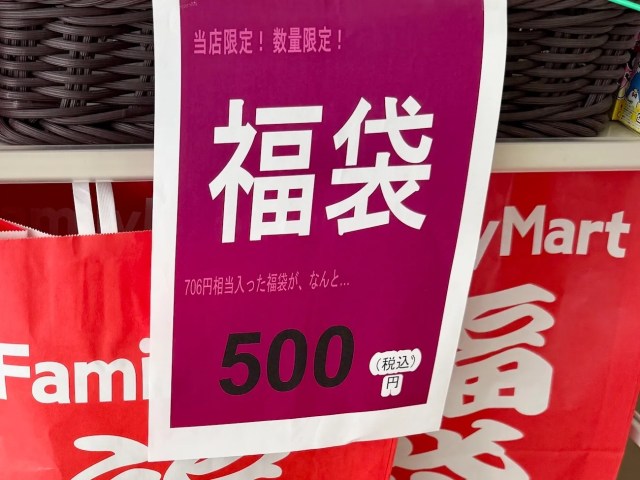
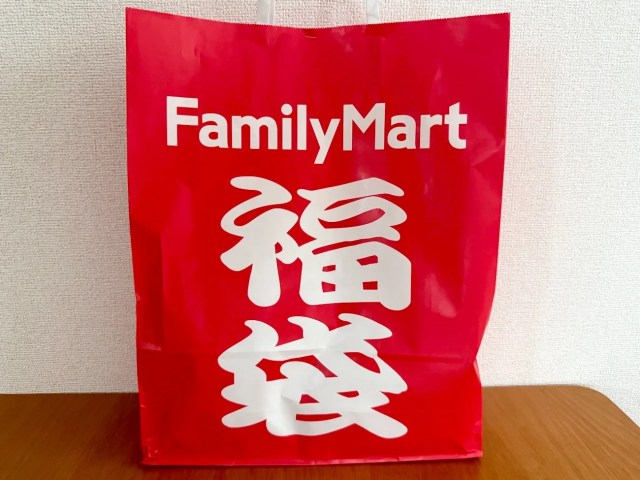
There on the table, he found the “Grand Opening Lucky Bag”, which was priced at a very reasonable 500 yen (US$3.47), so he immediately grabbed one to see what it contained.

The word “福袋” (“fukubukuro” or “lucky bag”) is usually reserved for blind-buy bags sold at New Year, but a store opening is also a good time to bring them out for a celebration.

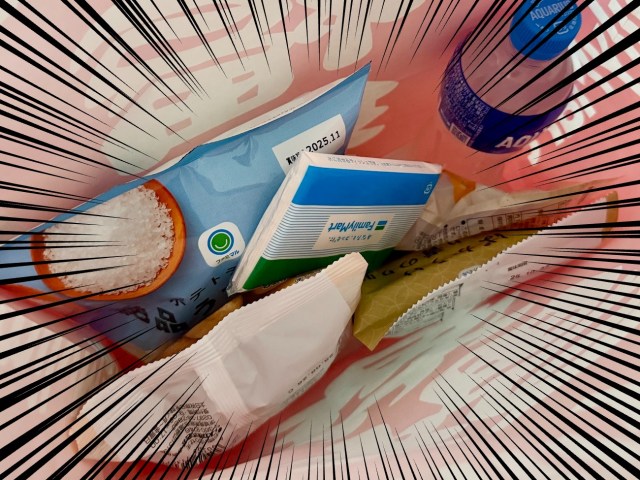
Feeling a flurry of excitement, Masanuki opened the lucky bag and peered inside…

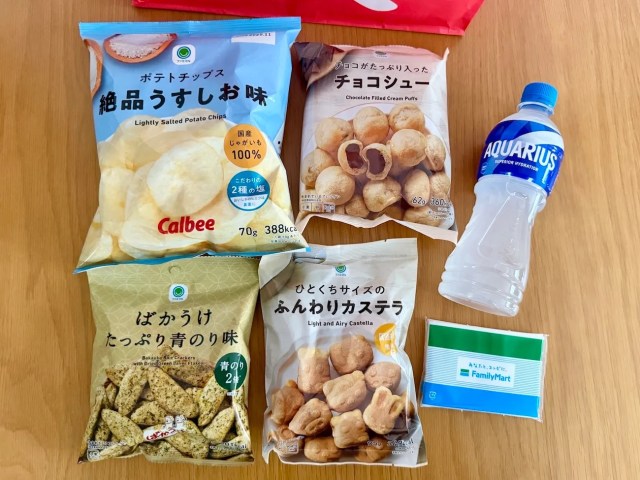
What he found was a collection of goods worthy of a party.

  • Lightly Salted Potato Chips (150 yen)
  • Chocolate Filled Cream Puffs (138 yen)
  • Bakauke Rice Crackers with Dried Green Laver Flakes (118 yen)
  • Light and Airy Castella (128 yen)
  • Aquarius sports drink (151 yen)
  • Family Mart Pocket Tissues (not available for sale)

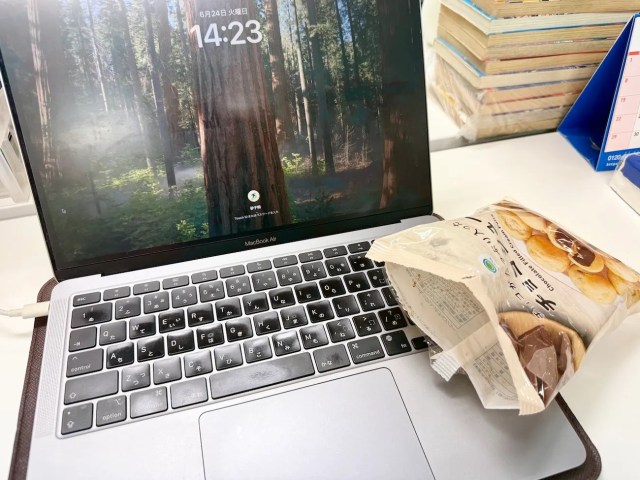
The value of the bag turned out to be 685 yen, which wasn’t a bad return for the 500 yen he spent on it. Every item was a welcome addition to the snack cupboard, but out of everything, his favourite had to be the Chocolate Filled Cream Puffs, which he demolished in no time.

So if you ever spot a new convenience store pop up in your neighbourhood, it’s always worth going in to take a look. You may find discounts, lucky bags, or even steamed manju buns that you won’t ever see at that store again.

Photos ©SoraNews24
● Want to hear about SoraNews24’s latest articles as soon as they’re published? Follow us on Facebook and Twitter!


Credit:

A Pokémon fan’s eye-opening experience of Japan’s national championship

“Is this even the same game I play?”

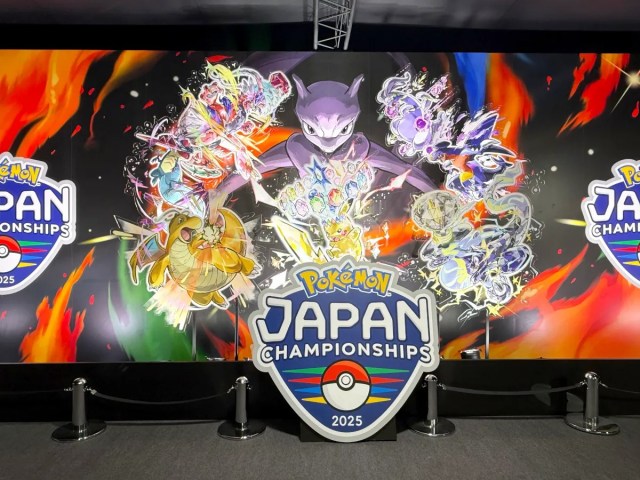
Like most competitive games, Pokémon has had many tournaments over the years, both within Japan and internationally. However, despite being an obsessive fan of Pokémon Go, our Japanese-language reporter P.K. Sanjun had never attended the Pokémon Japan Championships, also known as PJCS, which originally started back in 2009.

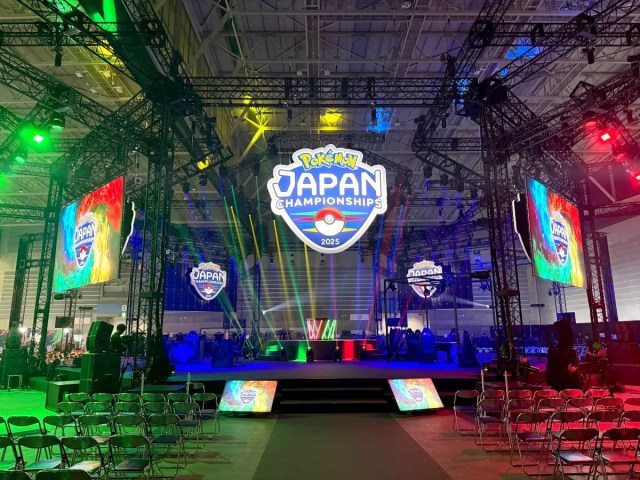
PJCS was held on June 21 and 22 at Pacifico Yokohama, in Yokohama, Kanagawa Prefecture,  as the official tournament to decide the top Pokémon trainers in Japan across four divisions: the Pokémon video game, the trading card game, Pokémon Go, and Pokémon Unite. At its most fundamental level, the Pokémon games are focused on “collecting,” “training,” “battling,” and “trading,” but at these tournaments the focus is specifically on the battling aspect.

P.K., however, generally avoids battling in Pokémon Go, unless it’s absolutely necessary, and so has never taken much of an interest in the competition. This year, a high school student who he knows was competing, so he decided to tag along as a sort of guardian.

▼ Participants in the games receive a sticker.

Having gathered competitors from across Japan, who had successfully made it through the regional qualifiers, the venue was brimming with an intense fighting spirit, which in combination with many thoughtful touches by the organizers scattered about, created an exciting environment for both players and spectators alike.

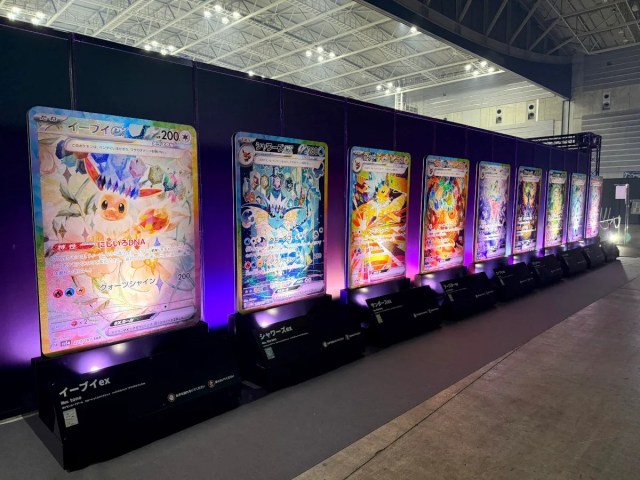
Even though everyone was there to cheer and compete in the matches, there were plenty of things to keep people occupied during any downtime.

▼ If you place a trading card on the device, it will display an enlarged version on the screen next to it—perfect for a photo opportunity with your favorite partner Pokémon.

While keeping an eye on the preliminary rounds of the high schooler he was accompanying, P.K. wandered around the venue until he heard thunderous roars erupt from one section.

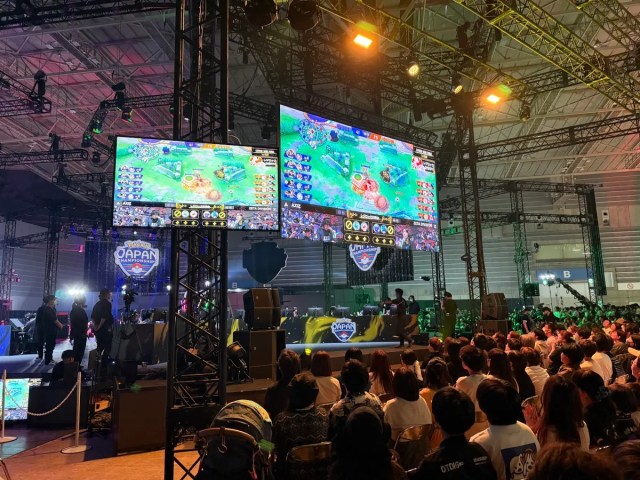
Going over to investigate, he discovered that the source of those cheers was Pokémon Unite. Throughout the entire day, the most visibly hyped area was undoubtedly the Pokémon Unite zone. P.K. wasn’t all too familiar with the game, and being a relatively recent addition to the franchise, he’d assumed it might have had the fewest spectators of the four areas. However, just based on the sheer energy emanating from the crowd, it was incredible.

According to a Pokémon Company staff member P.K. spoke to, “Unite always gets super hyped like this,” suggesting that it’s nothing out of the ordinary for fans of the game. Perhaps it’s in part due to the pro teams who also compete? Nevertheless, he was impressed at the scene of all of the fans cheering with towels that bear their favorite team’s names.

In terms of short peaks of excitement, though, Pokémon Unite couldn’t hold a candle to the Pokémon video game division. The crowd numbers were through the roof, which is to be expected from the original core of the franchise, and the video game section being the main event was an undisputed fact.

On the other hand, the trading card division felt less like something that would have had people jumping out of their seats, but more like something people watched with deep concentration. Naturally, there were cheers and applause, but despite the impressively-sized audience, the atmosphere wasn’t full of squeals of excitement. Instead, the surroundings resonated with deep rumbles of appreciation.

P.K.’s beloved Pokémon Go had perhaps the most subdued of all of the crowds.

In terms of numbers, the fans watching the Pokémon Go division were clearly in last place. If someone unfamiliar with the event happened to walk by, they might assume that it was the least heated part of the competition, but that couldn’t be further from the truth. The battles were seriously intense. P.K. was captivated by the mental warfare and mind games that were underway before the match had even started, and was blown away by the elite techniques on display and incredible pressure where not a single mistake was allowed. It was almost inconceivable to him that these top competitors were playing the same game he plays every day.

The quality and intensity of matches just didn’t correspond to the energy exhibited by the crowd. P.K. could understand the low hype if the battles were boring, but with the skill on display, it simply didn’t make sense. As a fellow Pokémon Go trainer, P.K. hopes that everyone can rally together in the future to hype up the battles more.

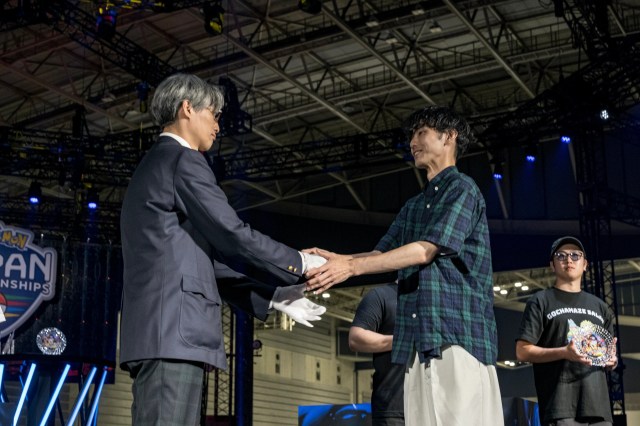
The winner of the Pokémon Go tournament, Takumi Tanaka, commented, “Once you start battling, catching and trading Pokémon becomes even more fun.” Takumi also hoped that the tournament format—playing nine rounds and the people with six wins going through to the next stage (known as the 6-3 format or Swiss rounds) will be available to play in the game itself sometime in the future.

Summing up his experience at PJCS, P.K. was surprised at the level of excitement around Pokémon Unite, and comparatively how underwhelming the crowd at the Pokémon Go matches were. Overall, though, he was moved by the thought of how thousands of people in a single space shared their love for Pokémon.

If you didn’t happen to catch any of the championships in Japan, the World Championships will be held in Anaheim, California, from August 15-17. However, spectator tickets are no longer available, so if you’re looking to join in the excitement, you’ll need to catch one of the livestreams through the official Pokémon account. If beating down the competition to become a Pokémon Master is more of your thing, it’s never too early to start brushing up on your skills for next year’s championship. I’ve already started practicing in the hope that Pokémon Sleep gets added to the roster of games to compete in; I’ve a good feeling I’ve got a chance at first place.

Photos ©SoraNews24
● Want to hear about SoraNews24’s latest articles as soon as they’re published? Follow us on Facebook and Twitter!


Credit:

Calpis taps to flow at 1,000 sites across Japan in new plan from beverage maker Asahi

Yogurt-like drink has been beloved by Japanese people young and old for generations.

Green tea may be Japan’s most traditional non-alcoholic beverage, but when Japanese people are feeling thirsty, especially on a hot summer’s day, a lot of them would rather gulp down some nicely chilled Calpis instead.

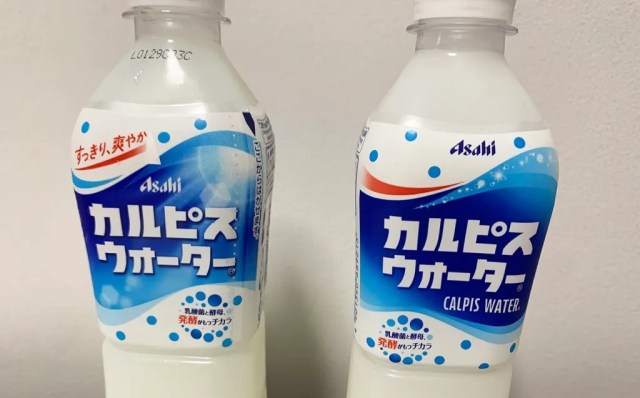
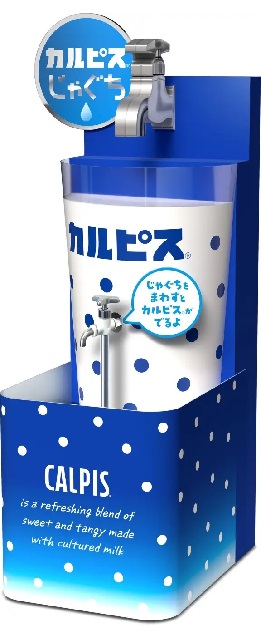
Depending on what part of the world you live in, you might know this yogurt-like drink better by its overseas-market name, Calpico, as bottler Asahi Soft Drinks realizes that in English-speaking areas, “Calpis” can sound more than a little like a coarse reference to bovine urine, an undesirable mental image for a milky white beverage. But that potential for misunderstanding doesn’t exist in Japanese, so if you mention Calpis in front of a group of Japanese people, they won’t react with snickers. Instead, many will say they’re in the mood for the stuff, and Asahi Soft Drinks wants you to be able to pour yourself a glass of Calpis straight from one of 1,000 Calpis faucet to be set up across Japan.

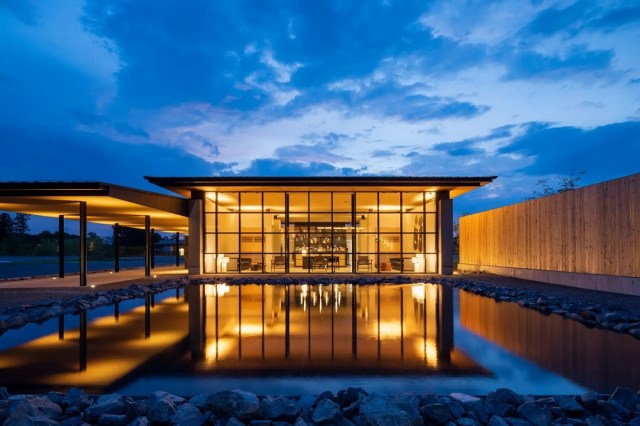
The first of those is going to be going into service this summer at the Hotel Vison in the town of Taki, Mie Prefecture. With Calpis being refreshingly sweet but not as sugary as cola, it’s a drink that kids and adults alike have enjoyed for generations, and taking a Calpis break so as not to get overheated while having summer fun is a nostalgic childhood moment for many. With that in mind, Hotel Vison’s Calpis faucet will go into service on July 1, and the hotel hopes pouring their own Calpis from the tap will be an opportunity for friends and families to make new memories together.

▼ The Hotel Vison is a pretty fancy place, which speaks to how popular Calpis is across all strata of society in Japan.

This isn’t Japan’s first-ever Calpis faucet. In 2019, as part of Calpis’ 100th anniversary celebration, temporary taps were set up at the Tokyo Dome City and Osaka Expo City entertainment centers, as shown in the video below.

However, the new Calpis faucet project looks to be a longer-term affair, with no mention in Hotel Vison announcement that theirs will only be around for a limited time. What’s more, Asahi Soft Drinks says that while the Hotel Vison is a test site for the program, the company is aiming to install 1,000 Calpis faucets across Japan by the end of 2030. Specifics (such as whether Calpis from the faucet is complementary or must be paid for, hours of availability, and so on) will likely vary from site to site, but fans can look forward to more and more Calpis flowing in the years to come.

Related: Hotel Vison
Source: Shokuhin Sangyo Shimbun via Livedoor News via Hachima Kiko, PR Times
Top image: SoraNews24
Insert images: PR Times (1, 2)
● Want to hear about SoraNews24’s latest articles as soon as they’re published? Follow us on Facebook and Twitter!


Credit:

Beef bowl king Yoshinoya to start serving ramen this summer with new beefy mazesoba

It has beef and it comes in a bowl, but it’s not a beef bowl.

There’s no dish Yoshinoya is more strongly associated with than gyudon (beef bowls), and no restaurants is more strongly associated with beef bowls than Yoshinoya. The mental connection between the two is so strong that it’s not uncommon for people in Japan to mash the words together and refer to the chain and its flagship food as “Yoshigyu.”

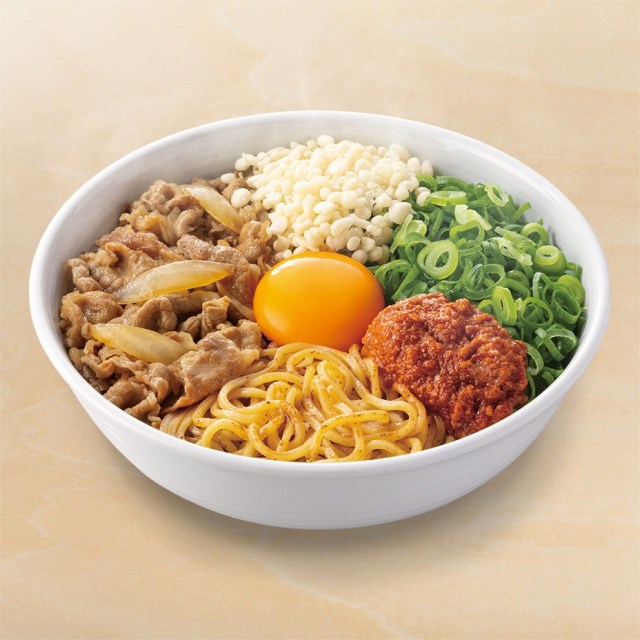
But this summer Yoshinoya is stepping out of the beef bowl box, and while they’re not ditching beef in their newest offering, it’ll have no rice, because it’s beef ramen.

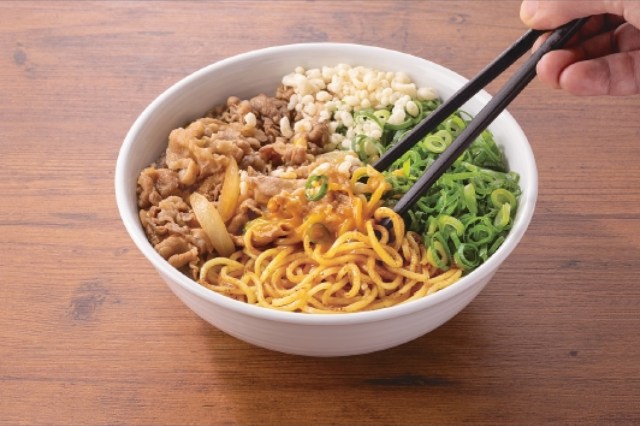
Specifically, this is mazesoba. The “maze” part comes from mazeru, meaning to stir or mix, and while “soba” by itself usually refers to buckwheat noodles, it can also indicate ramen noodles (as it does in the stir-fried ramen noodle dish yakisoba). Mazesoba is a type of non-soup ramen where instead of the noodles floating in liquid broth they’re placed in a bowl with sauce and other ingredients, and you stir everything together just before eating so that the flavor mixes throughout.

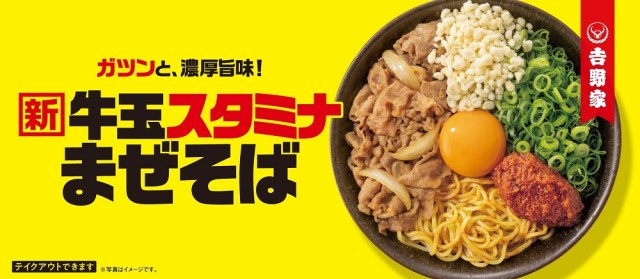
For its Gyutama Stamina Mazesoba, the key co-star for the noodles is the same strips of simmered beef that Yoshinoya fans know and love from the chain’s beef bowls. Accompanying them are sliced onions, diced leeks, tempura flakes, an egg, and a thick-consistency spicy garlic sauce, which is served on the side so that you can add as much or as little as you want.

Yoshinoya says the result is tasty and satiating, but surprisingly describes the flavor as “rich yet refreshing.” Considering that just about every ingredient in Yoshinoya’s mazesoba is meaty, pungent, or fried, it’s probably best to take that “refreshing” claim with a grain of salt, but the bold and filling parts of the promise definitely sound plausible, and with Japanese folk wisdom holding that garlic is supposed to boost physical endurance, the Gyutama Stamina Mazesoba, priced at 767 yen (US$5.30) is set to go on sale July 4, right as the midsummer heat starts showing up.

Source: Yoshinoya (1, 2)via Hachima Kiko
Images: Yoshinoya
● Want to hear about SoraNews24’s latest articles as soon as they’re published? Follow us on Facebook and Twitter!


Credit:

Police raid real casino in Tokyo where people gambled with online casinos

Yo dawg, I heard you like casinos.

On the evening of 25 June, the Tokyo Metropolitan Police Department raided Rizin, not the mixed martial arts association but what is known as a “brick-and-mortar online casino” that was operating in the Kabukicho area of Tokyo.

Let’s start by unraveling what a brick-and-mortar online casino is. First, online casinos are prohibited in Japan, as is partaking in online casinos that operate overseas. That certainly doesn’t stop people with the gambling bug from trying, but there are a lot of challenges, especially for the large elderly population in Japan, such as navigating websites in other languages and setting up dodgy payment systems.

“Crypto-what-now? On Telegram? I haven’t used one of those since ’42!”

So, some rackets have been set up to help facilitate these hurdles. For example, a brick-and-mortar online casino can help set up accounts for their clients and accept cash directly from them to be converted into online currency. Despite being a criminal enterprise, gamblers can get a sense of security in dealing with people directly and even enjoy the social aspect of being among others, though it’s probably still a far cry from The Stardust in the ’70s.

Anyway, Rizin operated secretly and only let in trusted customers by identifying their faces on security cameras and buzzing them in through double iron doors. At the time of the raid, five employees and seven customers with ages ranging from their 20s to 80s were arrested and police say they’ve found data on over 5,000 other people on the roughly 20 computers they seized.

▼ A news report on the bust

Rizin was discovered by authorities during their investigation of Shizuku Ida, a 27-year-old woman charged with the romance fraud of a 29-year-old man worth about 3.7 million yen ($25,000) last year. She was said to have spent about 80 million yen at Rizin. Police also say that Rizin was raking in millions of yen a day, but the investigation is still ongoing. All the employees admitted to the charges against them.

In online comments, many people were confused by both the existence of brick-and-mortar online casinos and why this one decided to call itself Rizin.

“A brick-and-mortar what?”
“The police are just helping the pachinko parlors with this.”
“Even if he gets arrested, he can just use all the money he made to open another one and keep it going for as long as he wants.”
“So, is this related to the fighting league?”
“I don’t really get brick-and-mortar online casinos.”
“I thought about using one but figured my own phone would be safer. Guess I was right.”
“I think Japan should just legalize them and regulate them properly so we don’t lose money to other countries.”

Japan does seem to be heading down that path with an integrated resort and casino already under construction next to the site of the 2025 Osaka-Kansai World Expo. It doesn’t seem outlandish to assume legalized online betting might be in the future as well. Whether this will ultimately be to Japan’s benefit or detriment is the biggest gamble of them all.

Source: NHK, Jiji.com, YouTube/TBS NEWS DIG Powered by JNN
Featured image: Pakutaso
Insert image: Pakutaso
● Want to hear about SoraNews24’s latest articles as soon as they’re published? Follow us on Facebook and Twitter!


Credit:

Tokyo day-trip hot springs: Beautiful Mt. Fuji-view bath is just one highway bus stop from Shibuya

We head to the outlets do zero shopping, but have zero regrets.

What’s the best one-way distance for an onsen (hot spring) getaway day trip? You don’t want to go somewhere too close, because part of the relaxing atmosphere of a hot spring soak comes from putting some physical distance between yourself and the stress sources of your everyday life. Go too far from home, though, and you’re going to wear yourself out just getting to the onsen and back.

After giving it some thought, our Japanese-language reporter Seiji Nakazawa thinks that about two hours away from home is the sweet spot, and so he’s making it his personal quest to find great day-use hot springs within that travel time from downtown Tokyo. And today, he’s even found one that’s just a single bus stop from Tokyo’s Shibuya neighborhood, and just two stops from Shinjuku.

Of course, we’re not talking about a regular old city bus here. Instead, Seiji hopped on a highway bus from Shibuya’s Mark City building at 10:30 in the morning, then settled in for a ride all the way out to Gotemba, in Shizuoka Prefecture, arriving at 12:42 in the afternoon.

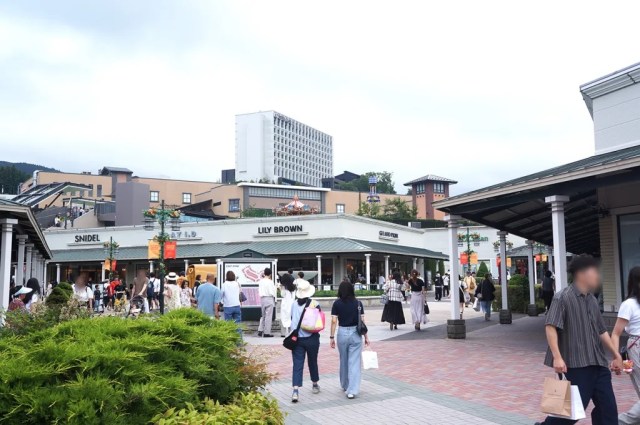
Gotemba has two claims to fame. For starters, it has a gigantic outlet shopping mall, split up into multiple terraced hillside sections. Many of the stores and shoppers here hail from overseas, and if you’re into high-fashion bargain-hunting, you could easily spend a whole day here. In fact, it’s because of the Gotemba Premium Outlet that there are direct buses to here from downtown Tokyo.
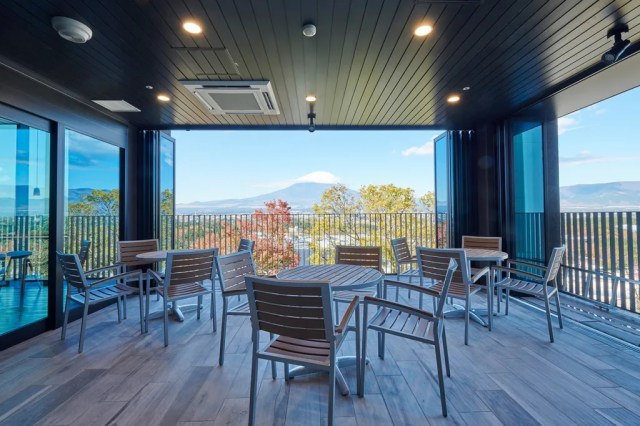
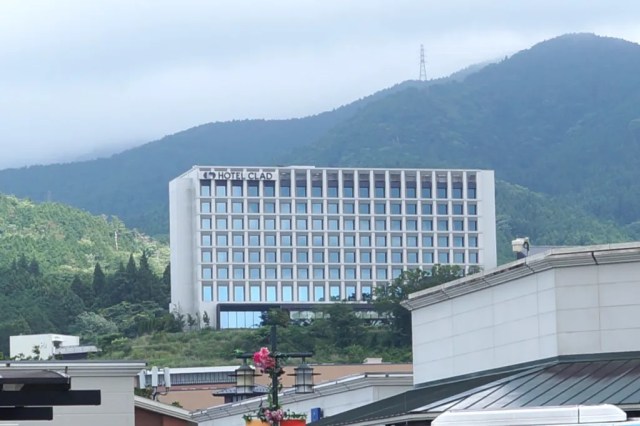
The other thing Gotemba is famous for is being one of the last sizeable cities before you get to the foot of Mt. Fuji, which means that the town has some impressive views of Japan’s tallest mountain. As a matter of fact, there are particularly nice vantage points from the luxurious Hotel Clad, which is adjacent to the outlets.
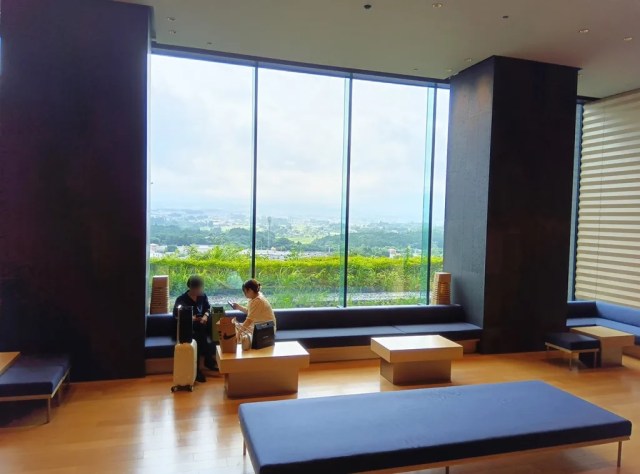
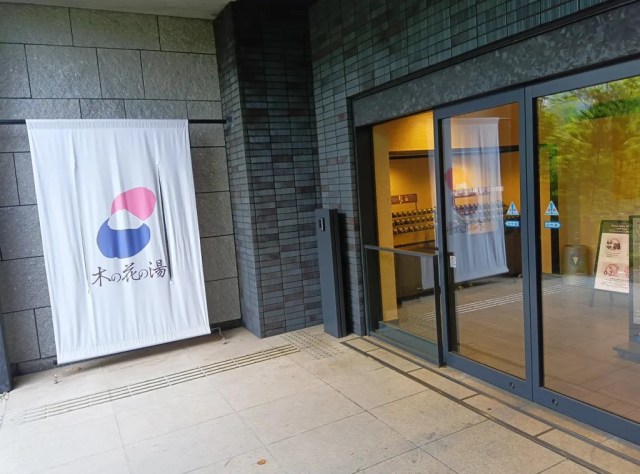
But Seiji wasn’t here for an overnight stay, so he wouldn’t be able to take in the view from the guestrooms. That didn’t mean he’d have to be content with looking through the hotel’s lobby windows, though, because the property’s attached hot spring bath facility, Konohana no Yu, is available for day-use, and the hotel’s restaurant buffet is open to non-overnight guests too.

▼ Konohana no Yu entrance. Note the “no bathing suits” sign; this is an authentic onsen, and you’ll need to be naked when in the baths. Adult admission is 1,700 yen (US$12) on weekdays and 2,100 yen on weekends and holidays, and private baths are available for an additional charge.
▼ Women’s and men’s bath entrances
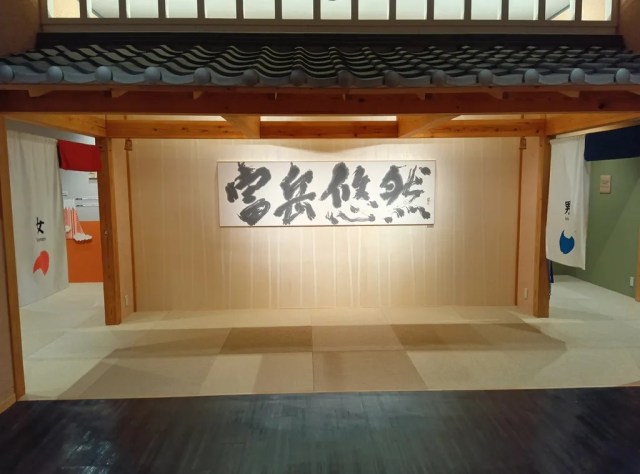
After undressing in the locker room and showering, it was time for Seiji to soak, and while the indoor bath area was spacious and appealing…
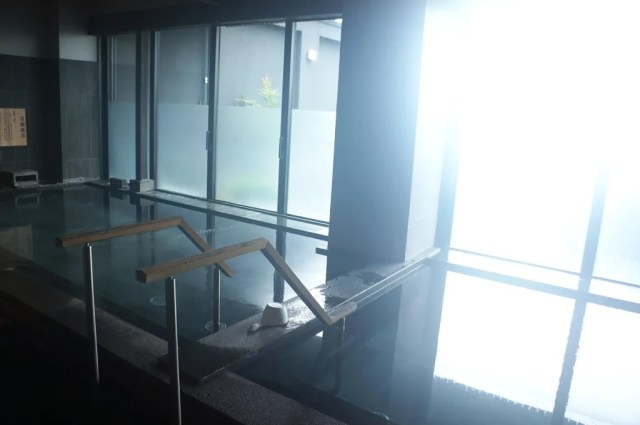
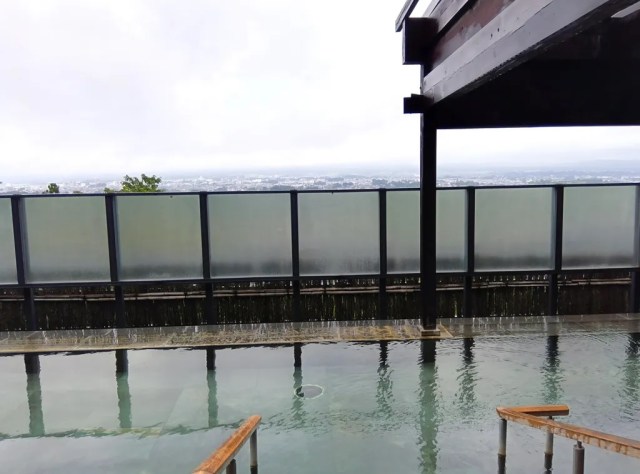
the highlight of an onsen trip is always the rotenbeuro, or open-air bath area.
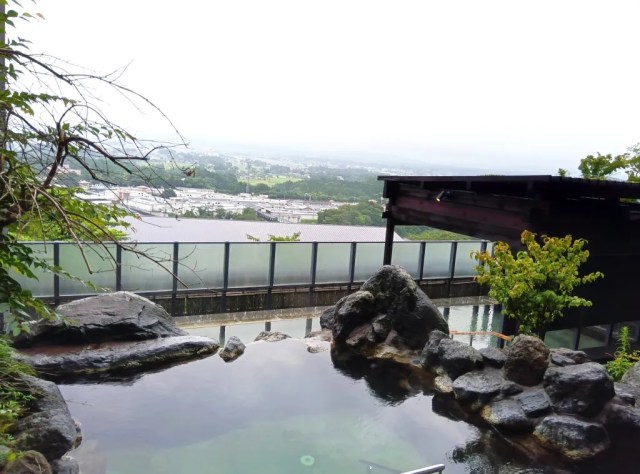
Because of its hillside location, the view from the bath area is wide-open and expansive, while still providing plenty of privacy for bathers from anyone outside the baths. Even though we’re in Japan’s rainy season, when the weather tends to be especially muggy, the rotenburo is situated such that there was a nice breeze, allowing Seiji to take an extended soak without getting uncomfortably sweaty from the atmospheric conditions.

Really, the only bummer was that Mt. Fuji isn’t just Japan’s tallest mountain, but its most notoriously shy one as well. It’s often hidden in clouds and fog, and that was true on this day too. The view was still beautiful, but if you’ve got your heart set on seeing Fuji from the bath, you’ll probably want to check the weather report before you decide to get on the bus.

But if the weather cooperates and you are able to see Mt. Fuji? The view from the baths is breathtaking, as you can see in the photos of clear-sky days that Konohana no Yu provided us with.
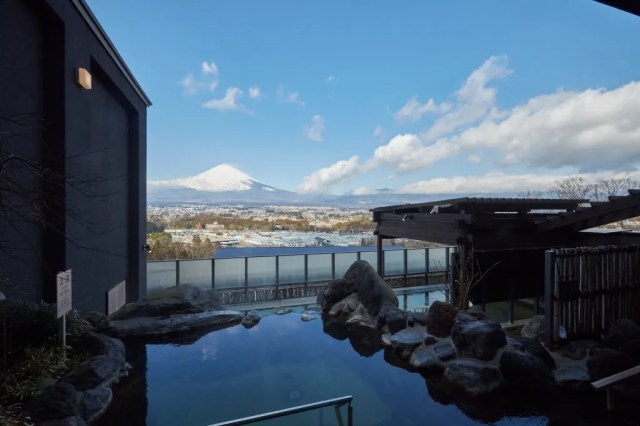
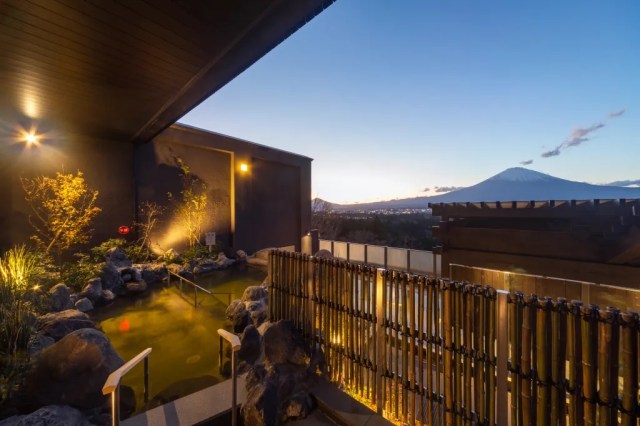
Even without being able to see the mountain, though, the combination of soothing hot spring water, which Konohana no Yu pumps in directly from the source, and alpine air quickly melted/blew away Seiji’s stress, and in place of it, he now felt hunger, so it was time to head to the buffet, which is served in the Hanagoromi restaurant on the hotel’s first floor.
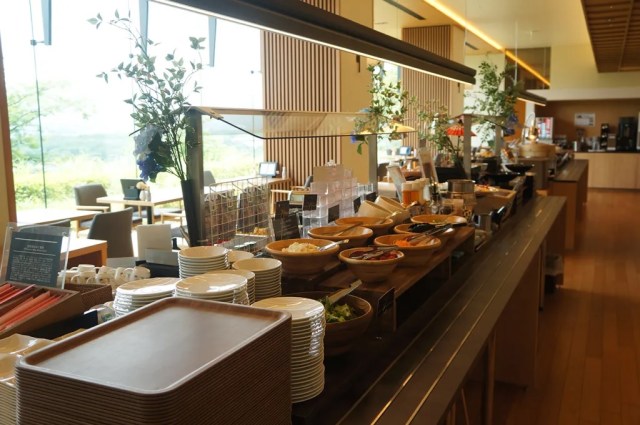
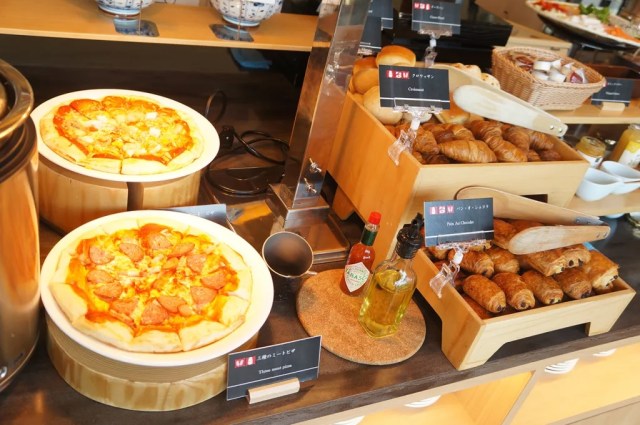
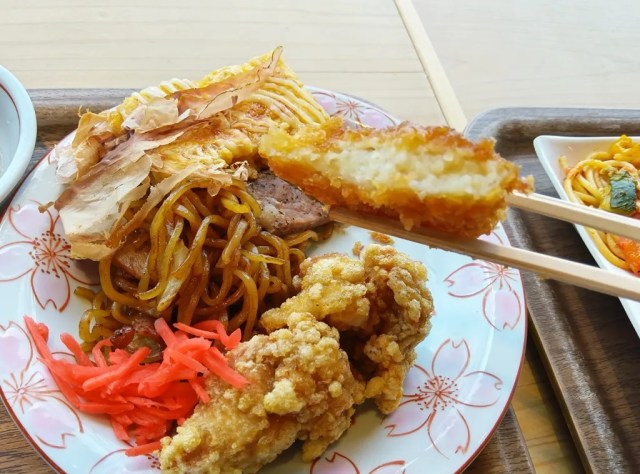
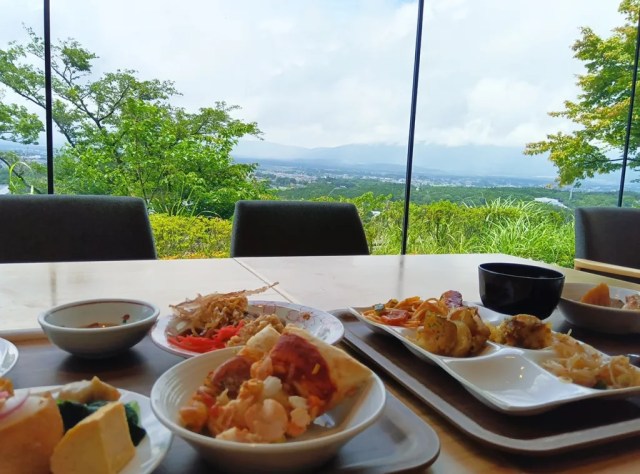
The lunch buffet is priced at 3,300 yen (US$23) for non-hotel guests and is served from noon to 3 p.m. Seiji recommends going towards the back half of that window, since the place tends to get crowded during the lunch rush, and when he sauntered in there was still plenty of delicious, freshly prepared food on offer.

▼ The croquettes, using potatoes grown in the town of Hakone in the neighboring prefecture of Kanagawa, were a standout, as were the just-baked croissants.
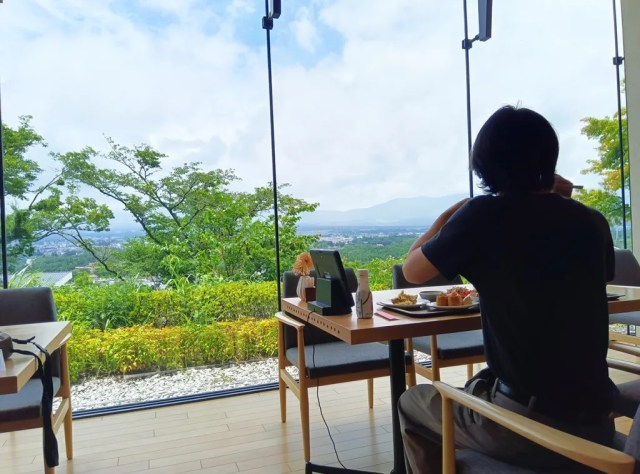
▼ The lobby area has panoramic windows so you can take in the scenery while you dig in.
After eating his fill, Seiji headed back into the baths, and as proof that this place is still worth visiting on a cloud day, when he was finally finished with all of his indoor bath, outdoor bah, and sauna sessions, he checked the time…
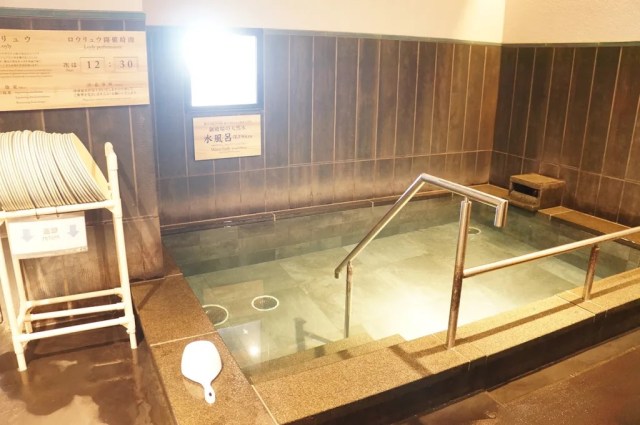
…and saw that he’d been here for a total of five hours!
Konohana no Yu’s baths are open from 10 a.m. to 10 p.m., but if you’re looking to follow in Seiji’s footsteps and do this as a day trip, the more important consideration is the bus schedule. One-way prices are almost the same between the outlets and Shibuya or Shinjuku (1,800 yen versus 2,000 yen, and by either route it’s roughly a two-hour ride, with the first buses of the day leaving Shibuya at 8:30 and Shinjuku at 8:05. Buses between the outlets and Shinjuku are far more frequent, though, and while the last bus back to Shibuya leaves the outlets at 4:10 in the afternoon, the last one for Shinjuku doesn’t depart until 7:20 on weekdays or 8 on weekends. With Shinjuku and Shibuya not being all that far from each other, depending on where you’re starting from the best plan might be to do what Seiji did and take a morning bus from Shibuya to the outlets, but return to Tokyo on a bus bound for Shinjuku Station or the Busta Shinjuku highway bus terminal.
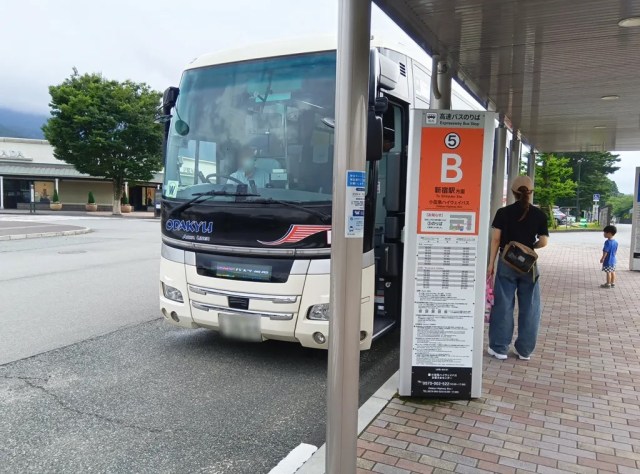
Another option is to make your way by train to JR Gotemba Station, which is still a 15-minute drive from the outlets, but there’s a free shuttle bus that’ll save you a taxi ride. Full details for buses can be found here on the Gotemba Premium Outlets website, and information for the Gotemba Station shuttle bus is available here on the Konohana no Yu website (both in English).

Location information
Konohana no Yu / 木の花の湯
Address: Shizuoka-ken, Gotemba-shi, Fukasawa 2839-1
静岡県御殿場市深沢2839-1
Open 10:30 a.m.-10 p.m.
Website

Photos ©SoraNews24 (unless otherwise indicated)
● Want to hear about SoraNews24’s latest articles as soon as they’re published? Follow us on Facebook and Twitter!


Credit: