Japan’s new Pokémon jackets give you the look and powers of the Kanto starter trio

Bulbasaur, Charmander, and Squirtle jackets won’t be available in stores, though.

Over the years, there’s been quite a lot of Pokémon fashion for fans to wear. But while most Poké-pparel is only concerned with the aesthetics of popular Pocket Monster species, a new line of jackets looks to give you a taste of their powers too.

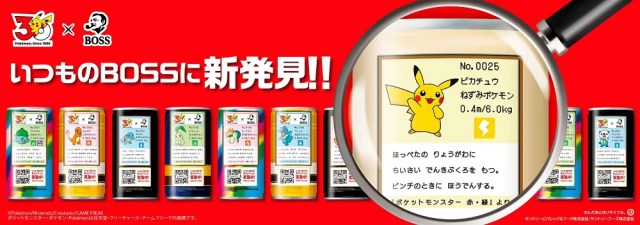
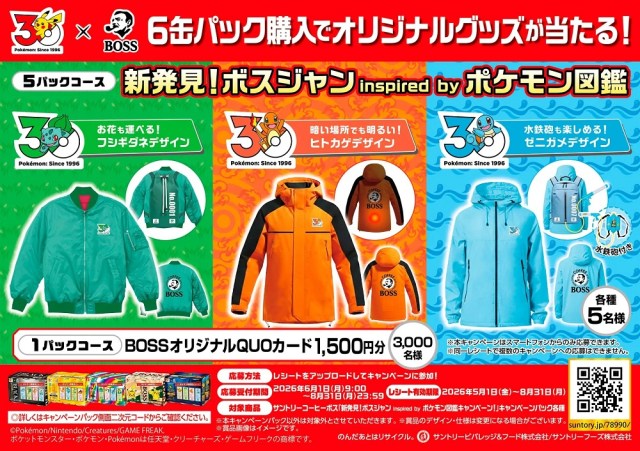
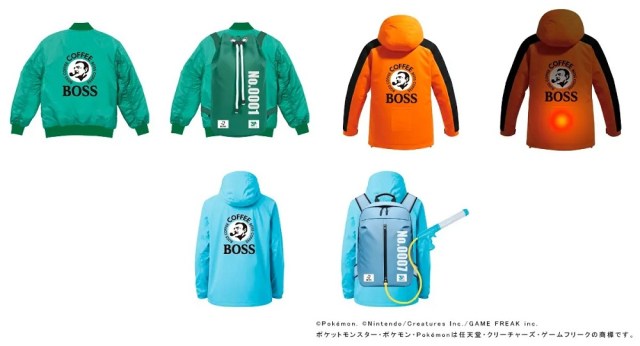
These creative designs are part of a collaboration between Pokémon and beverage maker Suntory’s Boss canned coffee. Boss has been giving away branded jackets as part of its promotional activities for years, but for their next round of giveaways they’ll be taking their design cues from he original Kanto Region/Gen-1 starter trio: Bulbasaur, Charmander, and Squirtle. Naturally each jacket uses the species’ image colors, but the Bulbasaur jacket comes bundled with a backpack that opens at the top, allowing you to carry flowers on your back, where Bulbasaur’s blossoms is found. The Charmander jacket includes a light-up LED section in the small of the back, right about where the Fire-type’s always-on-fire tail tip would be. Finally, the Squirtle jacket comes with a backpack that holds a water tank and a squirt gun to hook up to it, so that you can douse your friends (or yourself) on hot, sunny days.

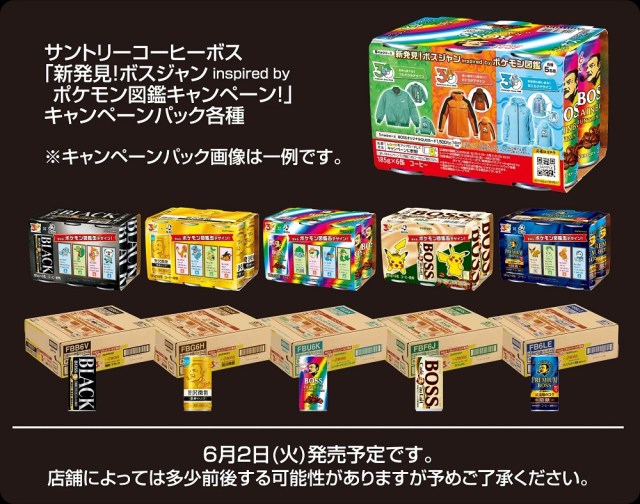
The jackets will be given to randomly selected shoppers who purchase five six-packs of Boss coffee with special Pokémon packaging. A total of 15 jackets (five of each type) will be given away, all in a “free size”/one-size-fits-all size, so likely around a loose-fitting adult medium or large. The Bulbasaur and Squirtle backpacks can also be removed, if you want to keep your  Pokémon powers under wraps.

▼ For those wanting to do their shopping all in one fell swoop, you can purchase a case of five six-packs all packaged together.

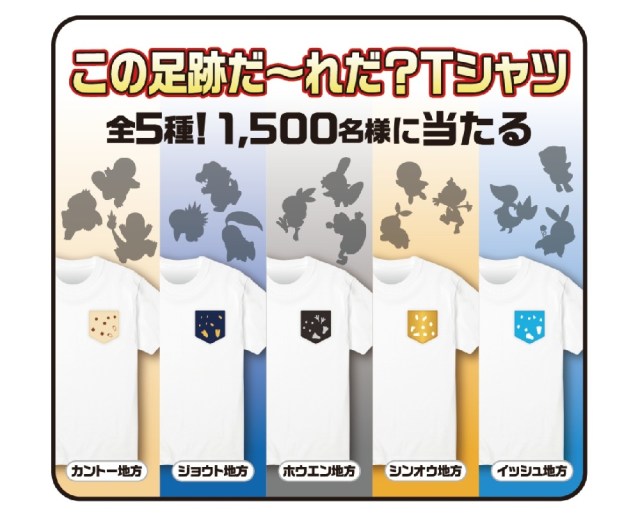
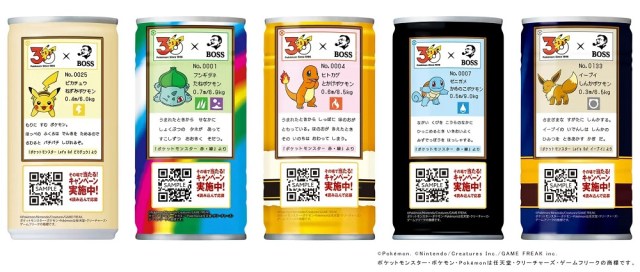
During the collaboration, Suntory will also be giving away 1,500 Pokémon footprint T-shirts, representing the starter trios from the Kanto, Johto, Hoenn, Sinnoh, and Isshu. These can be won by scanning the QR code on Boss’ special Pokédex-style cans

The Pokémon Boss six-packs are scheduled to go on sale June 1, and the individual cans will be available from June 2. The giveaway campaign runs from June 1 to August 31, so you should have your Bulbasaur, Charmander, or Squirtle jacket before the start of crisp fall weather.

Source: Suntory, PR Times
Top image: PR Times
Insert images: PR Times, Suntory
● Want to hear about SoraNews24’s latest articles as soon as they’re published? Follow us on Facebook and Twitter!


Credit:

War in Iran threatening Japan’s pudding production

If you don’t end the war, you can’t have any pudding! How can you have any pudding if you don’t end the war?!

There are few desserts as beloved in Japan as pudding, though I always have to go through the long-winded discussion that this “pudding” is actually purin. It’s a type of firm custard served with a caramel topping and similar to a creme caramel or flan in other countries.

Its soft texture and gentle sweetness make it a treat that people of all ages can enjoy, and it has earned a long-standing reputation as one of Japan’s top-tier snacks. However, Japanese pudding is facing an existential crisis, and it’s all because of the ongoing war in Iran.

So far, Japan has managed to handle the oil crisis fairly well. A few people were panic-buying toilet paper for a while, but that’s par for the course, and gas prices have risen, but just a few months earlier, the government removed a tax on gasoline. As a result, gas prices basically just rose more or less back to their taxed levels which people always had to deal with.

On the other hand, cracks are beginning to appear in the country’s supply of naptha, an essential component in the production of plastics. Originally, the government said there was enough oil in reserves to last four months, but industries are saying the reality is only two months. As proof, some pudding makers are already announcing that they may not be able to produce any more by the end of May.

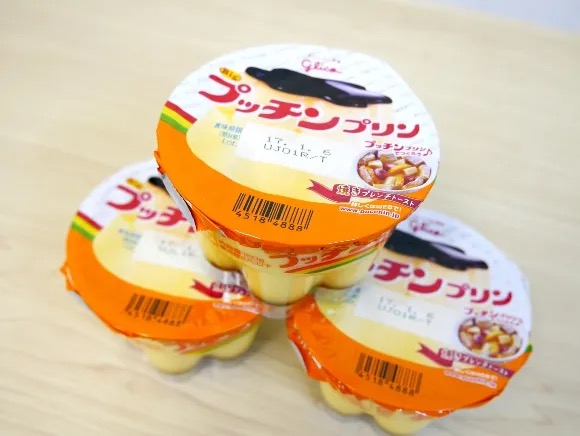
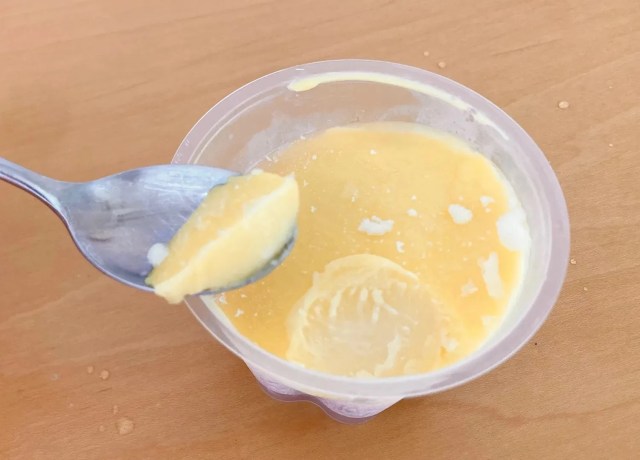
▼ Get some now, while it lasts.

The reason for this is that pudding is usually packaged in plastic cups, and without naptha, they won’t be able to make any more cups and have nothing to sell their pudding in.

Of course, alternatives such as paper and glass exist, but they would require a huge overhaul of manufacturing and still rely heavily on oil. Paper cups usually use a naptha-based film to waterproof the inside, and glass requires a great deal of heat to make. So, even if they went to the trouble of revamping their factories, they’d probably just end up in the same situation.

And although pudding makers are among the first to cry uncle at the current oil crisis, with plastic being such a big part of our daily lives, this is a problem that will affect just about every business out there at some point. Readers of the news were quick to point this out, too.

“If I look at supermarket shelves, I can’t find anything that isn’t plastic.”
“They won’t be able to build houses either.”
“They’re cutting off our pudding?”
“If they can’t make pudding then how can they make anything else?”
“So, charging for plastic bags was a good idea after all?!”
“This is even worse than rising prices. It’s just going away.”
“How many garbage bags do we have left as a country?”
“I read that tofu containers and plastic wrap are also in a bad situation.”

Now that they mention it, tofu has a very similar consistency to pudding, and has existed in Japan well before the advent of plastic packaging, or any kind of mass production for that matter. So, how did people buy it back then?

There were two ways, the first of which involved bringing your own bowl or bucket to the tofu shop and getting a fresh slice to take home. The other way was to wait for the Tofu Man to come to your neighborhood with a bucket of tofu. He’d announce his arrival by playing a horn called a charumera.

▼ You can still find guys pulling ramen carts through neighborhoods and playing a charumera these days. It’s kind of the same idea.

It seems like pudding makers should just abandon plastic altogether and consider hiring fleets of Pudding People to wander the streets playing horns and selling pudding to all the townsfolk of Japan. It would reduce waste, creates jobs, and be downright charming.

Source: Nikkei, Real Time News Navi, Twitter/@nikkei, Hachima Kiko
Photos ©SoraNews24
● Want to hear about SoraNews24’s latest articles as soon as they’re published? Follow us on Facebook and Twitter!


Credit:

An interview with Evangelion’s composer, Shiro Sagisu

Our anime-loving musician reporter sits down for a talk with an anime music legend.

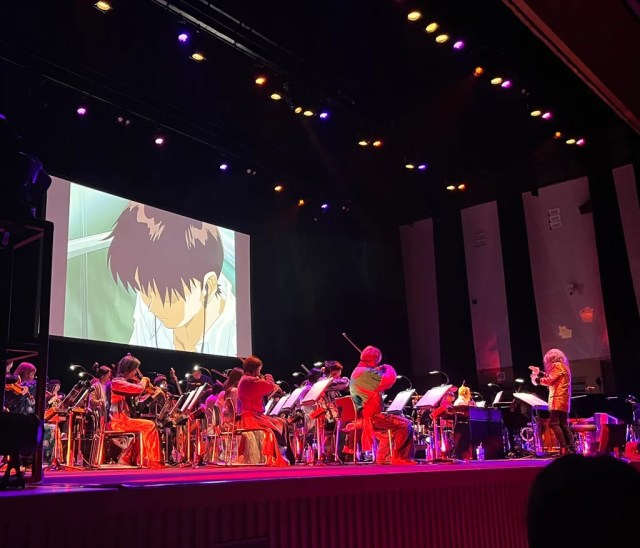
Two of our Japanese-language reporter Seiji Nakazawa’s favorite things in life are music and anime. So when he checked his email inbox and saw that he’d gotten an invitation to Back to Neon Genesis, an Evangelion musical retrospective held in Osaka held at the end of March, there was no way he was going to say no…even though he felt a little nervous about the trip.

See, Seiji wasn’t just going to be attending the event and its concert, he was also going to be interviewing Shiro Sagisu, the Evangelion franchise’s composer. Even without his Eva works Sagasu has legend-level credentials, having contributed to the Bleach, Berserk, Nadia: The Secret of Blue Water, Kimagure Orange Road, and Attack on Titan anime, as well as the Shin Godzilla and Shin Ultraman movies, plus numerous non-anime/film-related pop music projects over a nearly 50-year-long career so far.
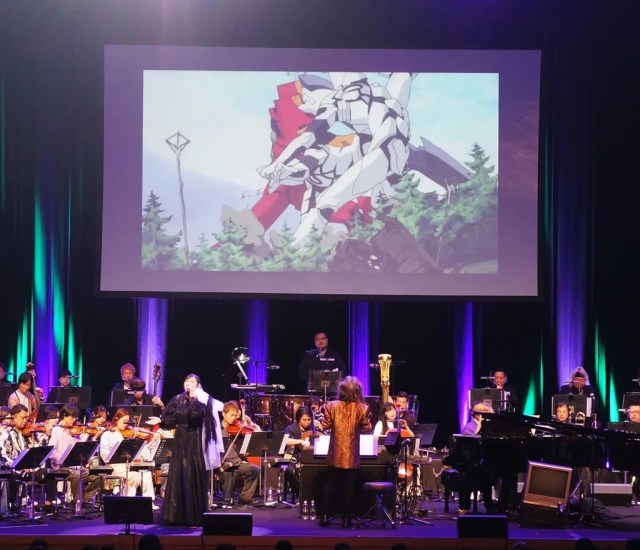
So yeah, Seiji was nervous about meeting one of his idols. But just like how Eva protagonist Shinji keeps telling himself that he mustn’t run away, so too did Seiji repeatedly remind himself of that mantra. As a matter of fact, he went in the opposite direction, transforming himself from mild-mannered reporter…

…to Yngwie Malmsteen.

As longtime readers will remember, Seiji occasionally channels the spirit of the famous Swedish rock guitarist when he needs a boost of confidence, and Seiji could feel his tension transitioning to steely determination as he rode the Shinkansen from Tokyo to Osaka.
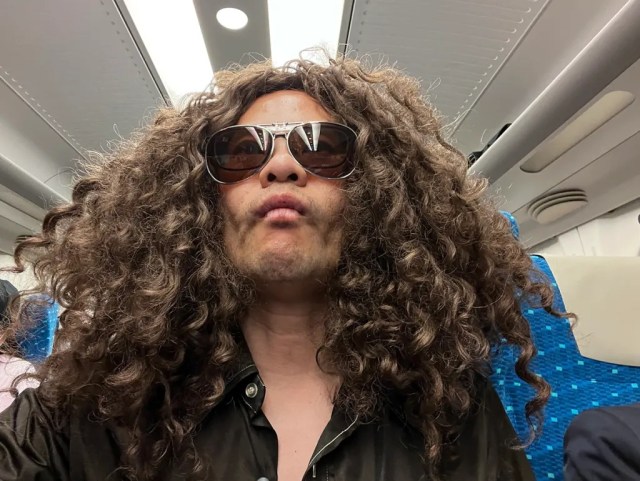
After all, even if he’s not really Yngwie Malmsteen, Seiji is the guitarist for Japanese indies band si,irene, and with he and Sagisu both being musicians, he was sure their hearts would somehow synchronize during the interview.

And besides, it’s not like Sagisu is the sort of person to be put off by flashy fashion or hairstyling.

As a matter of fact, Sagisu had requested that Seiji specifically interview him. It turns out that he’s a fan of Seiji’s, regularly reading his articles about music and food, and with Seiji being a native of Osaka, where Back to Neon Genesis was being held, it all seemed even more appropriate.

Having exchanged warm greetings, it was time for the interview to get underway, and Seiji decided to jump right into some deep questions about the music of Evangelion.

Seiji: The arrangement for the [Evangelion] song “Komm, Susser Tod” in today’s concert had a very Baroque feel, but was that first time for you to perform that arrangement?

Sagisu: Yes, this was the first time for it to be performed in public. Usually, insert songs that appear in the middle of a movie don’t become very famous, so there’s no point to changing up their arrangements. Thankfully, though, “Komm, Susser Tod” has become well known all over the world, so I was able to put a lot of little playful touches into this new arrangement.

Seiji: It’s my favorite piece from Evangelion, and I liked the joyous U.K. rock feel of the original version, but the Baroque arrangement is so dramatically different that if feels like an entirely different song.

Sagisu: The most rewarding part of tweaking the arrangement for a song is when it gets people talking about it, so seeing that I was able to pull you in like that makes me feel really happy (laughs). Back to Evangelion is a film concert covering the Neon Genesis Evangelion TV series that premiered in 1995. But “Komm, Susser Tod” is from the theatrical feature from 1997, so finding a way to work it into this concert was a way to surprise the audience.

Seiji: In 1997’s The End of Evangelion movie, I always remember the scene where Asuka is fighting against the Mass Production Evangelions. It’s such a desperate, intense scene, but set to the gentle, beautiful melody of Johann Sebastian Bach’s Air, and that contrast made the feeling of despair even sharper. Was it your decision to do that?

Sagisu: No. Using Bach in The End of Evangelion, and Beethoven’s Ninth Symphony in the Evangelion TV series too, were the decisions of [Evangelion creator and director] Hideaki Anno. Like you said, though, those were very bold directorial choices.

Seiji: I have one more question, from a musician’s perspective, about Evangelion. The melodies for the pieces “Thanatos” and “Asuka Strikes” are so catchy that I find myself unconsciously humming them on practically a daily basis. So when you’re composing, are you thinking about the melody as the first part?

Sagisu: Ah, that’s an excellent question! I can really tell that you’re a fellow musician. When making music that’s going to accompany another work, Evangelion, the melody and arrangement tend to well up inside of me together, at the same time. Then I take that and write it down as sheet music. For me, the melody, accompaniment, and rhythm all form together, so I transfer them to the sheet in that way.

By the way, as we mentioned above, while Seiji is a fan of Sagisu, Sagisu is also a fan of Seiji. In particular, he enjoys reading about Seiji’s band activities, and so Seiji brought along one of si,irene’s new demo tapes, and a boombox to play it on.

“This is my first time to hear your music, Seiji,” Sagisu told our reporter, “but your guitar sounds really good. You play with skill, and the sound is well-crafted. It reminds me of the sound of the band of Mike Wyzgowski, my English friend who wrote the English lyrics that appear in Evangelion. Your guitar-playing has a very U.K. feel to it…it really does sound great.”

So in the end, Seiji was reminded once again of the importance of not running away, and also the importance of continuing to make music.

Photos © SoraNews24
Evangelion ©︎khara/Project Eva. ©︎1997 khara/Project EVA
● Want to hear about SoraNews24’s latest articles as soon as they’re published? Follow us on Facebook and Twitter!


Credit:

Finnish design brand Iittala partners with Pokémon for a golden first collaborative tableware set

The brand’s Origo line of bold-patterned tableware makes for a shockingly good partner with the world’s favorite Pokémon.

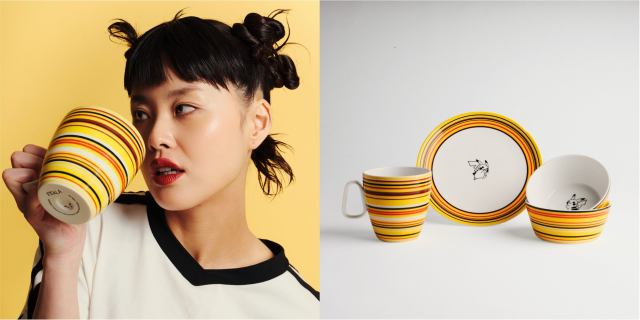
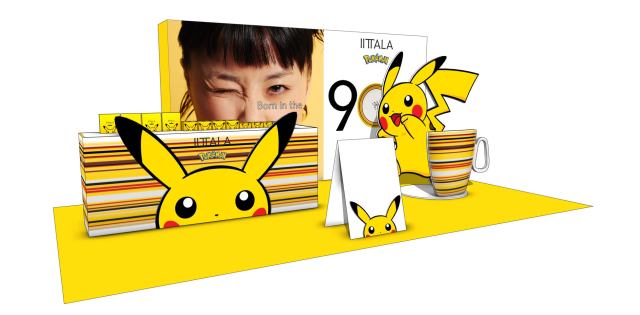
Finnish design brand Iittala, originally founded as a glassware company in 1881, is bringing its design A game to Pokémon’s 30th anniversary party this year. Three collaborative products are being released under the brand’s series of Origo tableware in Japan, which is beloved for its bold, striped patterns and functional designs that blend in effortlessly with daily living. In a fun connection between Pokémon and Origo’s origins, both of which were born in the latter half of the 1990s.

▼ The three Pokémon x Iittala collaborative items make use of bright yellow hues and images of Pikachu.

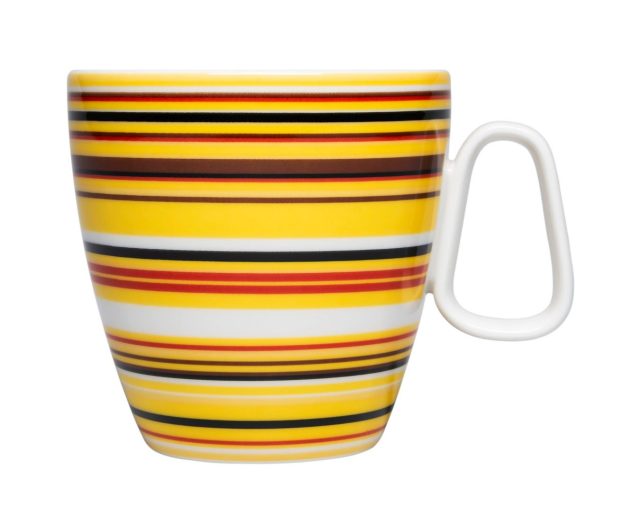
First, the mug consists of an elegantly simple design with a variety of different-sized stripes. It holds 0.4 liters (13.5 ounces) of liquid and retails for 5,500 yen (US$34).

Second, the bowl makes the outer stripes look even bolder. A cute illustration of Pikachu is also hiding on the inside bottom and is ready to greet you when you finish your meal. It holds 0.25 liters of substance and retails for 5,280 yen.

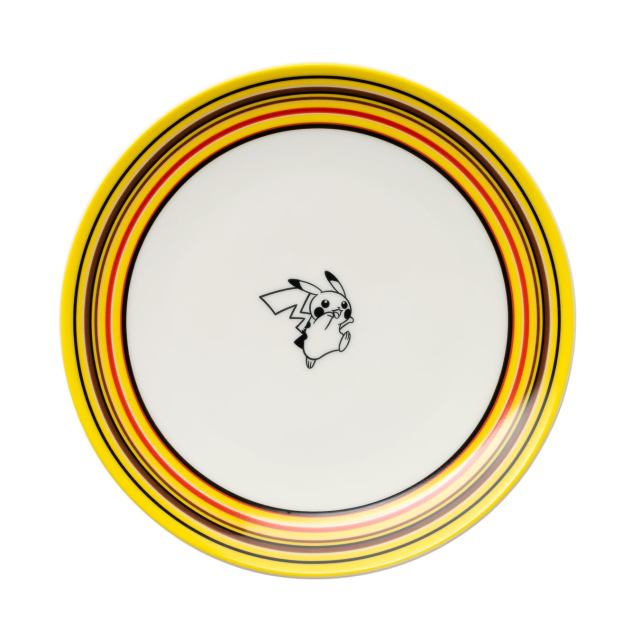
Third, the plate puts the focus on a frolicking Pikachu right in the center. Its diameter is 20 centimeters (7.9 inches) and it retails for 5,500 yen.

The Iittala x Pokémon collaborative lineup goes on sale on May 1 at Iittala stores around Japan and Iittala Japan’s online shop.

As a bonus, a special pop-up spot celebrating the team-up will be available between May 1 through May 6 in Tokyo’s Atré Ebisu Main Building. Visitors can pose with a giant illustration of Pikachu with the collaborative Origo mug and Pikachu. There’s also an Iittala store on the 5th floor of the same building that will be selling the merchandise.

It’s been a good year so far for Pokémon-inspired tableware collaborations. In fact, we can barely hold our (fire) horses to find out what special team-up will be next!

Event information
Atré Ebisu Main Building 4th floor Fontaineau Plaza / アトレ恵比寿本館 4F フォンテーヌ広場
Address: Tokyo-to, Shibuya-ku, Ebisu-minami 1-5-5
東京都渋谷区恵比寿南1丁目5−5
Runs May 1-6, 2026
Open 10 a.m.-8 p.m.

Source, images: PR Times
● Want to hear about SoraNews24’s latest articles as soon as they’re published? Follow us on Facebook and Twitter!


Credit:
Second-generation sumo burger coming to Burger King Japan with return of Baby Body Burger

New collaboration with Japan Sumo Association is even more deacdent than the last.

Sumo is a cultural tradition with centuries of history of ceremony, and also a deep, complex sport with dozens of power, footwork, and strategic techniques compressed into every bout. And yet, it’s almost impossible to watch a sumo match and not be thinking, at least a little bit, about food.

That’s an unavoidable side effect of a sport in which sheer mass is a prerequisite for reaching the highest levels of competition, and if thinking about sumo also has you feeling hungry, Burger King Japan is ready with the Second-generation Baby Body Burger.

As the name implies, this is the second time for Burger King Japan to create a burger with the official approval of the Japan Sumo Association, following their initial collaboration roughly a year ago. Once again, Burger King has crafted a gigantic sandwich, calling it a “Yokozuna-class super jumbo-sized cheeseburger.”

The Second-generation Baby Body Burger bears a strong family resemblance to the first-gen, with five all-beef patties. This time around, though, Burger King has doubled the amount of cheese, with eight slices instead of the original’s four. You also get four slices of smokey bacon, onion, pickles, ketchup and mustard. In total, the sandwich weighs 661 grams (1.46 pounds) and will transfer 1,856 calories to you as you eat it. Believe it or not, this actually makes the Second-generation Baby Body Burger a lighter option than the original was, as the first-generation version was 668 grams and 1,876 calories.

▼ Don’t worry, though, this slight reduction in calories seems to have been achieved by jettisoning the lettuce and tomato from the first-gen Baby Body Burger, not lessening the amount of meat.

Burger King Japan recommends asking the staff to cut your Second-generation Baby Body Burger in half for you when ordering, but this is not because they’re trying to talk anyone out of eating the whole thing in one sitting. Instead, the half-cut suggestion is to make the burger easier to hold, and also to allow you to directly bite into the middle of the patty, the center, right from the very start.

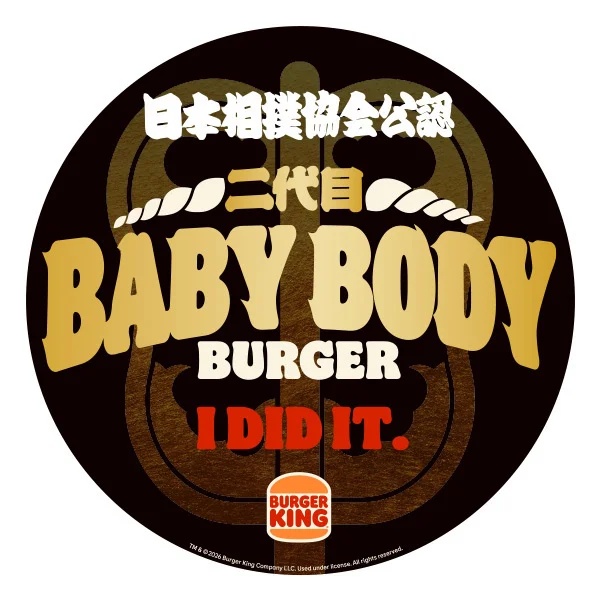
While supplies last, purchasers of the Second-generation Baby Body Burger will also receive a sticker announcing “I did it,” which should serve as a handy alternative to attempting to speak after you’ve just stuffed yourself with so much beef.

The Second-generation Baby Body Burger is priced at 2,890 yen (US$18.65) by itself or 3,190 yen as a set with fries and a drink. It goes on sale for a limited time starting May 1, roughly a week and a half before the start of the spring sumo tournament at Tokyo’s Kokugikan arena. The Baby Body Burger will be available at all Burger King Japan branches except the Tsugaike Snow Square branch in Nagano and the Tokyo and Kyoto Racecourse horse tracks (and considering that it’s not the most responsible meal choice, maybe it’s for the best that it’s not offered at gambling facilities). Oh, and if you’re wondering what sort of dessert to have after it, Burger King Japan has just launching its King Fusion frozen treats.

Source: PR Times
Top image ©SoraNews24
Insert images: PR Times
● Want to hear about SoraNews24’s latest articles as soon as they’re published? Follow us on Facebook and Twitter!


Credit:
Sanrio amusement park in Tokyo to host Psycho Game horror event this summer[Video]

After Hello Kitty goes home for the day, some decidedly less cute characters will be taking over Sanrio Puroland.

June is the rainy season in Japan, so if you’re going to be traveling in the Tokyo area around that time, it’s probably best to have a few indoor ideas as part of your itinerary. For example, Sanrio Puroland is a Tokyo theme park dedicated to Hello Kitty and company, and it’s entirely indoors, meaning you can enjoy it to your heart’s content regardless of how wet or humid the weather is outside.

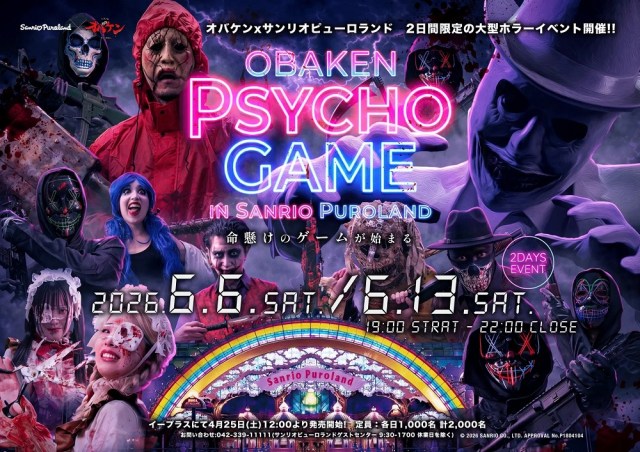
As you might expect, in addition to its regularly scheduled attractions and shows, Puroland often has limited-time events that put the spotlight on certain characters, and if you visit on one of two special nights in June 6 and 13, you’ll be able to play the Obaken Psycho Game with the Psykers.

If you’re having trouble recalling the Psykers from the last time you browsed through the plushies at a Sanrio store, that’s because they’re the creation of Obakeyashiki Obaken, a Tokyo-based haunted house design company. In one of the stranger partnerships in the theme park industry, Obaken and Sanrio team up on an annual basis to hold horror events at Puroland. These aren’t silly, gently spooky productions, either – children younger than middle school-age are barred from entry, and the regular Puroland crowd is cleared out in the evening before the event starts, to ensure no little tykes are traumatized.

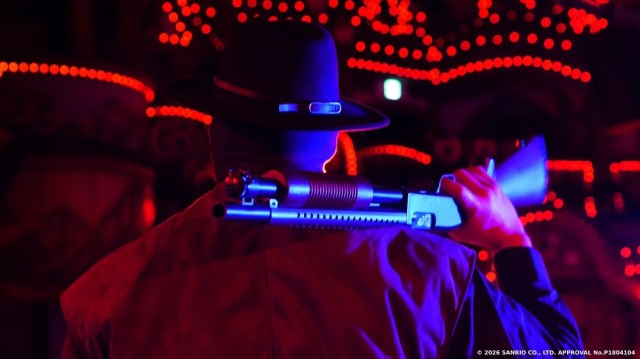
As for traumatizing adults, though? That scenario is definitely on the table, as the above preview video shows. While previous Obaken Puroland events have had zombies, ghosts, and other supernatural entities stalking guests, for this year’s Psycho Game your adversaries will be the criminal organization Psykers, in keeping with the designers’ shift of theme to “human madness.”

The framing device for Psycho Game is that the Psykers, without making any explicit demands, have sealed the exits from Puroland and forcing those inside to play a series of seven “games,” set up in different areas of the facility. Play them well, and you’ll accumulate points towards your release (and some sort of commemorative merch for those who play exceptionally well). Play poorly, though, and you’ll be subjected to “terrifying penalty games.”

The Psykers will also be roaming the halls of Puroland, ambushing you as you attempt to make your way from one game to the next.

Obaken Psycho Game in Sanrio Puroland will be taking place from 7 to 10 p.m. on June 6 and 13, with a total of 1,000 tickets available for each date. Reserved tickets, available now through the event’s official website here, are priced at 7,480 yen (US$48), while at-the-door tickets, if any are left, will be 8,480 yen.

Related: Sanrio Puroland official website, Obaken Psycho Game in Sanrio Puroland official website
Source, images: PR Times
● Want to hear about SoraNews24’s latest articles as soon as they’re published? Follow us on Facebook and Twitter!


Credit:
Final Fantasy VII’s Sephiroth finds happiness in a canned cocktail[Video]

Hero-turned-villain enters the celebrity endorser stage of his character arc.

Over the course of Final Fantasy VII and its associated spinoffs, Sephiroth goes on one of video gaming’s most iconic hero-to-villain arcs. He starts off as the most powerful and accomplished member of the organization Soldier, dispatched to cull dangerous monsters and idolized by the common people as a symbol of strength and protection, but descends into madness and becomes a self-fashioned would-be cleanser of the planet, willing to adopt some very violent methods to achieve his ambitions.

Honestly, the guy really needed to find a better way to blow off some steam. Like, maybe instead of trying to erase mankind, he should have just clocked out of work and cracked open a nice relaxing drink, like he does in this video.

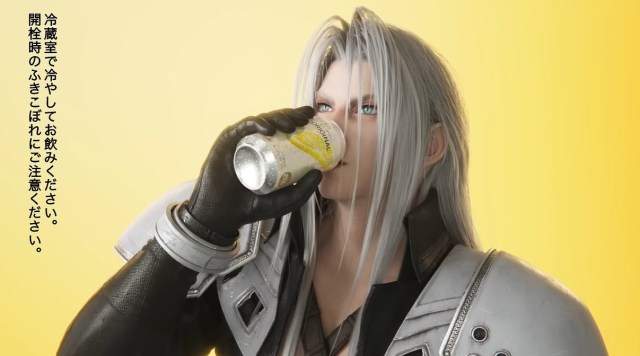
Yes, Sephiroth is now Japan’s newest celebrity canned cocktail endorser. It makes sense. Since he’s no longer a member of Soldier, he’s not getting paychecks from Shinra Electric Power Company anymore, but he’s still got to earn a living, so why should he turn down an offer from Asahi and their Future Lemon canned cocktail line?

▼ The on-screen text here, “Please drink after chilling in refrigerator. Please be careful of spilling when opening the can” was likely added by Asahi, but we suppose it could also be Sephiroth’s internal dialogue as he knocks back his Future Lemon.

Future Lemon’s selling point is that it isn’t just made with fruit juice, it has an actual lemon slice floating inside the can. The video has some fun with that, showing Sephiroth using his famed Masamune sword to make the necessary cuts, accompanied by his narration of:

Slice through the lemon.
This is the real thing.
Not just drinking.
So happy.
Future Lemon, with real fruit.

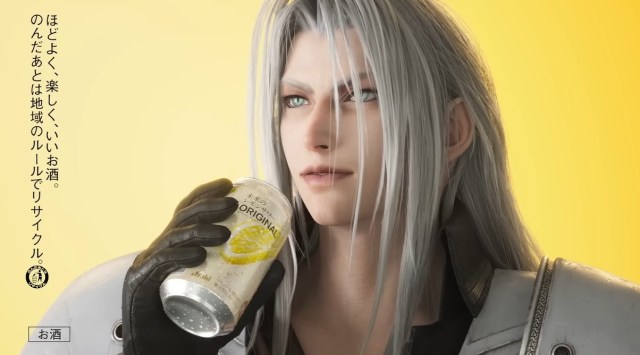
▼ Yes, Sephiroth, one of the gloomiest video game characters ever, has found happiness in a canned cocktail. He also reminds you to enjoy alcohol in moderation and recycle your empty cans, as per the text here.

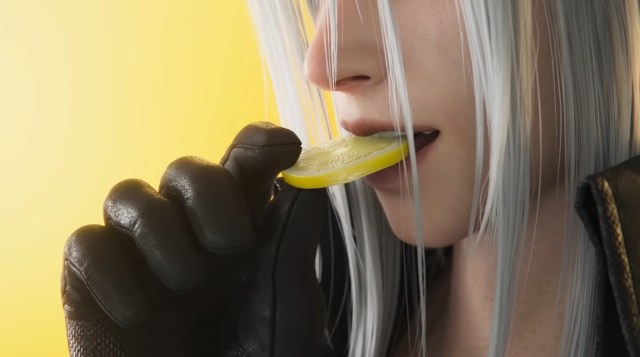
While the primary purpose of the sliced lemon is to add extra fresh flavor to the drink, Asahi also recommends eating the fruit from the Future Lemon, and makes sure to include some close-ups of Sephiroth’s lips in the video.

This isn’t Future Lemon’s only tie-up with Final Fantasy VII either, as there’s also a real-world version of Tifa’s Seventh Heaven bar set to open in Tokyo this week, though there’s no word on whether or not Sephiroth himself will show up or if he’s more of a drink-at-home guy.

Source: YouTube/アサヒグループ公式チャンネル via Denfaminico Gamer
Images: YouTube/アサヒグループ公式チャンネル
● Want to hear about SoraNews24’s latest articles as soon as they’re published? Follow us on Facebook and Twitter!


Credit: