Studio Ghibli combines anime and craftsmanship in new Totoro and Jiji Gobelin tapestry bags

Traditional craft brings hand-drawn anime characters to life with unique warmth.

Studio Ghibli is known for championing old-school traditions through its animated storylines and love of hand-drawn animation, and its appreciation for craftsmanship also extends to its official merchandise collections.

A good example is the studio’s latest release, which shines a light on Gobelin tapestry weaving, a centuries-old European textile technique renowned for its rich texture and intricate woven designs. It’s a craft that fits in well with Ghibli’s hand-drawn anime aesthetic, and for this release, Jiji from Kii’s Delivery Service and Totoro from My Neighbour Totoro are being brought to life in beautifully woven form, on a pouch and mini bag made with the magic of Gobelin tapestry.

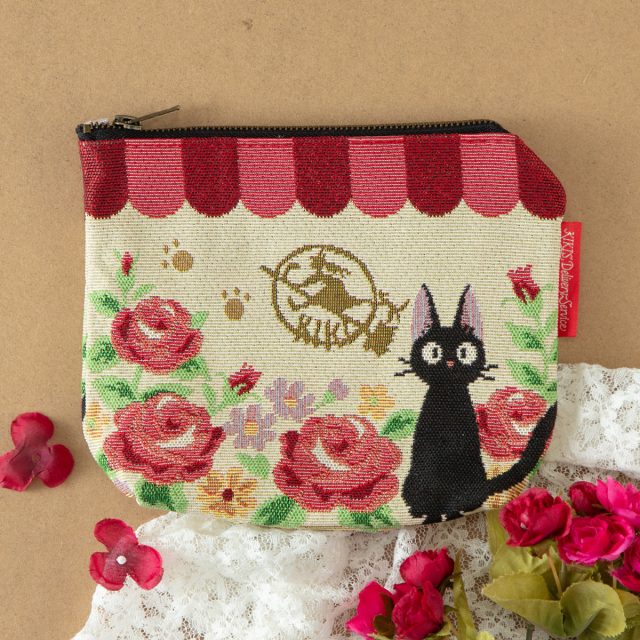
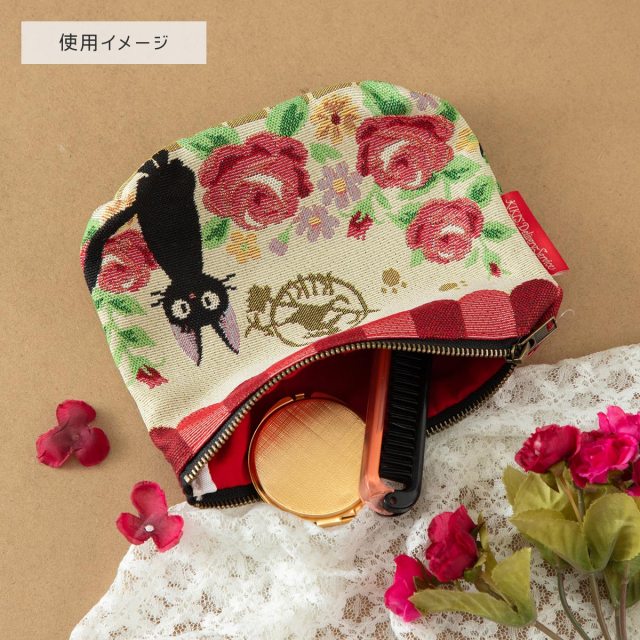
▼ The Kiki’s Delivery Service “Under the Eaves” Jiji Pouch (2,530 yen [US$17.40]) features subdued colors and an elegant, sophisticated design.

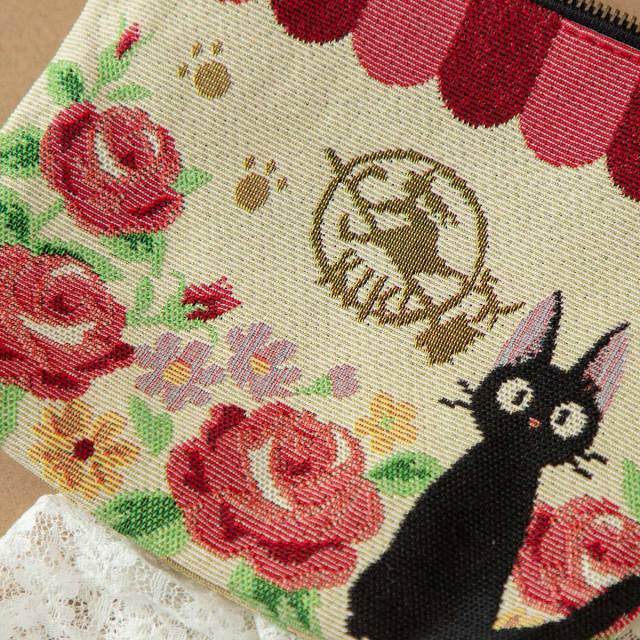
This pouch is cleverly crafted to create a charming shopfront scene, with Jiji sitting beneath the eaves, surrounded by a rose-filled floral display. Though titular character Kiki isn’t officially present, the “Kiki” logo in the centre recalls the bread wreath in the shopfront of the film’s bakery, making her presence felt in the design.

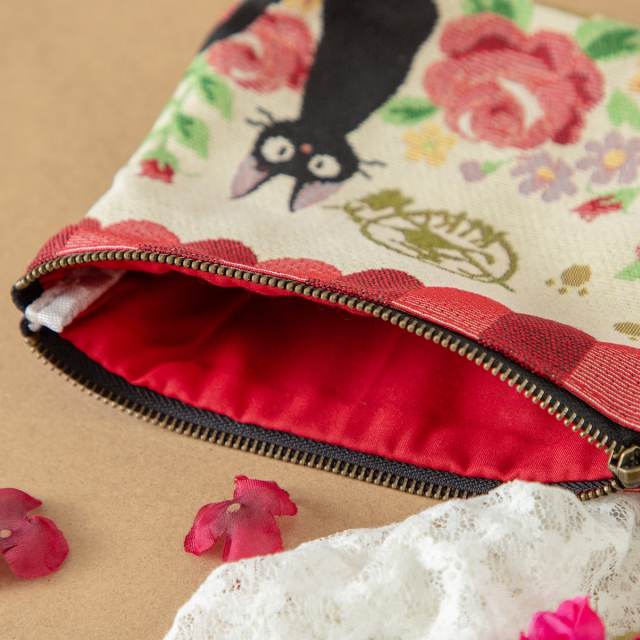
Measuring 17 × 21.5 × 6 centimetres (6.7 × 8.5 × 2.4 inches), the pouch is a convenient size for storing small items such as cosmetics, earphones, and keys.

It can be used on its own as an everyday pouch or inside a larger bag to help keep your things neat and organised.

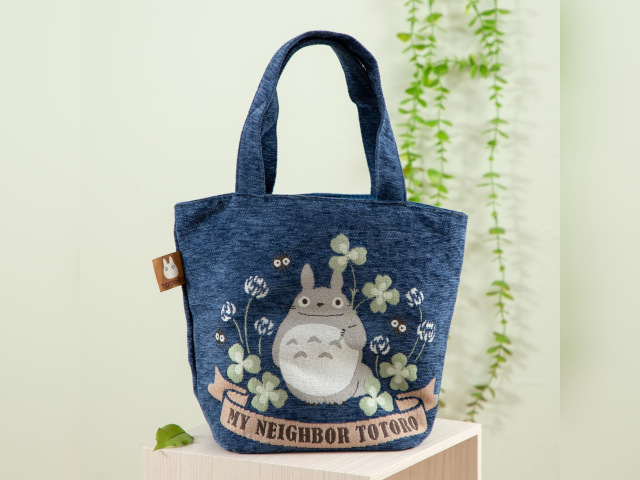
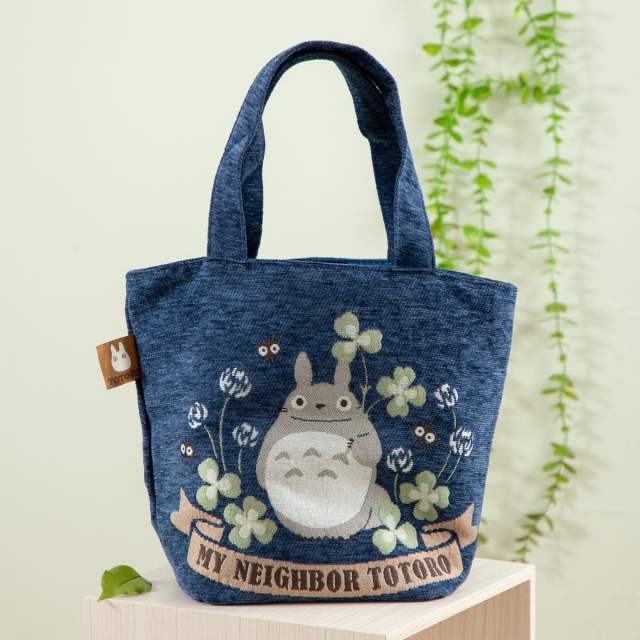
If you’re looking for a larger bag to pair it with, then the My Neighbour Totoro ‘Clover Season’ Mini Bag (3,850 yen) acts as a very sweet partner.

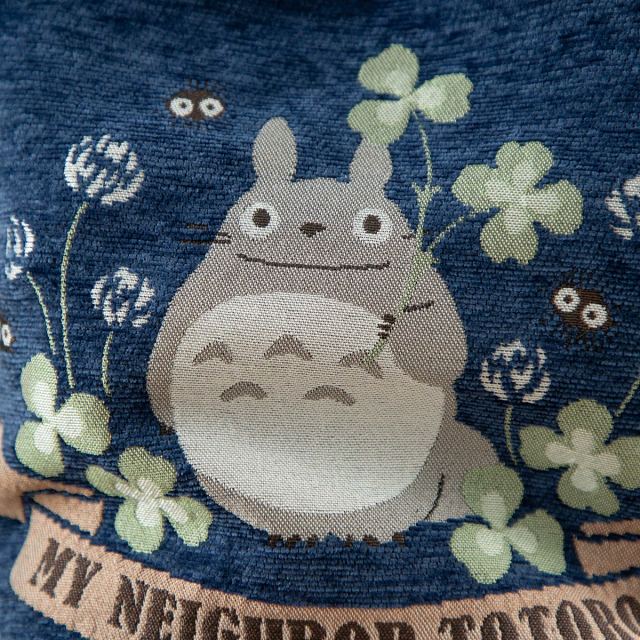
This design features Totoro surrounded by an elegant woven clover pattern, with a trio of Soot Sprites for company.

Measuring 26 × 32 × 15 centimetres, this bag is ideal for quick outings. The navy tapestry design gives the bag a sophisticated look and luxurious feel, making it a beautiful, well-made piece.

These bags are like woven artworks that will bring a smile to anyone who lays eyes upon them, and they can be purchased at Donguri Kyowakoku stores around Japan and online (links below). If you prefer your bags soft and cuddly, then the retail chain also has you covered, with a line of “friendly” bags featuring the likes of all three Totoros, plus an appearance from Jiji, the Catbus, and Boh Mouse from Spirited Away.

Source: Donguri Kyowakoku
Featured image: Donguri Kyowakoku
Insert images: Donguri Kyowakoku (1, 2)

● Want to hear about SoraNews24’s latest articles as soon as they’re published? Follow us on Facebook and Twitter!


Credit:

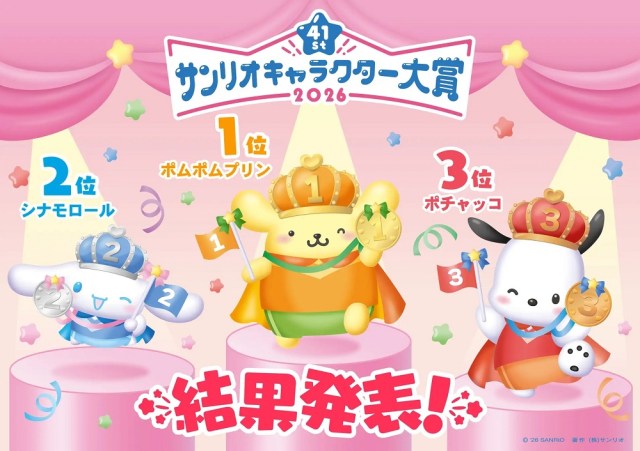
Sanrio Character Poll announces winners, Hello Kitty absent from top 10 in many countries

70,647,379 votes tallied, and one European nation apparently loves Sanrio’s often-forgotten grannie character.

Hello Kitty may be the face of Sanrio, but she’s far from the only adorable icon at Japan’s leading cute character company. As a matter of fact, Sanrio has so many loveable stars that every year fans make their favorites known in the Sanrio Character Ranking election.

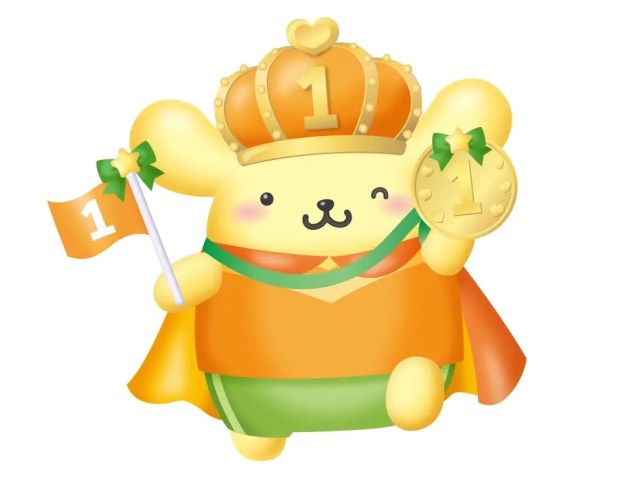
This year the poll set a new record with 70,647,379 votes being cast, a 12-percent increase over last year. When those were all counted up, there was a very familiar face at the top of the ranking, Pompompurin.

This was the custard pudding-colored Golden Receiver’s second year in a row to finish in first place, and his fifth time to be there since Sanrio began conducting the poll. Pompompurin might have gotten an extra boost from fans fired up about 2026 being the 30th anniversary of the character’s debut, showering him with 7,135,114 votes, more than 800,000 more than second-place finisher…

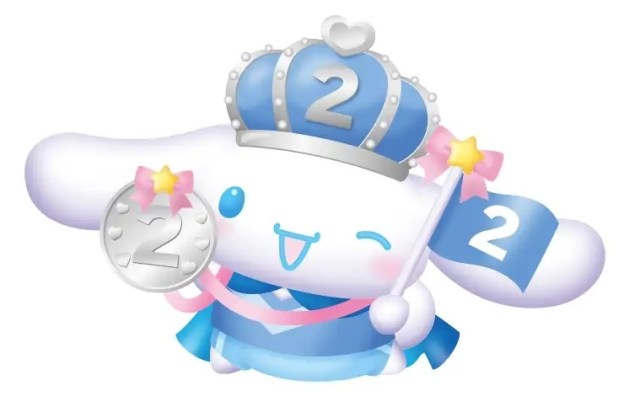
Cinnamaroll, who had 6,313,623 votes, and rounding out the top three was…

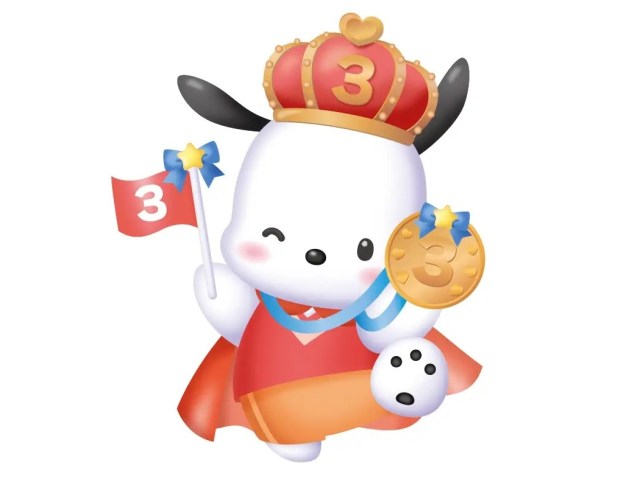
Pochacco, with 3,967,689 votes.

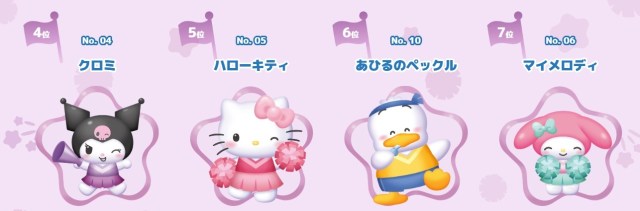
This one-two-three order mirrors the results from the 2025 poll, and also finishing in the same spots as a year ago are Kuromi and Hello Kitty in fourth and fifth place. Making the biggest jump within the top 10 was Ahirunopekkle, who moved up from 10th to 6th, while My Melody slips one slot from 6th to 7th.

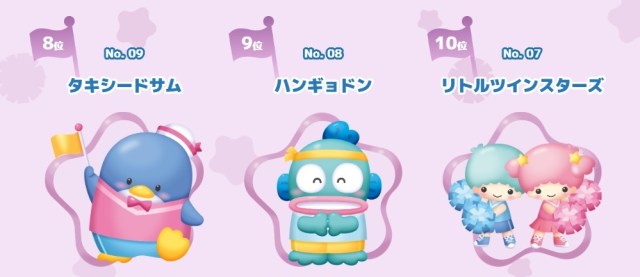
Rounding out the top 10 are Tuxedo Sam (up one rank compared to last year), Hangyodon (up one rank), and Little Twin Stars Kiki and Lala (down two ranks).

Also finding their way into the top 20 were Badtz-Maru (11th, same as 2025), Kerokerokeroppi (14th, same as 2025) and Gudetama (20th, down four ranks). Out of the top-20 finishers, the biggest improvement came for My Sweet Piano, who moved up five ranks to finish in 13th place, perhaps thanks in part to her appearance in the My Melody & Kuromi series that streamed on Netflix since the last Sanrio Character Ranking.

Surprisingly, while canine characters took the top three spots for the second year in a row for total votes, when Sanrio broke down the data by country, with the exception of Taiwan each demographic outside Japan had one non-dog among its three most popular characters.

Top three characters (first, second, and third) by country
Australia: Pompompurin, Cinnamaroll, Kuromi (rabbit)
Brazil: Cinnamaroll, Pompompurin, Kuromi (rabbit)
China: Cinnamaroll, Pompompurin, My Melody (rabbit)
France: Cinnamaroll, Pompompurin, Kuromi (rabbit)
Germany: Pompompurin, Cinnamaroll, Kuromi (rabbit)
Hong Kong: Pompompurin, Cinnamaroll, Kuromi (rabbit)
Italy: Cinnamaroll, Pompompurin, My Melody (rabbit)
Korea: Pompompurin, Cinnamaroll, Hangyodon (fishman)
Singapore: Pompompurin, Cinnamaroll, Hangyodon (fishman)
Spain: Pompompurin, Cinnamaroll, Umeya Zakkaten
Taiwan: Pompompurin, Cinnamaroll, Pochacco
Thailand: Yoshikitty (cat), Cinnamaroll, Pompompurin
U.S.A.: Pompompurin, Cinnamaroll, Chococat (cat)
U.K.: Pompompurin, Cinnamaroll, Usahana (rabbit)

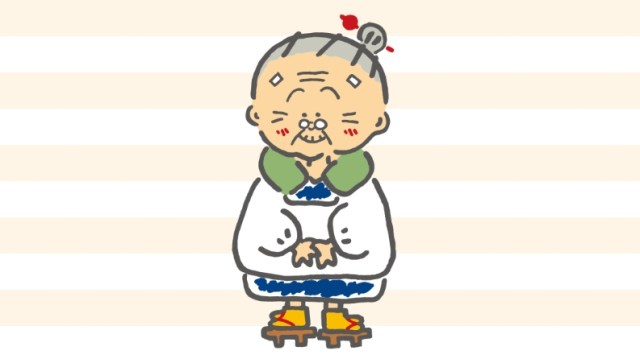
An outlier in the foreign-country results is Yoshikitty, the fusion of Hello Kitty and J-rock star Yoshiki, who, like last year, is Thailand’s favorite of all Sanrio characters. The biggest surprise, though, is Spain’s love for Umeya Zakkaten, a grandmotherly general store shopkeeper who even some younger Japanese Sanrio fans might not recognize or know by name.

▼ Despite finishing 3rd in Spain, Umeya Zakkaten was 70th in overall votes

As for Hello Kitty, her highest individual foreign-country finish was 4th place in China, and she didn’t even crack the top ten for the Germany, Spain, the U.S., and the U.K. (despite being canonically born in England). Though Sanrio doesn’t publish Japan-specific rankings, odds are her overall fifth-place finish resulted from strong support from Japanese voters, but she hasn’t won the poll since 2019.

Source: Sanrio (1, 2), PR Times
Top image: PR Times
Insert images: PR Times, Sanrio (1, 2)
● Want to hear about SoraNews24’s latest articles as soon as they’re published? Follow us on Facebook and Twitter!


Credit:

Here’s what Shibuya’s famous scramble intersection looked like after the Japan vs. Sweden match

Did the aftermath of Japan’s final match in the World Cup group stage result in order or chaos at one of Tokyo’s biggest gathering spots?

The FIFA World Cup currently taking place in Canada, Mexico, and the U.S. has sparked all kinds of excitement in the air in Japan. The Japanese national team’s performance had been solid in the group stage, drawing in its first match and winning its second, prior to its last matchup against Sweden on June 25 local time.

We had tried to grab tickets to watch this one at the official public viewing being offered at Tokyo’s Toho Cinemas Shibuya on the morning of June 26 Japan Standard Time (JST) but it was sadly already sold out. Instead, we decided to hang around the same area anyway, since the famous Shibuya scramble intersection has become a sort of infamous gathering space for all kinds of revelries and can get quite chaotic. Maybe we’d see something interesting if Japan played well.

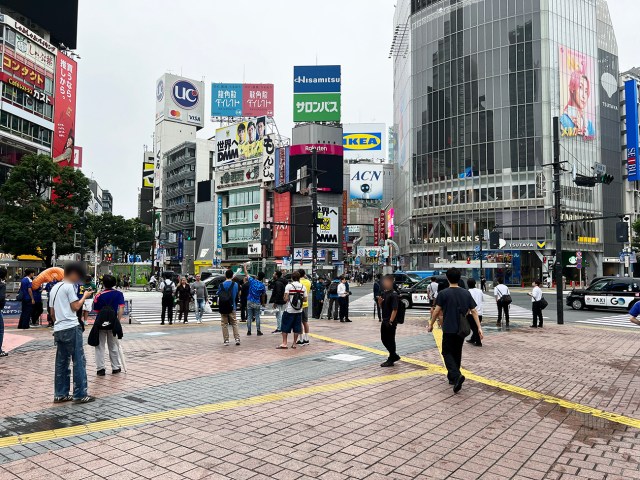
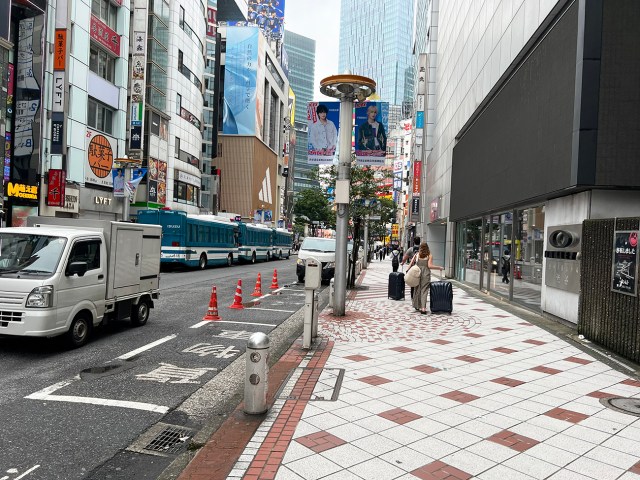
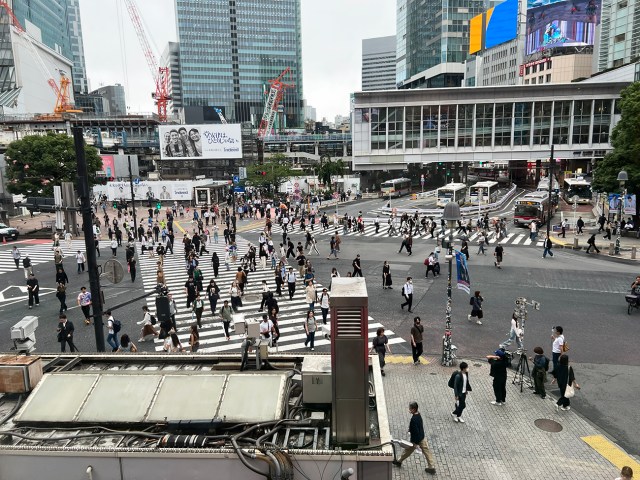
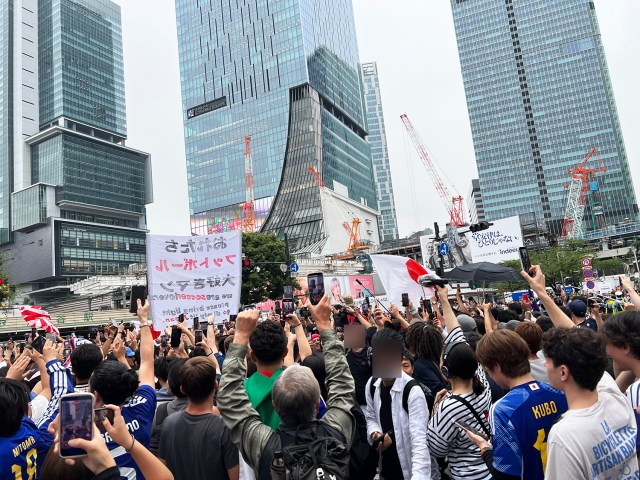
Here’s what the intersection area looked like just prior to 8 a.m. JST. We spotted more people walking around than typical at this time on a weekday as well as some police on standby. If anything, everyone seemed to be a bit restless in anticipation of what was to come.

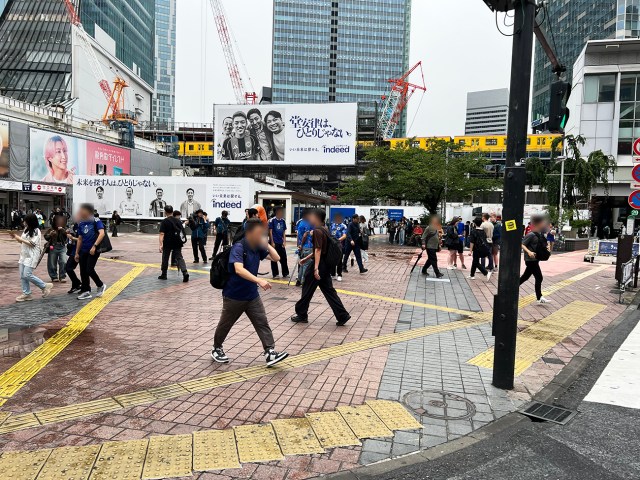
The game isn’t broadcast on the big screen at the intersection anymore like it used to be, but even so, there were some groups of people hanging around the Hachiko plaza who were wearing Samurai Blue uniforms. They were probably watching the match on their phones in solidarity.

Not much changed in the overall atmosphere of the vicinity as the match went on. Some media outlets had gathered with cameras but they were still just biding their time. Even the people gathered by the Hachiko statue were more subdued while watching than at an official public viewing event. Was this the calm before the storm?

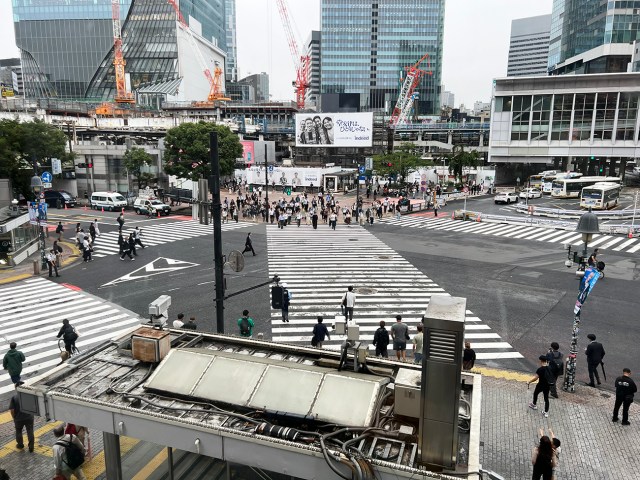
We wanted to see the view from a higher vantage point so we crossed the street and found a window seat at the Starbucks overlooking the intersection and Shibuya Station.

We saw the number of people in the area start to increase around 9 a.m. Suddenly, a loud cheer erupted inside the cafe when Daizen Maeda scored the first goal of the match for Japan. It was a fun feeling of comradery to share this moment with others.

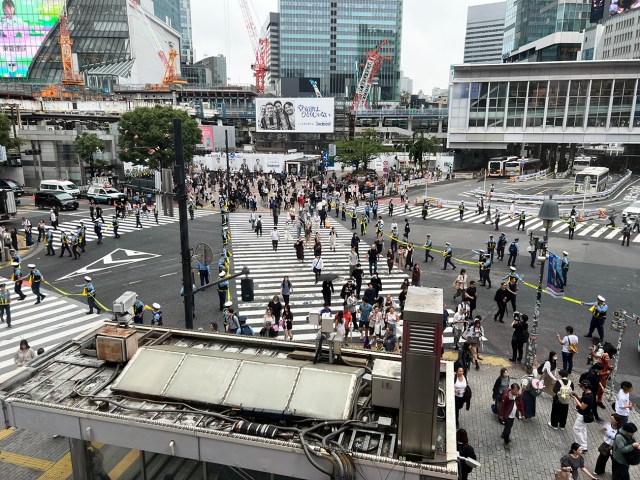
Traffic control finally went into effect around 9:30 a.m. The area was starting to become more lively with pedestrians and more people were gathering in front of the station to watch the second half.

Not long after, Sweden’s Anthony Elanga tied the score and the match intensified. We saw that some people in the cafe who had been silently watching it on their laptops were now chatting and watching it together with some foreigners right up until it ended with no further goals.

In the past, Japan’s national team was more likely to be the ones to equalize the match rather than to score the first goal. Back then even a draw used to be worthy of great celebration, but now it feels more like an “Ugh, we were so close!” kind of moment. Consequently, we were curious how people in the streets would react to this end result.

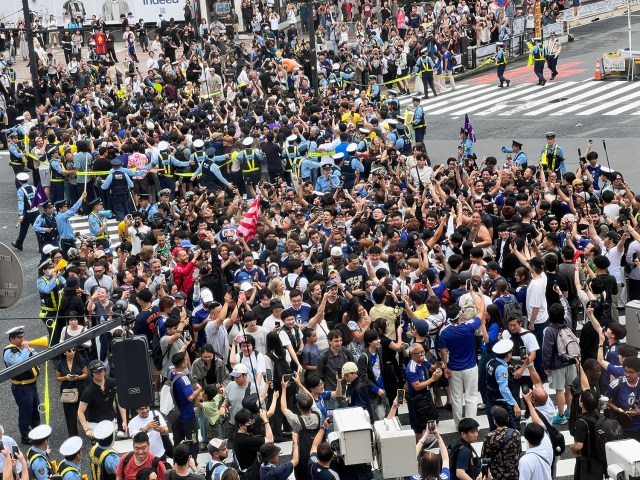
We didn’t have to wait long to find out as the movie theater public viewing let out and swarms descended on the intersection around 10 a.m.

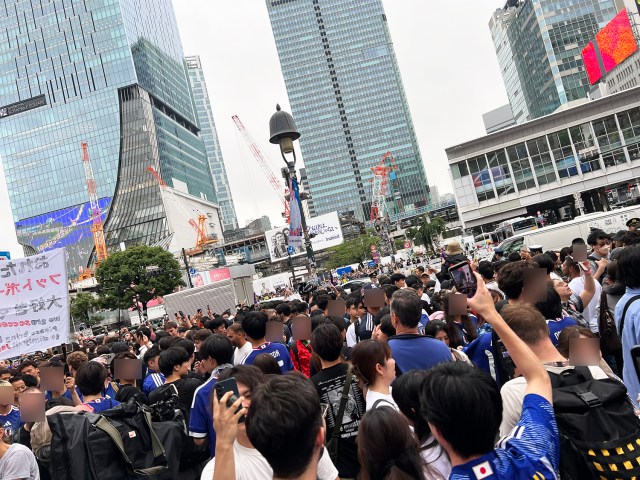
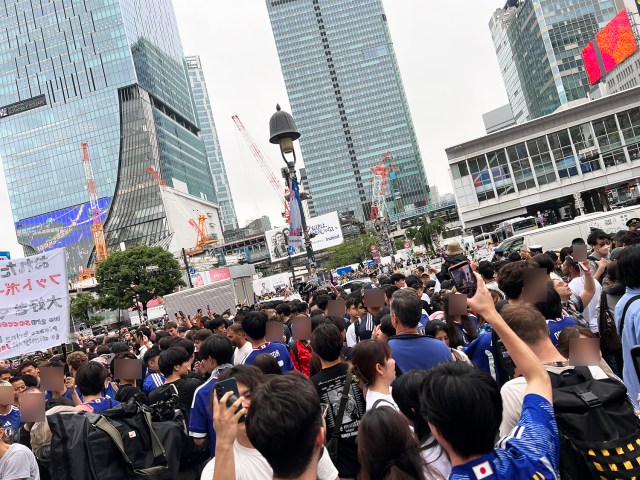
Every time the walk signal turned on the crowds flocked to the center of the street, giving high-fives to random passerby and chanting Nippon! Nippon! (Japan! Japan!) in unison. Welp, that answered our question!

Another thing we noticed was that there were quite a number of foreigners mixed in with the crowd and they were all filming the spectacle on their phones. It seemed like this experience in and of itself was a form of entertainment.

▼ Here’s a short video clip of the scene.

To sum it up, the end result of the Japan vs. Sweden match translated into orderly celebrations at the Shibuya Scramble intersection. Who knows whether that orderliness will translate into chaos if Japan manages to defeat Brazil in its first match of the knockout stage–which begins on June 30 at 2 a.m. JST–but we’ll be waiting to find out.

All images © SoraNews24
● Want to hear about SoraNews24’s latest articles as soon as they’re published? Follow us on Facebook and Twitter!


Credit:

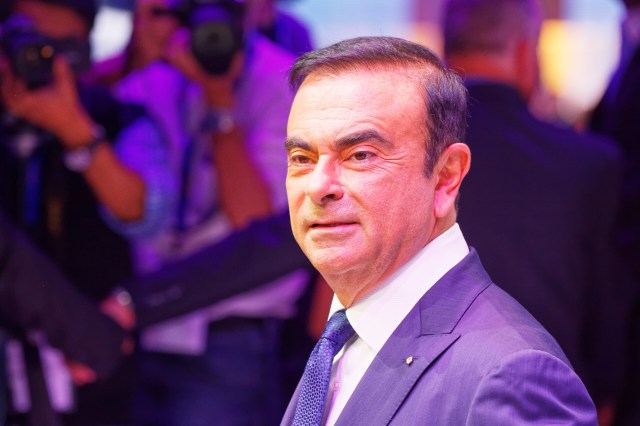
International fugitive Carlos Ghosn says he’d be best person to head Nissan now

I think I have a better chance of becoming CEO of Nissan at this point.

In the evening of 30 December, 2019, when much of Japan was gearing down for the New Year’s holidays, a small team led by a former US Special Forces soldier were quietly breaking former Nissan CEO Carlos Ghosn out of house arrest and helping him flee the country back to his home in Lebanon.

Prior to that, Ghosn had been under arrest for over a year, both in jail and then under house arrest, while he faced mounting charges, including under reporting his compensation and misuse of corporate funds for personal gain. He now still lives in Lebanon, where he cannot be extradited to Japan, maintaining that the indictment was a plot by other Nissan executives and his imprisonment was unjust.

Meanwhile, at Nissan, the removal of Ghosn led to several major restructuring plans facing a different direction from his aggressive form of high-volume sales. However, the plans have not been going well, and shareholders have been getting increasingly dissatisfied with the direction Nissan has been taking. This sentiment boiled over at a shareholder meeting on 23 June 2026, where outside director Motoo Nagai, a key person involved in the ousting of Ghosn in 2018, was denied reappointment in a vote. Some shareholders were reportedly also floating the idea of reinstalling Ghosn as CEO, though that was likely out of frustration rather than a feasible suggestion.

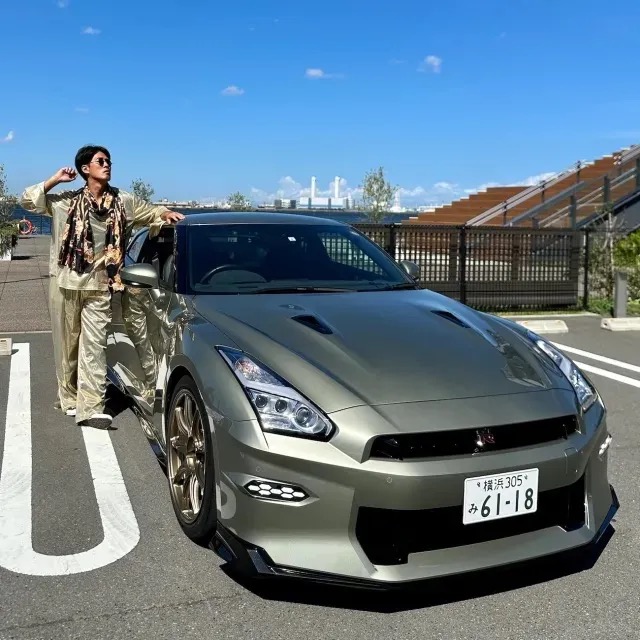
▼ One point of contention with Ghosn’s strategy was that Nissan should focus more on prestige signature models, like the GT-R.

News of this reached Ghosn, and in an interview with Reuters the following day, he said Nissan was in an emergency situation and that “tough decisions have to be made.” When asked if he would be willing to advise Nissan, he said that it would require a CEO position to fix things and: “If there is one person or one profile today who can make it happen, it’s mine. I’m not saying it because I’m arrogant. I’m saying it because of the facts. I’ve done it already once.”

He’s not wrong in saying the facts back him up. It was in 1999 that Ghosn arrived on the scene and brought Nissan back from the brink of bankruptcy, and as a result, he became a superstar in the Japanese business scene. He earned multiple accolades for his work, even snagging a Father of the Year award from a community group in 2001, a rare distinction allowing him to legally open carry a “#1 Dad” coffee mug.

But even with some shareholders calling for it, and Ghosn himself saying he’d be the man for the job, is there any possible way that he could go from being an exiled fugitive to Nissan CEO?

Readers of the news said in online comments that they doubt it, but would love to see him try.

“You’re eagerly awaited… by the police.”
“Oh yeah, hurry up and get over here.”
“Isn’t he the guy who turned Nissan into a company with nothing worth selling?”
“Ghosn gutted the company to make a quick buck. The management that came after him didn’t help either, though.”
“So, he wants to escape Lebanon now?”
“Will he come back in a musical instrument case?”
“Nissan probably would have been better off if they just kept letting him do whatever he was doing.”
“Nissan should just move their headquarters to Lebanon.”

Let’s assume Nissan did relocate to Lebanon, which would be rather ironic since the name literally means “Japan Industries.” Or, even more realistically, let’s say Ghosn somehow manages to whittle all the charges against him in Japan down to a suspended sentence. Stranger things have happened when mega-wealthy captains of industry are in legal trouble. 

Let’s even say he also manages to slip out of getting extradited from Japan and put on trial in France, where he is wanted for a different matter of financial misconduct. Even after somehow evading all that, in 2019, Ghosn reached a settlement with the SEC in the USA, part of which prohibited him from acting in any capacity as a CEO for 10 years. While that wouldn’t technically prevent him from becoming one in Japan or Lebanon, it still would be an additional nightmare to toss on the current pile of nightmares for Nissan if they hoped to do any business in the USA prior to 2029.

So, it’s clear to see the deck is heavily stacked against any chance of Carlos Ghosn’s return. But he does seem to have a knack for doing the impossible, so you never know. He is 2001’s Father of the Year after all.

Source: Jiji.com, Reuters 1, 2, Japan Times, CNN, Itai News
Top image: Wikipedia/Thesupermat
Insert image: ©SoraNews24
● Want to hear about SoraNews24’s latest articles as soon as they’re published? Follow us on Facebook and Twitter!


Credit:

Japan’s Mos Burger goes super-premium for summer with eel burgers that require pre-orders

Summer is the season for unagi, and Mos Burger has some very special, and very expensive, sandwiches on the way to celebrate Doyo no Ushi no Hi.

Despite having a name that sounds intimidatingly identical to “moss burger,” Japan’s Mos Burger fast food chain has a broadly accessible menu. “Mos” is actually meant to represent “mountain,” “ocean,” and “sea,” symbolizing the chain’s championing of fresh, naturally delicious ingredients.

That accessibility usually extends to Mos’ pricing too, since while it’s a little more expensive than some other chains, it’s still within the budget-friendly range expected of a casual burger joint. However, later this summer Mos is going to be serving up some very premium sandwiches of a sort you won’t see on the menu at McDonald’s or Burger King, and which require a pre-order to get your hands on: an unagi, or freshwater eel, burger.

Traditional Japanese culture holds that the midsummer day called Doyo no Ushi no Hi is when the weather is supposed to be at or near its hottest. Doyo no Ushi no Hi’s exact date fluctuates under the contemporary calendar, but this year falls on July 26. For hundreds of years, folk wisdom in Japan has also said that eating unagi is supposed to help the human body better cope with heat. Some historians say that this idea was first floated by crafty unagi merchants, and modern medical science doesn’t necessarily back up the claim. Nevertheless, the custom of eating unagi on Doyo no Ushi no Hi gained traction, and between unagi already being a luxury food and people now having an excuse to splurge on it for summertime health seasons, demand for fancy unagi foodstuffs spikes annually at this time.

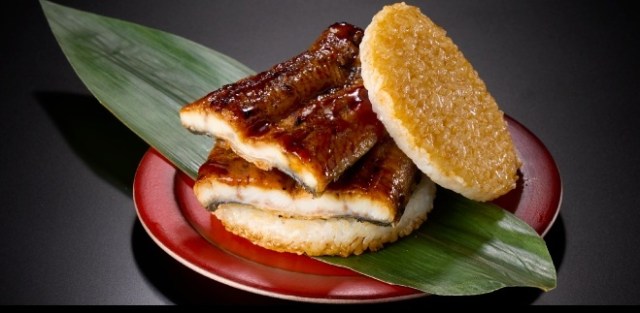
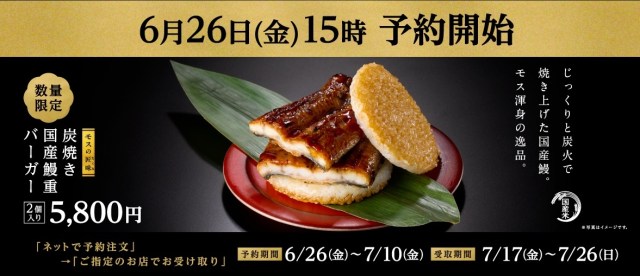
This is where Mos Burger comes in with its Charcoal Grilled Unaju Burger, and if you want to eat it, you’re going to have to shell out 5,800 yen (US$36).

Granted, that price actually gets you two unagi burgers, but since they’re not sold individually, you’re still going to need to cover a bill of 5,800 yen if you want one, and even if you’re splitting the cost with a dining companion, your individual outlay will be 2,900 yen. For comparison, a standard Mos Burger costs 470 yen, so the Unaju Burger is more than six times as much.

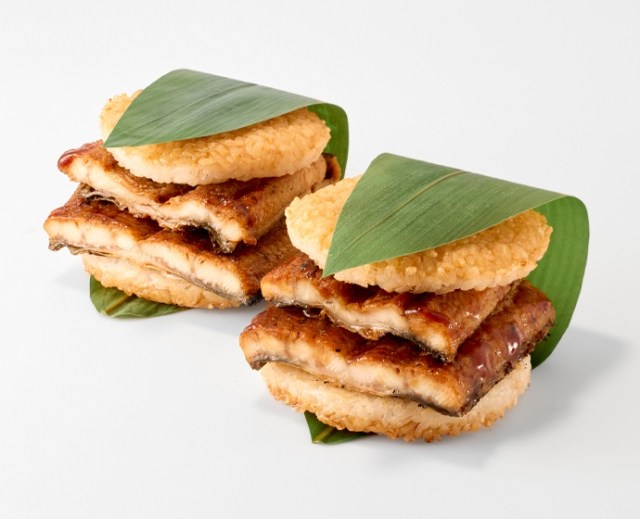
That lofty price does get you an elevated eating experience, though, with each freshwater eel fillet individually sliced, skewered, and grilled by an expert chef. The Unaju Burger is also part of Mos Burger’s rice burger family, swapping out bread buns in favor of a pair of lightly toasted disc-shaped rice balls (this is also why the sandwich is called the Unaji Burger, as unaju is a dish of unagi and rice). And since these offerings are too exquisite for an ordinary paper wrapper, they instead come embraced by fragrant bamboo leaves.

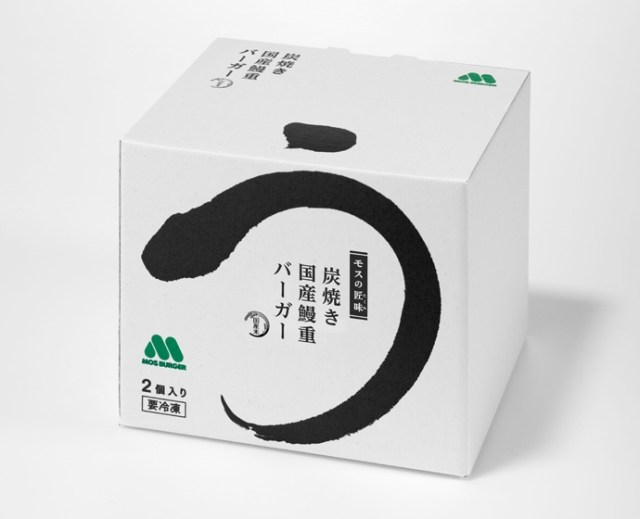
The Unaju Burger even comes in a fancy box with an illustrated eel that doubles as the hiragana character for the “u” in “unagi.”

▼ う = u

An arguably counterintuitive part of the deal, though, is that because the preparation of the Unaju Burger is done by experts, they’re not cooked at individual Mos Burger branches. Instead they’re shipped cooked but frozen, and available only through prior reservation. While supplies last, pre-orders can be placed through the Mos Burger website here between June 26 and July 10, with in-store pickup or home delivery schedulable between July 17 and 26.

Source, images: Mos Burger
● Want to hear about SoraNews24’s latest articles as soon as they’re published? Follow us on Facebook and Twitter!


Credit:

Taco Spaghetti appears in Japan, and our taco fan rushes to try it[Taste test]

Tacos and spaghetti have earned love around the world, but will their meeting in Japan be a tragedy?

Japan loves spaghetti, but doesn’t necessarily feel bound to tradition when it comes to the dish, So while you can find authentic Italian-style pasta in Japan, so too can you find things like Napolitan (spaghetti with ketchup sauce, bacon, bell peppers, onion, and mushrooms) and spaghetti with tarako (cod roe) sauce.

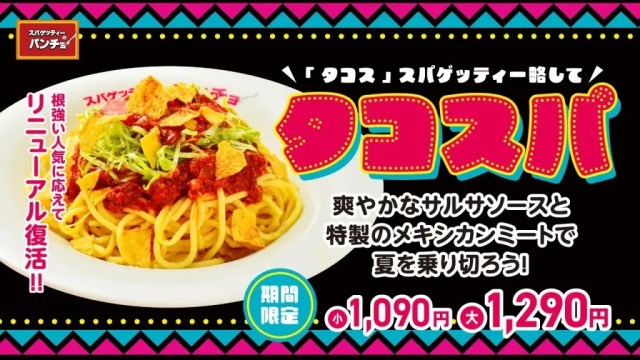
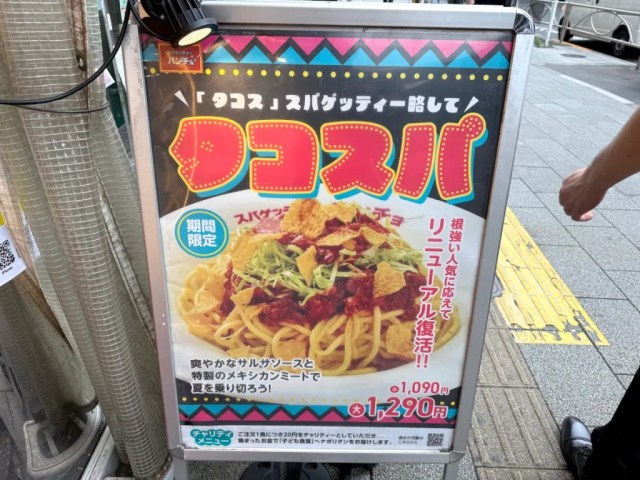
And now restaurant chain Spaghetti no Pancho is expanding the concept of spaghetti even further in Japan with its new Tacospa, or Taco Spaghetti.

▼ タコスパ = Tacospa

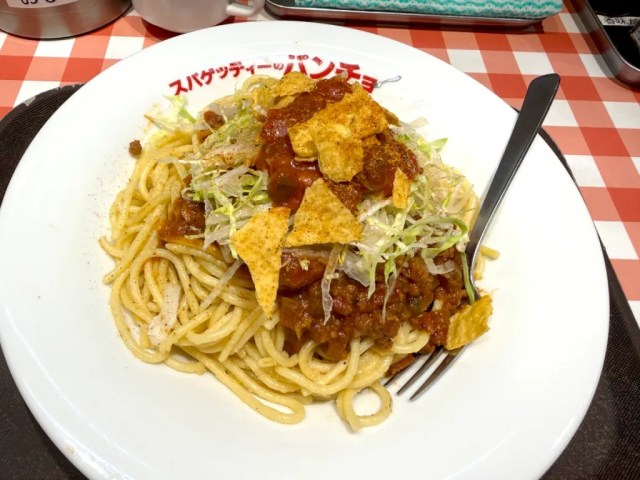
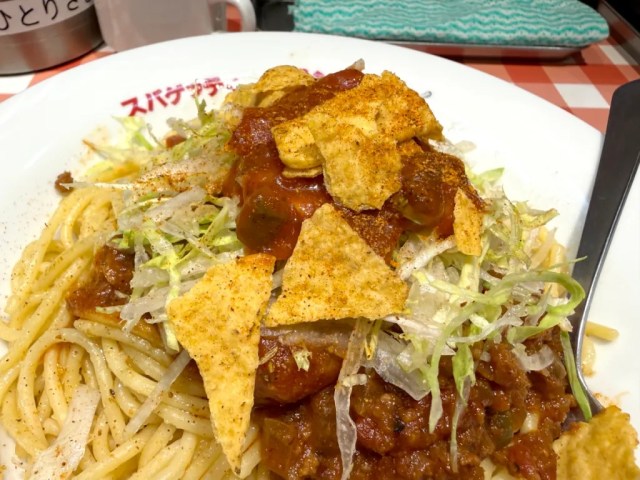
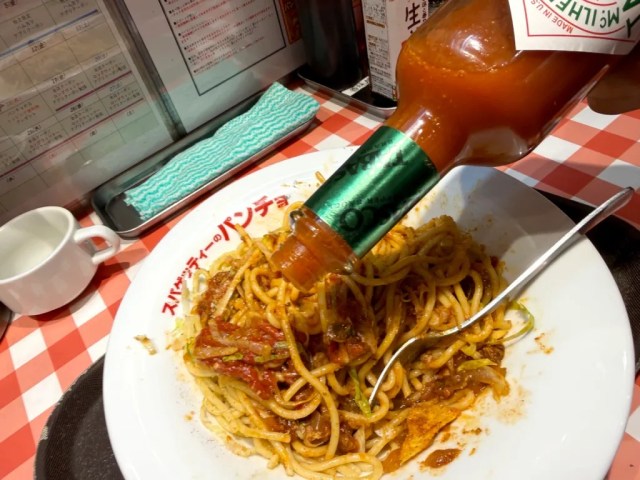
To be clear, this isn’t a spaghetti taco (that’d be a taco filled with spaghetti). Spaghetti no Pancho’s Tacospa is an attempt to combine the flavors and ingredients of a taco with those of a bowl of spaghetti. For this fusion dish, Spaghetti no Pancho forgoes its flagship Napolitan sauce and instead starts from a ragu-style meat sauce, but adds cumin and “Cajun spices” for a taste inspired by the seasoned ground meat you’d find in a taco. Salsa is then mixed in with the sauce, and shredded lettuce and cracked tortilla chips are sprinkled on.

Placed in front of us, the Tacospa had immediately impactful visual vibes. It reminded us a little of the Okinawan fusion dish taco rice, which is essentially the fillings of a taco on top of white rice. Unlike taco rice, though, Spaghetti no Pancho’s Tacospa has those tortilla chips, and the contrasting colors of the lettuce and vivid sauce help the ingredients really stand out from one another and make you doubly aware of just how unique this dish is.

Taste-testing duties fell to our Japanese-language reporter P.K. Sanjun, one of the more passionate taco enthusiasts in the SoraNews24 office. As captivated as he was by the Tacospa concept, though, his initial impression after taking his first bite was that it tasted like pretty ordinary meat sauce spaghetti, but with a little extra spiciness. That’s not a complaint, as Spaghetti no Pancho’s basic meat sauce is really tasty, but still, if he’d been doing this taste test blindfolded, aside from the texture there wasn’t anything that screamed “Tacos!” to him right away, and instead the Tacospa seemed to be only faintly whispering “…tacos…” to him.

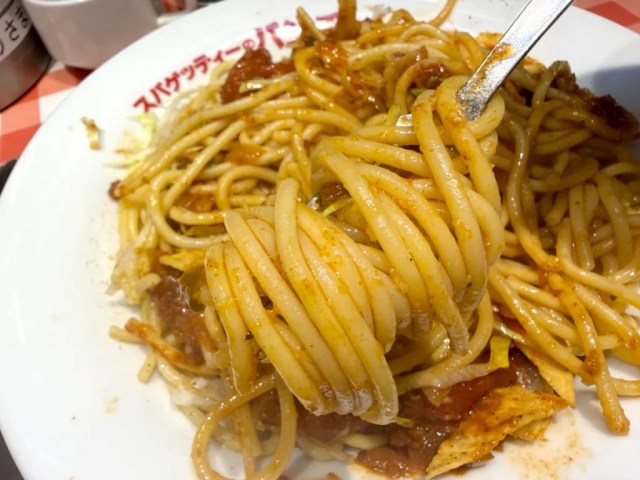
But something unexpected happened as P.K. continued eating. Maybe because of its thinner consistency compared to the meat sauce, it takes a while for the salsa to really start to cling to the noodles. With every twist of his fork and mixing of the pasta, though, the salsa sensation got stronger and stronger. The result is a very enjoyable, momentum-building eating experience that gets increasingly rewarding the more you eat, with your taste buds spurring you on once they realize that each mouthful is going to taste even better than the last.

Spaghetti no Pancho, it just so happens, always has bottles of Tabasco sauce on its tables, since it’s a popular condiment for Napolitan spaghetti. To P.K.’s great joy, Tabasco is also an outstanding accompaniment to the Taco Spaghetti, and pouring some on took it to an even higher level of stimulating spicy deliciousness.

The Tacospa is priced at 1,090 yen (US$6.80) for a small-size order or 1,290 for a large, and is scheduled to be available until the end of July.

Related: Spaghetti no Pancho location list
Top image: PR Times
Insert images ©SoraNews24
● Want to hear about SoraNews24’s latest articles as soon as they’re published? Follow us on Facebook and Twitter!


Credit:

Blind Tokyo commuter explains the easiest place for him to stand while riding the train

While waiting for the train, there’s always one spot he hopes will be empty when it comes.

Today, we’re featuring the writing of a special guest columnist, Ryoku. Ryoku works as a producer in the TV industry, and his hobbies include singing karaoke and traveling the country in a search for Japan’s tastiest gyoza.

Ryoku also happens to have glaucoma, and has been almost completely blind since about four years ago. In this article, he’d like to talk about his experiences riding the train as someone with impaired vision.

“You can’t see, but you still work in the television industry?”

Sometimes even I ask myself that, but it’s thanks to the support of people around me that I’m able to continue in this line of work. On the other hand, even though I receive help from so many people, I’d like to talk about some of the things I can do on my own and what I’ve noticed while doing them. One of those things, which I want to talk about today, is the best spot for me to be at inside a train.

I use a white cane when taking the train, and each time I do I end up thinking the same thing: It’s a huge help for me if there are empty spaces inside the train right next to the door. Those are the best places for me to ride in. You could even say that after I became unable to see, standing next to the door was one of the first places I found where I could feel secure.
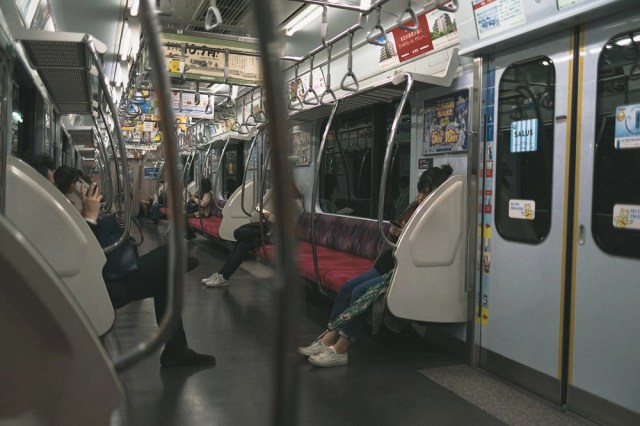
I usually get on the train a little past 9 a.m. Even if there are some days when it’s still crowded, at that time usually it’s not all that packed. I’d say there’s about a 50-percent chance of having an empty spot next to the door where I can stand, so when I’m waiting on the platform for the train to arrive, I’m usually thinking about whether I’m going to be lucky that day.

When the train stops and the doors open, I don’t get on right away. First, I focus all my attention on what I’m hearing. Can I hear footsteps of people getting off? Can I hear voices of people talking inside the train? Can I hear air currents rustling? Usually, though, everyone is pretty quiet.

In movies and manga, there are a lot of stories where someone loses their eyesight and then their other senses become sharpened. Unfortunately, in real life it’s not that simple. I didn’t realize this until after developing vision problems, but you always have to be paying attention. Is my footing safe? Am I going to bump into someone? What was that sound I just heard? And, of course, where exactly am I right now? There’s hardly ever a moment when I can relax and stop asking myself these kinds of questions.

This is all before even getting on the train, At this point, I’m already using about 60 percent of my mental capacity. Once the train does come and it’s time to get onboard, that gets kicked up to 100 percent. When the doors open, I gather my resolve and stretch out my left hand…and if I feel someone else’s hand inside the train, I think “Ah, no luck again today.” If someone is standing inside the train to the left of the door, it’s a pretty sure bet that someone will be standing on the right side too. As everyone knows, the spots right next to the door are popular spaces for commuters. So I end up standing right in front of the door, and that means that at every stop along the way to where I’m going, I have to get off the train, then get on again, so that other people can get on and off too.
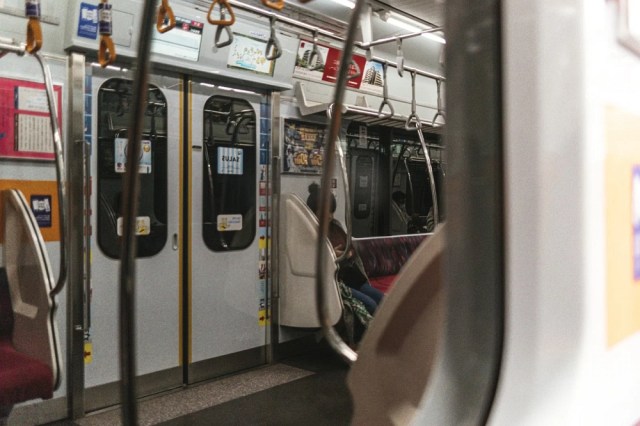
I could solve this by going further into the train, but honestly that’s really frightening for me. The more I move, the more chance there is that I’ll bump into someone, but what I’m even more worried about is making other people do more to accommodate me. There have been many times when someone has helped me find a hand strap or given up their seat so that I can sit in it. I really appreciate their kindness, but having to be in a state of continual reliance on them is tiring. If I move farther into the train’s interior, I have to start saying “Excuse me” and “Thank you.” I bump into people. I apologize. I bump into someone else. Then this terrifying game repeats when the train gets to my destination and I have to get off. To other people, it probably looks like a peaceful scene, but actually, I’m moving around the train constantly appreciating, apologizing, and feeling frightened. I’m in a state of serious panic.

On occasion, a thoughtful person standing by the door will say “You can stand here” and give me the spot. At those times I tell them “Thank you” from the bottom of my heart, and accept their offer. Standing next to the door makes it easier to understand where I’m at inside the train, and I can feel my mental HP quickly refilling. When other people need to get on or off the train, I can just stand up straight so I won’t block their way. I don’t have to concentrate on anything else until I need to get off. It’s one of the few places where I can feel relaxed and secure.

Recently, I’ve also started putting this card on my bag.

▼ 運動不足なので立っています = “I am standing because I don’t get enough exercise,” and the red tag is Japan’s Help Mark badge, indicating that the bearer may be in need of assistance.
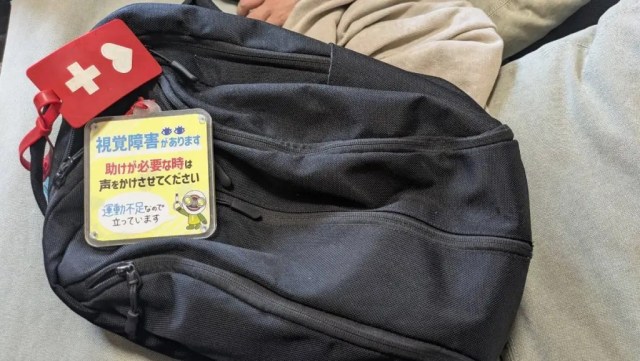
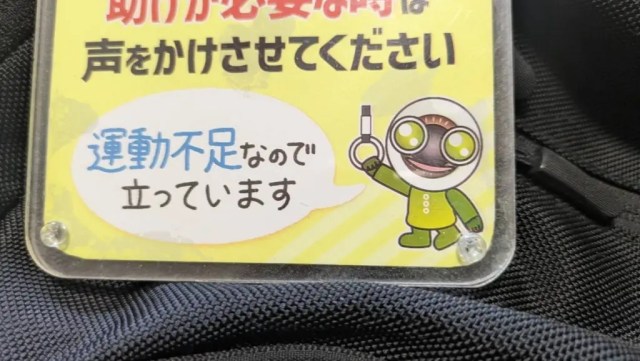
This is my personal reason for standing. The card has turned out to be more effective than I’d expected, though. Seeing the card, people seem to think “Oh, this person doesn’t want to sit,” and that’s made standing by the door even more comfortable for me.

There’s a downside too, though. A few times a month, I go back to visit my parents’ house, and the train ride to get there takes about an hour and a half. Obviously, somewhere in the middle of the ride I start wanting to sit down, but no matter how many empty seats there are on the train, none of the other passengers tell me that there are places to sit. Well, that’s to be expected though, isn’t it? After all, I’m the one who, all on his own, let them know that “I am standing because I don’t get enough exercise.” Plus, having put the card on my bag, it somehow becomes a point of pride, so I can’t say “You know what, I actually do want to sit down.” Sometimes, people end up struggling in the situations they set up for themselves…

In talking about all this, I’m not asking for anyone to change the rules about riding trains. It’s just that, if the space next to the door is empty and I can stand there, it makes it a little easier to get around that day, so the next time I’m waiting on the platform and the train comes, I’ll be listening as the doors open, and stretching out my hand to see if that space is available.

Top image: Pakutaso
Insert images: Pakutaso (1, 2), SoraNews24
● Want to hear about SoraNews24’s latest articles as soon as they’re published? Follow us on Facebook and Twitter!


Credit: