
Shinto shrine in downtown Tokyo announces cosplay ban
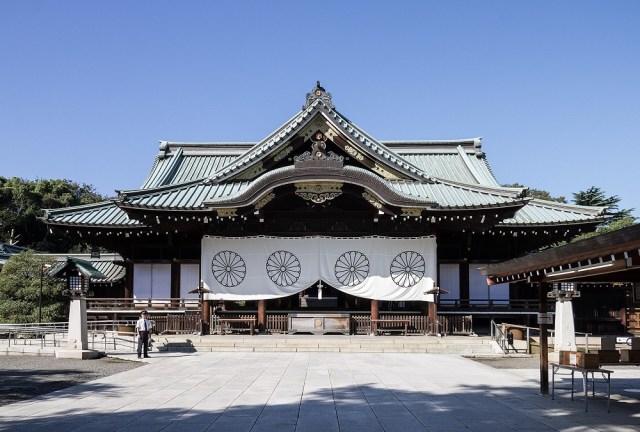
No more cosplaying on shrine grounds, please, says Yasukuni.
There’s more to consider than just costuming, makeup, and posing when taking cosplay photos. If you want a really convincing shot, you’re going to need a good background too. Thankfully, for those cosplaying as characters whose outfits draw inspiration from samurai, ninja, yokai, or other symbols of traditional Japanese folklore, there are plenty of places in Japan with classical aesthetics. However, one of Tokyo’s most prominent Shinto shrines, Yasukuni Shrine, has updated its visitor policies and now expressly bans cosplaying on its premises.
According to the statement posted to Yasukuni’s official website on August 7, the cosplay ban is being put into place to help maintain the “solemn” and “sacred” atmosphere of the shrine grounds. That might sound heavy-handed in contrast to the generally casual vibe at many other shrines in Japan, but Yasukuni is in a uniquely complex position because of the shrine’s purpose.
Yasukuni Shrine was built in 1869 to enshrine members of Japan’s modern (i.e. post-feudal era) armed forces. This now includes many members of the Japanese Imperial Army and Navy who fought in World War II. As such, Yasukuni often finds itself at the center of controversies if politicians, celebrities, or other prominent figures visit the shrine, with especially strong criticism coming from China, Korea, or other victims of Japanese aggression in World War II. Meanwhile, pointedly or explicitly avoiding visiting Yasukuni can be seen by some as disrespectful to those who gave their lives in service of the country. Further complicating the situation is that Yasukuni enshrines some 2.4 million souls, of which 1,066 are convicted war criminals, but casting them out would be incongruent with the shrine’s intended purpose of spiritual salvation.
All of which is to say that it’s understandable that Yasukuni probably doesn’t want to be seen as doing anything to cultivate an image that it’s a “cool” or “fun” place, and would prefer to maintain an atmosphere with a seriousness befitting the weight of the shrine’s purpose, which brings us back to the statement posted to its website.
Requests regarding attire on the shrine grounds
Yasukuni Shrine is a solemn and sacred site that exists to comfort and enshrine the souls of the war dead who gave their precious lives for Japan. So that all visitors may offer their sincere prayers in a tranquil environment, we ask for your cooperation with the following:
● The wearing of cosplay outfits on shrine grounds is prohibited.
● The wearing of military uniforms (military attire, military equipment, etc.) on shrine grounds is prohibited.
The mention of “military uniforms” adds another layer to the new policy, and the exact terminology is especially significant. Yasukuni Shrine’s statement refers to gunsou and gunpuku, which translate literally to “military outfits” and “military clothing.” However, the Japan Self-Defense Forces do not use either word to refer to the official attire of JSDF personnel, and instead use seifuku, which simply means “uniform,” with no military-related linguistic connotation. As a result, the words gunsou and gunpuku usually evoke thoughts of Japanese military uniforms from before the JSDF’s founding.
Taking all of that into account, it would seem that Yasukuni Shrine’s new policy does not prohibit members of the JSDF from visiting the shrine in dress uniform. However, the explicit gunsou/gunpuku ban does prohibit someone from visiting while dressed in an Imperial Japanese Army or Navy uniform, and it would apply both to cosplayers trying to exploit a loophole by trying to argue that a uniform is not a costume as well as far-right wingers trying to use the shrine as a stage to trumpet their nostalgia for Japan’s aggressively militaristic past.
This is also a good opportunity to remember that cosplaying rules can vary widely from shrine to shrine, and on the opposite end of the spectrum from Yasukuni are shrines that have hosted official cosplay events. At all times, though, it’s important to remember that these are first and foremost places of religious and cultural importance, and so if you are hoping to cosplay at a shrine, it’s probably best to check their website or contact the shrine ahead of time to confirm what their policy is.
Source: Yasukuni Shrine via Sponichi Annex via Yahoo! Japan News, Ministry of Defense
Top image: Wikipedia/Kakidai
Insert image ©SoraNews24
● Want to hear about SoraNews24’s latest articles as soon as they’re published? Follow us on Facebook and Twitter!
Credit:

.jpg)
0 comments: