Survey finds more than 70 percent of Japanese children have an online friend

Meeting someone through games or social media is becoming just as normal as going to the playground.

It wasn’t so long ago that a child making a new friend simply meant walking up to a kid in the park, on the playground, or at school and asking, “Want to play together?” Nowadays, while those scenarios certainly do still happen, a rising number of children are just as likely to meet friends through online video games, social media, and online communities.

▼ This used to be one of the only ways you could find new friends
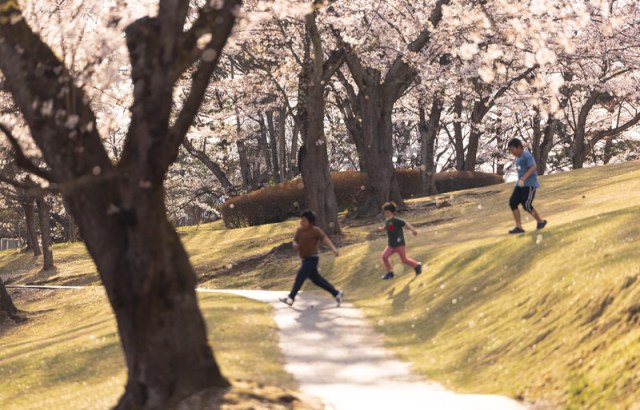
According to a survey of more than 1,600 Japanese elementary and junior high school students by Japanese children’s Internet portal Nifty Kids, over 70 percent said they have at least one online friend. That number has steadily been increasing year by year, reflecting how the Internet has gradually become a core part of children’s daily lives. For many kids now, chatting online or teaming up in a game feels as natural as inviting someone to come play at their houses after school.

A particularly interesting finding is that many of these online friends are older, with about 40 percent of children saying they mostly interact with people about one to three years older than themselves, although in some cases it can be much more. Shared hobbies, favorite games, or other mutual interests make it easy to connect across age groups, which is something that would have been less likely to occur in strictly offline childhoods.

Naturally, this does also present a few risks. A surprisingly high number of children, 81.9 percent of those surveyed, said they’ve shared personal information with their online friends. Quite identifying information was at the top of the list, with age, gender, and birthdays revealed by 87.6, 81.4, and 71.9 percent of those who said they’d shared personal information, followed by the general area they live in (44.1 percent) and first name (38.9 percent). This isn’t a new phenomenon, as I can recall using a popular kids’ chatroom when I was younger, where one of the first questions newcomers were asked was “a/s/l?” (age/sex/location). Nor does it automatically foreshadow danger, but it does highlight the need for parents to pay a lot closer attention to Internet usage.

▼ Unfiltered and unmonitored access to the internet for a child just sounds like a bad idea all round

That being said, today’s kids seem to be pretty cautious, with nearly 90 percent of those in the survey with online friends saying that they’ve never met them in real life, and when asked if they want to meet them, the most common responses were “I don’t want to” or “I want to, but it’s scary.” Others said that they’d only consider it when they’re older, or after getting to know the person better.

For some children, they describe online friends as being people they can talk to freely, share their interests with, or feel comfortable confiding in, without having to conform to the external pressures of social expectations, yet still keeping a healthy distance. Others still held a level of wariness, saying that online friends should not be trusted completely.

While the cynic in me might argue that even offline friends can be a potential source of danger, it’s clear that childhood friendships are continuing to evolve. In many ways, they’re still enjoying sharing a fun experience together, be it a game or a new interest. There’s just an added Wi-Fi signal in the mix.

Source: PR Times
Top image: PR Times
Insert images: Pakutaso (1, 2)

● Want to hear about SoraNews24’s latest articles as soon as they’re published? Follow us on Facebook and Twitter!


Credit:
Beautiful Studio Ghibli photo frames let you put yourself in the worlds of Totoro and Kiki【Pics】

Intricately detailed frames let you mix your real life memories with Ghibi’s unforgettable anime settings.

I’ve always though it’s kind of odd when you’re shopping for a photo frame and there’s already a picture of people inside of it. I guess the intent is to help you gauge the overall visual vibe before you commit to making the purchase, but it still feels weird to buy something that comes with a picture of complete strangers included as part of the deal.

The people pictured within these photo frames, though, should be very familiar to fans of the anime films of Studio Ghibli.

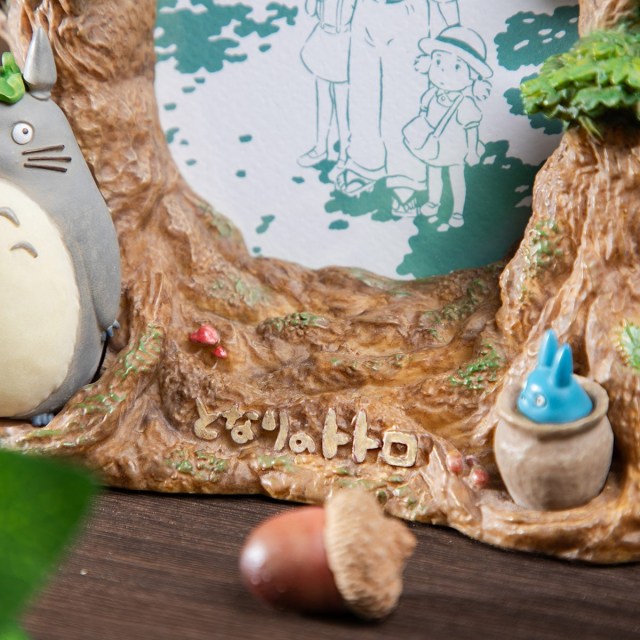
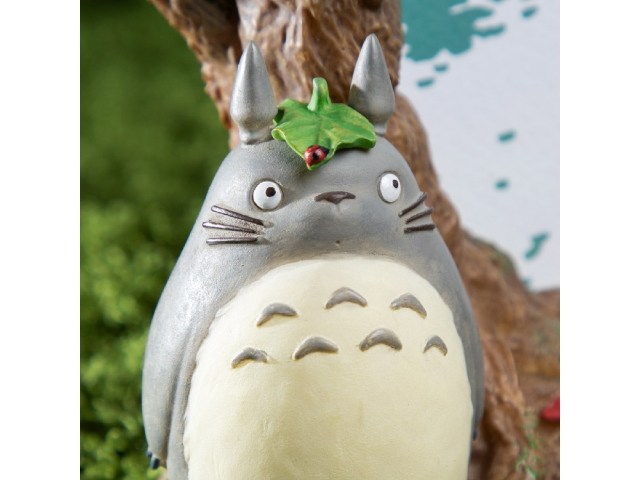
Just released by Ghibli specialty shop Donguri Kyowakoku, the Totoro Forest photo frame has an illustration of sisters Mei and Satsuki, plus their dad, gazing up reverently at the boughs of the camphor tree near their new countryside home in My Neighbor Totoro. “It’s a fine tree,” the sisters’ father tells them. “I think it must have been standing here since long, long ago…from the times when trees and people got along with each other so well.”

Of course, if you recognize the people inside the frame, you’re definitely going to be happy to see the characters on the frame itself, as there’s a full group of all three Totoros: the big/gray Totoro

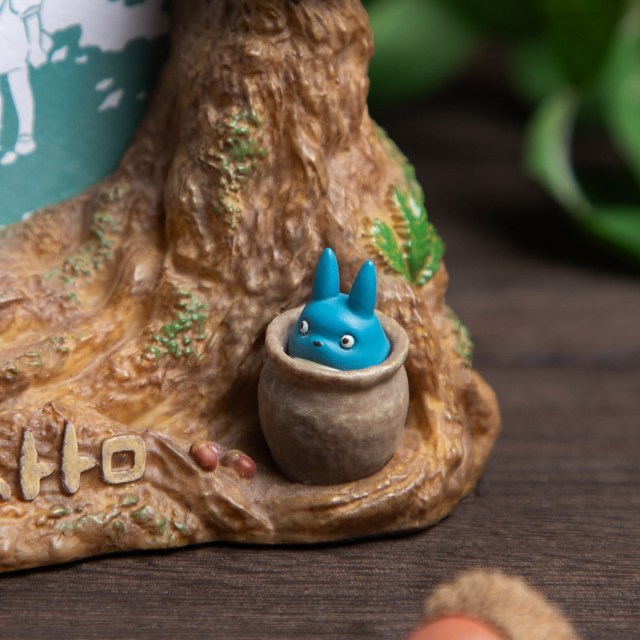
the medium/blue Totoro

…and the small/white Totoro, who’s perched on top of the camphor branches that arch over the photo space.

An especially cool touch is how the Tototos’ eyes are positioned to be looking into the frame, so they’ll be looking at you, your friends, and your family once you insert your own photos.

▼ The film’s Japanese title, Tonari no Totoro is written at the bottom of the frame…

▼ …and there are some Soot Sprites hanging out here too!

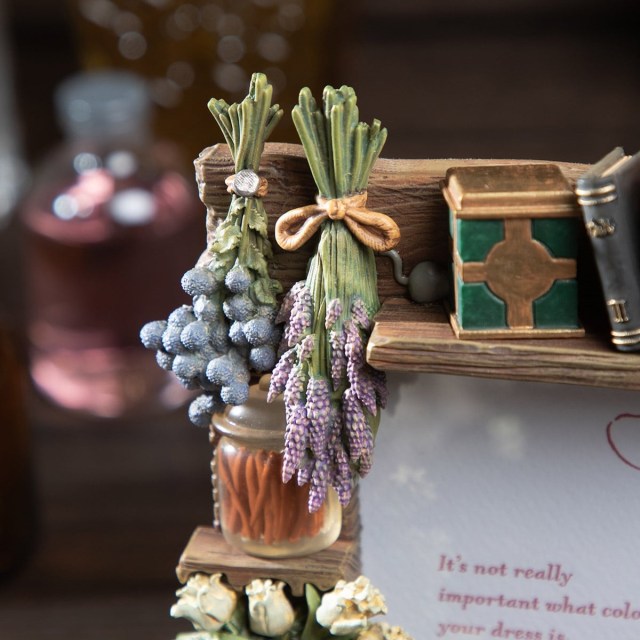
Kiki’s Delivery Service fans are also getting a special photo frame, this one recreating the home potion workshop that Kiki’s mom plies her trade in.

Inside the frame is a moment from early in the anime, when Kiki’s mom gives her some sage words of advice after the witch-in-training grumbles about the look of the plain black dress she’ll be wearing on her journey.

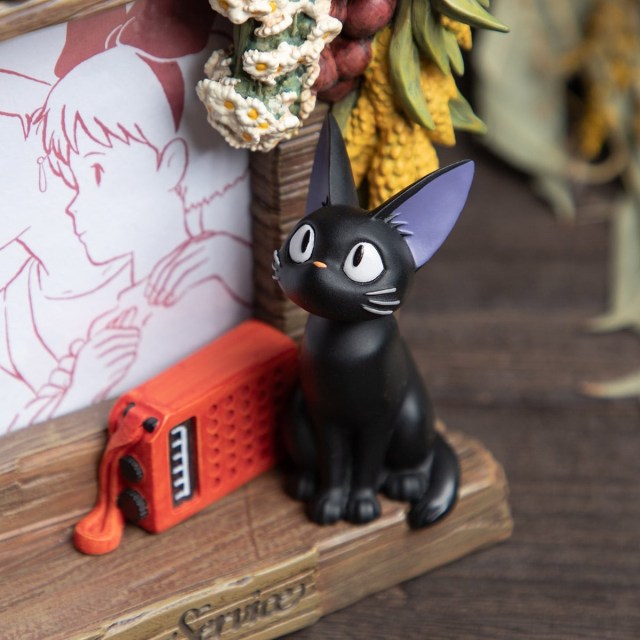
This time, the Ghibli character on the frame is Kiki’s black cat companion Jiji.

But wait…Jiji isn’t quite looking towards the picture inside the frame.

Instead he’s looking up above, behind the dried flowers and herbs that Kiki’s mom has prepared, because…there’s a mouse at the end of the shelf!

With so many little details to appreciate, these frames would actually make fine decorations even without adding a photo of your own, and being made of resin, metal, and plastic means they should be sturdy, long-lasting interior accents. Size-wise, the Totoro frame is 15 centimeters (5.9 inches) wide and 18.5 centimeters tall, and the Kiki’s Delivery Service one is 18 by 15 centimeters. Prices are different for the two, though, with the Totoro frame 9,900 yen (US$65) and the Kiki’s 12,100 yen, perhaps on account of the intricacies of crafting all those potion ingredients.

Both frames are available through the Donguri Kyowakoku online store here.

Source: Donguri Kyowakoku
Top image: Donguri Kyowakoku
Insert images: Donguri Kyowakoku (1, 2)
● Want to hear about SoraNews24’s latest articles as soon as they’re published? Follow us on Facebook and Twitter!


Credit:

New Japanese menstrual product seeks to help women spot unidentified iron deficiencies

A new test kit checks for hidden iron deficiency using menstrual blood, and it’s super simple to use.

Have you ever wound up dragging yourself out of bed in the morning, feeling exhausted even after a full night’s sleep? Or have you often find yourself zoning out at work? While stress and poor sleep quality might be the more common culprits, there might be a hidden player at work: iron deficiency.

Iron deficiency is especially common among women, particularly those who menstruate, with frequent iron loss through periods known as “hidden anemia.” In those with this condition, hemoglobin levels look completely normal on standard blood tests, but ferritin, an indicator of the body’s stored iron, is low. With this deficiency easy to miss, symptoms like fatigue, lightheadedness, and headaches often go unexplained or attributed to another cause.

▼ That headache might not just be simple stress.

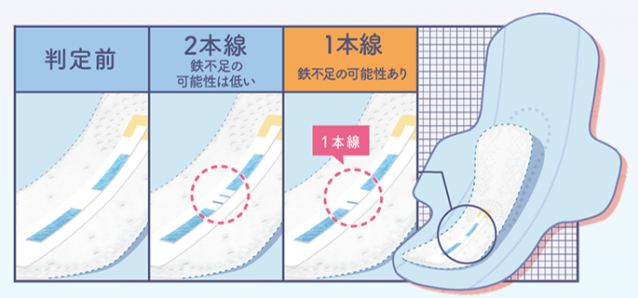
The Sofy brand from health and hygiene product manufacturer Unicharm has just announced a clever and simple way of checking for iron deficiency without needing a doctor-administered blood test. The new product, aptly named Sofy Menstrual Blood Iron Deficiency Check Kit, is being offered at selected retailers, Amazon Japan, and Unicharm’s online store. The kit includes special sheets that simply layer on top of your usual sanitary napkin, so those with heavy flow don’t need to be concerned of any spillage as a result of using the kit. Much like a pregnancy test, when menstrual blood reaches the tester’s orange mark, lines will appear.

▼ The technology behind the kit is described as Japan’s first, using an immunochromatographic method to detect iron-storage indicators in menstrual blood.

One line suggests a possible iron deficiency, while two indicate a low likelihood. It’s really as simple as that.

▼ They’ve even got a video to prove it’s easy.

According to Japan’s Ministry of Health, Labour, and Welfare around 65 percent of Japanese women in their 20s to 40s are affected by anemia or hidden anemia, yet awareness of this common condition remains low. A recent survey run by Unicharm found that 80 percent of women feel tired from the moment they wake up, but only around 20 percent suspect iron deficiency as the cause, with most considering it the result of poor sleep or stress. Unicharm hopes this new product will help close that awareness gap by making iron deficiencies easier to notice and allowing women to incorporate countermeasures into their daily life routines.

Related: Unicharm Online Store, Sofy Menstrual Blood Iron Deficiency Check Kit Amazon Japan listing
Source: PR Times, Unicharm
Top image: Pakutaso
Insert images: Pakutaso, PR Times
● Want to hear about SoraNews24’s latest articles as soon as they’re published? Follow us on Facebook and Twitter!


Credit:

J-horror classic Ring 2 airing on Japanese TV with Zen monk offering prayers every time someone dies

Japan’s most quirkily empathetic monk is back to keep bad mojo away from us as the year ends.

There are a lot of different ways to celebrate New Year’s Eve in Japan. If you want to get orthodox, tradition says you should make a midnight visit to your local temple to literally ring in the new year, offering prayers seeking peace and prosperity while a bell is sounded to drive off wickedness and impure temptations. There’s the cozy approach of a quiet evening at home with family, maybe with your legs tucked under a kotatsu heated table with a big bowl of mandarin oranges within arm’s reach to munch on. And in recent years, lively New Year’s eve parties at bars or street events have also gained traction in Japanese society.

Or, if you’re looking for a more terrifying alternative, this year Japanese TV broadcaster Tokyo MX will be showing the 1999 cinematic classic Ring 2 on New Year’s Eve. The second entry in the film franchise that catapulted J-horror to international acclaim, Ring 2 continues the original’s tradition of creepy video cassettes, unnerving child phantasms, and people dying miserable deaths.

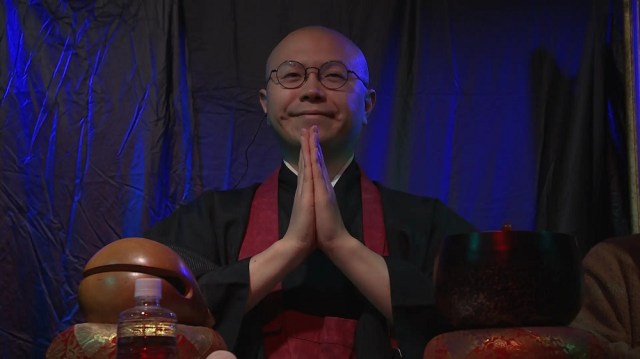
It’s pretty much the archetypal mix of tension and catharsis that makes the horror movie genre beloved by fans…but might closing out the year by watching a movie about people watching a video and then dying also curse you with an influx of so much bad mojo that it carries over into the new year? If such concerns have you on the fence, Tokyo MX is happy to provide some peace of mind, as they’ve arranged for an actual Buddhist monk to chant sutras and offer memorial prayers every single time someone dies onscreen in Ring 2.

If this mix of quirky playfulness and surprising empathy sounds familiar, you might be recalling the previous time we talked about Zen monk Bon Higanda. Before he was providing his credential-backed condolences to the victims of Ring 2’s supernatural slayings, he was doing the same for all the Koopas, Goombas, and other creatures on the receiving end of video game violence from Nintendo’s Super Mario, in a playthrough of the original Super Mario Bros. in which he would stop and recite sutras whenever he accidentally killed an enemy.

While Ring 2 is airing on December 31, the Tokyo MX official YouTube channel (found here) will also be streaming a video of Higanda. While not a live performance, the video is timed so that Higanda’s sutras will synch with the onscreen deaths, leaving no souls unmourned and hopefully breaking the cycle of murderous resentment, or at least keep it from affecting viewers.

Ring 2 begins airing at 6 p.m. on New Year’s Eve, and Higanda’s video will start streaming 10 minutes earlier, at 5:50.

Source, images: PR Times
● Want to hear about SoraNews24’s latest articles as soon as they’re published? Follow us on Facebook and Twitter!


Credit:

7 great places to see Mt. Fuji from without having to climb it

With peak Fuji-viewing season coming up, here are seven spots to add to your Japan travel list.

In addition to being Japan’s tallest and most famous mountain, Mt. Fuji is also considered a symbol of prosperity and good fortune. That means that a lot of people will be wanting to get a peek at it in the weeks to come, and so Japanese travel portal Jalan has a handful of recommendations of where to find great views of Mt. Fuji without having to go all the way to the mountain itself (which is closed to hikers until the summer anyway).

Let’s take a look at some of the best of the bunch.

● Mt. Takao (Tokyo)
Website

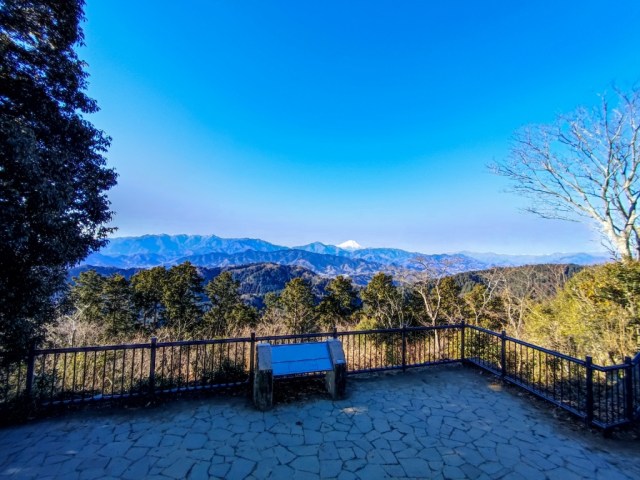
Starting off with an extremely easy one for Tokyoites (and Tokyo travelers) to access, we’ve got the summit of Mt. Takao, located in west Tokyo and just one hour away from the city center by train. With its summit at an altitude of 599 meters (1,965 feet), you can walk to the top of Mt. Takao in around an hour and a half, with the easiest trails fun for even novice hikers, or you can take a cable car that’ll save you almost all of those steps and keep you on paved paths the whole way. However you make it there, the plaza at the top offers a beautiful line of sight to Mt. Fuji.

● Mt. Kintoki (Kanagawa Prefecture)
Website

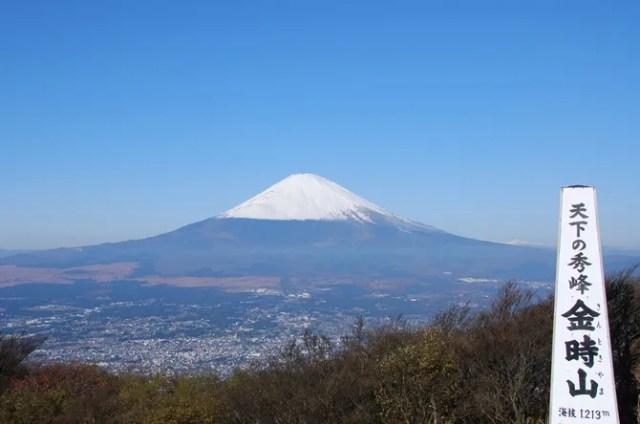
Another hike suitable for beginners, Mt. Kintoki is the Kanagawa town of Hakone, and takes about two hours to summit. In addition to Mt. Fuji, you’ll also get to take in the sight of Lake Ashinoko and the steam seeping out of the Owakudani gorge, and even if the hike does have your legs feeling a little sore, a soak in some of Hakone’s famous hot spring baths should have them feeling great again in no time.

● Asagiri Kogen (Shizuoka Prefecture)
Website

As you might expect, the Shizuoka town of Fujinomiya, meaning “Fuji shrine,” has some pretty great views of Mt. Fuji, and a lot of them are in the Asagiri Kogen/Asagiri Highlands area. Outdoor activities here include cycling and camping, and there are also farms and dairies that sightseers can visit, which means, of course, that there’s also Asagiri Kogen ice cream to enjoy while you gaze at Mt. Fuji.

● Shiraito Falls (Shizuoka Prefecture)
Website

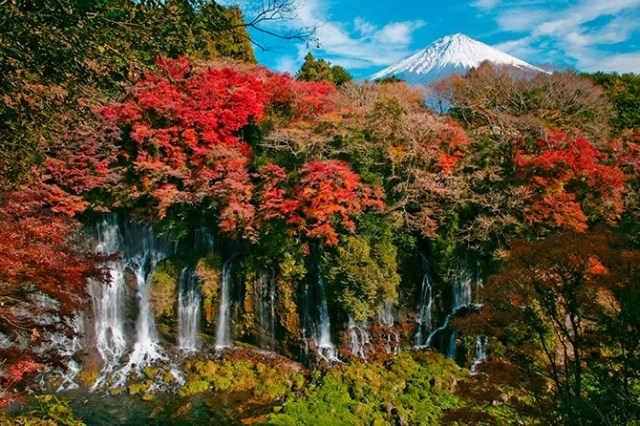
Also in Fujinomiya are the Shiraito Falls. Shiraito means “white threads,” and refers to the dozens of waterfalls that cascade down the cliffsides here, looking like so many strands of silk. The tallest waterfalls are 20 meters high and the widest 150 meters across, and rising into the sky on the far side of the forest behind them is Mt. Fuji, which almost, but not quite, gets upstaged by all the beauty in front of it.

● Mishima Skywalk (Shizuoka Prefecture)
Website

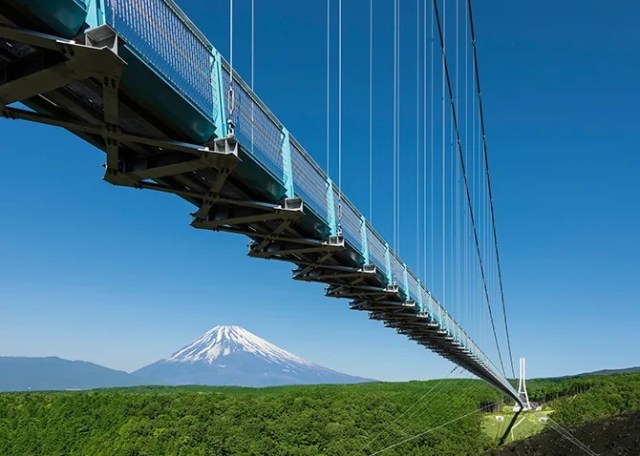
We’ve been talking about a lot of hiking trials today, but the Mishima Skywalk, in the city of Mishima, lets you get high off the ground without taking a single uphill step. This sightseeing and leisure spot has restaurants, ziplines, and obstacle courses, but the highlight is the 400-meter-long pedestrian suspension bridge from where you can see all the way to Mt. Fuji, with the view at sunset especially dramatic.

● Mt. Kumotori (Tokyo)
Website

We do actually have one more mountain on our list, with Mt. Kumotori, which actually straddles the borders of Tokyo and the neighboring prefectures of Saitama and Yamanashi in the Okutama region. This one is for the serious outdoors enthusiasts, as unlike the other trails we’ve discussed, roundtrip treks to the top of Mt. Kumotori (which translates to “cloud grabber”) take 10 hours, but among the rewards for those who handle it are uncrowded vistas of the southern Japan Alps and Mt. Fuji.

● Lake Tanuki (Shizuoka Prefecture)
Website

And last, we’re back in Fujinomiya to ask why settle for just one view of Mt. Fuji when you can have two? There is, admittedly, probably some mild disappointment when you learn that Lake Tanuki’s name translates loosely to “crossing the field,” and has no relation to Japan’s adorable tanuki/racoon dogs. This body of water more than makes up for that, though, by being situated such that Mt. Fuji is reflected perfectly across its mirror like surface. A walking course loops around the lake and takes about 60 minutes to make the circuit of, at which point the clouds and color of the sky will have probably shifted enough to give you a new double-Fuji scene to enjoy.

Mt. Fuji is a notoriously shy mountain, often hiding behind clouds and fog, so if you’ve got your heart set on seeing it, you’ll want to check the weather report and plan accordingly. Winter in Japan is usually the dry season though, with more clear, sunny days than other parts of the year, so we’ll be entering the peak time to see Japan’s most famous peak very soon.

Source: Jalan, PR Times
Images: PR Times
● Want to hear about SoraNews24’s latest articles as soon as they’re published? Follow us on Facebook and Twitter!


Credit:
Sumo Sanrio! Hello Kitty and pals team up with Japan Sumo Association for new merch【Pics】

Two Sanrio stars slip on sumo loincloths to celebrate the first nig sumo tournament of the year.

Some people like to ease into the new year, taking it easy for the first few weeks and not really revving up their work schedules until February. Not so for the Japan Sumo Association, which every year in January holds the Hatsu Basho, or first Tokyo Grand Sumo Tournament. This year, though, the sumo wrestlers and support staff will be joined by someone else with a tireless work ethic, Hello Kitty.

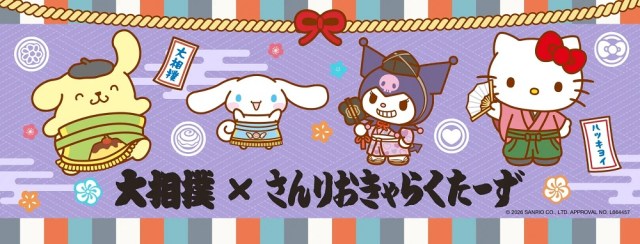
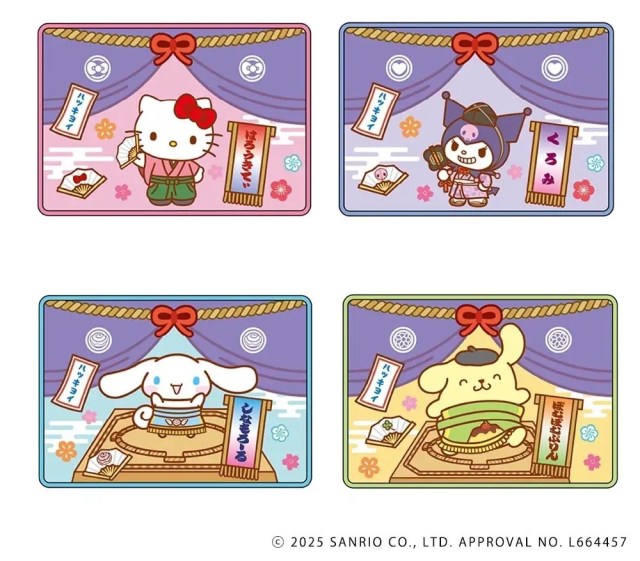
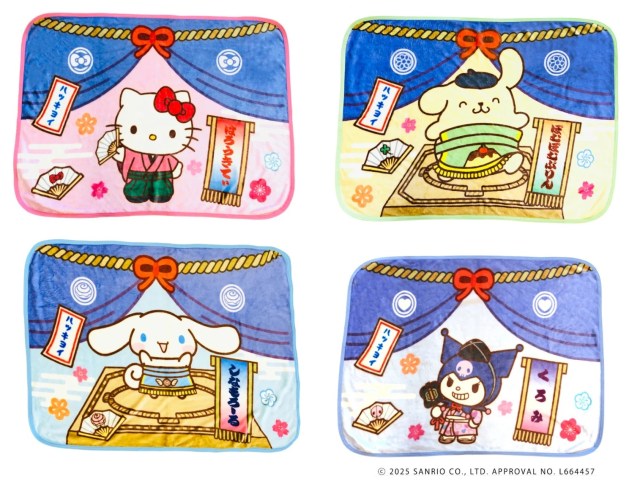
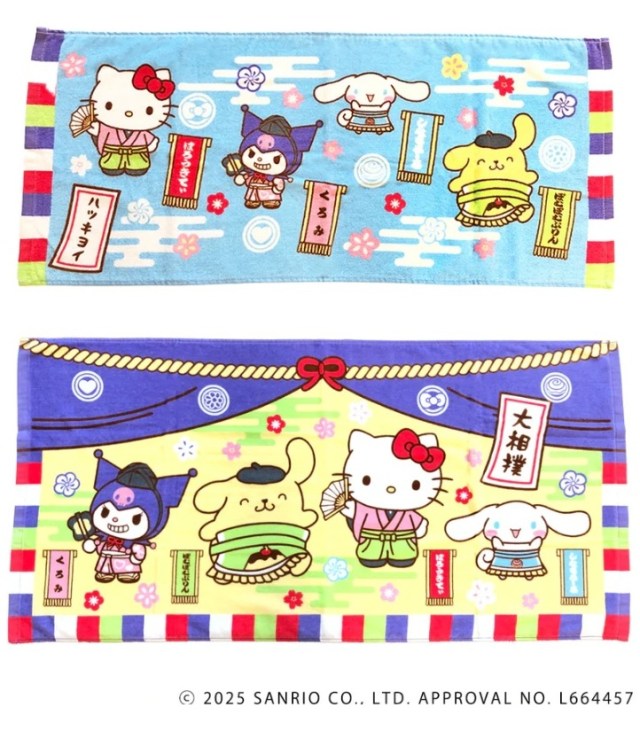
Sanrio has announced a collaboration with the Japan Sumo Association, featuring four of the kawaii design house’s most popular characters: Hello Kitty, Kuromi, Pom Pom Purin, and Cinnamoroll. Given his rotund physique, Pom Pom Purin doesn’t look at all out of place wearing sumo’s traditional kesho mawashi combined loincloth and apron. Joining him in sumo wrestler attire is Cinnamoroll, who’s usually depicted as quite a bit smaller than Pom Pom Purin. Professional sumo doesn’t have different weight classes, though, and if the two so desire, they’re appropriately dressed to step into the ring and add a new aspect to their battle for Sanrio supremacy.

Kitty-chan and Kuromi, meanwhile, will be forgoing loincloths and instead donning the the garb of a yobidashi and gyoji, respectively. Yobisashi play a part in assembling the wrestling ring for sumo tournaments, but their most visible role is that of announcer, calling wrestlers by name to the ring for their next bout, a task Hello Kitty, who’s all about bringing big groups of friends together, is well-suited for. Meanwhile, Kuromi, who unabashedly enjoys being in control, is dressed in the lavish kimono and hat of a gyoji, the in-ring referee of a sumo match.

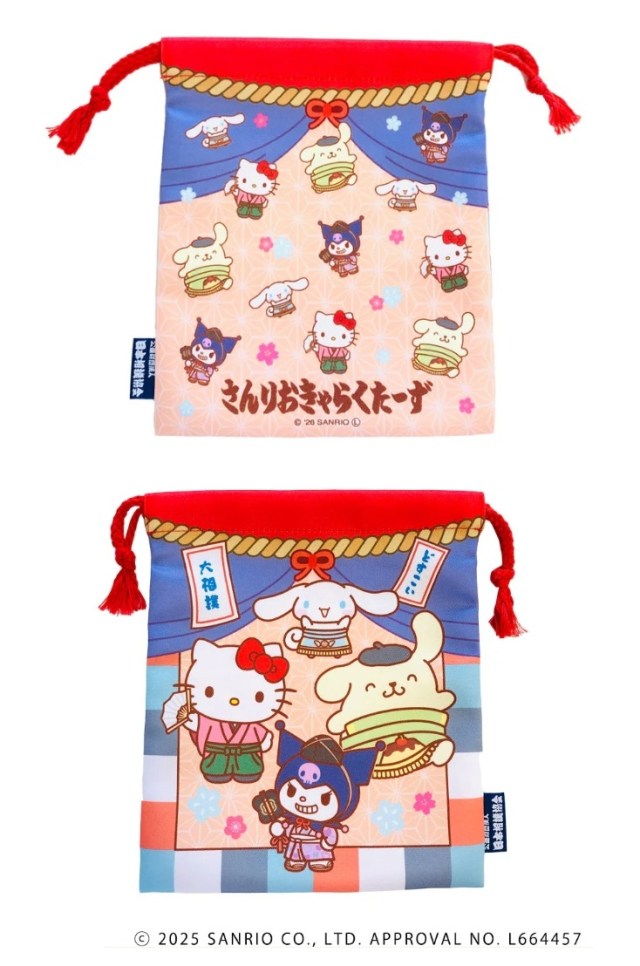
The merchandise lineup includes drawstring pouches, with the double-sided design pictured above, hand towels

…and face and bath towels.

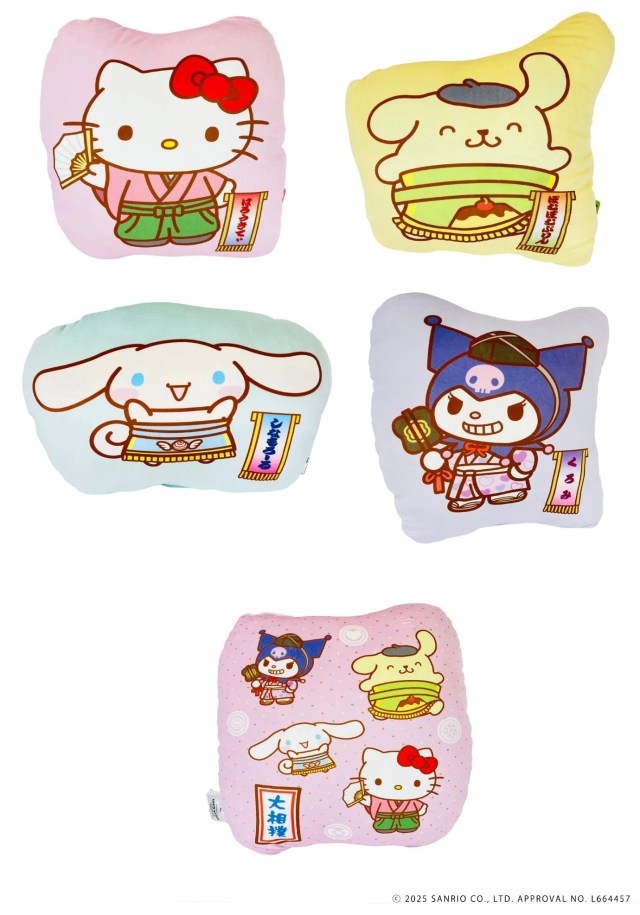
For those of the opinion that such cute characters absolutely need to be hugged, there’s also a series of cushions, with individual characters on one side and the whole quartet on the other.

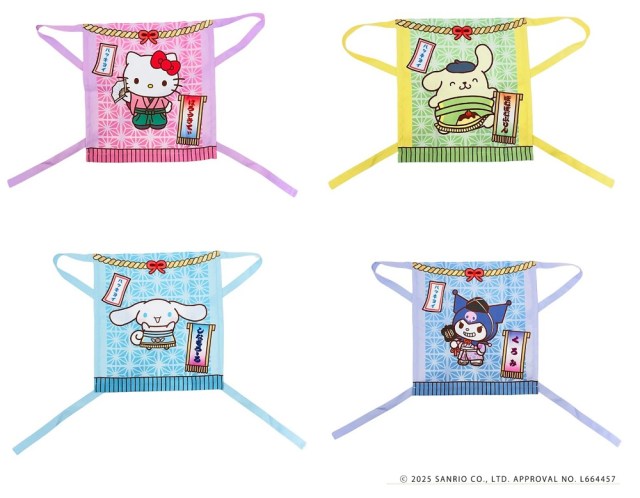
Finally, the kesho mawashi serve as inspiration for these cooking/cleaning aprons, which will probably be more useful than actual sumo loincloths in most people’s daily lives.

In addition to being adorable, the lineup is all affordably priced, with the drawstring pouch just 1,100 yen (US$7.20) and even the most expensive items, the cushions, just 2,310 yen, so nothing here is going to put a sumo wrestler-sized dent in fans’ budgets.

The Sanrio sumo items won’t be offered in regular stores, but instead will be offered at Tokyo’s Ryogoku Kokugikan stadium, the site of the January tournament, while the competition is taking place from January 11 to 25. They’ll also be available for online purchase through online sumo merch marketplace SuMALL here starting January 7.

Source: PR Times
Top image: PR Times
Insert images: PR Times, SuMALL
● Want to hear about SoraNews24’s latest articles as soon as they’re published? Follow us on Facebook and Twitter!


Credit:

Cyberpunk anime meets traditional culture in Ghost in the Shell gold leaf Japanese changing screens

Ghost in the Shell on the byobu.

Something I noticed a long time ago is that posters seem to be more popular among anime fans overseas than in Japan. That’s not because Japanese fans don’t appreciate the artwork of their country’s animated works, of course, but rather because hanging things, including posters, on your walls in general is comparatively less common in Japan.

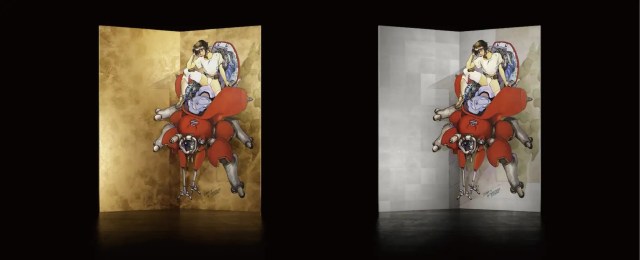
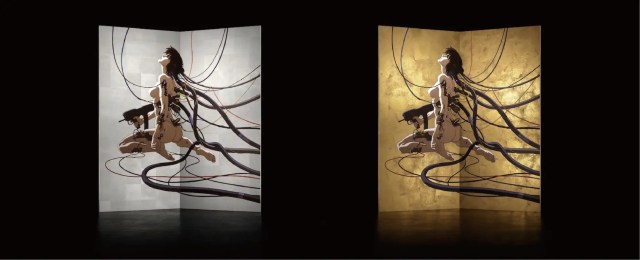
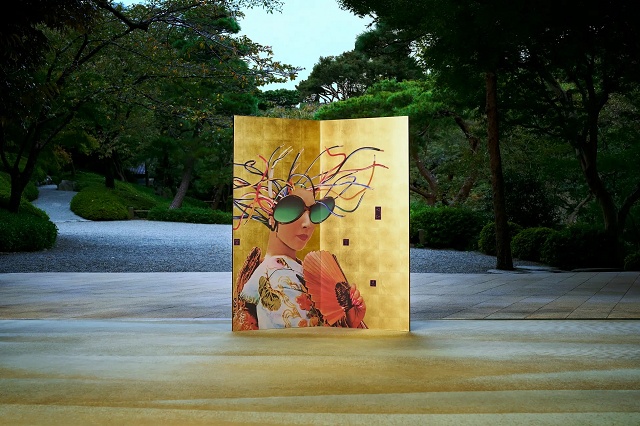
But now here comes Tokyo-based creative company UMAA with a very eye-catching alternative to anime posters, with an anime byobu, or traditional Japanese changing screen.

Chosen as the muse for the newest entries in UMAA’s TechnoByobu series is none other than Major Motoko Kusanagi, protagonist of anime/manga classic Ghost in the Shell. Two different designs are available, the first of which is called Konpaku (meaning “soul”) and shows the Major perched atop her Fuchikoma mecha pod in an illustration originally drawn by series creator Masamune Shirow.

The other design, designated Gitai (“prosthetic body”), uses the Major’s character design from the 1995 anime movie that brought the franchise worldwide acclaim, with a web of wires attached to her cybernetic shell.

In keeping with Japanese artistic traditions, the screens are specified as being five shaku in length, which converts to roughly 150 centimeters (59 inches) in modern measurement units, and they’re 140 centimeters (55 inches) tall. UMAA lists the screens’ materials as paper treated with gold leaf and pressed tin, with the different materials presumably occupying opposite sides of the screen, since there’s only a single price, 1.1 million yen (US$7,190) for each.

▼ UMAA’s previous TechnoByobu design was a recreation of a Yellow Magic Orchestra album cover.

The Ghost in the Shell screens will be produced in limited quantities and each will have a serial number. As you can probably guess, given their size and price, the Ghost in the Shell TechnoByobu aren’t going to be stocked on the shelves of ordinary anime shops. Instead they’ll be offered for sale at the upcoming Ghost in the Shell: The Exhibition event which will be held at Tokyo Node inside Tokyo’s Toranomon Hills complex from January 30.

Related: Ghost in the Shell: The Exhibition official website
Source, images: PR Times

● Want to hear about SoraNews24’s latest articles as soon as they’re published? Follow us on Facebook and Twitter!


Credit: