Tokyo’s “commuter boat” is an awesome hidden way to see the city from the water for dirt-cheap
Randomly stumbling across a beautiful cruise line that starts in the heart of downtown Tokyo.

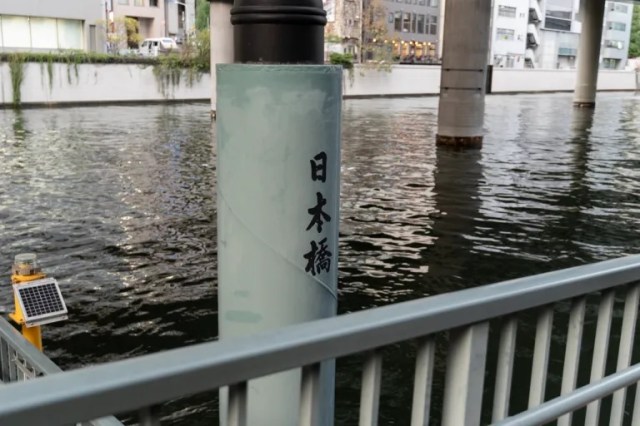
Nihonbashi is the name of a neighborhood in downtown Tokyo, but it’s also the name of a bridge (hashi being the Japanese word for “bridge,” after all). And while we’re at it, we may as well cover that Nihonbashi is also the name of a river, which the bridge goes over.

All of this is to set the scene for what happened the other day when we were in Nihonbashi, standing on Nihonbashi, and looking down at the Nihobashi River, which is where we saw a boat.
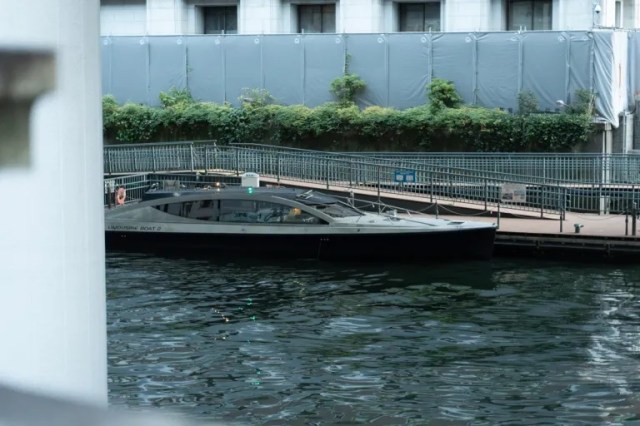
Nihonbashi is pretty deep into downtown, and a lot of the Nihonbashi River runs underneath the elevated expressway, which limits the size of ships that can go up and down the waterway. Occasionally you’ll spot a yakatabune, a long, low, traditionally styled boat used for dinner cruises, or some sort of public works maintenance ship, but that’s usually about it for water traffic. This boat, though, didn’t fit either of those categories, but it wasn’t a private craft either, since there was a group of people standing by the dock waiting to board. They weren’t dressed in crew outfits or work uniforms. They were just regular dudes.
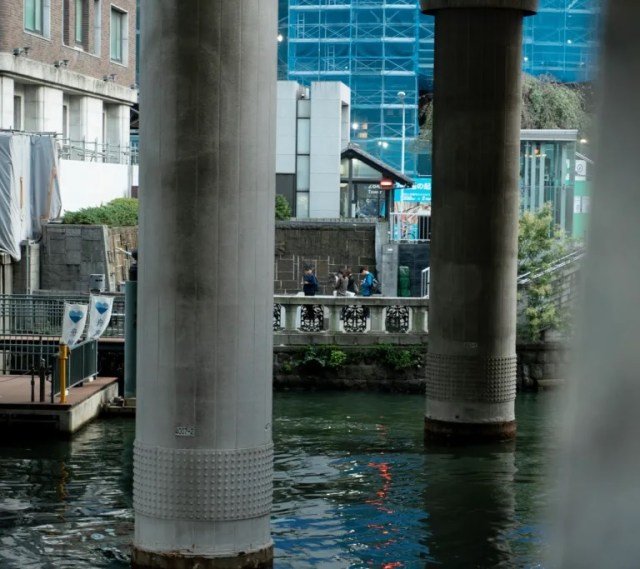
Curious, we headed down to the waterfront to investigate, and that’s when we found out that this is the “Commute by Boat” ship, which runs between Nihonbashi and Toyosu, a neighborhood on the southeast edge of downtown with rail connections out to the suburbs.

The Commute by Boat line runs in the evening between Tuesday and Friday, with the trip from Nihonbashi to Toyosu (or vice-versa) taking 20 minutes. The one-way fare is 500 yen (US$3.35) for adults and half that for kids, and you can pay simply by tapping a Suica pre-paid rail pass, just like you would on a commuter train, when you get off.
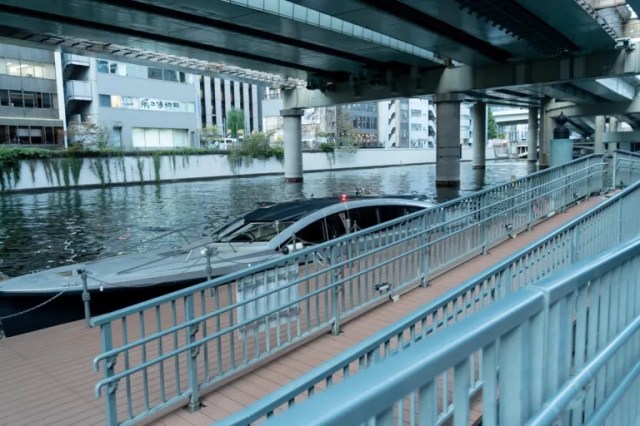
Boats depart from Nihonbashi at 4:30, 5:30, 6:30, 7:30, and 8:30, and as luck would have it, the next ship was leaving just a few minutes after we’d spotted it. While it’s possible to make reservations online, they’re not required as long as there are empty seats, and with only about a half-dozen people in total getting on at this time, there was plenty of space for us to come aboard.
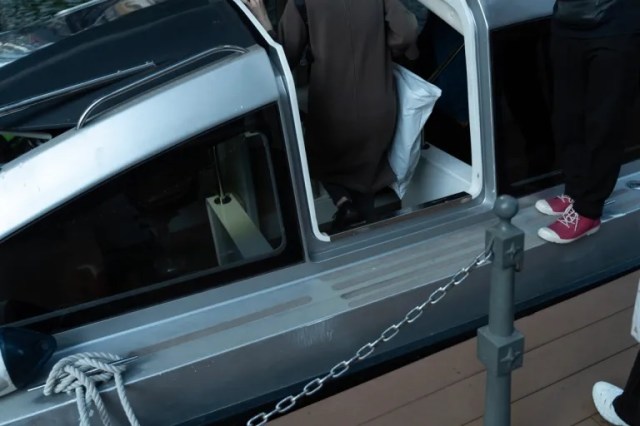
▼ The Nihonbashi boarding dock for the Commute by Boat ship

Seats aren’t assigned, so we settled into one, took a last look at the Nihonbashi bridge…
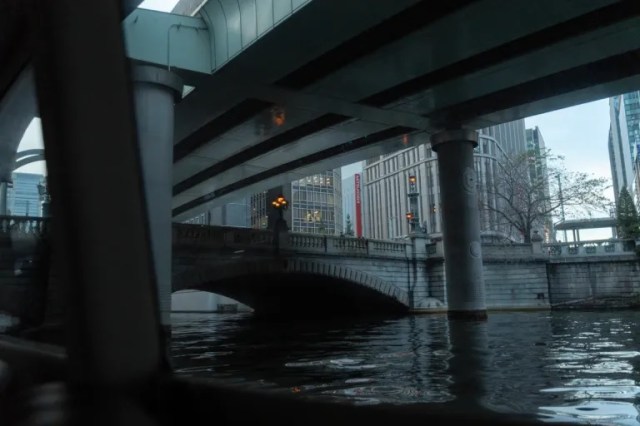
…and we were off!

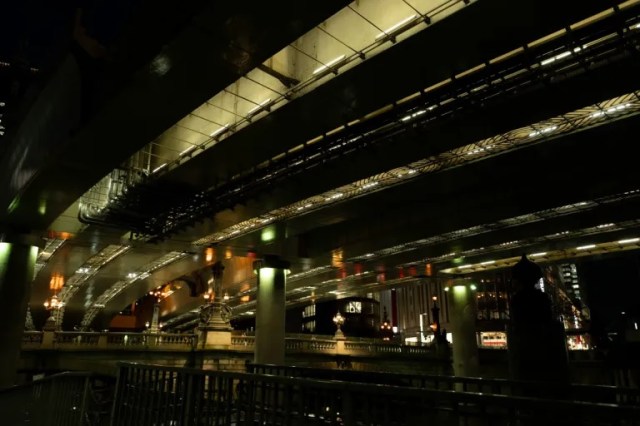
The Nihonbashi River has a total length of about five kilometers (3.1 miles), starting as a branch-off from the Kanda River and later joining up with the Kanda River on the east side of downtown Tokyo, which flows out into Tokyo Bay. The first part of the Commute by Boat Nihonbashi-to-Toyosu route is along the Nihonbashi River, with much of it spent under the canopy of the expressway. While it may not provide the sense of liberation you get from being on the high seas, it’s got a unique urban appeal, sort of a retro near-future vibe like you might find in the Patlabor anime series’ quieter moments.
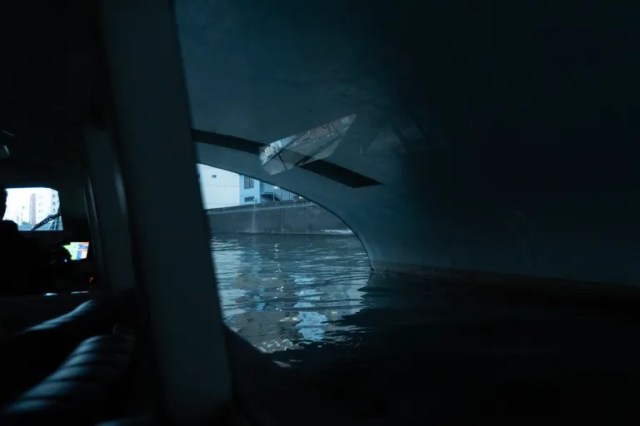
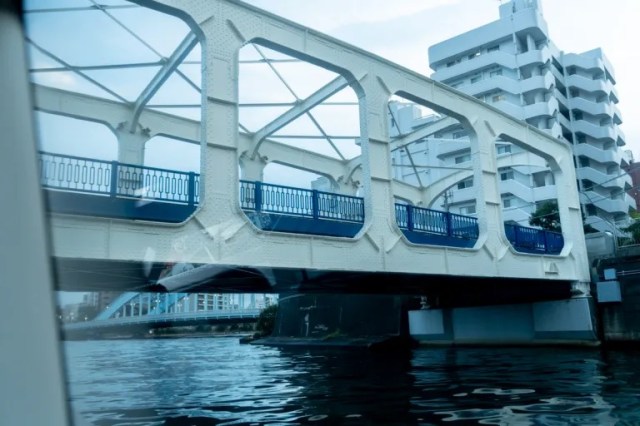
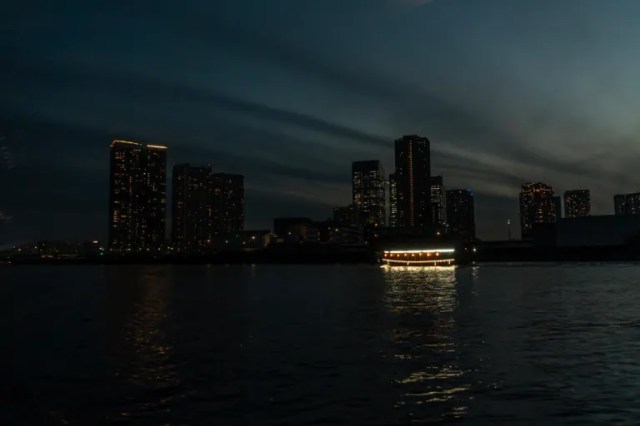
The view opens up considerably once the Nihonbashi River meets up with the Sumida River, where clouds in the sky, with the lingering dusk sunlight, made for some great photo ops.
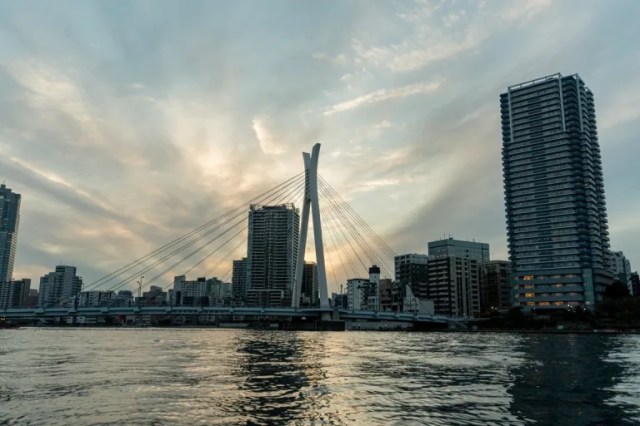
With the sun dipping below the horizon, the lights of the city started to come on, including the red lanterns along the yakatabune dinner cruise ships.
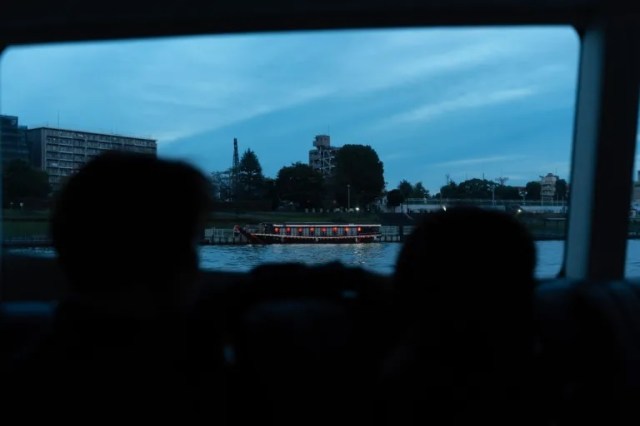
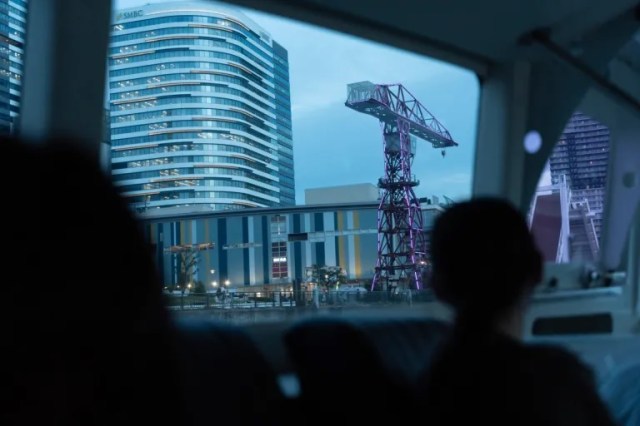
The Commute by Boat line docks at the Lalaport Toyosu shopping/entertainment center, which is just a five-minute walk from Toyosu Station, where both the Yurakucho and Yurikamome rail lines meet.
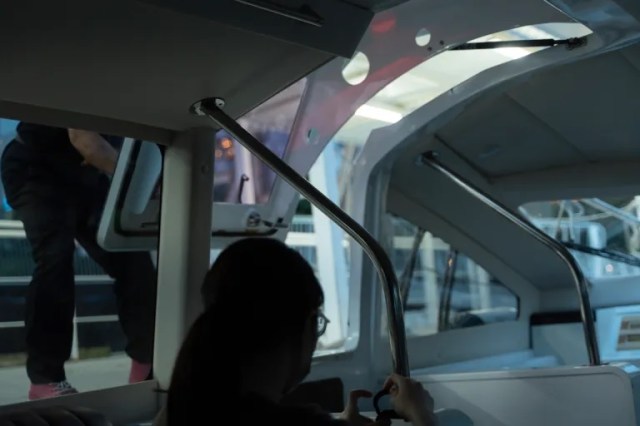
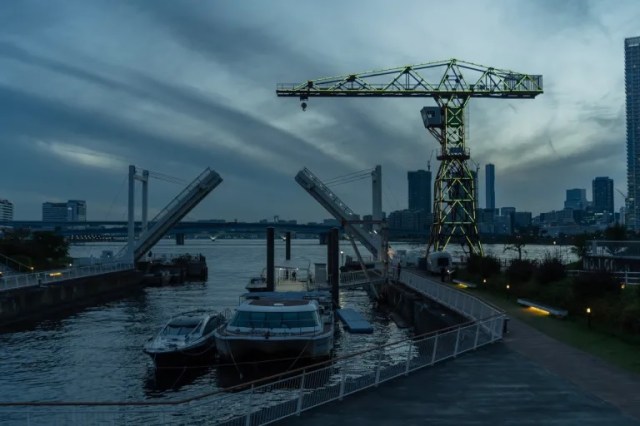
After paying by tapping our Suica card as we got off, we thought about grabbing a bite to eat in one of Lalaport’s restaurants. However, on our ride in we couldn’t help thinking that the scenery we’d seen probably looks really cool at night too. Since Commute by Boat ships depart from Toyosu on the hour at 4, 5, 6, 7, and 8 p.m., we only had a 10-minute wait until the next one was heading out, so we decided to hop on and do the reverse route too.
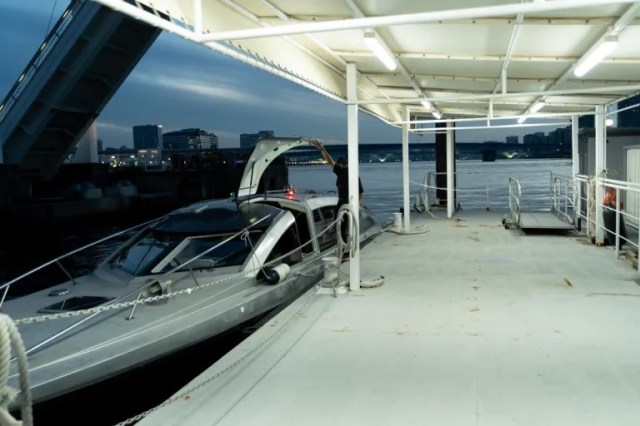
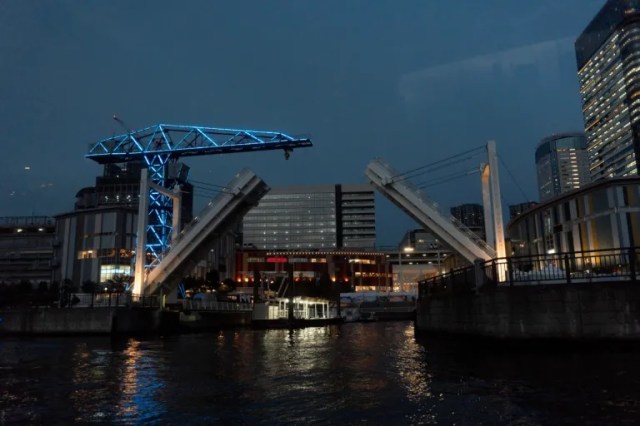
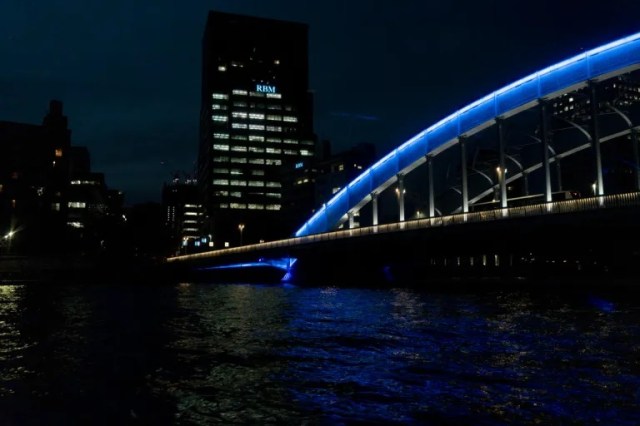
Sure enough, the neon accents dotting the night sky and reflecting off the otherwise darkened water made for a special kind of beauty, with a touch of nostalgic sophistication.
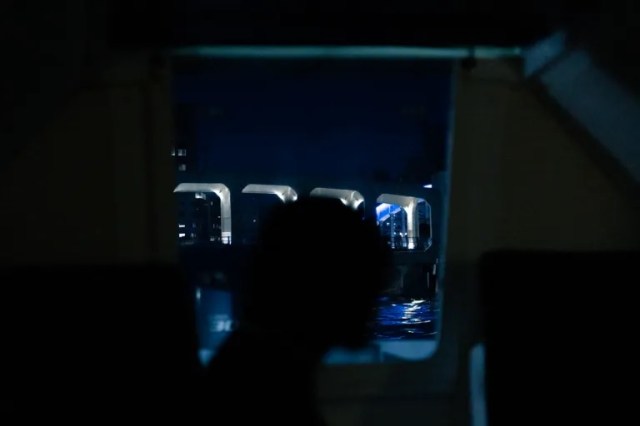
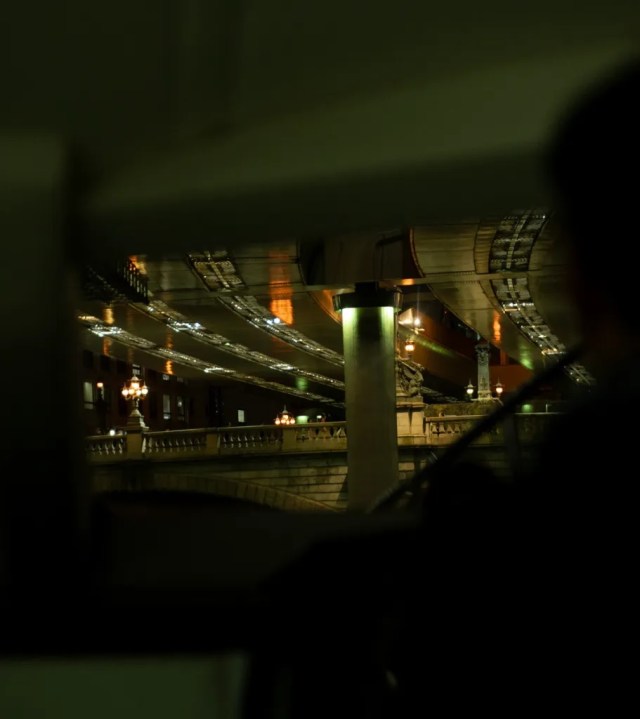
As an added bonus, there was only one other passenger on the boat from Toyosu to Nihonbashi, meaning that we had an almost-private cruise for just 500 yen. So even if you’re not using the Commute by Boat line to actually commute, it’s still very much worth taking a ride on.

Related: Commute by Boat official website (Japanese, English)
Photos ©SoraNews24
● Want to hear about SoraNews24’s latest articles as soon as they’re published? Follow us on Facebook and Twitter!


Credit:
Sagami Railway and Adobe hope AI can help stop Japanese train photographers from being jerks

Finally, a use of AI we can all get behind.

The toritetsu subset of Japanese train otaku which specializes in photography has long been notorious for a string of anti-social behavior unbecoming of their seemingly relaxing hobby. Reports of violence, vandalism, and general poor manners are widespread as these shutterbugs vie for the best shot of the rarest trains around. Railways have also made efforts to channel this passion for trains into something more positive, but problems still persist.

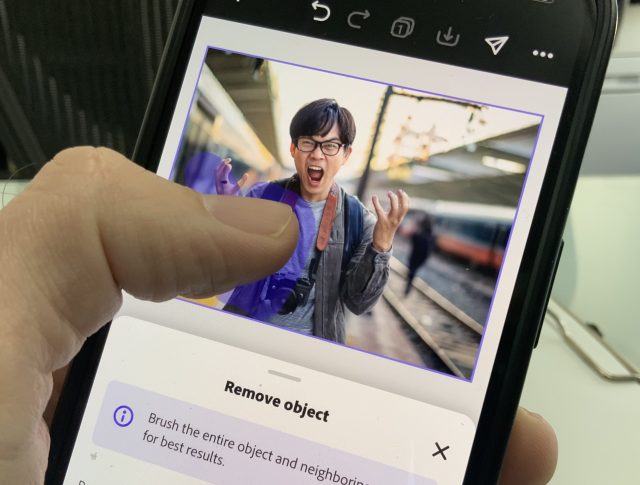
Now, Sagami Railway in Kanagawa Prefecture has teamed up with software maker Adobe to find ways to get that perfect shot without punching other photographers, cursing out staff, or cutting down trees. On 24 November, at Hoshikawa Station in Yokohama City, a workshop was held to teach toritetsu how to use Adobe Express’s generative AI to remove unwanted people or objects from photos.

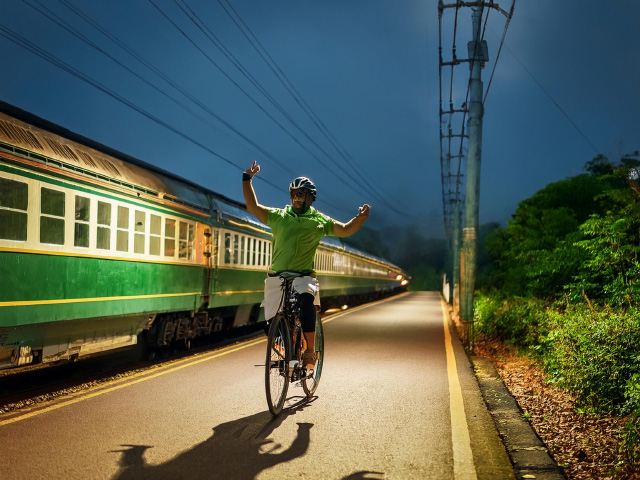
As a case study, who could forget that time dozens of toritetsu waited in the middle of the night to get the first photos of a new rolling stock on the Enoden line in Kanagawa, only to have a large man on a bicycle riding between them and it with his arm outstretched? Due to the contentious nature of the incident, video of it is often quickly removed from social media and YouTube, so I just got Adobe Photoshop to generate a similar image.

▼ Shortage of logic aside, it’s fairly close to the real incident.

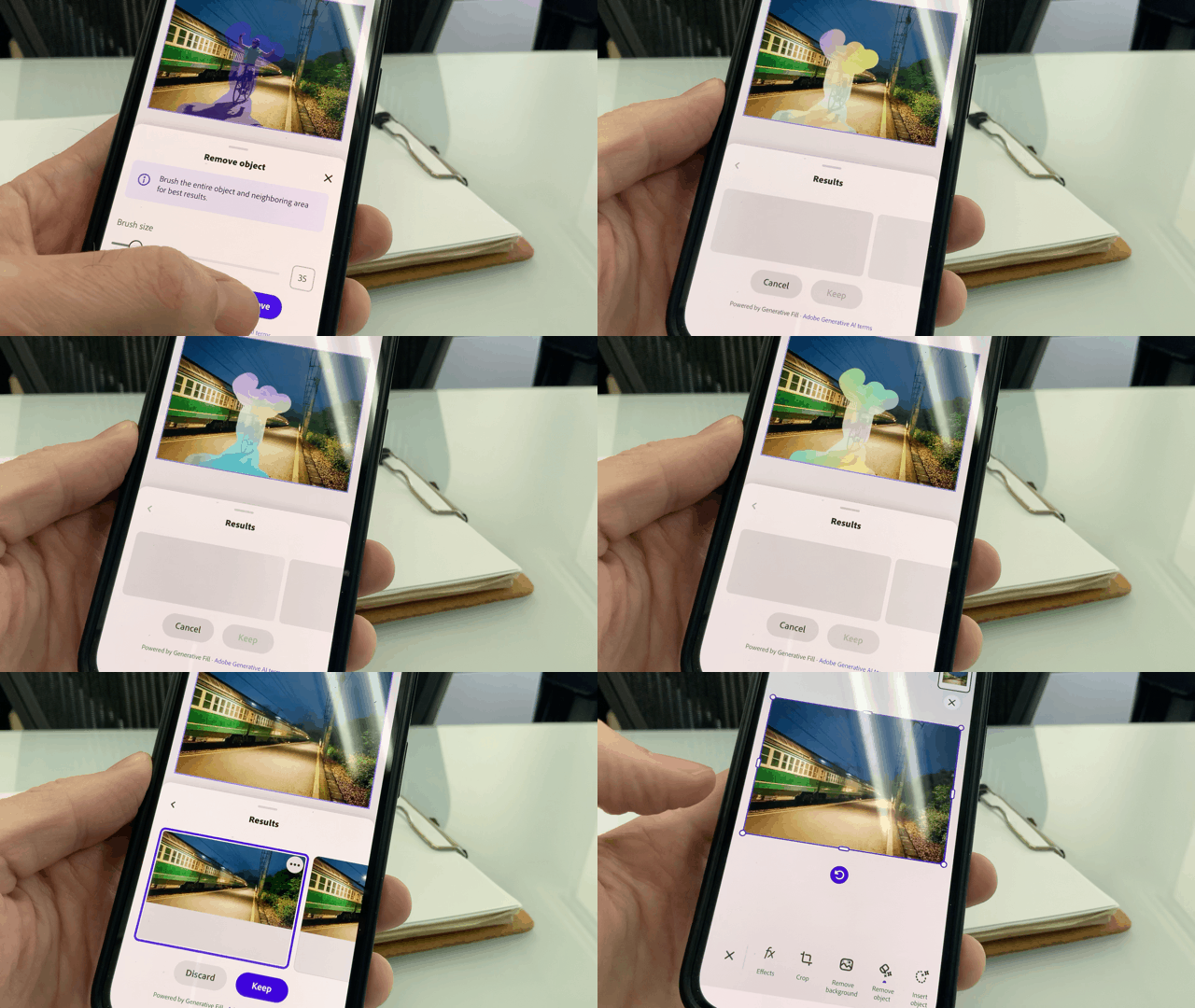
After that, I popped it into the Adobe Express app on my phone. Rubbed blue stuff on the guy with my finger and made him go away.

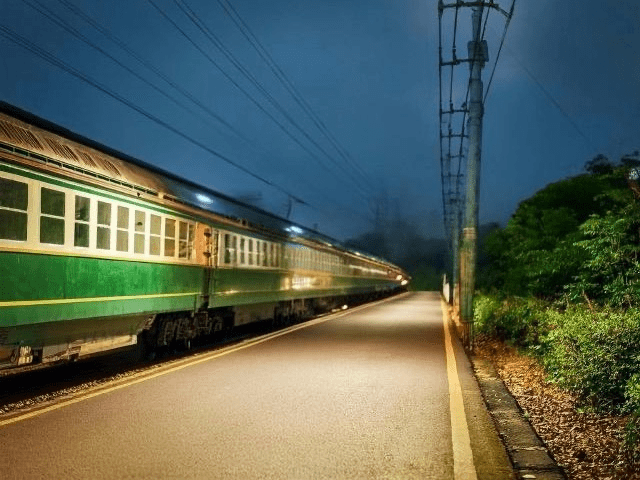
▼ Problem solved!

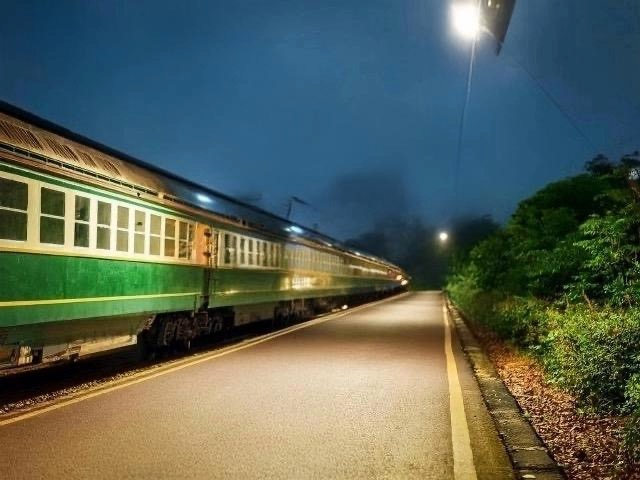
▼ Actually, those wires are ugly so let’s ditch those too.

▼ And you know what? I’m not all that crazy about trains anyway. How about a sailboat?

Bear in mind, I just did super-fast, one-shot edits and it’s possible to get better results with more time and effort, especially if I had gone to that workshop. This may not satisfy the purists among toritetsu, of whom most are, but there was some positive feedback at the workshop, with one attendee liking how it cleanly removed overhead wires and hands with a natural-looking result.

Even if it means just a few less people trespassing and destroying property then it’s a job well done. Readers of the news, however, seem to feel the problem is much too large to be cured with some AI editing tools.

“Now, we need a way for AI to erase the toritetsu.”
“Or just ban photography on station platforms.”
“These guys are pretty anti-processing, I think.”
“I think the toritetsu’s issues run much deeper than this.”
“I don’t get why they’re against editing. The photo itself is already inherently altered from what’s seen by the human eye.”

As the last comment pointed out, the news also sparked some debate over how much processing crosses that line of no longer being photography and becoming CGI. If AI editing was considered acceptable among these people, then why not just stay home and generate images of trains all day?

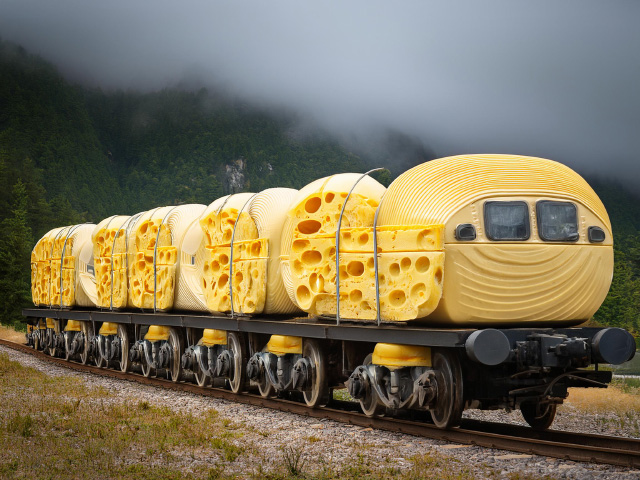
▼ You all have fun screaming at each other. I’ll stay home with my trains made of cheese.

Besides that, the ability to remove obstructions from images on Photoshop has been around for a long time and toritetsu never even seemed to embrace that. It required a lot more skill and effort back then, but probably not as much as breaking into a train yard and dismantling signs while evading security.

I’m willing to give Adobe credit for putting the idea out there, even if it is in a bit of a self-promotional way. Unfortunately, this probably won’t be the end of the mayhem caused by people who like to take pictures of trains.

Source: Asahi Shimbun, Itai News
Images: Adobe Photoshop and Adobe Express
● Want to hear about SoraNews24’s latest articles as soon as they’re published? Follow us on Facebook and Twitter!


Credit:
Furikake rice seasoning sales are soaring, which is bad news for Japan as a whole

Bad news for everyone over 10 in Japan at least.

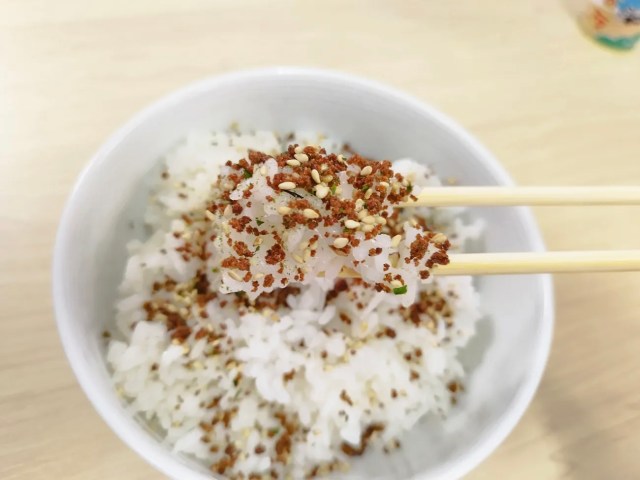
Furikake is a beloved Japanese topping for white rice which comes in many, many varieties from the salty purple perilla leaves of Yukari to dried versions of entire dishes like baked potato or grilled eel. These flavorful seasonings have long been popular in Japan and are recently on a tear with overall sales growing for the past 27 months straight.

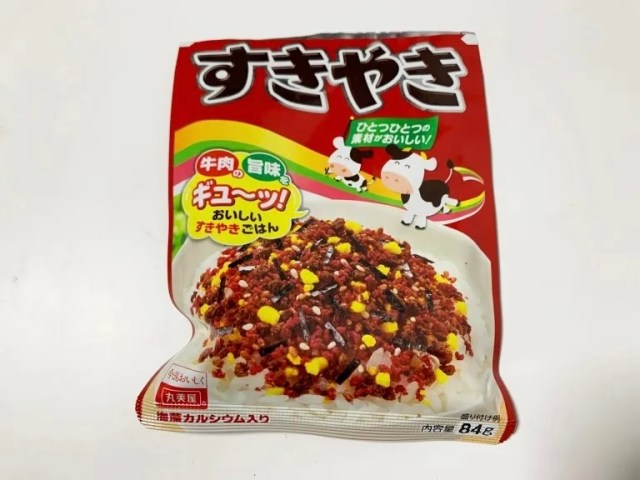
▼ Some sukiyaki-flavored furikake

While great news for furikake producers, it’s terrible news for everyone else. Yuki Yoshioka, a reporter for the Japanese food industry news outlet The Japan Food Journal found that rises in furikake sales are practically the inverse of the general economy of Japan. Other times furikake sales shot up coincided with rice shortages and the bursting of Japan’s bubble economy at the end of the 20th century. To put it simply, people eat more furikake when money is tight.

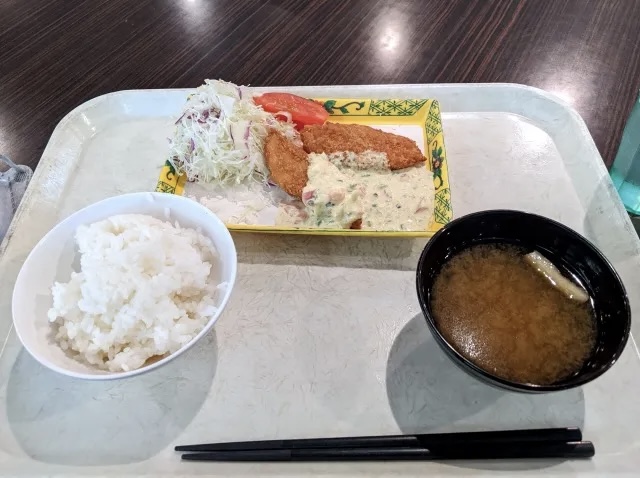
To understand more clearly it’s important to know the anatomy of a conventional Japanese meal. Its core components are plain white rice, soup, and what is known as “okazu,” which translates to “side dish.” Okazu is usually a meat or vegetable dish like fried chicken, spring rolls, Salisbury steak, grilled mackerel, and so much more.

▼ Cafeteria food usually exemplifies this format

This might seem backward to Western eaters who see rice as a side dish and meat as the main event, but for many in Japan, rice is the indispensable backbone of the meal. Everything else is secondary, so even in times like recently when rice prices shoot up, people will do what it takes to secure the rice and look to save costs on the okazu instead. This is where furikake comes in quite handy.

As mentioned earlier, furikake can often simulate the tastes of typical okazu dishes at a fraction of the price and in a longer-lasting form. This way people can at least get the feeling of eating a full meal even if they can’t afford it.

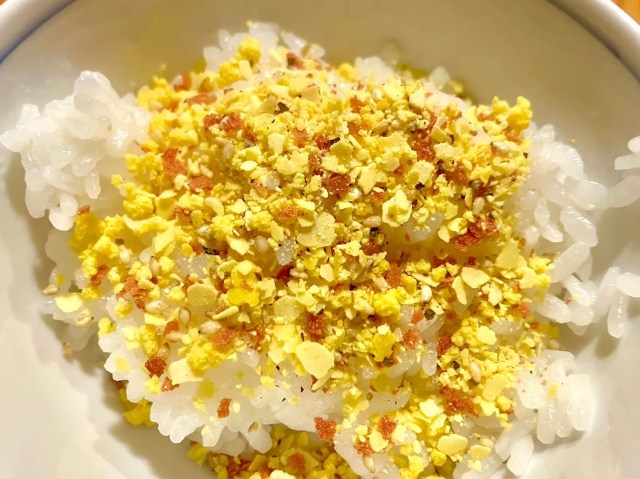
▼ Just like mom used to half-heartedly make…

That’s rather depressing, but the recent success of furikake isn’t all a result of economic doom and gloom. There are other factors, such as an increased acceptance among younger generations. Seniors in Japan will likely scoff at the concept of furikake as white rice is traditionally meant to remain pure and untouched by other foods unless for some ceremonial reason. To them, putting furikake on rice would be like putting ketchup on a fine steak.

However, much to their chagrin, their kids loved it, and those kids are now grown up with kids of their own. This means that furikake is enjoyed by twice as many people at the dinner table than in the previous generation.

Another factor that isn’t particularly great or bad is an increasing culinary pickiness among Japanese children. Contrary to their grandparents, a significant number of children today find plain white rice unbearably bland and refuse to eat it. School boards have long discussed the problem and whether students should be allowed to bring their own furikake to put on the rice of their school lunches.

Furikake’s growth is also contributed to by the fact that it makes a great souvenir for the increasing number of tourists as well as emergency rations in case of earthquakes or other disasters. But I suppose the main takeaway from all this is that furikake producers can be a great defensive investment when things hit the skids… that or Chiitan☆Coin I guess.

Source: The Japan Food Journal, AREA dot, My Game News Flash
Photos © SoraNews24
● Want to hear about SoraNews24’s latest articles as soon as they’re published? Follow us on Facebook and Twitter!


Credit:
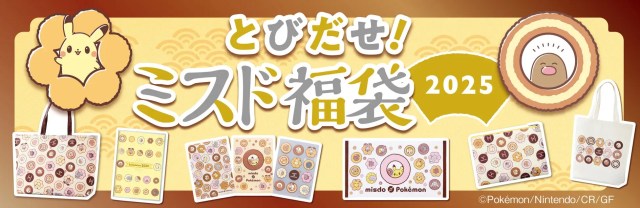
Pokémon Mister Donut lucky bags essentially pay you with Pokémon merch for eating dessert

Japan’s sweetest deal in the fukubukuro sphere is back!

December is a busy month. Between pulling winter clothes out of storage, taking care of the Christmas shopping, planning and attending end-of-the-year parties with friends and coworkers, making trips back home to visit family for the holidays, and finishing up work projects that need to get done before the end of the calendar year, there’s just so much to do.

But even with all that, you still need to remember to make sure to carve out space in your schedule for something very important: Mister Donut’s Pokémon lucky bags.

A whole lot of shops and restaurants in Japan offer lucky bags (or fukubukuro, as they’re called in Japanese) around the New Year’s Season, but Mister Donuts’ Pokémon ones are especially desirable. Not only do you get to know what’s inside of the grab bags ahead of time, they’re also an incredible value, and also let you share the wealth of free donut coupon with others.

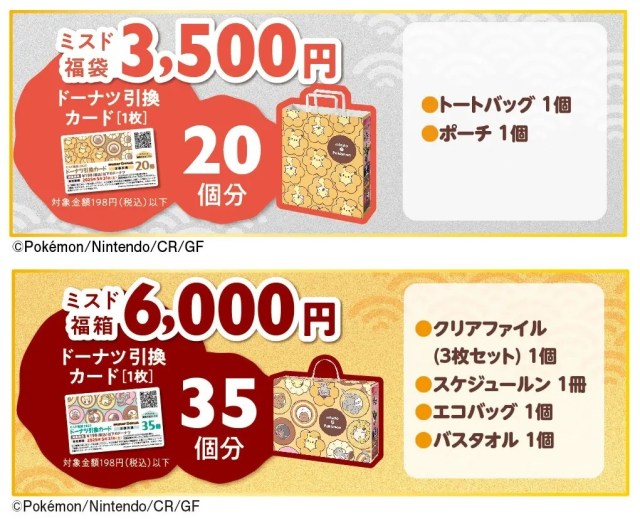
This year, Mister Donut is offering two tiers of Pokémon lucky bags, one for 3,500 yen (US$23), and one for 6,000 yen.

Both feature adorable illustrations of Pocket Monster species such as Pikachu, Diglett, Dugtrio, Sandshrew, and Onix peeking, peering, and leaping through donut holes, just like the real-life Diglett and Dugtrio donuts Mister Donut is currently serving up at its locations.

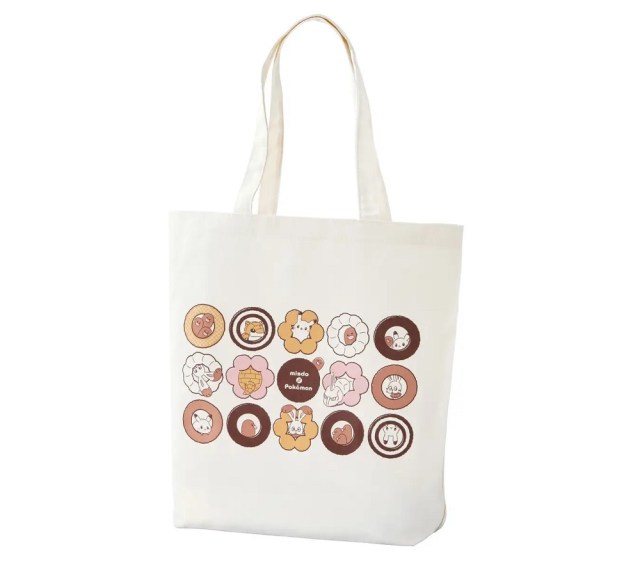
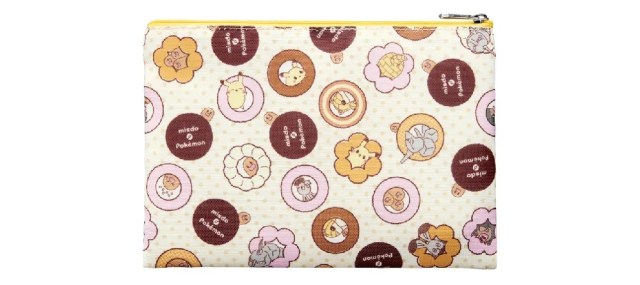
Included in the 3,500-yen lucky bag are a cloth tote bag and zippered pouch, both in classy earth tones with pink accents.

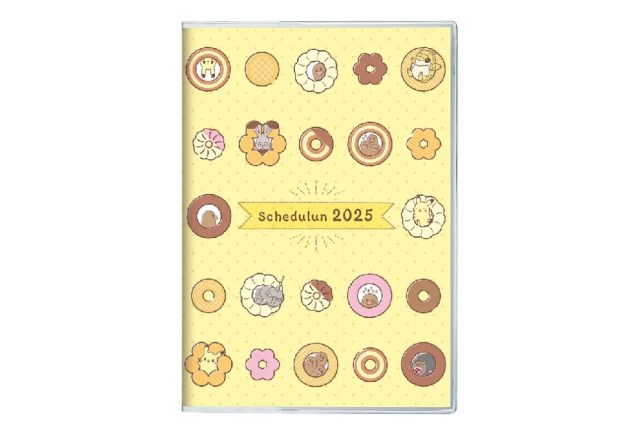
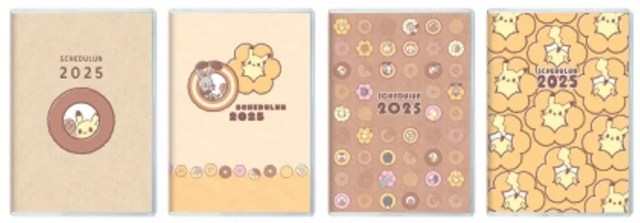
Stepping up to the 6,000-yen bag gets you a schedule book with a set of five covers which you can swap in and out to suit your mood…

▼ Alternate covers

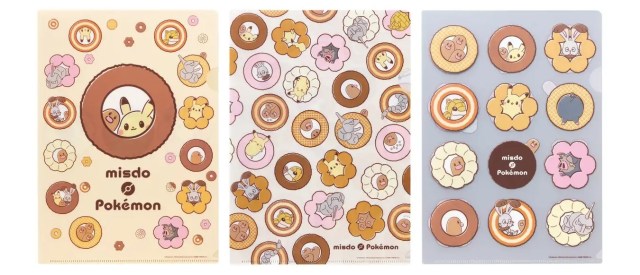
…three clear file document holders…

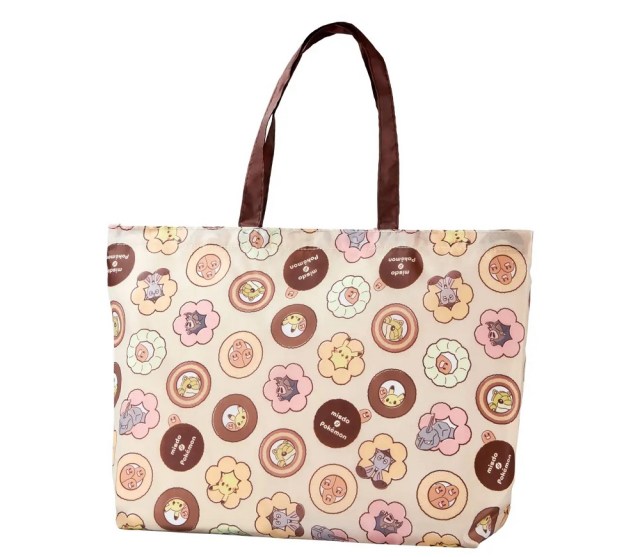
…a 51-centimeter (20-inch) wide reusable eco shopping bag…

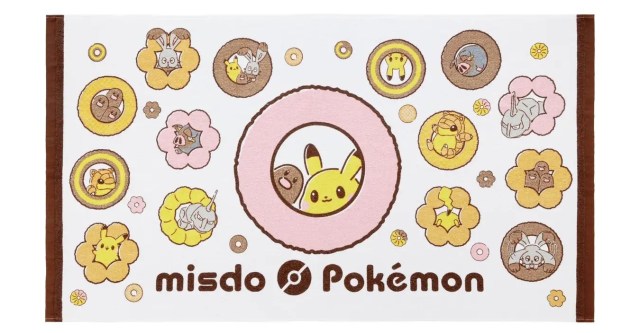
…and a bath towel.

This being Mister Donut, both bags also come with a whole bunch of free donuts, with the 3,500-yen lucky bag getting you 20 free donuts, and the 6,000-yen bag 35. However, since one of mankind’s great contradictions is our limitless love of donuts and limited stomach capacity, Mister Donut doesn’t stuff the lucky bags with actual donuts, but instead gives you a card which you can use to redeem the donuts in stores over multiple visits. By registering the card via the Mister Donut app you can also use your smartphone to get your freebies, and since one card can be registered to multiple phones, you can split the sweets haul with friends and family too, even if you’re not making your donut run together at the same time and place.

With the vouchers applicable for donuts priced up to 198 yen, the 20 free donuts included with the 3,500-yen lucky bag represent a value of 3,960 yen, and the 6,000-yen bag’s 35 free donuts are worth 6,930 yen. In other words, Mister Donut is essentially paying you with Pokémon merch for eating donuts, which is about as sweet a deal as you’ll ever find.

Reservations for the Mister Donut Pokémon lucky bags open December 11 through the Mister Donut website, with pickups staring on December 26, depending on specific store location.

Related: Mister Donut
Source, images: PR Times
Pokémon Mister Donut lucky bags essentially pay you with Pokémon merch for eating dessert
● Want to hear about SoraNews24’s latest articles as soon as they’re published? Follow us on Facebook and Twitter!


Credit:
“I just wanted her to see my T-back” doesn’t save Japanese man from being arrested for exposing butt

Thin strip of cloth is a thin excuse in the eyes of the law.

At around 5:30 p.m. last Wednesday, a young woman was riding an escalator in a shopping center in Okayama City’s Kita Ward. That should be about as mundane as a weekday evening scene can get, but the escalator ride had a sudden twist as the man in front of the woman suddenly pulled down his pants and gave her an eyeful of his butt cheeks.

Of course, the problem with butt-flashing someone on an escalator is that everyone knows where you’re going: to the top of the escalator. Well, there’s also the problem of the moral reprehensibleness of flashing someone in general, but in any case, doing it on an escalator makes escape difficult. Sure enough, a security guard apprehended the man, later identified as a 44-year-old office worker who lives in the city’s Higashi Ward. The security guard then called the police, delivering the succinct report of “I have a suspicious person in custody.”

The woman is described as being “judai,” a Japanese term describing someone between the age of 10 and 19, though with reports not referring to her as a child, she’s likely a teenager, and above the legal-adulthood age of 18.

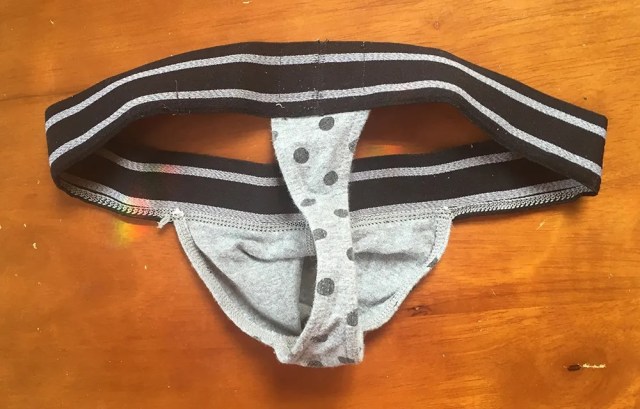
Officers were promptly dispatched to the scene, but during questioning the man partly denied the accusations. He’s not contesting that he pulled down his pants with the explicit purpose of showing the woman what was underneath, but he’s contesting that he didn’t expose his posterior, as he was wearing undergarments. In explaining his motives to the police, the man said “It was not my intention to show her my butt. I wanted a young woman to see the T-back underwear I was wearing.”

As such, the man could perhaps contend that he didn’t expose his butt, as he was, technically, still wearing something under his pants. That said, depending on the design of the underwear and the voluminousness of the man’s butt cheeks, it’s possible that the T-back was burrowed far enough his crack as to be materially the same as exposing a completely bare backside. And if you’re of the opinion that even flashing your T-backed butt to an unwilling stranger should be illegal, you’ll be happy to know that the man was still arrested on charges of violating Okayama’s Nuisance Prevention Ordinance.

▼ “Your butt is a severe enough nuisance that it violates the law” is among the more uniquely damning indictments the legal system can make against an individual.

It’s worth pointing out that while Japan does have a tradition of men wearing loincloths, which also provide only scant coverage of the lower body, such attire is generally reserved for traditional festivals and the lapsed Men of SoraNews24 charity calendar, situations/publications where people are mentally prepared for the possibility of seeing some cheek. Dropping trou on unsuspecting shoppers, on the other hand, will get you in trouble with the law even more quickly than carrying around Harry Potter’s Sword of Gryffindor.

Source: KSB Setonaikai Broadcasting via Hachima Kiko, RSK Sanyo Broadcasting, Sanyo Shimbun
Top image ©SoraNews24
Insert image: Pakutaso
● Want to hear about SoraNews24’s latest articles as soon as they’re published? Follow us on Facebook and Twitter!


Credit:
Taking revenge on Starbucks in Japan with 10,000 yen at the Reserve Roastery Tokyo

Risky revenge visit leaves us with some newfound revelations.

This time of year is an important one for Starbucks fans in Japan, as the chain announces the results of its annual lucky bag lottery by contacting the winners who now have the privilege of purchasing a bag.

This year, a lot of our own reporters entered the lottery but unfortunately most of them didn’t win. Yuuichiro Wasai was one of the losers, and he was so brokenhearted about it that he decided to turn his luck around by heading out to the fanciest branch and spending the money he would’ve spent on the lucky bag there instead.

Taking 10,000 yen (US$66.06) with him, Yuuichiro aimed to spend no more than the cost of the 8,800-yen lucky bag, with hopes of picking up an even better swag than the winners. So what did he end up buying, and was it worth it? Let’s find out!

Arriving at the Reserve Roastery Tokyo, Yuuichiro was greeted by a wide variety of premium drinks, food and products, many of which are exclusive to this location.

Being a 15-minute walk from the nearest station, this branch is slightly inconvenient to get to so Yuuichiro only visits here about once a year. After losing in the lucky bag department, Yuuichiro could think of no better place to visit, as a stylish Starbucks like this would surely buoy his spirits.

There was one exclusive drink here that he’d had an eye on for a while, so he headed up to the Arriviamo Bar to search for it. Called the Frozen Espresso Custard, this is a limited-edition cocktail that sounds totally delicious, but the only drawback to it is the price tag.

▼ 2,200 yen

Yuuichiro hadn’t thought to check the price beforehand, so this drink alone ate up a quarter of the total cost of a lucky bag. Oh well, he was here now so he figured he might as well make a meal of it, so he added a Pizza Margherita Foccacia and a Vanilla Sugar Mele (Italian apple cake) to his order.

▼ That brought the price, including tax, to a total of 3,830 yen.

Approximately half of the lucky bag price was now wiped out just by filling his stomach, before doing any shopping.

At this point, Yuuichiro began to feel anxious as the scars caused by losing in the lucky bag lottery became even deeper. Would he be satisfied if he continued with his shopping spree? Or would he feel duped by getting so little in return for his hard-earned money?

Putting his concerns aside for a moment, Yuuichiro took a sip of the Frozen Espresso Custard, which can be ordered with or without alcohol. He’d requested for alcohol and the most bitter coffee beans, and when it arrived, he had to admit that it did look like it was worth the money.

It was much whiter than he’d anticipated, and when viewed from above, it looked like a frozen yogurt.

However, at the bottom he could clearly see the coffee component, and when he took a sip through the cookie straw, he likened it to a sharp Kahlua milk.

The taste will vary depending on the choice of beans and the presence or absence of alcohol, but for Yuuichiro this blend was perfect. It didn’t really taste like a coffee or a cocktail, as it was more like a parfait, but that’s what he liked about it.

▼ The Focaccia Pizza Margherita was another costly menu item, but it was so delicious he didn’t mind forking out for it.

▼ The mele contained a delicious filling of apple, and although it was Yuuichiro’s first time trying it, it quickly became one of his favourite desserts.

The cocktail and side dishes worked to fill his stomach and brighten his spirits, so by the time he’d finished, he was ready to browse the shelves. There, he fell in love with a limited-edition tumbler, in beautiful blue gradated hues, which cost…

▼ …5,000 yen.

So in the end, Yuuichiro spent a total of 8,830 yen during his revenge Starbucks visit. It was slightly more than he would’ve spent on a lucky bag, and he may have only received four things in return for it, but as he made his way out of the store, he came to a realisation.

It’s not just the food, drinks and goods that Starbucks is selling; it’s the whole experience of visiting a store and enjoying the vibe and interiors inside. In that sense, Yuuichiro got more for his money than he would have if he’d simply purchased a lucky bag filled with goods and coupons.

So as he passed the gleaming panels inside the Roastery and pulled open the heavy door to step outside, he did so with a wide smile on his face. He may not have won the chance to purchase a Starbucks lucky bag this year, but he won something greater that day — a memory of a time well spent in beautiful surroundings, and a sense of self-fulfillment that money can’t buy.

Photos © SoraNews24 
● Want to hear about SoraNews24’s latest articles as soon as they’re published? Follow us on Facebook and Twitter! 


Credit: