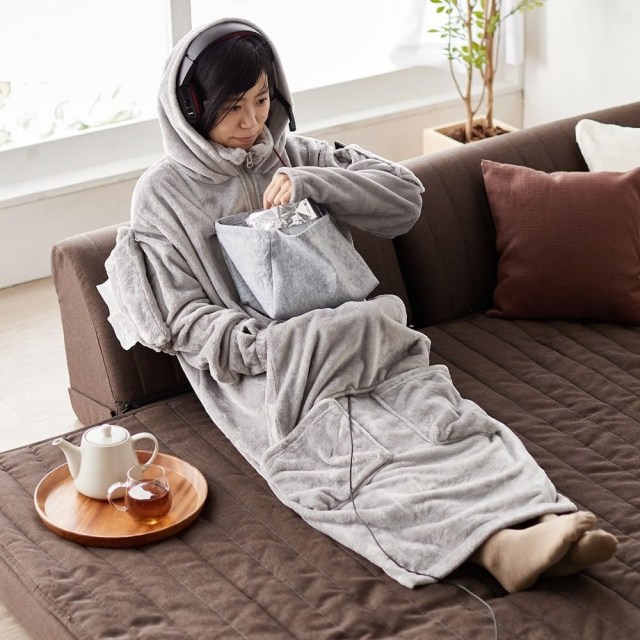
Slip this on, fill up the snack pouch, and wait for spring.
Japan has very pronounced seasonal weather swings, and we’re about to head into the part of the year where we can regularly expect temperatures in the “Hahaha no, I’m not setting foot outside my house unless I absolutely have to” range. With cold weather and shortened sunlight hours in the forecast for the next few months, there’s no better time to reacquaint yourself with the joys of video games, anime, books, and all of the other ways to keep yourself entertained while in the comfort of your own home, and there’s no more comfortable outfit to wear while you’re doing it than Japanese lifestyle brand Belle Maison’s new Gaming Wearable Blanket.
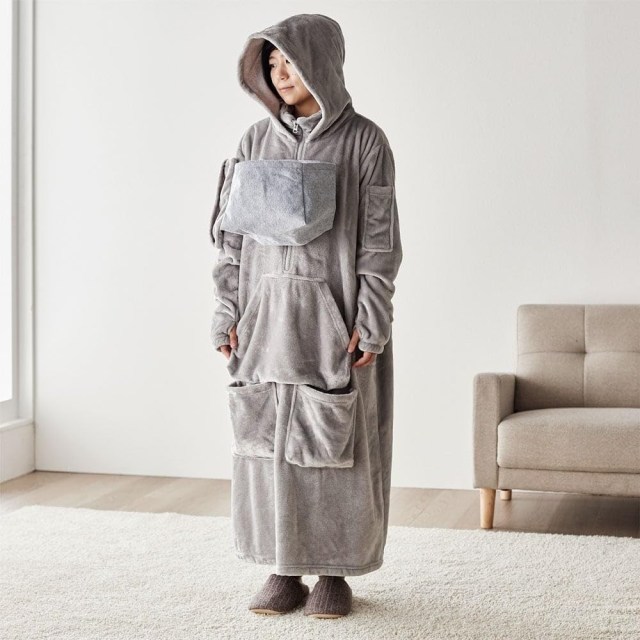
This isn’t the first time we’ve seen a “wearable blanket,” as Japanese clothing companies have taken to calling extra-warm robe-like garments. This just might be the most thoroughly thought-out example of the fashion genre yet, though, with tons of thoughtful features that truly take into account the full spectrum of luxurious laziness wearable blanket shoppers seek. For example, in the above photo you probably noticed that the model has a pouch of snacks made from the same material as the Gaming Wearable Blanket. What’s not so obvious in that shot, though, is that the snack pouch is actually attached to the garment’s chest area!
Yes, it can be removed and used separately, but the design allows you to always have your munchies within arm’s reach.
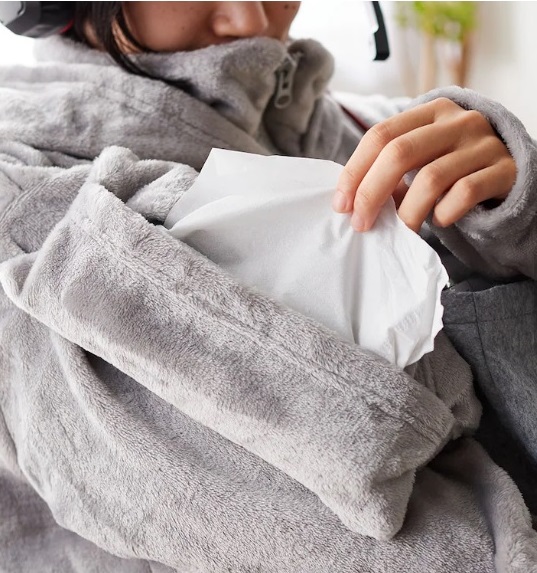
Of course, the drawback to snacking while doing any of the stay-home activities we mentioned above is the possibility of getting your game controller, TV remote, phone screen, or book pages dirty if you’ve still got bits of snack food on your fingertips. That’s why the Gaming Wearable Blanket’s right arm has a compartment sized for stocking with tissues/napkins.
Over on the left arm is a sheath for your TV remote.
The sleeves are long enough to keep your palms and the back of your hands warm, but have finger openings to allow for deft usage of analog sticks and touch screens.
And if you want even more coziness, there’s a controller pocket, located underneath the snack pouch, which has a small opening to run a power cord into it in case you need to charge the controller up while it’s in there.
Finally, the Gaming Wearable Blanket’s hood is purposefully oversized, both so that it’ll comfortably fit over a set of headphones, and also so that you can pull it down low over your eyes in case you want to take a nap wherever you happen to be at that moment.
All of this decadence can be yours for 6,990 yen (US$47) here through the Belle Maison online shop, or alternatively through Amazon Japan here.
Sounds like yami baito, but it turns out it’s an otome game job.
Recently, there’s been a lot of talk in Japan about yami baito, or “dark part-time jobs.” The general scenario goes something like this: a help-wanted posting appears, usually online, for some sort of part-time job that offers high pay for easy work. Once an applicant contacts the employer for more information about the tantalizing offer, they get roped into helping with something illegal such as theft or fraud, often being set up to take the fall instead of the organizer if they get caught.
So a help-wanted ad for a part-time job where you get paid just to chat online with young women might sound like it should immediately set off yami baito alarms. It being a full-remote job with flexible work hours only adds to the sense that the deal is too good to be true, or at least too good to be legal, right?
But it appears that this is a legitimate, lawful gig, as it’s being listed through En-gage, a reputable job-hunting website. So why is Ace, the company offering the position, willing to pay you to chat with girls? Because they’re running an otome game, a dating simulator for women, and they want someone to write responses to the in-game messages players can send to their virtual would-be boyfriends.
The wanted ad describes the job as:
“Applicant will take on the role of characters in the chat-style otome game app that our company is running, creating and sending responses to messages from players.”
As for workflow, the “response staff member” will start their shift by logging into the game’s administrative system and checking for unanswered messages from players. After choosing one to respond to, the response staff member will review the recent chat log between the player and character and craft an appropriate response, keeping in mind the character’s personality and style of expression, then send the reply and move on to the next unanswered message.
▼ It’s actually nice to know that Ace cares enough to provide players with personally crafted messages, not just pre-canned responses or janky AI ones.
No special required skills other than typing are specified, though presumably viable candidates will also need a certain degree of eloquence in written Japanese. Hourly pay ranges from 1,150 to 2,100 yen (US$7.65 to US$14), though it’s unclear if that’s dependent on the quantity or quality of messages sent. Ace says they’re looking to hire at least 10 response staff members, and aspiring honey drippers can apply through the En-gage website here.
Like receiving a warm embrace from an anime heroine.
Over the years, Studio Ghibli has showcased its skills outside the movie-making world, with a huge range of goods that appeal to people of all ages. Sold largely through Donguri Kyowakoku, the studio’s affiliated retail chain, these goods bring all the whimsy from Ghibli films and characters into our everyday lives, and now it’s added two new items that’ll keep us warm and cosy as well.
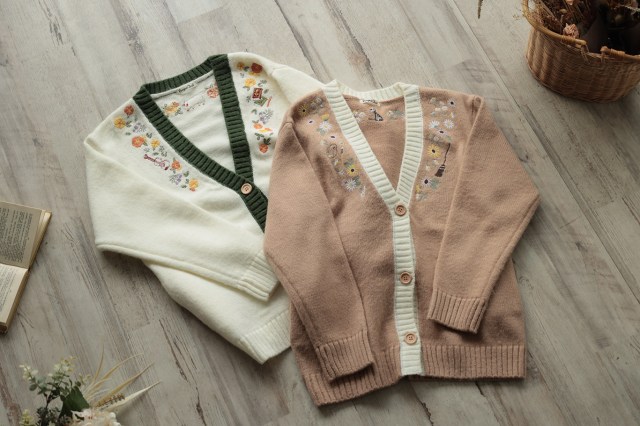
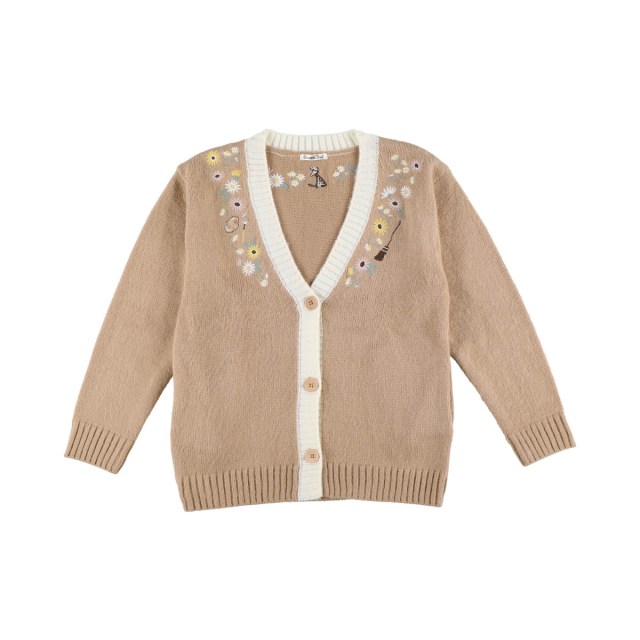
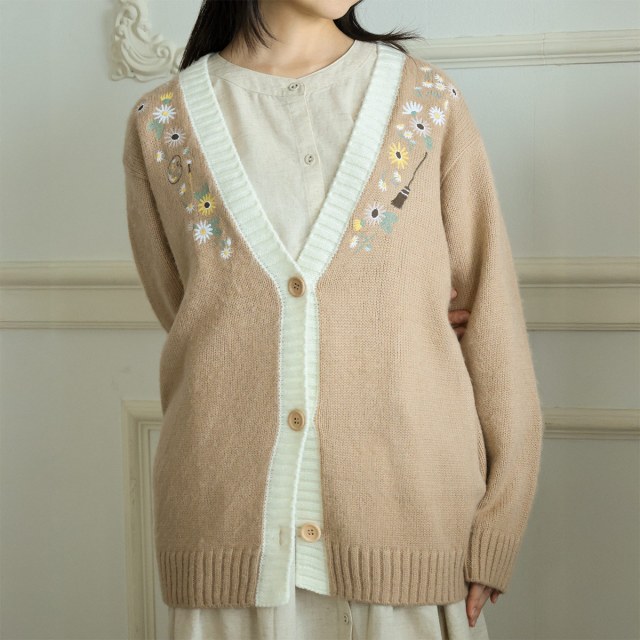
Dubbed “Ghibli Heroine’s Cardigan“, this new release is designed to give us the courage and energy to persevere through our everyday troubles, with the help of two famous heroines and embroidered flowers that hold special meaning.
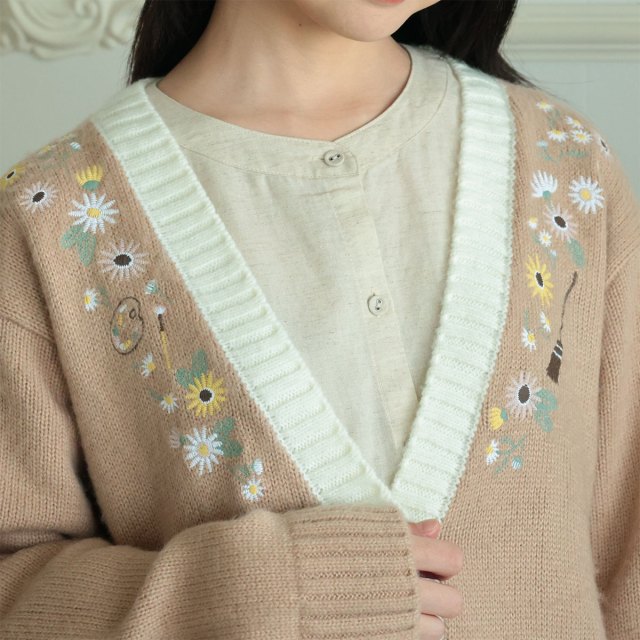
The Kiki’s Delivery Service design features gerbera, which, according to the language of flowers, is symbolic of hope, positivity, and “always moving forward”.
Alongside the gerbera are chamomile, which represents “bravery in facing difficulties”, a challenge that the titular character finds herself dealing with when her magic weakens and she receives advice from Ursula.
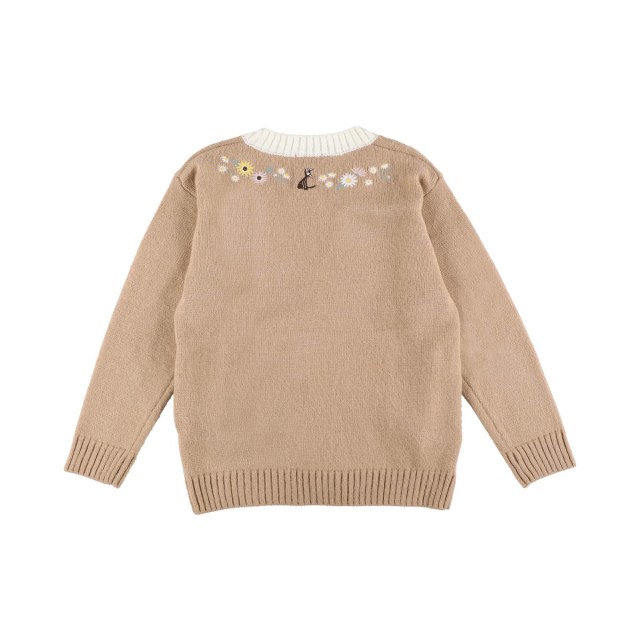
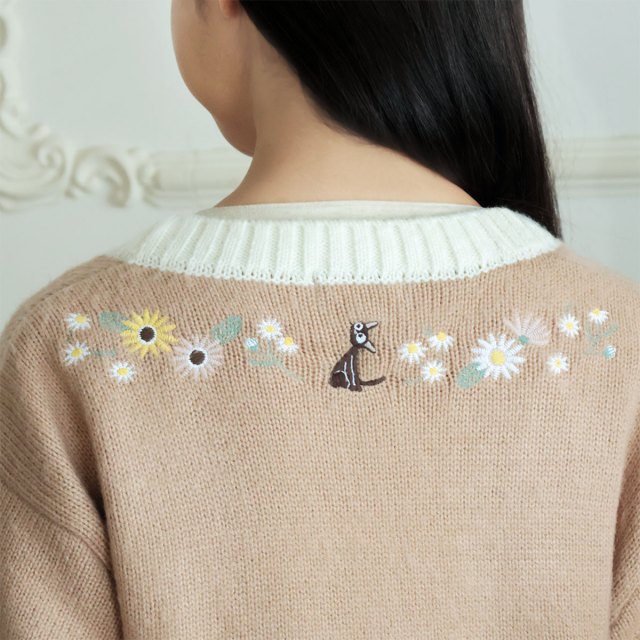
Kiki’s broom and Ursula’s paintbrush and palette also appear in the design, with Jiji sitting on the back, head tilted, as if looking up at the wearer.
▼ Wooden buttons bring a homely, casual feel to the one-size-fits-all design.
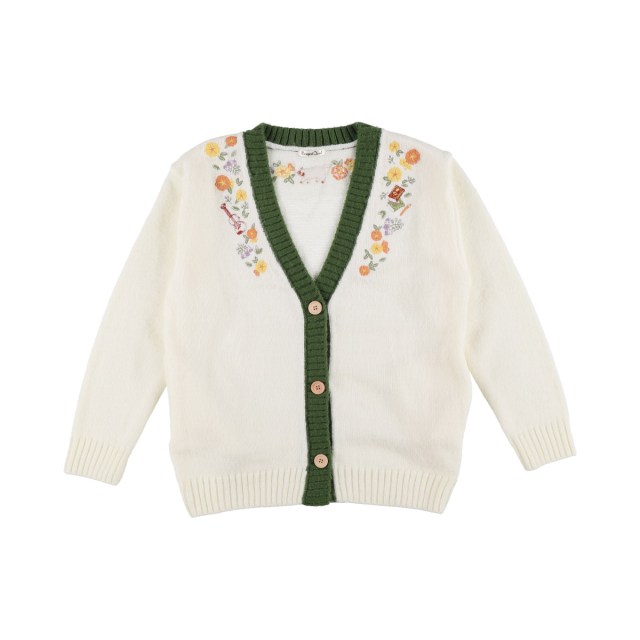
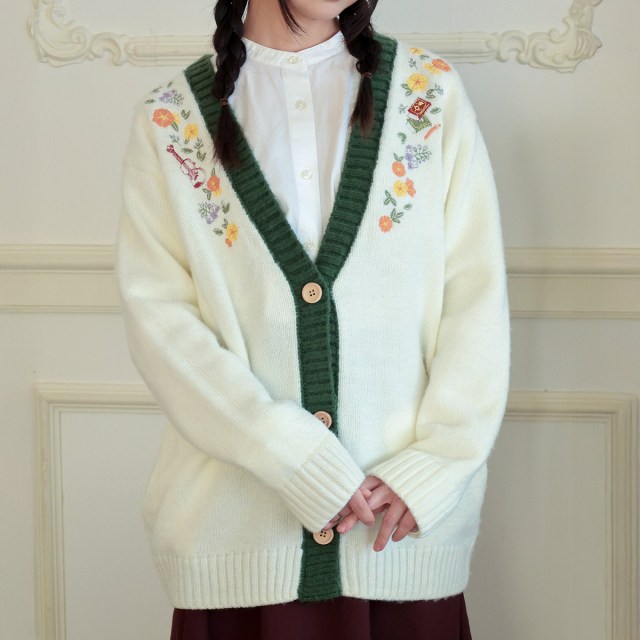
▼ The second cardigan draws its inspiration from Whisper of the Heart.
This design features petunias, which, in the language of flowers, means to “never give up” and blooms from hebe, a cold-resistant evergreen shrub found in Australia and New Zealand, which symbolises “effort”.
These qualities reflect the struggle of main character Shizuku as she attempts to make her dreams come true like her friend Seiji.
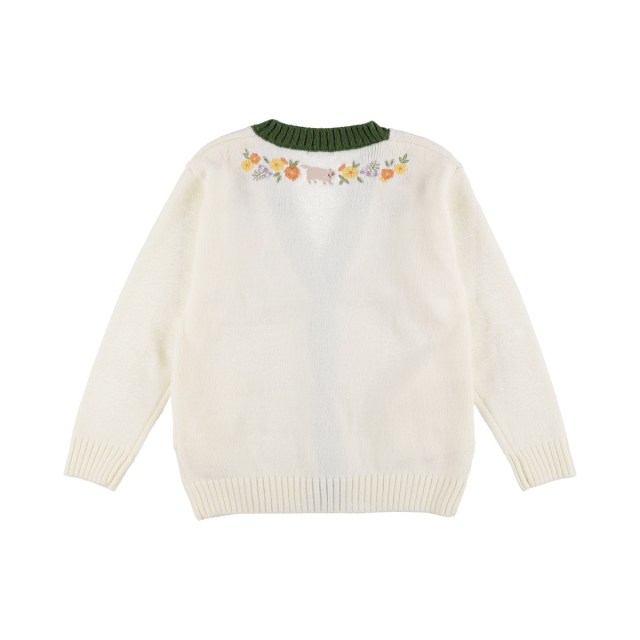
Shizuku’s book and pen, along with Seiji’s violin, appear as motifs within the design, with Moon the cat walking on the back of the cardigan.
Whether you’re like Kiki and need encouragement in moving forward, or like Shizuku, working hard toward her dreams, these cardigans will wrap you up in warmth when you need it, like a hug from a Ghibli heroine. Priced at 11,000 yen (US$73.92), the cardigans will be available in Donguri Kyowakoku stores and online from 7 December.
Source, images: Press release ● Want to hear about SoraNews24’s latest articles as soon as they’re published? Follow us on Facebook and Twitter!
Adorably fuzzy versions of the Studio Ghibli anime stars will give fans warm and fuzzy feelings of joy.
For anime fans, “Figure or plushie?” can be a difficult decision to make when you’re trying to welcome one of your favorite characters to your home. On the one hand, plastic figures often allow for more detail and greater stability, but the hard material can give them an inorganic vibe. Plushies are often the more appealing choice in tactile terms, but the tradeoff to that softness is that they often can’t stand on their own, making them less suited for display.
So along comes Studio Ghibli specialty shop Donguri Kyowakoku with a best-of-both-worlds solution, in the form of its Doll Collection line.
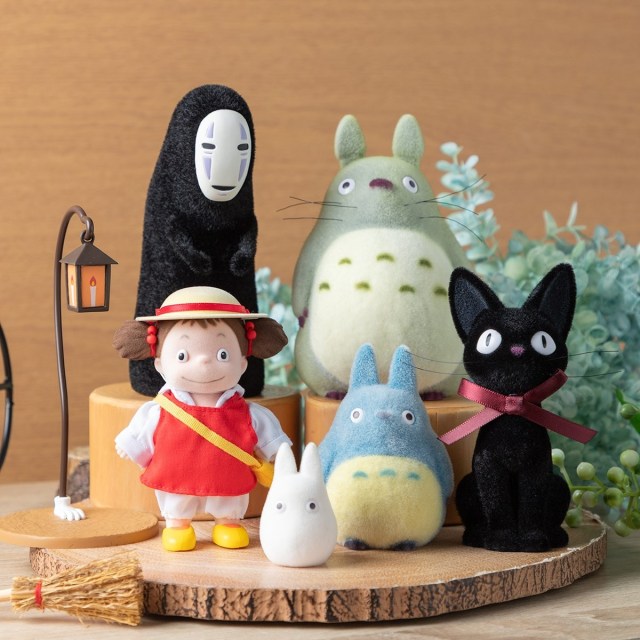
This is a collection of PVC figurines covered in nylon fiber, giving them structural stability and an invitingly soft fuzziness.
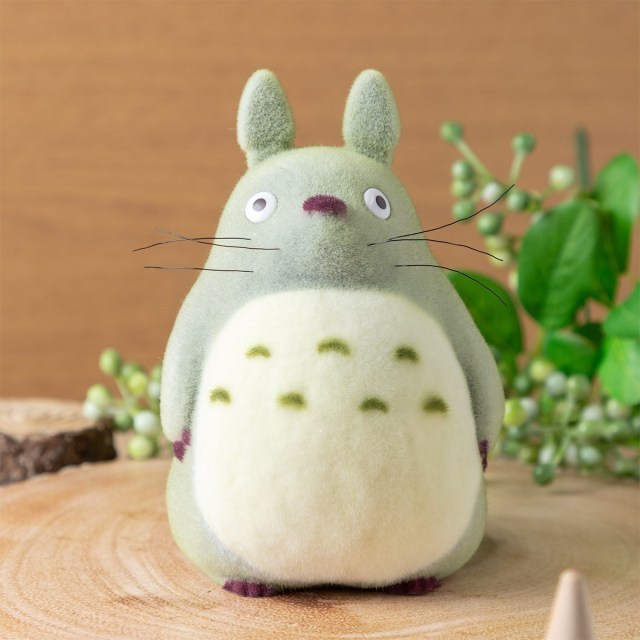
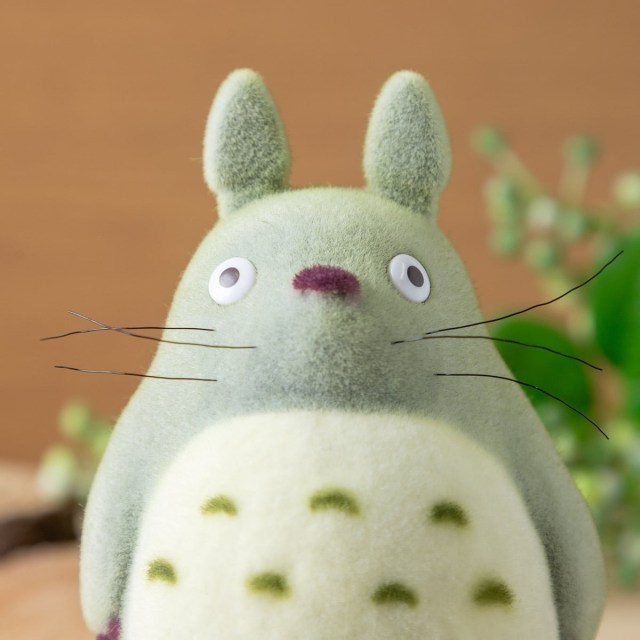
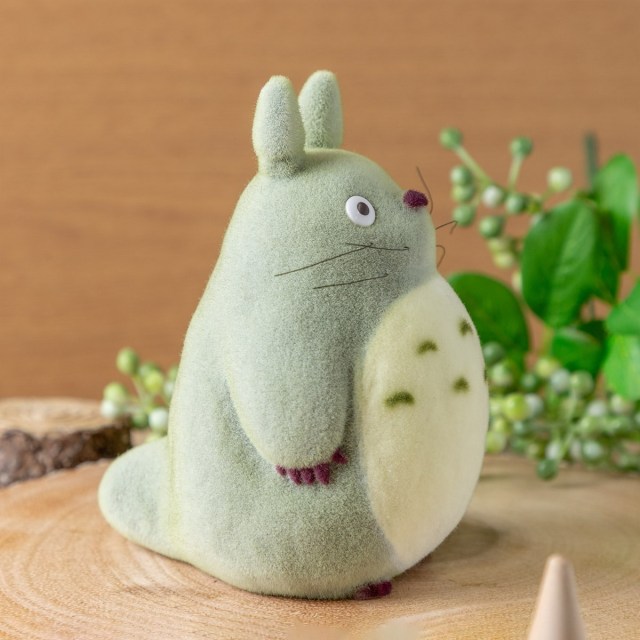
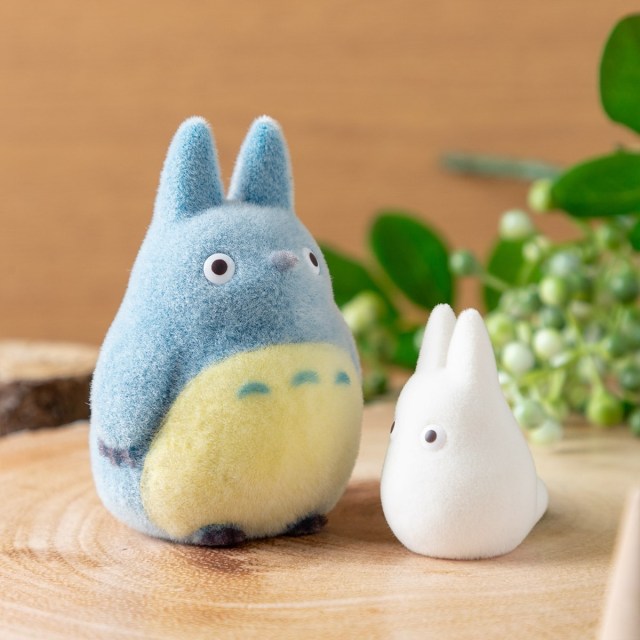
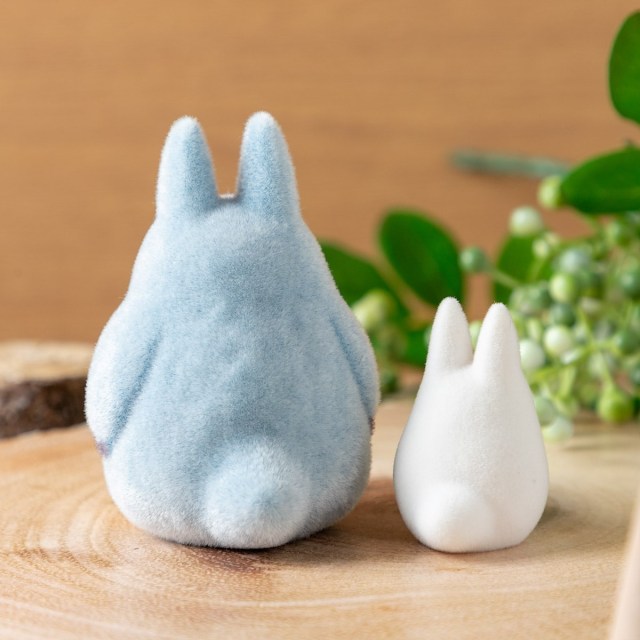
Naturally, you can’t call a quorum of cute Ghibli characters and not invite Totoro, and so the forest spirit shows up no less than three times in the Doll Collection, starting with the Big Totoro, who stands 10.5 centimeters (4.1 inches) tall.
The Medium and Little Totoros come bundled together as a set of two figurines, 8 and 5 centimeters in height.
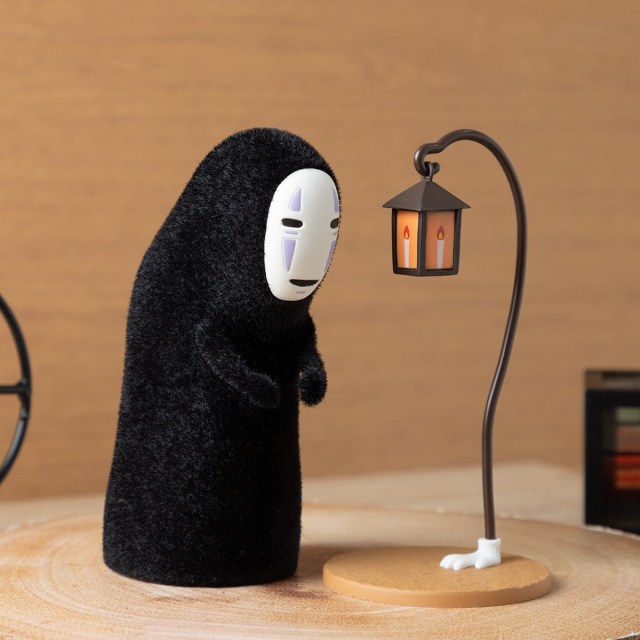
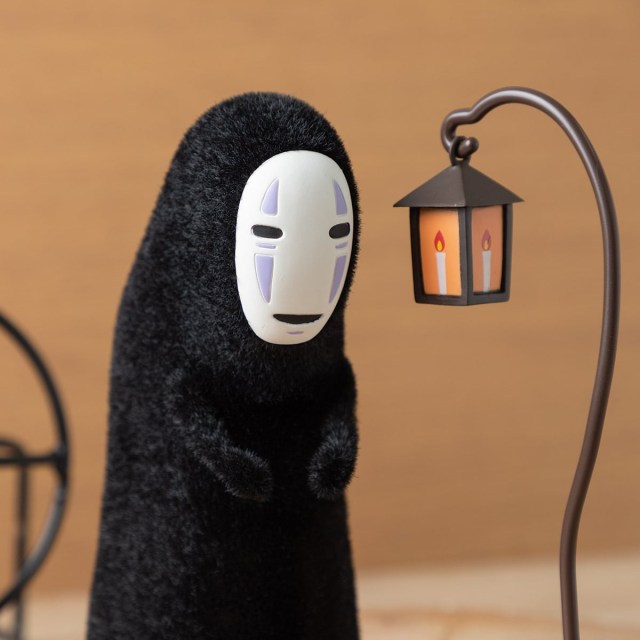
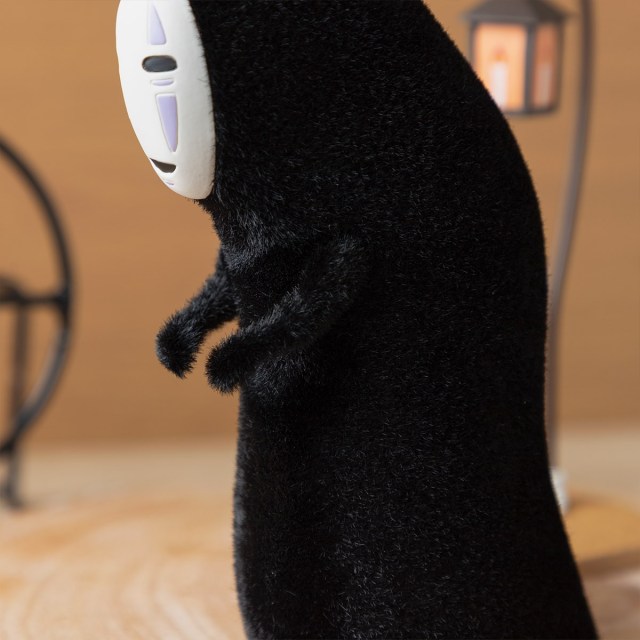
Also present is Spirited Away’s No Face, who at 13.5 centimeters is the tallest of the bunch and comes with an atmospheric lantern stand.
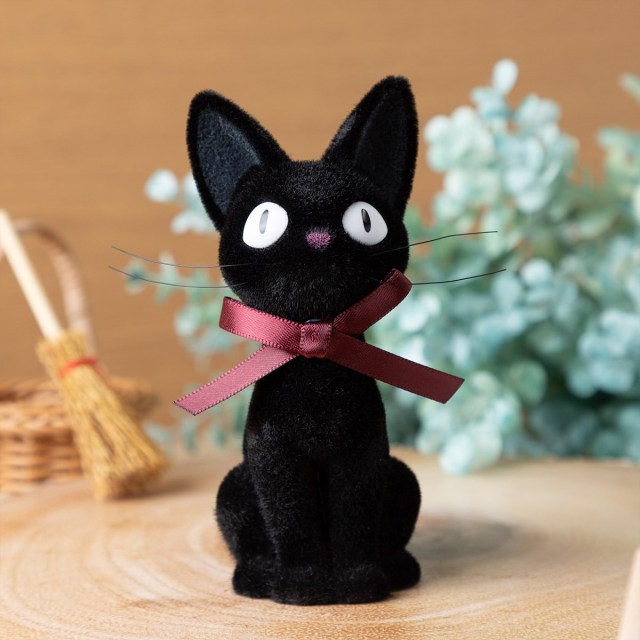
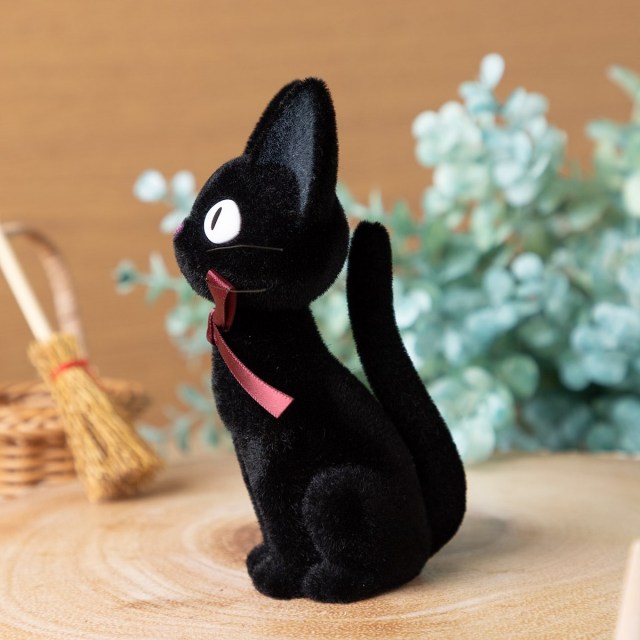
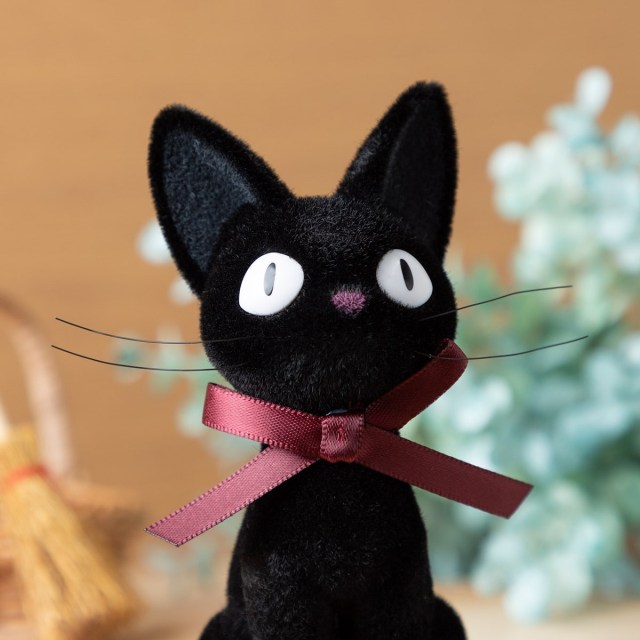
Next up is Jiji, cat companion of the titular witch of Kiki’s Delivery Service.
However, we suppose you could also make the argument that this 11.5-centimeter figurine is actually the plush birthday gift that Kiki was tasked with delivering within the film, as Jiji and the in-anime stuffed animal are supposed to be near-identical in appearance.
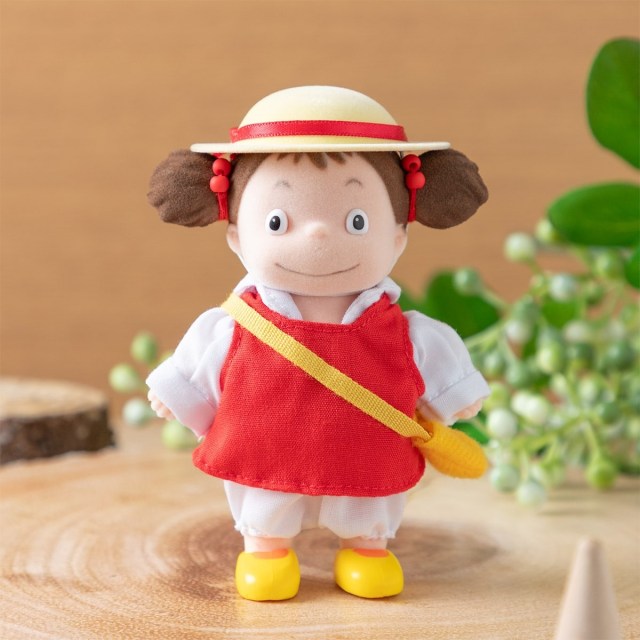
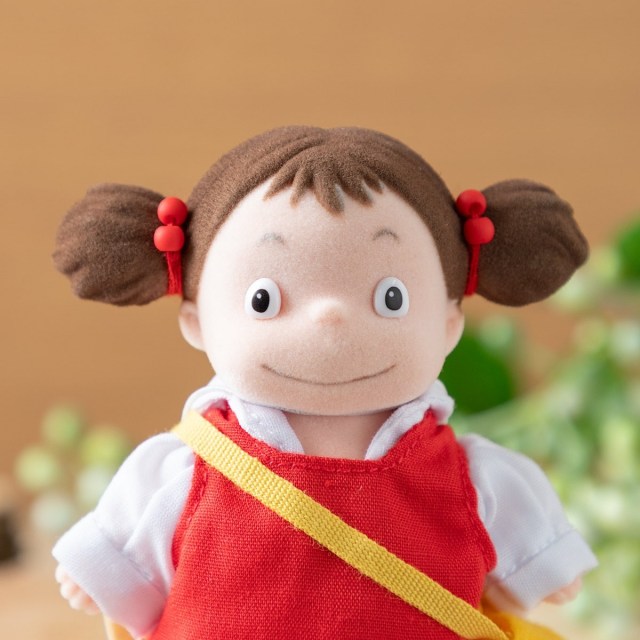
And finally, rounding out the Doll Collection is the first member of the My Neighbor Totoro human cast to meet the big guy, Mei.
With the Mei figurine being the same size as the Big Totoro one (10.5 centimeters), she unfortunately won’t be able to take a nap on his tummy like in the iconic anime scene, but her hat is removable.
The Big Totoro, Medium/Little Totoro bundle, and Jiji dolls are all priced at 4,400 yen (US$29), Mei at 5,280 yen, and No Face at 6,380 yen. They’re all available through the Donguri Kyowakoku online shop (here, here, here, here, and here) right now, in case you’ve got any Ghibli-fan friends or family members still on your Christmas shopping list.
Models and readers of gyaru fashion magazine Egg vote on the top 10 gyaru words/phrases of the year.
Egg is one of Japan’s premier gyaru fashion magazines. Gyaru culture isn’t just about eye-catching flashy fashions, though, but also about outspoken youthful expressiveness in all aspects of life, including how gyaru talk.
Because of that, Egg puts together an annual list of the top 10 trending gyaru slang/buzzwords. The list is compiled through a survey of Egg’s featured models as well as fans who follow the magazine’s official Instagram and Line social media accounts, and the 2024 results have just been released, so let’s take a look and update our gyaru vocabulary lists.
10. shabai Shabai, according to Egg, combines the atmosphere of the preexisting Japanese words dasai, “lame”/”uncool”, and shoboi, “cheap”/”mediocre.”
● Egg’s example sentence Kono meshi, shabakunai?
(Ain’t this food kinda shabai?)
9. chiimu tomodachi Chiimu here is the corrupted Japanese pronunciation of the English “team,” while tomodachi is the word for “friend.” Chiimu tomodachi refers to a friend you’ve got an especially strong bond and sense of trust with.
▼ “Chiimu Tomodachi” is also the title of a song released earlier this year by Japanese rapper Yuki Chiba, which is where the gyaru slang term originates.
8. wakannokannokannomiho The starting point for this major mouthful of gyaru slang is just wakaru, which literally means “I understand,” but can also be used to show agreement with something someone just said, sort of like “I get what you’re saying.” In casual conversation, the single syllable “n” sound can be used as a sort of all-purpose contraction, and tacking no at the end of a statement is a girlish way of adding emphasis.
In this way, Egg says, a gyaru can say “Wakanno,” to show enthusiastic agreement with what a fellow girl just said, and then if the rest of the people in the conversion want to join in with a second round of agreement, they’ll use the phrase wakannokannokannomiho to signify “Yeah, we agree too, for reals!”
● Egg’s example sentence
Gyaru A: I’m, like, totally starving!
Gyaru B: Wakanno!
Gyaru C and D: Wakannokannokannomiho!
7. giri happii Happi here is just the English “happy,” with giri, a shortened version of girigiri/“barely” coming before it. Giri happii is for situations where something bad has happened, but it’s coupled with something that just barely more than makes up for it. It’s a more positive feeling than the consolation prize-like feeling of “Every cloud has a silver lining,” but while still acknowledging that you’re just “barely happy” with the outcome.
● Egg’s example sentence Tsume toreta kedo, kozeni hiroiyasui kara giri happii.
(My fingernail came off, but it’s easier to pick up coins now, so I’m giri happy.)
6. jiba A simple one: jiba is a contraction of jibara, meaning to pay for something yourself out of pocket, as opposed to being treated or having it comped. It was popularized by Egg fashion model Erika.
● Egg’s example sentence Moshikashite korette jiba?
(Wait, I’m supposed to pay for this myself?)
5. furo kyanseru kaiwai
Furo is Japanese for “bath” and kyanseru is the corrupted pronunciation of “cancel.” Things start to get hazier with kaiwai, which means “neighborhood,” but the overall takeaway here is something along the lines of “cancelled bath community,” as furo kyanseru kaiwai indicates someone who’s skipping their bath/shower that day because bathing feels like too much of a hassle. It can also be used as a verb phrase by tacking suru (“to do”) on the end of it.
4. Mou ee desho. Technically, Mou ee desho isn’t specific to gyaru, and it’s not a particularly new phrase either. Really, it’s just a variation of Mou ii desho, meaning “Enough already” or “Give it a rest,” with a bit sharper edge to it by swapping in ee, the Kansai-dialect version of ii. Still, Mou ee desho got a spot on Egg’s list thanks to it being a catchphrase of actor Pierre Taki’s character Goto in streaming series Tokyo Swindlers.
● Egg’s example sentence
Gyaru tired of being asked so many questions: Mou ee desho.
(Ugh, enough already!)
3. shirankedo Here we’ve got another example of all-purpose contraction n, this time being used to shorten shiranai/”I don’t know.” Kedo just means “but,” making shiran kedo literally “but I don’t know.” The phrase is used when passing on information you’ve heard while also showing that you take no responsibility for what the other person does or doesn’t do with that information, similar in tone to “Hey, just letting you know.”
● Egg’s example sentence: Yuugata kara ame da yo. Shirankedo.
(It’s supposed to start raining in the evening. Just letting you know.)
Like mou ee desho, shirankedo is actually a phrase that’s been around for a long time. It’s getting heavier rotation in gyaru circles these days, though, because it’s also the title of a hit song by gyaru vocal unit Kogyaru.
▼ “Shirankedo” was actually released in December of 2023, but the phrase really started getting traction among gyaru in 2024.
2. umasugiyarogai Umasugi literally means “too delicious,” but it really gets used to mean something is incredibly/unbelievably tasty. Umasugi is a commonly used phrase among the general population, but gyaru have taken to tacking on a little extra to make umasugiyarogai, which describes a food coma-like sensation of feeling lazy after eating something really good.
● Egg’s example sentence
Gyaru after eating a good meal: Umasugiyarogai!
1. Sore gaachaa? Sore gaachaa? is another way of saying Sore gachi?, meaning “Is that for real?” or “Are you serious?” While Egg lists Sore gaachaa? as its top gyaru phrase for 2024, it also says that it’s usually used in combination with some sort of apology, making it a phrase to use when you suddenly find out you caused a problem for someone else and want to show that you had no idea you were bothering them, but that you’re sorry all the same.
● Egg’s example sentence
Person A: You were snoring like crazy all night and I couldn’t sleep.
Person B: Sore gaachaa? Honma gomen ya de.
(Oh, for real? Sorry about that, seriously.)
▼ Egg has also put out a video in which a team of the magazine’s models discuss and demonstrate the list’s entries.
Of course, just like being a CPA, medical physician, or lawyer, being a gyaru linguist requires a certain amount of ongoing education effort, as new words and phrases rise and fall in fashion. This list should give you a solid start, though, and if you want to give your Japanese even more of a youthful sheen, don’t forget to check out the year’s top JC and JK buzzwords too.
Japan loves eating tuna and fish eggs, but can we love eating tuna eggs?
Japan loves tuna. Not only is tuna (or maguro, as it’s called in Japanese) one of the most common types of sushi and sashimi, tuna sandwiches, tuna pasta, and even pizza topped with tuna are all extremely popular.
Japan loves roe too, with ikura (salmon eggs) being a highly prized delicacy. Tarako (cod roe) is regularly eaten with rice, pasta, or on bread, as its spicy version, mentaiko. Even flying fish eggs, called tobiko, are part of Japanese cuisine.
And yet, we’d never seen tuna eggs on a restaurant menu in Japan, nor on the dinner table at our friends’ or families’ homes.
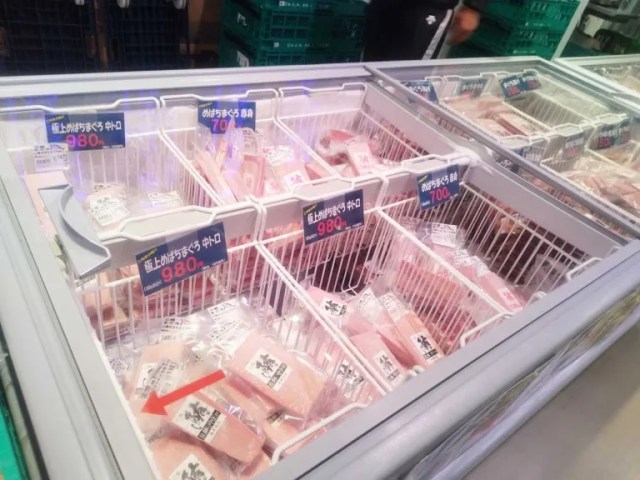
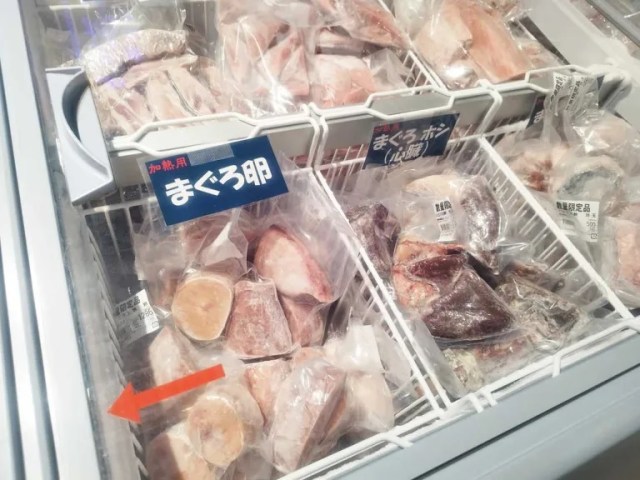
So imagine our surprise when we were strolling around the Yokosuka Port Market in the town of Yokosuka, Kanagawa Prefecture, and after stepping into fish seller Nagai Suisan’s booth to browse their wares…
…we spotted not only various cuts of tuna…
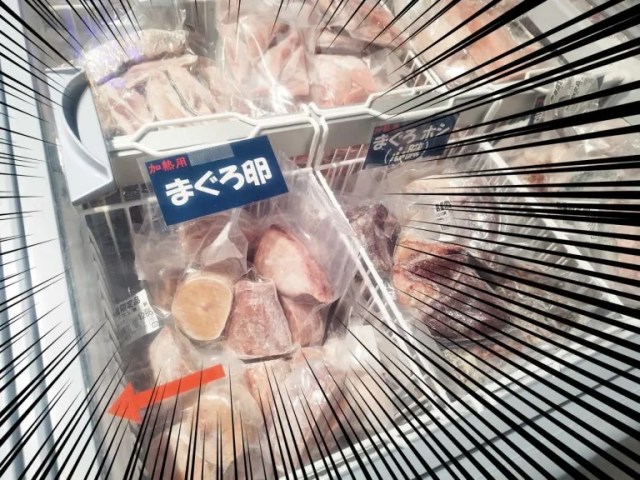
…but also tuna eggs!
▼ まぐろ卵 = Tuna eggs
Since they were selling them in a fish market, they must be edible…right? Still, being compete newbies when it comes to this kind of roe, we wanted to double check how you’re supposed to eat them. So we checked with the staff, who informed us that while it’s common to eat other types of roe raw in Japan, salmon eggs should be stewed.
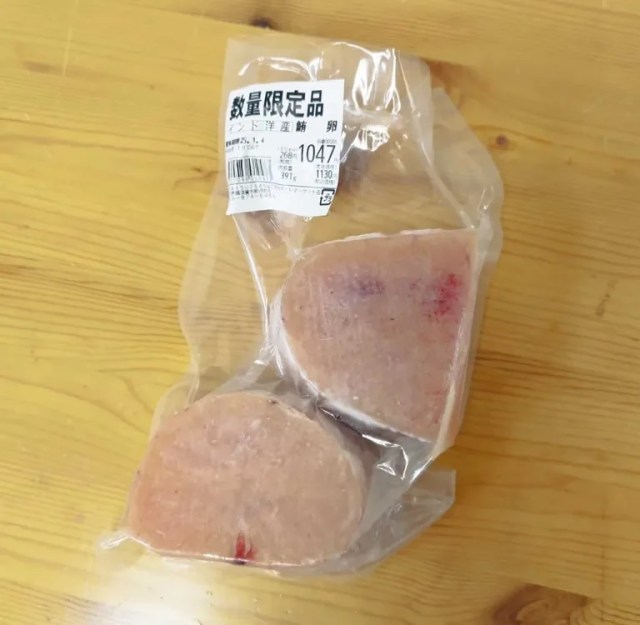
With our curiosity piqued, we decided to buy a pack, which cost us 1,130 yen (US$7.55) for 391 grams (13.8 ounces). Price-wise, that’s more expensive than what you’d pay for imported beef at a Japanese supermarket, but less expensive than domestically raised Japanese beef, so we guess you could call tuna eggs an affordable luxury.
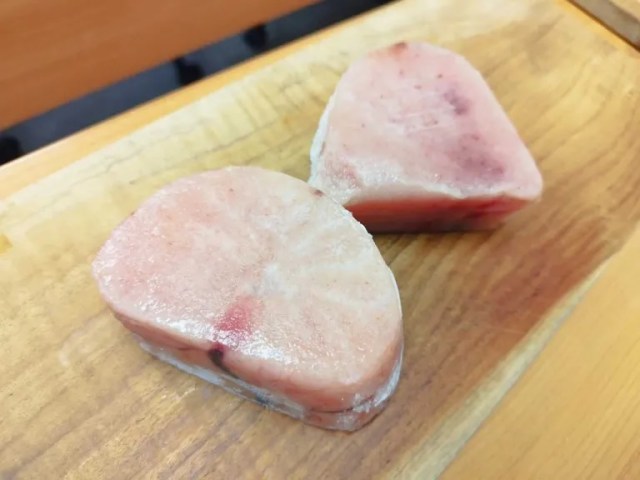
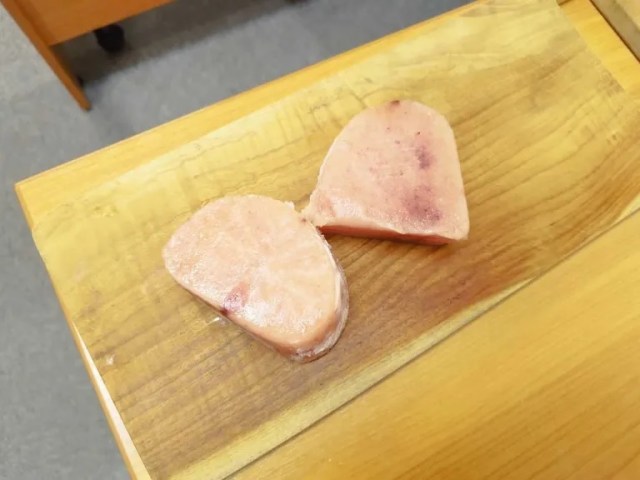
Back home we opened up the pouch, and were very startled to see just how huge the egg sacs are!
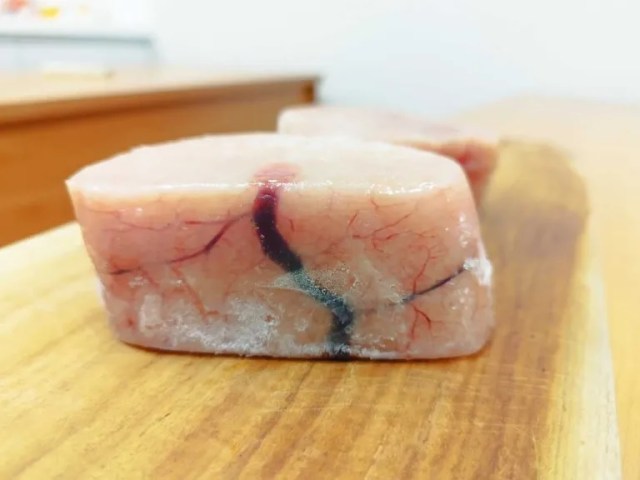
They’re so big that, looking at them from above, we’d have guessed that they were just thick cuts of fish if we didn’t know otherwise. In profile, though, they look much more egg sac-y.
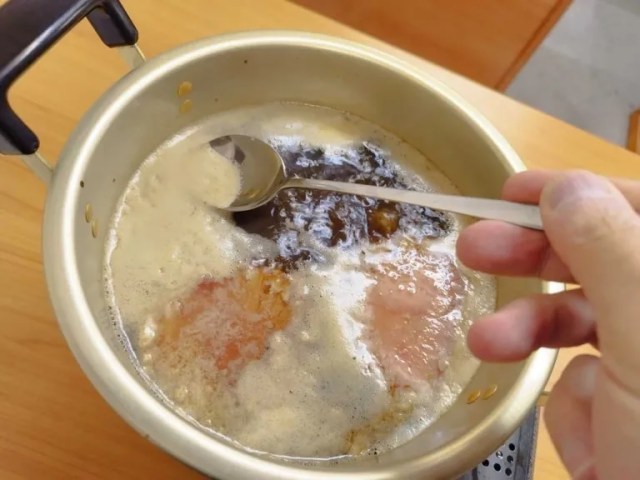
Since we were following Nagai Suisan’s recommendation to prepare our tuna eggs as nimono (the Japanese term for stewed/simmered dishes) we started by preparing a broth of soy sauce, mirin (sweet cooking sake), dashi (bonito stock), ginger, and water. With this being our first time cooking the unique star ingredients, we didn’t bother with exact measurements for the various seasonings, and just added them “to taste.”
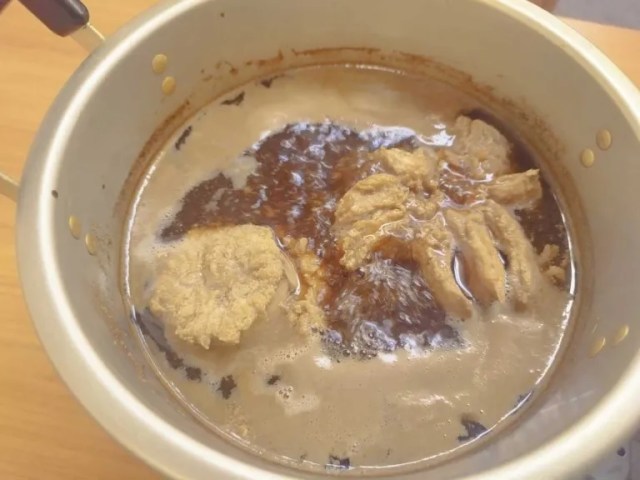
Once the broth was simmering nicely, we added the tuna eggs to the pot. While they cooked, we used a spoon to periodically skim off any film from the top of the broth, and as we were doing this…
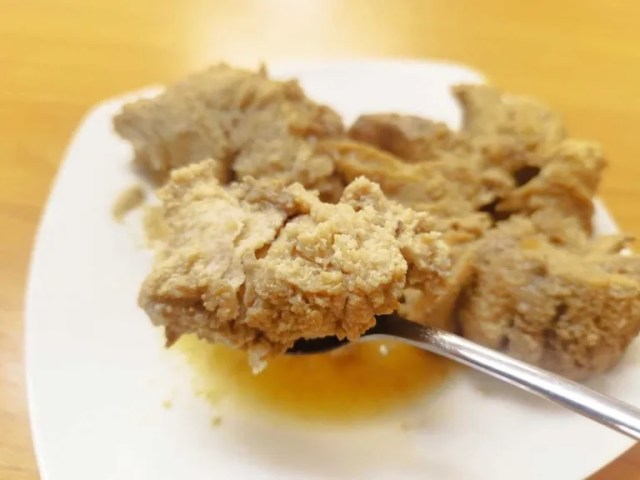
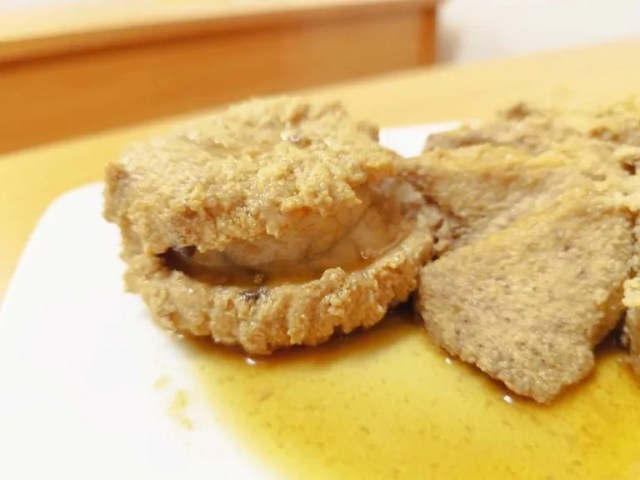
…we noticed that the egg sacs had transformed!
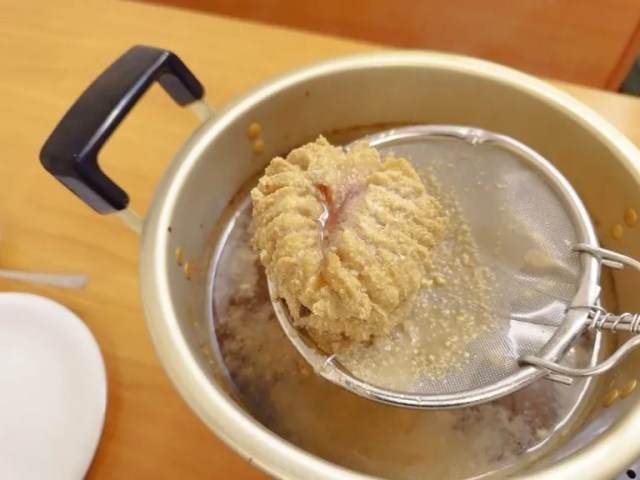
Maybe we should say that they “blossomed?” In any case, they looked very different coming out of the pot than they had going in.
Lifting a spoonful to our mouth to take a bite, we expected either a gritty texture, like tarako, or one of firmness giving way to a popping sensation, like ikura. Instead of either of those, though, the stewed tuna eggs had a consistency not unlike stewed white fish, a sort of meaty flakiness.
As for the flavor, tuna eggs taste very much like tuna, it turns out, without as sharply pronounced a feeling of fishiness as some other types of roe. We’re not sure we’d dump a bunch of tuna eggs over a bowl of white rice like is sometimes done with ikura and tarako, but our stewed sacs would make a very tasty side dish.
So while tuna eggs may be hard to find, they’re also pretty easy to love, and we’ll have to keep an eye out for them on our subsequent shopping trips. If this is an adventure your palate isn’t quite ready for, though, you can still find more orthodox treats in Yokosuka, like cinnamon rolls.
Shop information
Nagai Suisan (Port Market branch) / 店名 長井水産ポートマーケット店
Address: Kanagawa-ken, Yokosuka-shi, Shinko-cho Ichigo Yokosuka Port Market
神奈川県横須賀市新港町6いちごよこすかポートマーケット
Open 10 a.m.-6 p.m.